
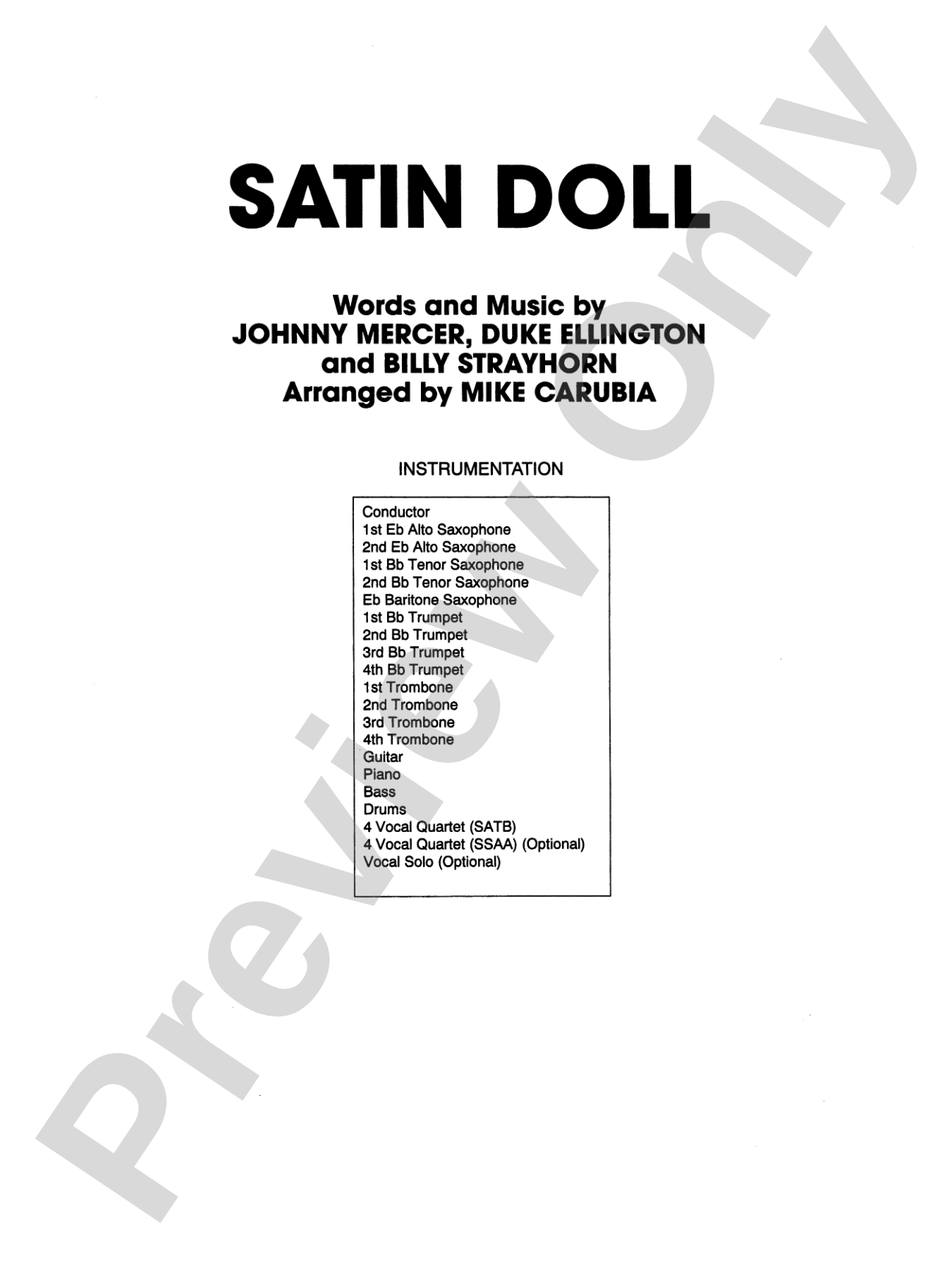

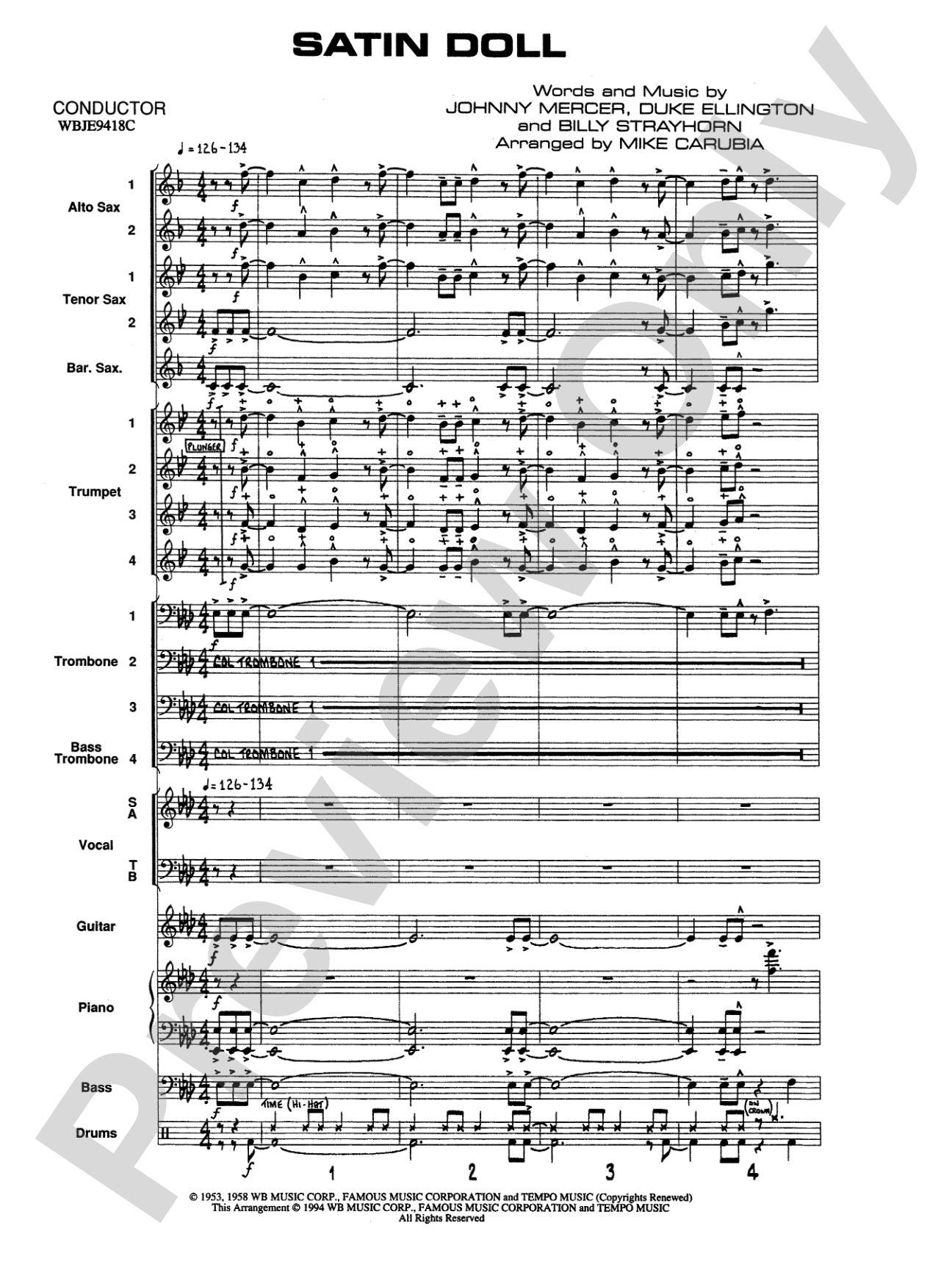
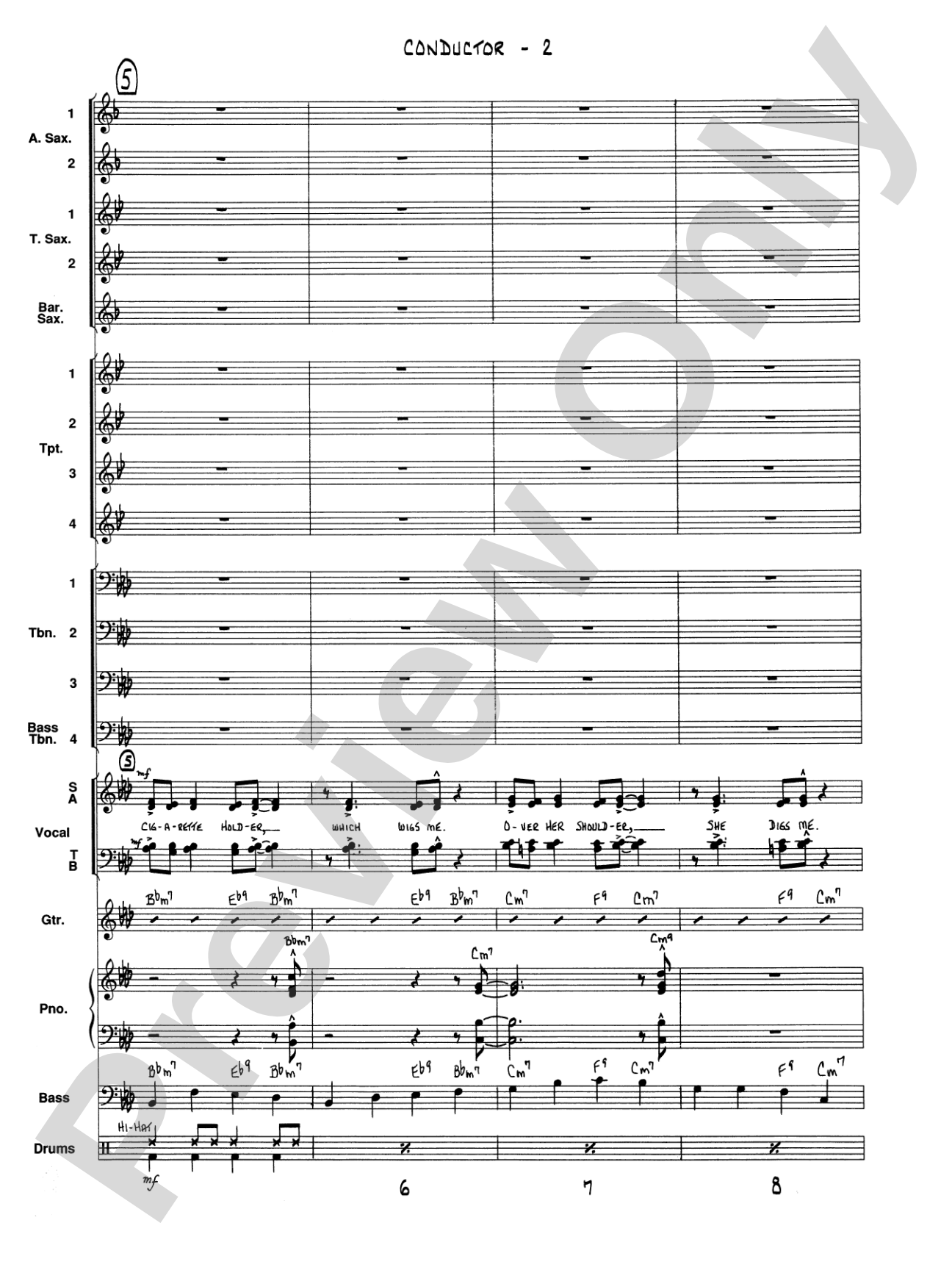
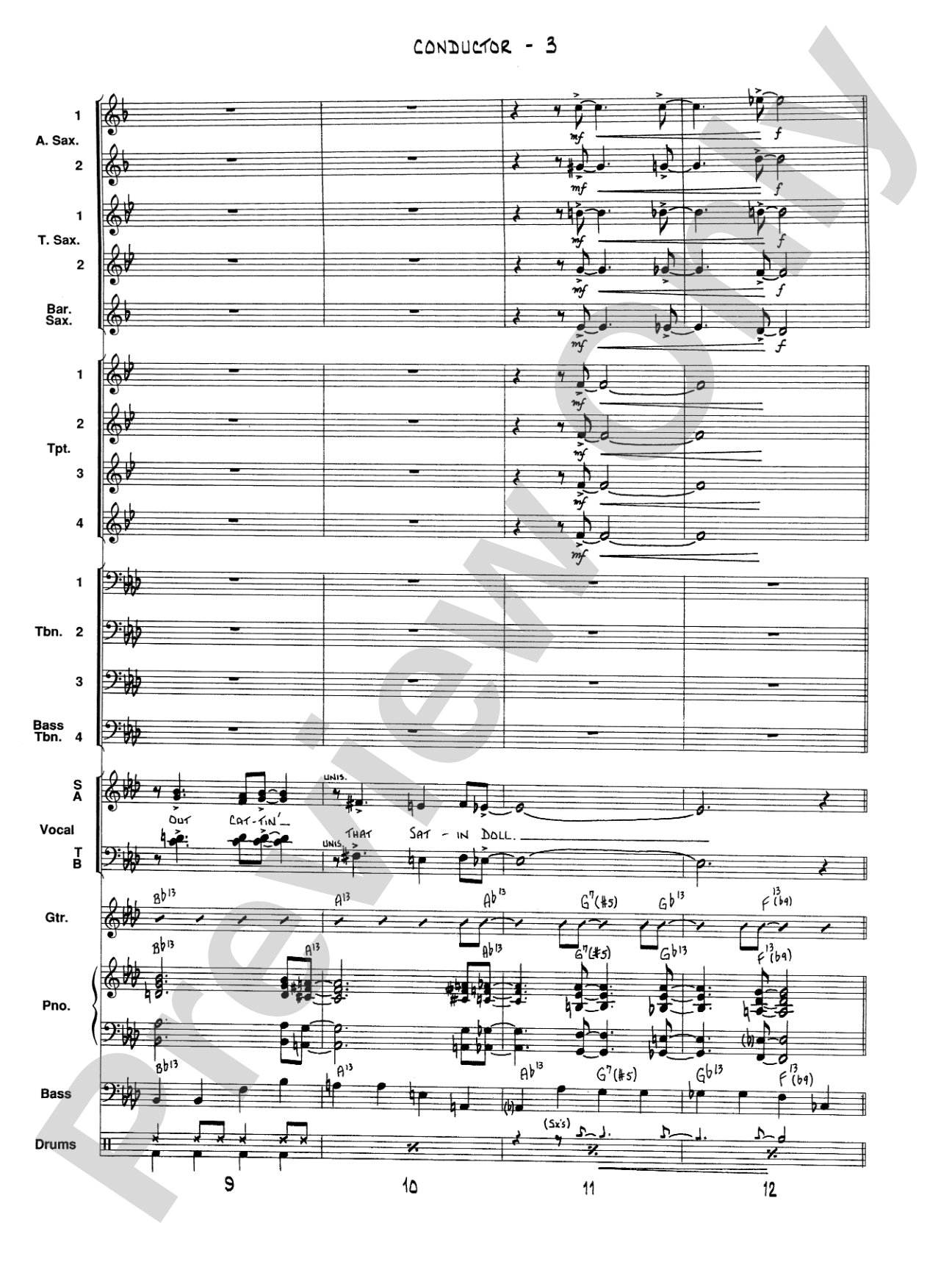
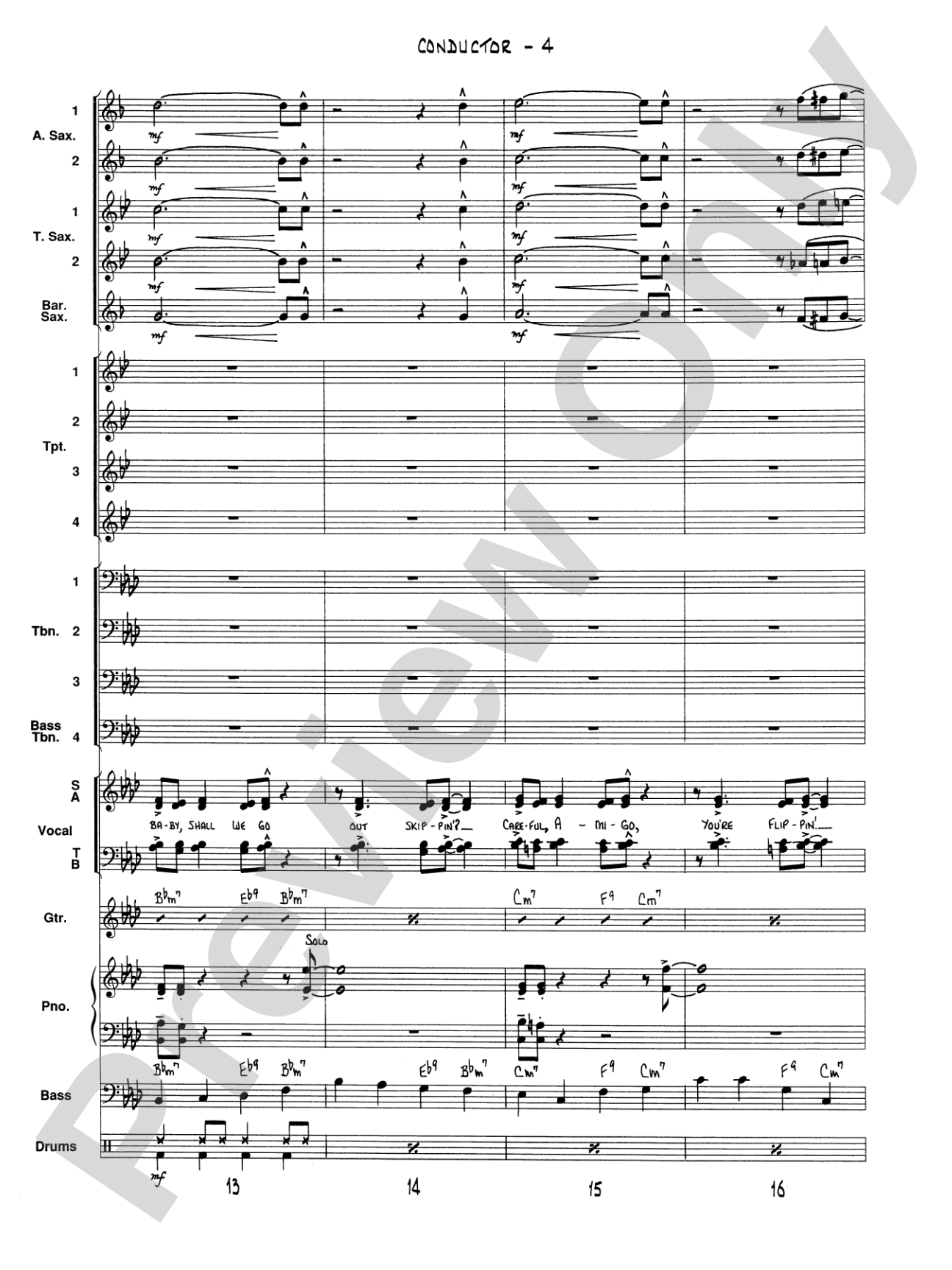
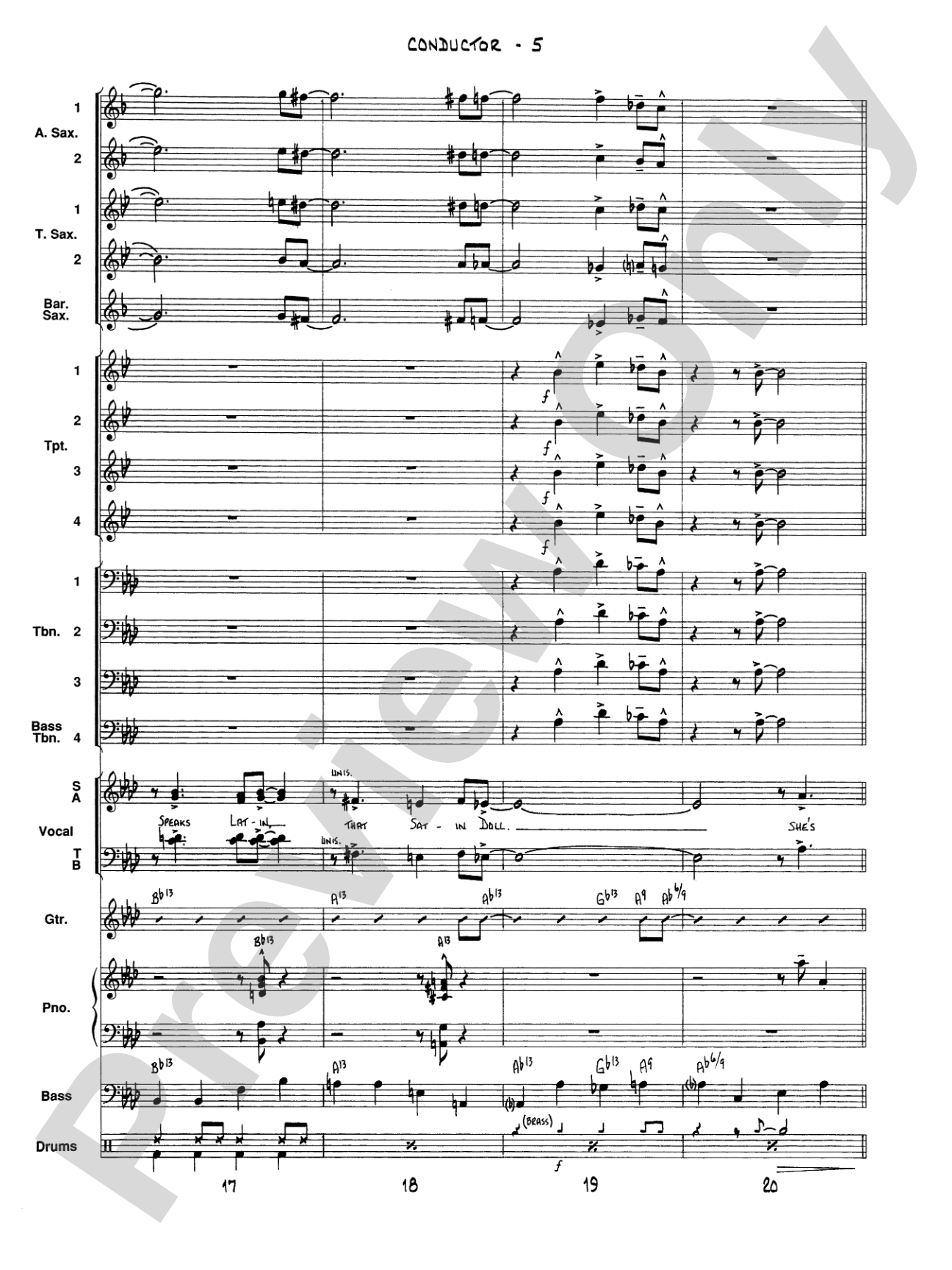
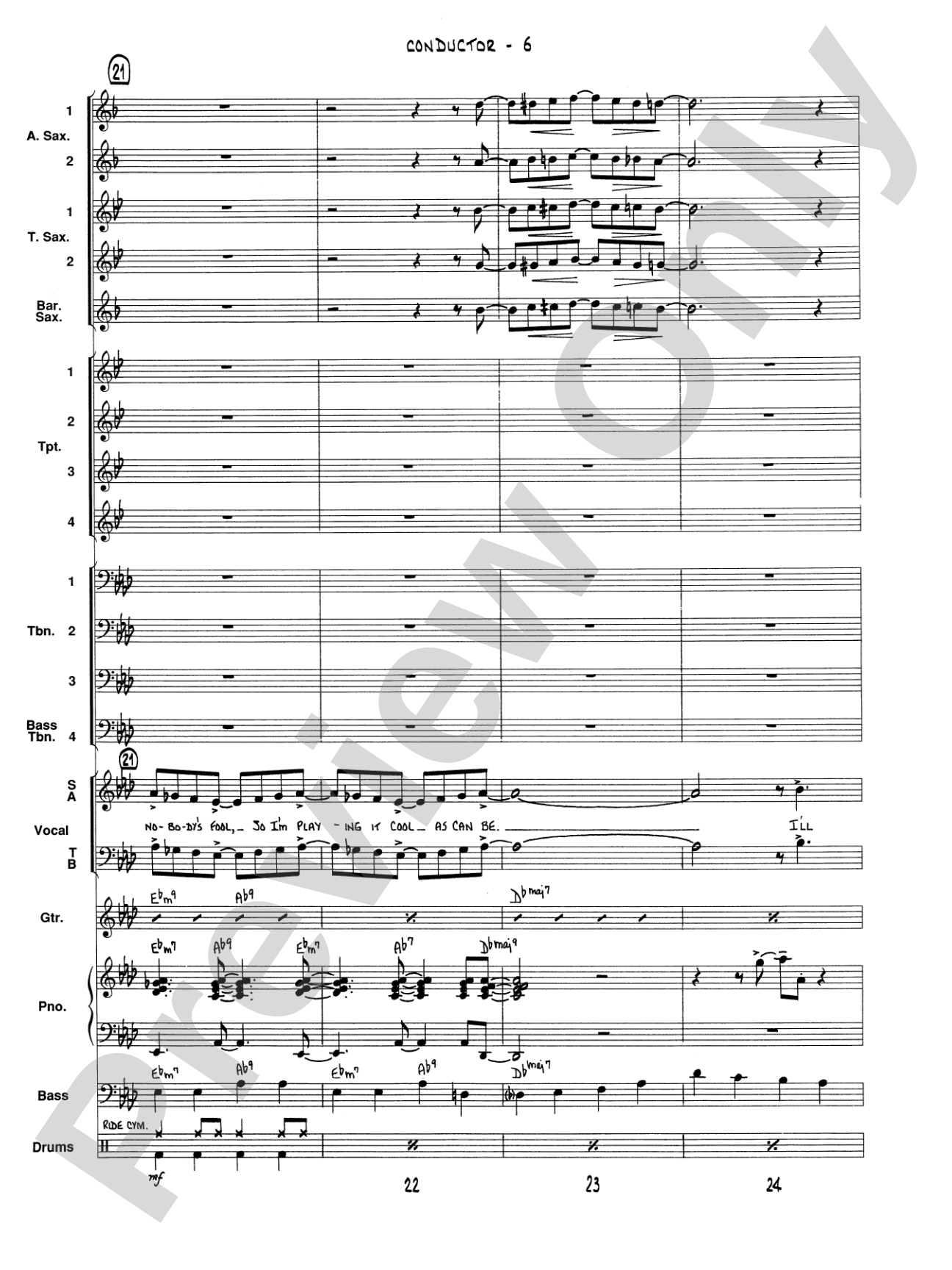
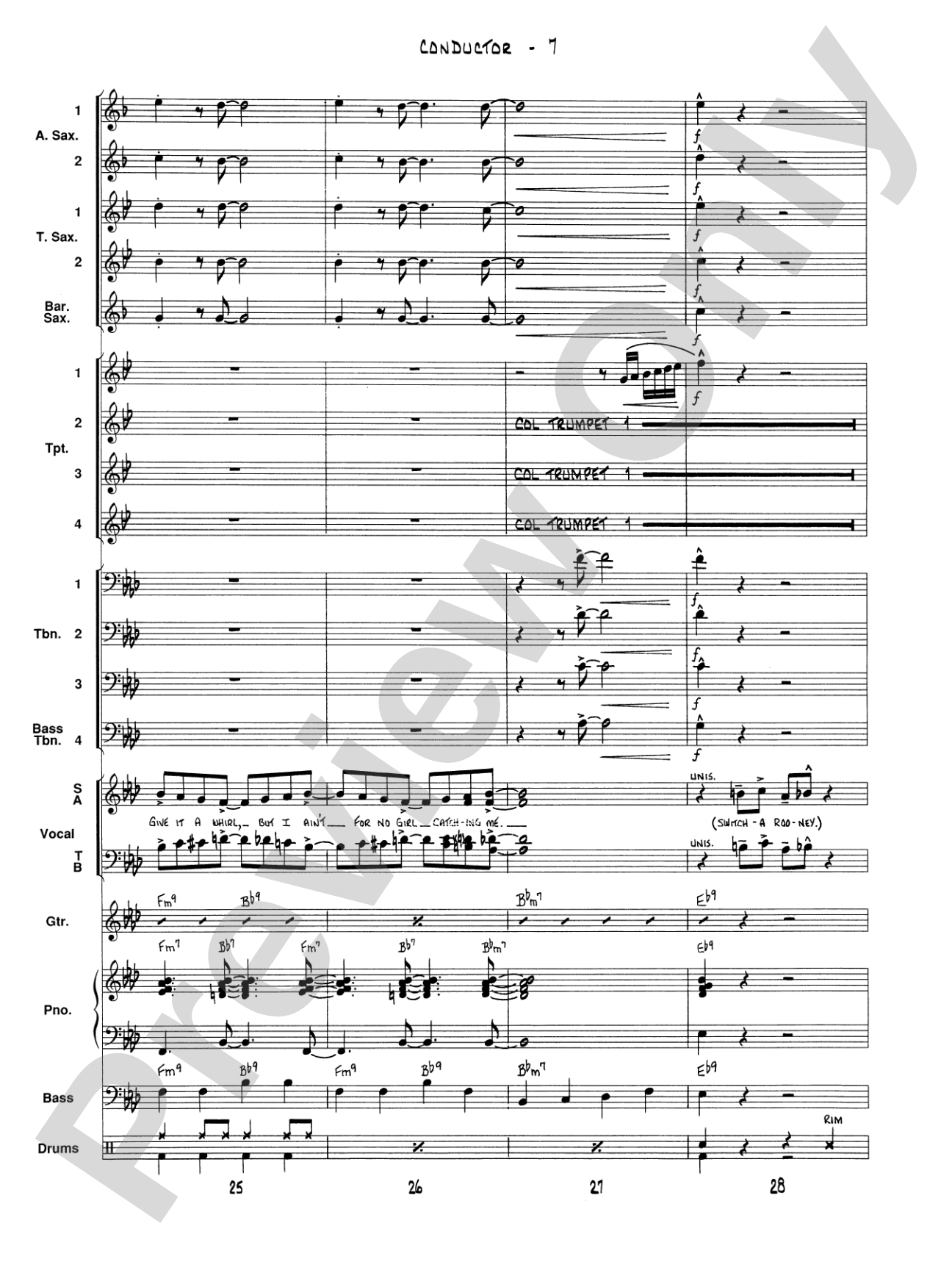
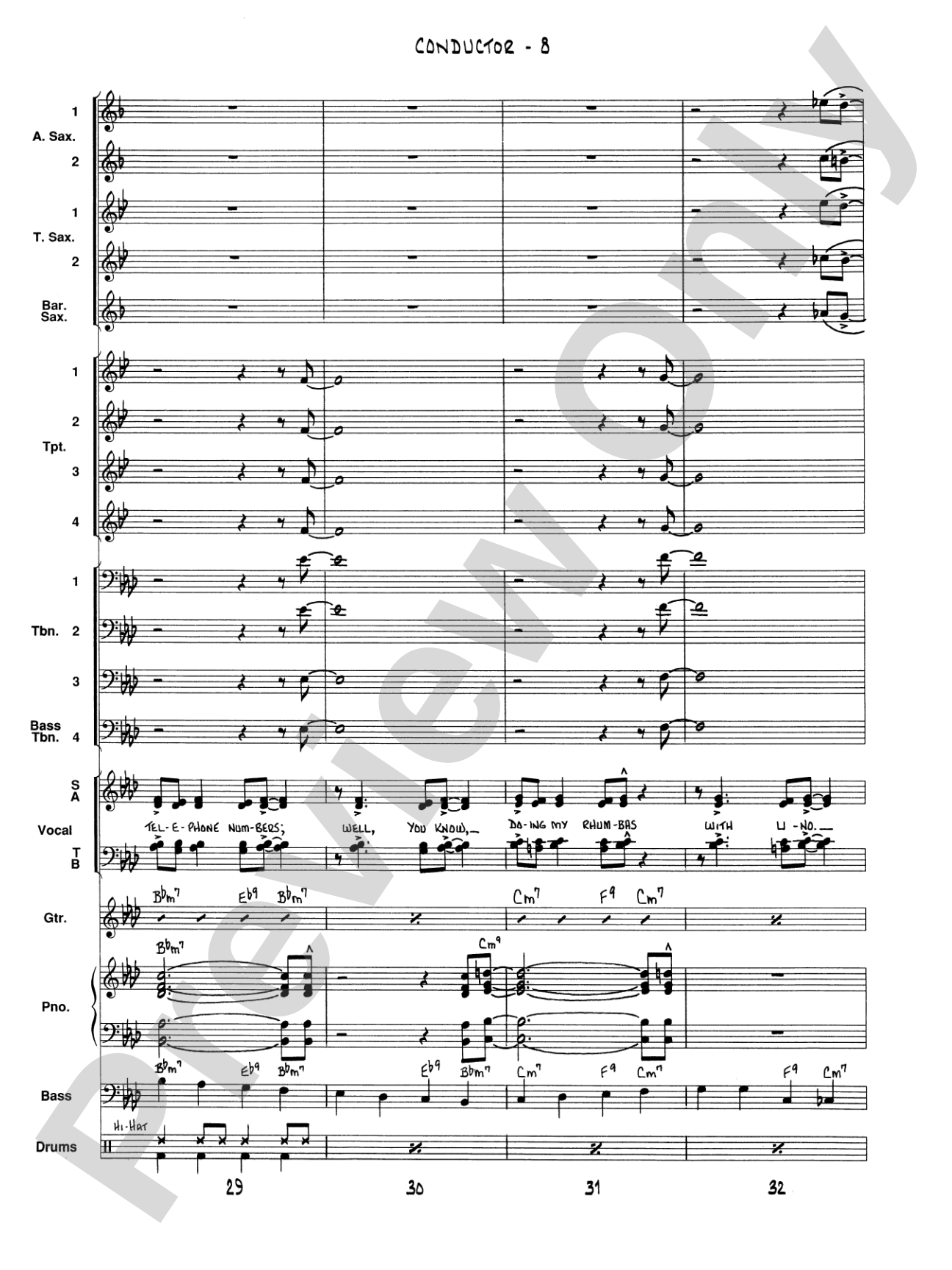
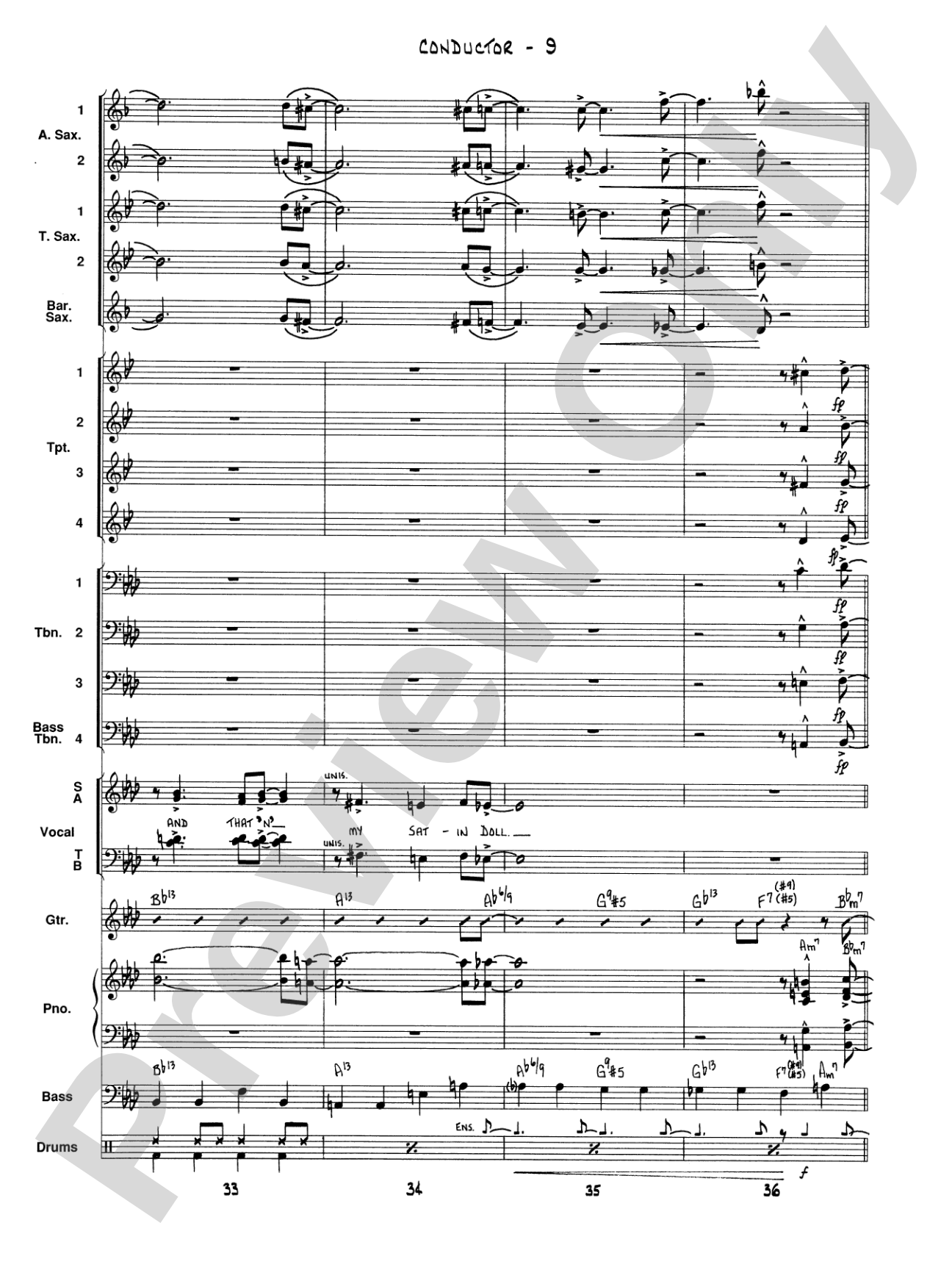
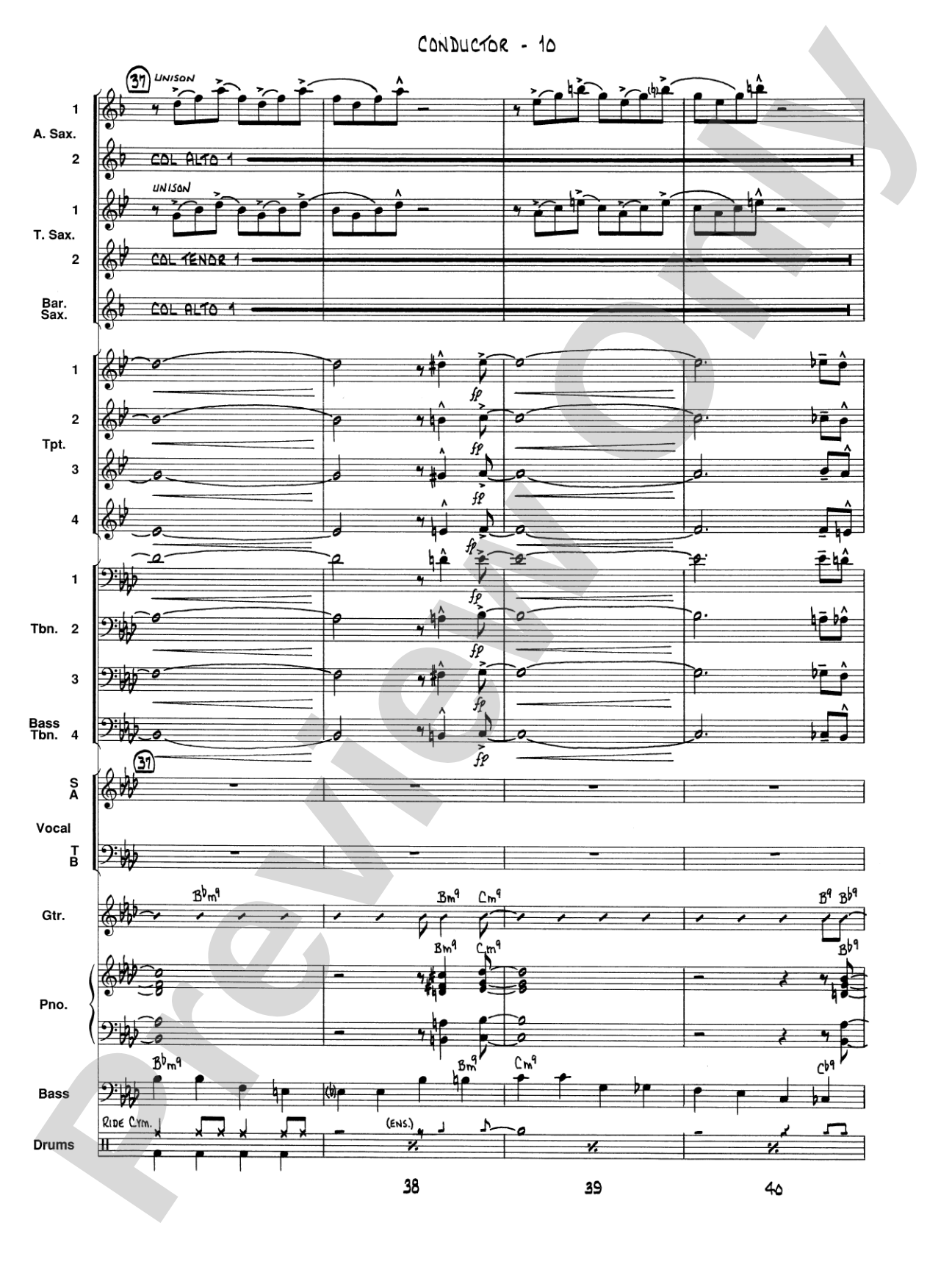
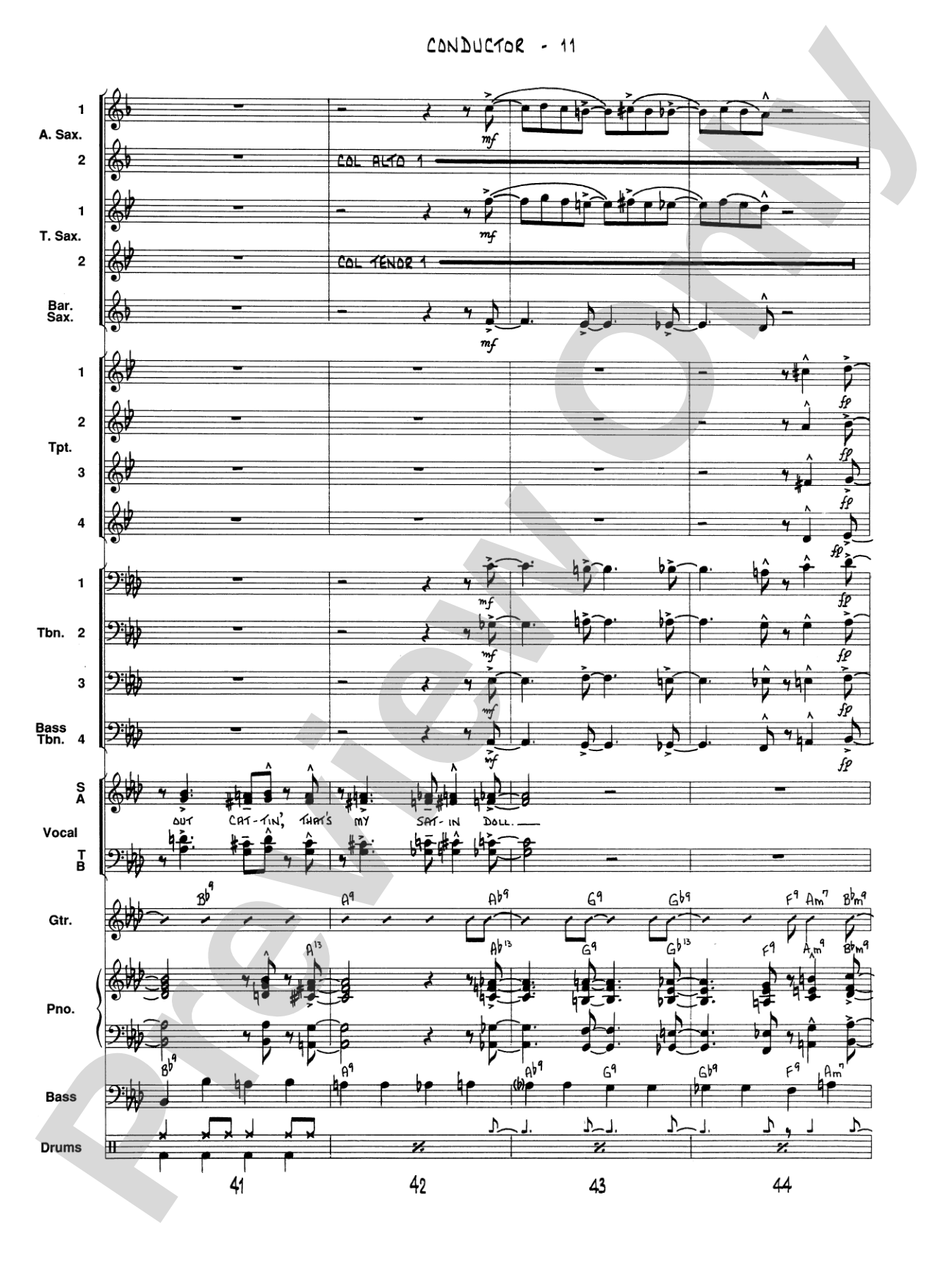
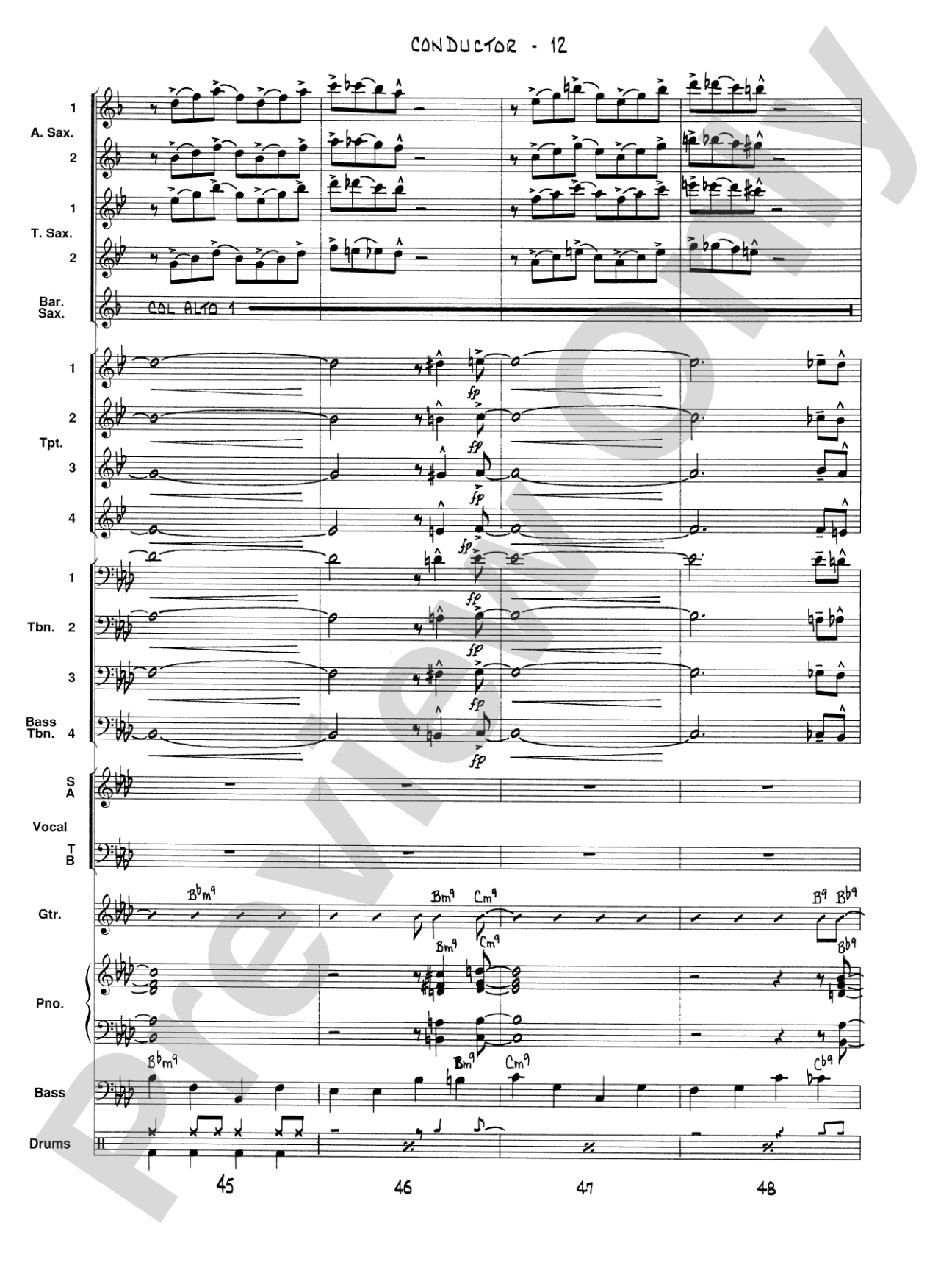
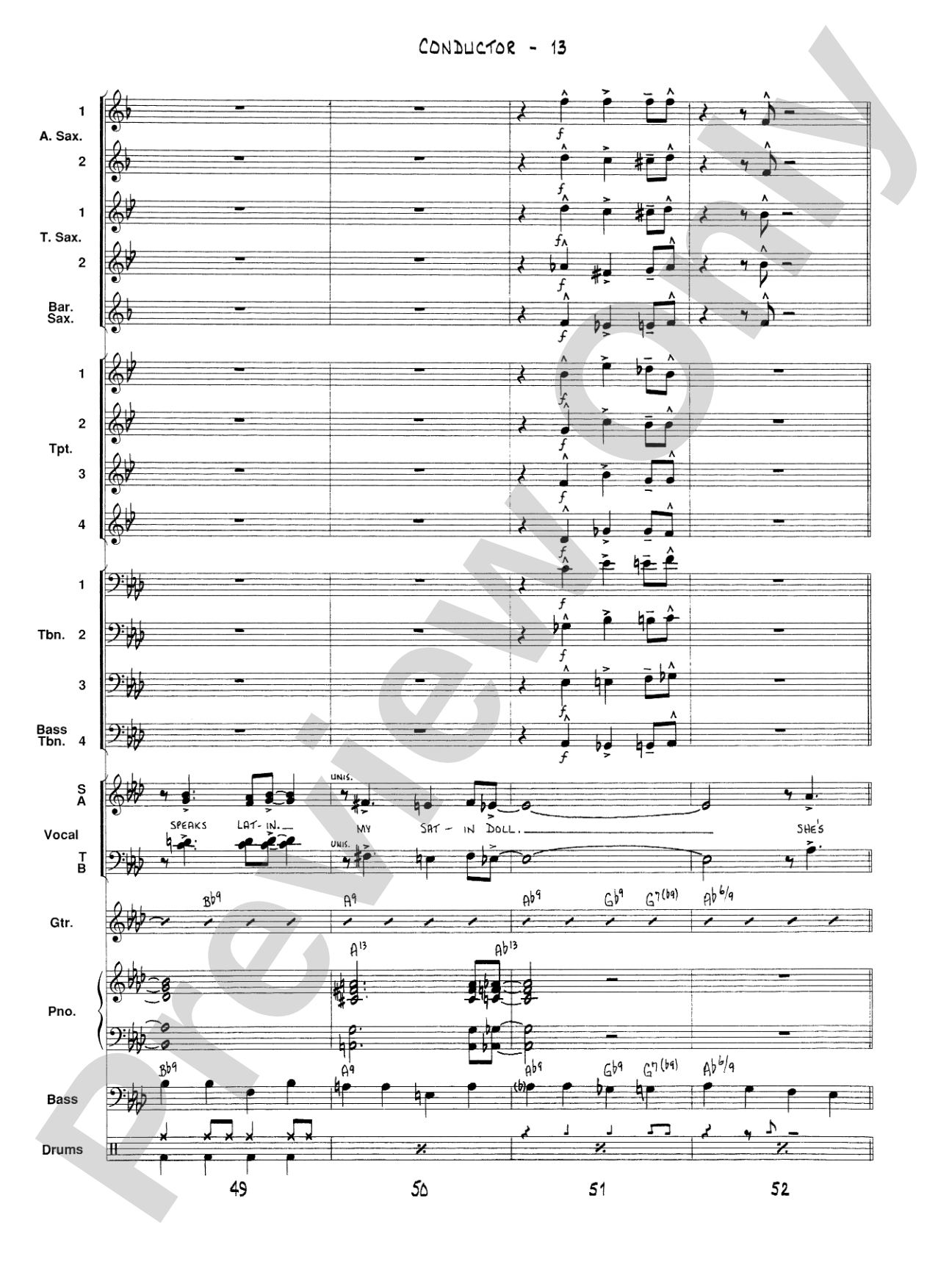
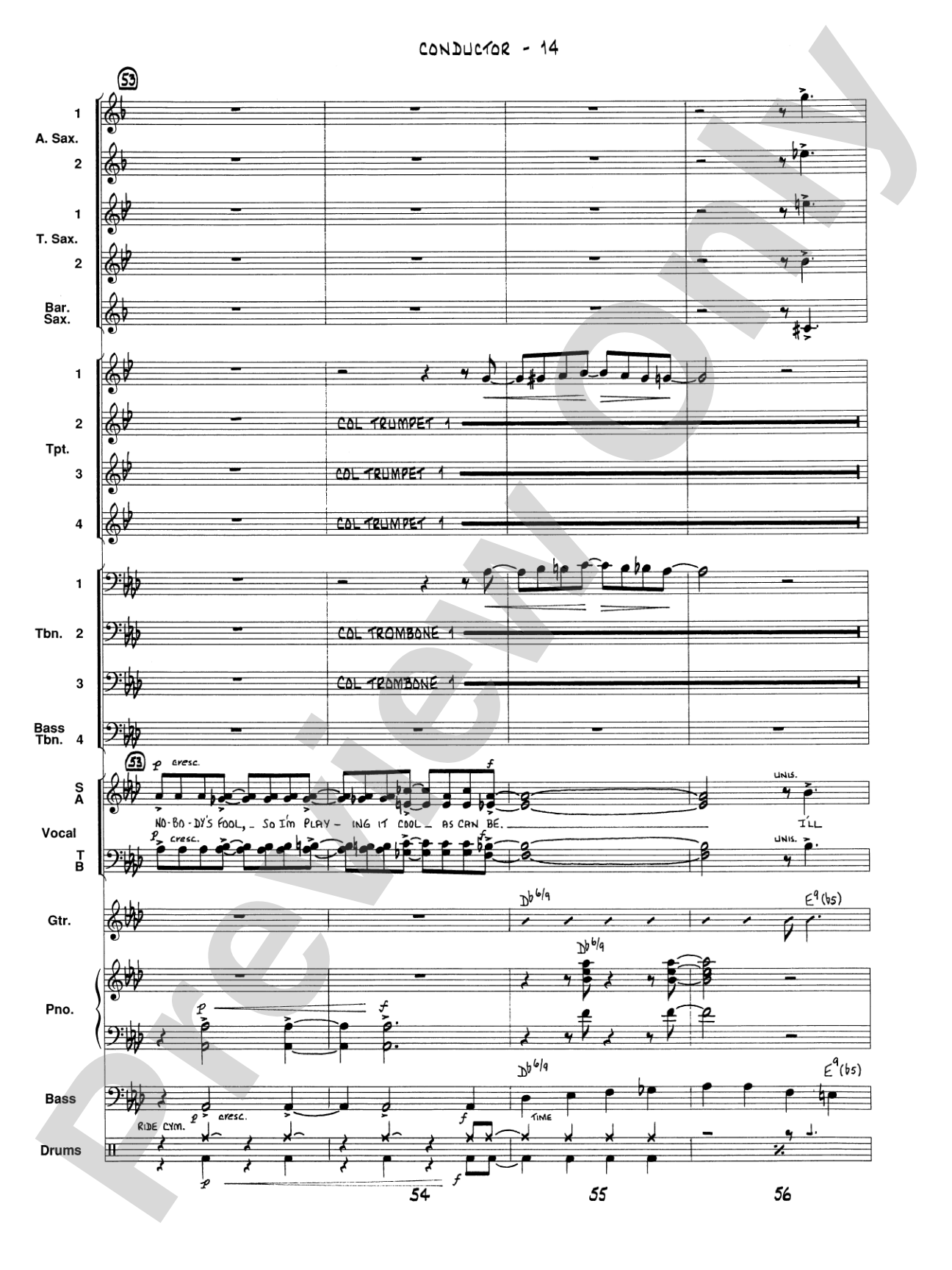
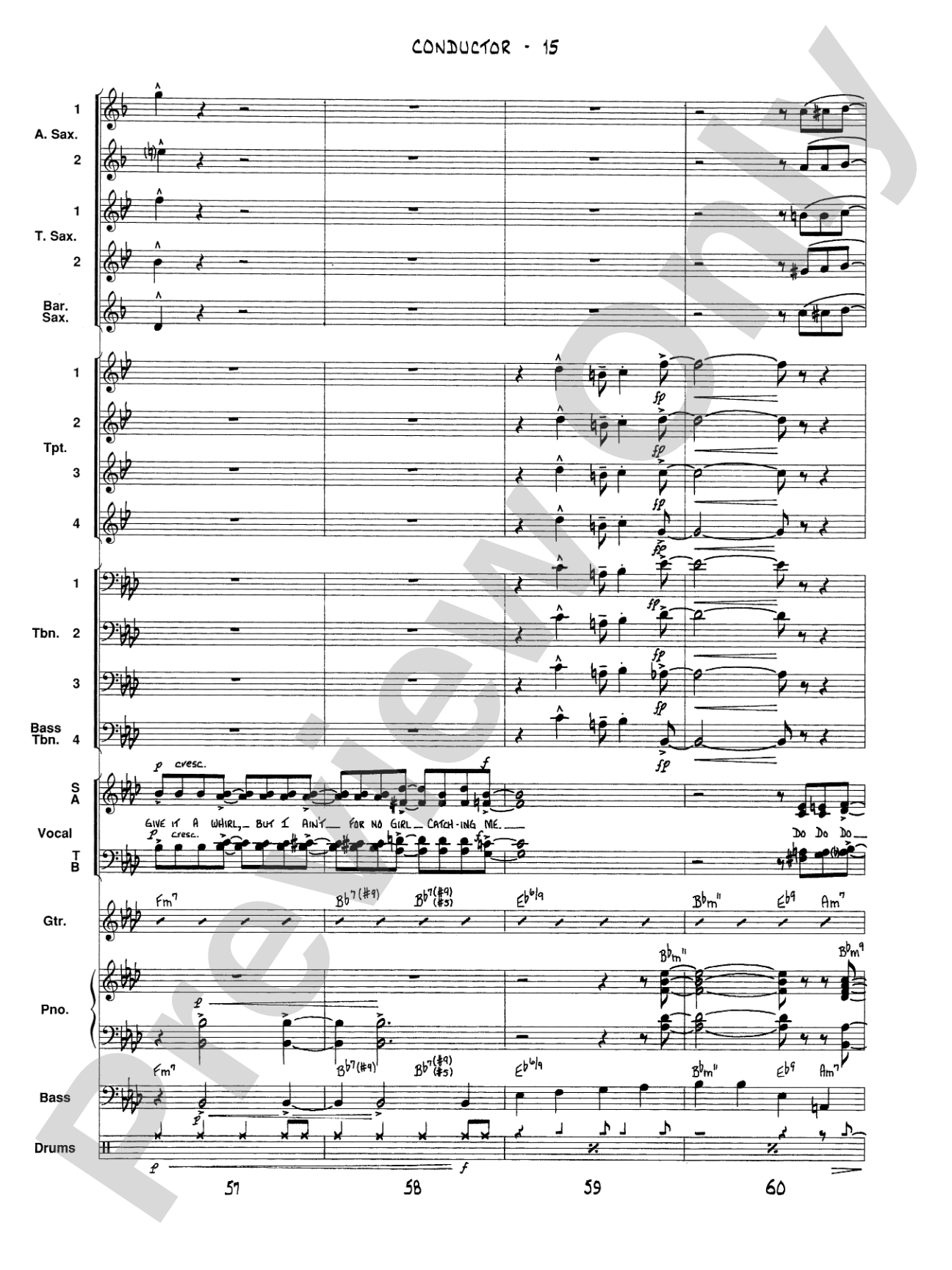
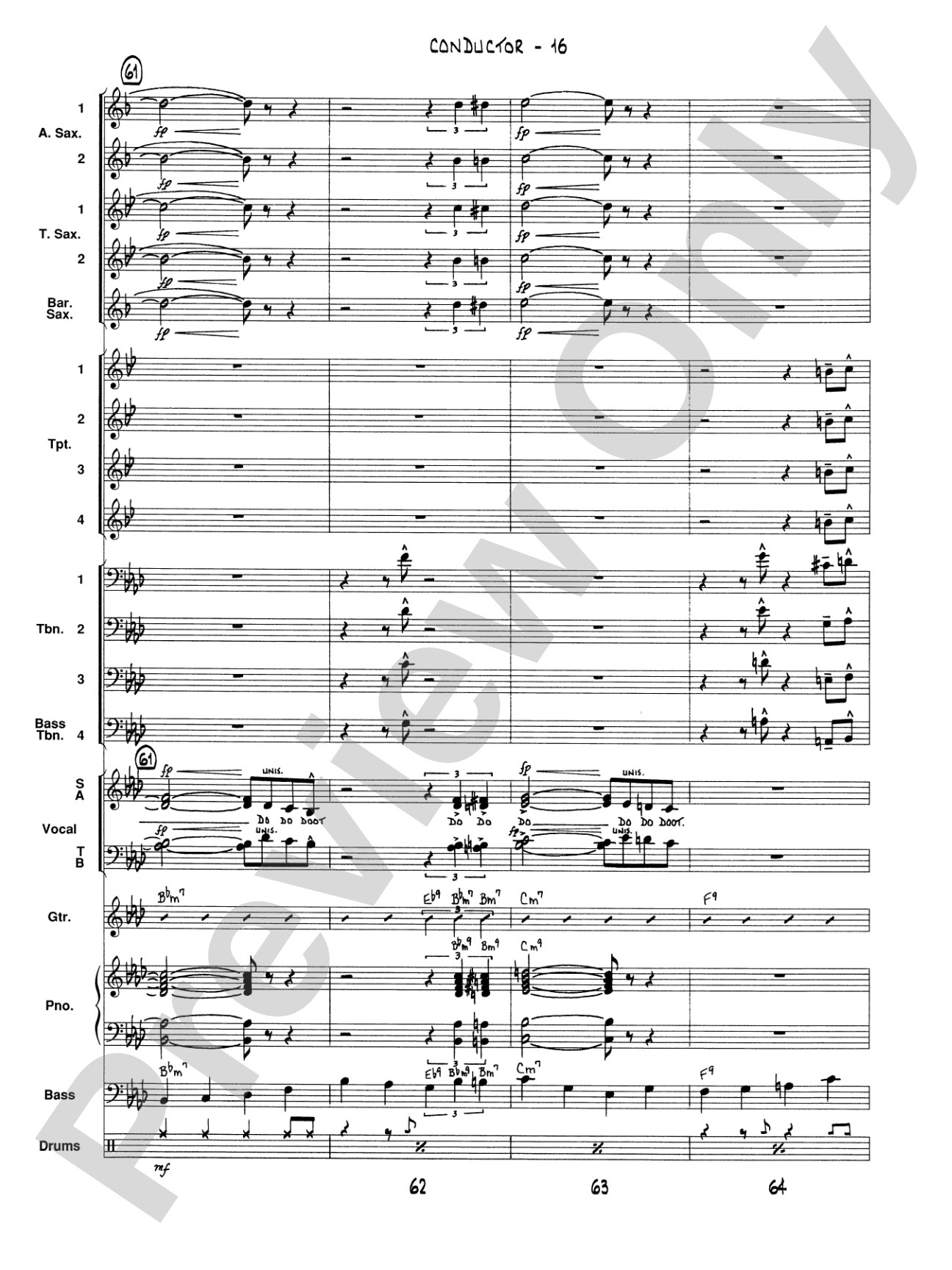
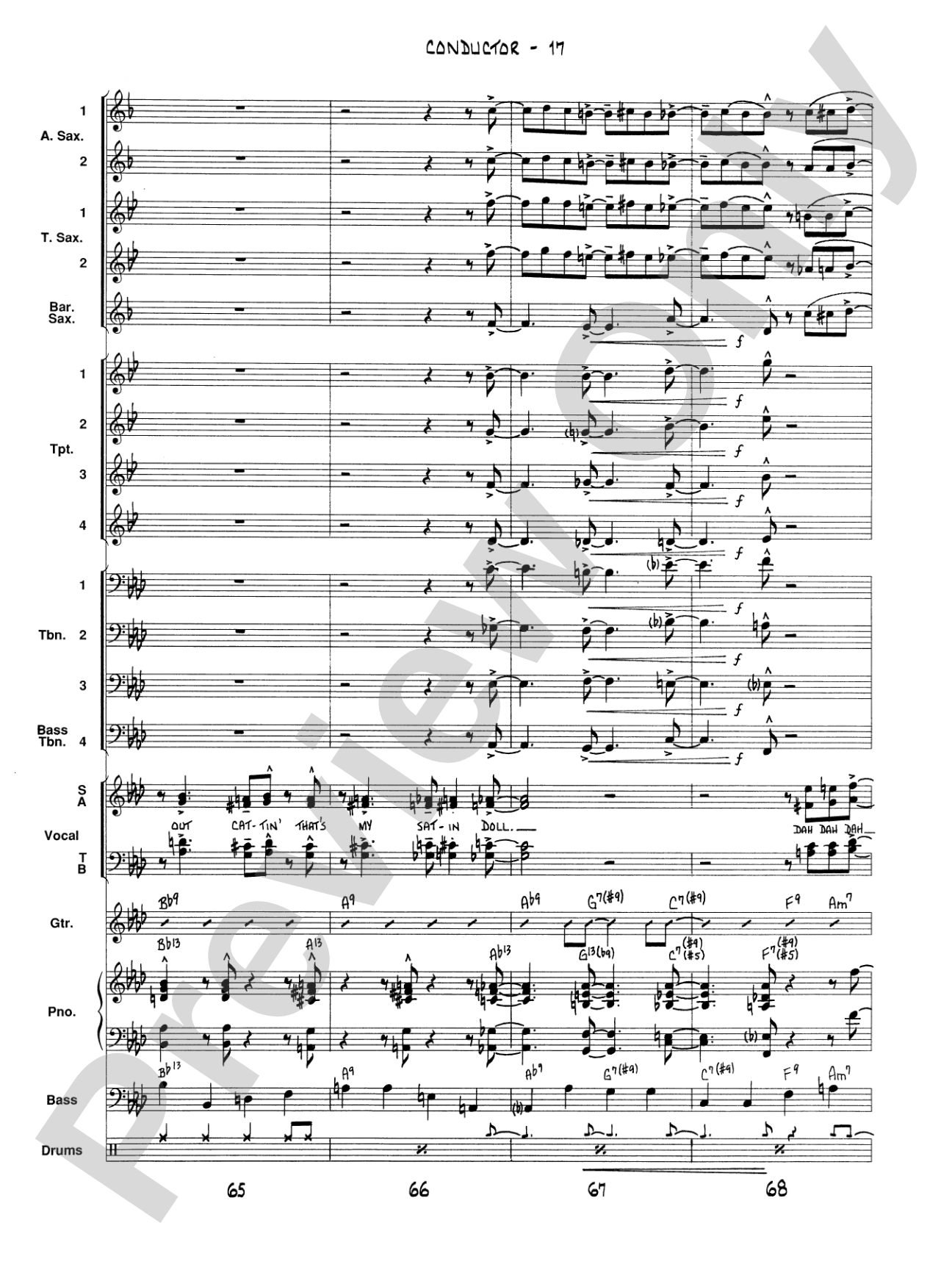
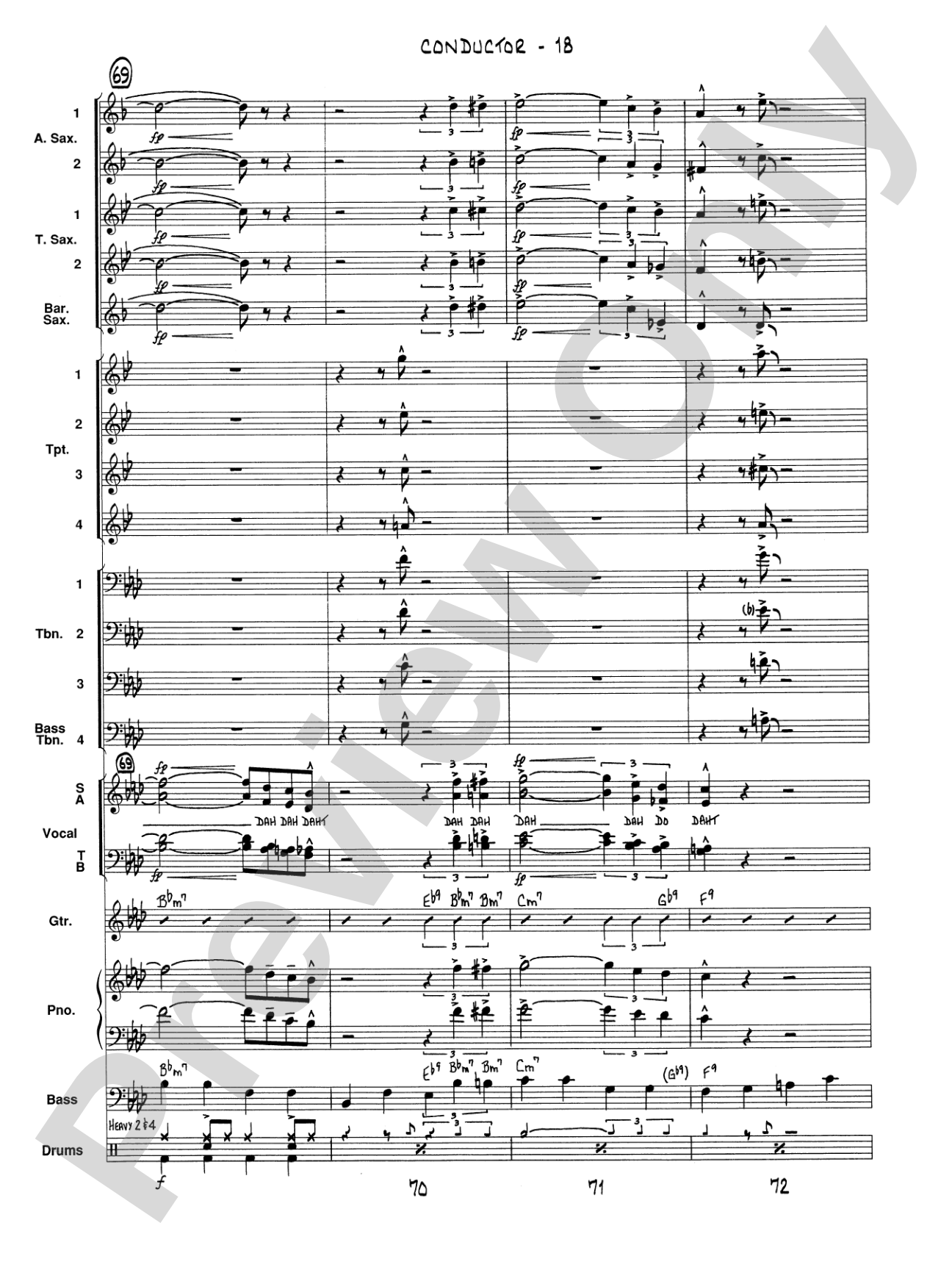
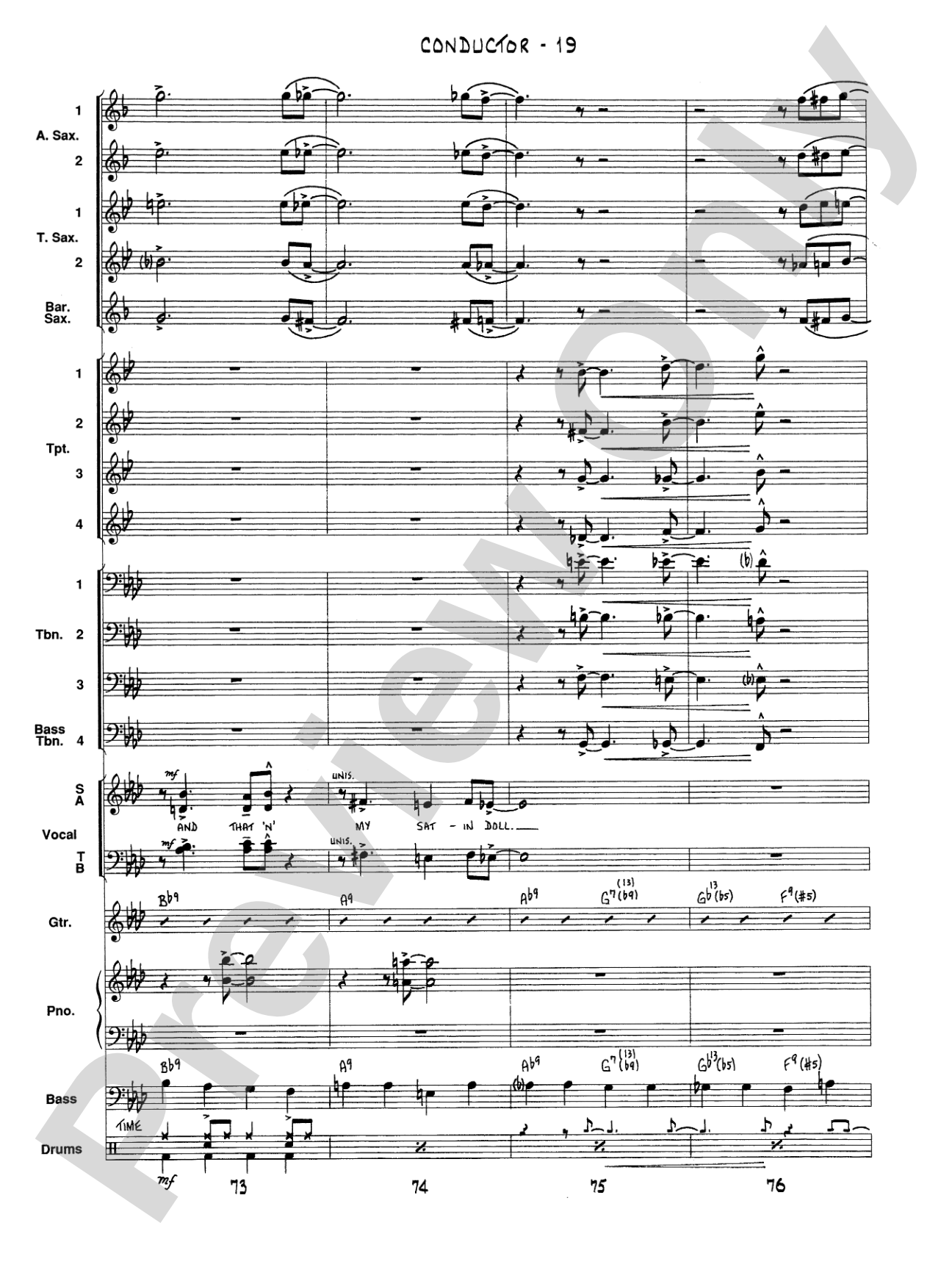
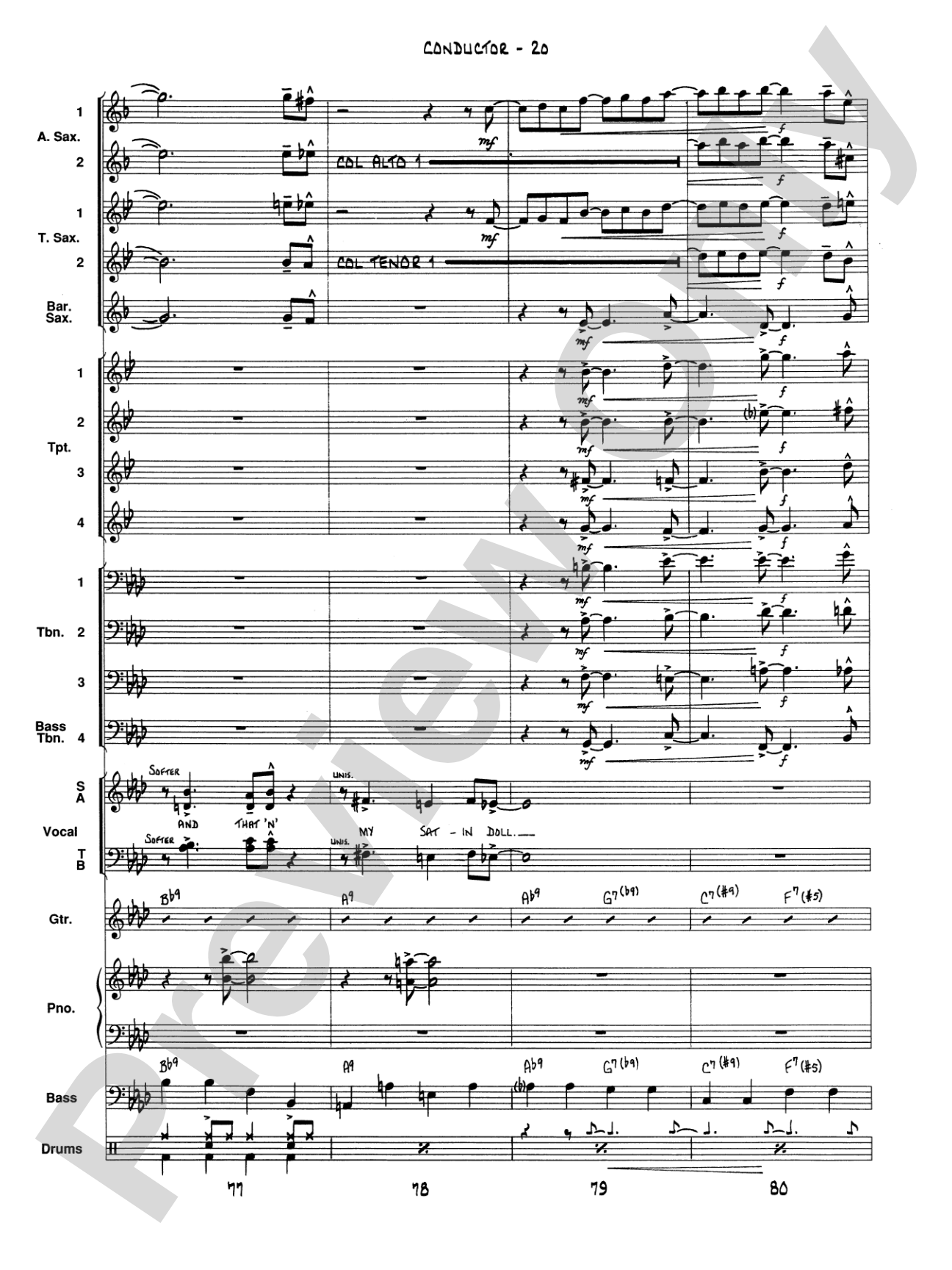
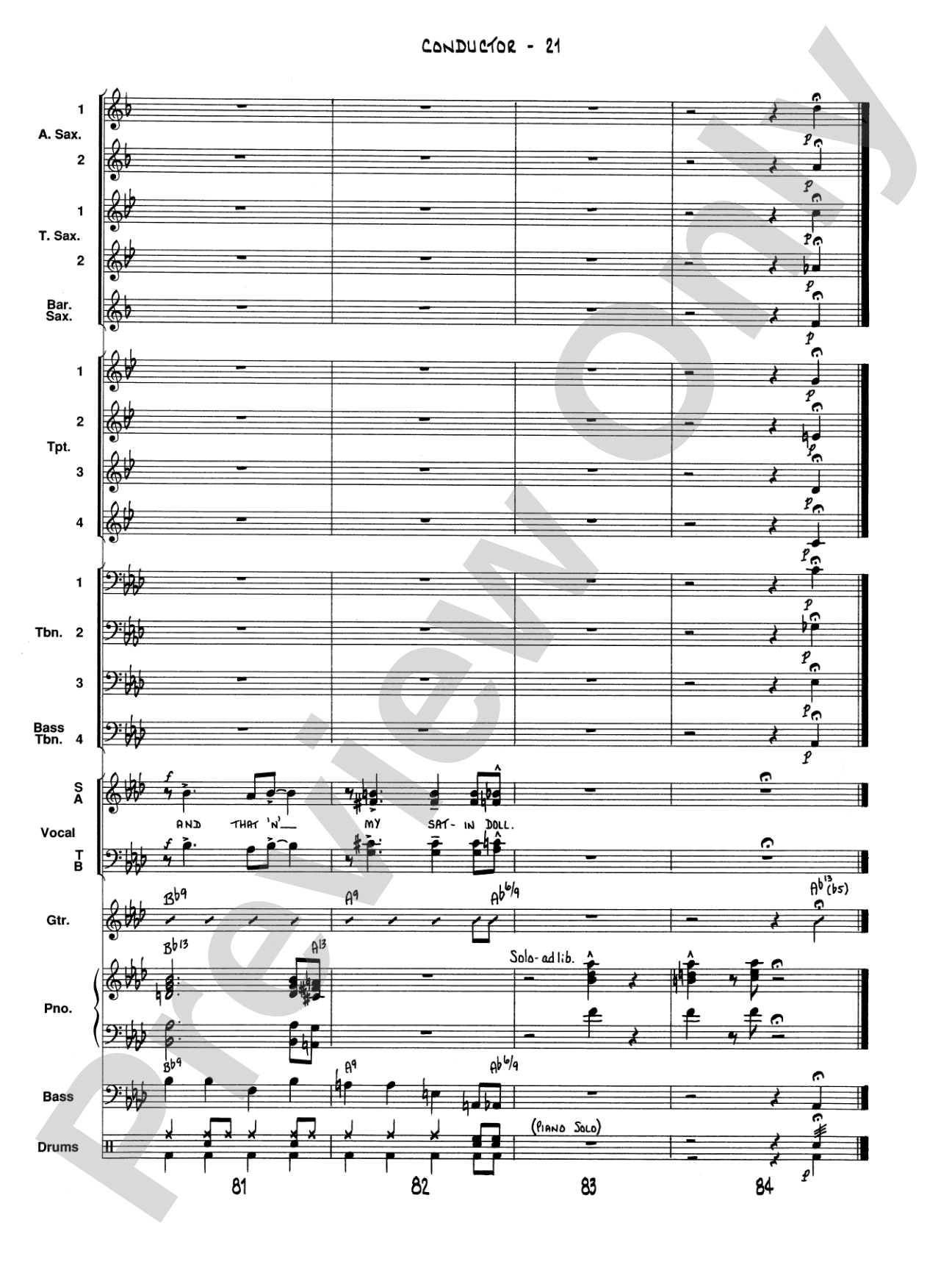

Satin Doll: Vocal Solo with Jazz Ensemble Conductor Score & Parts
Vocal Feature - Key of A-Flat
By Billy Strayhorn, Duke Ellington and Johnny Mercer / arr. Mike Carubia
Grade: 4 (Medium Advanced / Difficult)
Item: 00-PK-0002670

$50.00
One moment…
Description
A great jazz song from the collaboration of Duke Ellington and Billy Strayhorn! This arrangement is for vocal group (SATB or SSAA) with big band, and can be used with a vocal soloist as well. You'll like the way the band backs the singers and even gets a chance to blow on its own. Don't overlook this one!


Don't just read it, hear it, play along with it, and watch your students grow with it. In MakeMusic Cloud, Satin Doll: Vocal Solo with Jazz Ensemble Conductor Score & Parts comes alive with professional accompaniment, adjustable tempo, and built-in practice tools that turn solo practice into real progress.
Open in the Player
Jump straight in and assign it today.
Start Your Free Trial
Open this title and explore the full library in minutes.
Sample Audio
No sample audio found.
Sample Video
No sample videos found.
Additional Details
Series:
Jazz Vocal Series
Publisher:
Alfred Music
Page Count:
118
SKU:
00-PK-0002670
More about this title
About the Composer: Billy Strayhorn
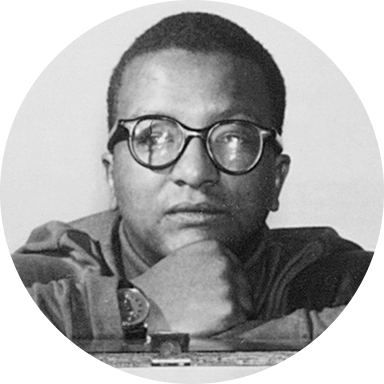
Billy Strayhorn was born November 29, 1915 in Dayton, Ohio, and became one of the most prolific jazz composers of the twentieth century. Though his partnership with Duke Ellington began in 1939, Strayhorn's contribution to American jazz standards has often been overshadowed by his collaborator's prominence. His compositions, including "Take the 'A' Train" and "Lush Life," rank among the most frequently performed jazz standards, yet his name remained relatively unknown to the general public for decades.
Strayhorn's harmonic sophistication and melodic invention shaped the sound of modern jazz. "Lush Life," composed when he was just sixteen, challenges singers with its complex harmonies and emotional depth, becoming a proving ground for ballad singers across generations. His decision to live openly as a gay Black man during an era of significant social restriction contributed to his historical underrecognition, even as his music became a cornerstone of the jazz repertoire performed by icons like Ella Fitzgerald, John Coltrane, and Sarah Vaughan.
Why we love this
Carubia's arrangement respects the sophistication of Strayhorn and Ellington's original while creating genuine opportunities for both vocalists and the big band to shine. The interplay between the vocal group and ensemble keeps players engaged throughout the full 118-page score, offering ensemble members meaningful solo passages rather than passive accompaniment roles. This is a standard that works equally well as a vehicle for a strong lead vocalist or as a showcase for tight ensemble singing.
What to expect
Sophisticated and swinging, with the elegance Strayhorn brought to every composition. The arrangement wraps vocalists in warm big band colors while leaving room for the ensemble's own voice to emerge, creating conversation between singers and instrumentalists that feels natural and never forced.
Who it's for
Jazz directors running a serious vocal and big band program will find this an ideal vehicle for vocalists who can handle sophisticated harmony and phrasing. The arrangement works for both SATB and SSAA voicings, making it accessible to different ensemble configurations. This is material for singers and players with solid fundamentals and comfort navigating jazz idiom.
How to get the most out of it
- Spend time establishing the groove between your rhythm section and vocals before full ensemble rehearsals. The band's support feels effortless only when the pocket is locked.
- Balance the vocal blend carefully against the big band texture. Ensemble members need to hear themselves while projecting over brass and reeds.
- Give your soloists (both vocalist and instrumentalists) space to interpret the melody and harmony. Jazz arranging assumes performers know how to shape phrases and adjust to the ensemble's feel.
- Schedule dedicated work on section tuning and intonation within the horn sections. Grade 4 big band voicings demand precise harmonic control.
How to use it
Program this as the anchor of a jazz concert devoted to Ellington and Strayhorn standards, or use it to bridge traditional choral and jazz ensemble programming at a spring concert. The 118-page score makes it substantial enough to justify its own rehearsal focus mid-year when ensembles have developed the technical foundation to handle Grade 4 complexity.
Skills your students will build
- Phrasing and articulation in jazz idiom
- Blend and balance between vocal ensemble and big band
- Reading complex harmonic structures and jazz chord symbols
- Listening to and responding to rhythm section groove
- Interpretation of a jazz standard while maintaining ensemble cohesion