
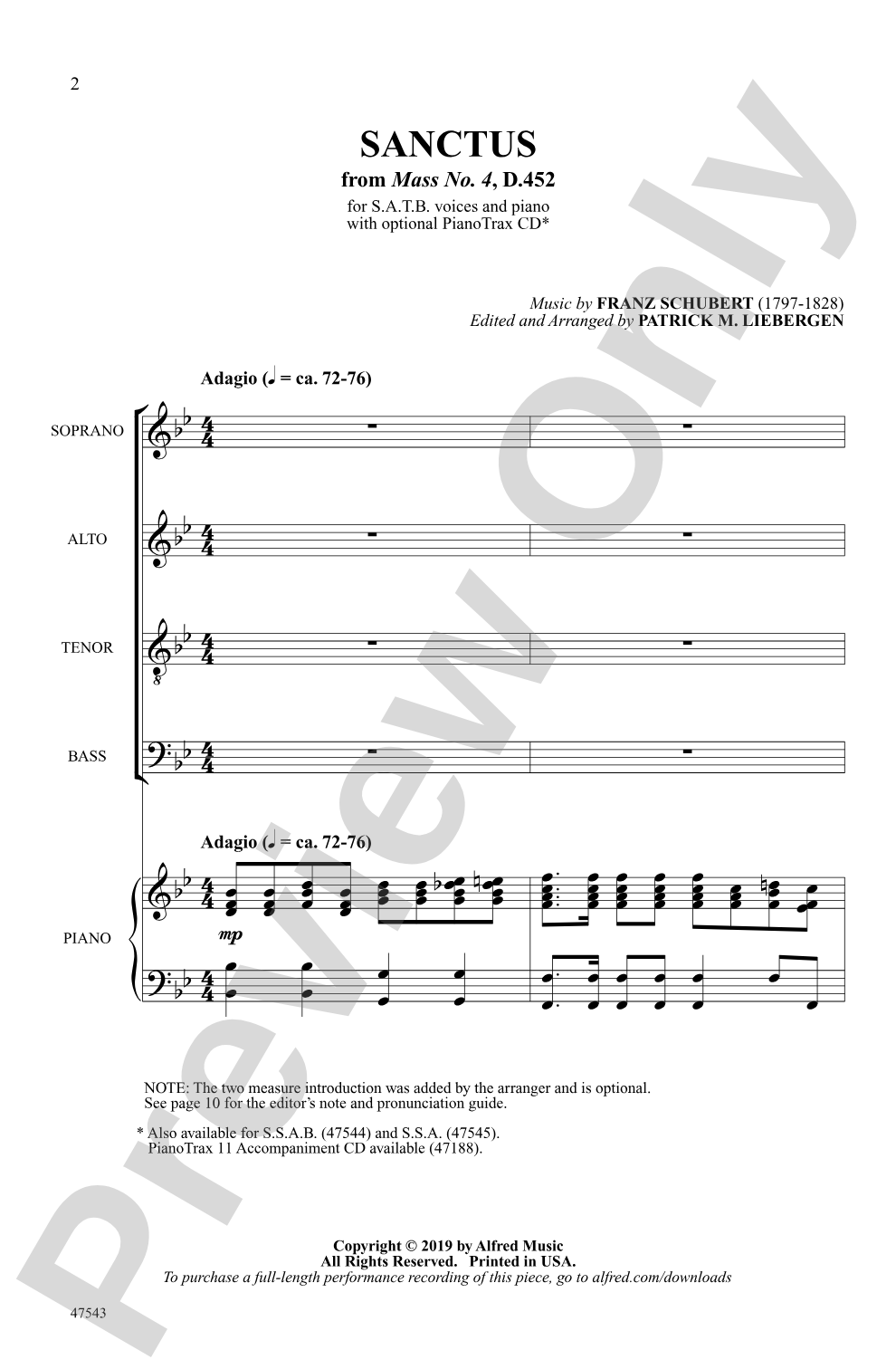

Sanctus: SATB Choral Octavo
from Mass No. 4, D. 452
Music by Franz Schubert / ed. and arr. Patrick M. Liebergen
Item: 00-PO-0005922
$2.05
Minimum order quantity: 20 copies
Pickup currently not available
Description
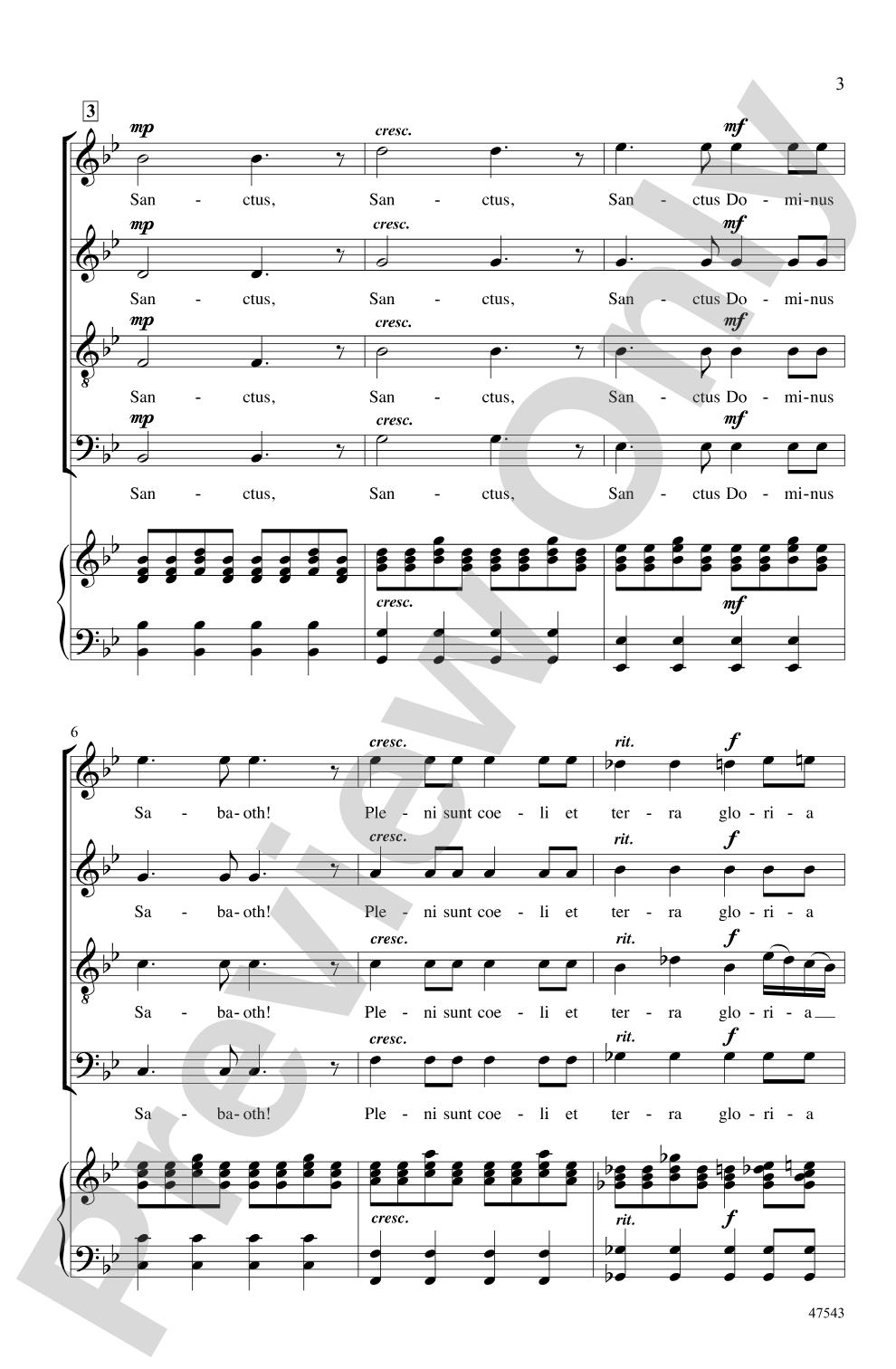
A warm adagio introduction breaks into a joyous “Hosanna” chorus in this 44-measure homophonic masterwork. Taken from Schubert's Mass No. 4, this edition offers sensible vocal ranges, editorial dynamic and metronome markings, plus a complete IPA guide for the brief Latin text. The orchestral parts have been reduced to a playable piano accompaniment while preserving the Classical characteristics of the original work.


Sanctus: SATB Choral Octavo isn't in MakeMusic Cloud just yet...but it could be. Let us know you'd like to see it, and you'll help shape what comes next. In the meantime, start a free trial and dive into thousands of interactive titles your students can play along with today.
Request This Title
Tell us you want it.
Start Your Free Trial
Explore everything that's ready to play right now.
Sample Audio
1
Audio File
--:--
0:00
0:00
Sample Video
Additional Details
Series:
Alfred Choral Designs
Publisher:
Alfred Music
Page Count:
12
SKU:
00-PO-0005922
More about this title
About the Composer: Franz Schubert
Franz Schubert (1797-1828) composed nearly a thousand works across every major genre, yet his sacred music remains among the least performed despite its lyrical depth and structural ingenuity. His four Masses emerged from a deeply personal spiritual conviction; unlike many of his contemporaries, Schubert approached the liturgical text with the same emotional directness and melodic gift he brought to his symphonies and songs.
Schubert's approach to the Mass form departed from the grandiose traditions of Haydn and Mozart. Instead, he favored intimate dimensions, shorter durations, and choral writing that prioritizes singability without sacrificing harmonic sophistication. This democratic philosophy made his Masses ideally suited for parish choirs and student ensembles, which explains why educators continue to return to them as gateway works into the Romantic sacred repertoire.
Why we love this
This octavo preserves everything that makes Schubert's choral writing so gratifying to teach: the melodic shapes are intuitive, the harmonic language feels accessible yet refined, and the emotional arc from reverent introduction to exuberant "Hosanna" gives singers real dramatic work without requiring a semester of preparation. Patrick Liebergen's arrangement respects the Classical skeleton of the original while making the piece genuinely singable by high school and community choirs, and the IPA guide removes the guesswork from Latin pronunciation.
What to expect
The opening unfolds with quiet introspection, a gentle harmonic unfolding that feels like stepping into candlelit sacred space. Then the "Hosanna" arrives like sunlight breaking through, built on accessible rhythmic patterns that let singers experience genuine joy in ensemble sound while the piano part anchors them in Schubert's Classical vocabulary of rising scales and warm harmonies.
Who it's for
High school and adult community choirs seeking repertoire that bridges the gap between familiar hymn textures and concert-hall sophistication. This octavo works equally well for intermediate collegiate choirs building Renaissance-to-Romantic survey programming or for directors seeking a liturgical piece shorter than a full Mass but substantial enough for contest and festival contexts.
How to get the most out of it
- Balance the opening adagio by assigning a conductor's beat pattern that emphasizes the half note, allowing singers to float sustained vowels rather than press for projection too early.
- Let the "Hosanna" section breathe with rhythmic vitality; the homophonic texture means ensemble precision matters greatly, so rehearse with a clear pulse established in the piano part first.
- Use the editorial dynamic markings as a foundation, but encourage singers to shape phrases within their marked ranges to create natural ebb and flow across the 44 measures.
- Isolate the soprano and alto lines in the introduction to ensure they lock into the underlying harmonic motion before adding tenor and bass, which prevents the piece from feeling sectional.
How to use it
Program this as a concert centerpiece following a set of lighter secular works, where its 44-measure span and emotional maturity become a moment of repose and reflection. It also pairs exceptionally well in a Christmas or Easter service where the Latin text feels liturgically appropriate, or as a closing piece on a choral festival in which it demonstrates range without requiring orchestral forces.
Skills your students will build
- Reading and performing Latin text with proper IPA pronunciation
- Balancing sustained tones in homophonic textures while maintaining individual line independence
- Navigating the harmonic language of early 19th-century sacred music
- Dynamic shaping across longer phrase structures without breathiness or loss of focus
- Ensemble precision in a fast-moving choral section preceded by slower, intimate writing