
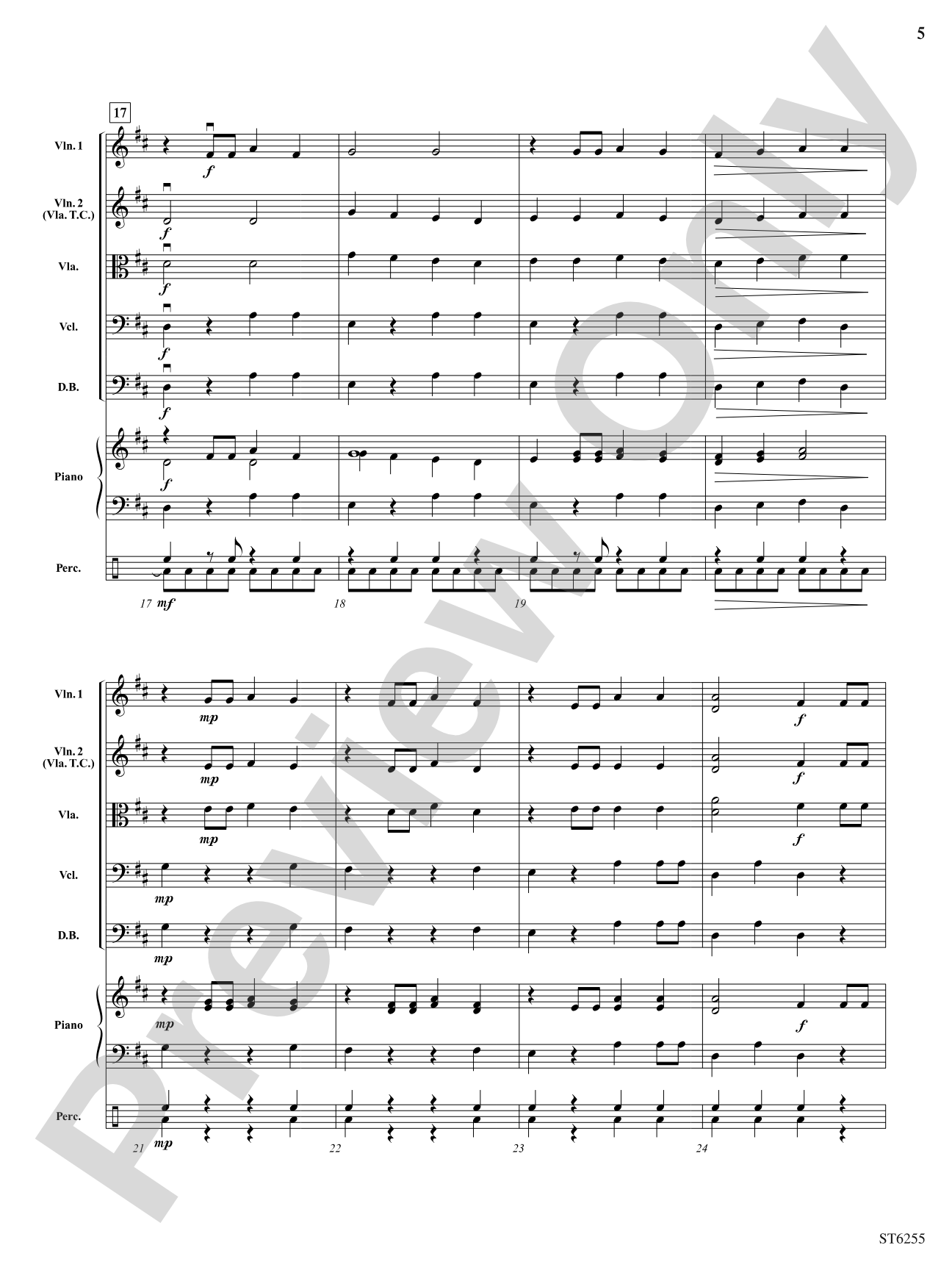
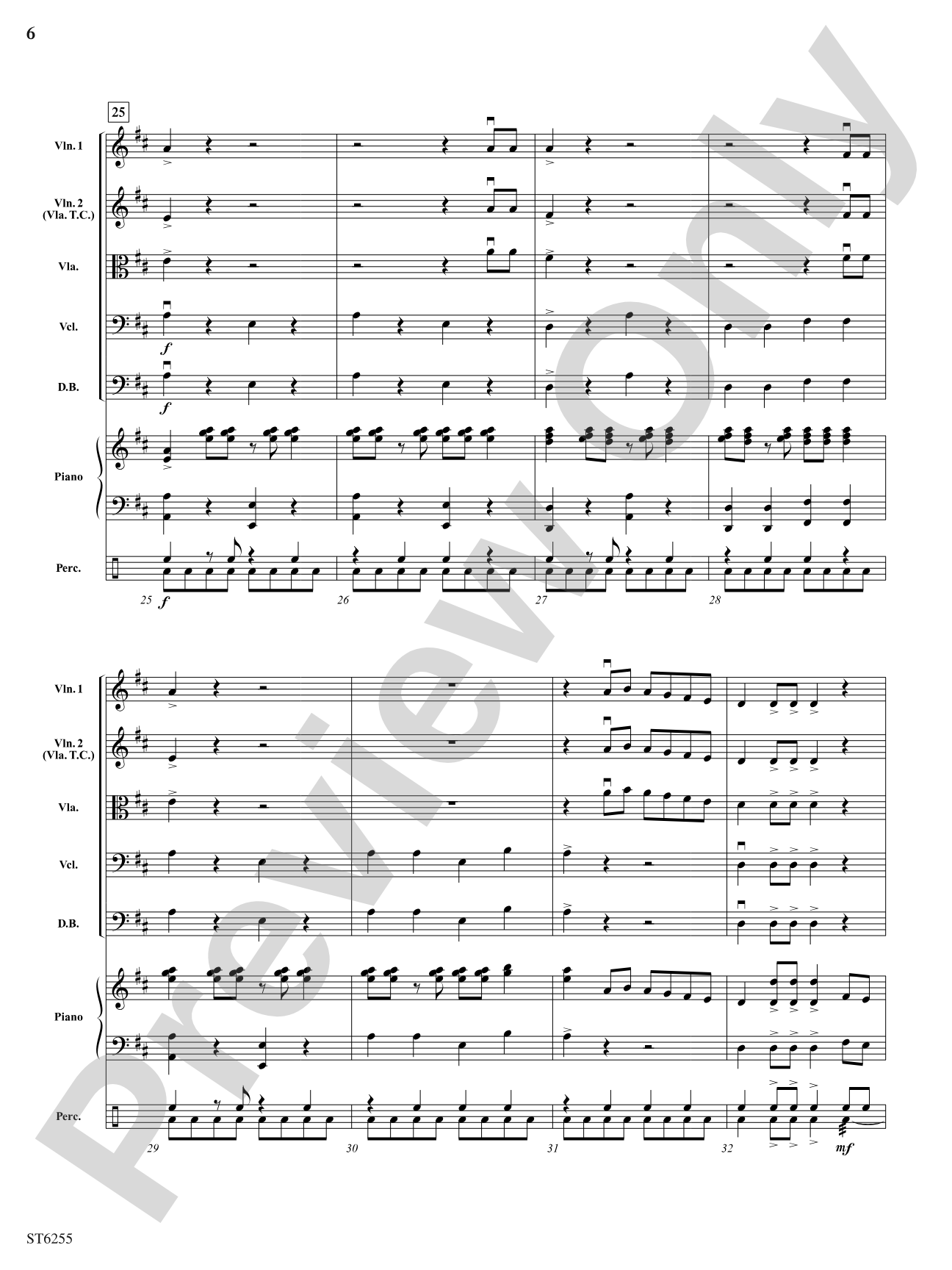
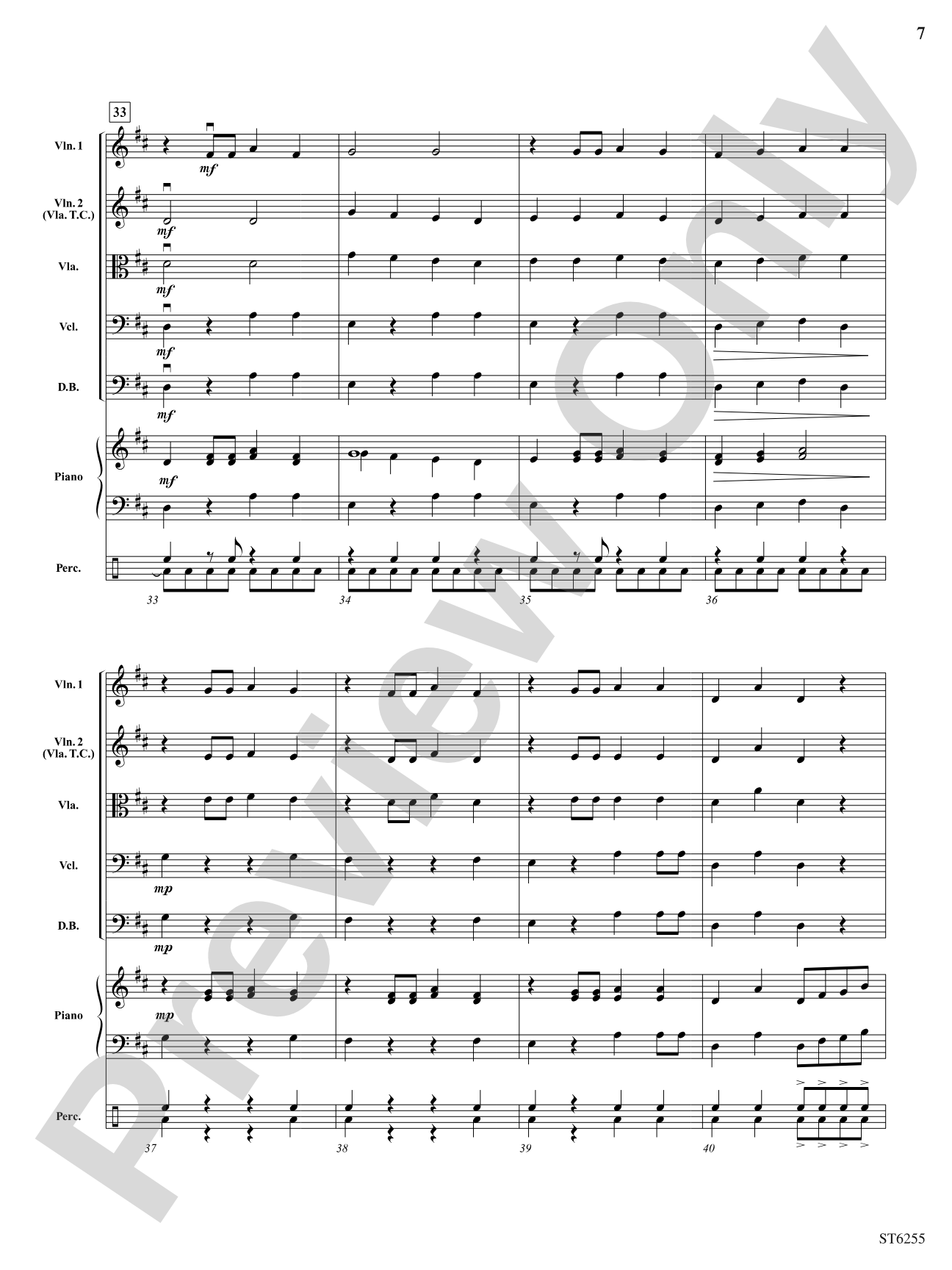
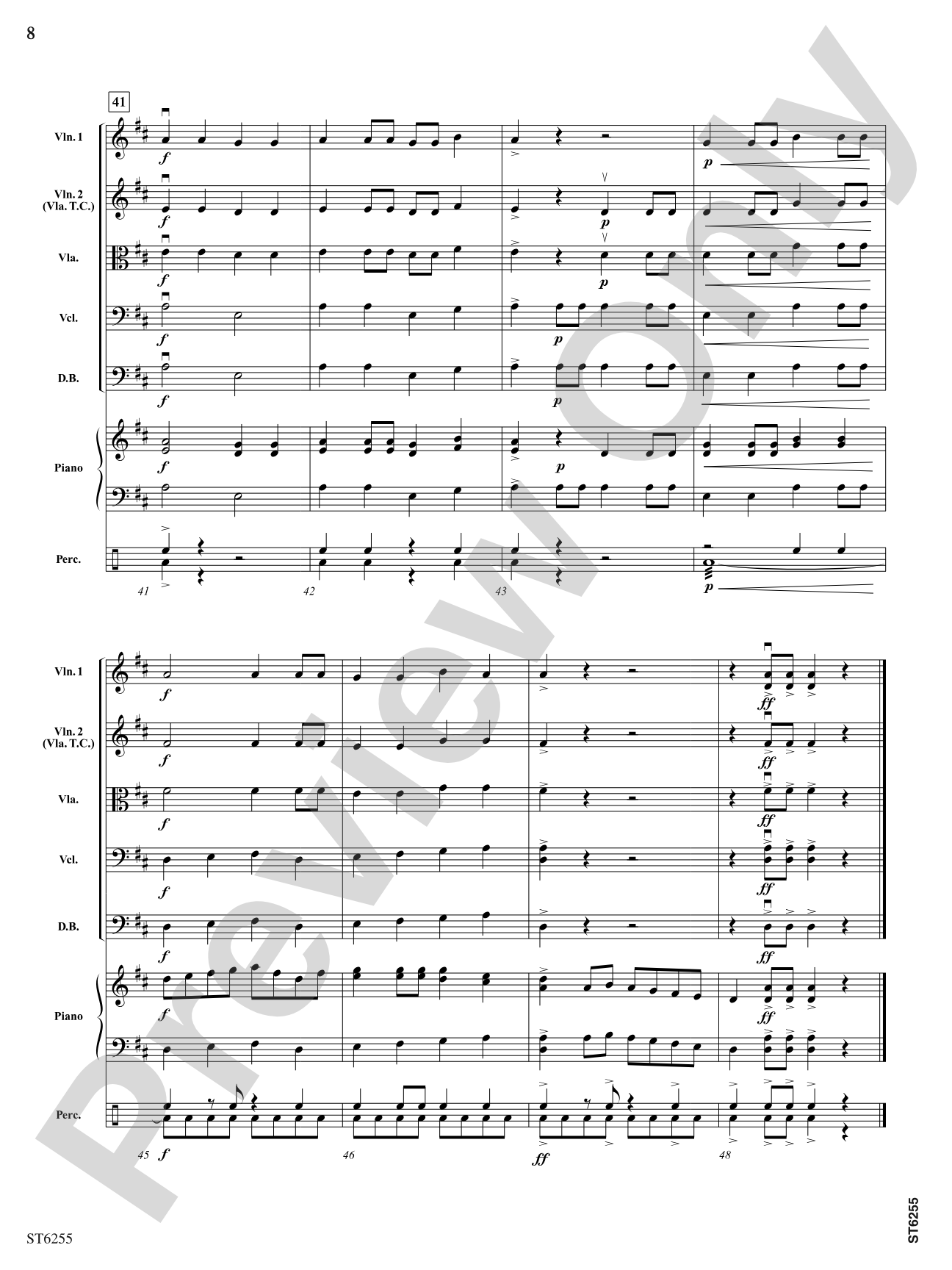

Samba La Bamba: String Orchestra Conductor Score & Parts
By William Owens
Level:.5
Item: 98-DST6255

$50.00
Pickup currently not available
Buy Extra Parts (Digital PDF Download)
| Product | Price | Quantity |
|---|---|---|
| Samba La Bamba: Score | $10.00 | |
| Samba La Bamba: Violin 1 | $7.00 | |
| Samba La Bamba: Violin 2 (Viola T.C.) | $7.00 | |
| Samba La Bamba: Viola | $7.00 | |
| Samba La Bamba: Violoncello | $7.00 | |
| Samba La Bamba: Double Bass | $7.00 | |
| Samba La Bamba: Piano | $7.00 | |
| Samba La Bamba: Percussion | $7.00 |
Parts Added to Cart!
Related Items
Samba La Bamba: Concert Band Conductor Score & Parts |
$60.00
|
View | |
Samba La Bamba: Concert Band Conductor Score & Parts |
$60.00
|
View | |
Samba La Bamba: Concert Band Conductor Score |
$12.00
|
View | |
Samba La Bamba: String Orchestra Conductor Score & Parts |
$50.00
|
View | |
Samba La Bamba: String Orchestra Conductor Score |
$10.00
|
View |
Description
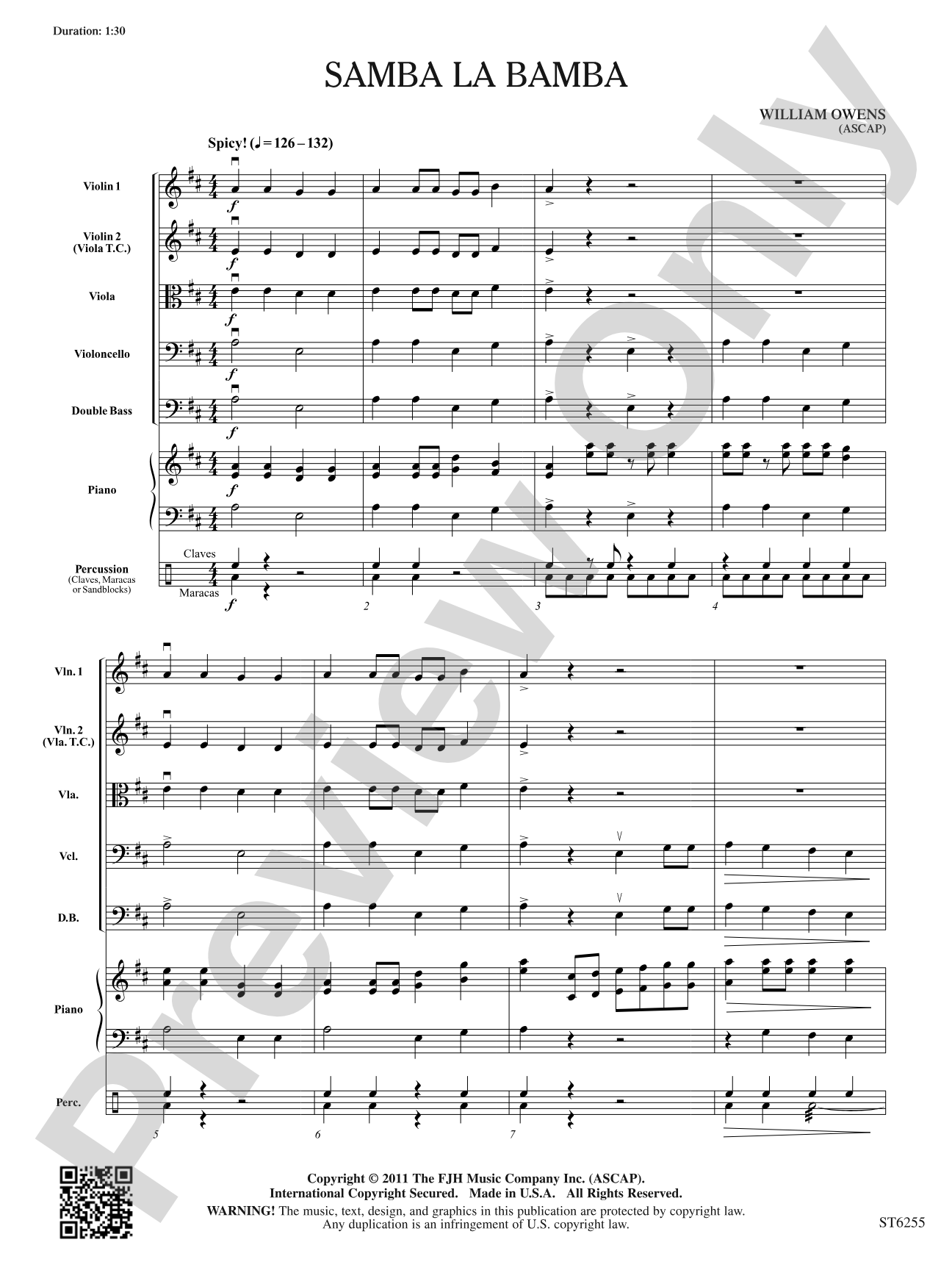
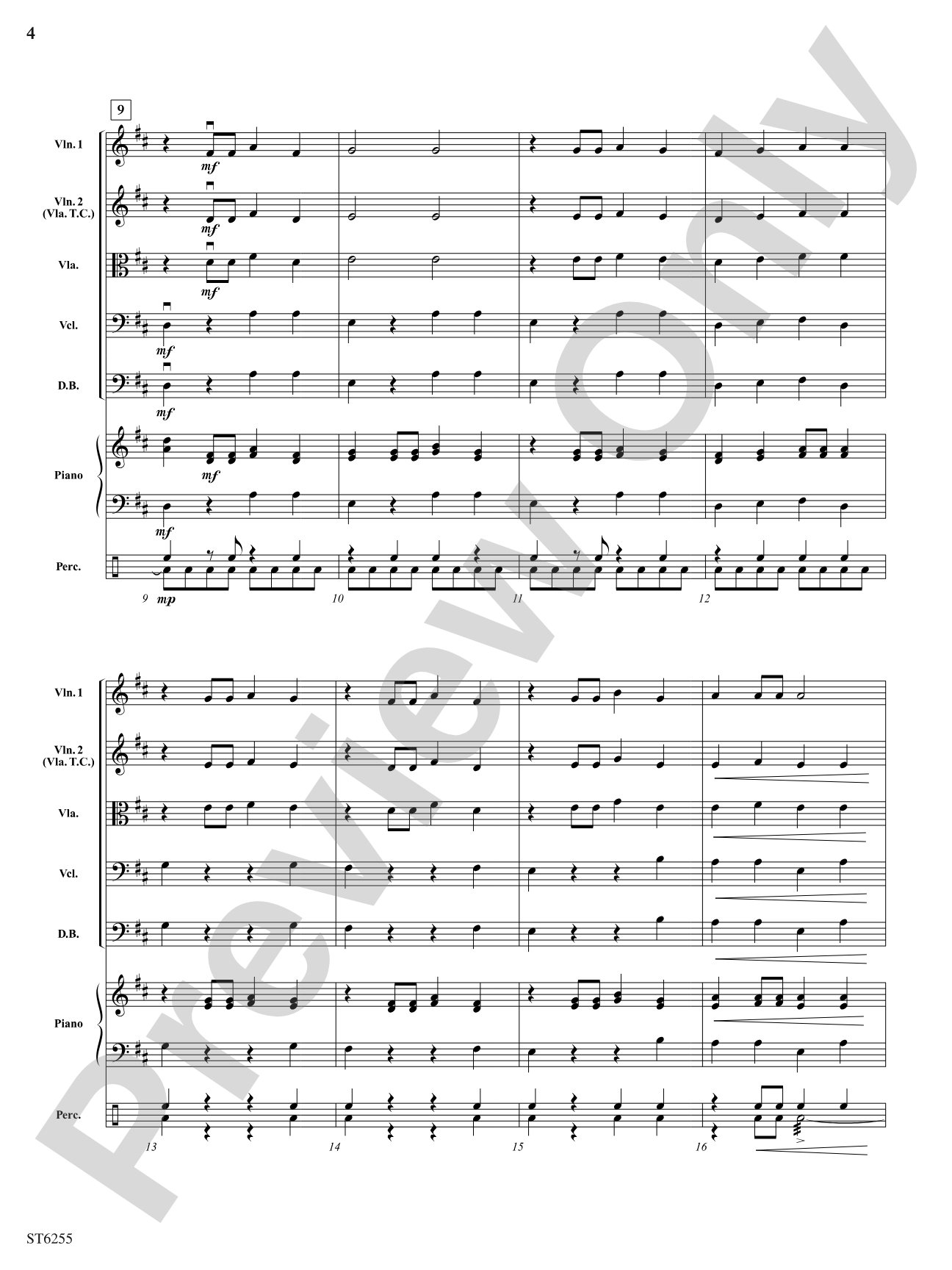
Treat your students to this Latin-flavored piece that uses only six notes! Geared toward the youngest musicians, this melody is a great tool for teaching basic rhythms in an ensemble setting. Optional percussion and piano parts add a ton of authenticity without adding any difficulty. A great change of pace, and a great way to get out of the method! (1:20)


Don't just read it, hear it, play along with it, and watch your students grow with it. In MakeMusic Cloud, Samba La Bamba: String Orchestra Conductor Score & Parts comes alive with professional accompaniment, adjustable tempo, and built-in practice tools that turn solo practice into real progress.
Open in the Player
Jump straight in and assign it today.
Start Your Free Trial
Open this title and explore the full library in minutes.
Sample Audio
1
Audio File
--:--
0:00
0:00
Sample Video
No sample videos found.
Additional Details
Series:
FJH Beginning Strings
Publisher:
The FJH Music Company, Inc.
SKU:
98-DST6255
More about this title
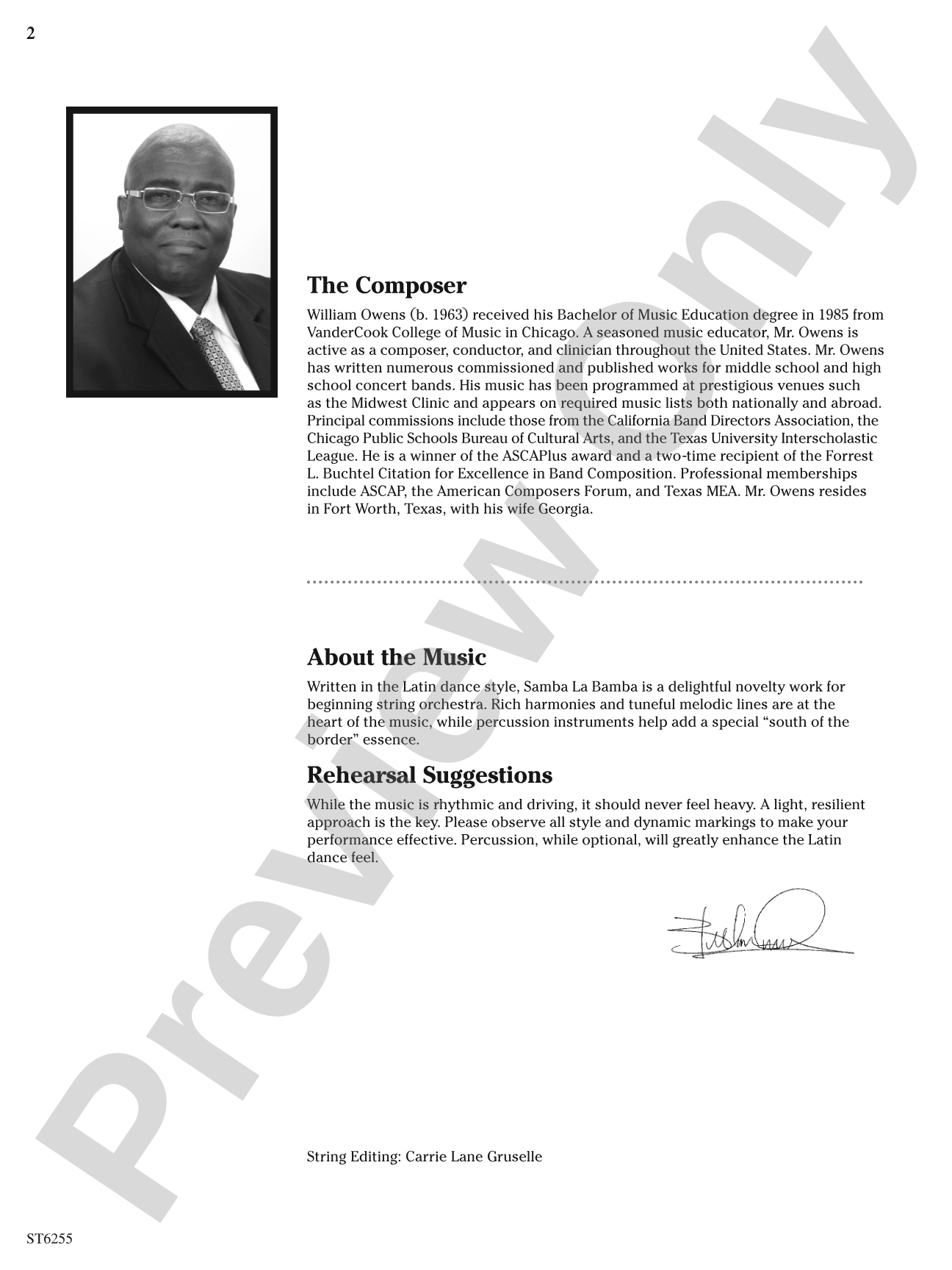
About the Composer: William Owens
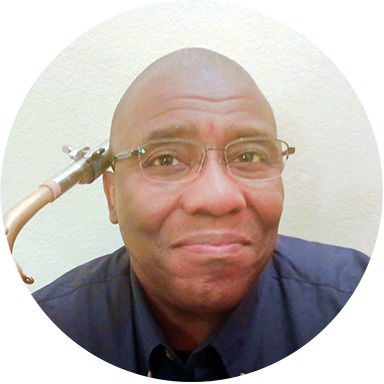
William Owens (b. 1963) grew up in Gary, Indiana, and earned his degree from Chicago's VanderCook College of Music in 1985. A former high school band director in Texas for three decades, Owens has built an extensive catalog of over 300 compositions for young ensembles since 1993, establishing himself as a trusted voice in music education through his practical, pedagogically sound approach to writing for developing musicians.
Owens holds membership in ASCAP, the Texas Music Educators Association, and Phi Beta Mu International Bandmasters Fraternity. His works appear on required music lists across North America and have been featured in educational texts as foundational repertoire for young musicians. He has received commissions from the South Plains College Department of Fine Arts, Phi Beta Mu International, and the American Bandmasters Association, and was honored as a Distinguished Alumnus by VanderCook College.
Why we love this
Owens strips away the complexity that often intimidates beginning string orchestras and delivers pure musicality through constraint. The six-note limitation forces creative, idiomatic writing that feels utterly natural, and the Latin rhythmic language opens young players' ears to genuine cultural music-making without requiring advanced technique. The optional percussion and piano parts let you build ensemble texture and authentic color the moment your students are ready.
What to expect
Warm, propulsive, and alive. The Latin-influenced groove and restricted melodic palette create a playful, almost celebration-ready atmosphere that feels fresh and genuinely musical despite its technical simplicity. Your ensemble will feel the joy of making real music together from day one.
Who it's for
Beginning string orchestra students (Grade ½ and up) who are ready for ensemble playing but still developing foundational skills. This piece works especially well for programs looking to build rhythmic accuracy and cross-cultural awareness without adding technical demands.
How to get the most out of it
- Establish the samba rhythm in rehearsal before adding melody; have the rhythm section (optional percussion and piano) lock in first, then layer string parts on top.
- Keep the tempo steady and dance-like. This piece breathes when conducted with a light, buoyant pulse rather than a mechanical beat.
- Balance the optional parts carefully. The piano and percussion should enhance the strings' rhythmic confidence, not overpower it.
- Encourage open, relaxed bow movements on the repeated rhythmic figures. The simplicity of the notes means tone quality and rhythmic precision are the focus.
How to use it
Program this early in a fall concert as a palate-cleanser and confidence-builder between method book exercises and more traditional string repertoire. It also works beautifully in multicultural program themes or as a spring concert opener that immediately engages audience energy. Use it as your entry point into teaching ensemble rhythmic cohesion and introducing non-European musical traditions.
Skills your students will build
- Reading and playing rhythmic patterns in samba style (repeated eighth-note and sixteenth-note figures)
- Ensemble rhythm section coordination and interdependence
- Maintaining steady pulse while responding to a lilt-based Latin feel
- Understanding basic structure and melody with a limited note set
- Exposure to multicultural music traditions and their rhythmic language