
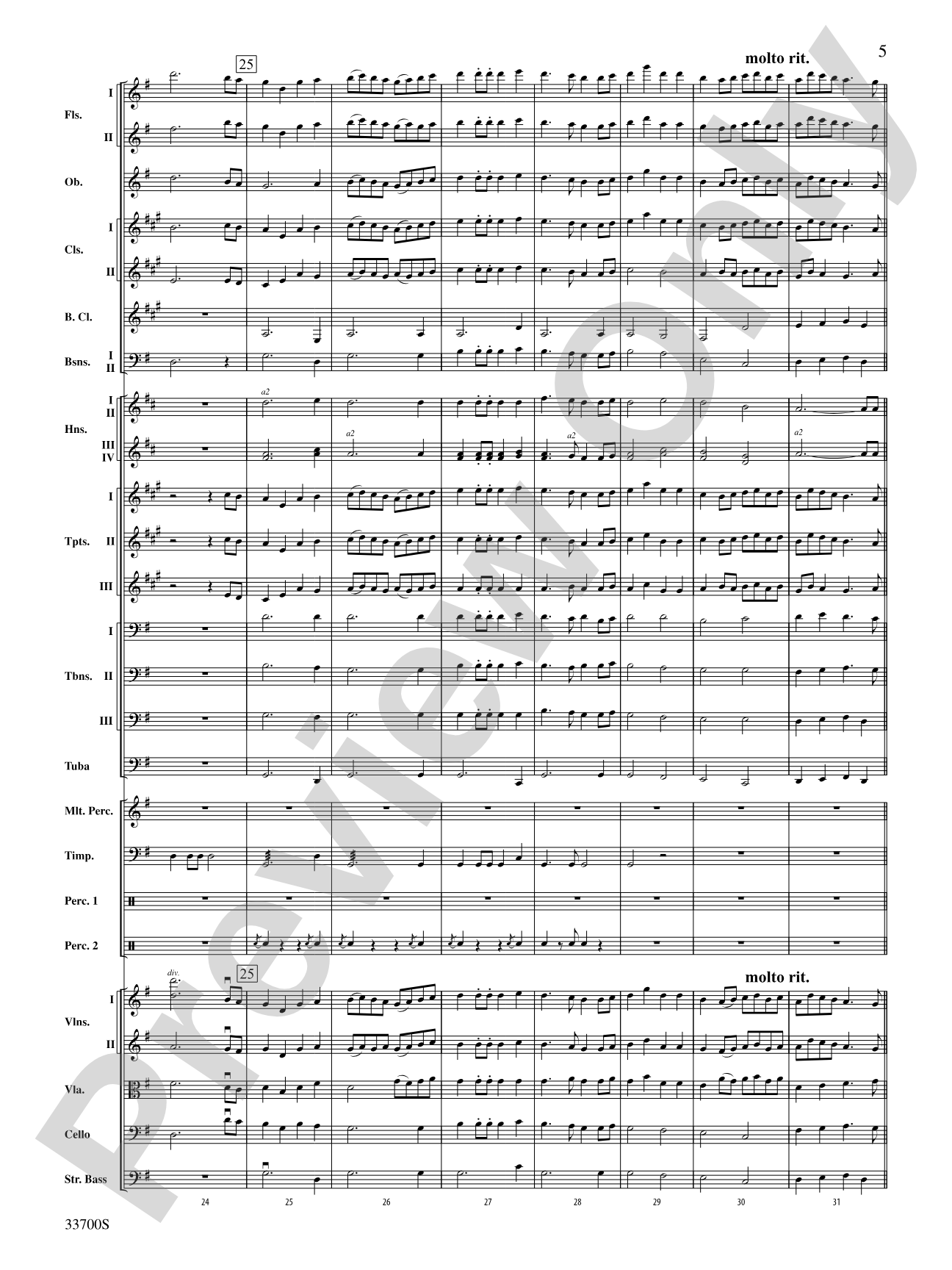
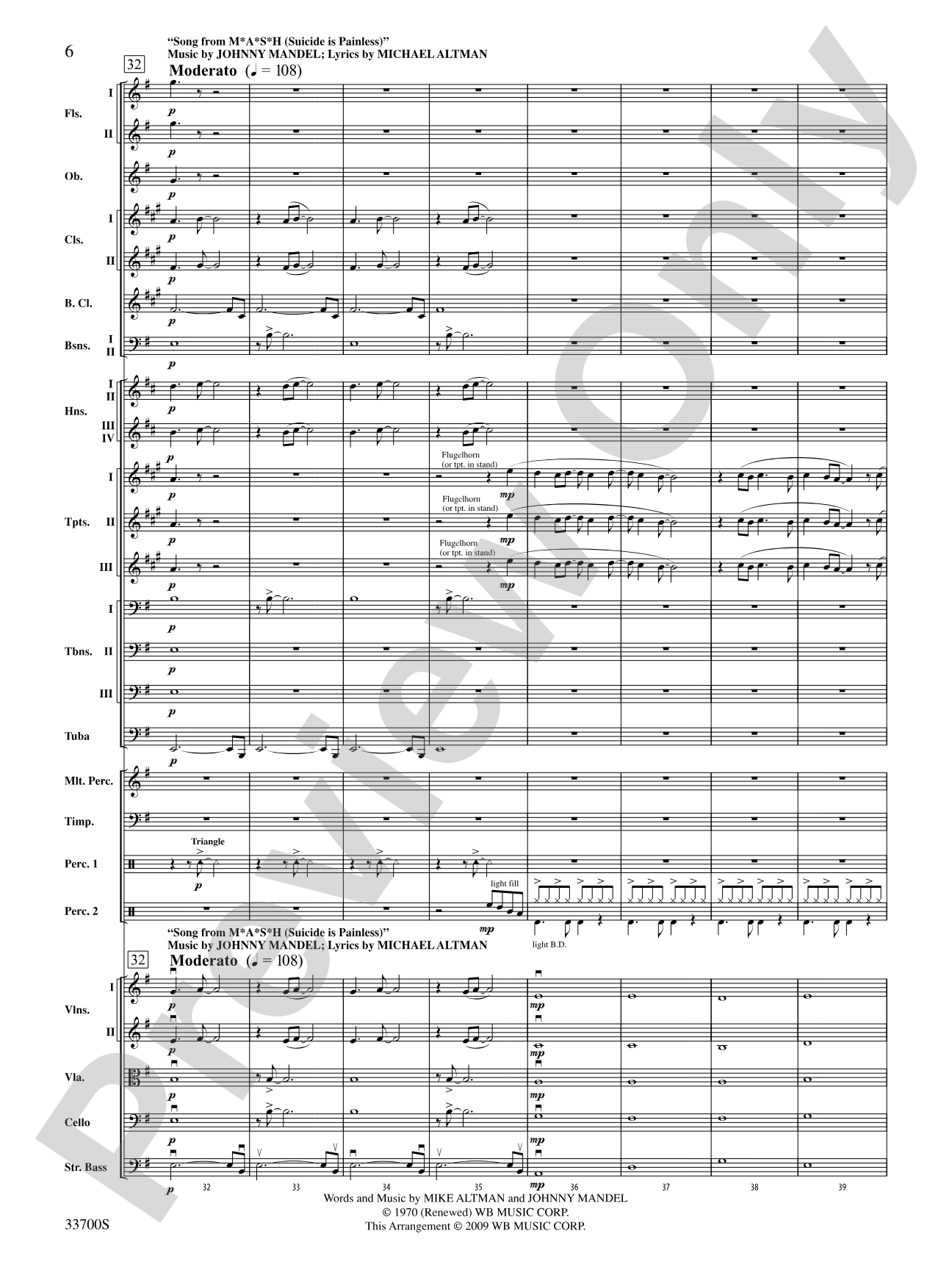
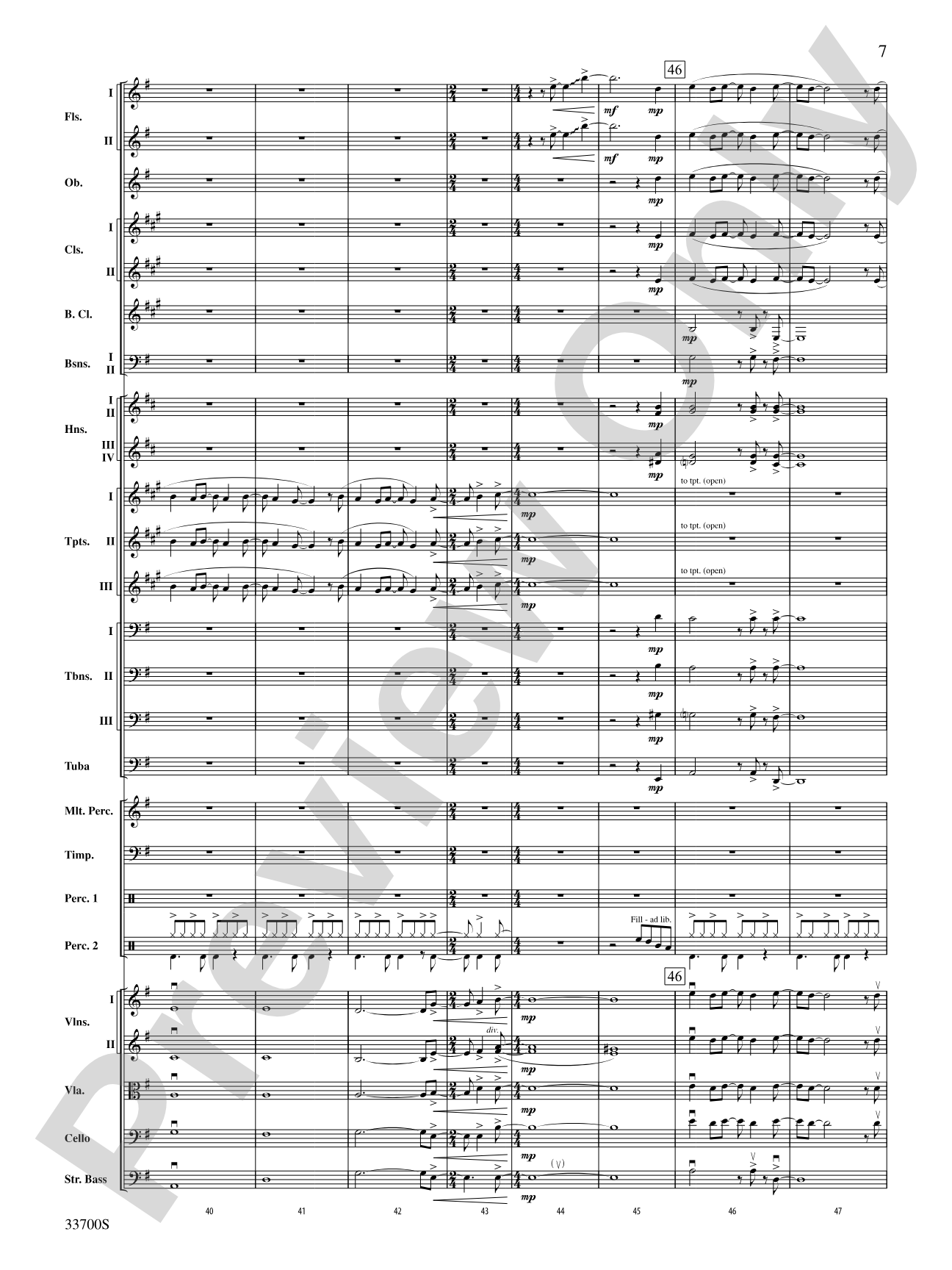
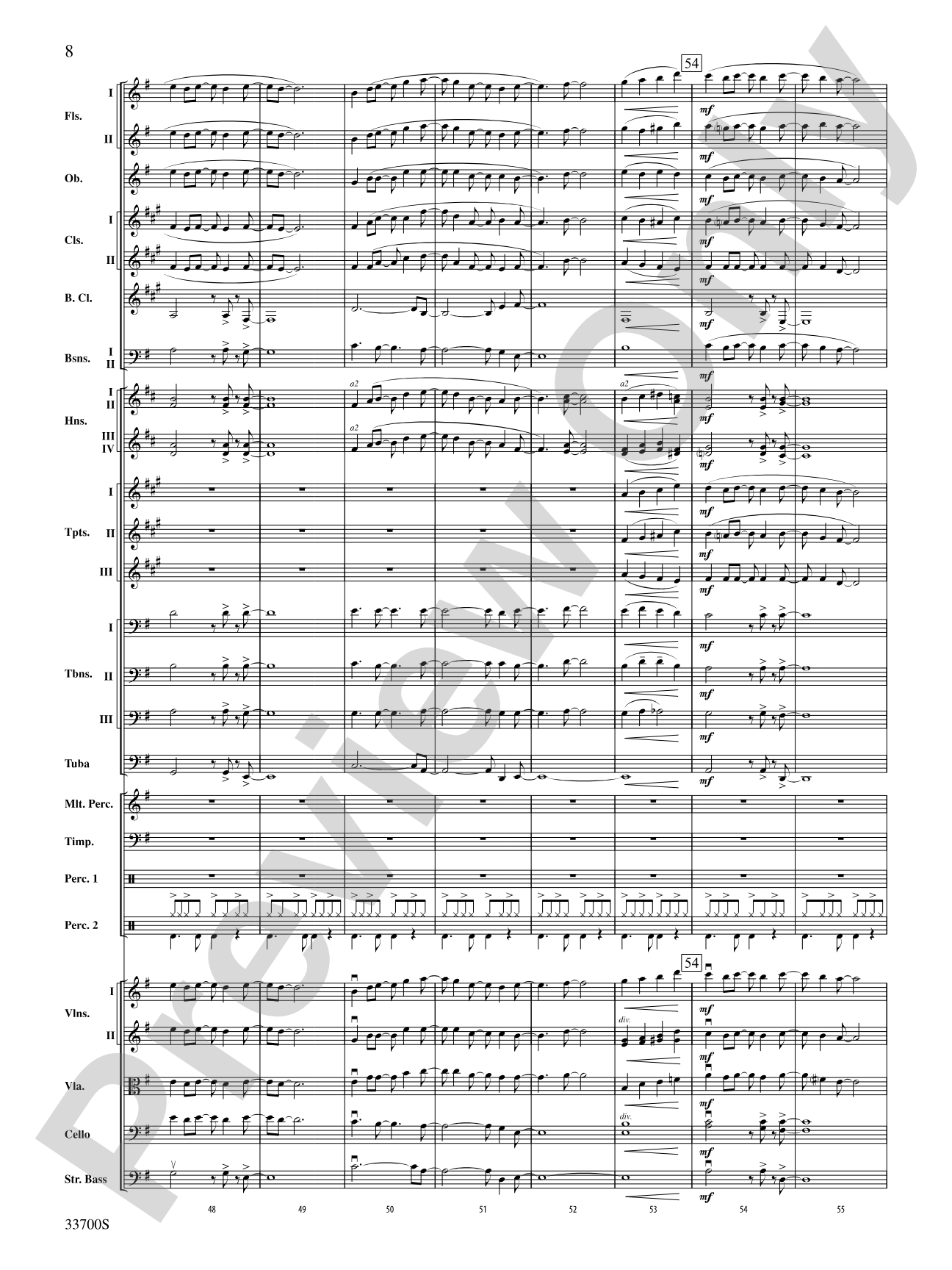
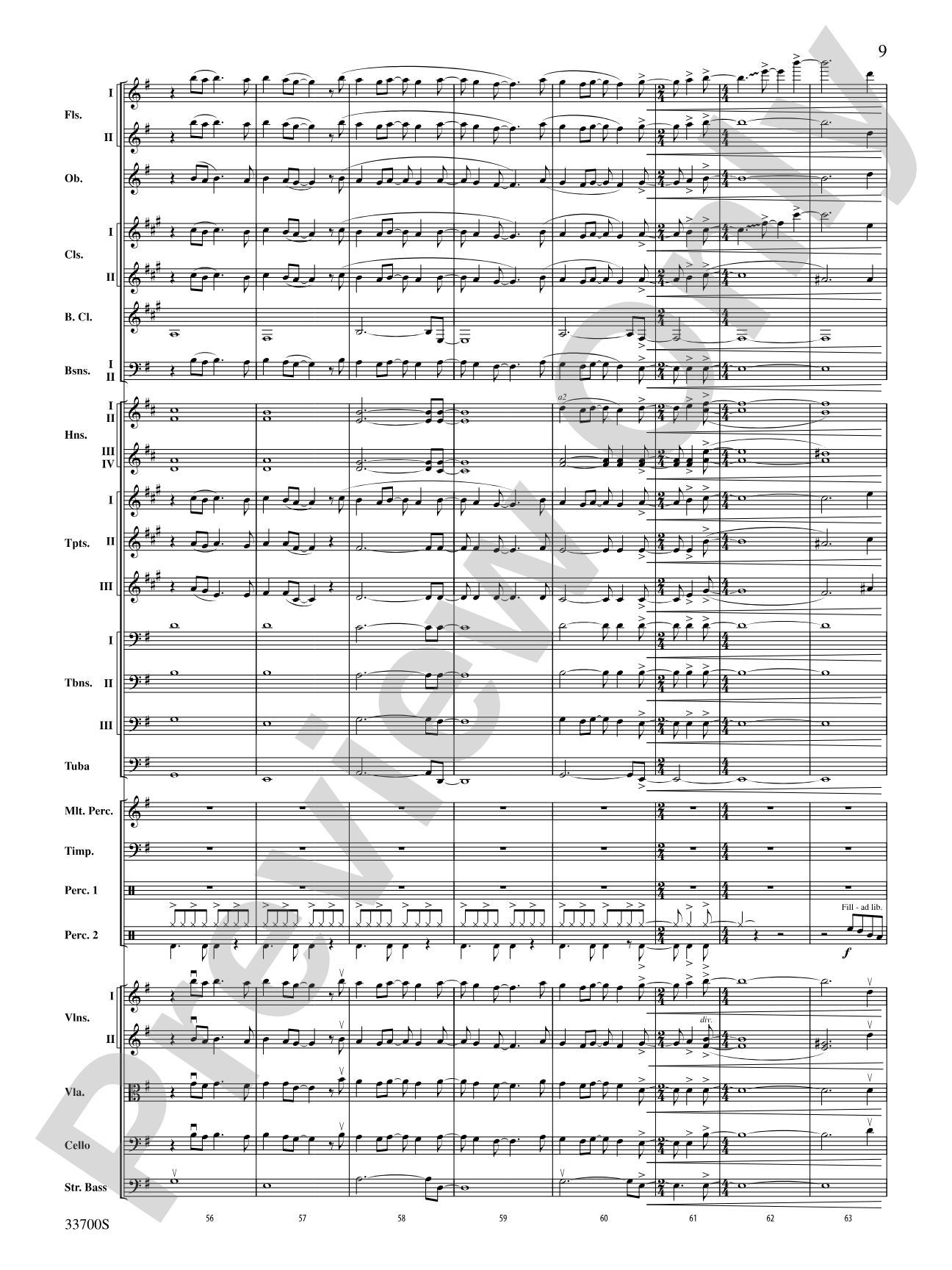
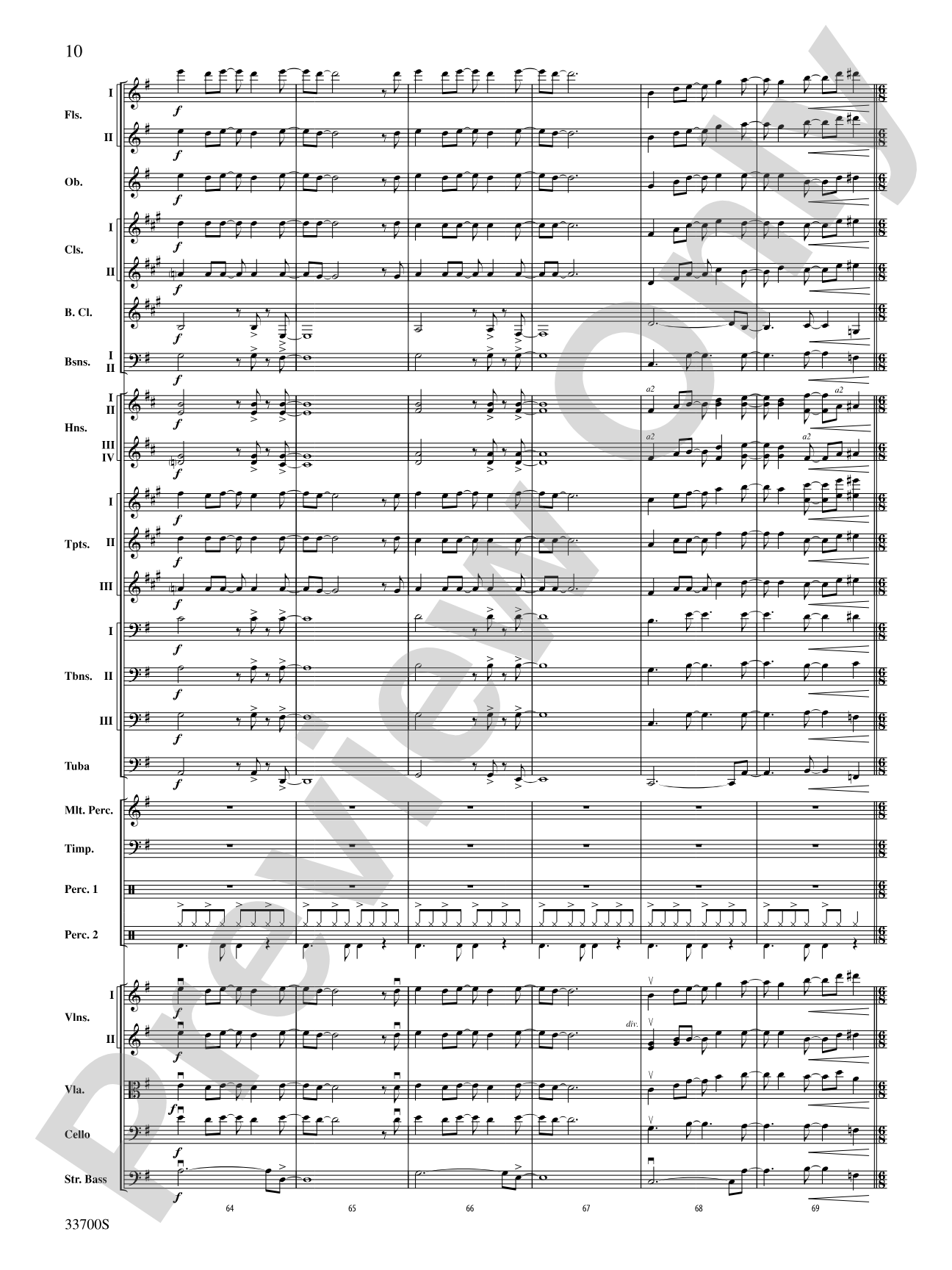
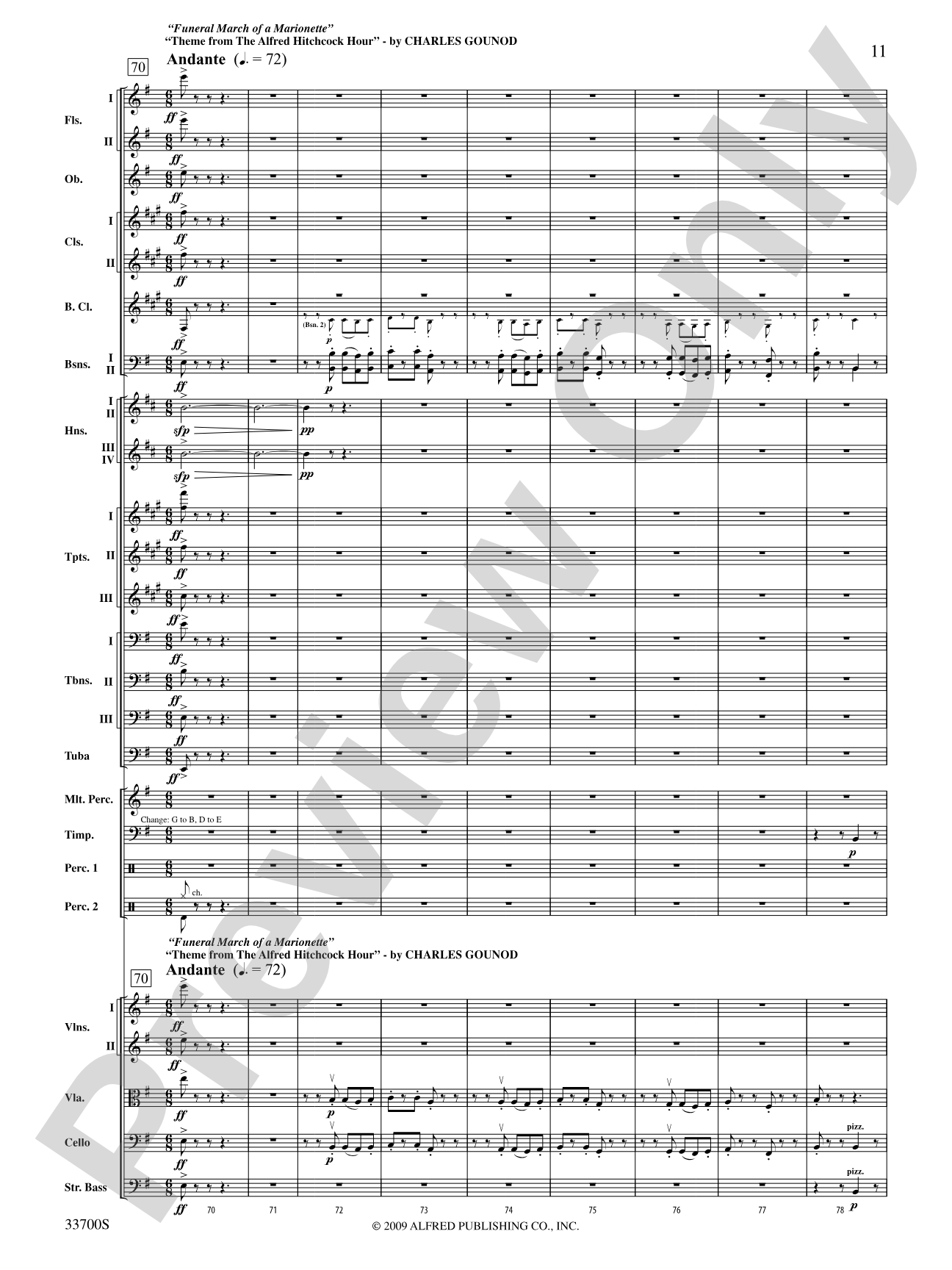
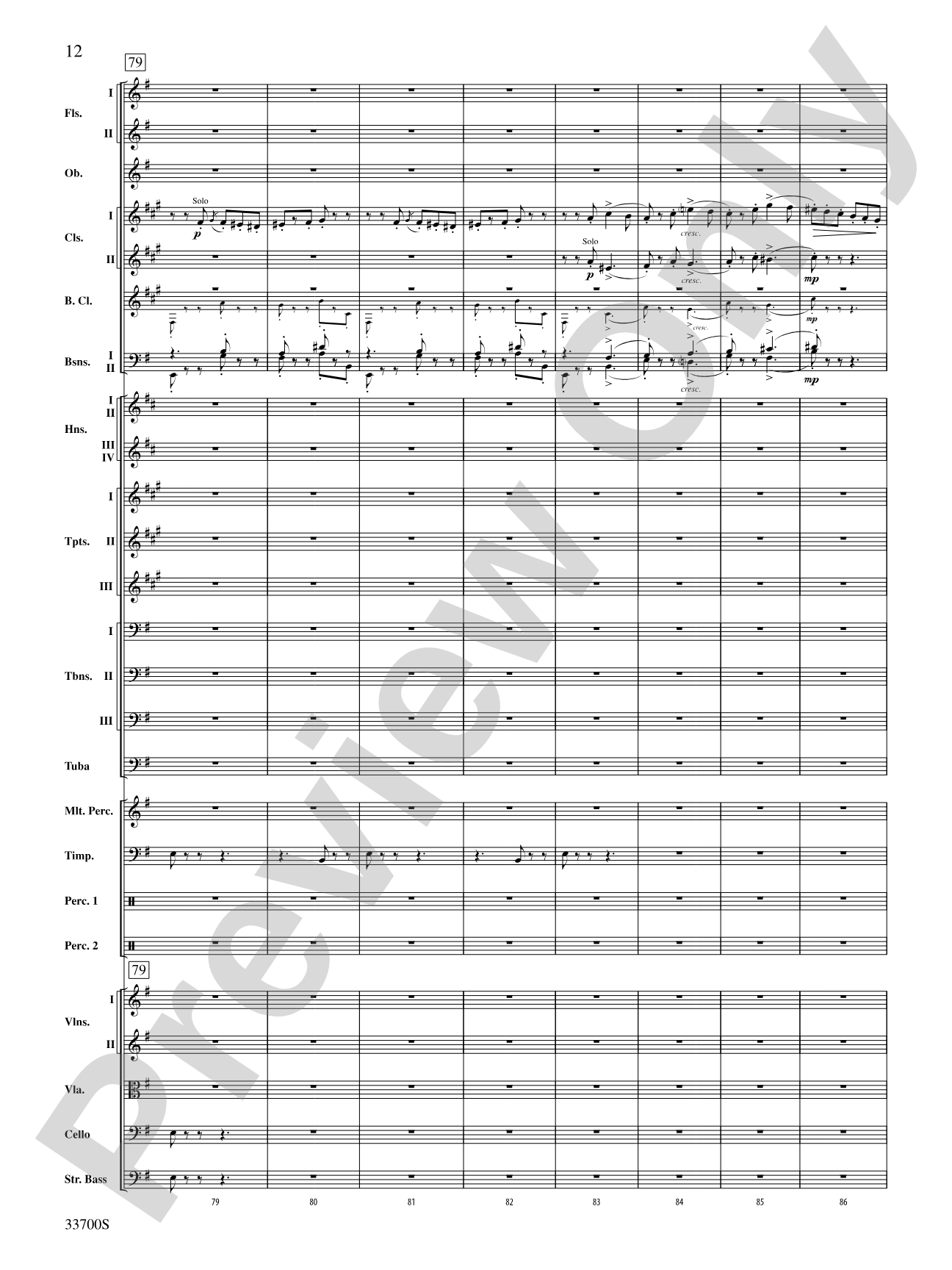
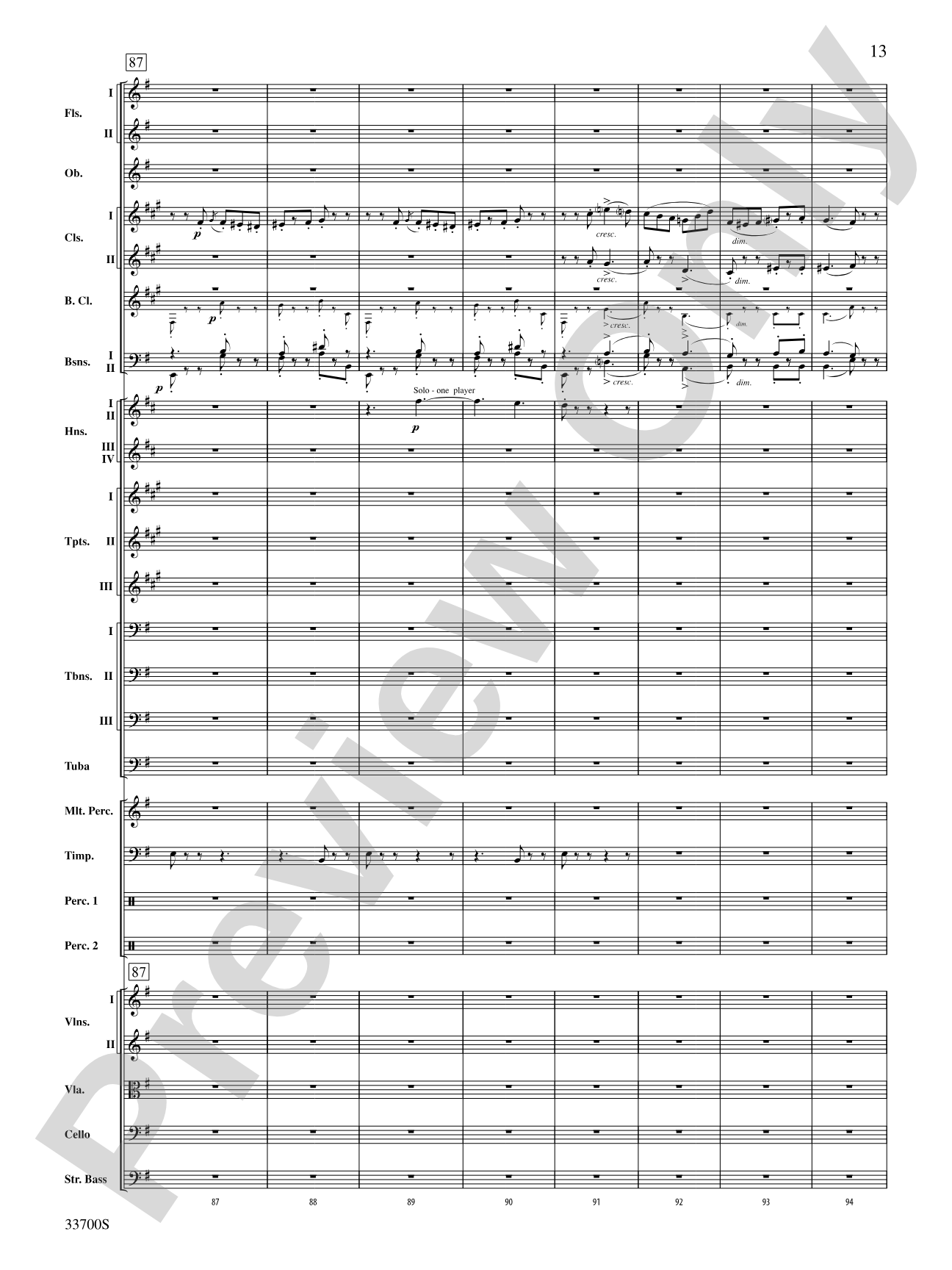
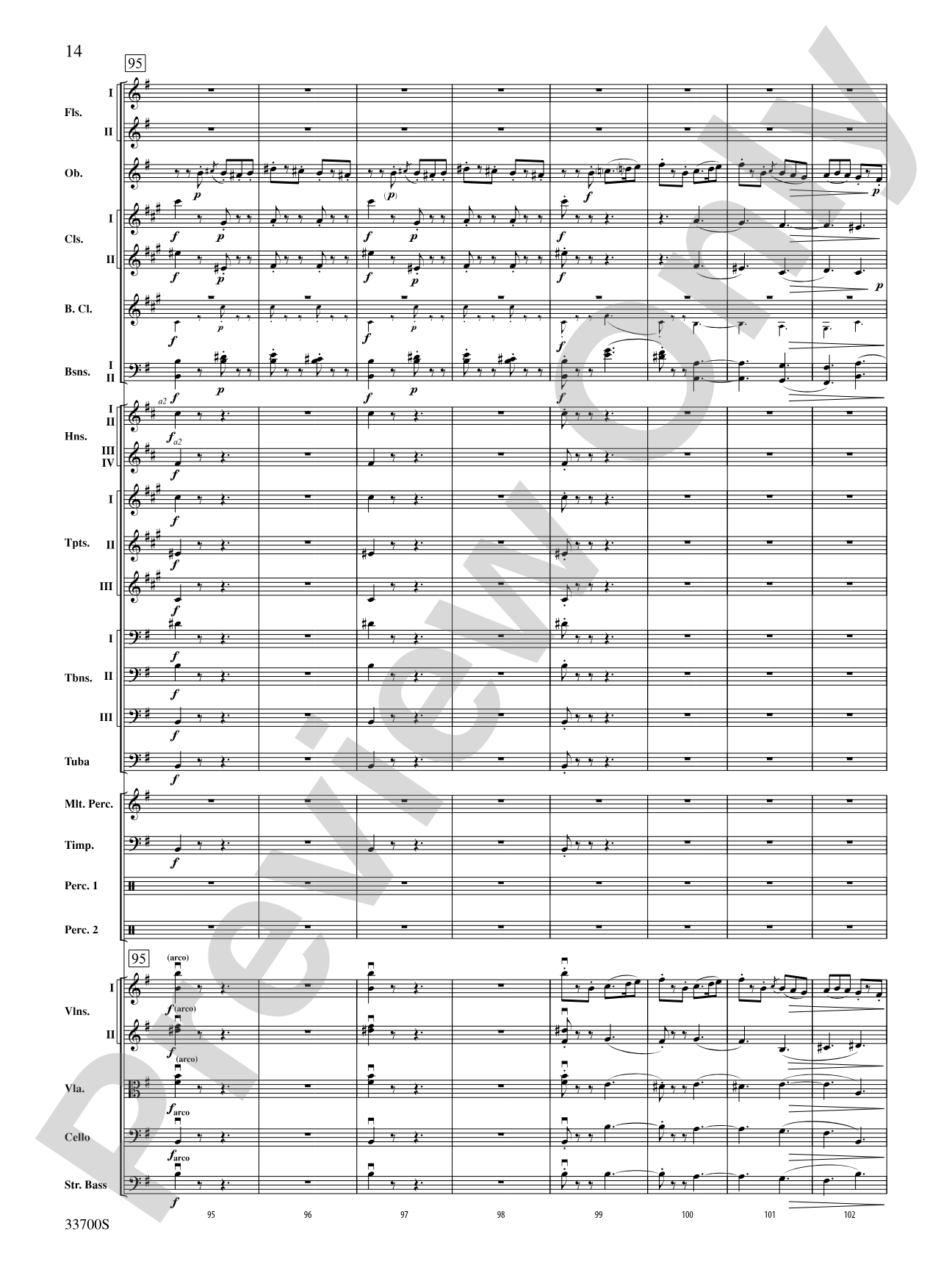
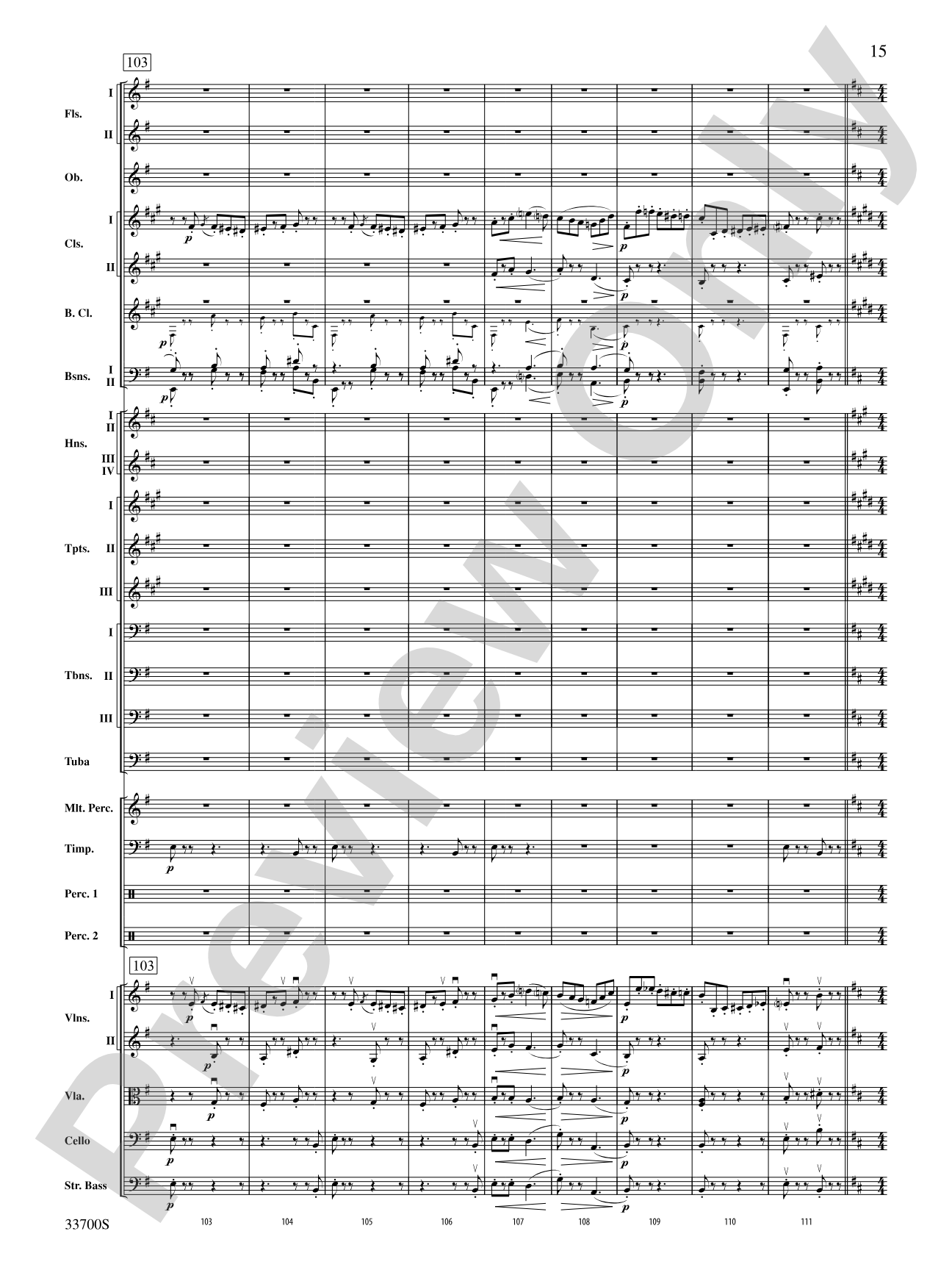
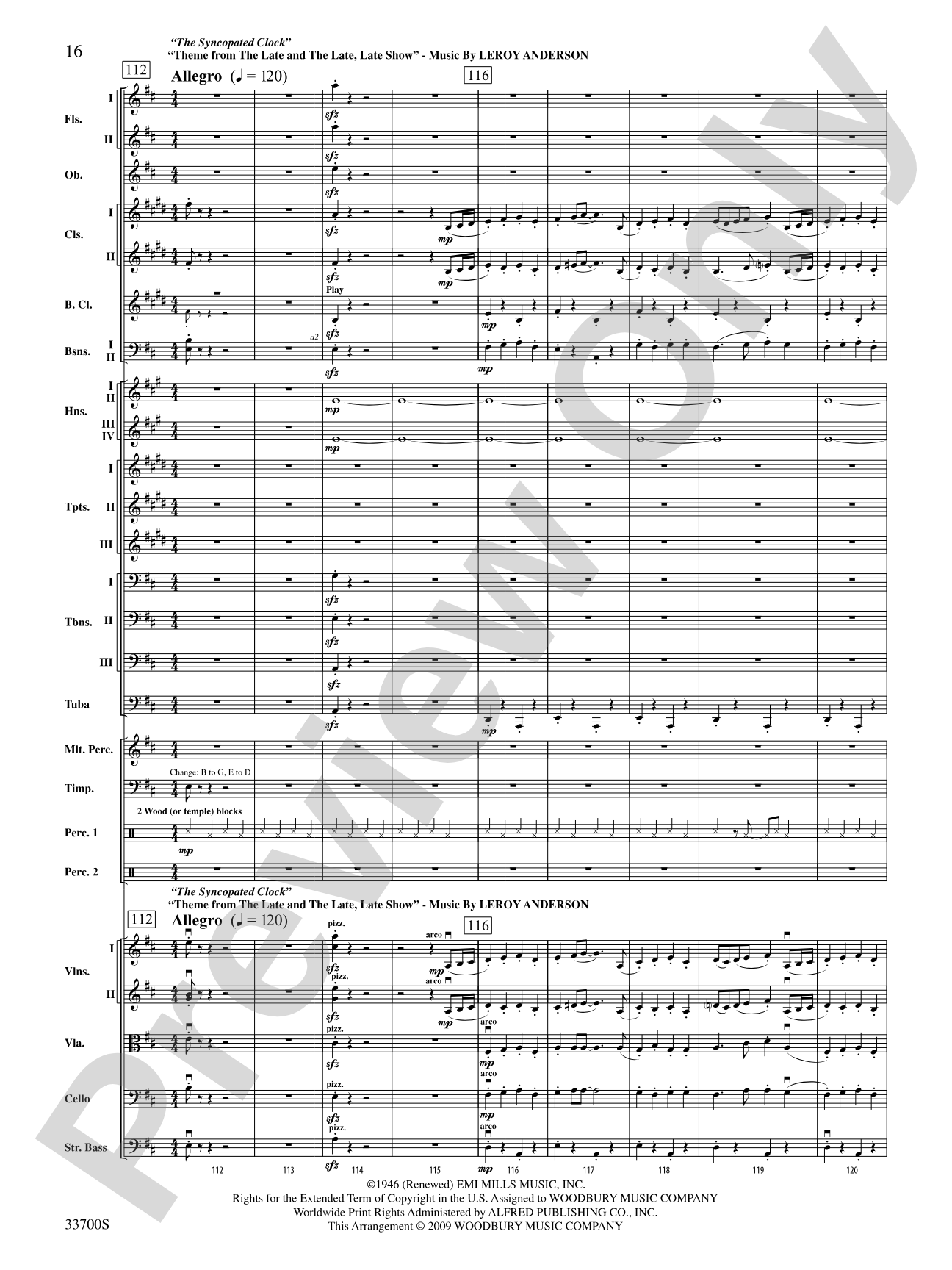
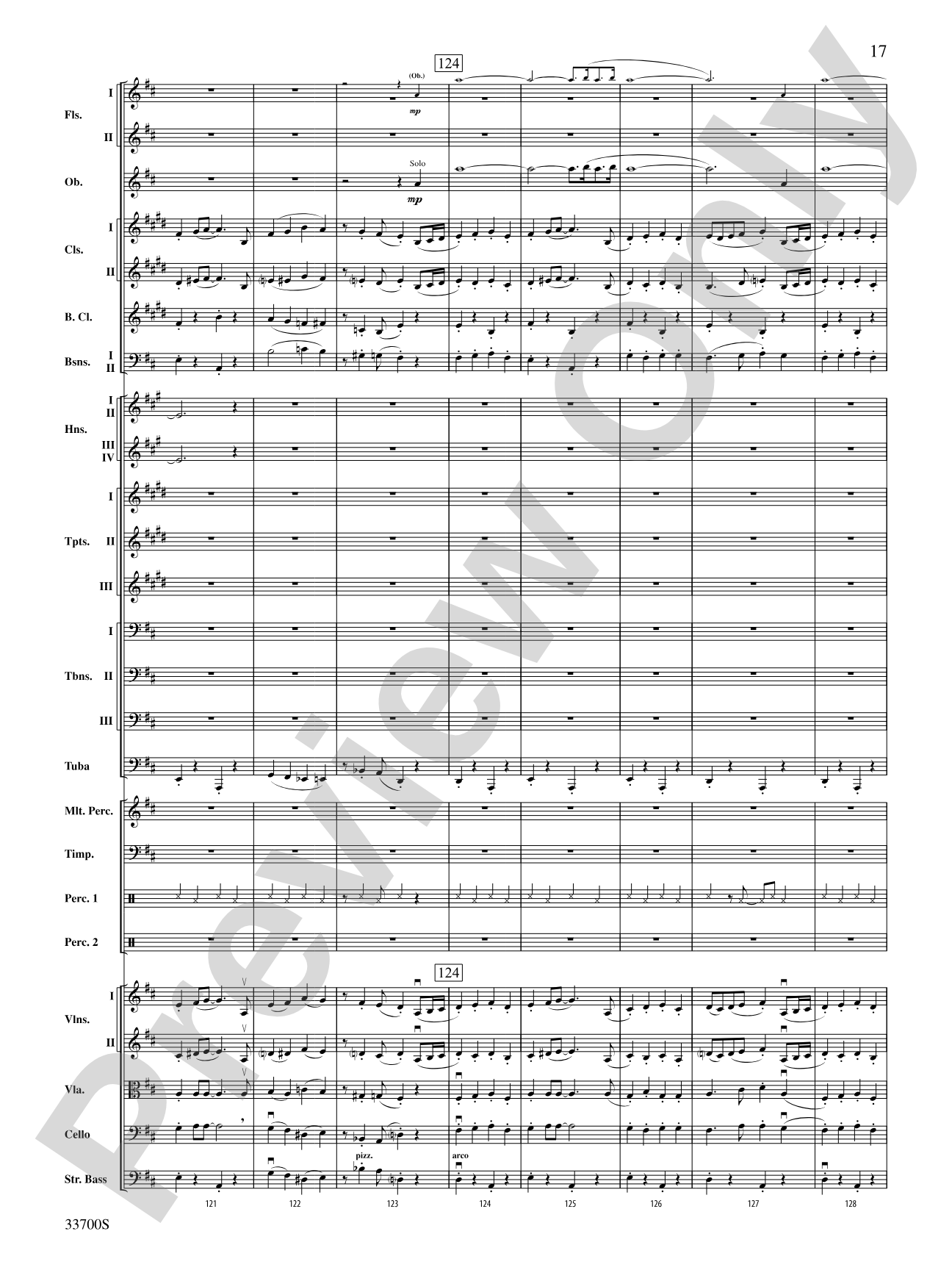
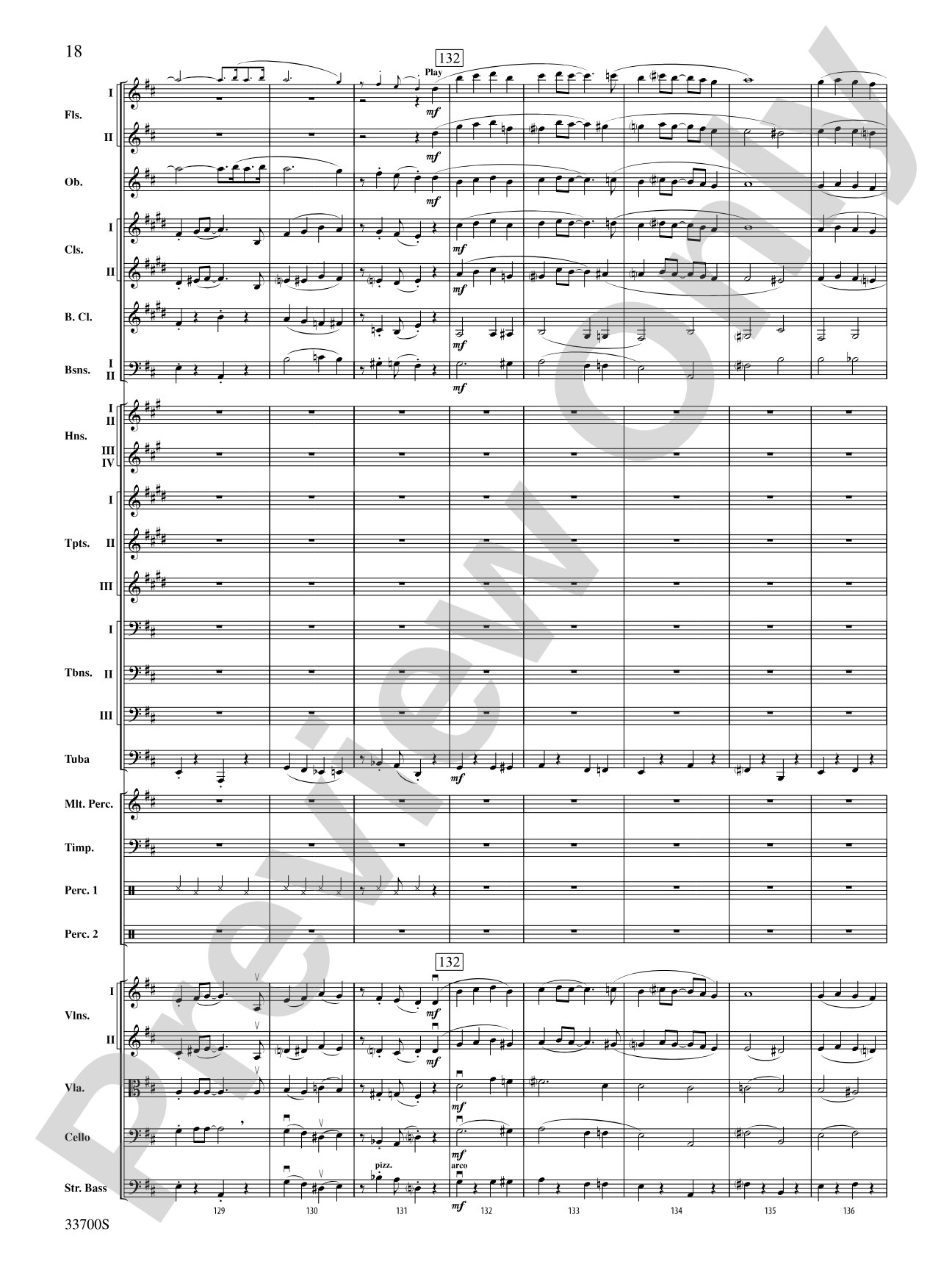
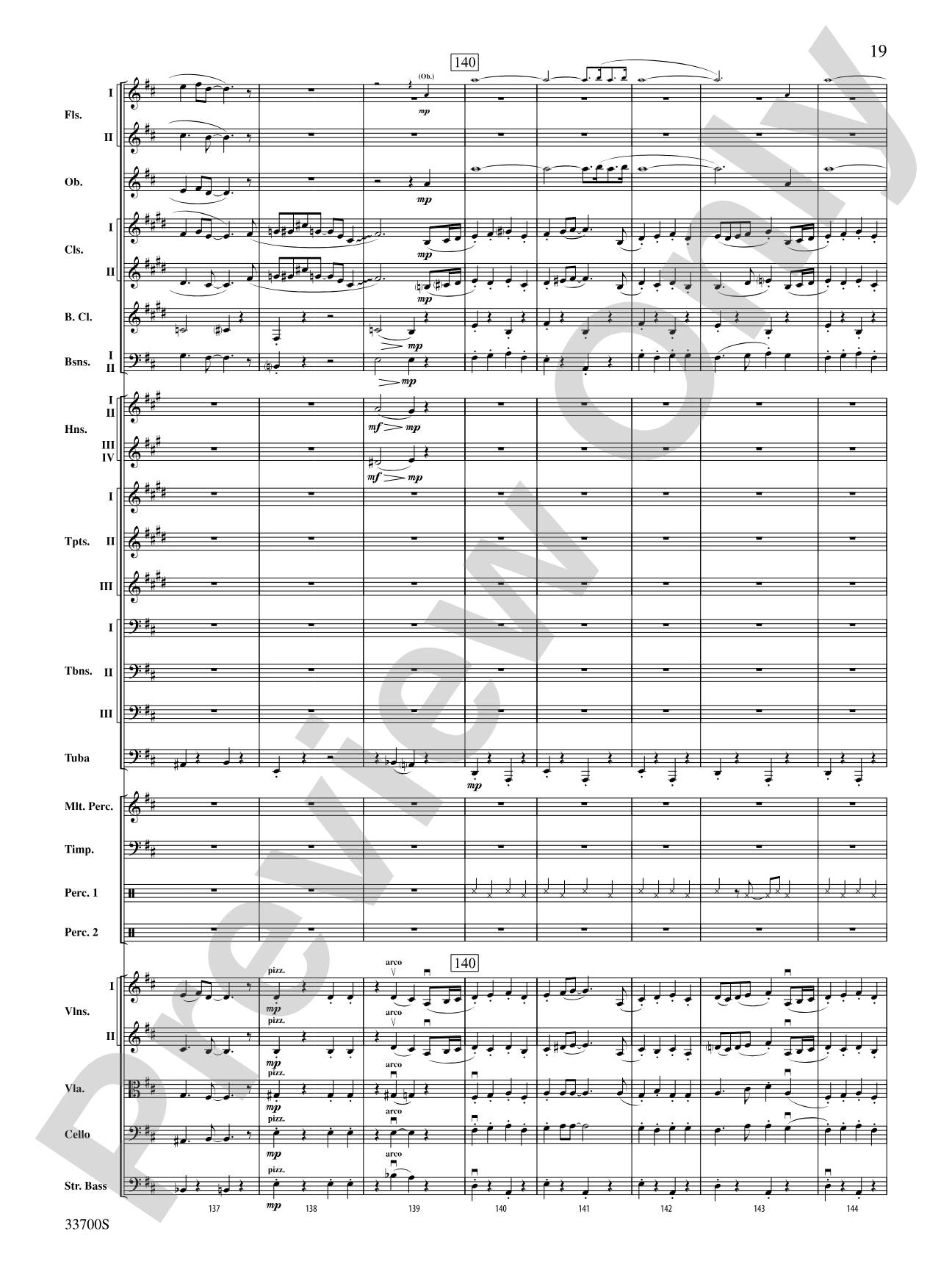
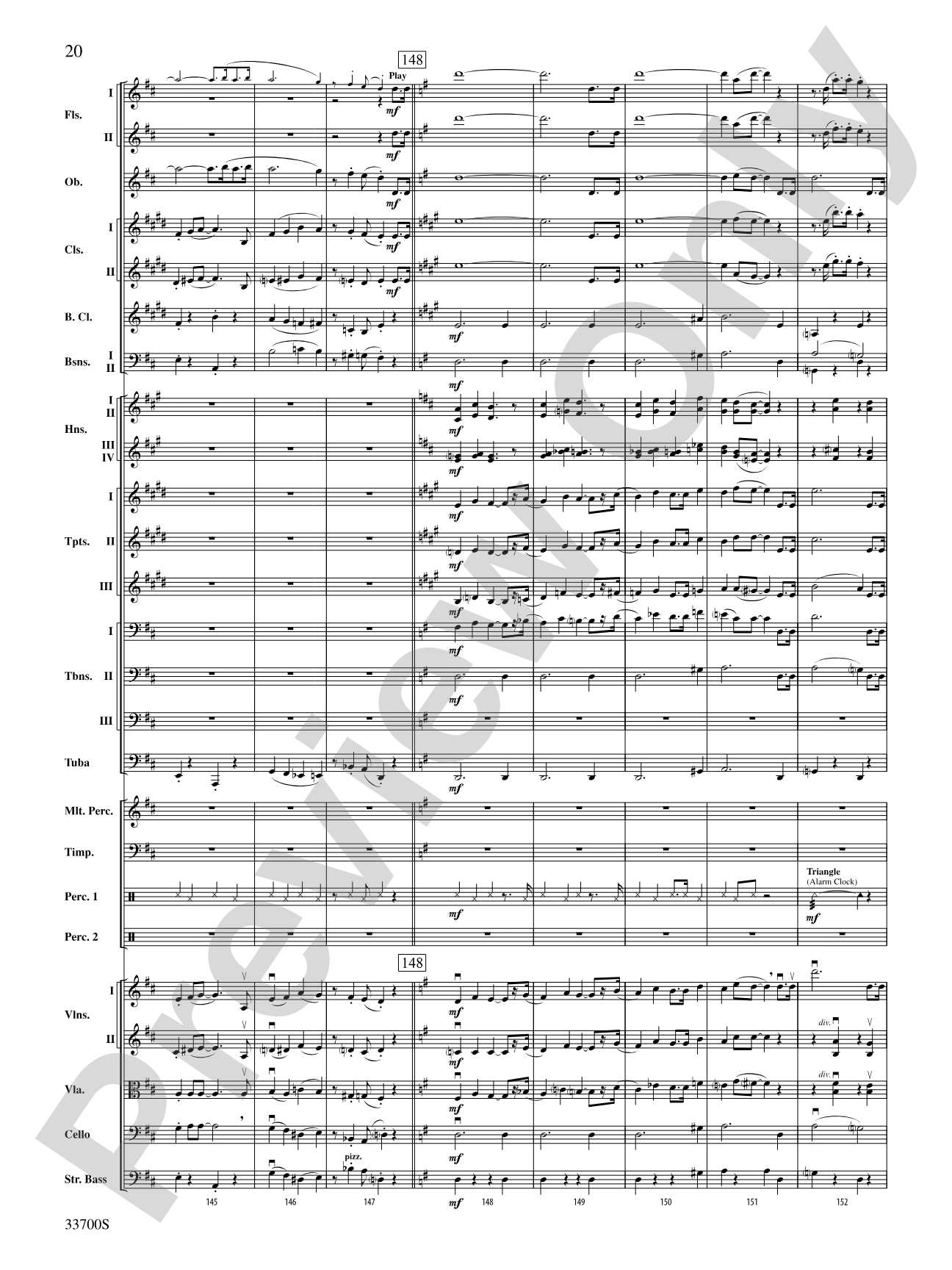
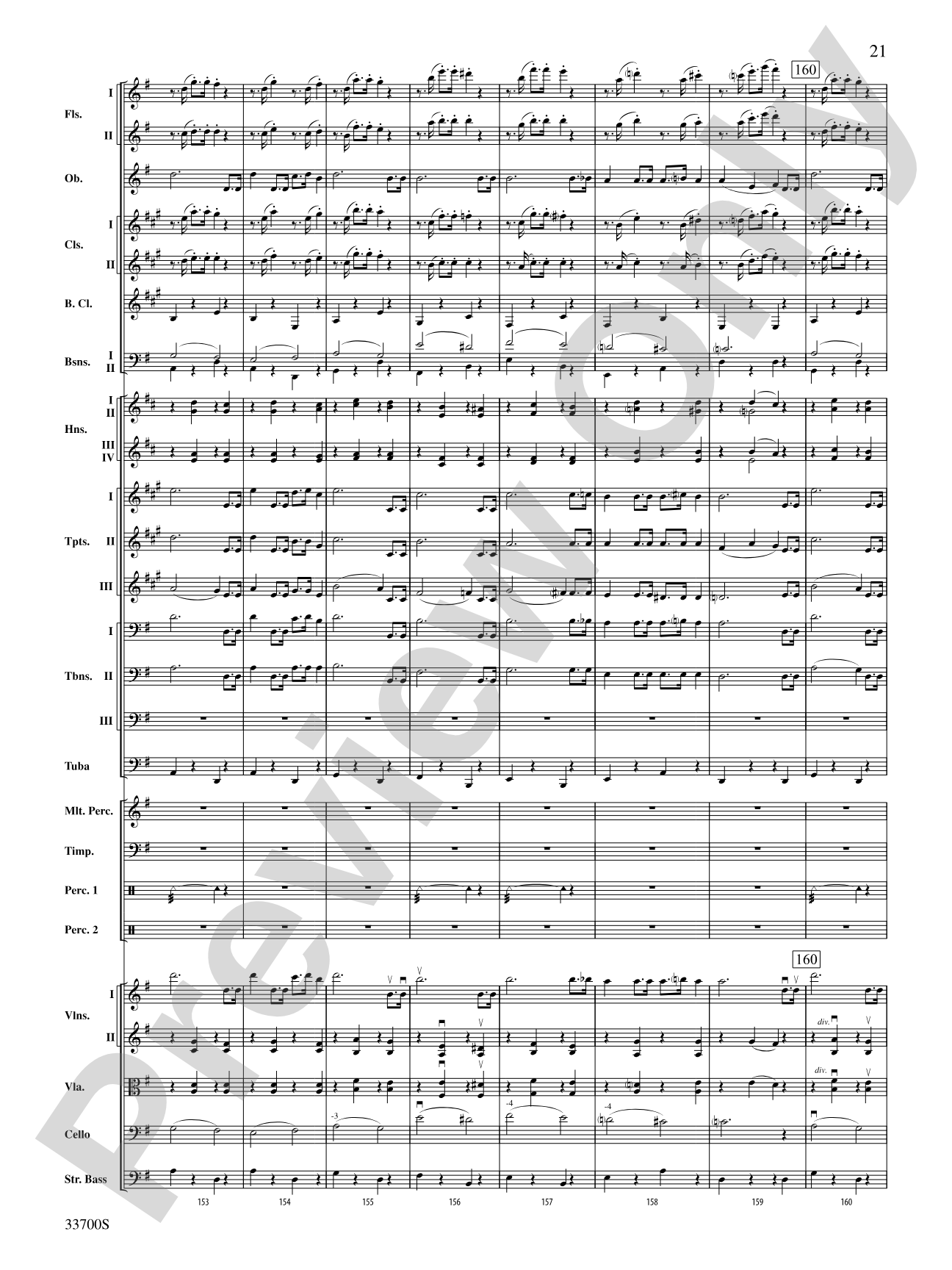
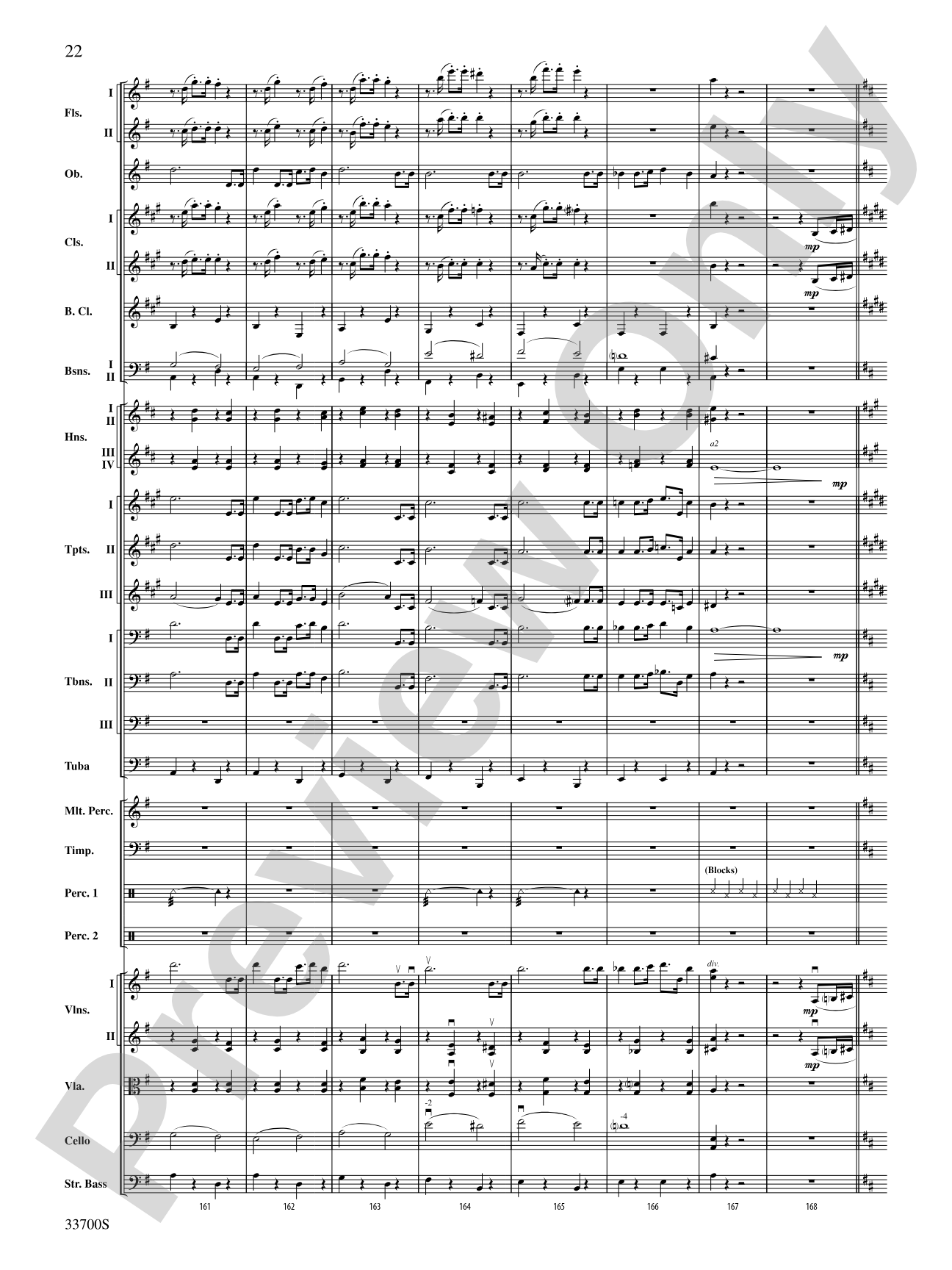
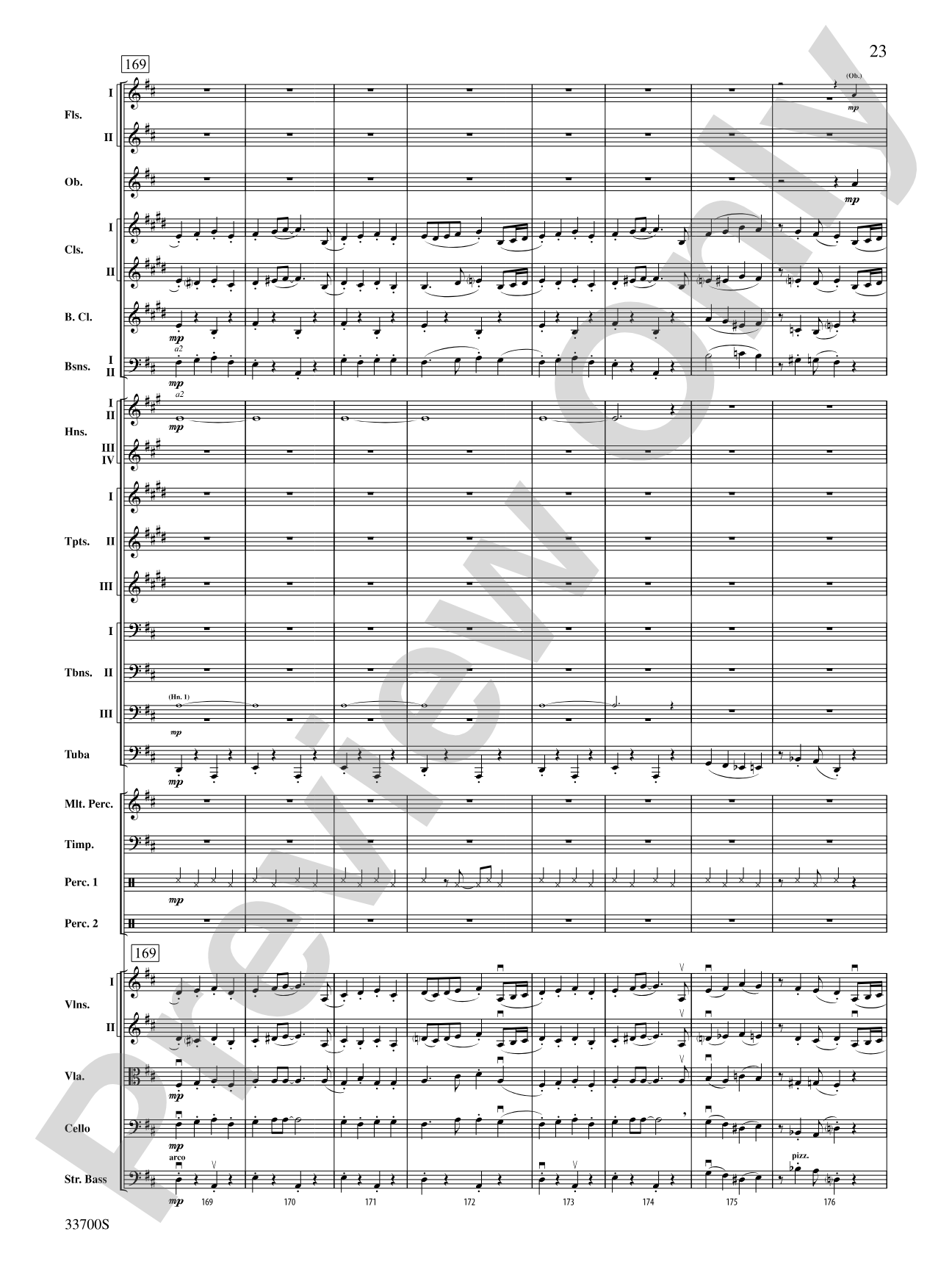
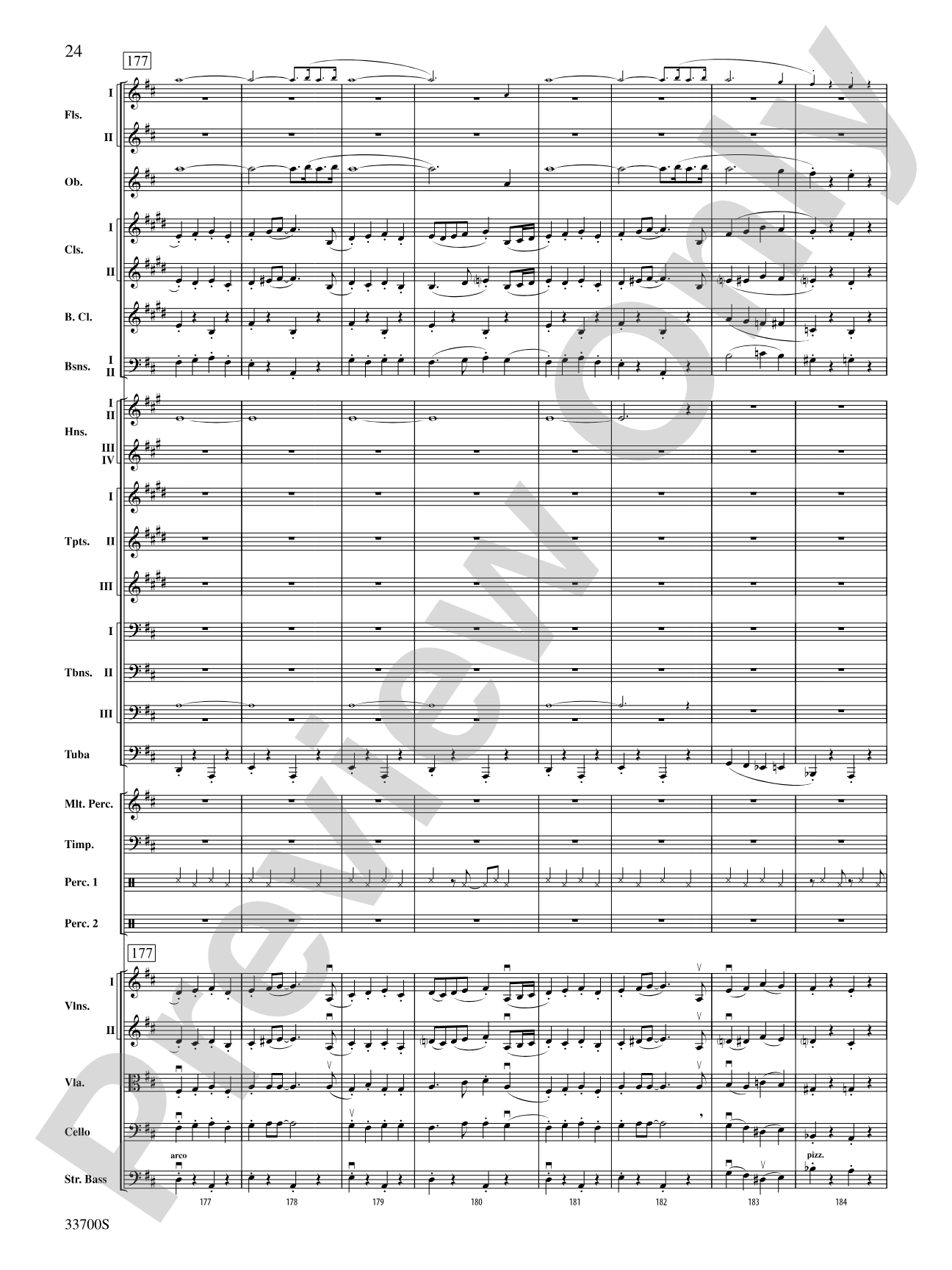
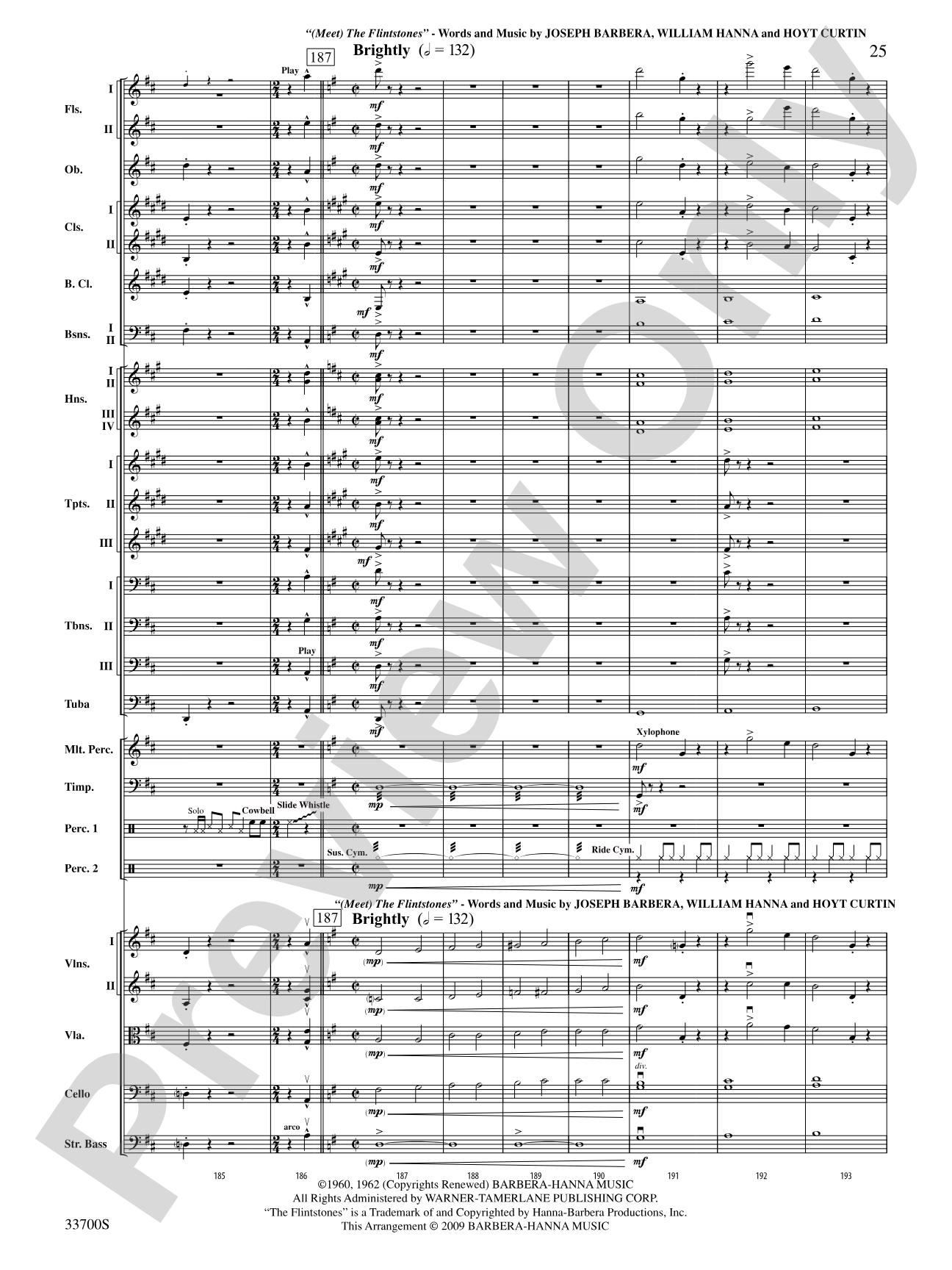
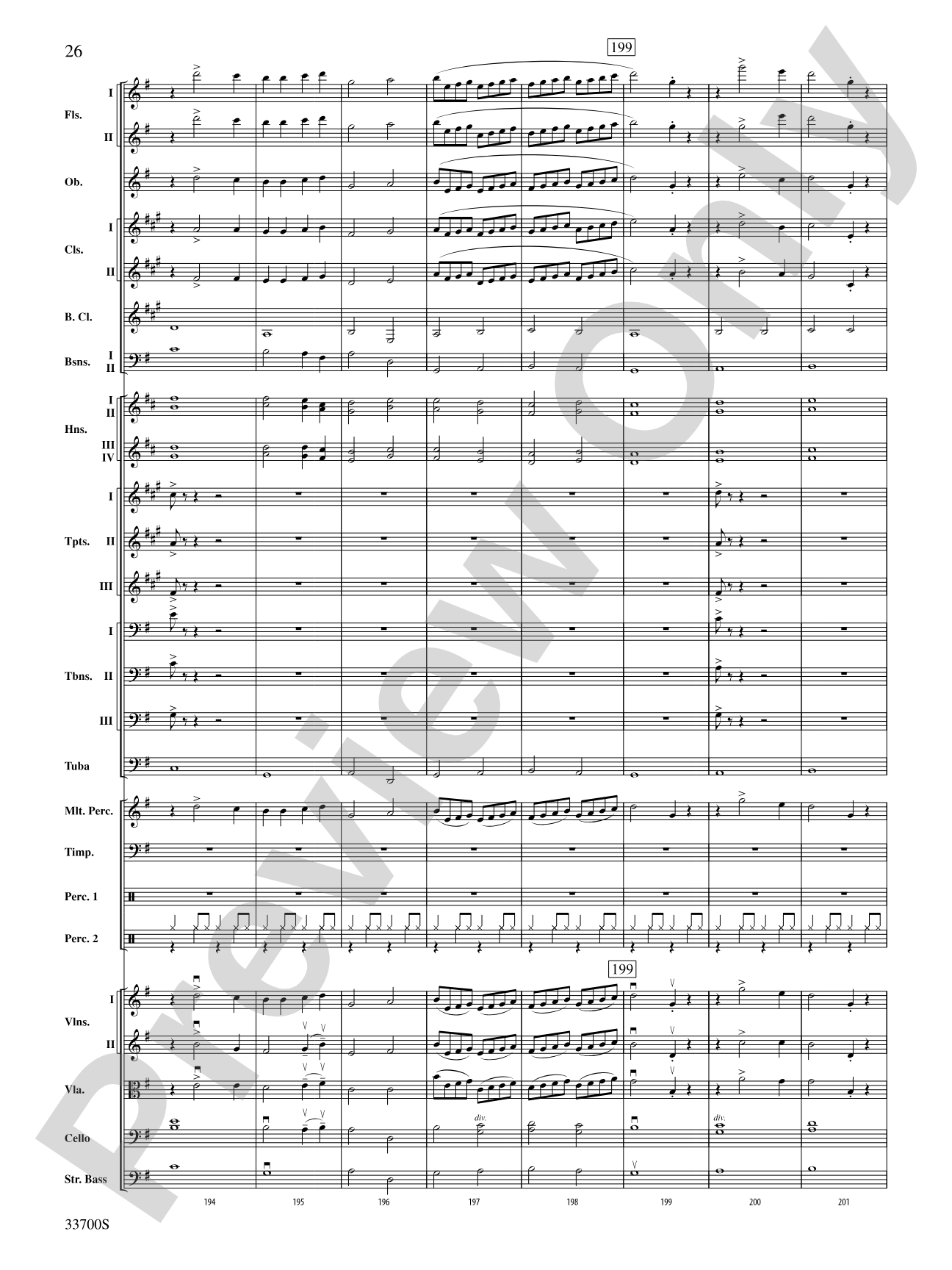
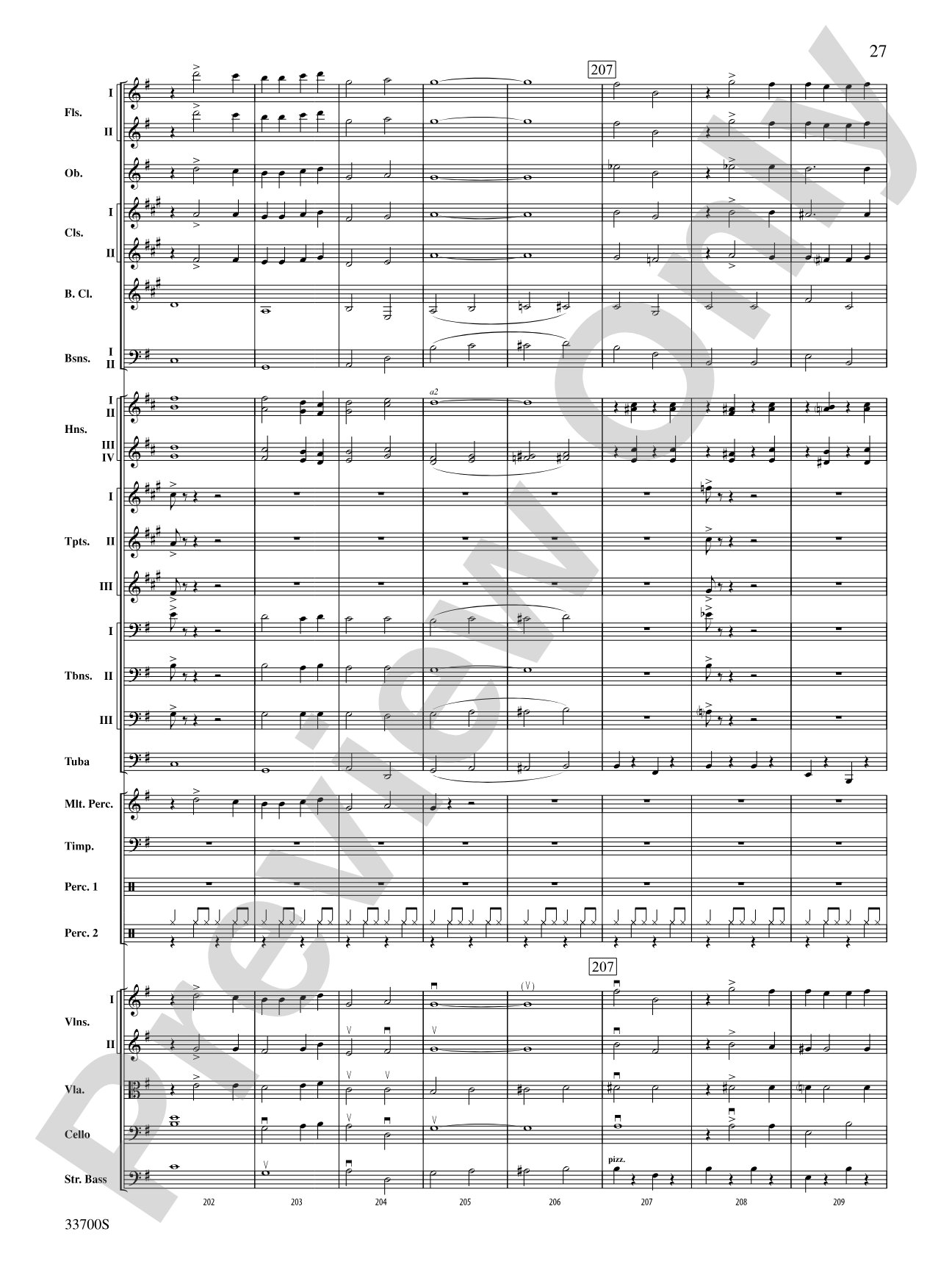
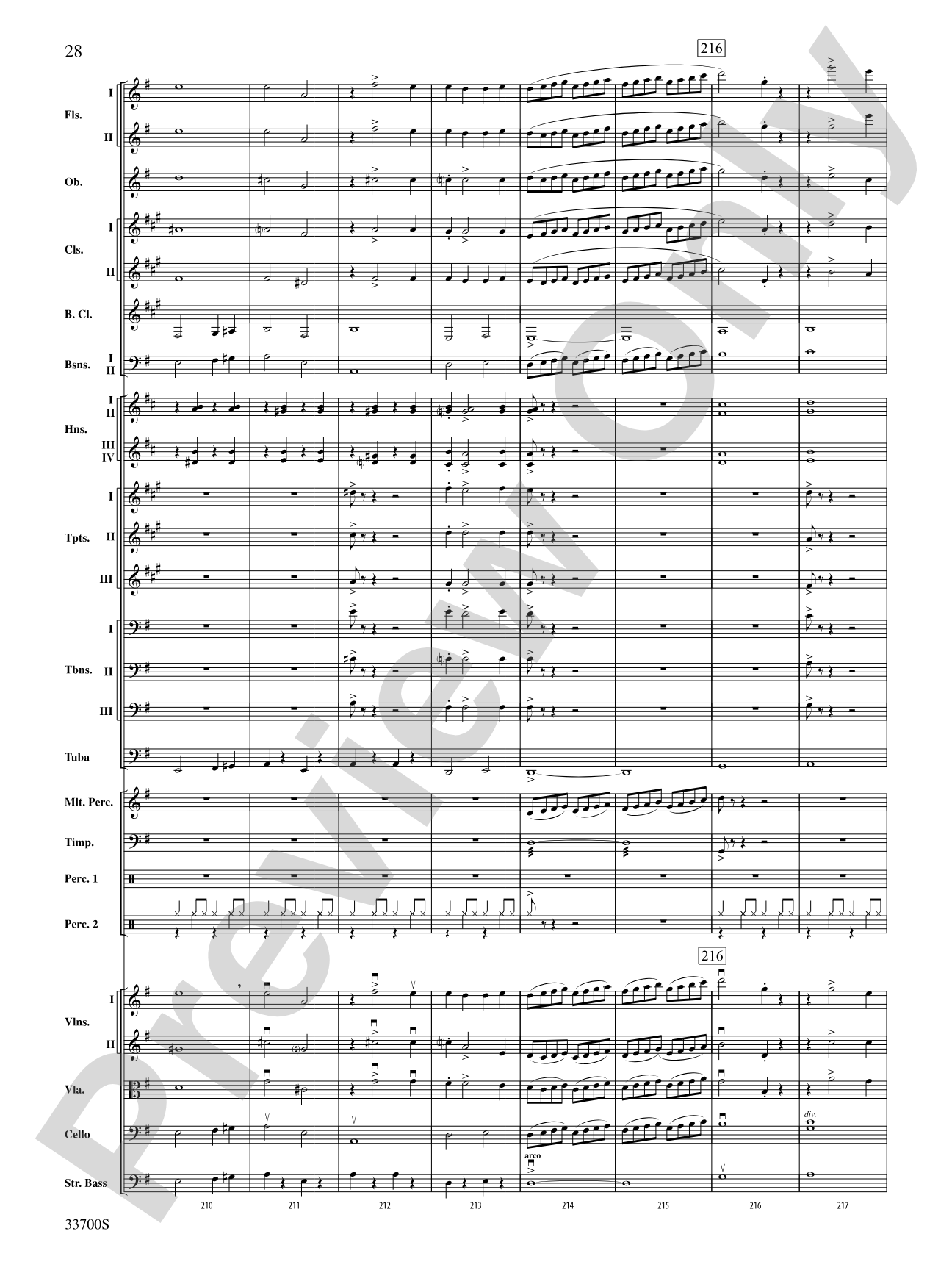
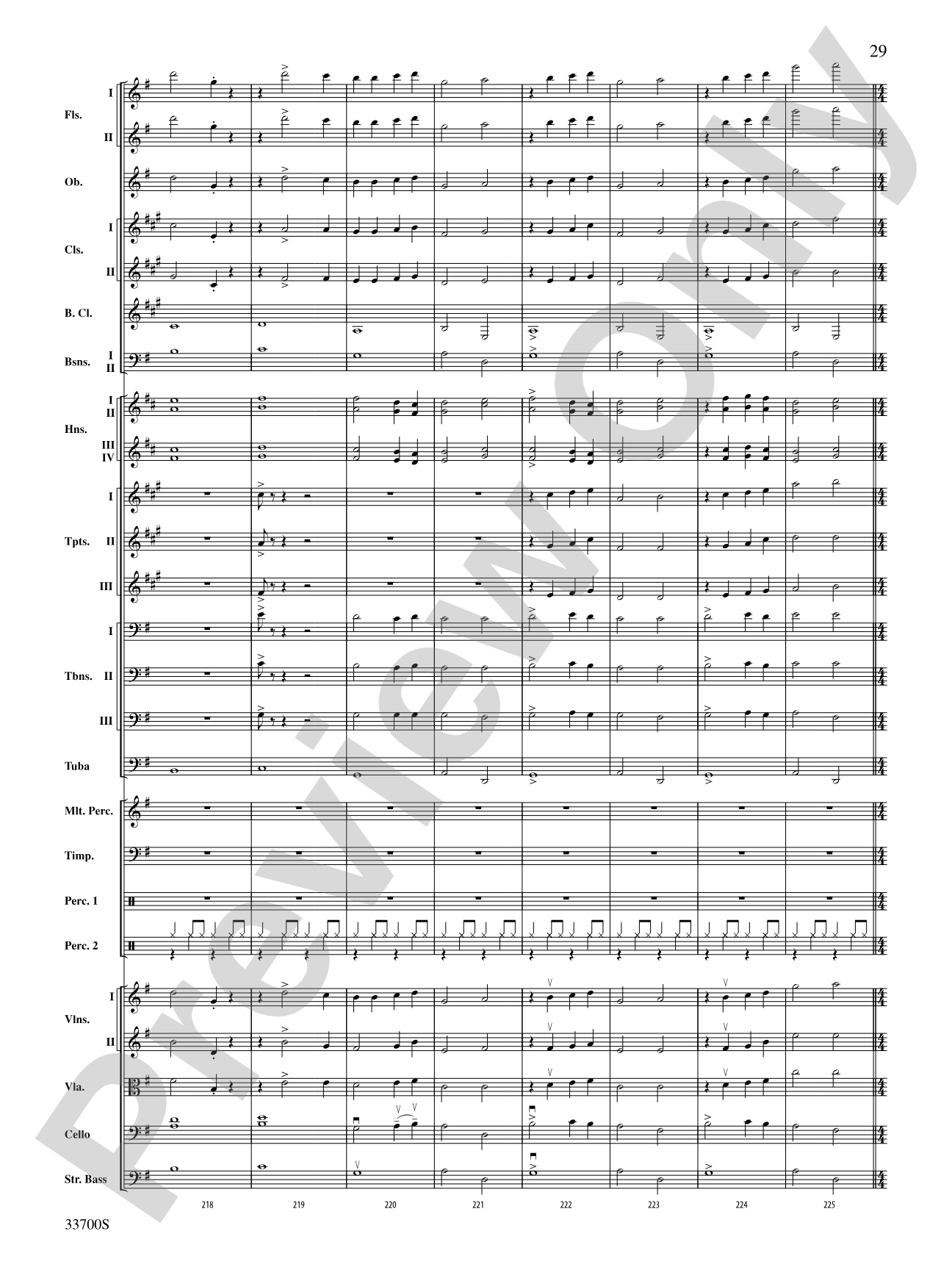
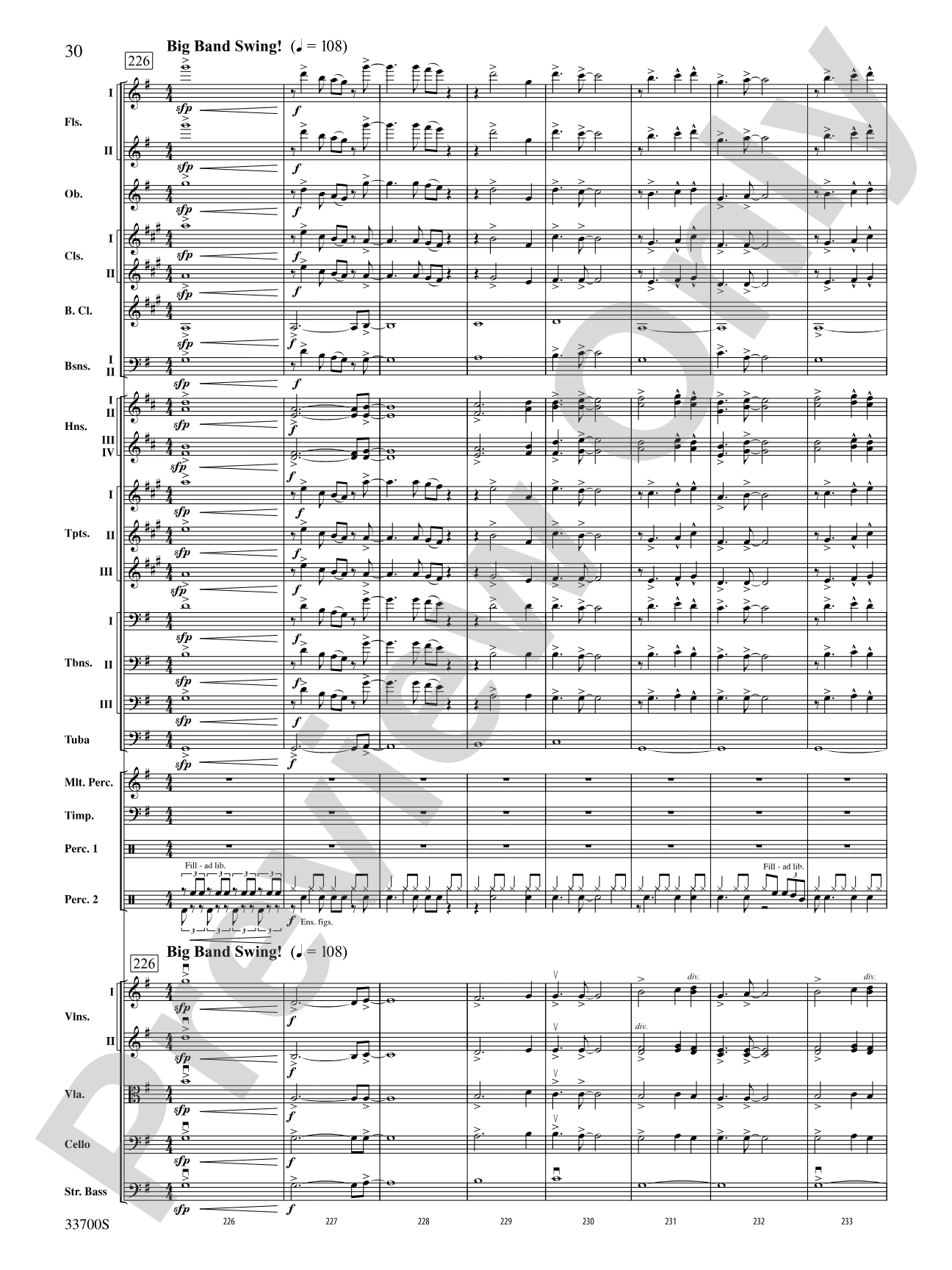
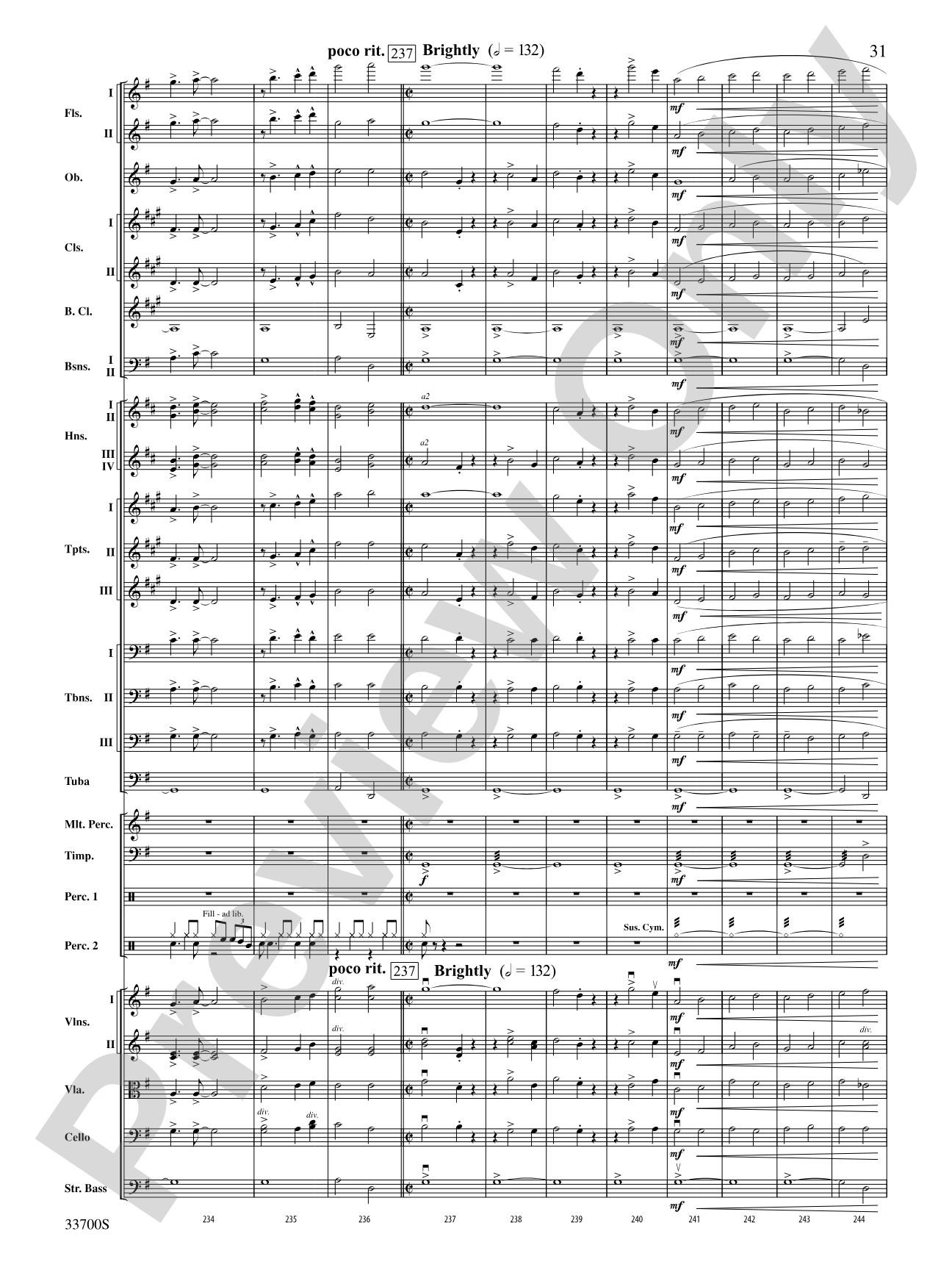
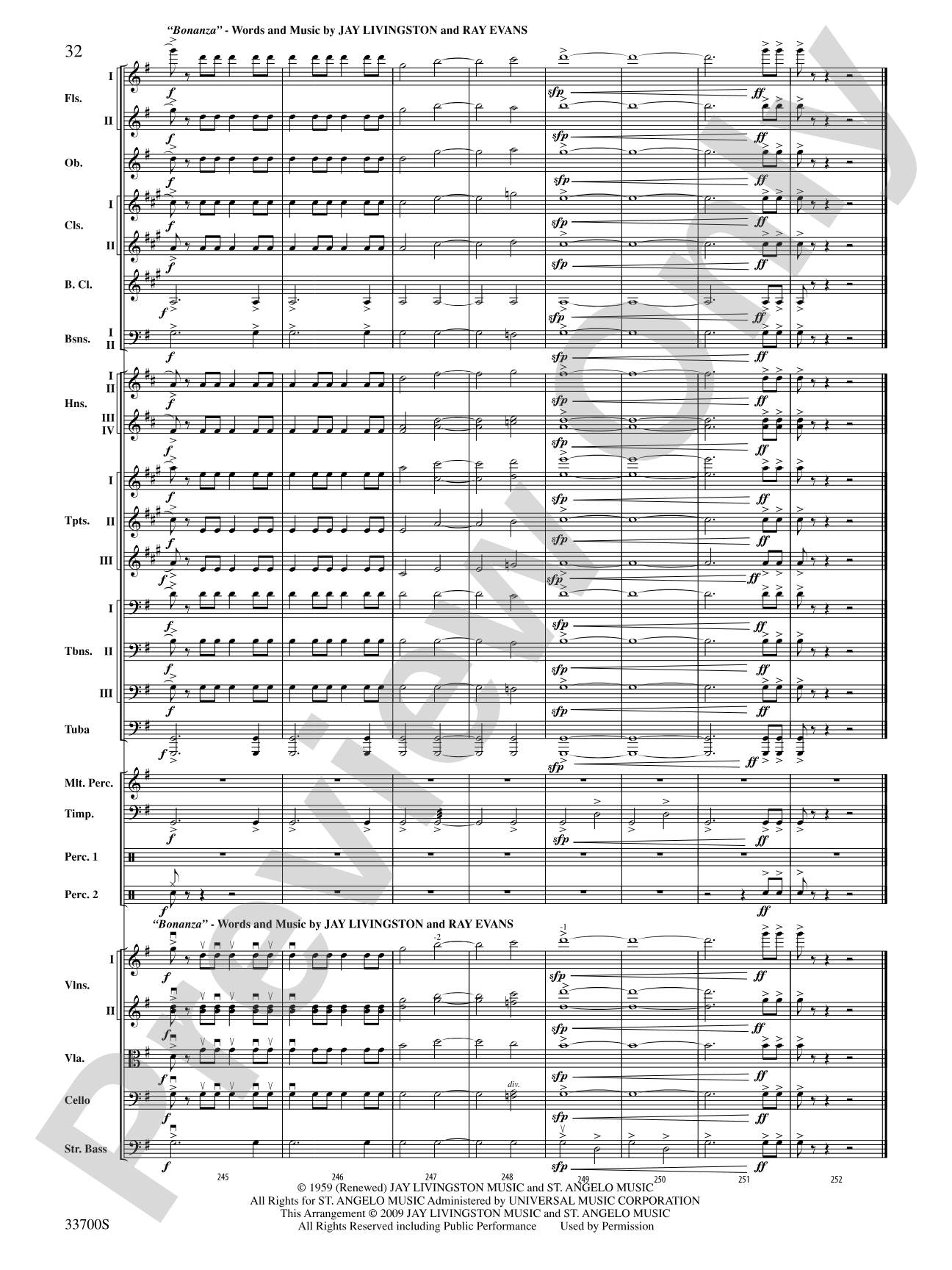

Salute to TV: Full Orchestra Conductor Score & Parts
Featuring themes from: Masterpiece Theater / M*A*S*H / The Alfred Hitchcock Hour / The Late Show / The Late, Late Show / The Flintstones / Bonanza
Arr. Carl Strommen
Grade: 4
Item: 00-PK-0006435

$70.00
Pickup currently not available
Buy Extra Parts (Digital PDF Download)
| Product | Price | Quantity |
|---|---|---|
| Salute to TV: Score | $9.00 | |
| Salute to TV: Flute | $3.00 | |
| Salute to TV: 2nd Flute | $3.00 | |
| Salute to TV: Oboe | $3.00 | |
| Salute to TV: 1st B-flat Clarinet | $3.00 | |
| Salute to TV: 2nd B-flat Clarinet | $3.00 | |
| Salute to TV: B-flat Bass Clarinet | $3.00 | |
| Salute to TV: 1st & 2nd Bassoon | $3.00 | |
| Salute to TV: 1st F Horn | $3.00 | |
| Salute to TV: 2nd F Horn | $3.00 | |
| Salute to TV: 3rd F Horn | $3.00 | |
| Salute to TV: 4th F Horn | $3.00 | |
| Salute to TV: 1st B-flat Trumpet | $3.00 | |
| Salute to TV: 2nd B-flat Trumpet | $3.00 | |
| Salute to TV: 3rd B-flat Trumpet | $3.00 | |
| Salute to TV: 1st Trombone | $3.00 | |
| Salute to TV: 2nd Trombone | $3.00 | |
| Salute to TV: 3rd Trombone | $3.00 | |
| Salute to TV: Tuba | $3.00 | |
| Salute to TV: Mallets | $3.00 | |
| Salute to TV: Timpani | $3.00 | |
| Salute to TV: 1st Percussion | $3.00 | |
| Salute to TV: 2nd Percussion | $3.00 | |
| Salute to TV: 1st Violin | $3.00 | |
| Salute to TV: 2nd Violin | $3.00 | |
| Salute to TV: Viola | $3.00 | |
| Salute to TV: Cello | $3.00 | |
| Salute to TV: String Bass | $3.00 |
Parts Added to Cart!
Description
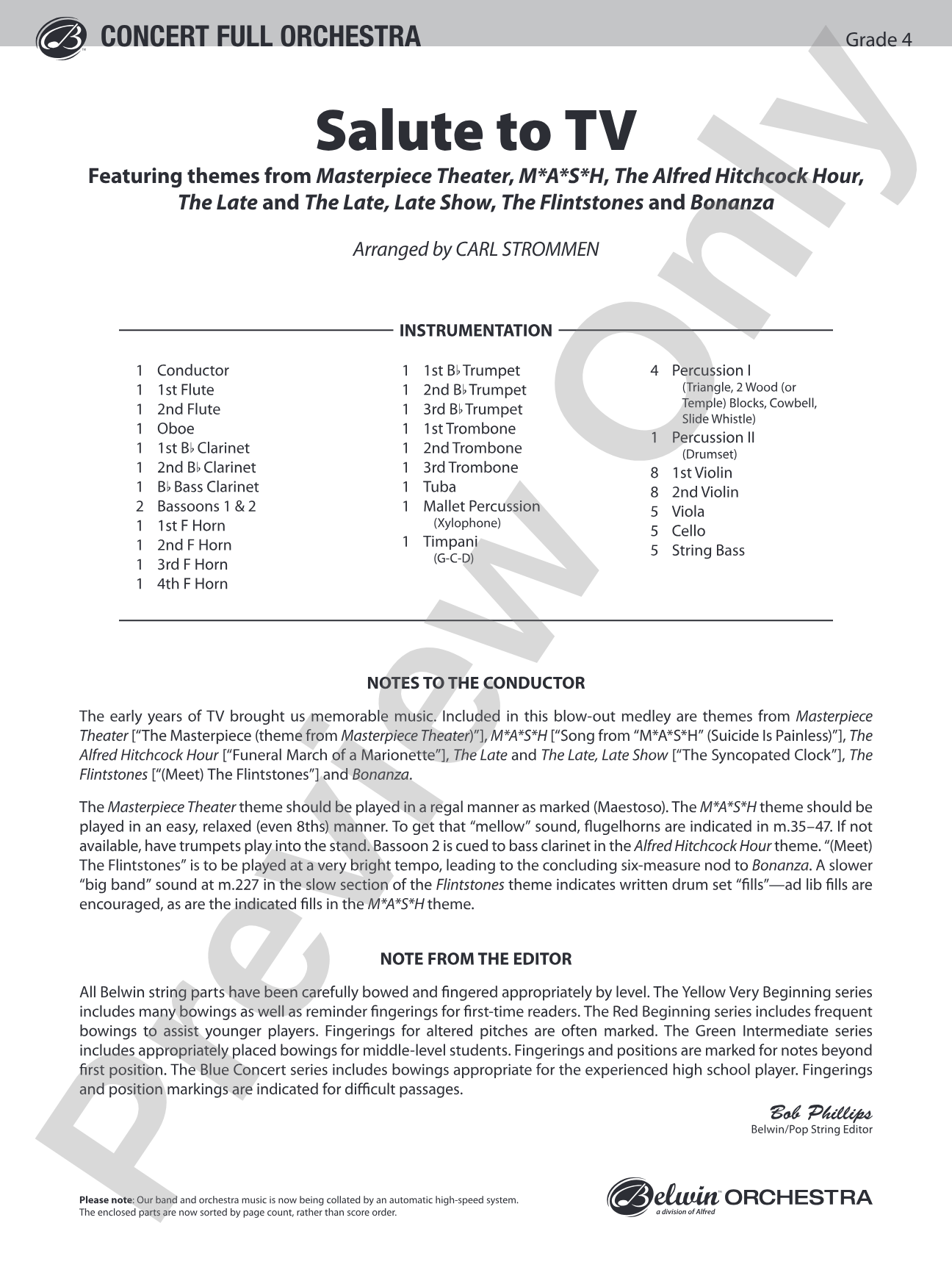
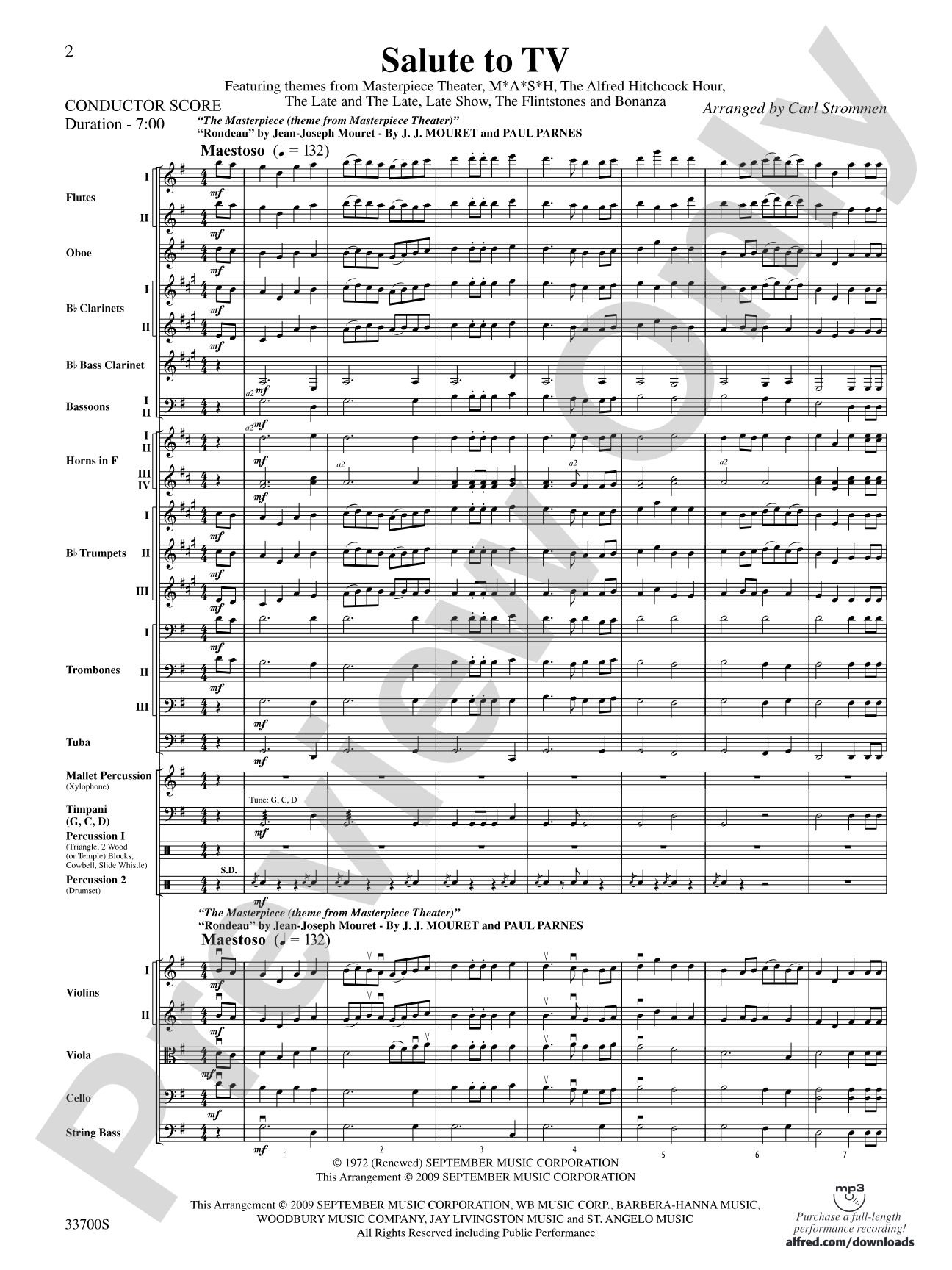
The early years of TV brought us memorable music. Included in this blow-out medley are themes from Masterpiece Theater, M*A*S*H, The Alfred Hitchcock Hour, The Late Show, The Late, Late Show, The Flintstones, and Bonanza. Perfect for a pops concert!


Don't just read it, hear it, play along with it, and watch your students grow with it. In MakeMusic Cloud, Salute to TV: Full Orchestra Conductor Score & Parts comes alive with professional accompaniment, adjustable tempo, and built-in practice tools that turn solo practice into real progress.
Open in the Player
Jump straight in and assign it today.
Start Your Free Trial
Open this title and explore the full library in minutes.
Sample Audio
1
Audio File
--:--
0:00
0:00
Sample Video
No sample videos found.
Additional Details
Series:
Pop Concert Full Orchestra
Publisher:
Alfred Music
Page Count:
232
SKU:
00-PK-0006435
More about this title
About the Arranger: Carl Strommen
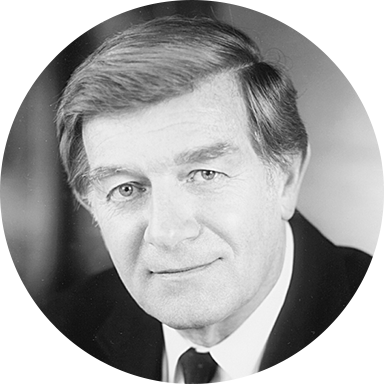
Carl Strommen's arrangements and compositions span concert band, orchestra, jazz ensemble, and choral settings, making him among the most frequently performed composer-arrangers working today. His music appears regularly in concert halls, on television, and in film, and he maintains an active schedule as both a clinician and commission writer. His steady output has earned him consecutive ASCAP Standard Writers Awards.
Strommen holds a degree from the City College of New York and serves as an adjunct professor of orchestration and composition at the C.W. Post Campus of Long Island University in Brookville, New York. He divides his time between Long Island and extended stays in Colorado with family.
Why we love this
Strommen captures the authentic character of each theme without kitsch or irony, honoring what made these pieces memorable to audiences while giving orchestras genuine material to sink their teeth into. The medley structure keeps energy high and gives you a compelling closer that celebrates a shared cultural moment. Grade 4 orchestration means real parts for every section, not a reduction dressed up as an arrangement.
What to expect
Nostalgic without being sentimental. The orchestration carries you through decades of television history with warmth and a light touch, capturing both the sophistication of Masterpiece Theater and the unbridled fun of The Flintstones. Playing it feels like joining a conversation about shared memory.
Who it's for
Orchestra directors building a pops program or needing a strong opener or closer that audiences recognize instantly. Students benefit from playing music with genuine cultural resonance, and this arrangement respects their abilities while delivering unmistakable charm.
How to get the most out of it
- Establish clean cutoffs between themes. Each show's music had its own identity, and clarity on the transitions keeps the medley from blurring into one long cue.
- Balance the melodic interest across your string section and woodwinds. Strommen distributes memorable material generously, and highlighting different colors in each theme prevents monotony.
- Use the full dynamic range available. These themes thrive on contrast between intimate moments and full orchestral statements.
How to use it
Program this as your concert closer on a pops concert to send the audience out smiling and energized. It also works as a sophisticated opener that establishes both the concert's mood and its willingness to have fun with beloved material. The medley format gives you flexibility if you want to spotlight different sections of the orchestra in brief solos.
Skills your students will build
- Executing rapid theme transitions and clean ensemble cutoffs
- Balancing melodic material across multiple instrumental lines
- Playing with stylistic awareness across diverse musical idioms
- Responding to conductor cues and sectional independence within a medley structure