Saltarello Cover Image

Saltarello: String Orchestra Conductor Score

$7.00 USD
Sale price  $7.00 USD Regular price 
Skip to product information
Saltarello Cover Image

Saltarello: String Orchestra Conductor Score

By Loreta Fin

Grade: 2

Item: 76-49396S

$7.00
Shipped

One moment…

Description
A Saltarello is an Italian folk dance, similar to a tarantella. Its main feature is the "leap" step, which comes from the Italian verb "saltare," meaning to jump. This is portrayed in the hooked bowings. The continuous, running motion is a good workout for all sections and requires clean finger action. Shifting work and string crossing are major features, and a strong sense of pulse is essential in the bass line. A piano part is included. It is not essential, but it could be played on an accordion or keyboard accordion to enhance to folk-music feel. (2:10)

Saltarello: String Orchestra Conductor Score isn't in MakeMusic Cloud just yet...but it could be. Let us know you'd like to see it, and you'll help shape what comes next. In the meantime, start a free trial and dive into thousands of interactive titles your students can play along with today.

Sample Pages

Sample Audio
0:00
0:00
Sample Video
Additional Details
Series: Wilfin String Orchestra: Young String Ensemble Series
Publisher: Wilfin Music
ISBN10: 1-4706-4799-0
ISBN13: 978-1-4706-4799-5
UPC: 038081567228
SKU: 76-49396S

More about this title

About the Composer: Loreta Fin
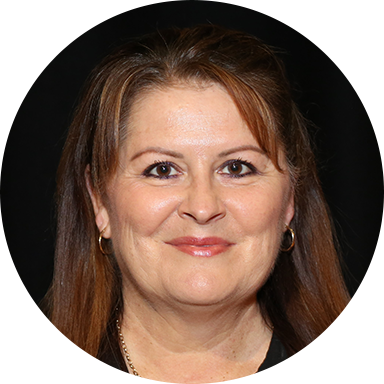
Loreta Fin

Loreta Fin AM is an Australian violist, educator, and prolific composer with deep roots in string pedagogy. A graduate of the Sydney Conservatorium of Music, she served as first violinist with the Sydney Youth Orchestra and has performed extensively in chamber and orchestral settings. For over 25 years she held the position of Principal Viola with the Queensland Pops Orchestra while simultaneously directing strings at Somerville House School in Brisbane since 1993.

Fin has established herself as a respected figure in string education across Australia and North America, presenting at national music conferences and adjudicating major competitions. Her contributions to music education and the Australian Strings Teachers Association earned her a Queensland State Award in 2009 and a National Award for Services to Music and String Teaching. She has composed over 100 works for string orchestra published by Alfred Music, and since 2015 has regularly conducted the State and National Honours Ensembles Programs in Brisbane. Fin currently serves as State Advisor for Strings with the Australian Music Examinations Board.

Why we love this

Fin writes with a conductor's understanding of what makes young string players engage physically and musically. The hooked bowings and continuous running passages demand attention to fingerwork and string crossing without feeling like drudgery; the folk-dance framework gives students a reason to care about precision and pulse. This works equally well in a concert setting or festival competition because the energy is genuine, not manufactured.

What to expect

Restless and alive, with the perpetual motion of a folk celebration caught in musical notation. The running figures and rhythmic drive create a sense of forward momentum, while the hooked bowings give the sound a spirited, almost impish character that makes young players want to move.

Who it's for

String orchestras at the early-intermediate level who are ready to tackle rhythmic precision and bow control without needing simplified harmonic language. This works for groups with mixed experience, since every section has its own technical challenges to master.

How to get the most out of it

  • Establish a clear, steady pulse in the bass line before rehearsal even begins; ask cellists and basses to voice their entrances cleanly so they become the heartbeat the rest of the orchestra depends on.
  • Work the hooked bowings in isolation first, separating the mechanics of the bow articulation from the shift work and string crossing, then layer them back together as players gain confidence.
  • If you have access to an accordion or keyboard accordion, use it instead of piano to deepen the folk idiom and give students an aural model of how this music lives in its cultural context.
  • Keep tempo steady throughout; the "leap" character comes from crisp finger action and articulation, not from rushing or slowing down.

How to use it

Pair this with other Grade 2 pieces from the Young String Ensemble Series to build a coherent concert or festival set, or program it alongside Baroque or Classical works to show students how the string orchestra sound spans centuries and genres. Its performance length of 2:10 makes it an ideal opener or closer that leaves audiences smiling.

Skills your students will build

  • Hooked bowings and articulation control
  • String crossing and shifting coordination
  • Reading and executing rhythm with precision in a steady tempo
  • Balancing individual fingerwork with ensemble pulse
  • Responding to stylistic cues from folk music idioms

You May Also Like