

Sakura: 2-Part Choral Octavo
Japanese Folk Song / arr., with English words, by Sally K. Albrecht
Item: 00-PO-0007415
$2.20
Minimum order quantity: 20 copies
Pickup currently not available
Description
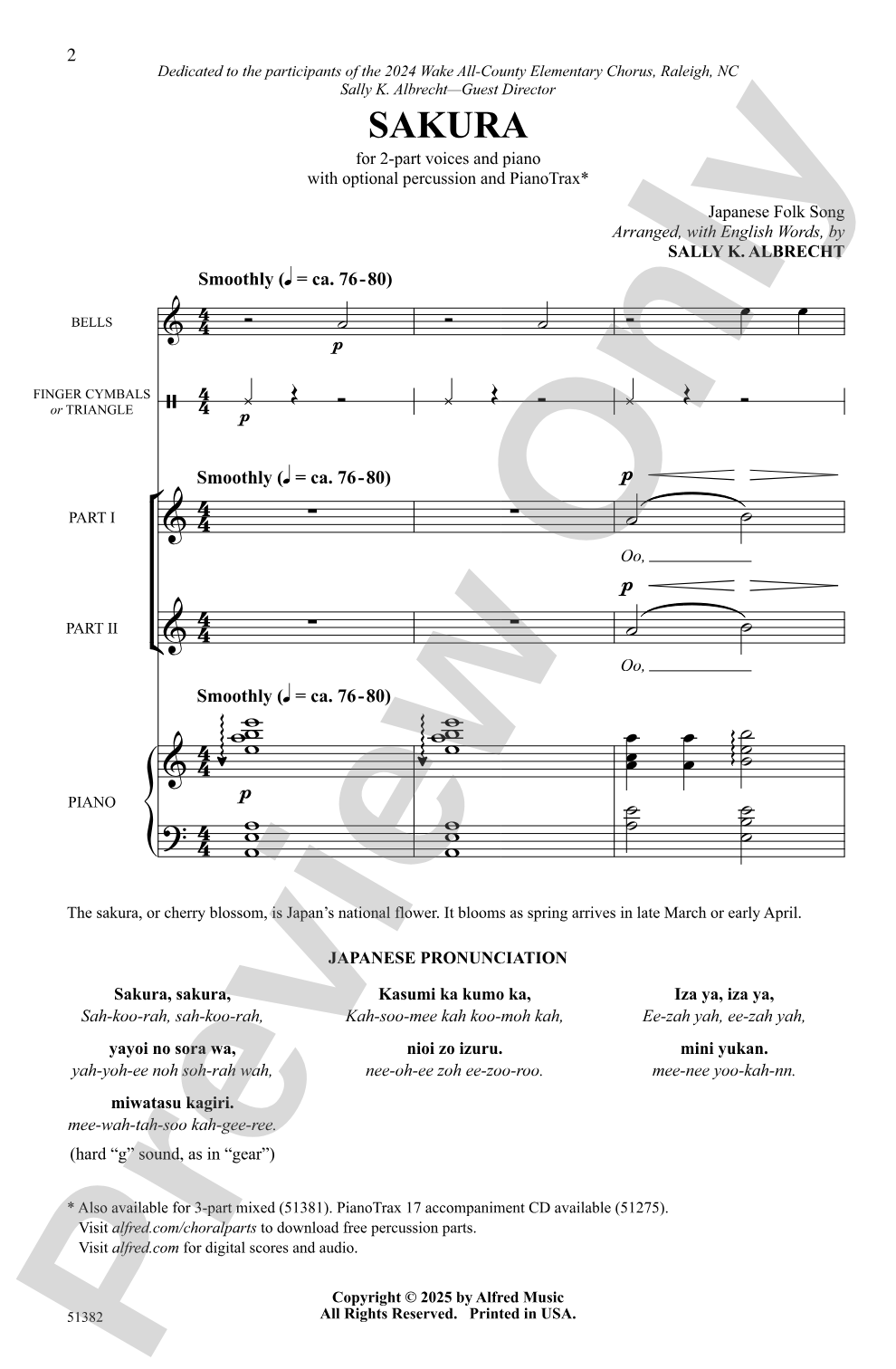
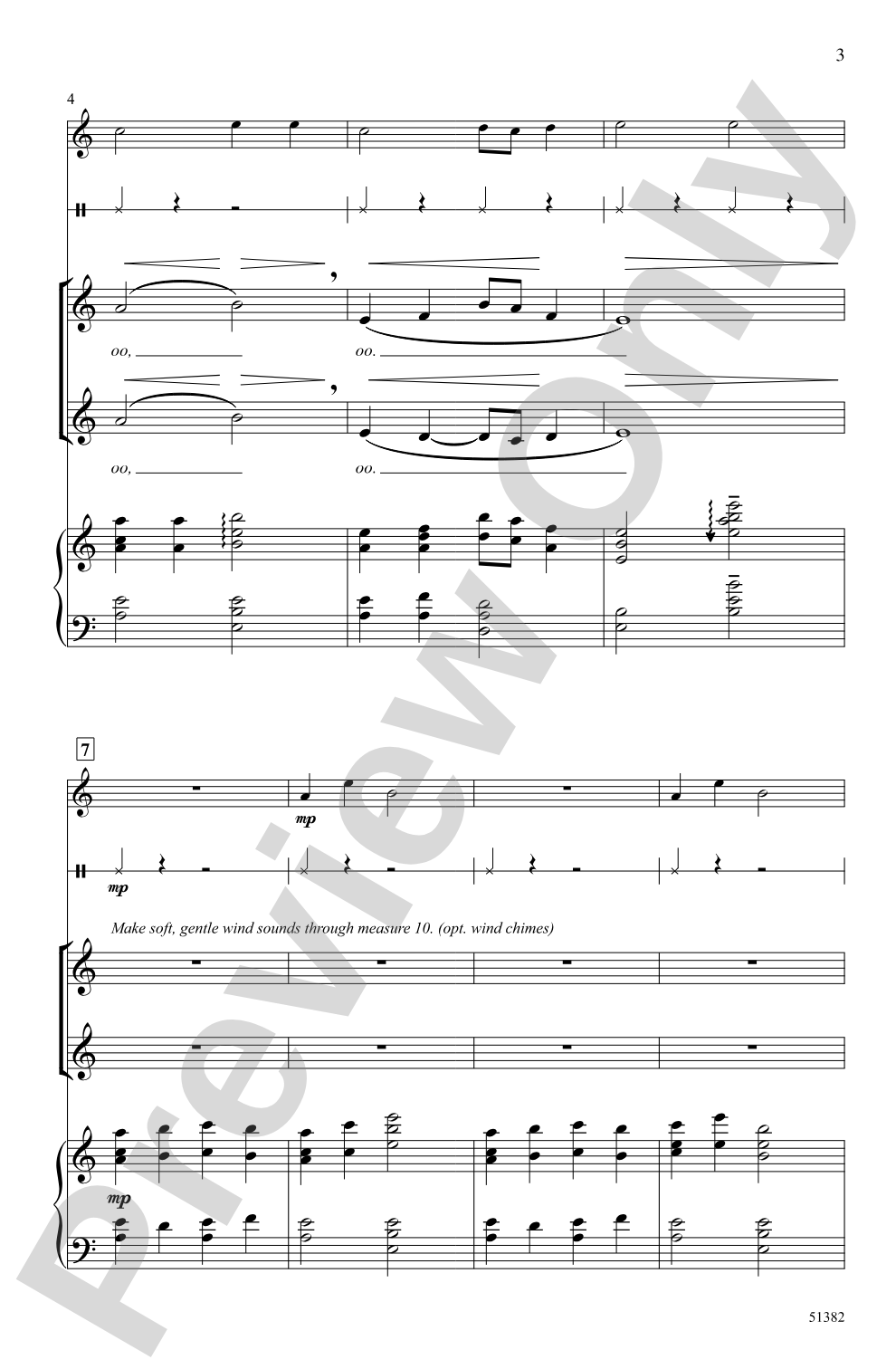
This favorite folk song about the cherry blossom, Japan's national flower, begins in Japanese and then repeats in English. Sally's haunting modal arrangement pays careful attention to voice leading and part-writing so that notes can be learned quickly, allowing time to shape expression and dynamics. Singers will especially enjoy creating soft gentle wind sounds in the interludes. Free percussion parts are available and a pronunciation guide is included.


Sakura: 2-Part Choral Octavo isn't in MakeMusic Cloud just yet...but it could be. Let us know you'd like to see it, and you'll help shape what comes next. In the meantime, start a free trial and dive into thousands of interactive titles your students can play along with today.
Request This Title
Tell us you want it.
Start Your Free Trial
Explore everything that's ready to play right now.
Sample Audio
1
Audio File
--:--
0:00
0:00
Sample Video
Additional Details
Series:
Alfred Choral Designs
Publisher:
Alfred Music
Page Count:
8
SKU:
00-PO-0007415
Instrumentation:
Bells, Finger Cymbal or Triangle
More about this title
About the Arranger: Sally K. Albrecht

Sally K. Albrecht has shaped American choral music for over three decades, serving as Director of School Choral, Vocal, and Elementary Publications at Alfred Music and other major educational publishers. A prolific composer and arranger with more than 600 published works and 75 songbooks and musicals in print, she has been a recipient of the ASCAP Special Music Award annually since 1987. Her particular expertise in choral movement and arranging has made her a sought-after clinician at festivals nationwide, including programs at Lincoln Center, Carnegie Hall, and The Kennedy Center.
Albrecht holds degrees from Rollins College (B.A. in Music and Theater, 1976), the University of Miami (M.A. in Drama, 1977; M.M. in Accompanying, 1979), and has taught at Oakland University, Jersey City State College, and Meredith College. In 2021, she received the Distinguished Alumna Award from both the University of Miami Frost School of Music and Rollins College, where she serves on the Board of Trustees. She resides in Wake Forest, North Carolina, with her husband, composer and arranger Jay Althouse.
Why we love this
Albrecht's arrangement strips away harmonic complexity in favor of elegant voice leading that lets singers absorb their parts without wrestling with chromatic passages or leaps. The modal sound evokes the genuine character of the folk melody while the bilingual text (Japanese followed by English) opens a genuine cultural conversation rather than simply translating. The interludes calling for soft wind sounds created by the singers themselves transform a two-page piece into a complete sensory experience.
What to expect
The opening has a quiet reverence, as if the cherry blossoms are being observed in a moment of stillness. As the English text enters, the piece unfolds with growing familiarity and ease, inviting the listener into a shared space between two languages and musical traditions. The interlude wind sounds create an almost impressionistic quality, suspending time between verses.
Who it's for
This arrangement works beautifully for middle school and high school choirs seeking accessible repertoire that teaches cultural awareness without sacrificing musical integrity. It also fits upper elementary choirs ready for two-part singing with genuine artistry. Directors programming spring concerts or multicultural festivals will find this a natural fit that singers enjoy learning and audiences respond to with genuine warmth.
How to get the most out of it
- Plan rehearsal time around learning the Japanese text first; the unfamiliar phonemes will feel more natural to singers if they anchor the melody before adding English words.
- Experiment with the interlude wind sounds in small groups during sectionals, then combine them in full choir to find the right dynamic balance and collective breath control.
- Use the available recorded accompaniment to free your hands for conducting the gentle dynamic shapes that Albrecht's arrangement makes possible once parts are secure.
- Add the optional percussion parts (bells and finger cymbals or triangle) selectively; consider using them only in the final English verse to reinforce the transition between languages.
How to use it
Position this in a spring concert as a bridge between larger works, or as the opening number to set a contemplative mood before moving into more energetic repertoire. It pairs naturally with other world music selections or with pieces that explore cultural themes. The moderate length and manageable difficulty make it ideal for inclusion in a concert devoted entirely to folk traditions from different continents.
Skills your students will build
- Singing in a non-English language with accurate pronunciation
- Reading and performing modal melodies
- Shaping dynamics and expression in two-part writing
- Creating vocal percussion effects and sound painting
- Understanding cultural context in world music traditions