

Sakura: 3-Part Mixed Choral Octavo
Japanese Folk Song / arr., with English words, by Sally K. Albrecht
Item: 00-PO-0007414
$2.20
Minimum order quantity: 20 copies
Pickup currently not available
Description
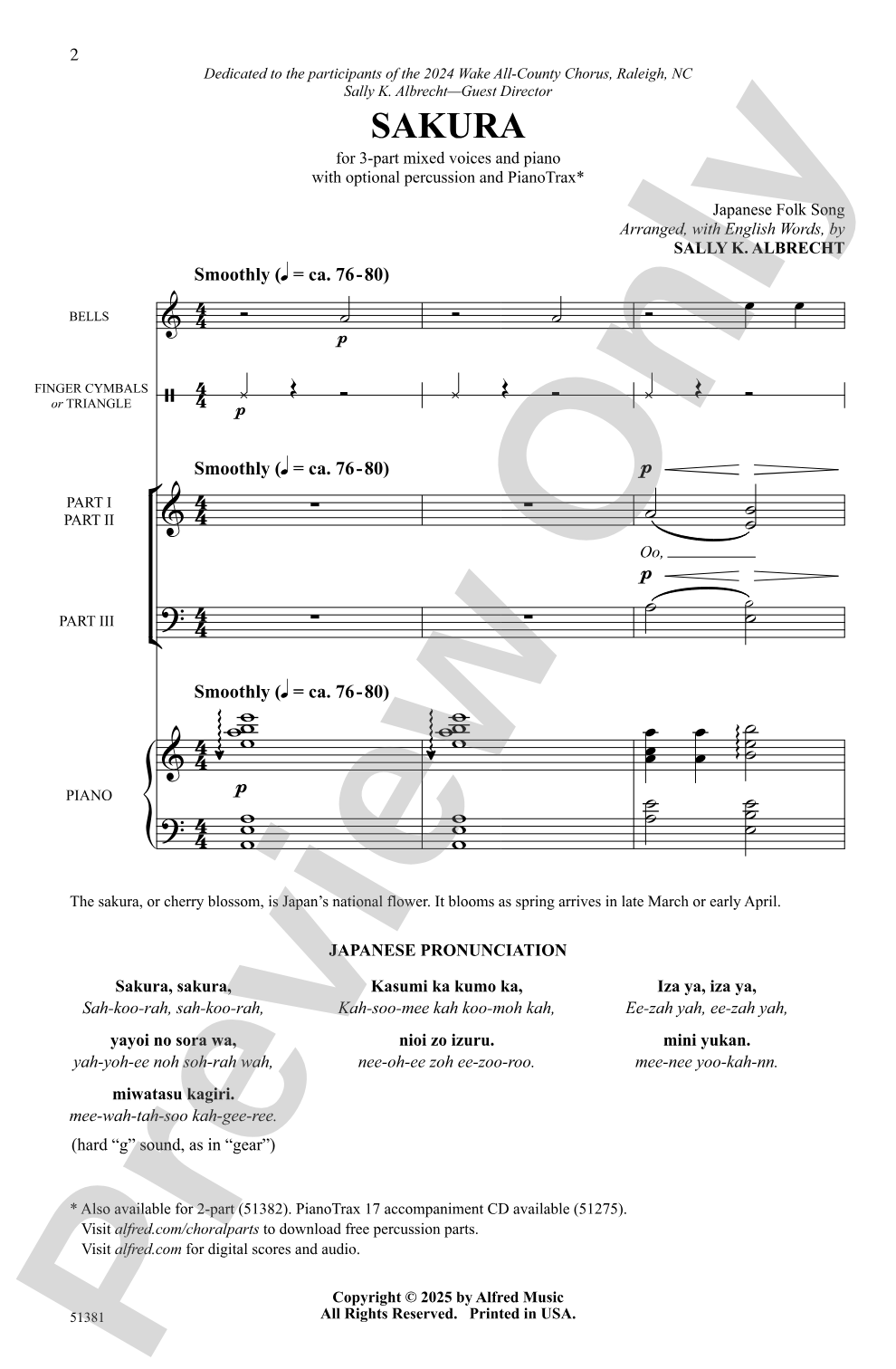
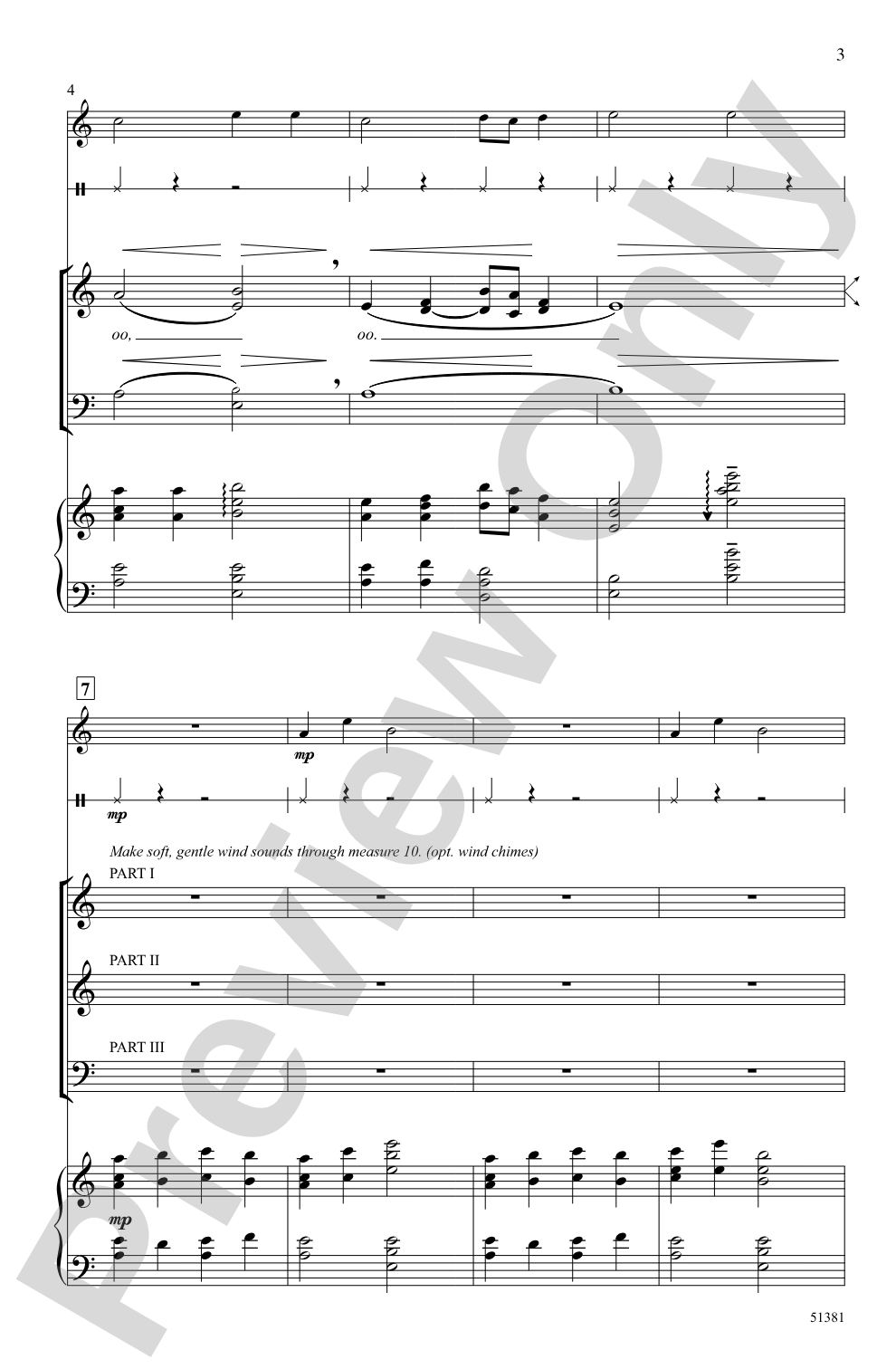
This favorite folk song about the cherry blossom, Japan's national flower, begins in Japanese and then repeats in English. Sally's haunting modal arrangement pays careful attention to voice leading and part-writing so that notes can be learned quickly, allowing time to shape expression and dynamics. Singers will especially enjoy creating soft gentle wind sounds in the interludes. Free percussion parts are available and a pronunciation guide is included.


Sakura: 3-Part Mixed Choral Octavo isn't in MakeMusic Cloud just yet...but it could be. Let us know you'd like to see it, and you'll help shape what comes next. In the meantime, start a free trial and dive into thousands of interactive titles your students can play along with today.
Request This Title
Tell us you want it.
Start Your Free Trial
Explore everything that's ready to play right now.
Sample Audio
1
Audio File
--:--
0:00
0:00
Sample Video
Additional Details
Series:
Alfred Choral Designs
Publisher:
Alfred Music
Page Count:
8
SKU:
00-PO-0007414
Instrumentation:
Bells, Finger Cymbal or Triangle
More about this title
About the Arranger: Sally K. Albrecht

Sally K. Albrecht has shaped American choral music for over four decades as a composer, conductor, and clinician with particular expertise in choral movement. Since 1987, she has received annual ASCAP Special Music Awards and maintains more than 600 published choral works alongside 75 larger musicals and songbooks. Her conducting experience spans honor choirs at major venues including Lincoln Center, Carnegie Hall, and The Kennedy Center, while her editorial leadership at Alfred Music and other major publishers shaped the landscape of school choral repertoire.
Albrecht holds degrees from Rollins College (B.A. in Music and Theater, 1976), the University of Miami (M.A. in Drama, 1977), and the University of Miami Frost School of Music (M.M. in Accompanying, 1979). She has taught at Oakland University, Jersey City State College, and Meredith College. Her contributions to music education earned her the Distinguished Alumna Award from both the University of Miami and Rollins College in 2021, and she currently serves on Rollins' Board of Trustees.
Why we love this
Albrecht's modal writing here strips away unnecessary complexity so your singers can absorb the part relationships in a handful of rehearsals. The arc from Japanese text through English repetition gives your choir natural opportunities to shape phrasing and dynamics once the mechanics are secure, while the wind-sound interlude moments add a sensory dimension that engages singers beyond reading notes.
What to expect
Sakura unfolds with quiet contemplation. The modal melody carries the serenity of cherry blossoms in spring, while the gentle interludes where singers become wind create moments of pure texture and atmosphere. The shift to English text feels like a bridge between cultures rather than a stark change, allowing the same melody to speak in two languages without losing its introspective character.
Who it's for
This octavo works for developing mixed choirs in grades 5-8 or early high school who are ready for part-singing but benefit from straightforward voice leading. It's equally at home in concert settings or festivals where a culturally aware, accessible piece makes a strong impression without requiring extensive rehearsal time.
How to get the most out of it
- Spend rehearsal time on the interludes where singers create soft wind sounds with their voices. This textural moment deserves as much attention as the melody and will become the memorable heart of the piece.
- Layer the percussion parts gradually. Start with just the finger cymbal or triangle during early rehearsals to establish the gentle accompaniment, then add bells only when the vocal parts are solid.
- Use the recorded accompaniment to help singers hear how their individual parts sit in the overall harmonic framework, then gradually reduce reliance on it as confidence builds.
- Work on the English text pronunciation carefully so it feels natural, especially at phrase endings where sustained notes can obscure vowel clarity.
How to use it
Open a spring concert with this piece to establish an intimate tone before moving to livelier repertoire, or use it as a palate cleanser between contrasting works. Its cross-cultural content makes it valuable in programs celebrating world music or during Asian heritage events, and its modest rehearsal demands make it feasible as a festival selection alongside more demanding pieces.
Skills your students will build
- Reading and singing in 3-part mixed voicing (SAB)
- Performing music in a non-English language with secure pronunciation
- Creating and sustaining non-pitched vocal sound effects in ensemble context
- Shaping dynamics and expression through modal harmony
- Coordinating with light percussion accompaniment while maintaining vocal focus