
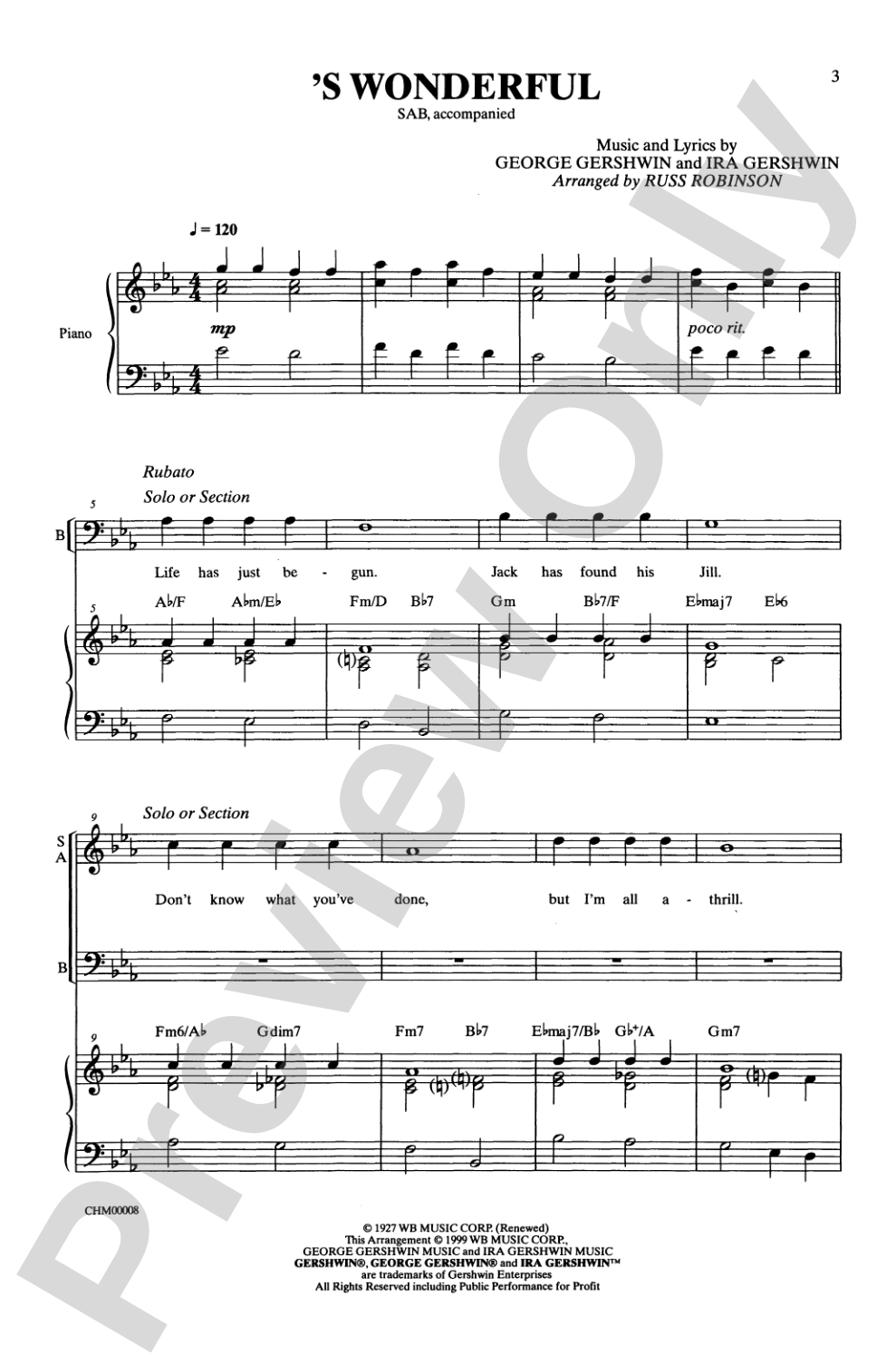
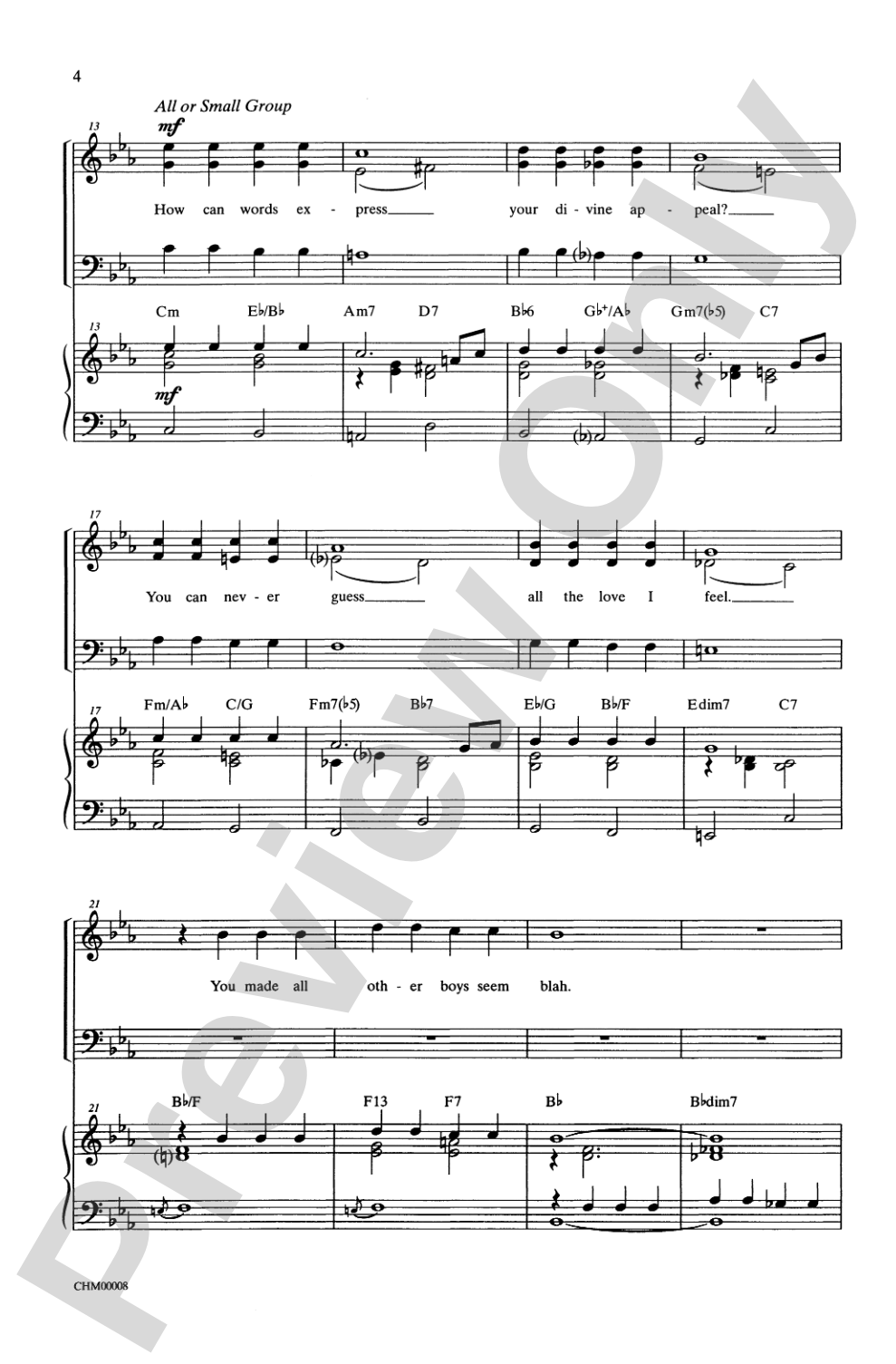

'S Wonderful: SAB Choral Octavo
Music and lyrics by George Gershwin and Ira Gershwin / arr. Russell Robinson
Item: 00-PO-0004748
$2.25
Minimum order quantity: 20 copies
One moment…
Description
This classic written years ago by George and Ira Gershwin never looses its charm. Show choirs and concert choirs everywhere will enjoy showcasing this special arrangement by Russ Robinson. The SATB and SAB voicings are a bit of a challenge, but this is a great way to introduce students to one of Gershwin's classics. An easy tempo and fabulous accompaniment track complete the wonderful feel of this piece.


'S Wonderful: SAB Choral Octavo isn't in MakeMusic Cloud just yet...but it could be. Let us know you'd like to see it, and you'll help shape what comes next. In the meantime, start a free trial and dive into thousands of interactive titles your students can play along with today.
Request This Title
Tell us you want it.
Start Your Free Trial
Explore everything that's ready to play right now.
Sample Audio
No sample audio found.
Sample Video
No sample videos found.
Additional Details
Series:
Alfred Archive Edition: Alfred Pop Choral Series
Publisher:
Alfred Music
Page Count:
12
SKU:
00-PO-0004748
More about this title
About the Composer: George Gershwin
George Gershwin (1898-1937) bridged classical and popular music in ways few composers have matched. His ability to write singable melodies within sophisticated harmonic frameworks made him a natural for both concert halls and Broadway stages, and his works remain central to American music education because they reveal how serious compositional craft can coexist with immediate, infectious appeal.
Ira Gershwin, George's brother and lyricist, had an equally sharp gift for language. His lyrics for 'S Wonderful' exemplify his wit and economy of expression. Together, the brothers created some of the 20th century's most enduring songs, and their work continues to introduce students to the idea that popular song and artistic merit are not mutually exclusive.
Why we love this
Russell Robinson's SAB arrangement opens this Gershwin standard to choirs who might otherwise lack the voice parts for a full SATB setting. The piece strikes a rare balance: charming and approachable on the surface, but with enough harmonic sophistication to stretch your singers without overwhelming them. Programming a Gershwin masterwork signals to audiences that your choir takes repertoire seriously while still honoring the joy that great popular song delivers.
What to expect
Effortless charm wrapped in genuine musicality. The piece carries the glow of a classic love song, with Gershwin's signature blend of jazz-influenced harmonies and Broadway elegance. Even at an easy tempo, the accompaniment and voicing create sophistication that feels modern and accessible at once.
Who it's for
Concert choirs and show choirs with mixed voices who want to expand their Gershwin repertoire beyond SATB limitations. This works well for ensembles comfortable with three-part mixed voicing and ready for the harmonic sophistication that Robinson brings to the arrangement.
How to get the most out of it
- Shape the familiar melody with clarity and warmth; resist the temptation to rush the easy tempo. Let the Gershwin lyricism breathe between phrases.
- Balance your three parts so the top line sings through without dominating. SAB arrangements require particular attention to blend since the lower voices carry substantial harmonic material.
- Use the accompaniment track to anchor ensemble precision, but rehearse unaccompanied sections to ensure your singers own the harmonic independence Robinson's arrangement requires.
- The movement and staging opportunities built into the piece should emerge from the text and musical phrasing, not feel imposed. Let blocking support the song's natural lilt.
How to use it
Position this as a mid-concert highlight, especially if programming other American standards or 20th-century classics. It works beautifully as a palate cleanser between heavier works, and its inherent theatricality pairs well with concert programming that values storytelling and character alongside musical technique.
Skills your students will build
- Singing jazz-influenced harmonies and chromatic voice leading
- Balancing three-part mixed voicing for clarity and blend
- Interpreting theatrical text within a concert choral setting
- Coordinating movement and blocking with ensemble cohesion
- Matching articulation and phrasing to accompany-track flexibility