
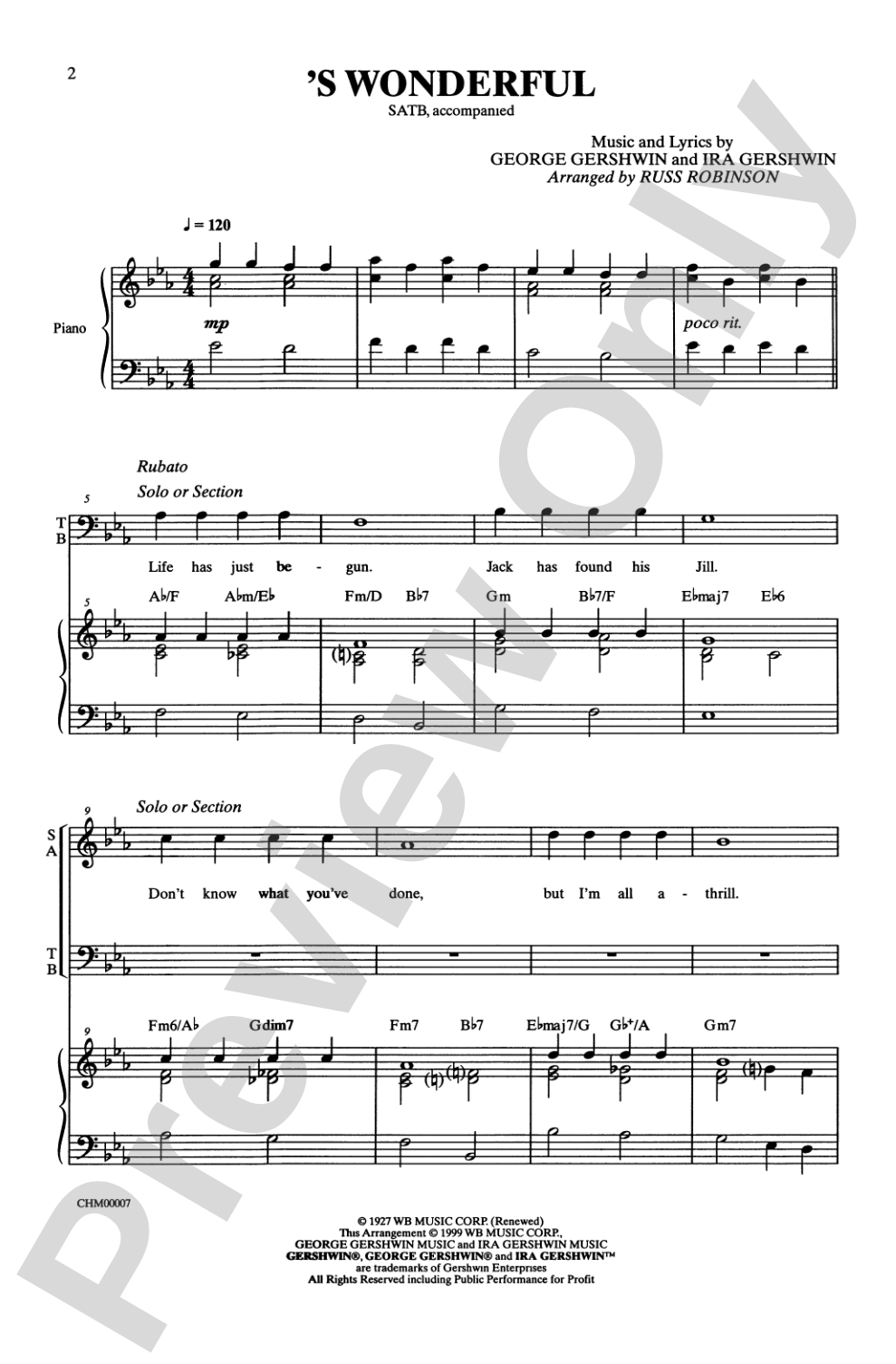

'S Wonderful: SATB Choral Octavo
Music and lyrics by George Gershwin and Ira Gershwin / arr. Russell Robinson
Item: 00-PO-0002532
$2.25
Minimum order quantity: 20 copies
One moment…
Description
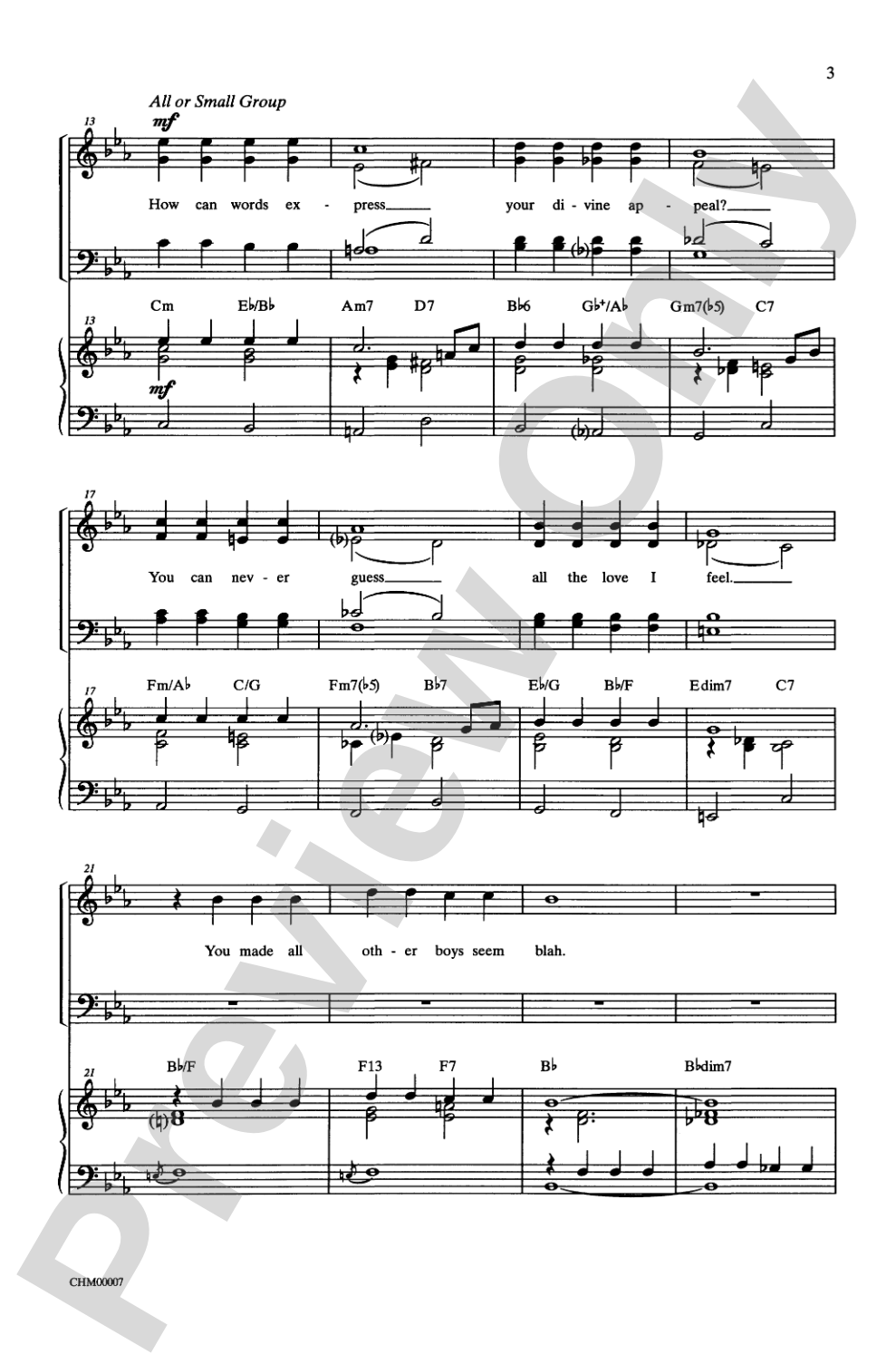
This classic written years ago by George and Ira Gershwin never looses its charm. Show choirs and concert choirs everywhere will enjoy showcasing this special arrangement by Russ Robinson. The SATB and SAB voicings are a bit of a challenge, but this is a great way to introduce students to one of Gershwin's classics. An easy tempo and fabulous accompaniment track complete the wonderful feel of this piece.


'S Wonderful: SATB Choral Octavo isn't in MakeMusic Cloud just yet...but it could be. Let us know you'd like to see it, and you'll help shape what comes next. In the meantime, start a free trial and dive into thousands of interactive titles your students can play along with today.
Request This Title
Tell us you want it.
Start Your Free Trial
Explore everything that's ready to play right now.
Sample Audio
No sample audio found.
Sample Video
No sample videos found.
Additional Details
Series:
Alfred Archive Edition: Alfred Pop Choral Series
Publisher:
Alfred Music
Page Count:
12
SKU:
00-PO-0002532
More about this title
About the Composer: George Gershwin
George Gershwin (1898-1937) bridged classical and popular music with a fluency that few composers have matched. His works for the concert hall drew unapologetically from jazz, blues, and Broadway idioms, making him essential repertoire for musicians learning to navigate 20th-century American sound. Gershwin's gift for memorable melody and harmonic sophistication shaped generations of composers and remains central to choral and instrumental curricula.
Ira Gershwin (1896-1983) was George's lyricist and creative partner, crafting witty, singable texts that matched his brother's musical inventiveness. Together they created some of American musical theater's most enduring standards, songs that have become teaching tools for understanding both vocal line and lyrical elegance.
Why we love this
Robinson's arrangement captures the effervescent charm of this standard without oversimplifying it. The voicing choices genuinely challenge singers while remaining accessible, which means your choir gets authentic Gershwin sophistication alongside genuine learning opportunities. The movement and staging elements transform what could be a concert hall piece into something your audience will visibly enjoy.
What to expect
Optimistic and urbane, with the snap of 1920s-30s Broadway filtered through a choral lens. There's lift and humor throughout, buoyed by Gershwin's innate sense of swing and the conversational ease of the text.
Who it's for
This arrangement works for show choirs seeking a jazz-inflected classic and for concert choirs wanting to expand beyond traditional art song. Your singers need secure sight-reading skills and comfort with rhythmic independence, since the SATB voicing requires confident individual line singing.
How to get the most out of it
- Keep the tempo buoyant and conversational; resist the urge to drag. Gershwin's wit lives in the rhythmic bounce, so maintain a sense of forward motion even in the slower phrases.
- Balance the inner voices carefully in the four-part writing. With 12 pages of material, the arrangement likely contains moments where altos and tenors carry important harmonic color. Don't let those parts disappear beneath the sopranos and basses.
- Use the accompaniment track as your rehearsal anchor, but make sure singers can hear each other once you step away from it. Work on parts without the recording so the choir develops independent intonation and ensemble awareness.
- The staging and movement suggestions in the score should feel organic to the performance, not tacked on. Coach your singers to let their faces and bodies follow the text's emotional arc, not just execute predetermined blocking.
How to use it
Slot this into a concert exploring American standards, or pair it with other Gershwin arrangements to create a thematic set. The piece's theatrical character and its approachable length make it ideal mid-program placement when you want energy and audience recognition without heavy emotional weight.
Skills your students will build
- Reading syncopated rhythms in a jazz-influenced idiom
- Independent four-part singing with attention to inner voice lines
- Interpreting 20th-century popular style with musical maturity
- Coordinating ensemble movement with harmonic precision
- Singing jazz inflections and stylistic articulation in choral context