

S'vivon: 2-Part Choral Octavo
Traditional Hebrew Folk Song / arr. Lois Brownsey and Marti Lunn Lantz
Item: 00-PO-0000044
$1.65
Minimum order quantity: 20 copies
Pickup currently not available
Description
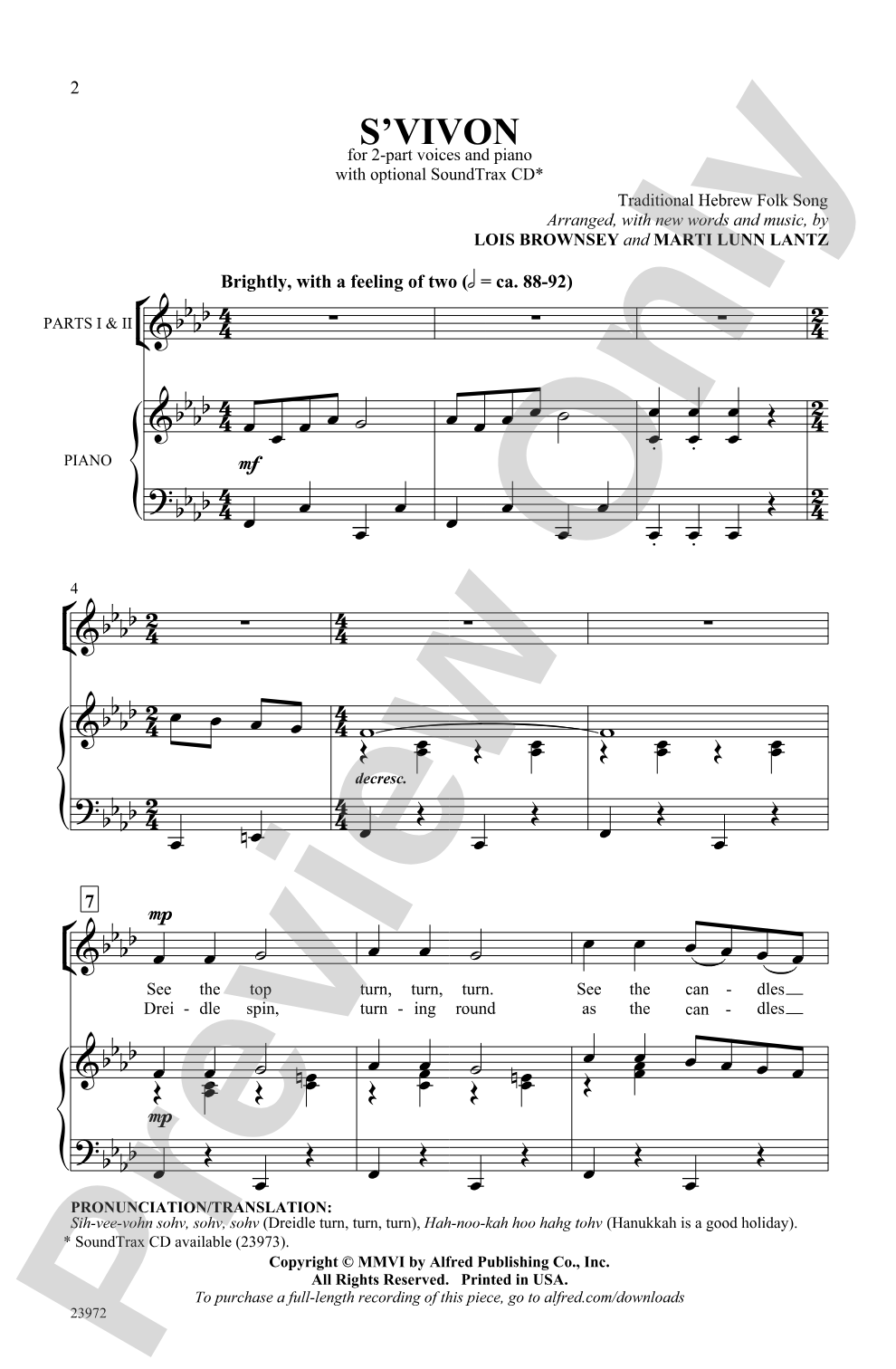
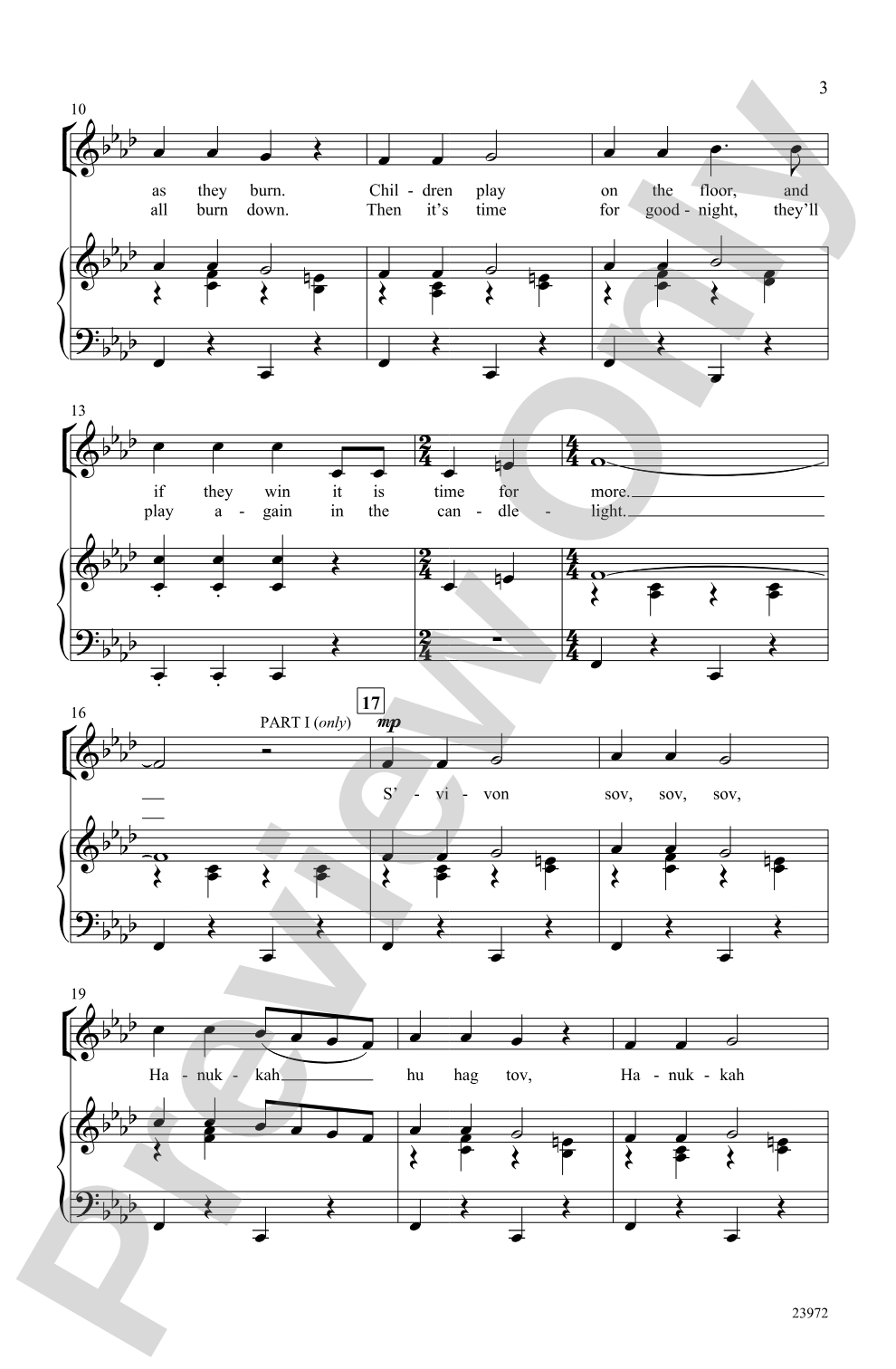
Celebrate Hanukkah with this jovial partner song featuring a bouncy accompaniment and cheerful hand claps during the repeated refrain. The traditional Hebrew folk song is combined with an original English partner melody to delight in the fun of spinning the dreidel. A holiday standout!


S'vivon: 2-Part Choral Octavo isn't in MakeMusic Cloud just yet...but it could be. Let us know you'd like to see it, and you'll help shape what comes next. In the meantime, start a free trial and dive into thousands of interactive titles your students can play along with today.
Request This Title
Tell us you want it.
Start Your Free Trial
Explore everything that's ready to play right now.
Sample Audio
1
Audio File
--:--
0:00
0:00
Sample Video
No sample videos found.
Additional Details
Series:
Alfred Choral Designs
Publisher:
Alfred Music
Page Count:
8
SKU:
00-PO-0000044
More about this title
About the Arranger: Lois Brownsey

Lois Brownsey and Marti Lunn Lantz have built a distinctive catalog of choral works rooted in cultural celebration and seasonal joy. Their collaborative output with Alfred includes settings that range from multicultural explorations to holiday favorites, each one crafted with attention to accessibility and ensemble delight. Brownsey's background spans classical training at Temple University, professional performance across multiple genres from 1973 through 1997, and extensive work in commercial music production. She and Lantz operate Red Rock Recording Studios in Pennsylvania's Pocono Mountains, where many of their published arrangements are recorded, giving them direct insight into how their scores sound in practice.
Why we love this
Partner songs create natural energy in rehearsal, and this one pairs the familiar dreidel tune with an original English melody that feels equally organic. The hand claps during the refrain transform the piece from a listening experience into a participatory moment—students remember where they are in the form because they're doing something physical and fun. For directors seeking Hanukkah repertoire beyond religious solemnity, this delivers genuine holiday warmth without requiring divided voice parts that strain small choirs.
What to expect
Bright and celebratory, with the infectious rhythmic bounce of a children's game song. The hand claps punctuate the refrain like an invitation to join in, making the piece feel less like a formal choral number and more like a musical party. There's genuine joy in the way the two melodies dance together, creating a sense of play rather than precision.
Who it's for
Middle school and early high school choirs looking for approachable 2-part literature that engages rather than challenges. Any ensemble with singers new to partner songs or mixed-age student groups will find the straightforward voicing accessible, while the cultural content and celebratory nature make it especially valuable for directors intentionally building multicultural programming or designing Hanukkah-centered concerts.
How to get the most out of it
- Establish a clear, steady tempo for the hand claps before adding singers; the rhythmic precision of the percussion makes the piece bounce rather than drag.
- Separate the two melodies in sectional rehearsals so each part feels confident in isolation before blending; partner songs often confuse singers if both parts are introduced simultaneously.
- Keep the accompaniment forward in your choral balance; the bouncy texture supports rather than obscures, so don't ask singers to pull back.
- Plan the hand claps as part of blocking, not an afterthought; consider whether singers stand or move during this moment to maximize visual impact.
How to use it
This works beautifully in a multicultural winter concert alongside secular seasonal pieces, or as the centerpiece of a Hanukkah-focused program. Pair it with instrumental or a cappella pieces to vary texture, and place it where the audience's energy can rise; it's an excellent closer or pre-finale moment because students perform it with visible enthusiasm.
Skills your students will build
- Singing partner songs with rhythmic independence
- Coordinating hand claps with vocal entrances
- Blending two different melodic lines in 2-part voicing
- Sustaining ensemble rhythm and tempo without conducting emphasis
- Performing with cultural awareness and respect for Hebrew folk tradition