Russian Polka Cover Image

Russian Polka: String Orchestra Conductor Score & Parts

$40.00 USD
Sale price  $40.00 USD Regular price 
Skip to product information
Russian Polka Cover Image

Russian Polka: String Orchestra Conductor Score & Parts

By Elena Roussanova Lucas

Grade: 1

Item: 00-BSOM04010

$40.00
Shipped

One moment…

Description
Inspired from her work with a ballet company, Elena wrote this traditional Russian dance to add the flair of "the old country" to your beginners' program. Each section has an opportunity with the melodic components. (2:29)

Russian Polka: String Orchestra Conductor Score & Parts isn't in MakeMusic Cloud just yet...but it could be. Let us know you'd like to see it, and you'll help shape what comes next. In the meantime, start a free trial and dive into thousands of interactive titles your students can play along with today.

Sample Pages

No sample pages found.

Sample Audio
0:00
0:00
Sample Video
Additional Details
Series: Belwin Beginning String Orchestra
Publisher: Alfred Music
UPC: 654979067429
SKU: 00-BSOM04010

More about this title

About the Composer: Elena Roussanova Lucas
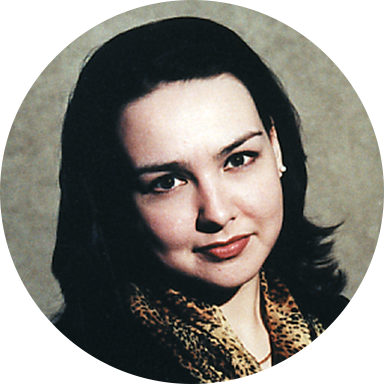
Elena Roussanova Lucas

Elena Roussanova Lucas grew up in Moscow and began piano studies at age three, eventually earning admission to the prestigious Central Music School's child prodigy program. She continued her musical training at the Ippolitov-Ivanov Music College, where she completed a diploma in Piano Pedagogy and Piano Accompaniment, and later at the Tchaikovsky Conservatoire, where she graduated with the Red Diploma (Summa Cum Laude) in Composition, Music History, Theory, and Instrumentation under the mentorship of Tihon Khrennikov and Tatiana Choodova.

Her compositions have been performed by major ensembles including The Tchaikovsky State Orchestra of Moscow, The Russian National Orchestra Brass Quintet, and The Bolshoi Ballet. As a pianist and pedagogue, she has performed across Moscow, the United Kingdom, the Netherlands, and the United States, and won First Prize in a Russia-wide piano competition sponsored by the Russian Ministry of Culture. Lucas has taught composition at the Tchaikovsky Conservatoire and currently serves on the faculty at Boston University.

Why we love this

Lucas draws directly from her ballet company experience to craft an authentic Russian dance with genuine character that beginning orchestras can actually play. The melodic sections are distributed so every stand gets a moment in the spotlight, keeping your ensemble engaged and invested in the performance.

What to expect

A spirited snapshot of Russian folk tradition brought to life with infectious rhythmic energy and clear, singable melodies. The piece captures the warmth and vitality of the dance without demanding virtuosity, making it accessible and genuinely fun for young orchestral musicians.

Who it's for

Beginning string orchestras seeking repertoire that connects to cultural traditions beyond the standard concert hall canon. This score is ideal for conductors building a program that celebrates diversity while respecting the technical limitations of Grade 1 players.

How to get the most out of it

  • Shape the melodic lines with clear phrasing; even at this level, dancers need to hear the contour of each musical idea to execute their patterns cleanly.
  • Keep the rhythmic pulse steady and energetic without rushing; the polka's characteristic bounce comes from precision, not speed.
  • Balance the melody across your string sections so that no single line dominates; this piece benefits from a unified ensemble sound rather than featured soloists.

How to use it

Program this alongside other folk-inspired pieces to create a thematic concert around world dance traditions, or use it as an energetic finale to showcase your beginners' solid command of rhythm and ensemble coordination. The short duration (2:29) makes it an excellent pairing with slightly longer Grade 1-2 works.

Skills your students will build

  • Playing as an ensemble within a steady pulse while maintaining individual line integrity
  • Reading and executing polka rhythm patterns across multiple string parts
  • Balancing melody and accompaniment textures within their section
  • Sustaining legit legato while the underlying rhythm drives forward

You May Also Like