
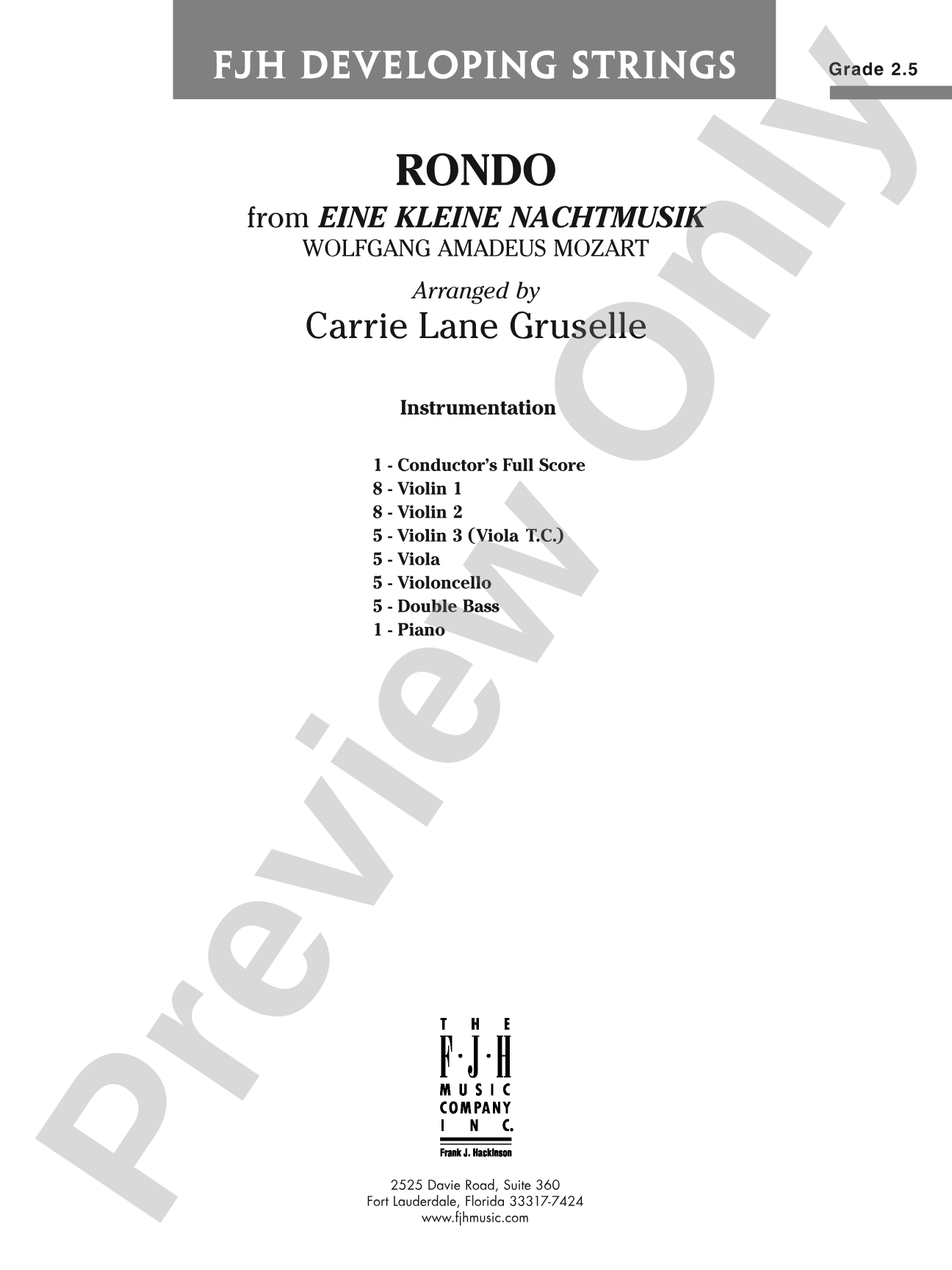
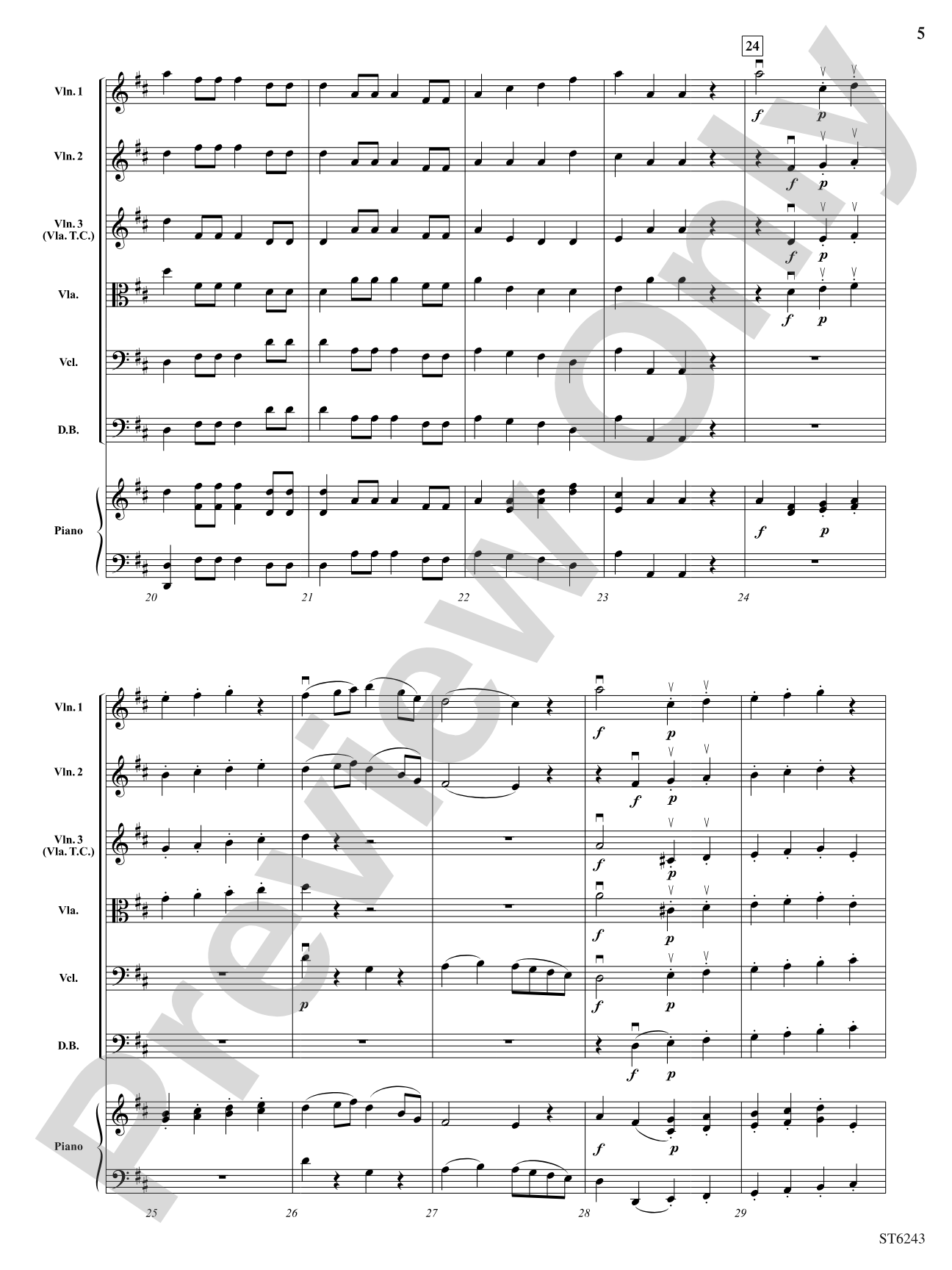
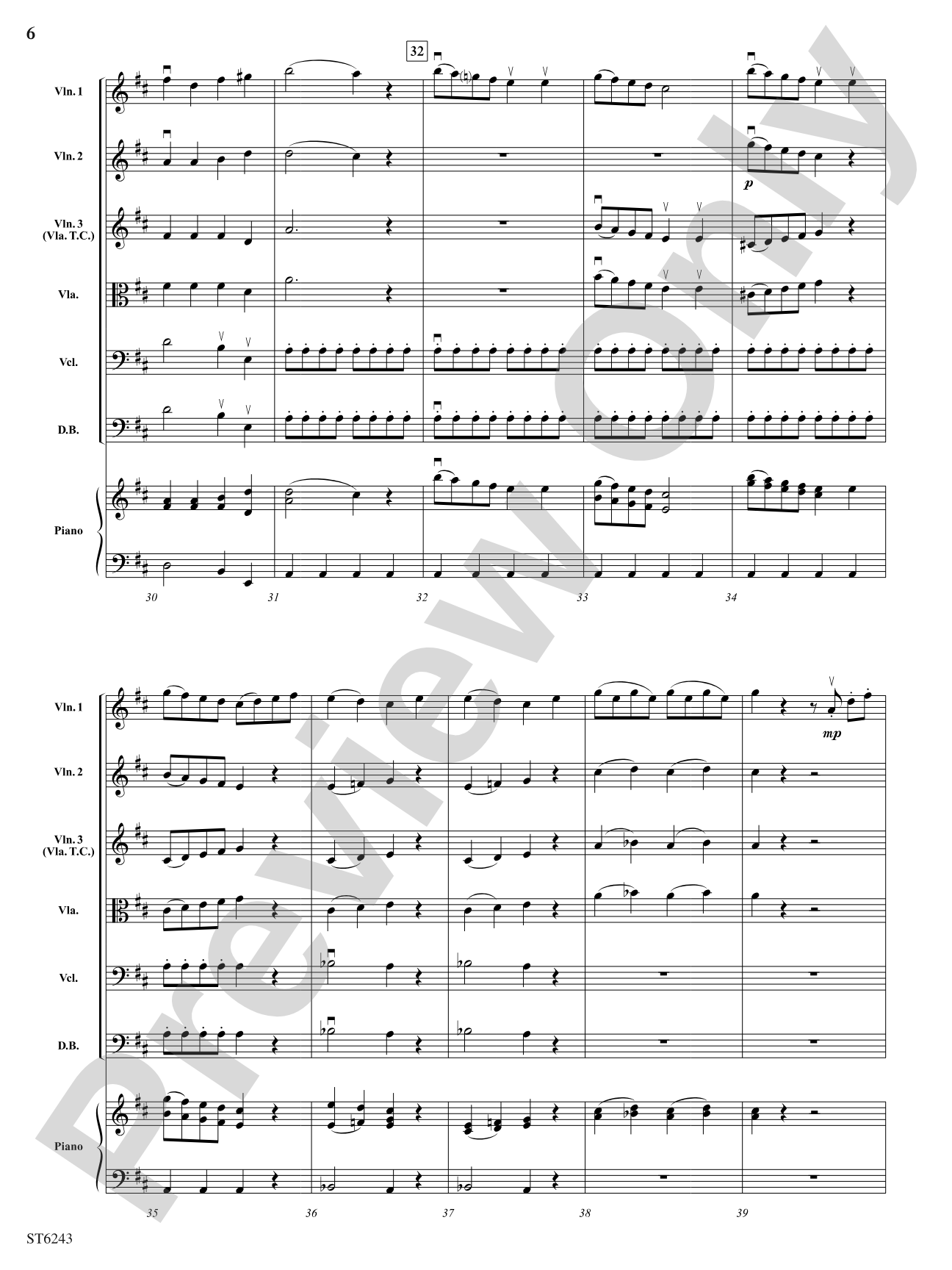
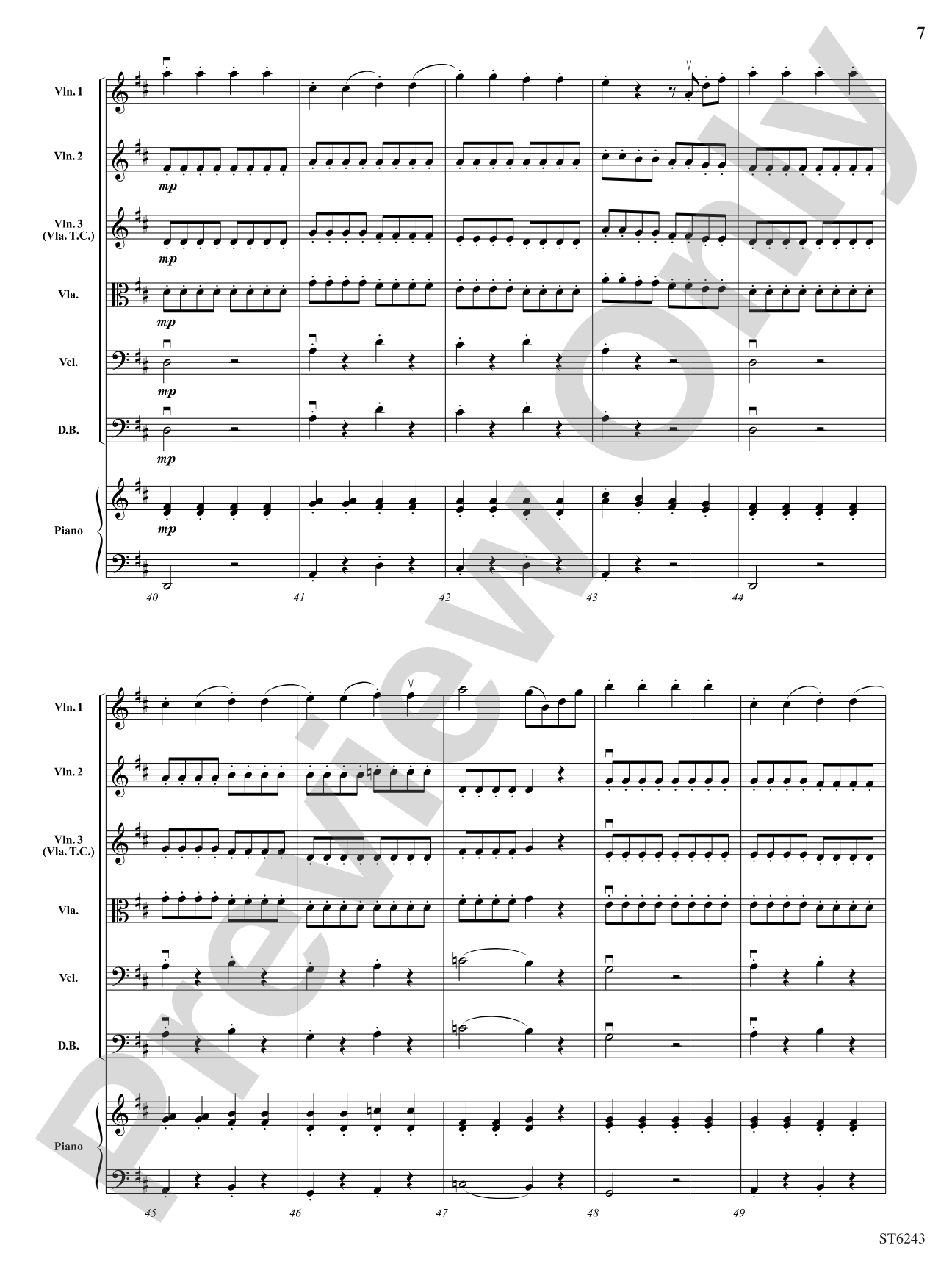
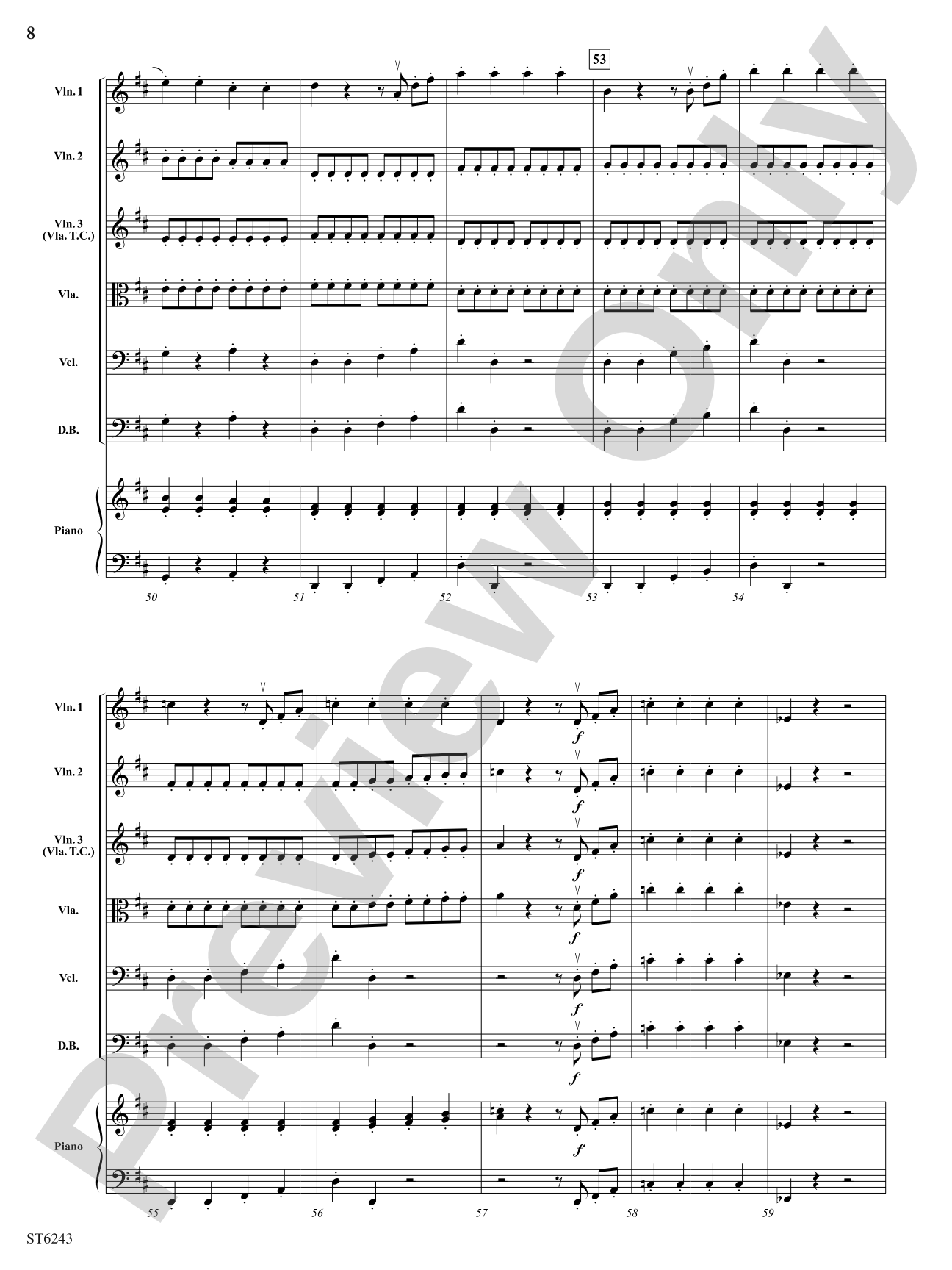
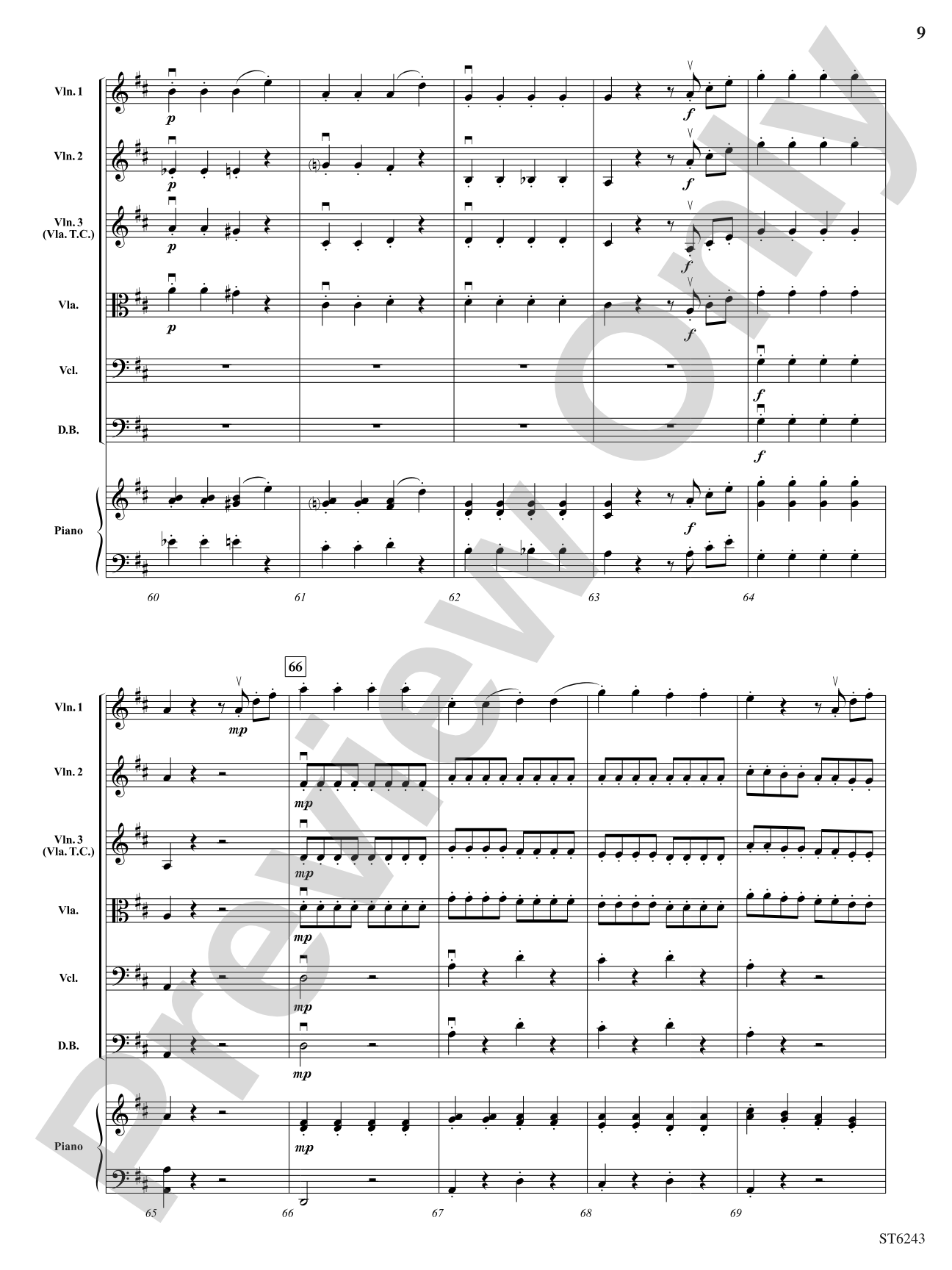
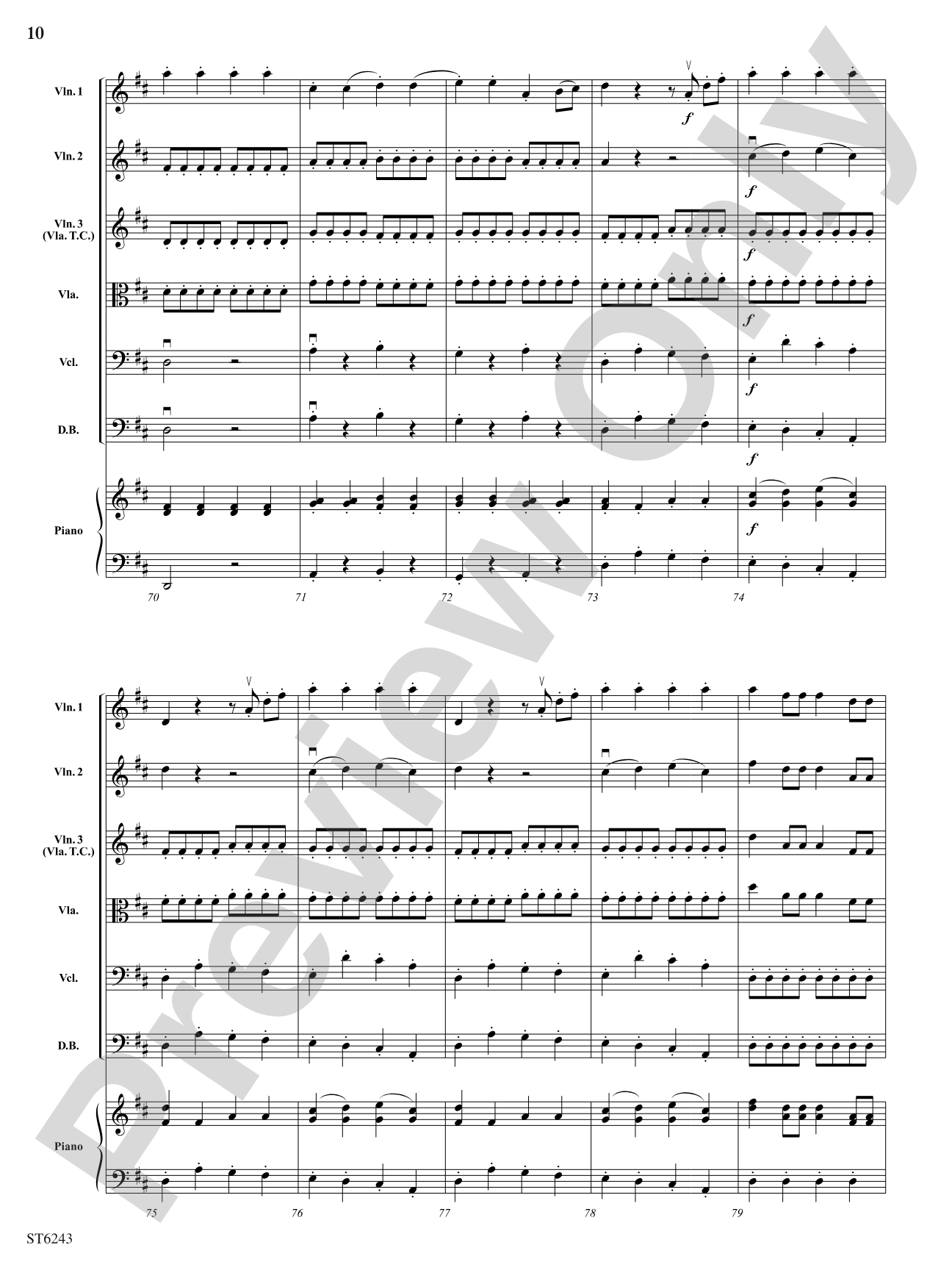
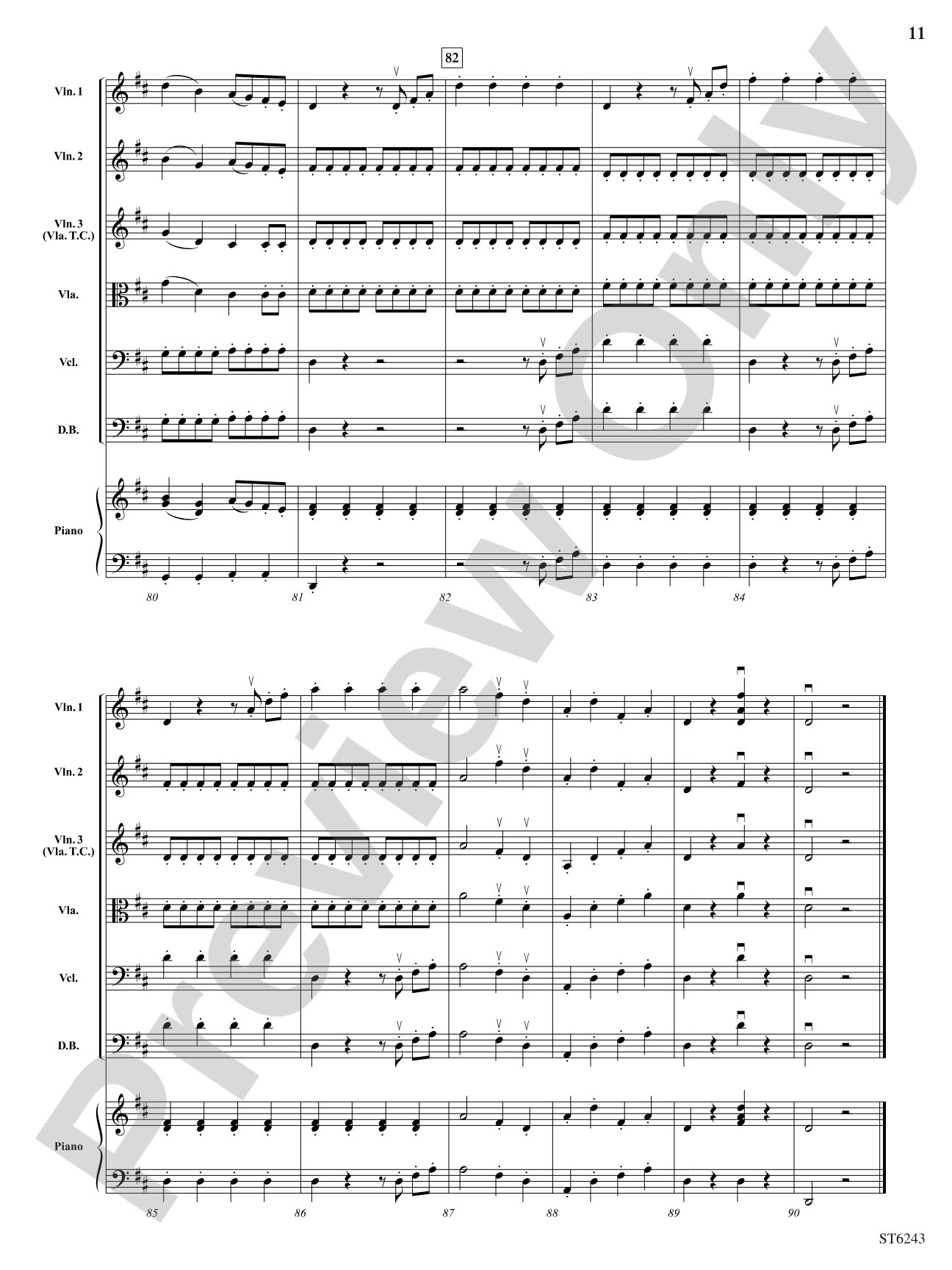

Rondo from Eine Kleine Nachtmusik: String Orchestra Conductor Score & Parts
Arranged by Carrie Lane Gruselle
Grade: 2.5
Item: 98-DST6243

$50.00
Pickup currently not available
Buy Extra Parts (Digital PDF Download)
Parts Added to Cart!
Description
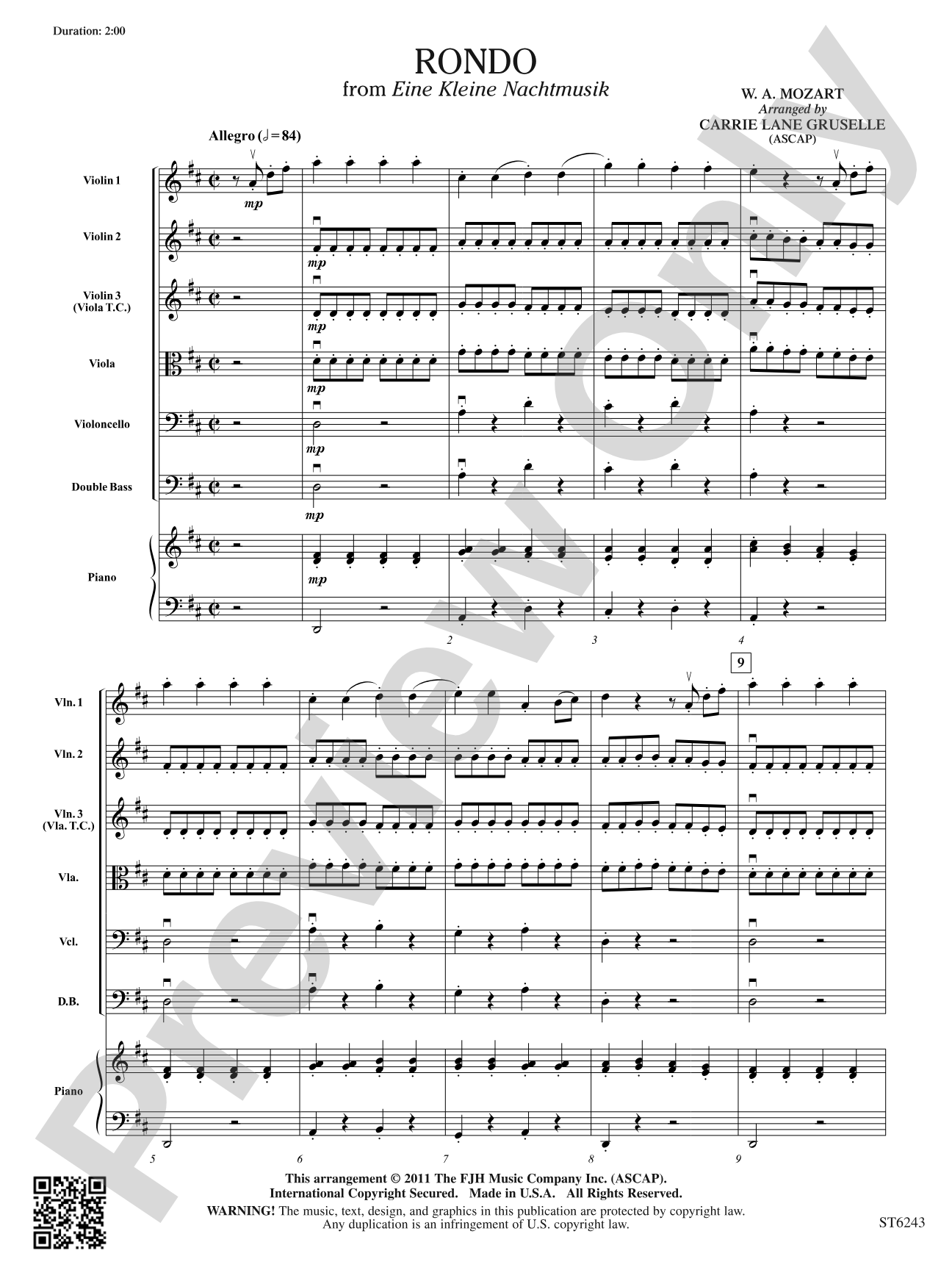
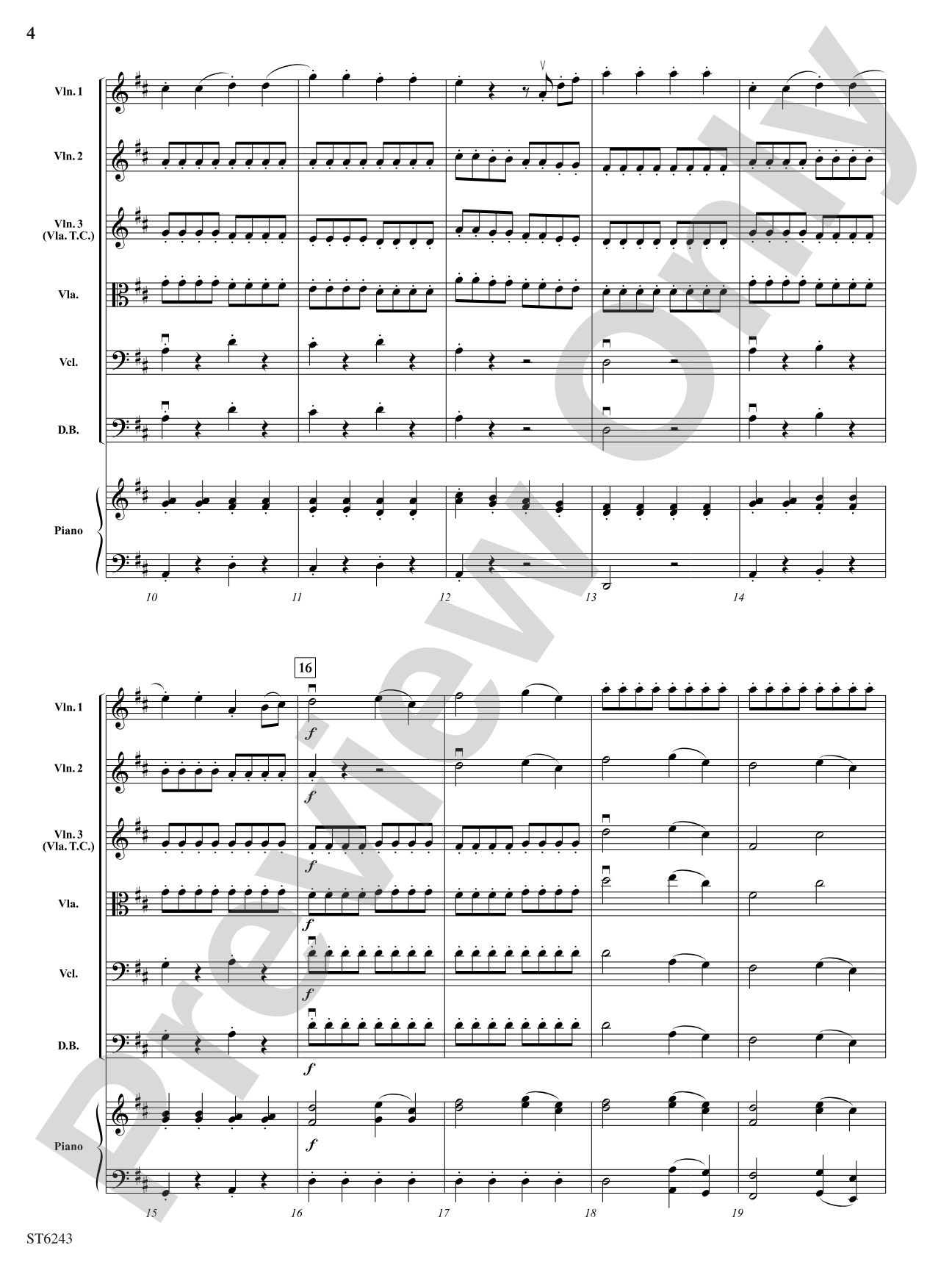
What a fantastic arrangement of a masterpiece for orchestra! Well within the reach of younger students without sounding watered down in the slightest, this arrangement will have students focusing on light, off-the-string bowings. The masterful scoring and attention to detail allow the inherent drive and energy to burst through as your orchestra conquers this Mozart masterpiece!


Don't just read it, hear it, play along with it, and watch your students grow with it. In MakeMusic Cloud, Rondo from Eine Kleine Nachtmusik: String Orchestra Conductor Score & Parts comes alive with professional accompaniment, adjustable tempo, and built-in practice tools that turn solo practice into real progress.
Open in the Player
Jump straight in and assign it today.
Start Your Free Trial
Open this title and explore the full library in minutes.
Sample Audio
1
Audio File
--:--
0:00
0:00
Sample Video
No sample videos found.
Additional Details
Series:
FJH Developing Strings
Publisher:
The FJH Music Company, Inc.
SKU:
98-DST6243
More about this title
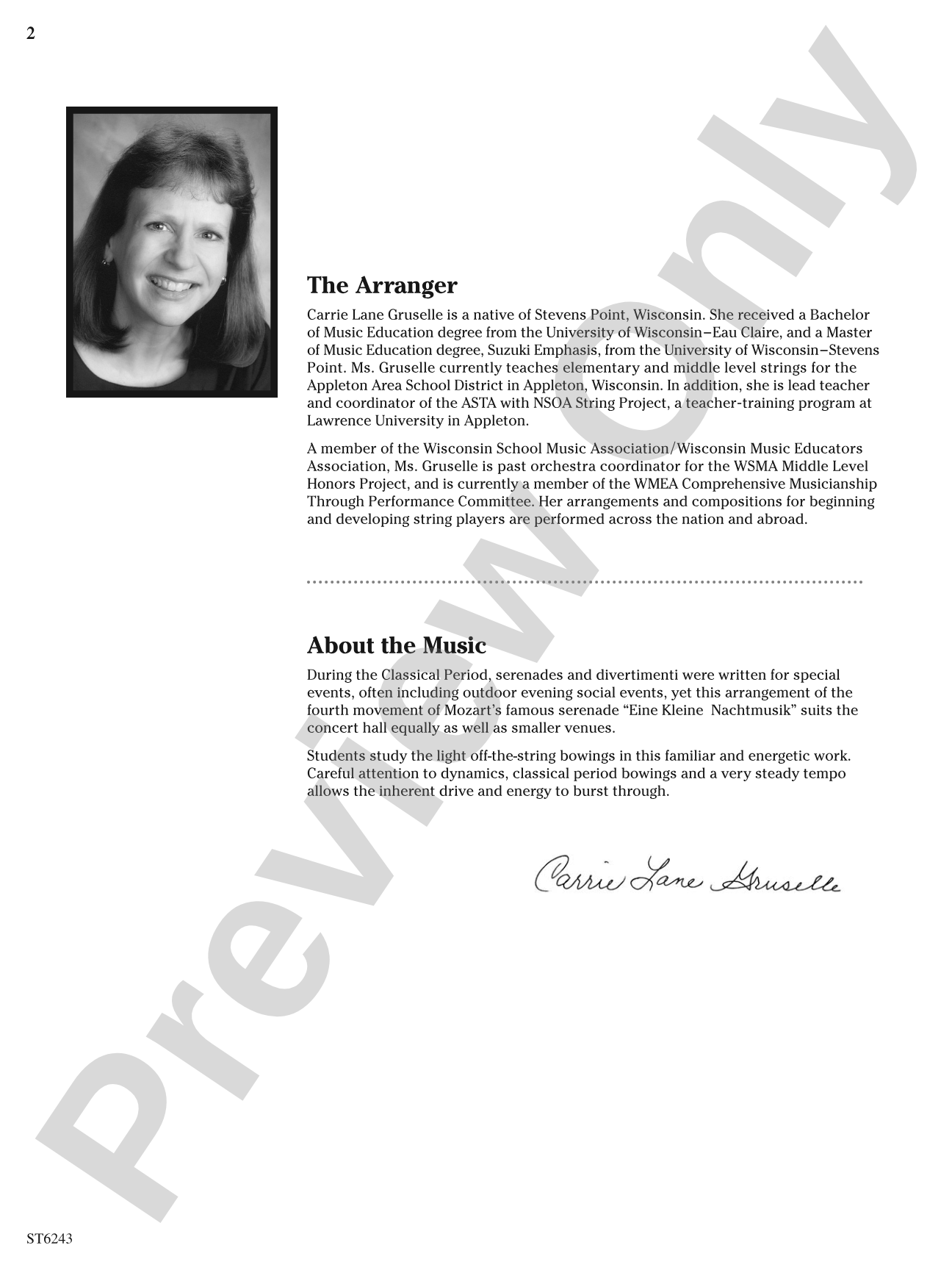
About the Arranger: Carrie Lane Gruselle

Carrie Lane Gruselle earned her Bachelor of Music Education from the University of Wisconsin–Eau Claire and her Master of Music Education from the University of Wisconsin–Stevens Point, where she specialized in Suzuki pedagogy. She has taught elementary and middle school strings in the Appleton Area School District and serves on the cello faculty at the Lawrence University Arts Academy in Appleton, Wisconsin.
Why we love this
Gruselle's arrangement captures the effervescence of Mozart's original without resorting to simplification; younger orchestras get to play a work that sounds genuinely sophisticated. The focus on off-the-string bowings gives students a specific technical challenge that builds real artistry rather than just getting through the notes.
What to expect
The Rondo bounds along with courtly elegance and infectious buoyancy. Even in a younger arrangement, Mozart's harmonic wit and melodic grace remain intact, creating a performance that feels both playful and refined.
Who it's for
This arrangement serves Grade 2.5 string orchestras ready to tackle a recognizable masterwork with technical and musical substance. It's ideal for directors building student confidence through exposure to great music, and for ensembles preparing repertoire for contests or festivals.
How to get the most out of it
- Keep the rhythmic drive buoyant; off-the-string articulation should feel light and bouncy, never labored or choppy.
- Balance the melody across sections as it passes from violins to violas and celli; make sure accompaniment figures stay transparent underneath.
- Maintain clarity in the faster passagework without sacrificing the lilting character; precision and lift go hand in hand here.
- Encourage violinists to lift the bow fully between notes rather than resting it on the string; this releases the energy that makes the piece dance.
How to use it
Program this as a centerpiece on a concert where you want to showcase student progress without diluting the repertoire. It also pairs naturally with other Classical-era works or serves as an accessible festival selection that won't overshadow developing players.
Skills your students will build
- Off-the-string bowing articulation and control
- Playing with lifted, dancing rhythmic character
- Balance and transparency in accompanying figures
- Following melody as it moves across sections
- Maintaining ensemble precision in faster passagework