Rock Steady Cover Image

Rock Steady: String Orchestra Conductor Score & Parts

$52.00 USD
Sale price  $52.00 USD Regular price 
Skip to product information
Rock Steady Cover Image

Rock Steady: String Orchestra Conductor Score & Parts

By Loreta Fin

Grade: 1.5

Item: 76-52807

$52.00
Shipped

One moment…

Description
A rest is a "note that has no sound" and it is one of the most challenging concepts for students to observe, without pushing the tempo or losing the sense of pulse. This piece requires the beat to stay Rock Steady. It features straightforward notes and rhythms, with rests in each part. However, every time there is a rest, other parts fill that rest. This helps the resting players to feel the continuous pulse, while being able to "count on" the other sections to assist them in feeling the spaces in the music. Left hand pizzicato and contrasting articulations are also explored.

Rock Steady: String Orchestra Conductor Score & Parts isn't in MakeMusic Cloud just yet...but it could be. Let us know you'd like to see it, and you'll help shape what comes next. In the meantime, start a free trial and dive into thousands of interactive titles your students can play along with today.

Sample Pages

Sample Audio
0:00
0:00
Sample Video
Additional Details
Series: Wilfin String Orchestra: Young String Ensemble Series
Publisher: Wilfin Music
ISBN10: 1-4706-8606-6
ISBN13: 978-1-4706-8606-2
UPC: 038081619958
SKU: 76-52807

More about this title

About the Composer: Loreta Fin
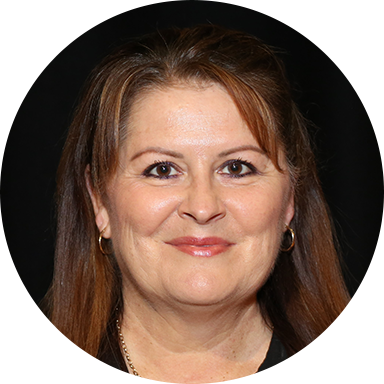
Loreta Fin

Loreta Fin AM brings nearly three decades of orchestral and educational leadership to her composing. A Sydney Conservatorium graduate and former first violinist with the Sydney Youth Orchestra, she served as Principal Viola with the Queensland Pops Orchestra and directed strings at Somerville House School in Brisbane since 1993. Her work as an adjudicator, conference presenter, and examiner with the Australian Music Examinations Board has shaped string education across Australia and internationally.

Fin's compositional output exceeds 100 published works for string orchestra, distributed worldwide by Alfred Music. She held significant roles within the Australian Strings Association, including State and National President, and received the National Award for Services to Music and String Teaching. Her career reflects deep commitment to both performance excellence and the practical realities of teaching young musicians.

Why we love this

Rock Steady addresses a fundamental struggle in early ensemble teaching: students who rest often disconnect from the pulse entirely. Fin's solution is elegant and pedagogically sound. By ensuring that active lines always fill the rests, she creates an acoustic safety net that keeps resting musicians anchored to the ensemble. The piece develops genuine musicianship through this constraint rather than circumventing the challenge.

What to expect

The piece maintains forward momentum while teaching patience. Students experience rests not as gaps but as moments of careful listening. Left-hand pizzicato adds texture and playfulness, keeping the energy light and focused rather than heavy.

Who it's for

This score works for conductors introducing rests as a legitimate musical element to first and second-year ensembles. It serves students who need concrete support systems to maintain pulse while learning to trust other sections, and it builds confidence in young musicians transitioning from unison to multi-part playing.

How to get the most out of it

  • Conduct with deliberate clarity on each beat, especially leading into passages where different sections rest. This gives students a visual anchor when their parts go silent.
  • Have sections mark where they rest beforehand. Knowing exactly when to count rests versus when to listen for fill patterns helps prevent the typical drift that occurs during silence.
  • Experiment with different left-hand pizzicato colors in sectionals. Lighter touch creates airiness; firmer execution adds bite. Consistency within a section matters more than perfection.
  • Balance the articulations carefully during rehearsal. Contrast between sections should emerge naturally from the written markings rather than being overstated.

How to use it

Program this early in the season when you're establishing fundamental concepts about rhythm and ensemble listening. It pairs well before tackling more complex meter work, as it isolates the single issue of rests within a straightforward rhythmic framework. This is ideal for a workshop or educational concert highlighting how young musicians develop foundational skills.

Skills your students will build

  • Sustaining pulse during rests by listening to other sections
  • Observing written rests without rushing or pushing tempo
  • Executing left-hand pizzicato with consistency and control
  • Balancing articulation markings across ensemble parts
  • Reading and maintaining parts in a multi-part texture

You May Also Like