

Rock 'n' Roll Party Tonight!: 2 or 3-Part Treble Choral Octavo
Music by Jay Althouse
Item: 00-PO-0004651
$2.25
Minimum order quantity: 20 copies
Pickup currently not available
Description
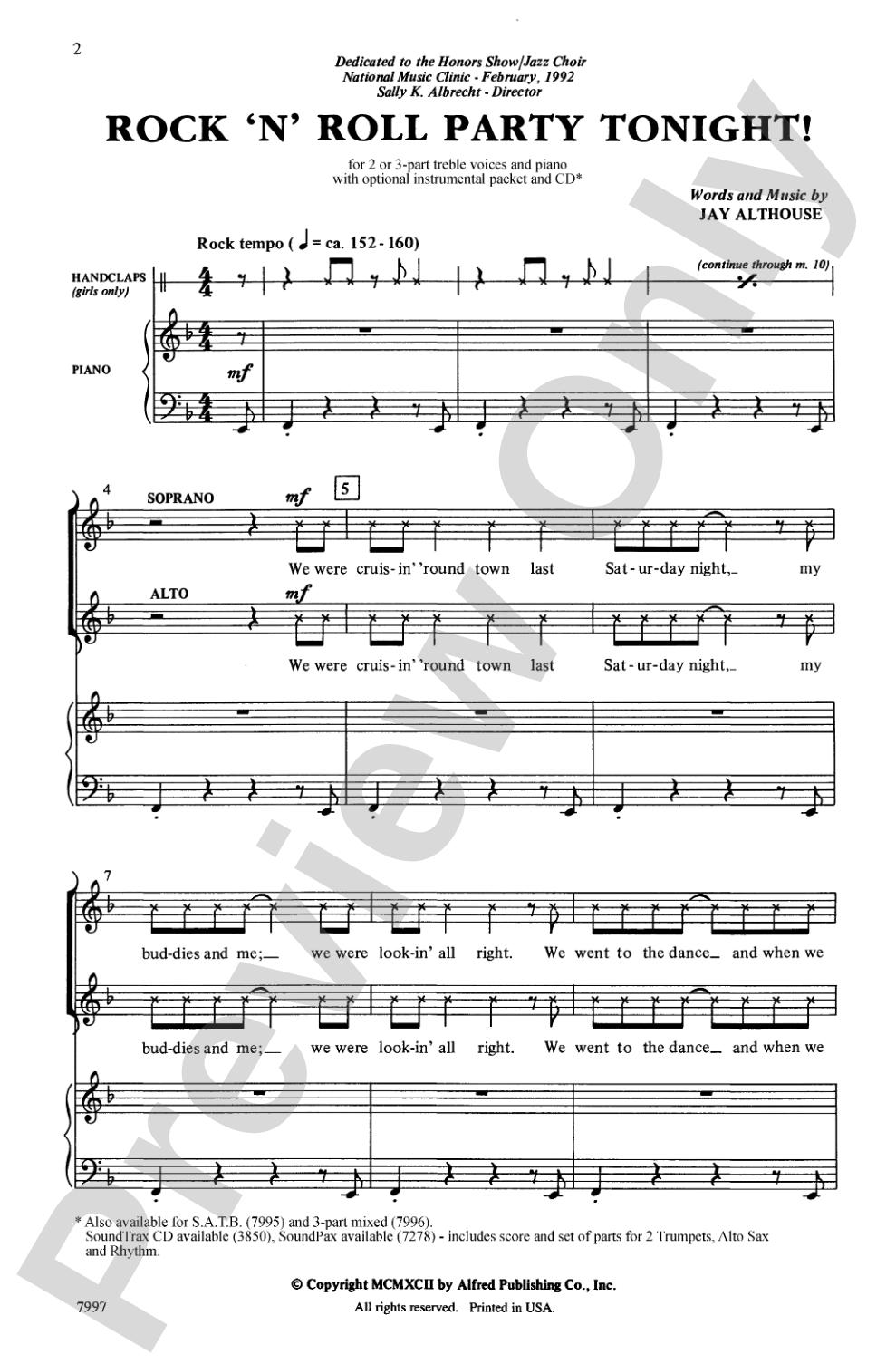
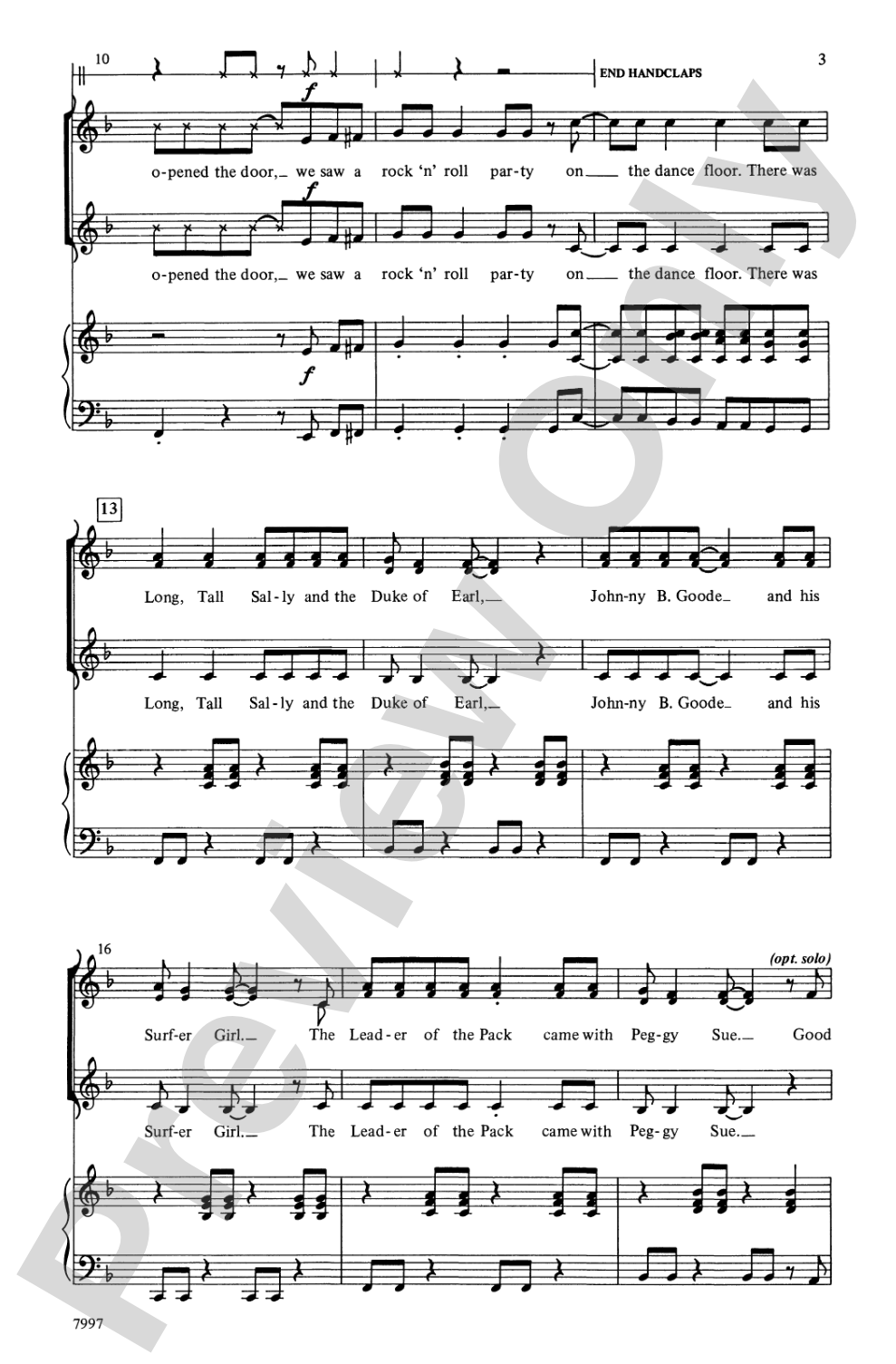
Would you believe a song in which the entire lyric is made up of 24 rock and roll song titles from the 50's and 60's?? Only Jay Althouse could have written this one. Opens with a brief speech choir section to set the rockin' mood, and then the hits just keep on rollin'! 'The Leader of the Pack came with Peggy Sue; Good Golly, Miss Molly was even there too.' The staging possibilities are endless.


Rock 'n' Roll Party Tonight!: 2 or 3-Part Treble Choral Octavo isn't in MakeMusic Cloud just yet...but it could be. Let us know you'd like to see it, and you'll help shape what comes next. In the meantime, start a free trial and dive into thousands of interactive titles your students can play along with today.
Request This Title
Tell us you want it.
Start Your Free Trial
Explore everything that's ready to play right now.
Sample Audio
No sample audio found.
Sample Video
No sample videos found.
Additional Details
Series:
Alfred Archive Edition: Alfred Choral Designs
Publisher:
Alfred Music
Page Count:
12
SKU:
00-PO-0004651
More about this title
About the Composer: Jay Althouse

Jay Althouse holds degrees in Music Education and Music from Indiana University of Pennsylvania, where he was later honored with the Distinguished Alumni award. His eight-year tenure in rights and licensing at a major educational publisher gave him deep insight into what works in classrooms and concert halls, and he served on the Executive Board of the Music Publishers Association of America during that period.
With over 800 choral works in print, Althouse has become a fixture in treble and mixed choir repertoire worldwide. He is a writer member of ASCAP and a regular recipient of the ASCAP Special Award. Beyond composition, he has co-written children's musicals with his wife Sally K. Albrecht, compiled influential vocal solo collections, co-authored The Complete Choral Warm-up Book and Accent on Composers, and created classroom resources including Ready to Read Music and Composer Bios. His collaborative arrangement I Hear America Singing was performed by the San Francisco Girls and Boys Choirs at President Barack Obama's inauguration in 2009. Althouse resides in North Carolina and serves on the National Advisory Board of the Folk Art Society of America.
Why we love this
Althouse's structural conceit is both clever and genuinely fun to rehearse. Building an entire song from a string of 1950s and 60s rock and roll titles could feel gimmicky, but the lyrical flow feels natural, and the opening speech choir section gives you a built-in way to energize singers before the main body kicks in. The staging possibilities alone give this piece real replay value in your program.
What to expect
Nostalgic and playful. The piece celebrates the infectious joy of 1950s and 60s rock and roll while delivering that joy through a modern choral lens. It swings with confidence and invites the audience to smile and reminisce alongside your singers.
Who it's for
Treble choirs looking for a novelty piece that lands with humor and energy. This works beautifully for middle school through adult choirs that want to close a concert on a high note or program something that appeals to mixed generations in the audience.
How to get the most out of it
- Treat the opening speech choir section as spoken rhythm, not sung rhythm. Lock the articulation and timing together so it lands as a unified moment rather than scattered voices. This sets up the energy perfectly for the transition into the sung material.
- Reference a recorded accompaniment if available to nail the rock and roll groove in rehearsal. Once the rhythm section settles, your singers can focus on nailing the text delivery and enjoying the rapid-fire song title references.
- Let the familiarity of the song titles work for you. Your singers likely know many of these hits; encourage them to feel the musical DNA of each reference even though they're singing new material over them.
How to use it
Save this for your closing number or the final set of a concert where you want to send the audience home in a great mood. It pairs well with other secular, uptempo repertoire and works especially effectively when your program has included more serious work earlier. The novelty factor and theatrical possibilities make it an ideal anchor for a pop or show tune set.
Skills your students will build
- Rhythmic precision in speech choir sections
- Rapid text articulation and clarity
- Rhythmic coordination between treble voices in 2- and 3-part textures
- Stylistic interpretation of rock and roll idioms
- Stage presence and choreographic responsiveness