

Riu, Riu, Chiu: SATB, a cappella Choral Octavo
Spanish Villancico / arr. Mark Burrows
Item: 00-PO-0006351

$2.30
Minimum order quantity: 20 copies
Pickup currently not available
Description
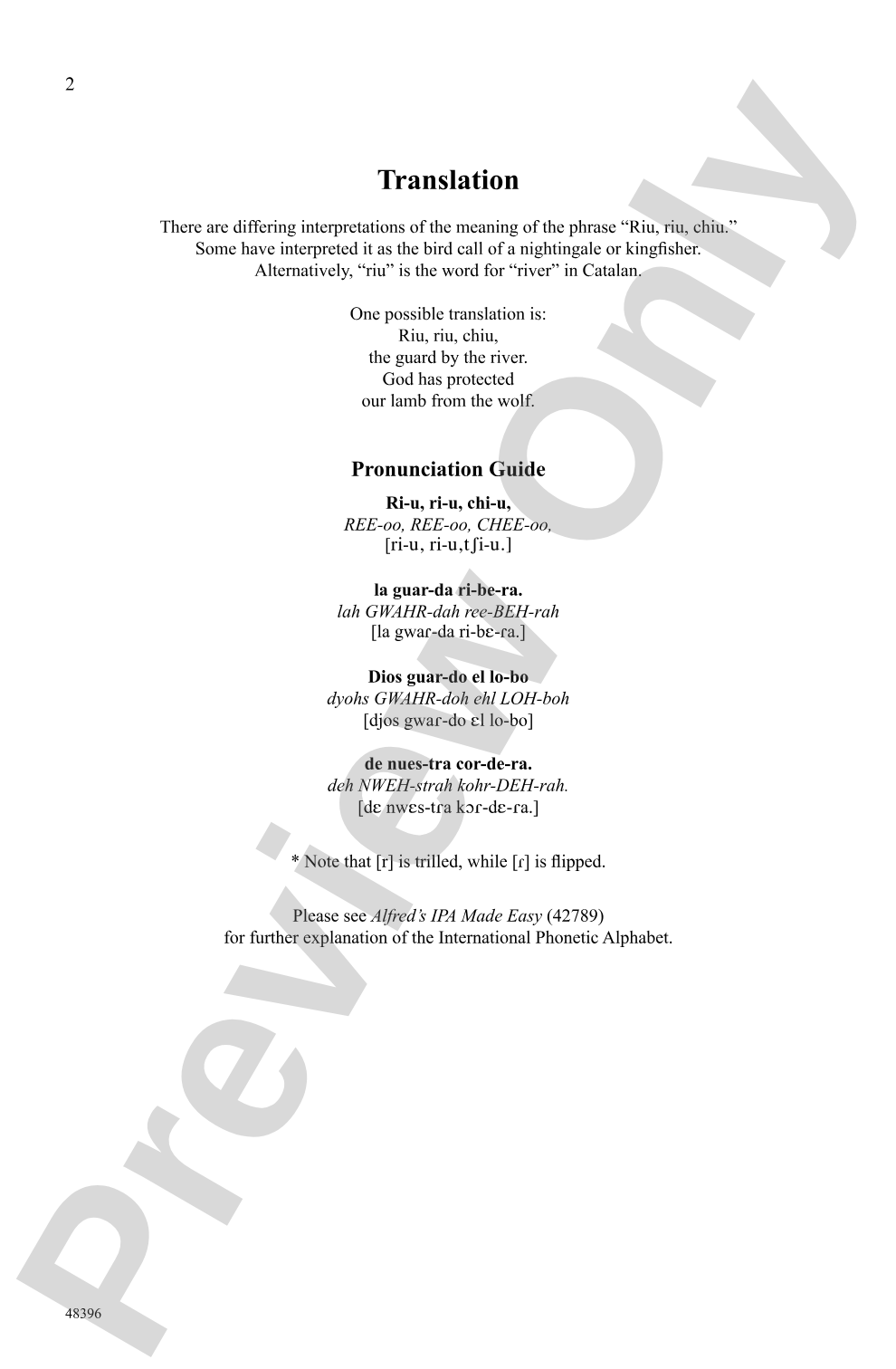
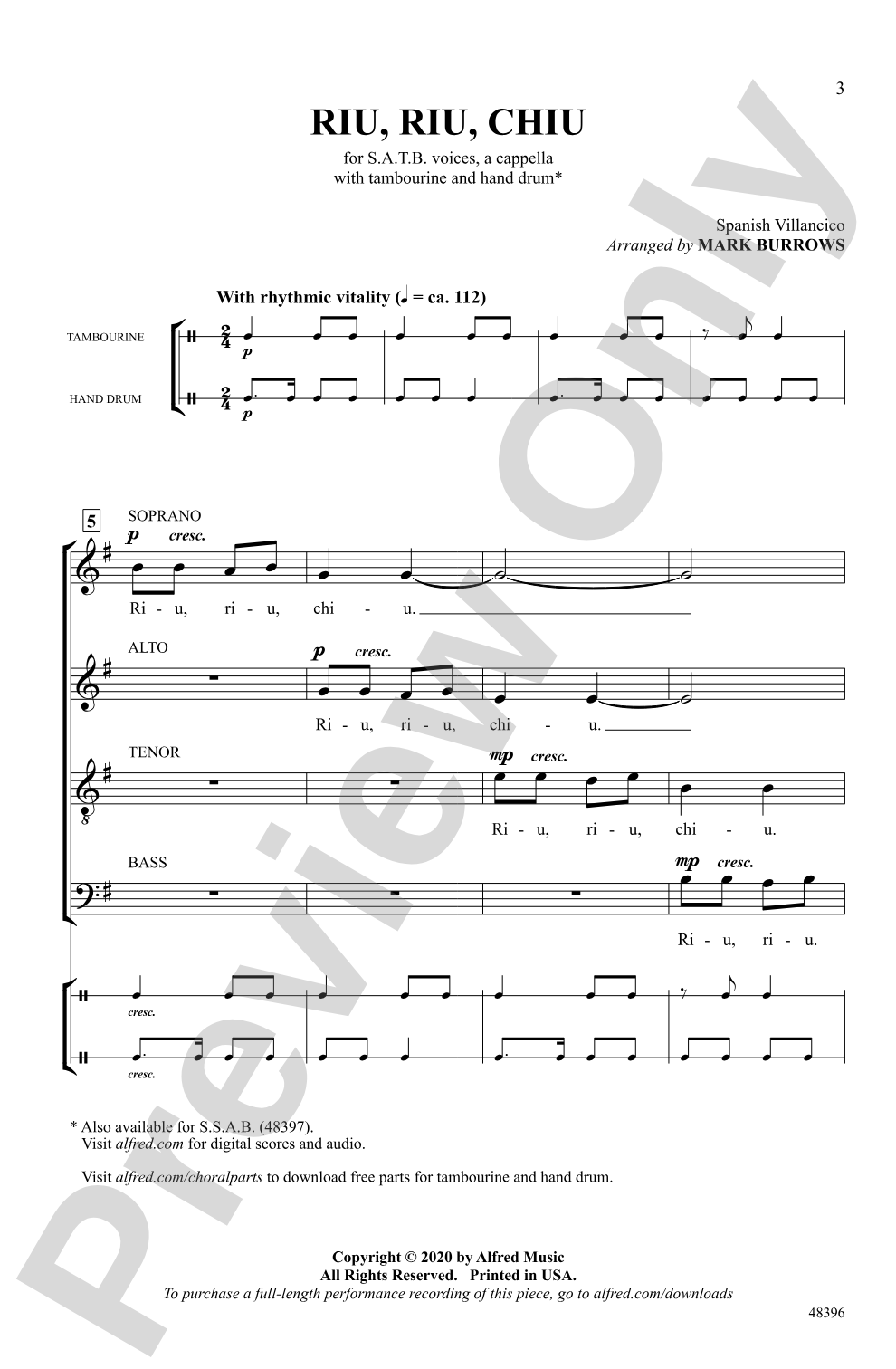
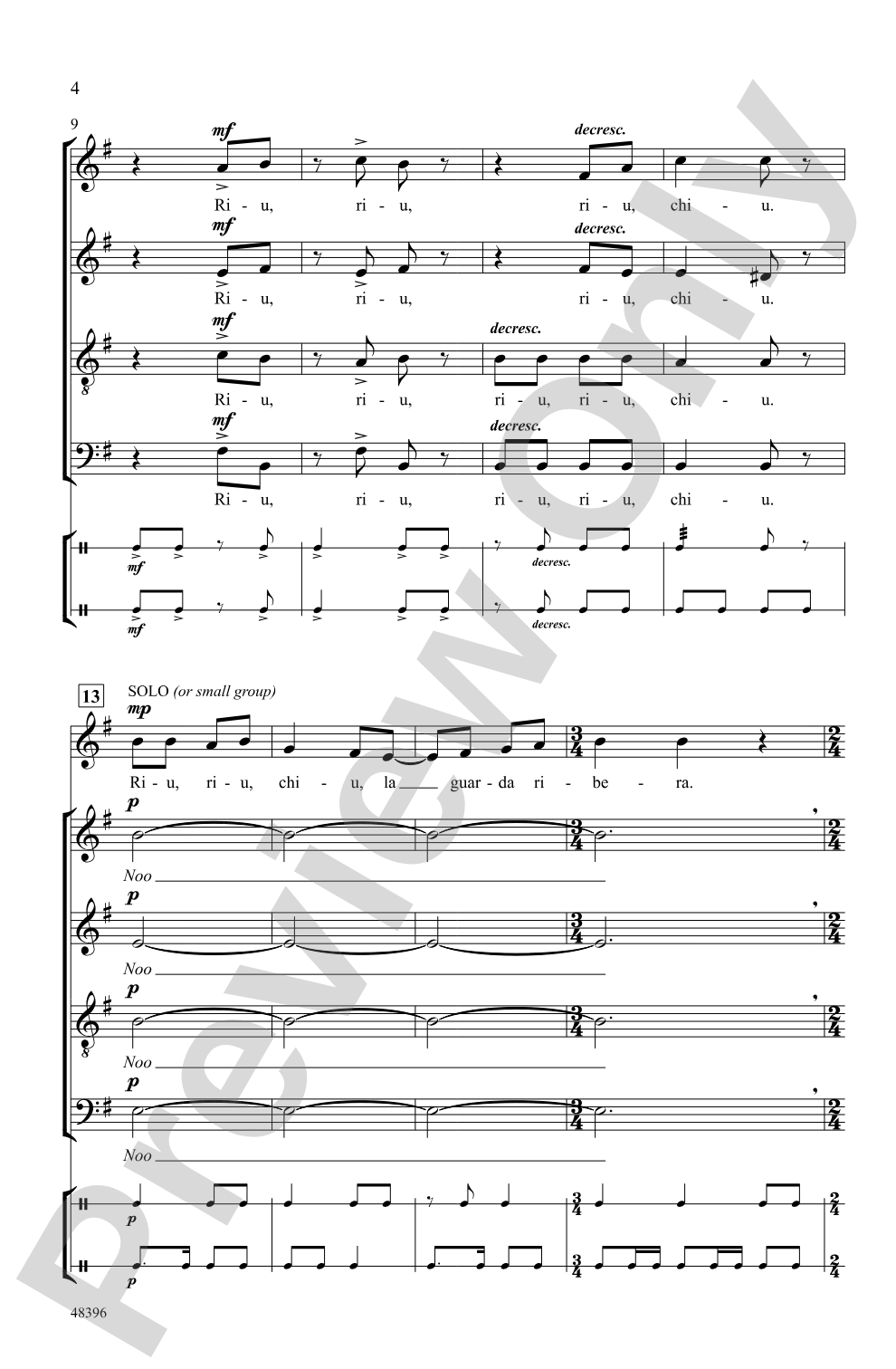
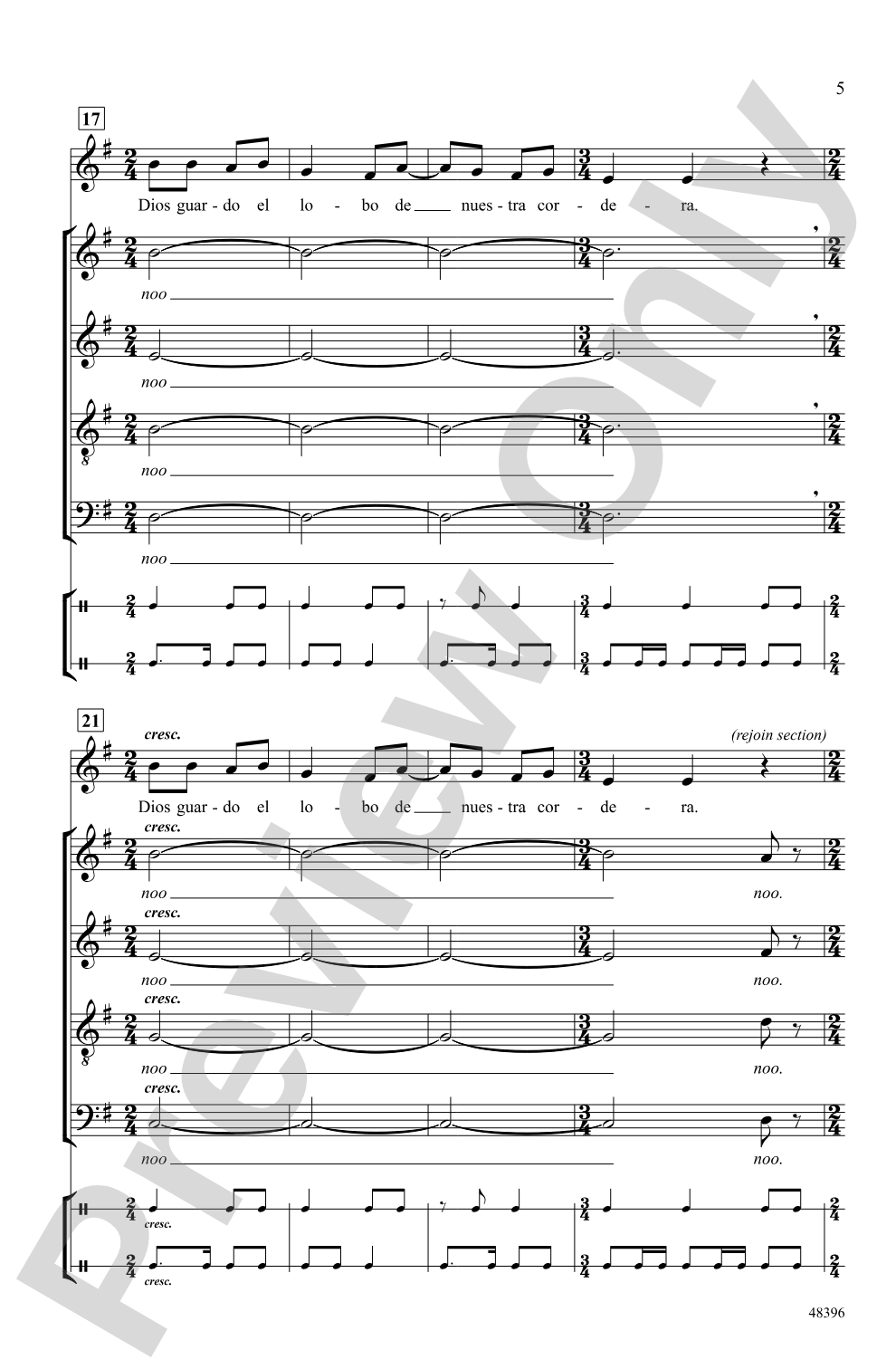
Tambourine and hand drum enhance the dance-like character of this Spanish villancico that dates back to the Renaissance era. This arrangement makes brilliant use of varied a cappella textures, from soloists over solid block chords to vigorous rhythmic interplay between voice parts. A true standout Christmas selection for discerning choirs.


Don't just read it, hear it, play along with it, and watch your students grow with it. In MakeMusic Cloud, Riu, Riu, Chiu: SATB, a cappella Choral Octavo comes alive with professional accompaniment, adjustable tempo, and built-in practice tools that turn solo practice into real progress.
Open in the Player
Jump straight in and assign it today.
Start Your Free Trial
Open this title and explore the full library in minutes.
Sample Audio
1
Audio File
--:--
0:00
0:00
Sample Video
Additional Details
Series:
Alfred Choral Designs
Publisher:
Alfred Music
Page Count:
20
SKU:
00-PO-0006351
Instrumentation:
Tambourine; Hand Drum
More about this title
About the Arranger: Mark Burrows
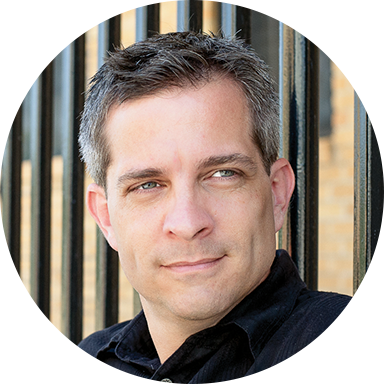
Mark Burrows brings decades of experience as a composer, conductor, and educator whose compositions appear regularly on state and festival repertoire lists. His commissions span diverse ensembles, from children's choirs to adult groups and intergenerational festival choirs, reflecting his deep engagement across the choral landscape. Burrows holds degrees in music education from Southern Methodist University and in conducting from Texas Christian University, grounding his work in both pedagogical rigor and artistic vision. He serves as Director of Children's Ministries at FUMC in Fort Worth, where he continues to create music that resonates with singers of all ages.
Why we love this
Burrows understands that a cappella Christmas music doesn't need to choose between authenticity and accessibility. This arrangement honors the villancico's Renaissance roots while giving your choir genuinely satisfying textures to perform—solo lines that float over block chords, rhythmic exchanges that keep singers engaged, and the strategic use of tambourine and hand drum parts that invite ensemble participation beyond the traditional four voice parts.
What to expect
The piece dances. Burrows captures the villancico's inherent joy and rhythmic vitality through constantly shifting textures that keep the harmonic and rhythmic landscape moving. There's a sense of celebration and ensemble play, where the singers themselves become the pulse and color of the music.
Who it's for
This octavo suits choirs looking for Christmas repertoire with real musical substance and historical roots. It works equally well for church choirs, school choirs at the advanced level, and festival-preparing groups who want a selection that stands out from conventional holiday fare.
How to get the most out of it
- Treat the rhythmic interplay between voice parts as conversation rather than competition; clarity matters more than volume when multiple lines are dancing against each other.
- If you have musicians available, the tambourine and hand drum parts add authentic color without overwhelming the a cappella foundation, and they give non-traditional ensemble members a meaningful role in your Christmas presentation.
- Shape the solo passages with warmth and character; these moments of reduced texture are your chance to let individual voices shine before the choir comes together again.
- Balance the block chord passages as true harmonic support rather than accompaniment; sopranos and altos can float their melodies confidently when tenors and basses lock in solidly underneath.
How to use it
Anchor this in a Christmas concert where it can speak for itself; it's distinctive enough to serve as a set closer or a centerpiece number rather than part of a medley. The varied textures and optional percussion parts make it a strong choice when you want to demonstrate your choir's versatility and musicianship to an audience expecting something fresh.
Skills your students will build
- Balancing solo lines over sustained harmonic support
- Rhythmic precision and independence in polyphonic passages
- A cappella blend and intonation across changing textures
- Ensemble coordination with optional percussion parts
- Historical awareness of the villancico tradition and Renaissance choral practice