Rise, Shine, Little Light! Cover Image

Rise, Shine, Little Light!: 2-Part Choral Octavo

$2.25 USD
Sale price  $2.25 USD Regular price 
Skip to product information
Rise, Shine, Little Light! Cover Image

Rise, Shine, Little Light!: 2-Part Choral Octavo

Rise, Shine / This Little Light of Mine

Arr. Sally K. Albrecht

Item: 00-16956

makemusic Cloud badge

Need it now?

Buy Digital Version
$2.25
Shipped

One moment…

Description
A partner song combining two traditional American Spirituals: "Rise,Shine!" and "This Little Light of Mine." Opens with "Rise, Shine!" sung by Part II. Then Part I sings "The LIttle Light," then both parts combine. An optional descant can be added.

Don't just read it, hear it, play along with it, and watch your students grow with it. In MakeMusic Cloud, Rise, Shine, Little Light!: 2-Part Choral Octavo comes alive with professional accompaniment, adjustable tempo, and built-in practice tools that turn solo practice into real progress.

Sample Pages

Sample Audio
No sample audio found.
Sample Video
Additional Details
Series: Alfred Archive Edition: Alfred Choral Designs
Publisher: Alfred Music
Page Count: 12
UPC: 038081150949
SKU: 00-16956

More about this title

About the Arranger: Sally K. Albrecht
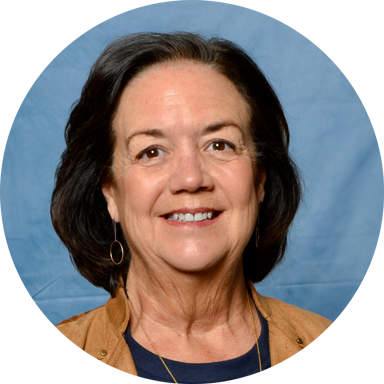
Sally K. Albrecht

Sally K. Albrecht has shaped choral music education for over thirty years, first as Director of School Choral, Vocal, and Elementary Publications at Alfred Music, and throughout her career as a composer, conductor, and clinician with deep expertise in movement-integrated choral work. Her catalog exceeds 600 choral publications alongside 75 musicals and songbooks, and she has been recognized annually with the ASCAP Special Music Award since 1987. She has conducted honor choirs at Lincoln Center, Carnegie Hall, and The Kennedy Center, and taught in university music departments at Oakland University, Jersey City State College, and Meredith College.

Albrecht holds degrees from Rollins College (B.A. in Music and Theater, 1976), the University of Miami (M.A. in Drama, 1977, and M.M. in Accompanying, 1979), and has served as Chair of the Board of Trustees for the Omicron Delta Kappa National Leadership Honor Society. In 2021, she received the Distinguished Alumna Award from both the University of Miami Frost School of Music and Rollins College, where she now serves on the Board of Trustees. She lives in Wake Forest, North Carolina, with her husband Jay Althouse, also a prominent composer and arranger.

Why we love this

Albrecht's approach to pairing these two spirituals feels organic rather than forced; the songs genuinely complement each other harmonically and thematically, creating a building arc that holds student attention and delivers real emotional impact. The optional descant layer gives you flexibility to differentiate within your ensemble or add complexity as students master the core material. Her movement and staging suggestions turn a simple octavo into a full performance experience that engages even reluctant singers.

What to expect

Warm, affirming, and gradually luminous. 'Rise, Shine!' enters with quiet encouragement, then 'This Little Light of Mine' builds a layer of hope and personal agency. When both melodies interweave, the piece becomes expansive without losing its intimacy, rooted in the resilience and joy at the heart of American spirituals.

Who it's for

This works beautifully for middle school and high school choirs seeking accessible two-part literature with spiritual depth and performance flexibility. It suits both school concerts and community or sacred music settings, and the manageable difficulty makes it ideal for ensembles building their tone and blend.

How to get the most out of it

  • Balance the initial Part II entrance of 'Rise, Shine!' with enough acoustic space so Part I can hear the melody clearly when they enter with 'This Little Light.' A well-placed soloist or small group at the start clarifies the song's profile.
  • Time the transition into the two-part combination generously; this is where the piece finds its power, and rushing it loses the magic. Give students a clear breath mark and visual cue from the conductor.
  • If you add the descant, introduce it only after both main parts are secure. Layer it last, and consider assigning it to your strongest readers or a small group rather than the full ensemble.
  • Explore the movement suggestions early in rehearsal, even in rough form. This piece comes alive when bodies are engaged; it transforms how students hear and hold the melodic line.

How to use it

Place this early in a concert to establish an uplifting emotional tone, or use it as a bridge between secular and sacred repertoire on a mixed program. The movement and staging make it equally effective as a rehearsal reward or a concert anchor that audiences remember.

Skills your students will build

  • Singing independent melodic lines while maintaining harmonic awareness
  • Blend and balance in two-part writing
  • Historical understanding of spirituals and their cultural significance
  • Integration of movement with vocal performance
  • Transition between solo, small-group, and ensemble textures
  • Reading and sustaining longer phrases across multiple measures

You May Also Like
