
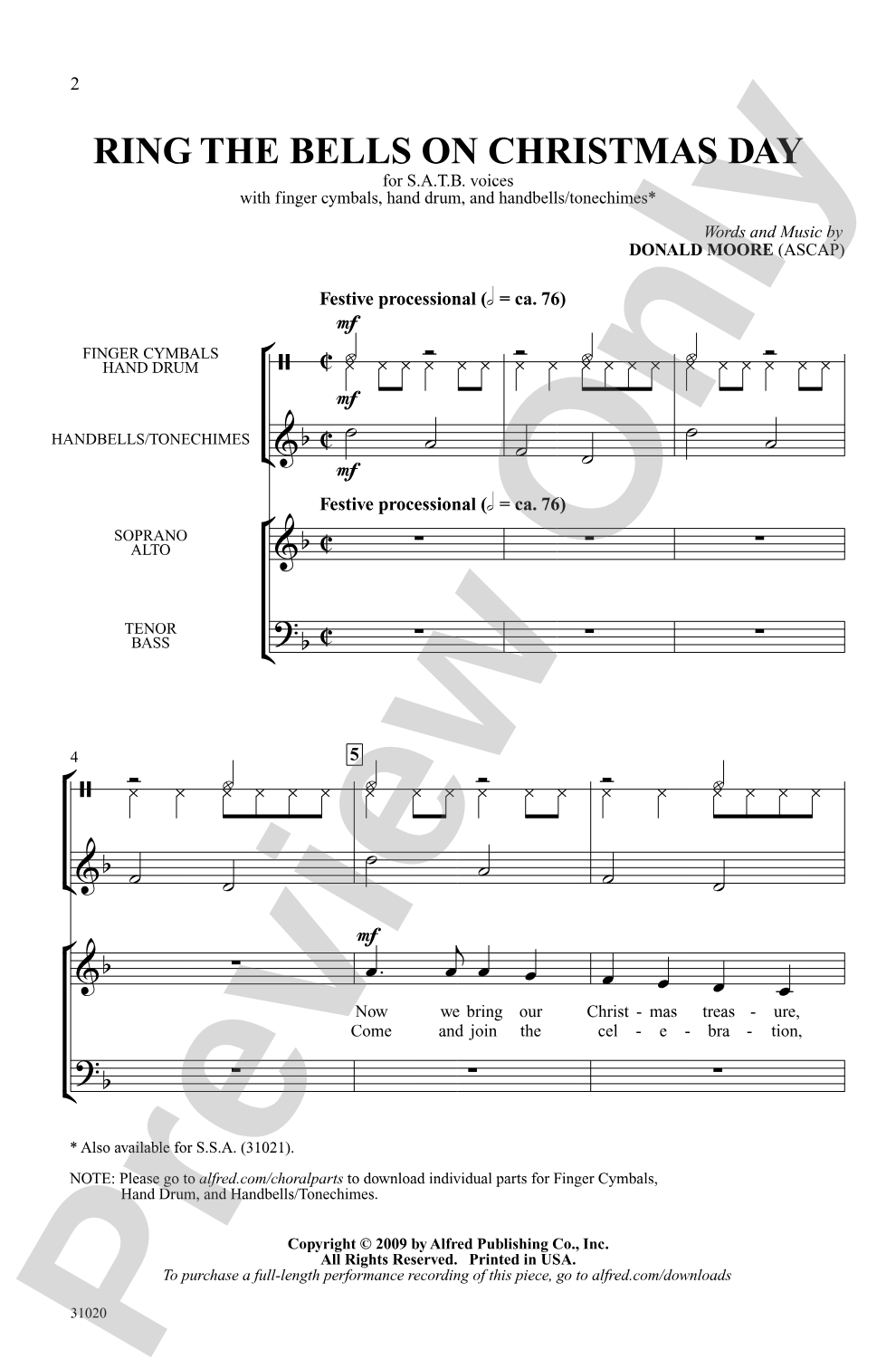
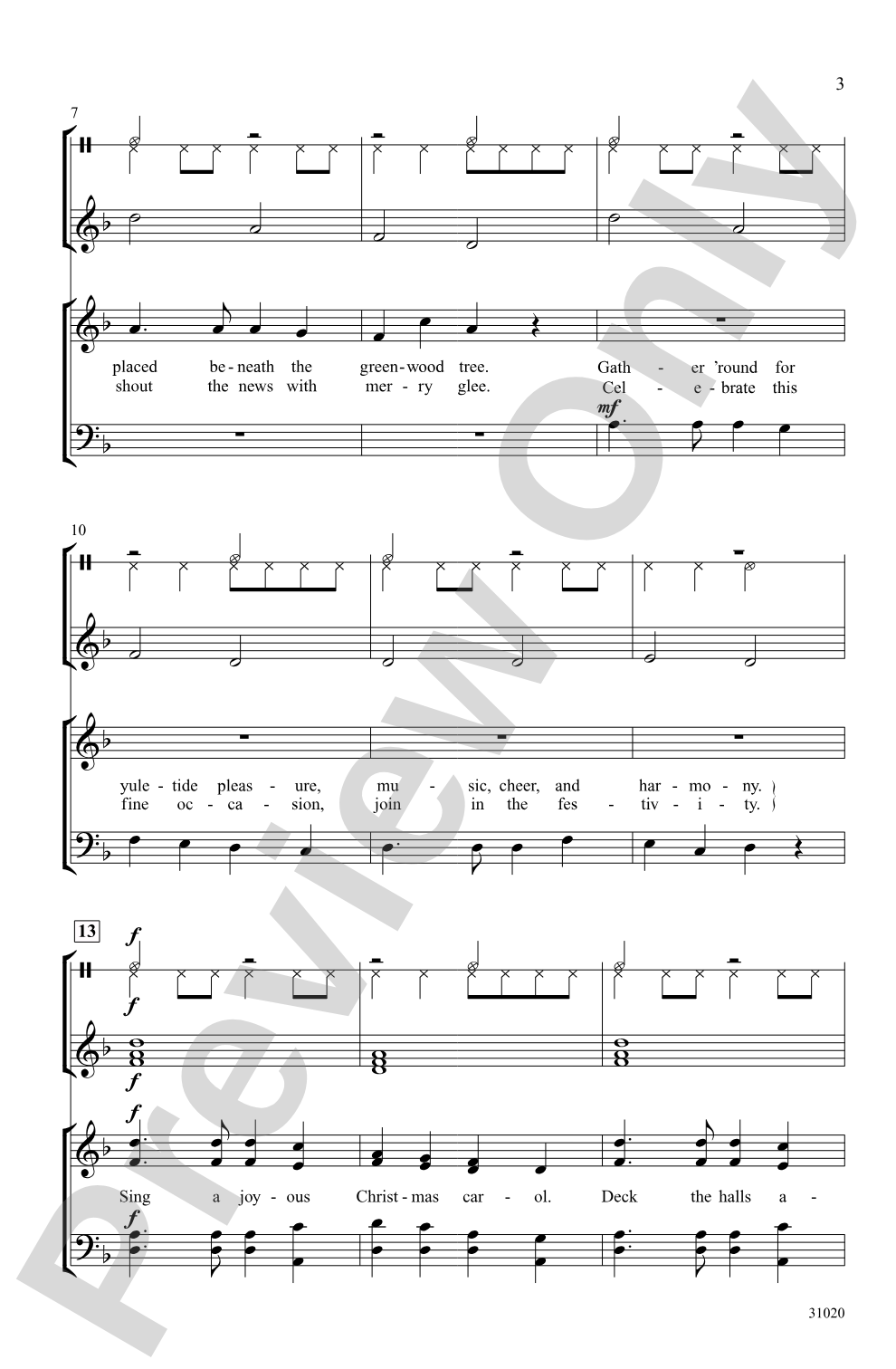

Ring the Bells on Christmas Day: SATB Choral Octavo
Words and music by Donald Moore
Item: 00-PO-0000753
$1.75
Minimum order quantity: 20 copies
Pickup currently not available
Description
The choir is accompanied by only handbells and percussion in this festive, modal work for Christmas. A unique and memorable change of pace, which would work well as a processional, an antiphonal feature, or a postlude.


Ring the Bells on Christmas Day: SATB Choral Octavo isn't in MakeMusic Cloud just yet...but it could be. Let us know you'd like to see it, and you'll help shape what comes next. In the meantime, start a free trial and dive into thousands of interactive titles your students can play along with today.
Request This Title
Tell us you want it.
Start Your Free Trial
Explore everything that's ready to play right now.
Sample Audio
1
Audio File
--:--
0:00
0:00
Sample Video
No sample videos found.
Additional Details
Series:
Alfred Choral Designs
Publisher:
Alfred Music
Page Count:
8
SKU:
00-PO-0000753
More about this title
About the Composer: Donald Moore

Donald Moore earned his Bachelor of Music in organ performance and Master of Arts in Teaching from Kent State University. He serves as Organist-Choirmaster at Pilgrim United Church of Christ in Cuyahoga Falls, Ohio, and has established himself as one of the most prolific composers working in American choral music today.
With more than 500 published compositions across sacred, secular, and educational genres, Moore's works appear regularly in state contests, festivals, and music conventions at regional, national, and international levels. His achievements include seventeen ASCAP Composers Standard Awards and recognition by the American Choral Directors Association as one of 400 elite composers of historical significance in American choral music. His catalog spans choral octavos, organ and piano works, educational collections, and instructional books published through Alfred, Heritage Music Press, Hal Leonard, and other major publishers.
Why we love this
This piece transforms the Christmas service into something genuinely unexpected. The combination of modal harmony with handbells and percussion creates an ethereal quality that cuts through the predictability of holiday programming, giving your choir a moment that audiences will remember long after the service ends.
What to expect
Modal harmony and bell sounds transport you away from conventional carol language into something more contemplative yet celebratory. The texture is light and luminous, with a processional quality that feels both ancient and timeless.
Who it's for
This octavo suits choirs comfortable singing modal harmony and working with a hand percussion accompaniment. It works equally well in church services, community concert settings, and school choral programs looking for distinctive Christmas repertoire.
How to get the most out of it
- Balance the SATB voices carefully with the handbells so neither overwhelms the other. The accompaniment should shimmer beneath the text, not compete for attention.
- Experiment with processional staging if your space permits. The modal texture and bell accompaniment work beautifully when singers move through the space rather than stand in fixed positions.
- Let the percussion layer gradually if the score indicates it. Building from handbells alone to the full accompaniment creates natural momentum through the piece.
- Shape phrases with gentle dynamics. The festive character comes from clarity and precision, not volume.
How to use it
Use this as your Christmas service's processional or recessional, allowing the handbells and voices to float through the space. It also functions beautifully as a postlude if your performers are already vested in bells and percussion, creating a seamless transition out of the service. The modest length makes it perfect for a standalone choral feature when you want something that stands apart from traditional repertoire.
Skills your students will build
- Reading and singing in modal contexts (Dorian, Mixolydian, or other modes)
- Blending voices with non-traditional harmonic language
- Ensemble coordination with handbells and percussion accompaniment
- Understanding processional and liturgical choral function
- Sustaining pitch and clarity in open vocal textures