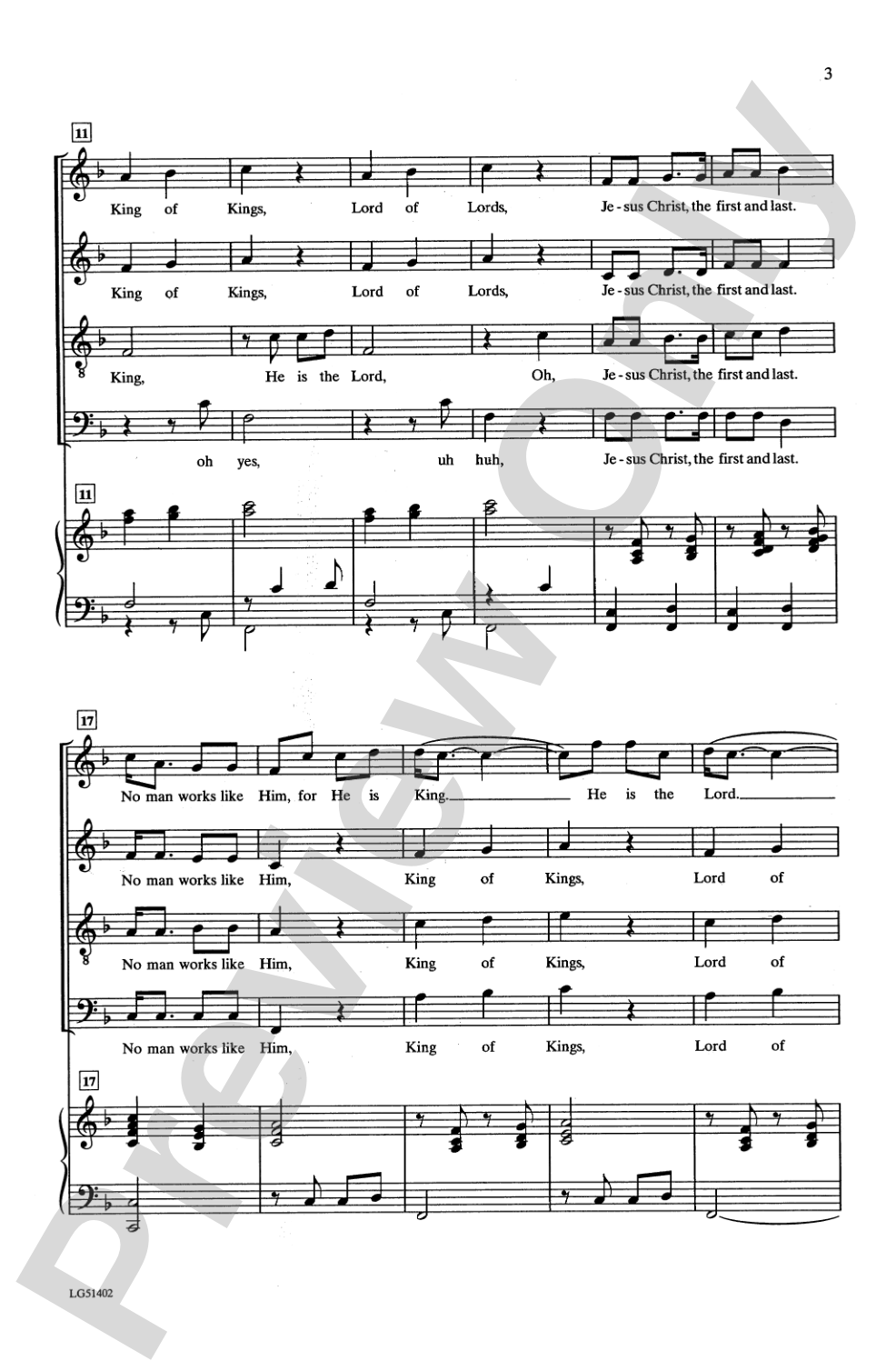
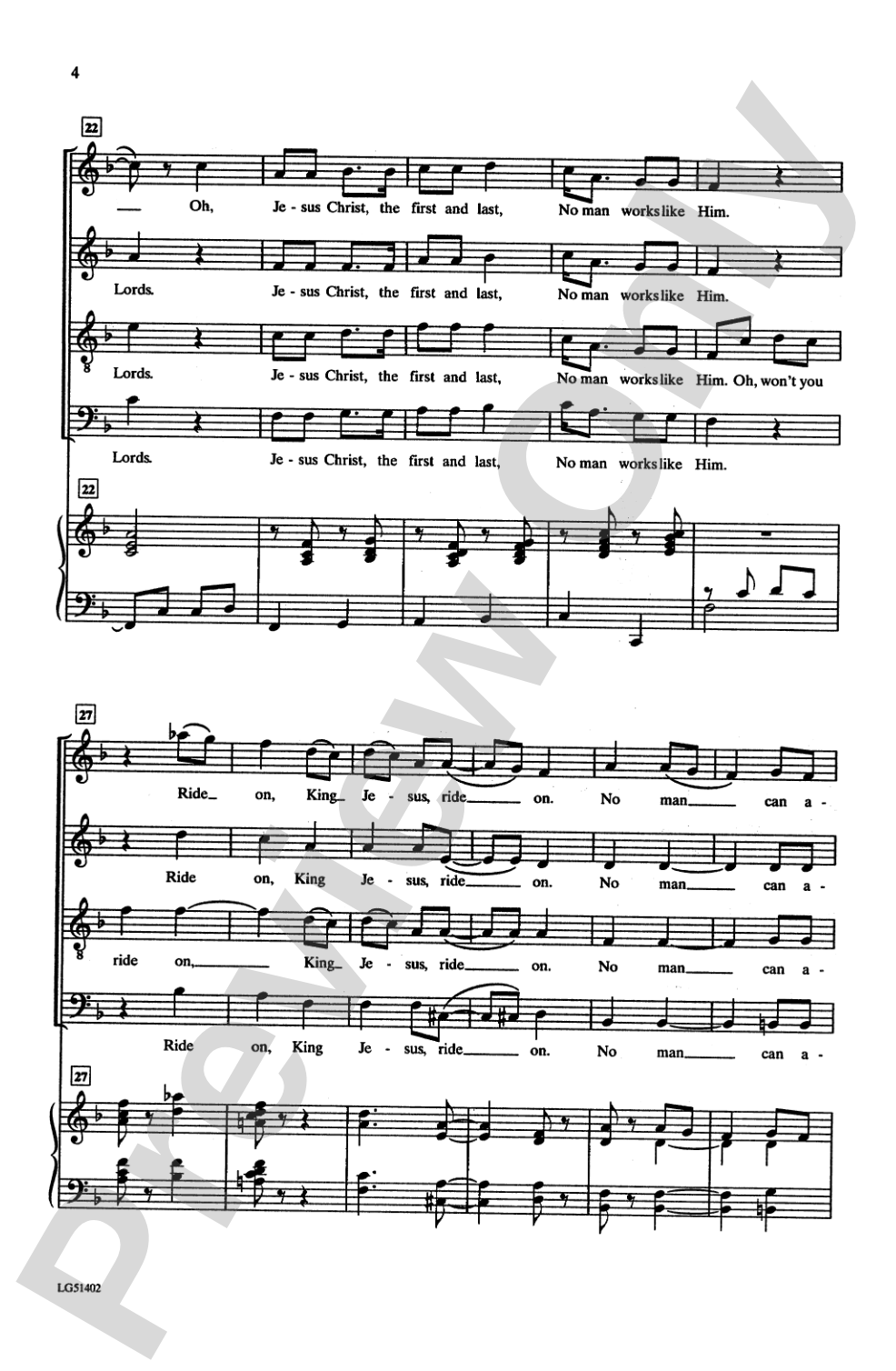
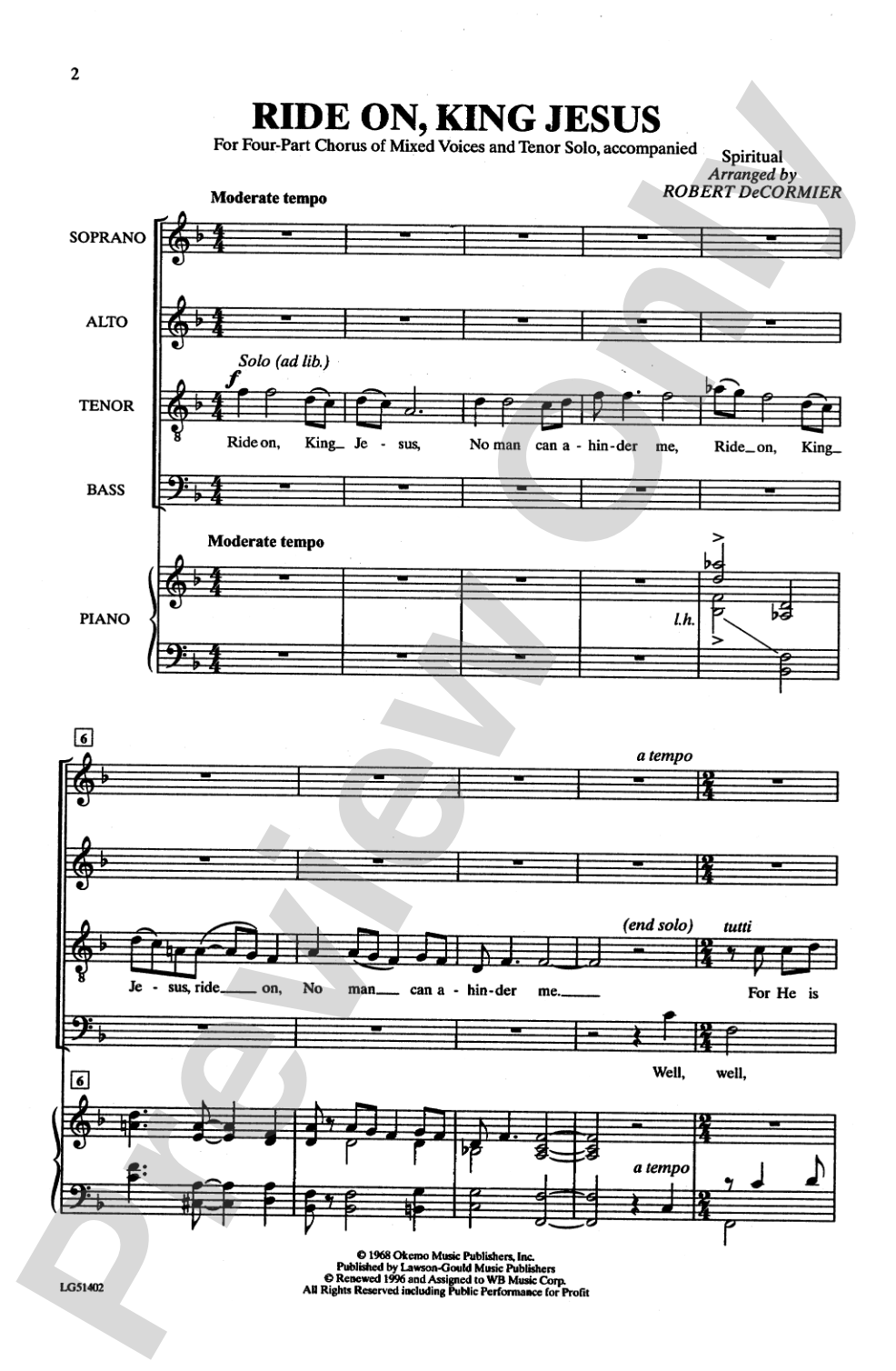
Ride On, King Jesus Sheet Music Preview

Ride On, King Jesus: SATB Choral Octavo

Arr. Robert DeCormier

Item: 00-PO-0005001

Digital Download
$2.25

Minimum order quantity: 20 copies

Description

Ride On, King Jesus: SATB Choral Octavo isn't in MakeMusic Cloud just yet...but it could be. Let us know you'd like to see it, and you'll help shape what comes next. In the meantime, start a free trial and dive into thousands of interactive titles your students can play along with today.

Sample Audio
No sample audio found.
Sample Video
Additional Details
Series: Alfred Archive Edition: Lawson-Gould Music Publishers
Publisher: Alfred Music
Page Count: 12
SKU: 00-PO-0005001

More about this title

About the Arranger: Robert DeCormier

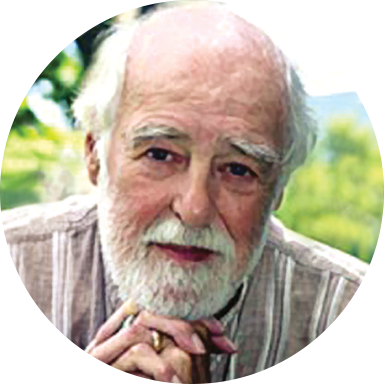
Robert DeCormier

Robert DeCormier studied at the Juilliard School and built a career spanning classical conducting, Broadway, opera, and American folk music. He served as music director of the New York Choral Society for seventeen years, worked as conductor and arranger for Harry Belafonte, and held the position of music director for Peter, Paul and Mary from 1978 to 2010. His teaching experience includes an associate professorship at the Eastman School of Music from 1972 to 1977.

Beyond the concert hall, DeCormier founded the professional vocal ensemble Counterpoint in 2000, which performed and offered workshops throughout New England and beyond. His arrangements and original compositions drew from African-American spirituals, American folk songs, and international repertoire. Recognition of his contributions includes the Vermont Governor's Award for Excellence in the Arts (2002) and a Lifetime Achievement Award from the New England Choral Arts Foundation (2006). His work has appeared on numerous labels and earned him a CBS Emmy for a television special with Harry Belafonte.

Why we love this

DeCormier's command of spiritual arrangement shines here. He shapes the spiritual idiom with authentic harmonic color and clear voice leading that lets each section breathe, making this accessible enough for high school choirs yet substantial enough to feel genuinely rewarding on stage.

What to expect

The piece radiates dignity and hope. DeCormier's harmonies ground the spiritual in warmth while maintaining its spiritual character, creating an arrangement that feels both grounded and lifting—the kind of music that carries both the joy and the historical weight of the tradition it honors.

Who it's for

This arrangement works well for SATB choirs at the high school through community level. The spiritual genre carries cultural weight and emotional directness that resonates with singers of all backgrounds and brings out genuine musicianship from solid intermediate to advanced ensembles.

How to get the most out of it

  • Honor the inherent rhythmic flexibility of the spiritual tradition. Allow slight rubato at cadential moments and in phrases marked for expression rather than rigidly metronomic execution.
  • Balance the four voice parts so the melody emerges naturally without soloists drowning out the harmonic foundation; this arrangement relies on textural clarity.
  • Let dynamic contrasts serve the text. A spiritual's power lies in its ability to build from intimate to exultant, so shape phrase dynamics with the meaning of the words.
  • Consider a brief pause before key harmonic moments to let them land. DeCormier's voice leading often creates moments of resolution that benefit from slight breath space.

How to use it

Program this as a centerpiece for a concert celebrating African-American choral traditions or American spirituals. Its direct emotional impact and strong melody make it an excellent choice for community performances and interfaith settings where you want repertoire that speaks clearly and authentically.

Skills your students will build

  • Singing with stylistic awareness of the African-American spiritual tradition
  • Four-part harmonic blend and balance within a SATB texture
  • Phrasing and dynamic shaping to serve text meaning rather than purely musical contour
  • Managing rubato and rhythmic flexibility in an organized ensemble context

You May Also Like