
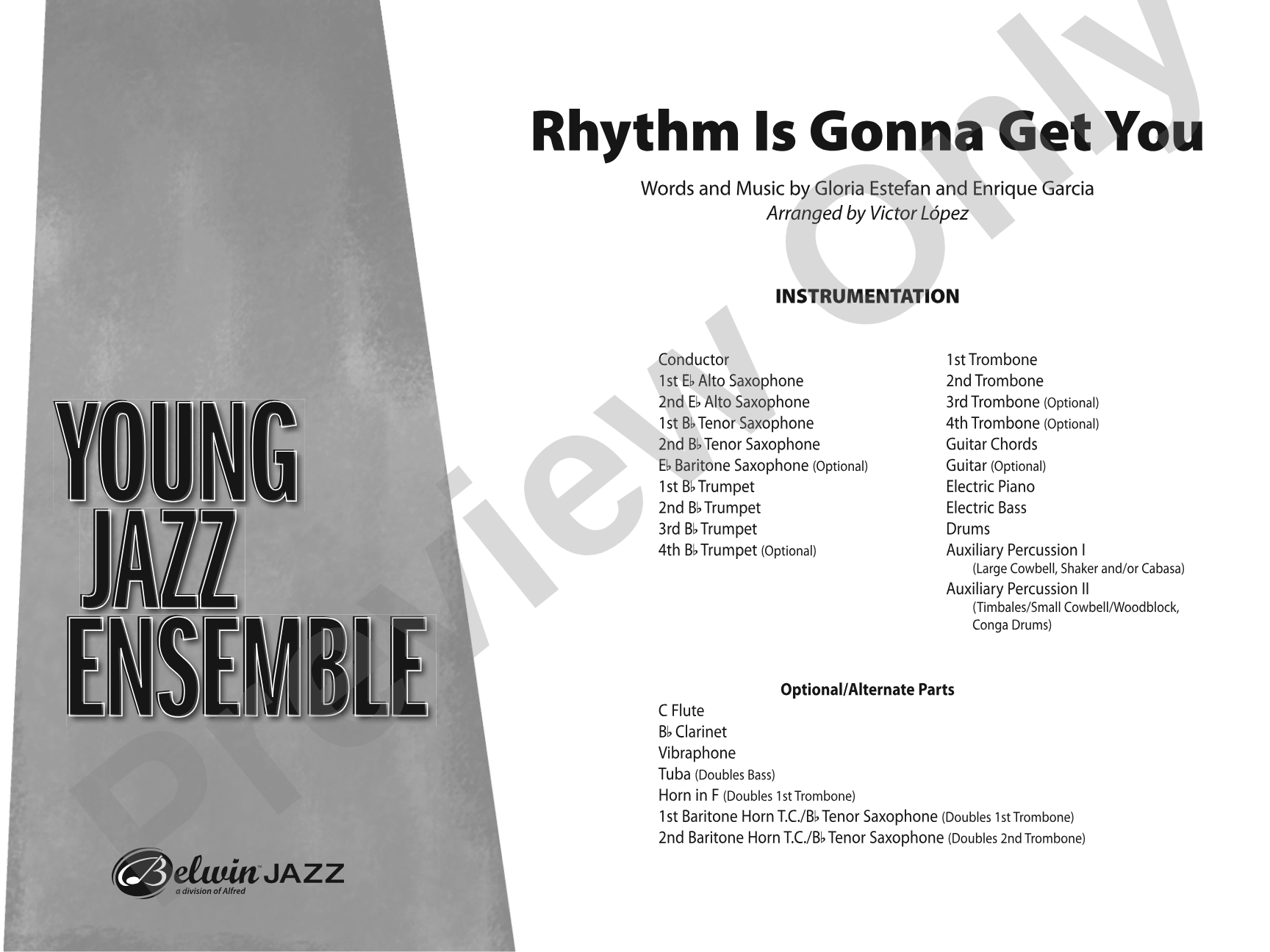
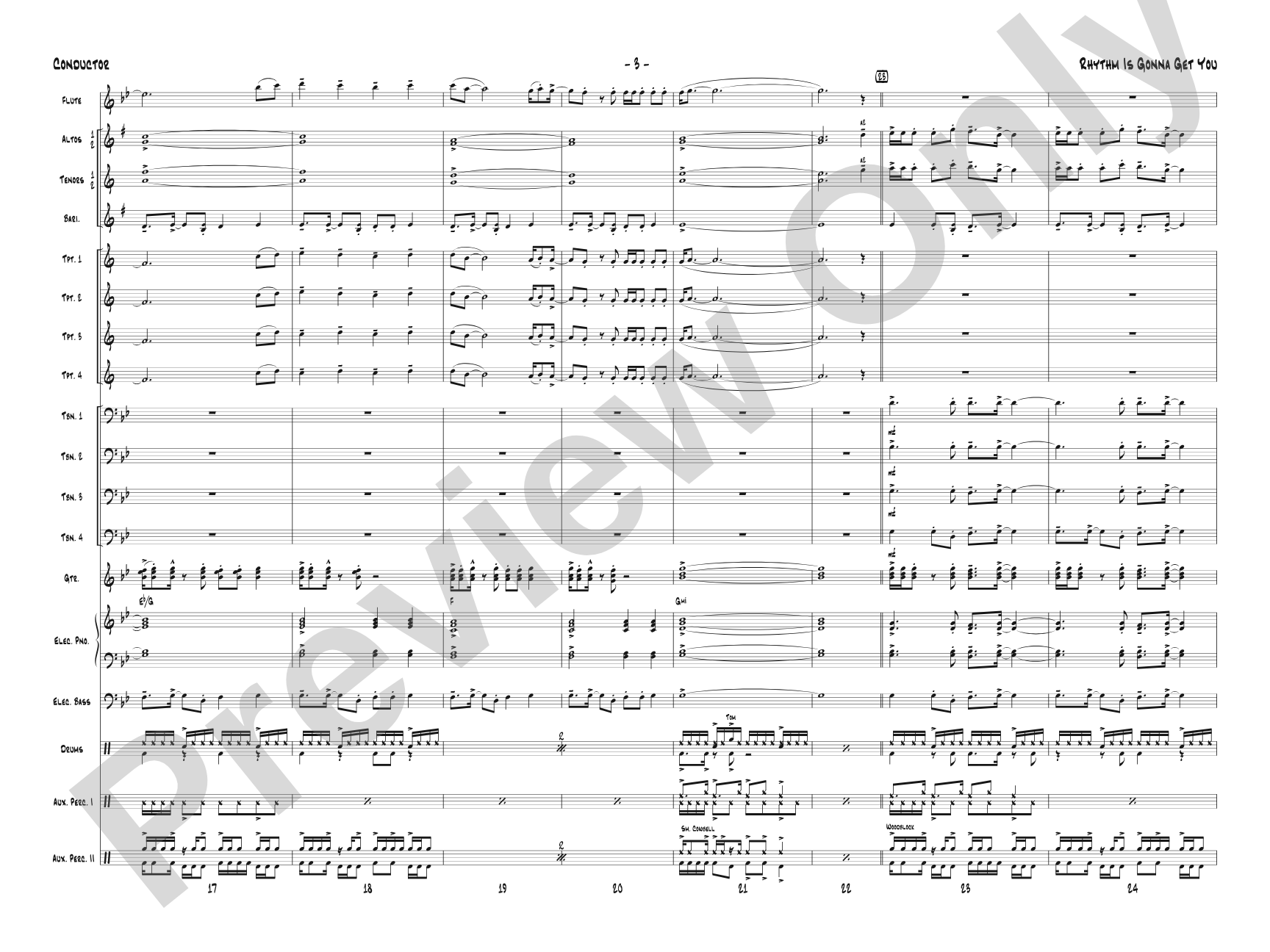
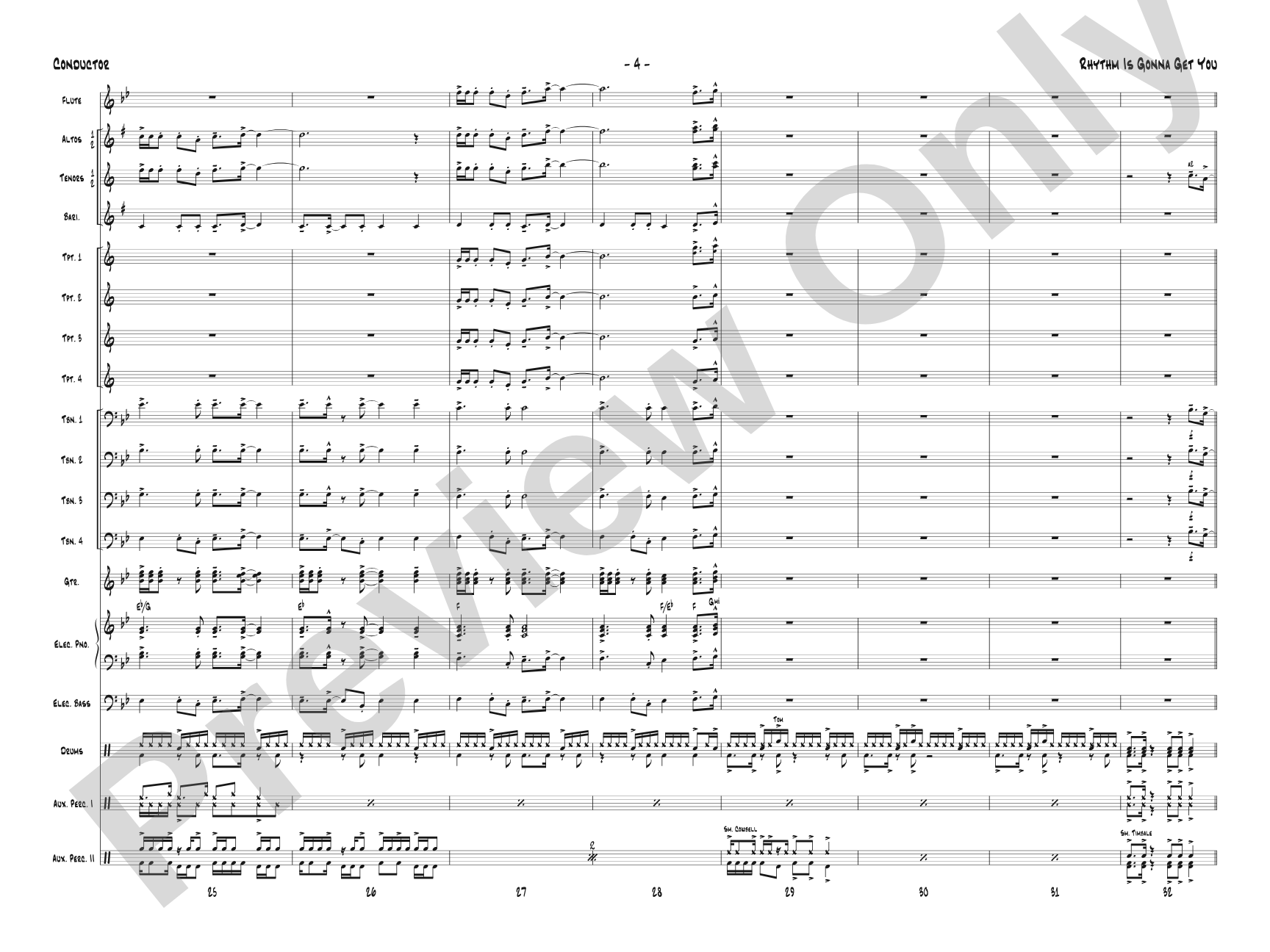
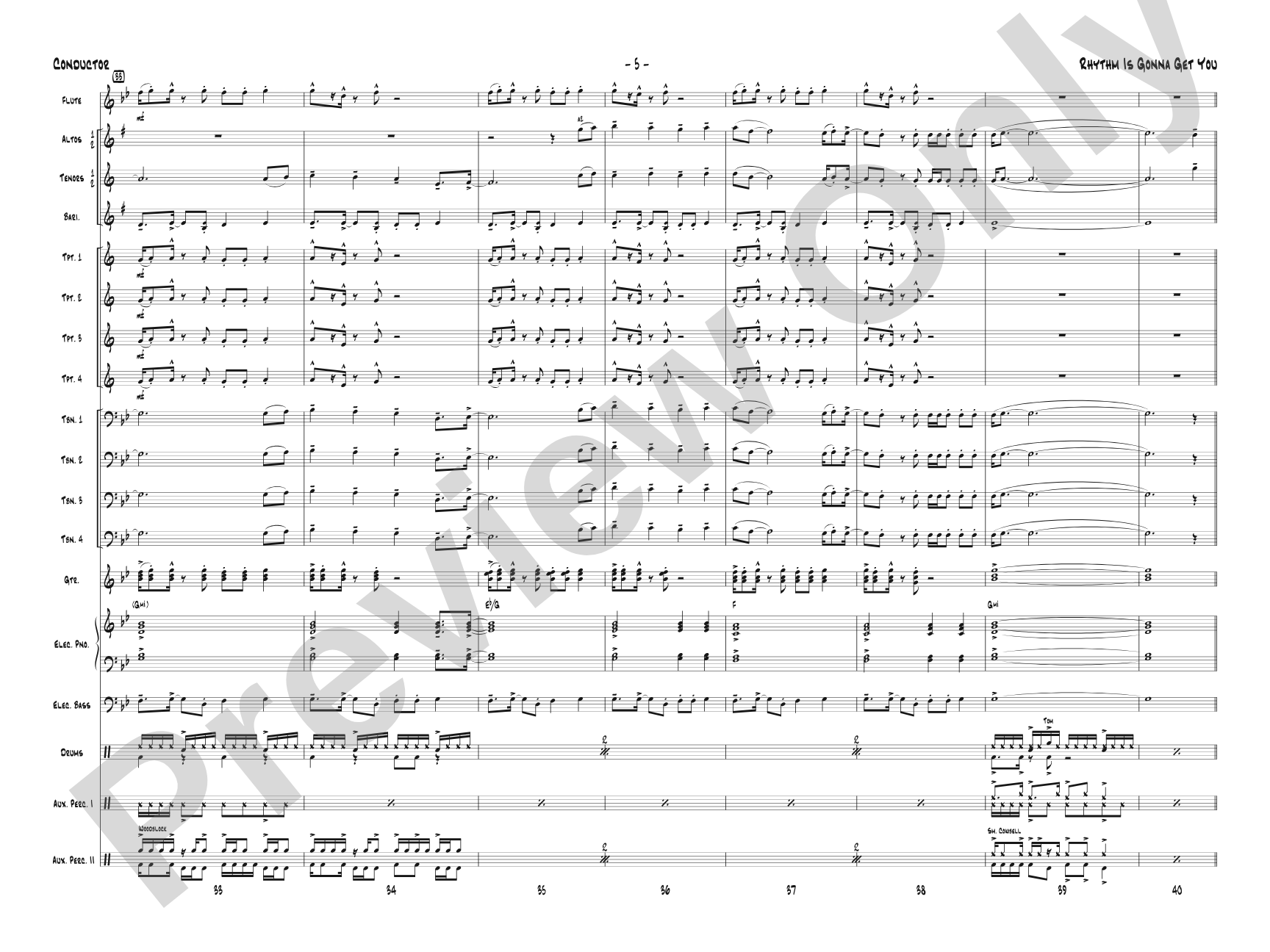
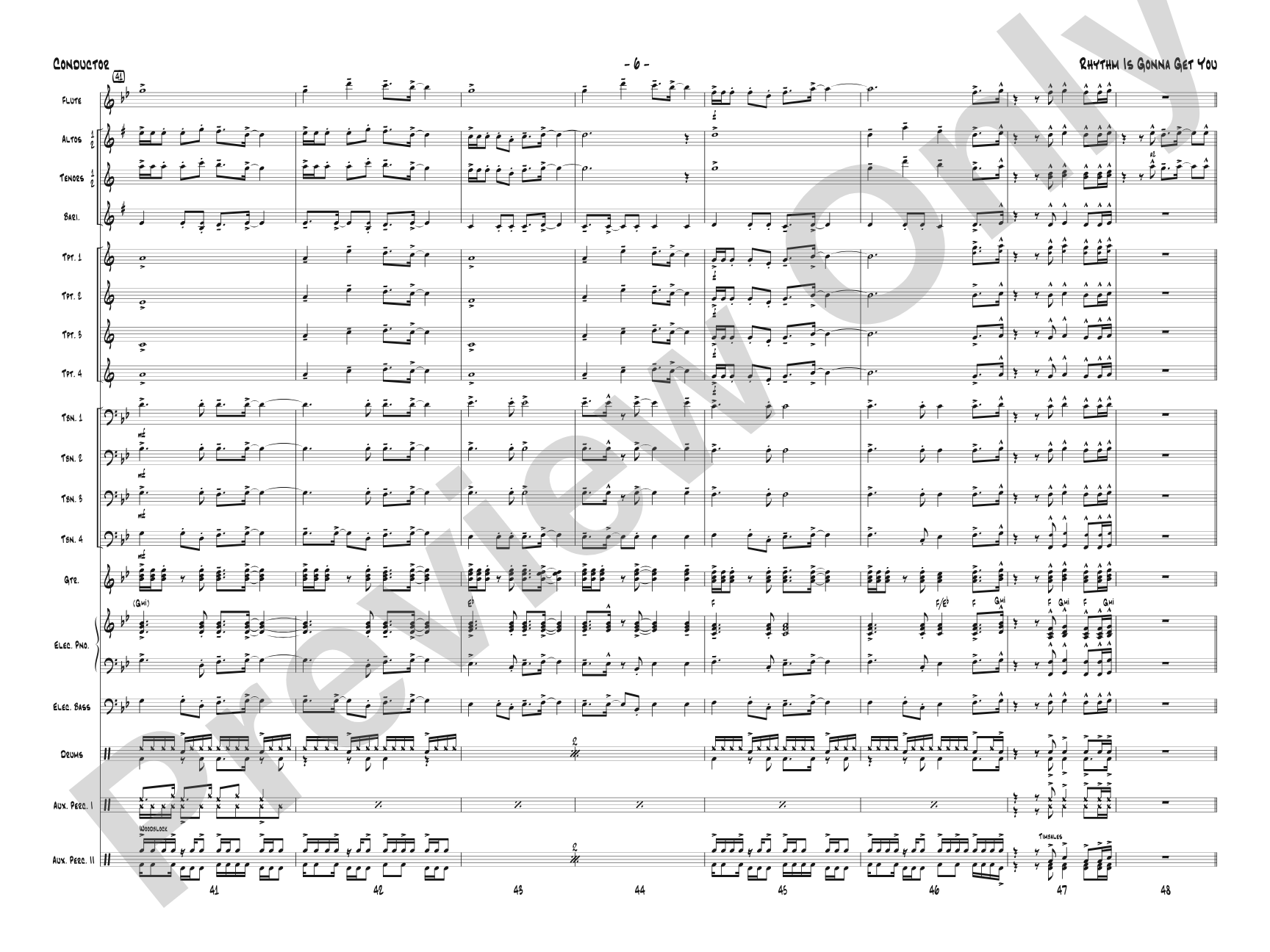
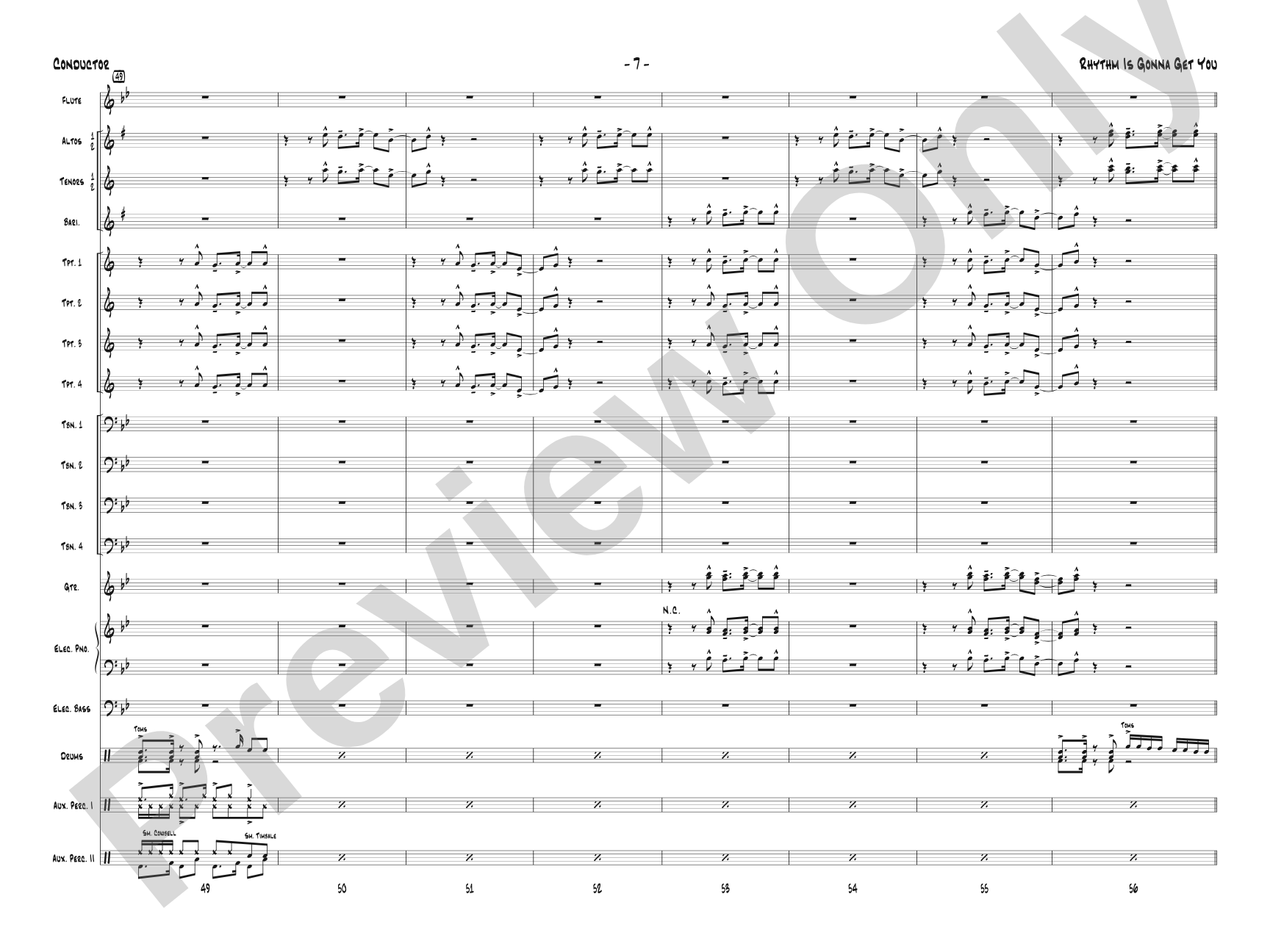
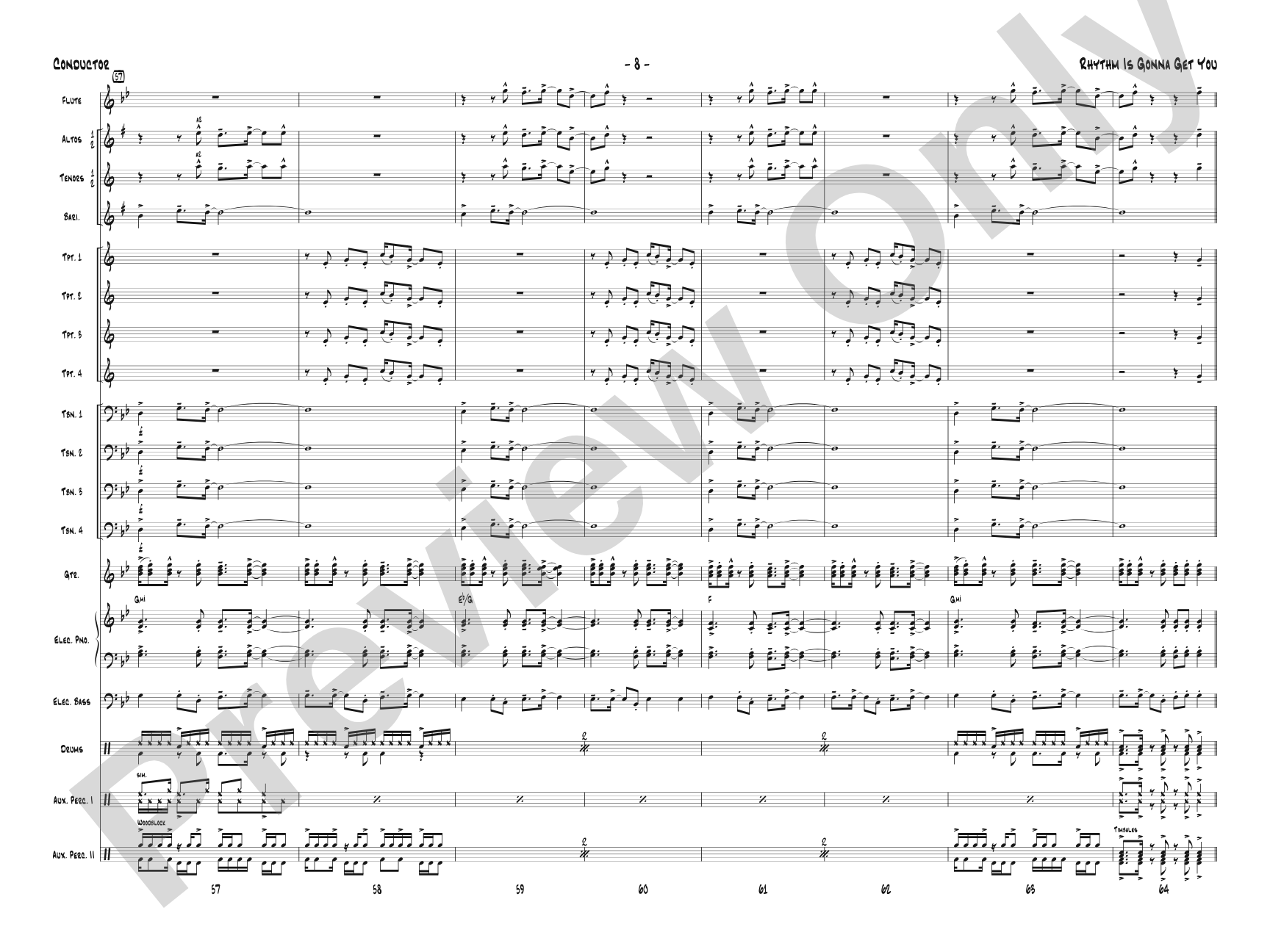
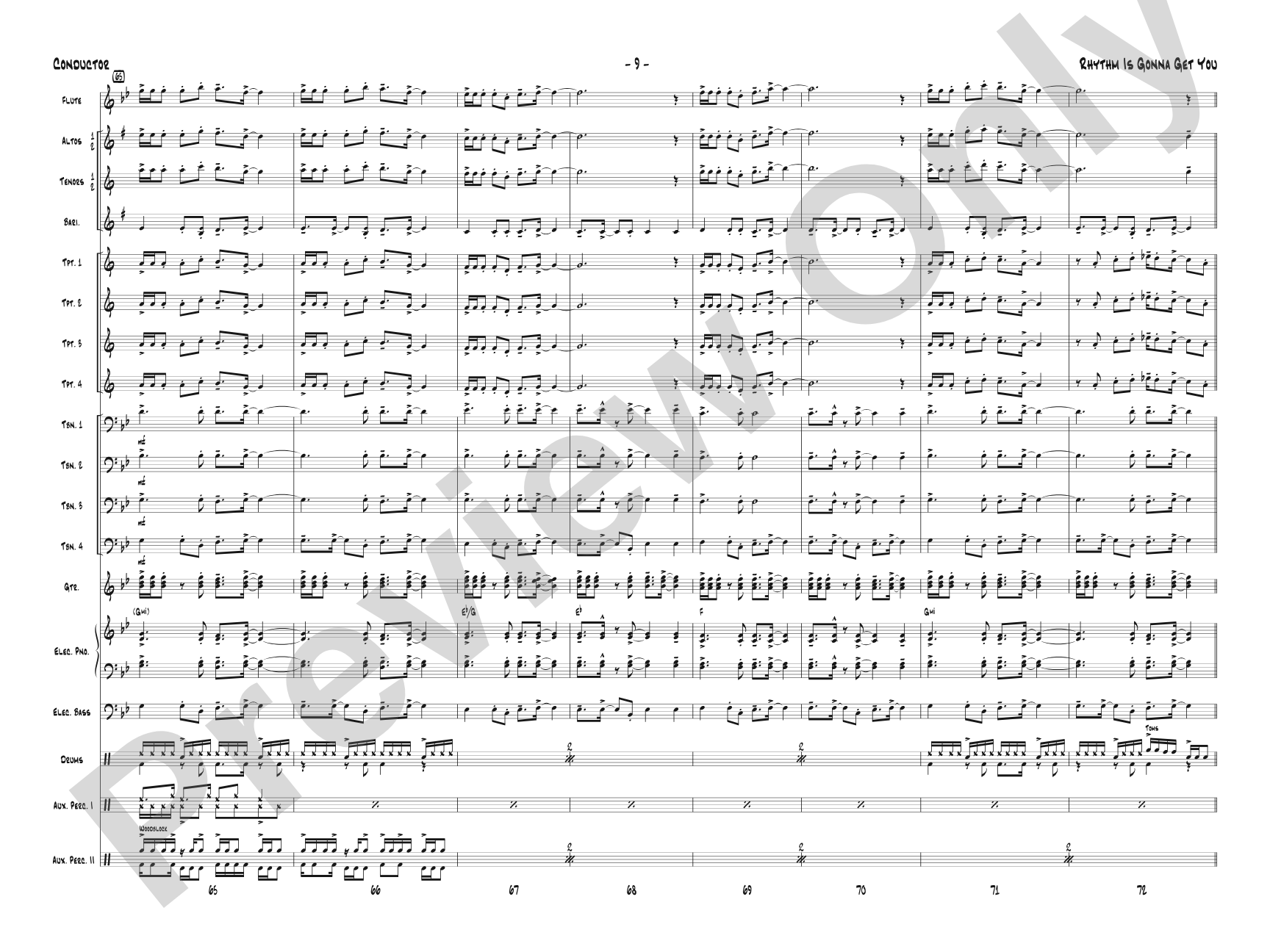
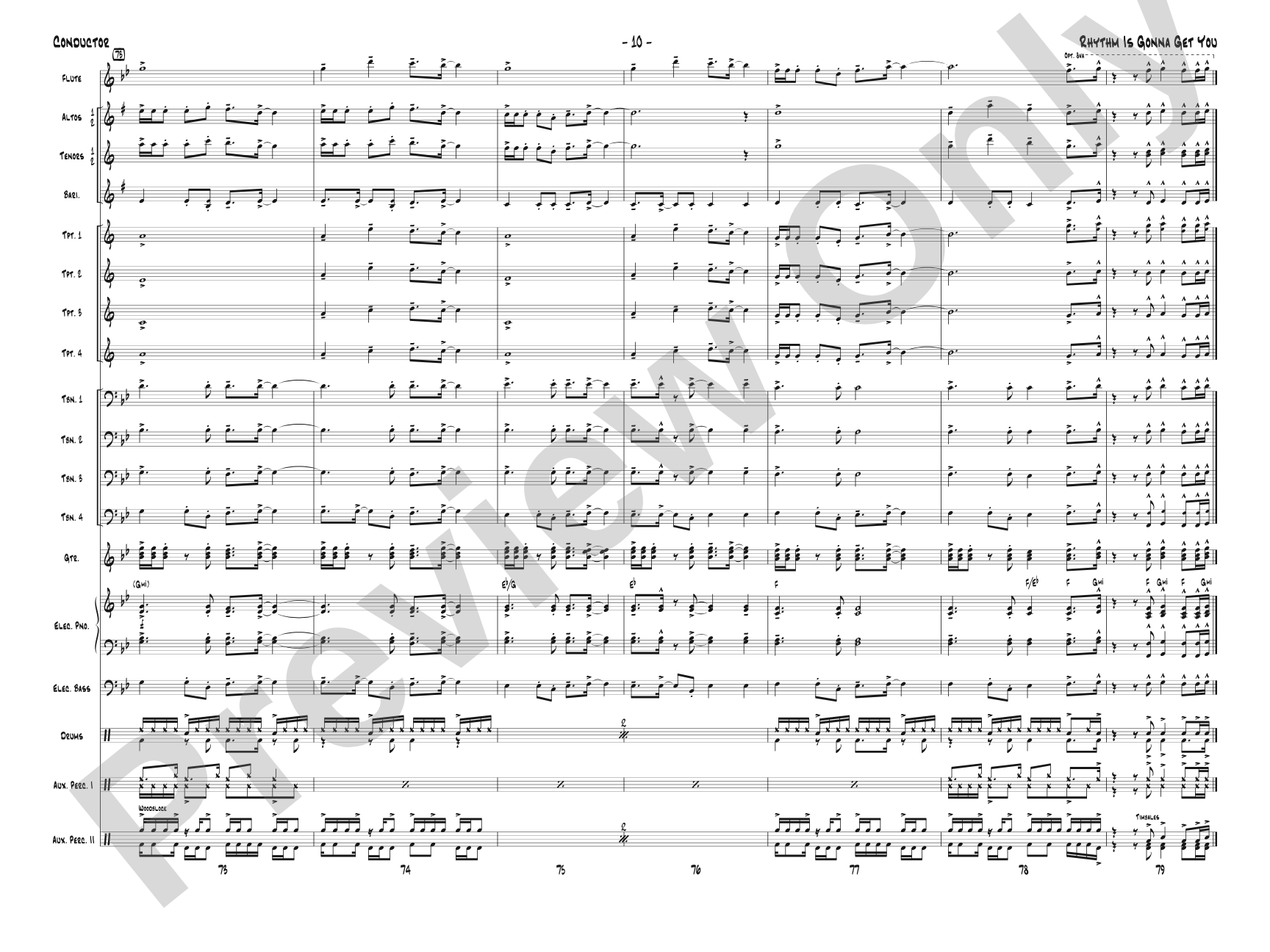

Rhythm Is Gonna Get You: Jazz Ensemble Conductor Score & Parts
Words and music by Gloria Estefan and Enrique Garcia / arr. Victor López
Grade: 2.5 (Medium Easy)
Item: 00-PK-0007239

$48.00
Pickup currently not available
Buy Extra Parts (Digital PDF Download)
Parts Added to Cart!
Description
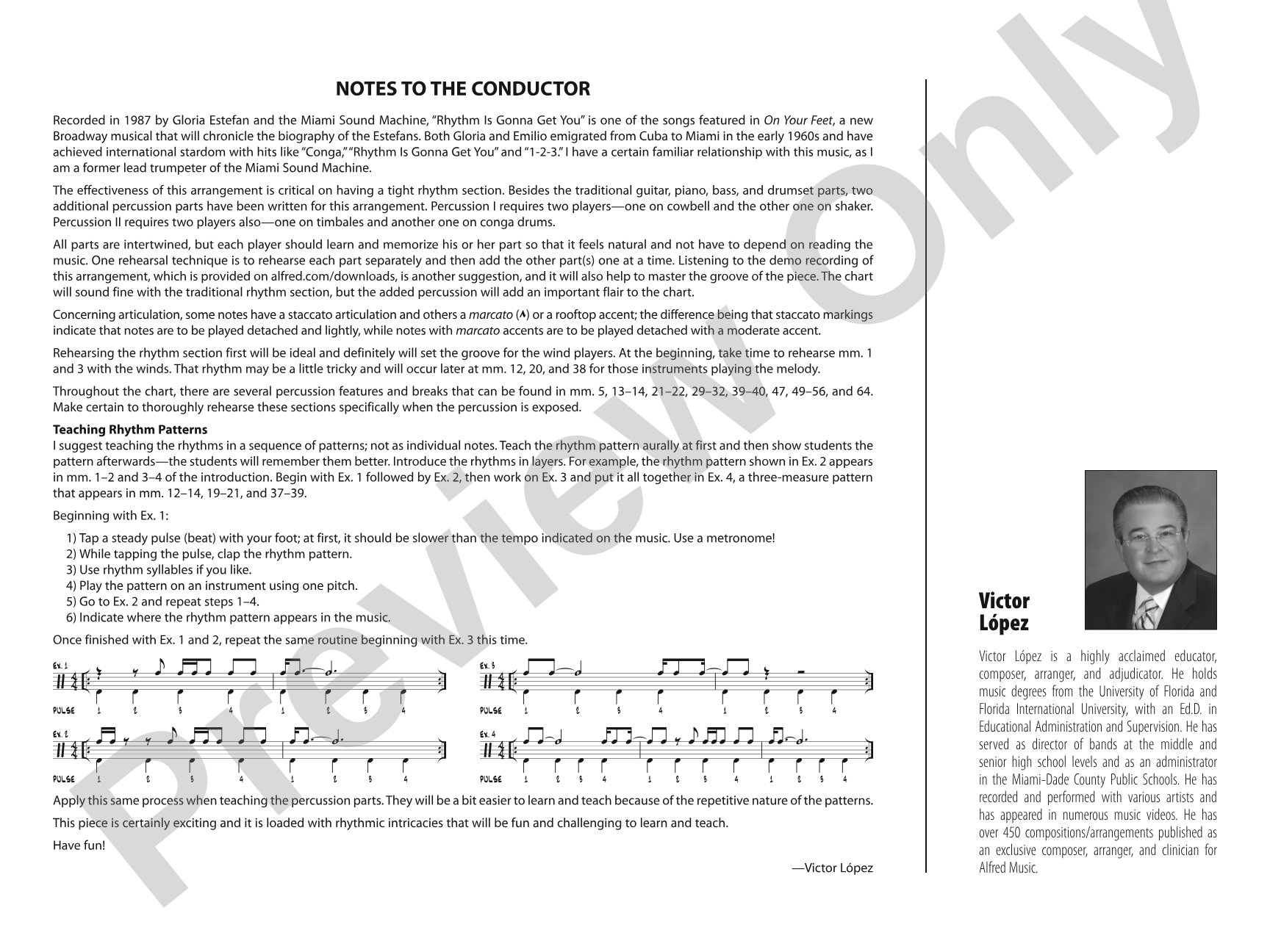
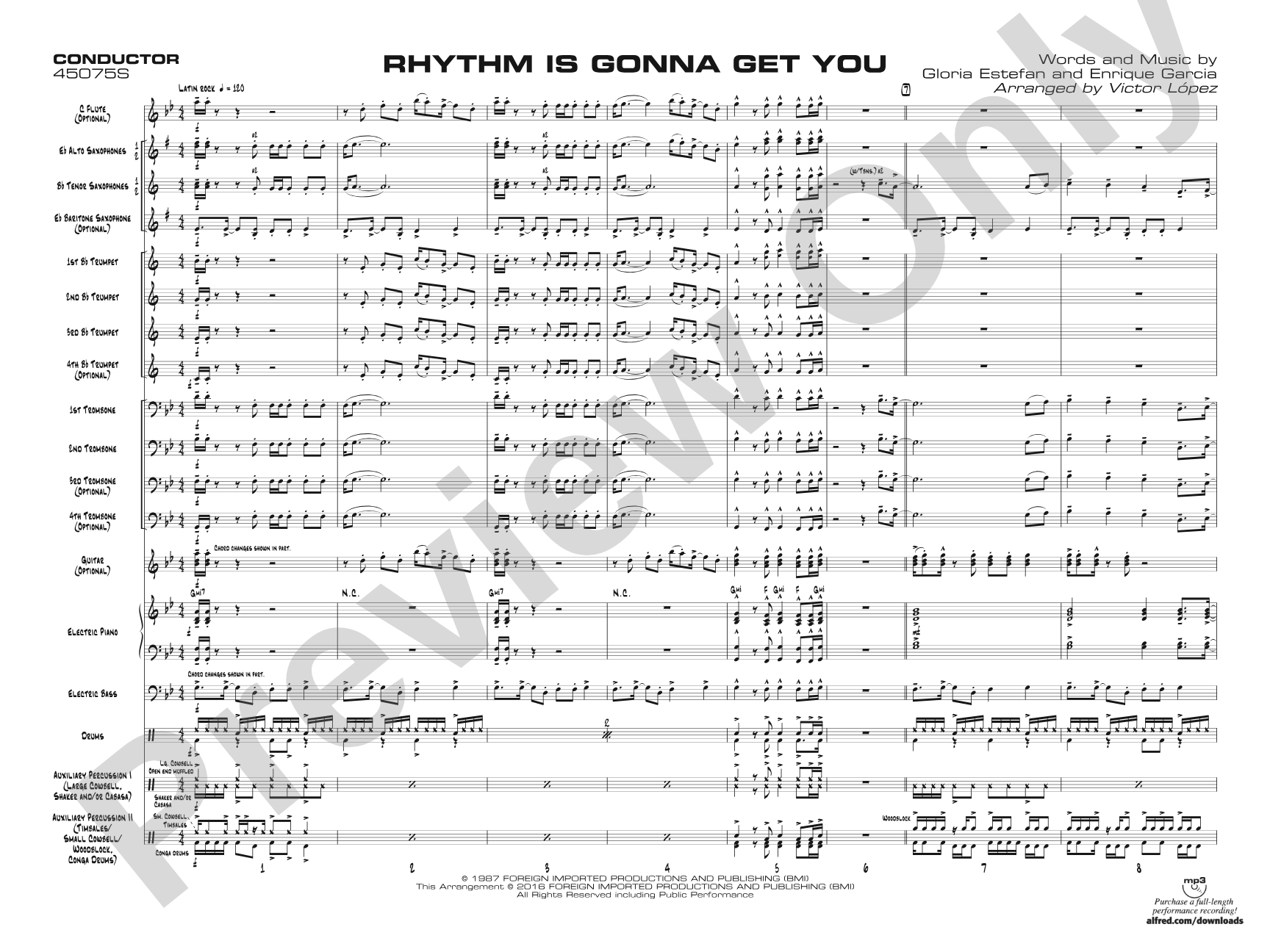
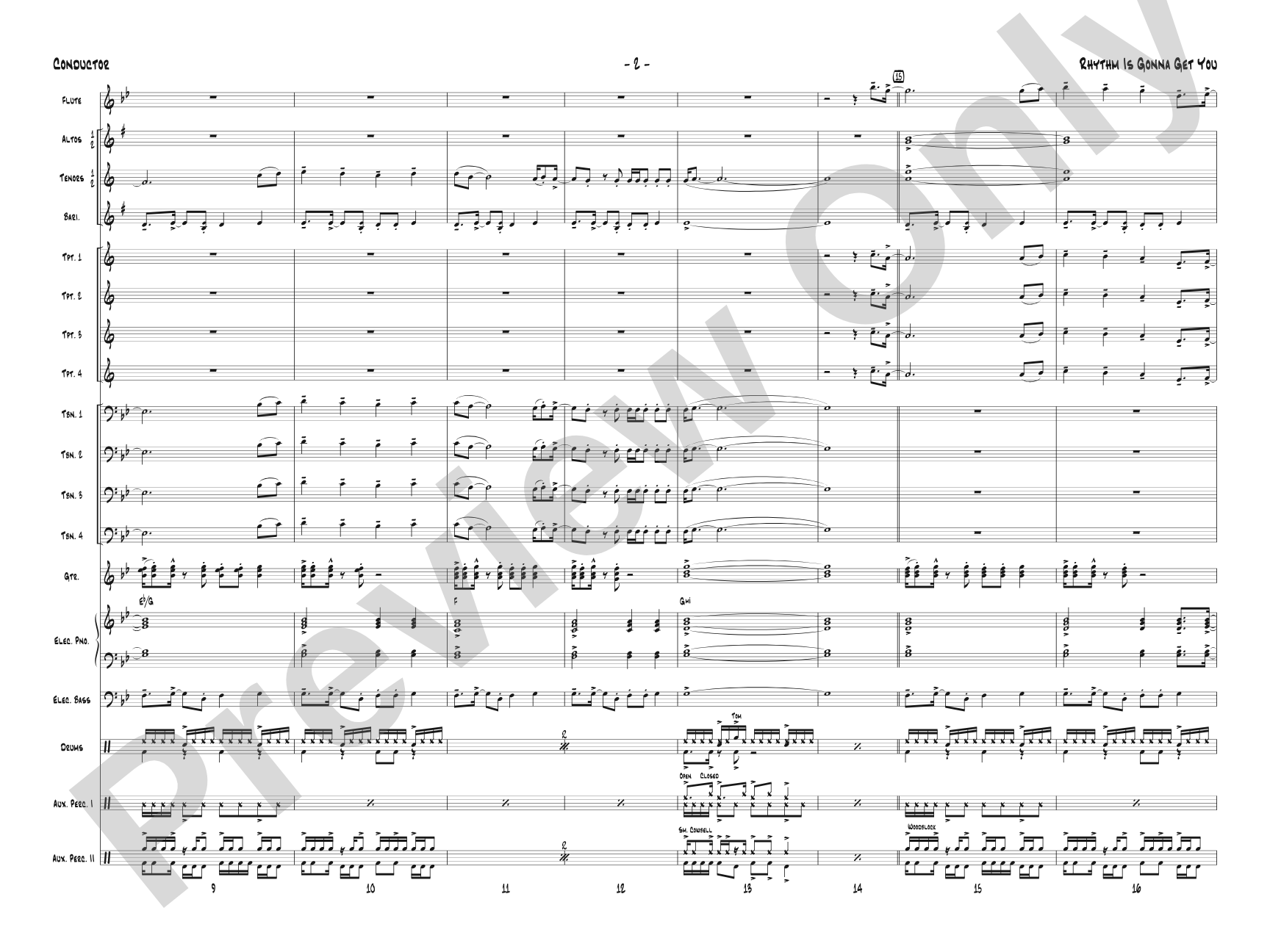
"Rhythm Is Gonna Get You" arranged by Victor López, is hot and exciting Latin rock! This groove is loaded with tons of energy plus it has a cool melody hook, no solos, two auxiliary percussion parts, all the usual optional parts plus flute, clarinet, and vibes. Lead trumpet range to written A above the staff, and the tempo is around 120 BPM. It's gonna get you! (2:40)


Don't just read it, hear it, play along with it, and watch your students grow with it. In MakeMusic Cloud, Rhythm Is Gonna Get You: Jazz Ensemble Conductor Score & Parts comes alive with professional accompaniment, adjustable tempo, and built-in practice tools that turn solo practice into real progress.
Open in the Player
Jump straight in and assign it today.
Start Your Free Trial
Open this title and explore the full library in minutes.
Sample Audio
1
Audio File
--:--
0:00
0:00
Sample Video
Additional Details
Series:
Young Jazz Ensemble
Publisher:
Alfred Music
Page Count:
106
SKU:
00-PK-0007239
More about this title
About the Composer: Gloria Estefan
Gloria Estefan is a Cuban-American singer, songwriter, and cultural ambassador whose music has shaped popular Latin music globally since the 1980s. Her work spans pop, dance, and Latin rock, and she has consistently created music that bridges musical traditions while maintaining infectious, memorable melodies and sophisticated production.
Why we love this
Victor López's arrangement captures the infectious energy of the original while keeping the ensemble part accessible for Grade 2.5 players. The Latin rock groove drives naturally without requiring soloists, making it an ideal confidence-builder for ensembles still developing their rhythmic cohesion and sectional independence. One listen will tell you why this piece works: the hook is unforgettable, the arrangement sparkles with auxiliary percussion and vibes color, and the ensemble exits a performance with genuine excitement.
What to expect
Immediate and propulsive. The Latin rock groove locks in fast, with a melody hook that sticks in your ear from measure one. The ensemble arrangement bubbles with percussion and vibes color, creating a sense of celebration and drive that never lets up across two minutes and forty seconds.
Who it's for
Jazz ensembles at the intermediate level who are ready for genuine popular music but still need straightforward ensemble writing without complex solos. Directors programming concerts with contemporary appeal will find this works equally well as a concert opener or as a surprise moment that connects with student energy and audience recognition.
How to get the most out of it
- Lock the rhythm section (piano, bass, drums, auxiliary percussion) before rehearsing with the full ensemble. The Latin rock pocket is tight, and synchronizing these parts will make the rest of the arrangement sit cleanly.
- Balance the melody hook carefully between lead trumpet and the supporting voices. At 120 BPM, the tune moves quickly, so clarity in the lead (up to written A) matters more than volume.
- Use the vibes and auxiliary percussion parts to establish the groove's character during early rehearsals. These colors define the arrangement and give soloists (or the section) something rhythmic to lock into.
- Mark articulation and dynamics in parts during the first read-through. This piece rewards crisp attacks and clear dynamic shapes, especially in the rhythmic riffs that weave through the ensemble.
How to use it
Program this early in a concert to establish momentum and energy, or use it as a standalone feature when you want to showcase your ensemble's rhythmic precision and ability to handle contemporary popular music. The accessible grade level and no-solo structure make it ideal for mid-year programming, after your ensemble has built confidence with section balance but before tackling heavier works.
Skills your students will build
- Latin rock rhythm and shuffle feel at medium tempo
- Sectional independence in ensemble writing (sustaining parts while melody moves)
- Rhythmic precision and articulation in fast-moving melodic passages
- Balance between melody hook and supporting harmony voices
- Coordination with auxiliary percussion and vibes as integral ensemble colors