
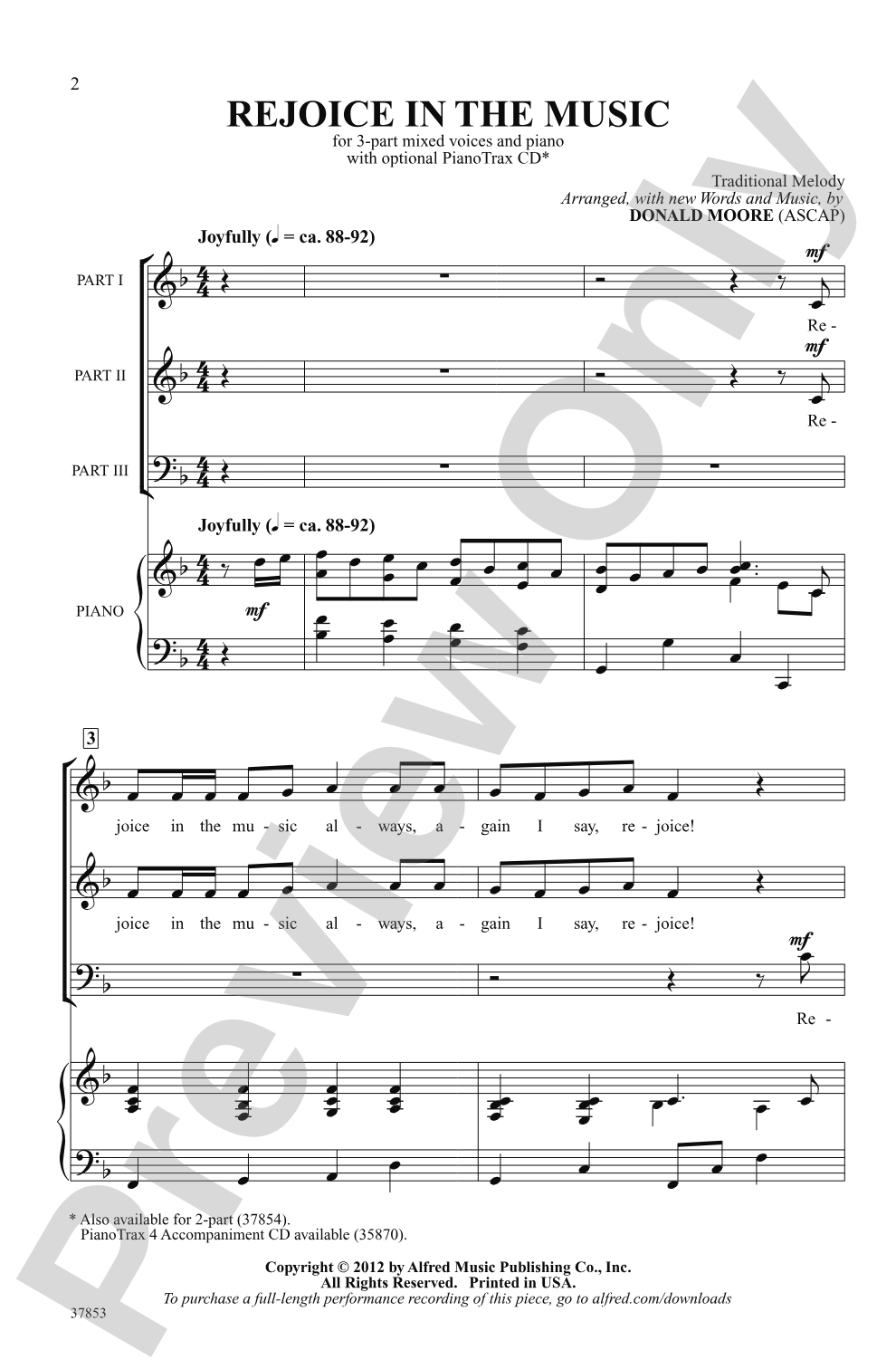

Rejoice in the Music: 3-Part Mixed Choral Octavo
Traditional Melody, arr., with new words and music, by Donald Moore
Item: 00-PO-0001223
$1.80
Minimum order quantity: 20 copies
Pickup currently not available
Description
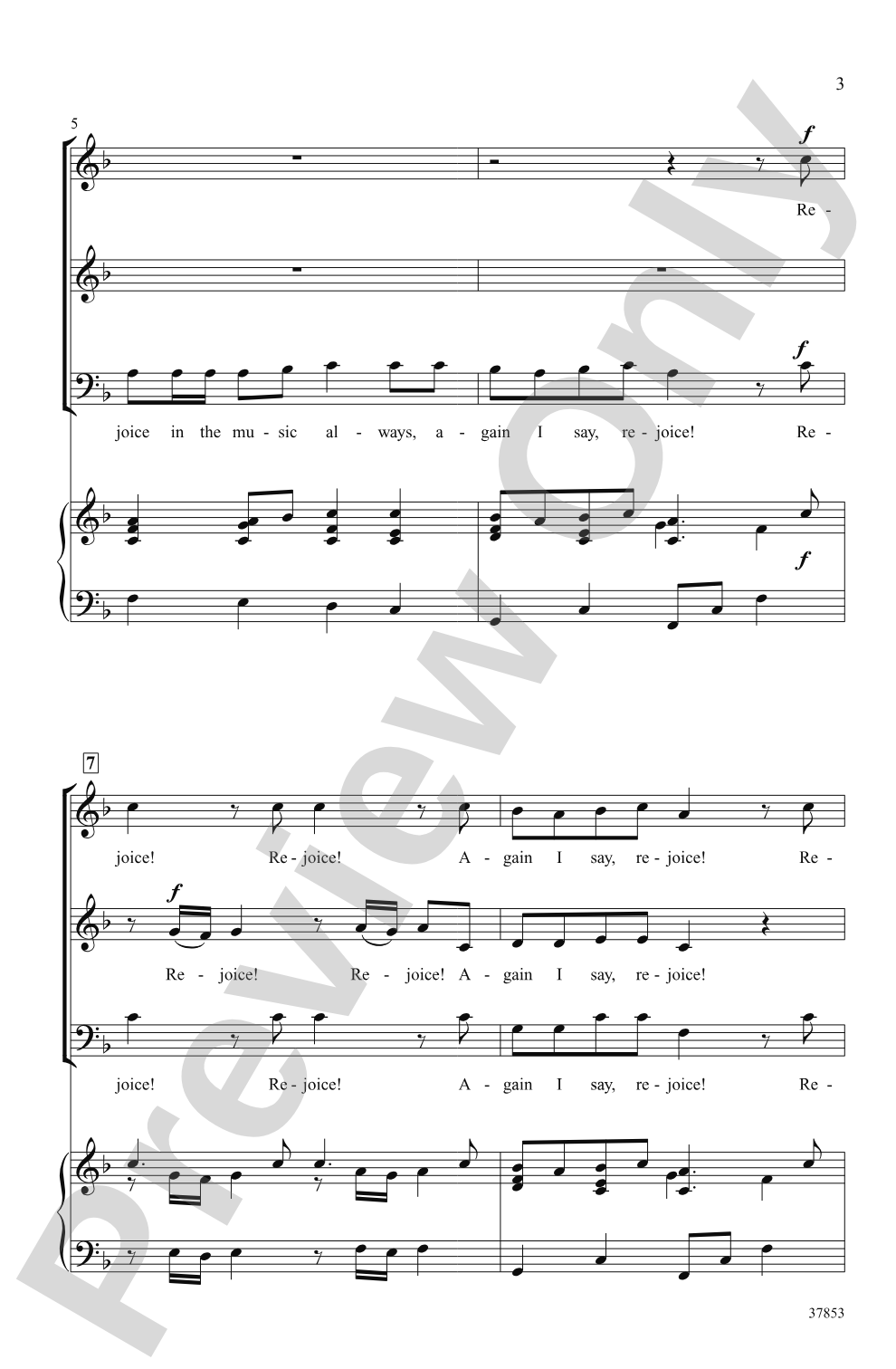
This celebratory music text is suitable year-round. Joyous melodies alternate with independent harmony lines that are easy to sing. Perfect cambiata range in the 3-part voicing. Accompaniment available on PianoTrax 4 CD (00-35870).


Rejoice in the Music: 3-Part Mixed Choral Octavo isn't in MakeMusic Cloud just yet...but it could be. Let us know you'd like to see it, and you'll help shape what comes next. In the meantime, start a free trial and dive into thousands of interactive titles your students can play along with today.
Request This Title
Tell us you want it.
Start Your Free Trial
Explore everything that's ready to play right now.
Sample Audio
1
Audio File
--:--
0:00
0:00
Sample Video
No sample videos found.
Additional Details
Series:
Alfred Choral Designs
Publisher:
Alfred Music
Page Count:
12
SKU:
00-PO-0001223
More about this title
About the Composer: Donald Moore

Donald Moore earned his Bachelor of Music in organ performance and Master of Arts in Teaching from Kent State University. Currently serving as Organist-Choirmaster at Pilgrim United Church of Christ in Cuyahoga Falls, Ohio, he has established himself as a prolific composer and arranger with more than 500 works published across major houses including Alfred, Hal Leonard, Heritage Music Press, and others. His output spans sacred and secular choral music, educational collections, and organ and piano works alongside eight instructional books.
Moore's compositions appear regularly at state contests and festivals and have been performed at state, regional, national, and international conventions. He is a seventeen-time recipient of the ASCAP Composers Standard Award and was recognized by the American Choral Directors Association Choral Journal as one of 400 significant composers in the history of American choral music. Beyond his musical work, Moore maintains an active midget car racing operation.
Why we love this
The straightforward vocal writing here respects your singers' abilities while delivering genuine musical satisfaction. Moore pairs accessible melodic lines with independent harmony parts that sit naturally in the cambiata range, so singers stay engaged without strain, and the piece builds ensemble confidence through genuine musicmaking rather than oversimplification.
What to expect
Bright and celebratory, this piece radiates warmth without sentimentality. The alternating melodic and harmonic sections create a conversation between voices that feels conversational and alive, inviting singers to enjoy the moment of making music together.
Who it's for
This octavo works for choirs of all ages from middle school upward, particularly groups still developing blend and independence. It suits churches, school choirs, and community ensembles seeking repertoire that sounds polished without demanding advanced technique.
How to get the most out of it
- Balance the alternating melody and harmony sections by having singers mark where the musical focus shifts in rehearsal; this prevents over-singing one part and keeps the joyous character light and clear.
- Allow the independent harmony lines room to breathe; encourage singers not to lock onto the melody, which will showcase the piece's two-part texture and harmonic interest.
- Take advantage of the year-round appeal by placing this piece early in rehearsal season when you need something that builds morale and reinforces fundamental ensemble skills.
How to use it
Program this as a concert opener or closer to establish an uplifting tone; it works equally well as a standalone number or paired with other Moore works for a cohesive set. Its accessibility makes it ideal for early-season performances or outreach events where you want to showcase your ensemble's musicality without the demands of more complex repertoire.
Skills your students will build
- Singing independent harmony lines in three-part texture
- Maintaining melodic accuracy while hearing different vocal lines
- Blending and balance in cambiata range
- Phrasing and expression in secular choral music
- Ensemble listening and sectional independence