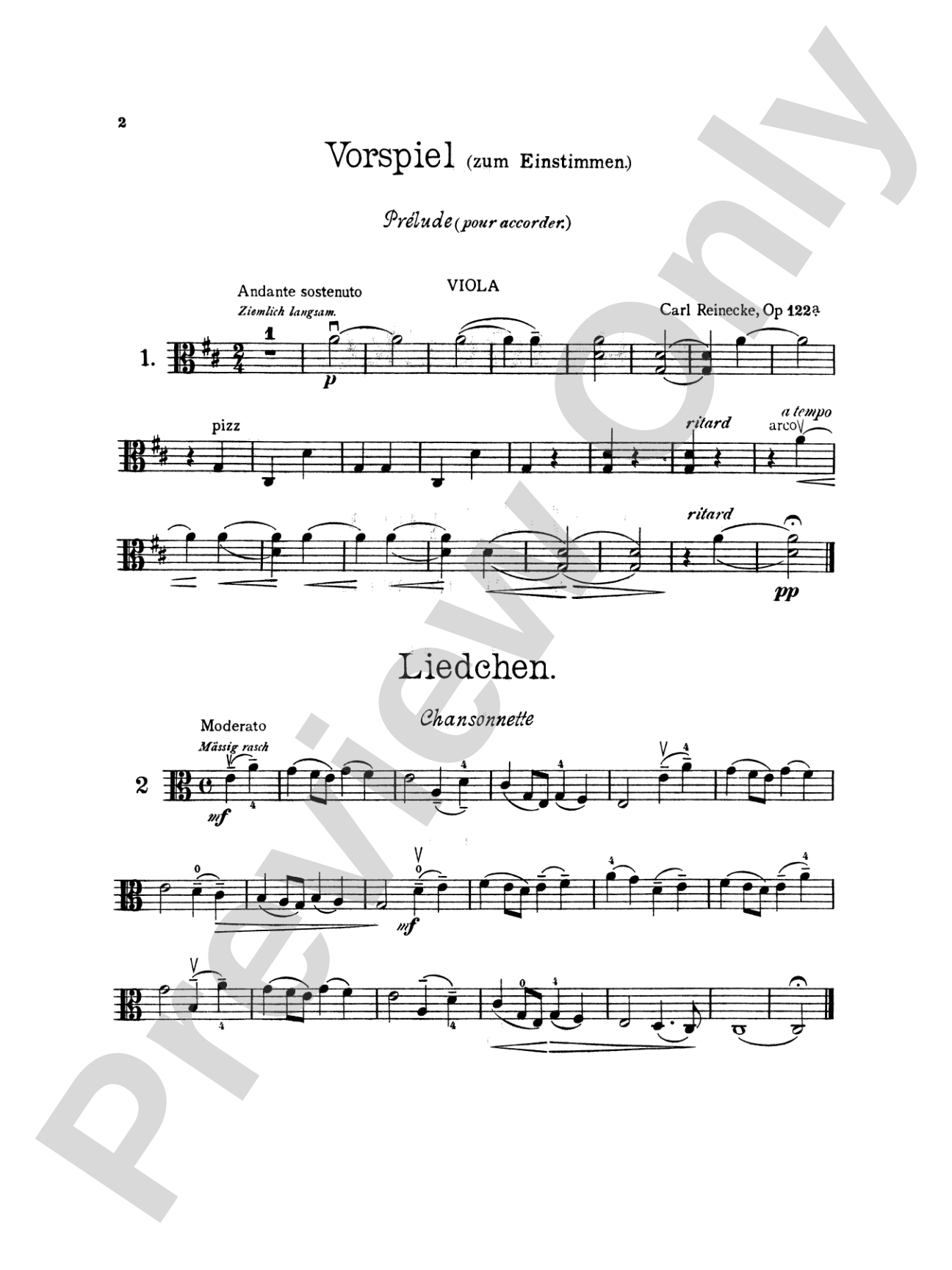
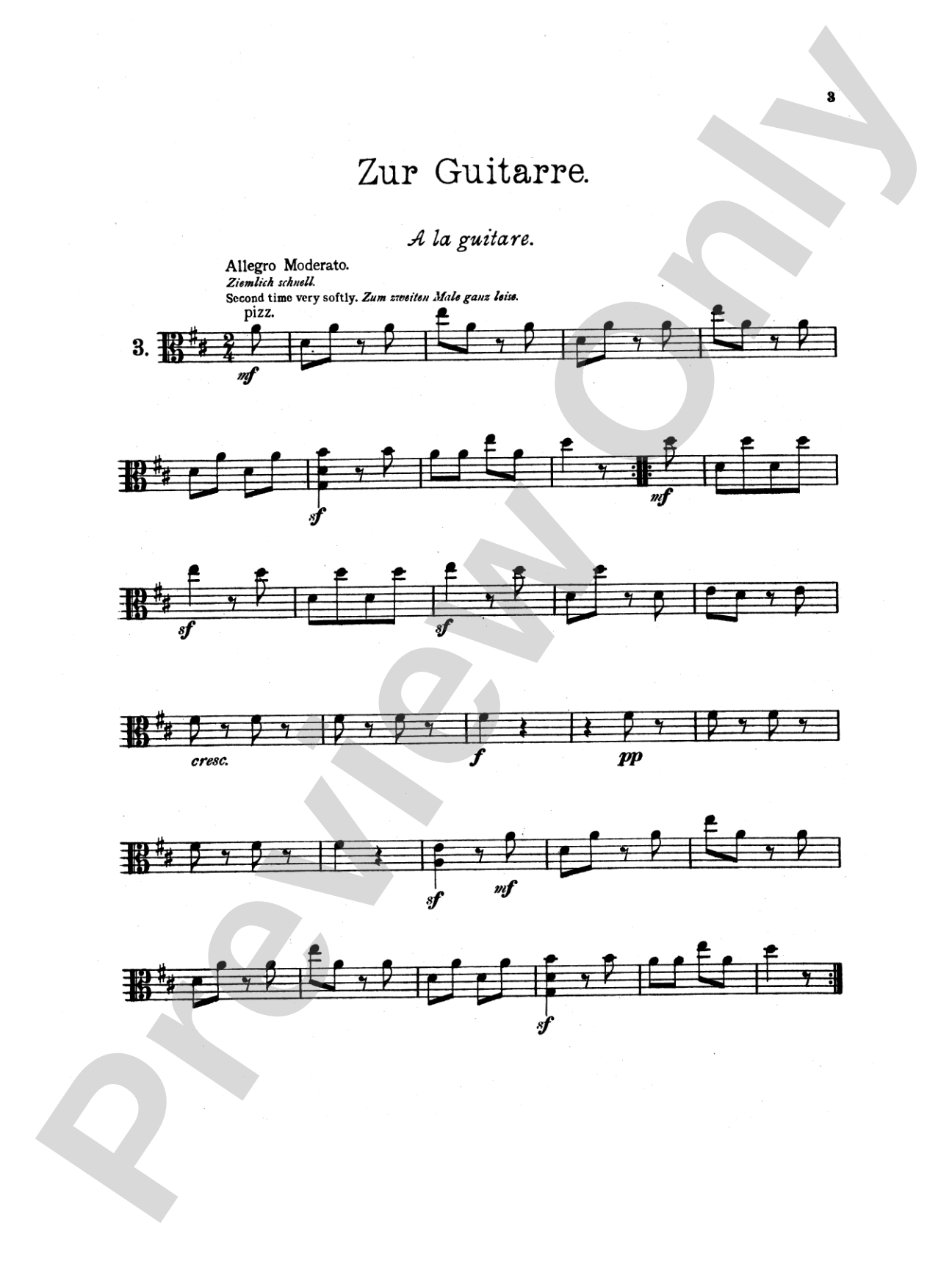
Reinecke: Ten Little Pieces (Petits Morceaux), Op. 122A Sheet Music Preview

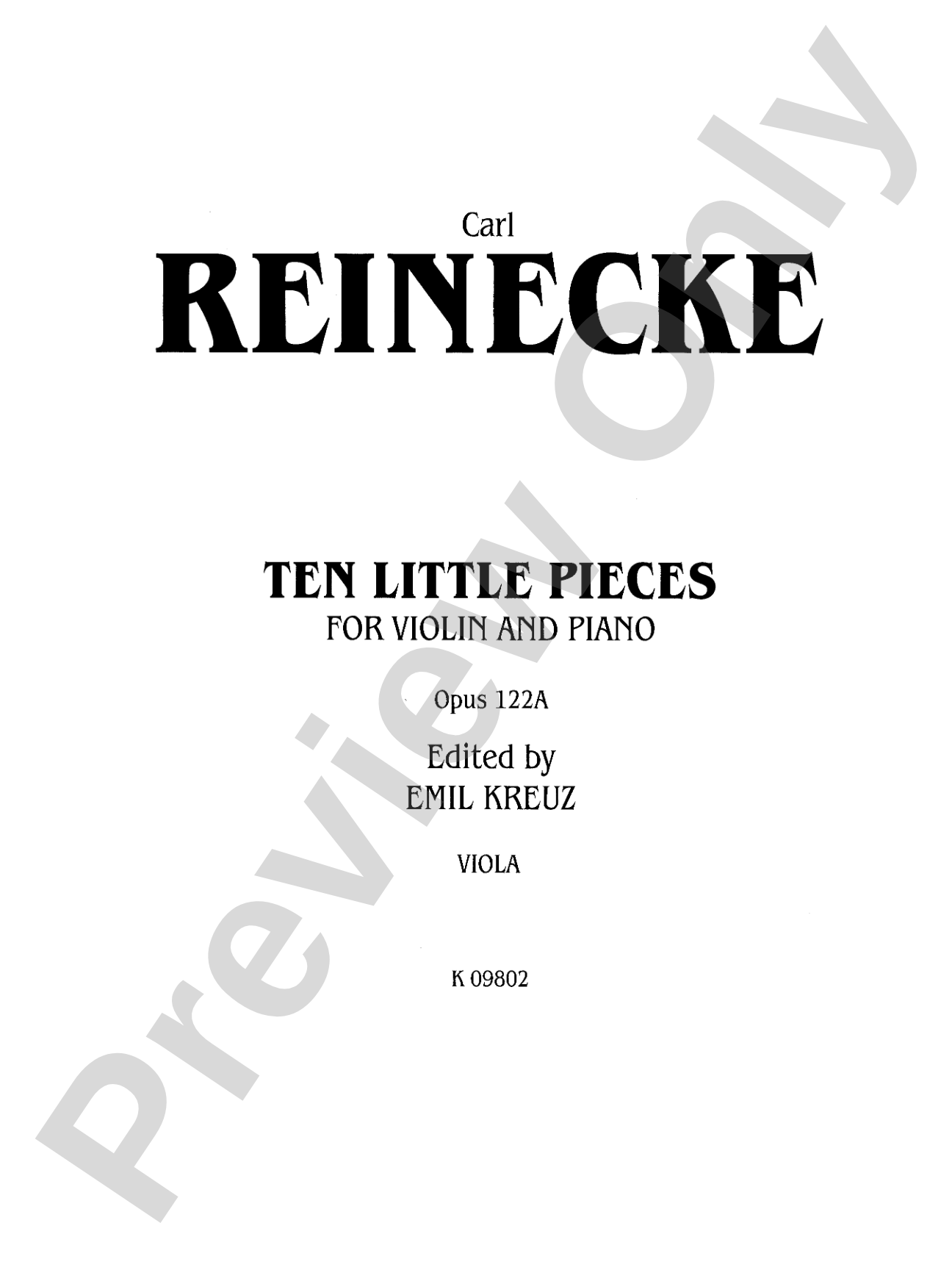
Reinecke: Ten Little Pieces (Petits Morceaux), Op. 122A

By Carl Reinecke

Item: 00-PC-0013238

Digital Download
$3.99
Description
A collection of ten violin solos with piano accompanitment composed by Carl Reinecke and edited by Emil Kreuz.

Don't just read it, hear it, play along with it, and watch your students grow with it. In MakeMusic Cloud, Reinecke: Ten Little Pieces (Petits Morceaux), Op. 122A comes alive with professional accompaniment, adjustable tempo, and built-in practice tools that turn solo practice into real progress.

Sample Audio
No sample audio found.
Sample Video
Additional Details
Series: Kalmus Edition
Publisher: Alfred Music
Page Count: 36
SKU: 00-PC-0013238

More about this title

About the Composer: Carl Reinecke

Carl Reinecke (1824–1910) was a German composer, conductor, and pedagogue whose output spanned nearly seven decades. As director of the Gewandhaus Orchestra in Leipzig and professor at the Leipzig Conservatory, Reinecke shaped Romantic-era musical life through both his compositions and his mentorship of countless students.

Why we love this

Reinecke's gift for writing accessible yet sophisticated string literature shines in these ten pieces. Each morceaux stands alone as a complete musical thought, making this collection ideal for building a recital program or selecting individual teaching repertoire without committing to a longer sonata cycle.

What to expect

These pieces capture the Romantic spirit of intimate salon music. Reinecke's writing is lyrical and direct, favoring singing melodies and gentle harmonic colors over virtuosity. The emotional world feels warm and personal, inviting rather than intimidating.

Who it's for

This collection suits intermediate to advanced violists seeking repertoire that develops musicality without extreme technical demands. Studio teachers value these pieces for students ready to move beyond elementary methods but not yet prepared for major concerto literature.

How to get the most out of it

  • Attend to the piano part as a full partner, not merely accompaniment; Reinecke writes dialogue between viola and keyboard that demands listening and response from both players.
  • Shape each piece's melodic contour with clear phrasing; these Romantic miniatures rely on singers' instincts for line rather than technical display.
  • Balance tone production across dynamic changes, especially in the softer passages where Reinecke often places expressive character.

How to use it

Program individual pieces as recital openers or closers to create varied moods across a concert. Use them in student recitals to demonstrate range from lyrical to playful character in a single program without requiring multiple longer works.

Skills your students will build

  • Sustaining legato phrases across position shifts
  • Responding musically to harmonic movement in the accompaniment
  • Balancing volume and tone between forte and piano dynamics in Romantic style
  • Reading and performing Reinecke's articulation and phrasing markings with expressive intent

You May Also Like