Kathy Holmes came to composing and formal music study later in life, earning her Bachelor's degree in Music from Hiram College in Ohio while in her forties. Before that pivotal turn toward music education and composition, she raised three children and worked in early childhood education, all while maintaining a daily piano practice she'd begun at age seven. She is an active member of the Western Reserve Piano Teachers, a collaborative group of piano educators in the greater Cleveland area whose monthly meetings have shaped her approach to both teaching and writing accessible repertoire.
Why we love this
Holmes writes rags that actually sound like rags without demanding the technical wizardry that can intimidate intermediate students. The syncopation lands naturally in the hands, the phrasing stays playable at tempo, and students leave the lesson excited about what they just played rather than exhausted by left-hand patterns.
What to expect
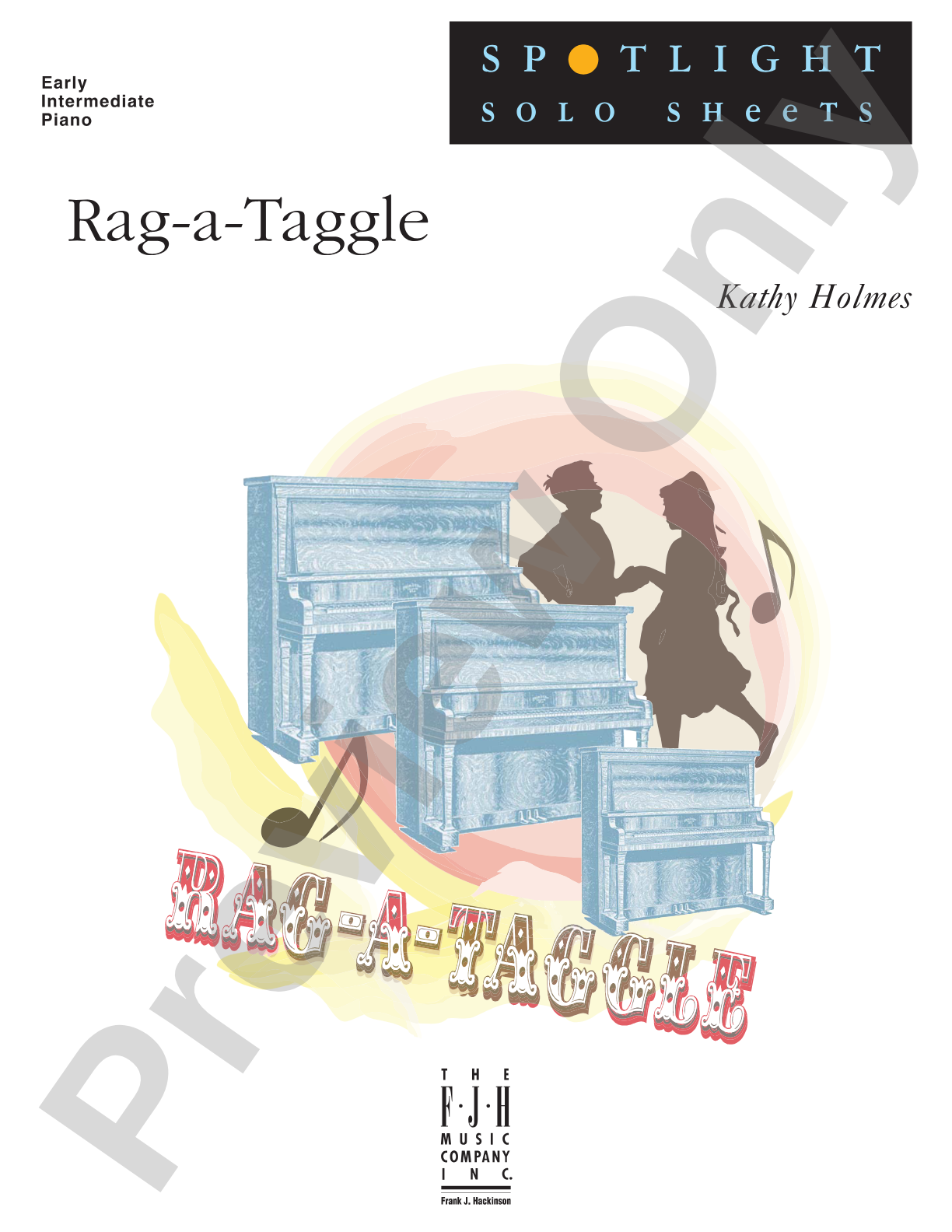
Rag-a-Taggle bounces with good humor and period charm. There's swagger in the syncopation and a sense of play throughout, making it the kind of piece that feels triumphant when performed and genuinely fun to practice.
Who it's for
This works for early intermediate to intermediate pianists who are ready for rhythmic independence but benefit from music that lies comfortably under the fingers. Teachers seeking cheerful, musically substantial pieces that reward consistent practice without becoming frustrating will find a genuine asset here.
How to get the most out of it
Let the left-hand rhythm live independently from the right hand. The magic of ragtime is the conversation between the two voices, not their lockstep alignment.
Keep the tempo steady and energetic. Rags lose their sparkle when the pace sags, so use a metronome even in practice.
Shape the syncopated melodic lines with gentle dynamic emphasis on the off-beat figures rather than pounding through them.
How to use it
Program this early in a recital or student showcase to set an upbeat tone and give younger or less experienced pianists a moment in the spotlight. It also pairs well on a studio recital alongside other early 20th-century character pieces or as a bridge between classical and contemporary solo repertoire.
Skills your students will build
Syncopated rhythm reading and execution in both hands
Left-hand independence from melodic line
Maintaining steady tempo through off-beat figures
Dynamic shaping of syncopated phrases
Period-style articulation and phrasing in ragtime idiom
You May Also Like
Scan to Complete Your Purchase
Use your phone's camera to scan the code below
You'll log in on your phone and the order will be added to your account