Quasar Cover Image

Quasar: Concert Band Conductor Score

$14.00 USD
Sale price  $14.00 USD Regular price 
Skip to product information
Quasar Cover Image

Quasar: Concert Band Conductor Score

By William Owens

Grade: 2.5

Item: 98-B1594S

$14.00
Shipped

One moment…

Description
This thrilling and adrenaline-charged work depicts a “quasar,” the most intense source of light in the universe. The boisterous opening and brisk tempo portrays the speed of light itself while sudden bursts of sound mix with lingering dissonant clusters to characterize unpredictable discharges of light and radiation. A serene, slow section offers a glimpse into a distant universe before the music becomes more powerful, driving to a fiery finish. Outstanding!

Quasar: Concert Band Conductor Score isn't in MakeMusic Cloud just yet...but it could be. Let us know you'd like to see it, and you'll help shape what comes next. In the meantime, start a free trial and dive into thousands of interactive titles your students can play along with today.

Sample Pages

Sample Audio
No sample audio found.
Sample Video
Additional Details
Series: FJH Young Band
Publisher: The FJH Music Company, Inc.
UPC: 241444509340
SKU: 98-B1594S

More about this title

About the Composer: William Owens
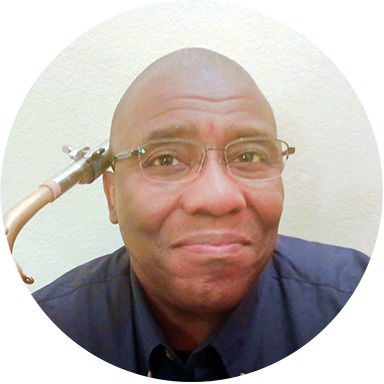
William Owens

William Owens has established himself as one of the most prolific and trusted composers for young concert bands. A native of Gary, Indiana, and a 1985 graduate of VanderCook College of Music, Owens has built a career spanning three decades as an educator, conductor, and clinician across North America. Since 1993, he has authored over 300 works for concert band, string orchestra, and chamber ensembles, many of which appear on state competition lists and are studied in music education coursework.

Owens's compositional voice is defined by his grasp of what young musicians can accomplish and what they need to grow. His works have earned him recognition as a Distinguished Alumnus of VanderCook and the Texas Bandmasters Association's Meritorious Achievement Award. He served as a band director in Texas for 30 years before retiring in 2014 and now resides in Fort Worth with his wife Georgia, maintaining active involvement in the music education community through guest conducting and composition.

Why we love this

Owens captures the visual drama of a cosmic phenomenon and translates it into a musical experience that drives ensemble engagement from the opening measure. The piece moves between visceral, high-energy writing and genuine musical substance—a rare combination at Grade 2.5 that keeps students invested while building technical and interpretive skills. Directors appreciate how the programmatic content gives young musicians a clear dramatic arc to shape and perform.

What to expect

Quasar opens with kinetic urgency as light races across the sky; rhythmic momentum drives the ensemble forward while sudden eruptions of dissonant sound interrupt the flow like unpredictable cosmic events. The middle section pulls back into a hushed, contemplative space where starlight feels distant and cold, before the music swells again into a powerful, inevitable conclusion that feels both climactic and controlled.

Who it's for

This score is ideal for Grade 2 and Grade 3 concert bands seeking a programmatic work with genuine dramatic stakes. It engages musicians who respond to concrete imagery and rewards directors who want to develop both technical facility and musical storytelling within a manageable instrumentation.

How to get the most out of it

  • Establish the blazing tempo of the opening section early in rehearsal; this passage sets the quasar's velocity and gives the work its essential character. Build ensemble precision on rhythmic figures before addressing individual balance.
  • Shape the dissonant clusters intentionally rather than as accidents. These moments depict radiation bursts, so blend them with commitment and hold them steady until the release.
  • Contrast the slow, serene section with genuine repose. Use this moment to reset the band's energy and prepare for the final driving passage without losing focus.
  • Balance the fiery finale so that rising intensity comes from ensemble cohesion and dynamic control, not from pushing individuals out of line. The last section should feel like organized power, not chaos.

How to use it

Place this work as a festival or contest selection where its dramatic arc and programmatic title engage both judges and audiences. It also functions well as an opener or closer on a concert, the bright, kinetic opening immediately commanding attention and the powerful finale leaving a lasting impression. Pair it with more introspective or lyrical pieces to highlight its high-energy character.

Skills your students will build

  • Sustaining brisk tempo with rhythmic precision under energetic conditions
  • Balancing and blending dissonant chord clusters
  • Contrasting dynamics and intensity across large formal sections
  • Shaping programmatic narrative through ensemble interpretation
  • Executing rapid section transitions without losing ensemble unity

You May Also Like