

Pure Imagination: SAB Choral Octavo
From Charlie and the Chocolate Factory
Words and music by Leslie Bricusse and Anthony Newley / arr. Mark Hayes
Item: 00-PO-0005691

$2.00
Minimum order quantity: 20 copies
Pickup currently not available
Related Items
Pure Imagination: SoundTrax Digital Audio Download |
$29.99
|
View | |
Pure Imagination: SATB Choral Octavo |
$2.10
|
View | |
Pure Imagination: SSA Choral Octavo |
$2.00
|
View | |
Pure Imagination: Choral SoundPax |
$65.00
|
View | |
Pure Imagination: SATB Choral Octavo |
$2.10
|
View | |
Pure Imagination: SAB Choral Octavo |
$2.00
|
View | |
Pure Imagination: SSA Choral Octavo |
$2.00
|
View | |
Pure Imagination: Choral Octavo SoundTrax CD |
$29.99
|
View | |
Pure Imagination: Choral SoundPax |
$65.00
|
View |
Description
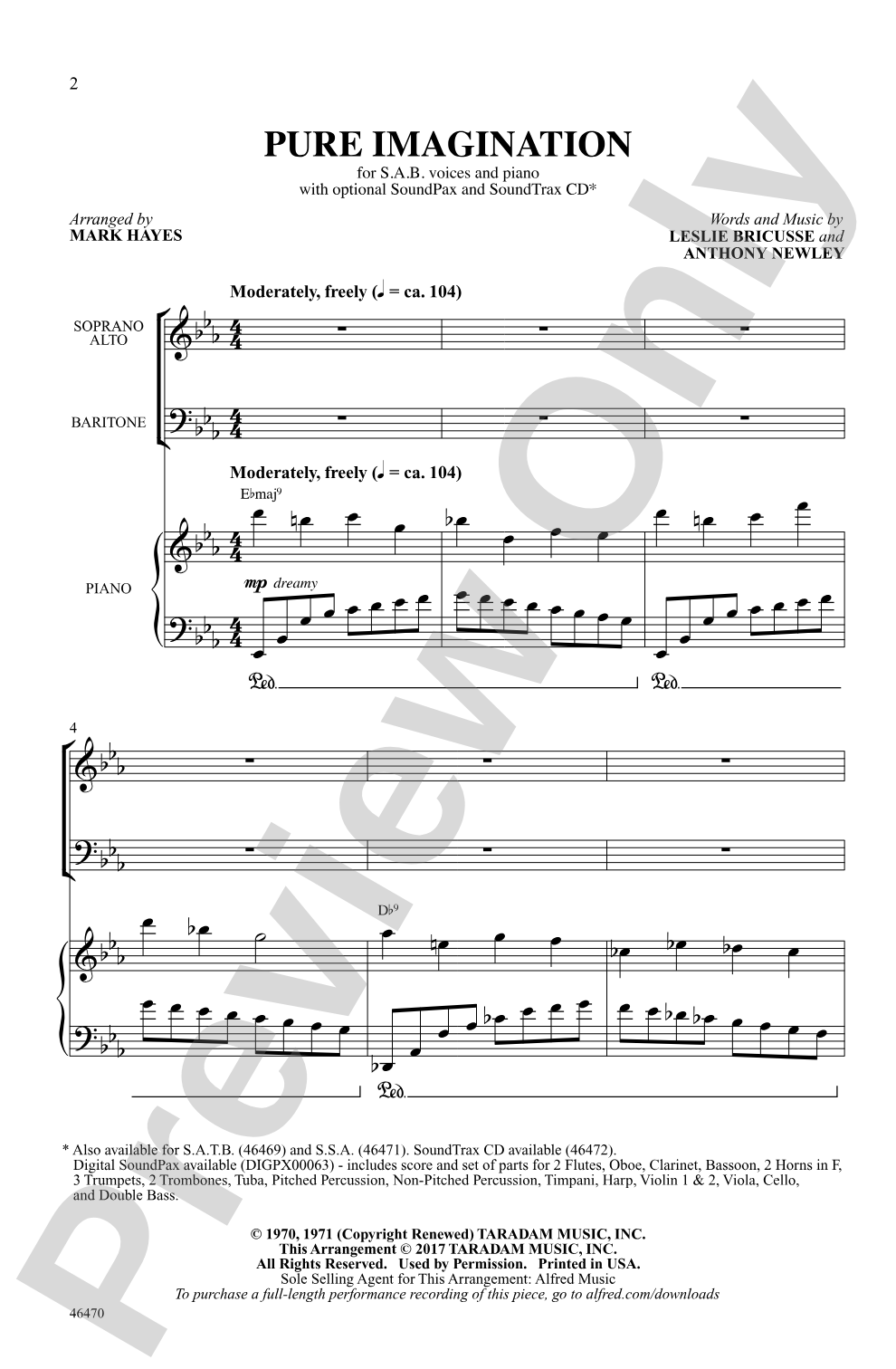
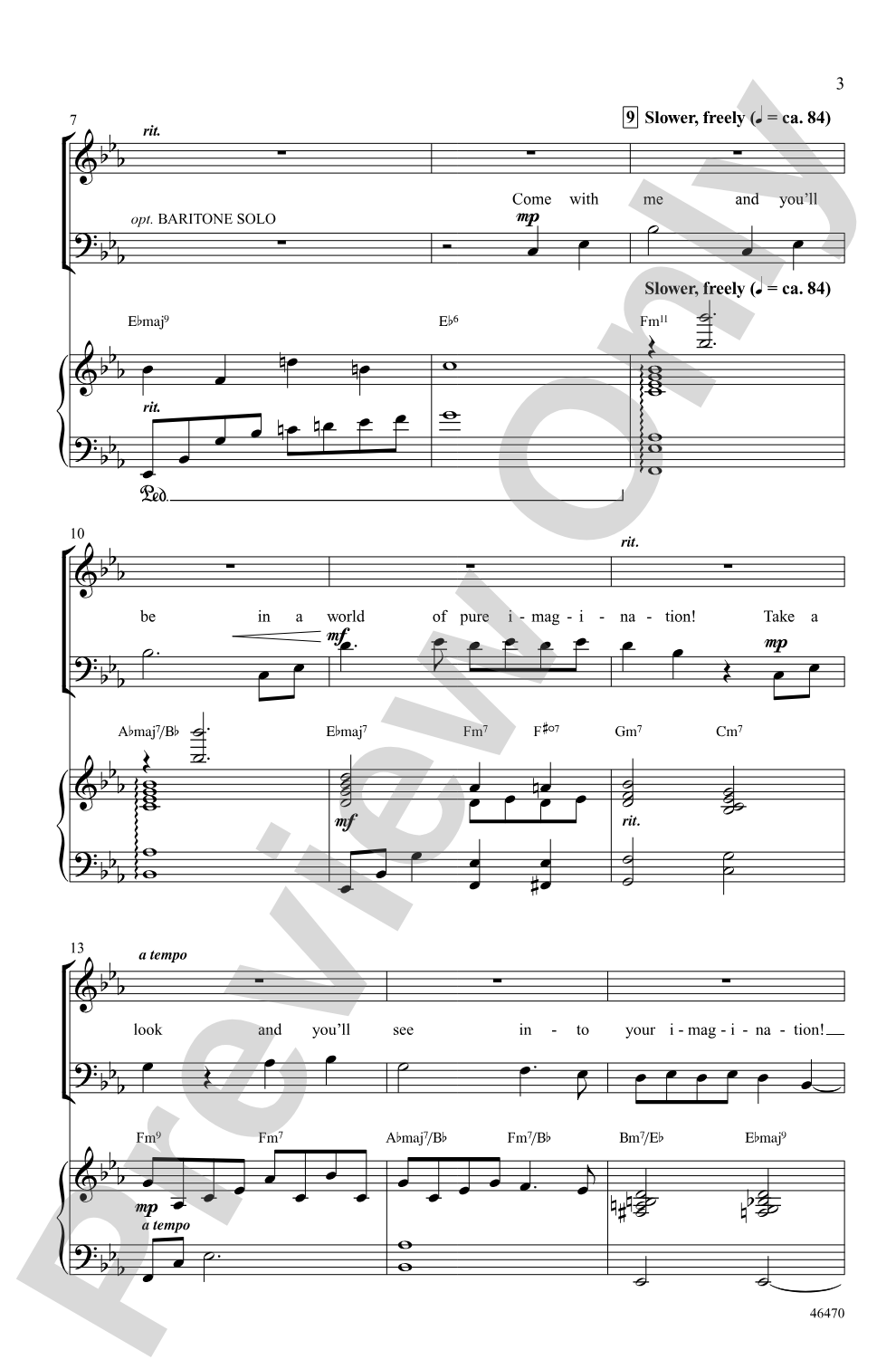
Originally performed by Gene Wilder in Willy Wonka and the Chocolate Factory, this inspirational ballad shimmers with the Mark Hayes touch. "Come with me, and you'll be in a world of pure imagination!"


Don't just read it, hear it, play along with it, and watch your students grow with it. In MakeMusic Cloud, Pure Imagination: SAB Choral Octavo comes alive with professional accompaniment, adjustable tempo, and built-in practice tools that turn solo practice into real progress.
Open in the Player
Jump straight in and assign it today.
Start Your Free Trial
Open this title and explore the full library in minutes.
Sample Audio
1
Audio File
--:--
0:00
0:00
Sample Video
No sample videos found.
Additional Details
Series:
Alfred Pop Choral Series
Publisher:
Alfred Music
Page Count:
12
SKU:
00-PO-0005691
More about this title
About the Composer: Leslie Bricusse
Leslie Bricusse is a British composer and lyricist whose theatrical work spans film, television, and stage. His partnership with Anthony Newley produced some of the most enduring songs in entertainment history, including "Pure Imagination" from Willy Wonka and the Chocolate Factory. Bricusse's gift for melody and his ability to craft lyrics that resonate across generations have made his work a staple of music education and popular performance.
Beyond his film work, Bricusse has composed for numerous theatrical productions and contributed significantly to the Great American Songbook repertoire. His melodies are singable without being simplistic, and his lyrics often contain emotional depth that appeals to both young performers and adult audiences.
Why we love this
Mark Hayes has crafted an arrangement that captures the wonder and warmth of the original while sitting perfectly for SAB voices. The harmonic writing is sophisticated without demanding vocal gymnastics, and the piece builds genuine emotional resonance through careful dynamic shaping. Directors appreciate how this arrangement balances accessibility with musical substance, making it equally effective in concert settings or as a showcase for developing singers.
What to expect
Soft wonder and gentle persuasion define the character of this arrangement. The piece has an almost dreamy quality, with Hayes's harmonies creating moments of harmonic depth that lift the familiar melody into something fresh and slightly mysterious. Singers experience the joy of carrying a beloved song while discovering that the arrangement asks them to listen carefully to the voices around them.
Who it's for
This arrangement works for treble-dominant or mixed choirs at the intermediate level who have solid intonation and basic part-singing skills. The SAB voicing accommodates ensembles with lighter lower voices while keeping alto and soprano lines singable and engaged. Whether you're programming a full concert or building a set list for a spring show, this piece appeals to audiences across all ages.
How to get the most out of it
- Balance the melody line across your section so the main tune shines clearly; mark where the harmony supports rather than doubles the lead voice.
- Shape the phrase "Come with me" with gentle forward motion and warmth, as it's the emotional anchor of the arrangement.
- Use the recorded accompaniment during rehearsals to establish secure harmonic tuning, then gradually reduce reliance on it to build ensemble independence.
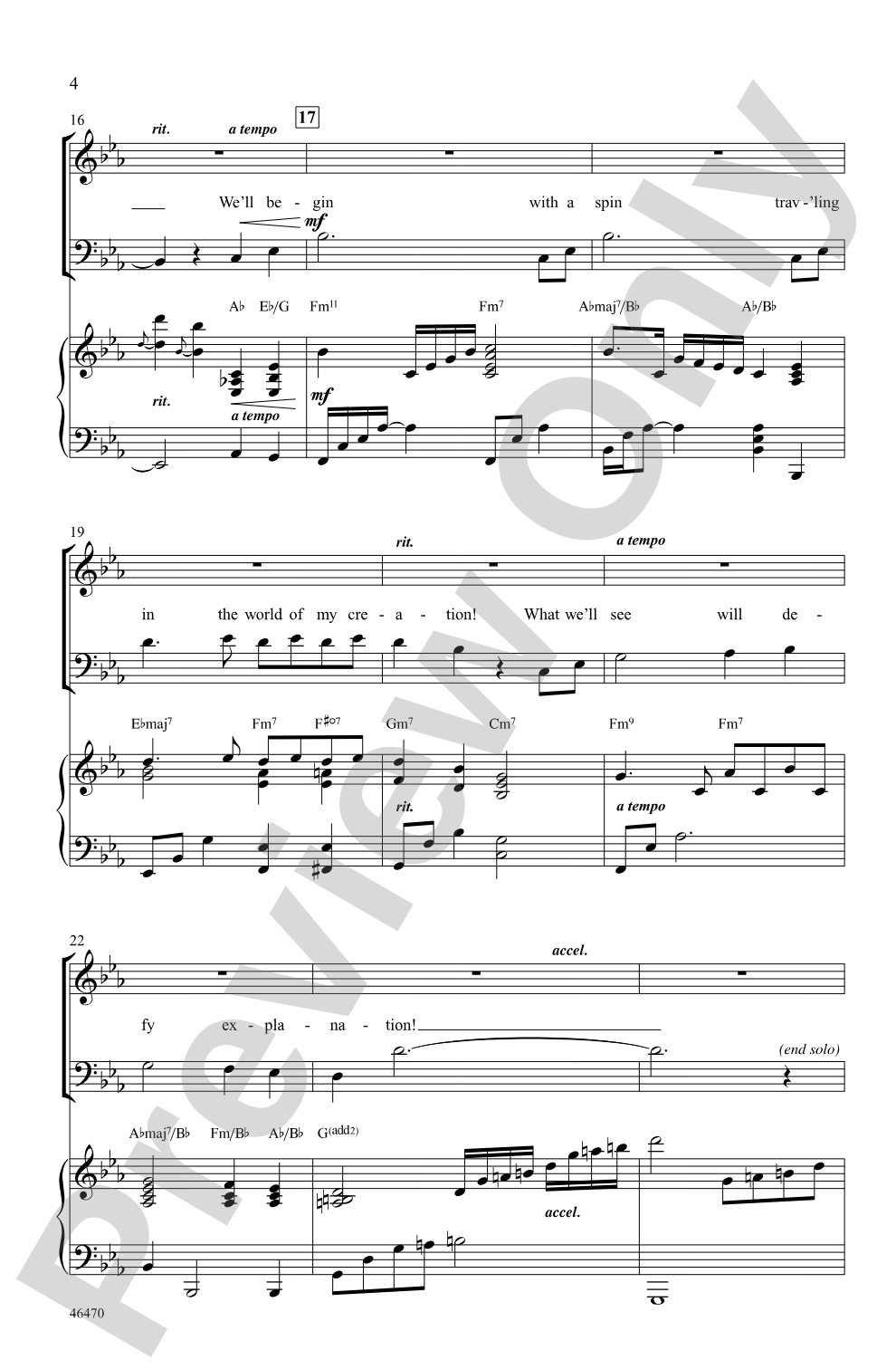
- Pay attention to the text painting in dynamic markings; Hayes uses crescendos and diminuendos to deepen the sense of wonder and invitation.
How to use it
Pair this with other contemporary pop arrangements or light musical theater selections for a mixed concert that appeals to families and younger audience members. The piece also works beautifully as a showcase number for developing singers, since it builds confidence while maintaining musical integrity. Consider programming it mid-concert to create a moment of reflection and accessibility after a series of more demanding pieces.
Skills your students will build
- Blending and balancing three-part harmony with varied ranges
- Sustaining legit phrasing through longer phrases without breath interruption
- Responding to dynamic shapes that enhance emotional expression
- Reading and maintaining independent alto and soprano lines