
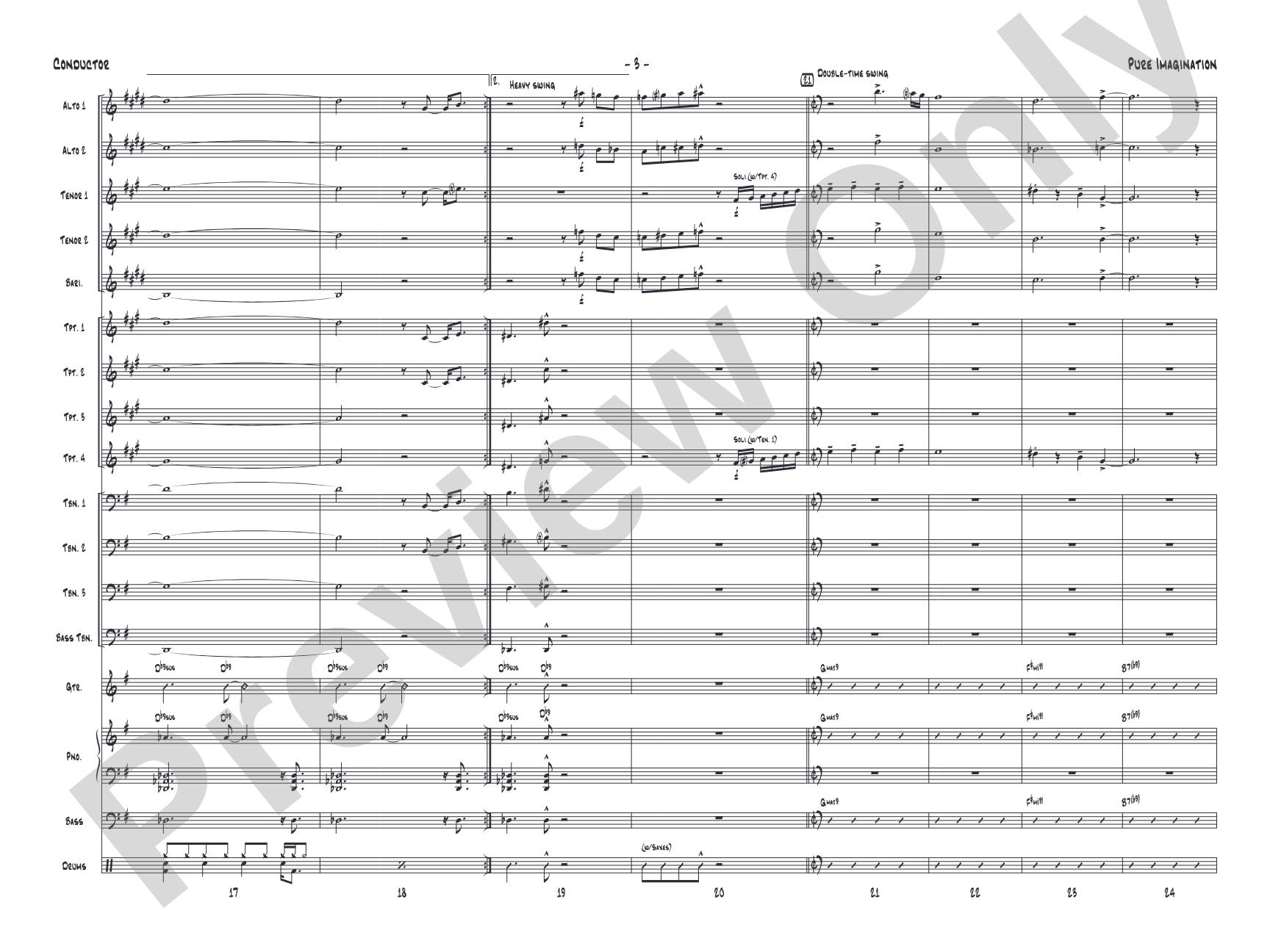
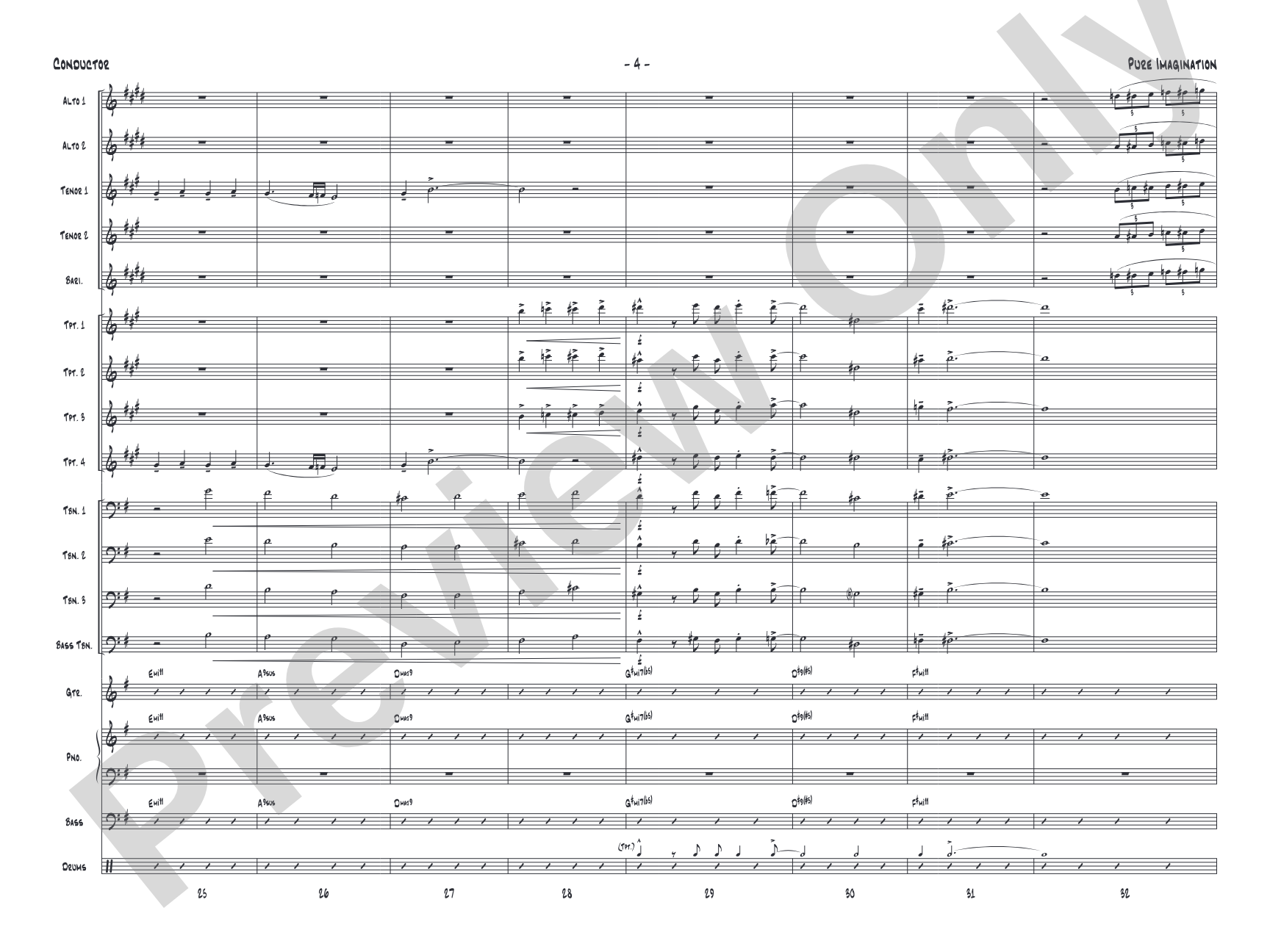
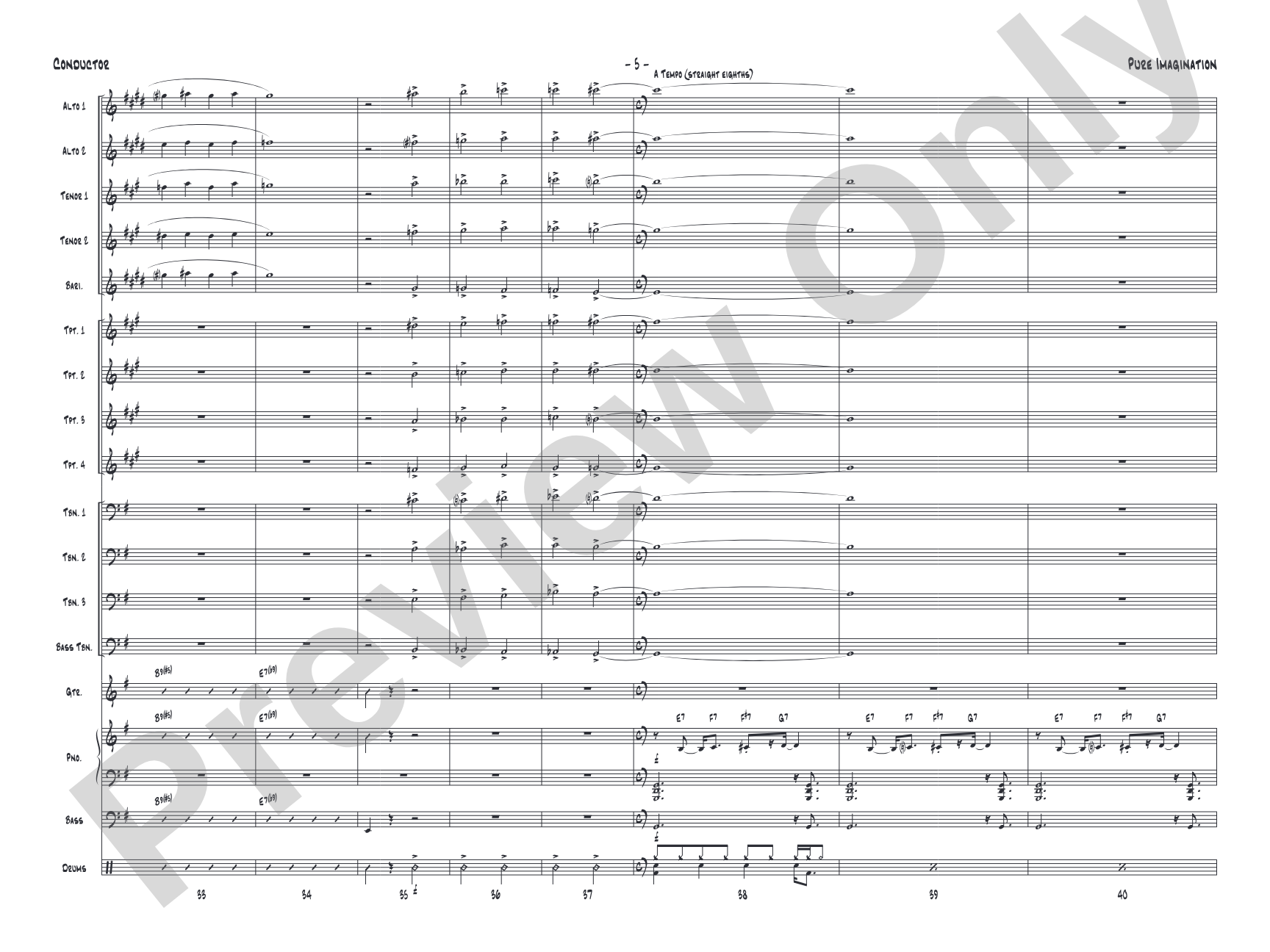
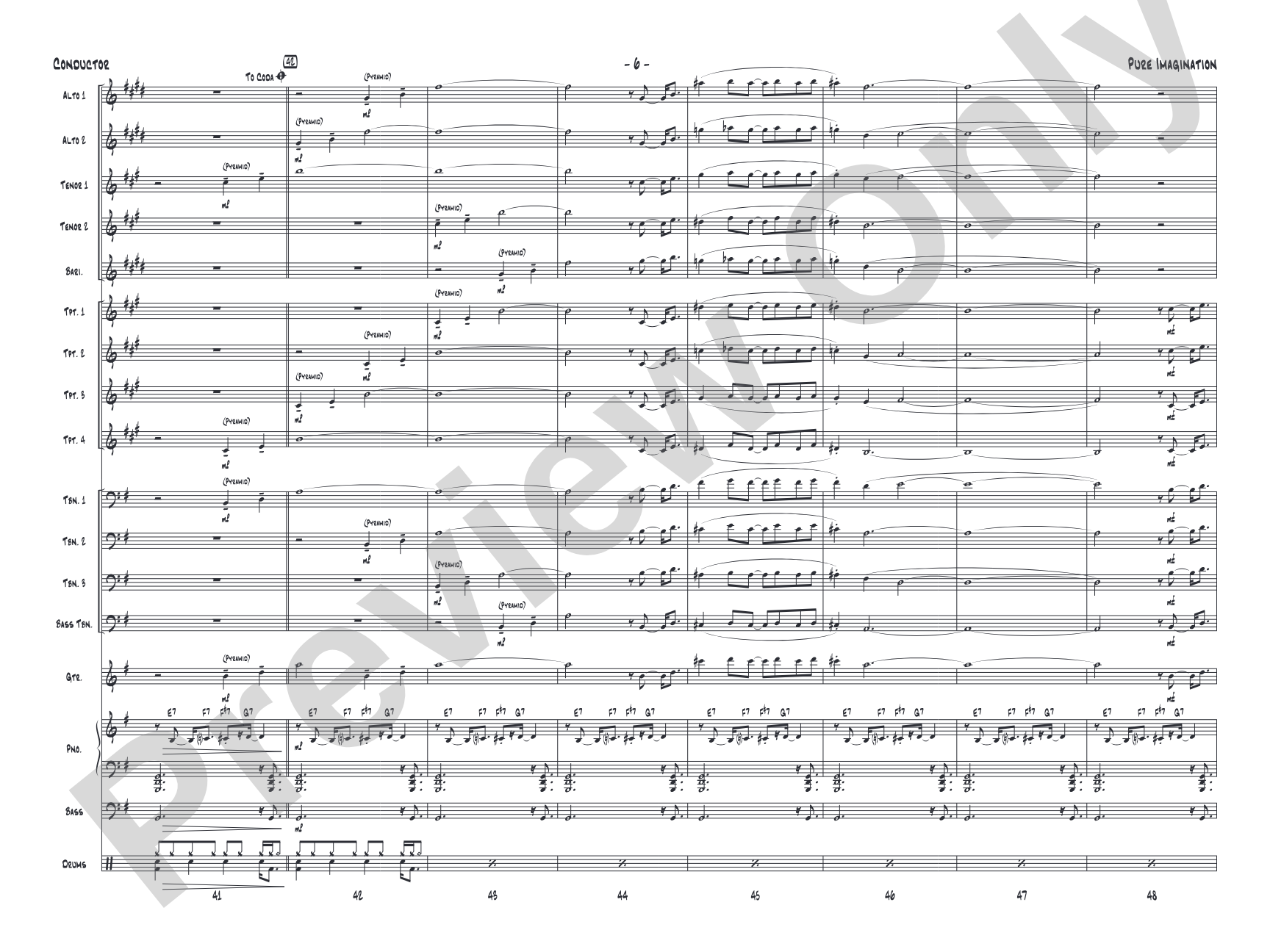
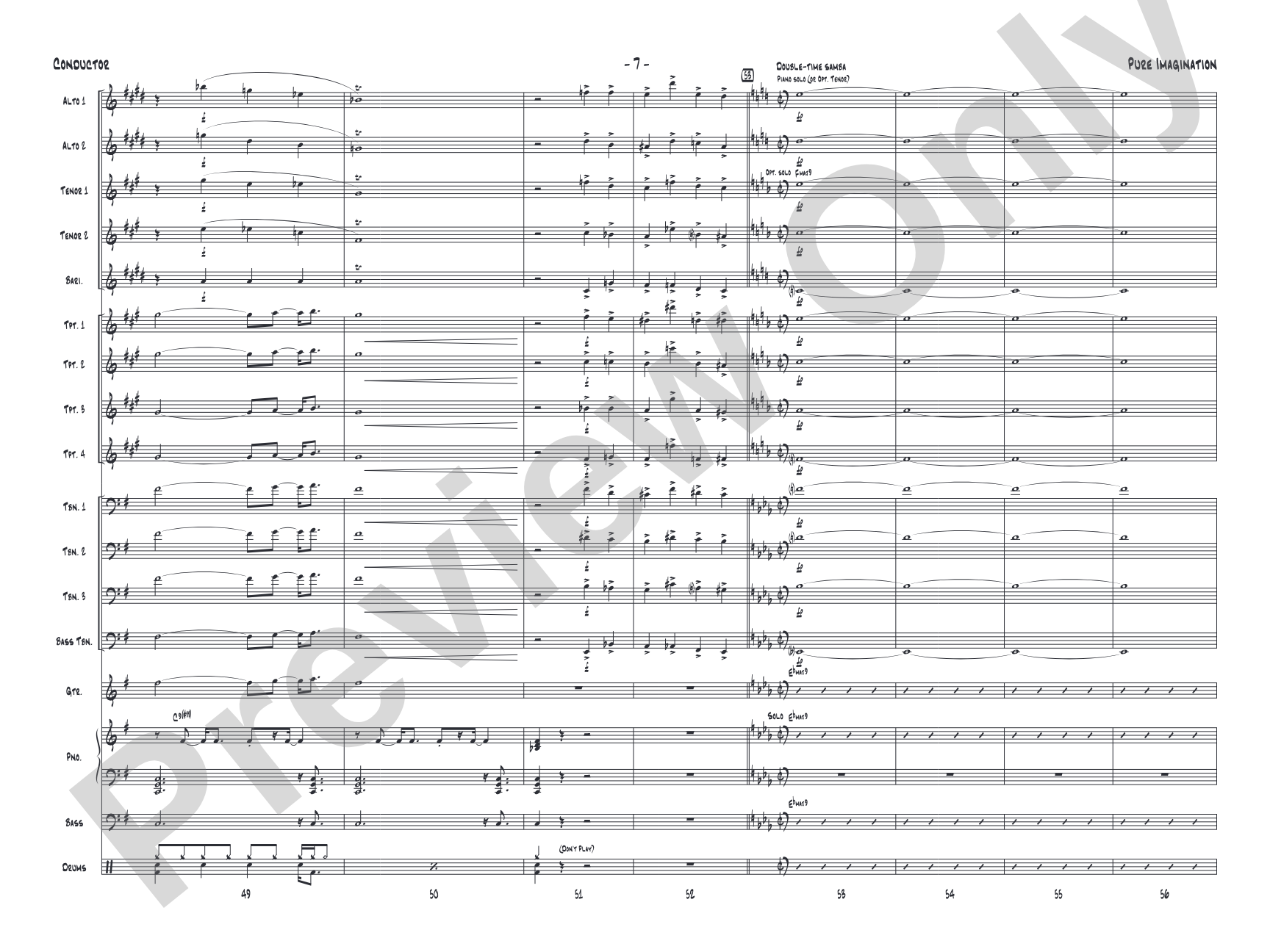
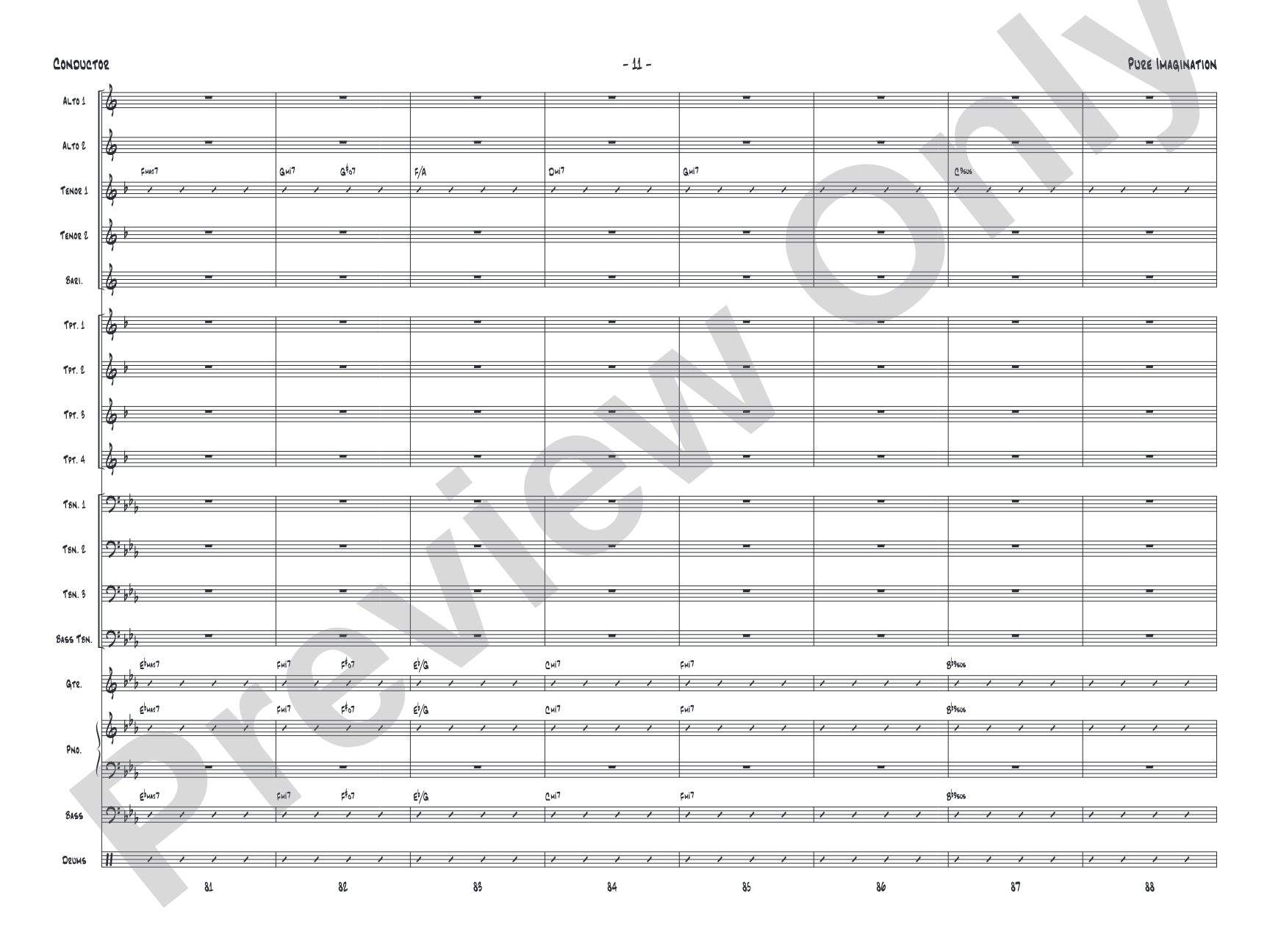
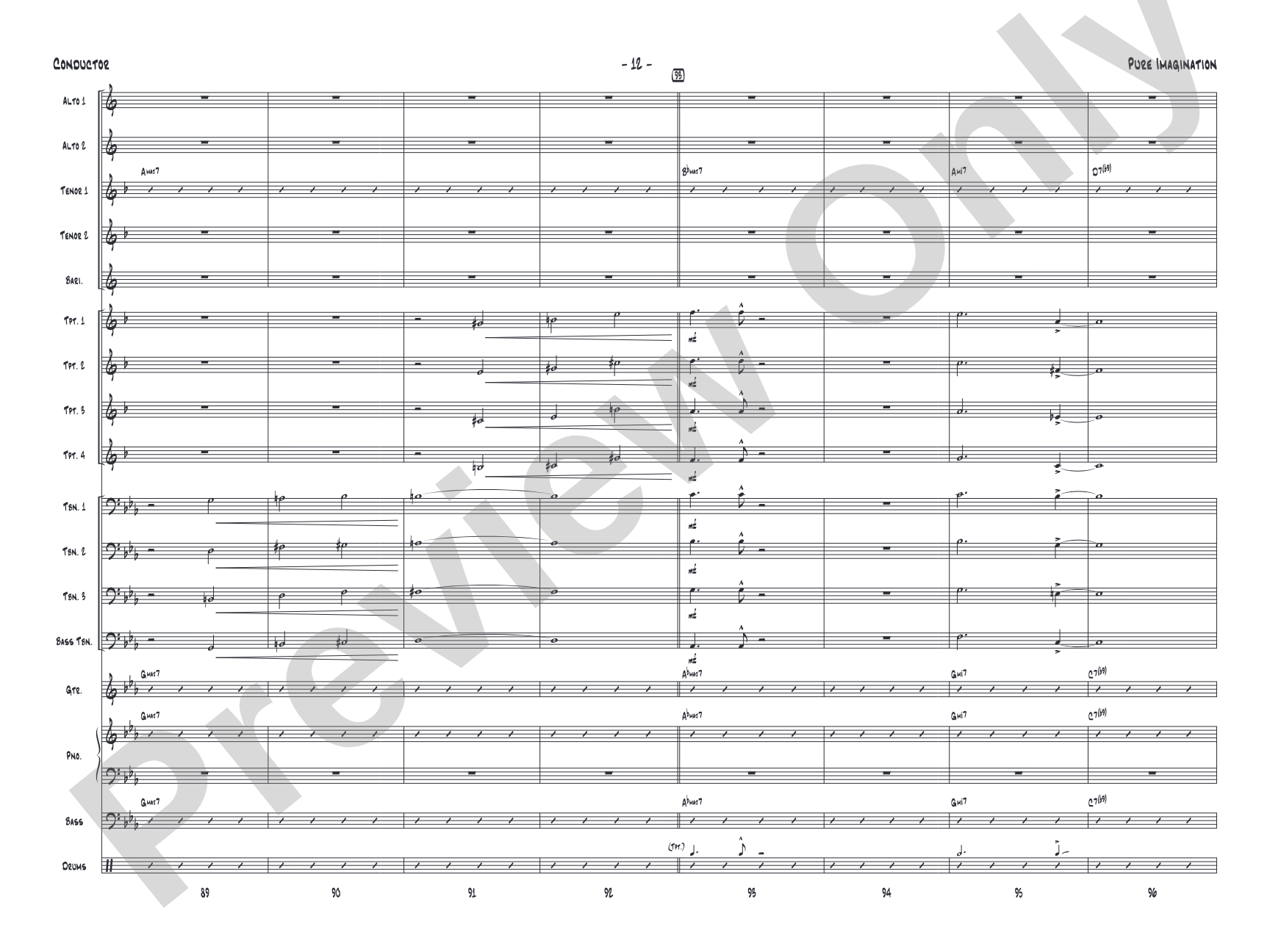
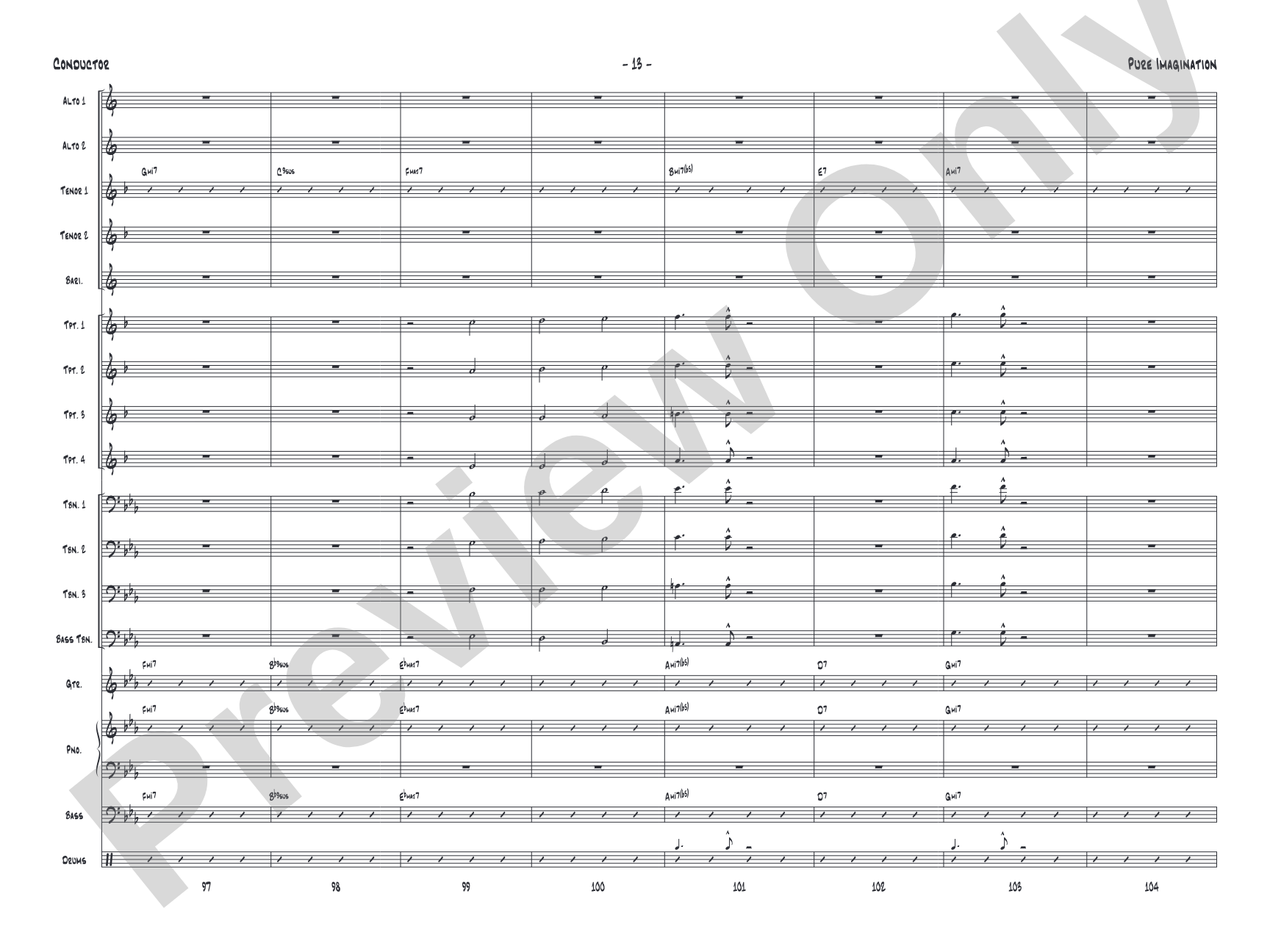
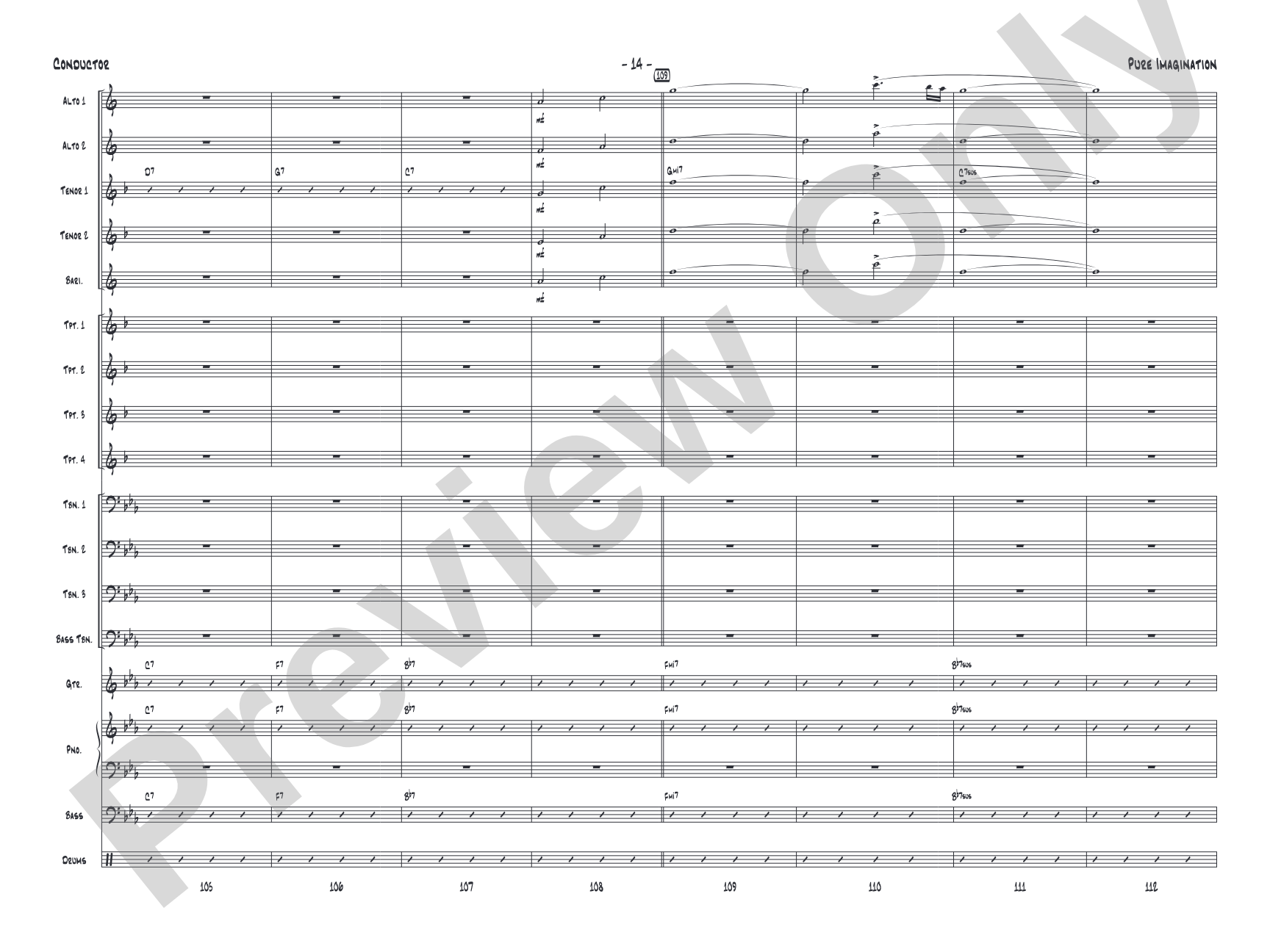
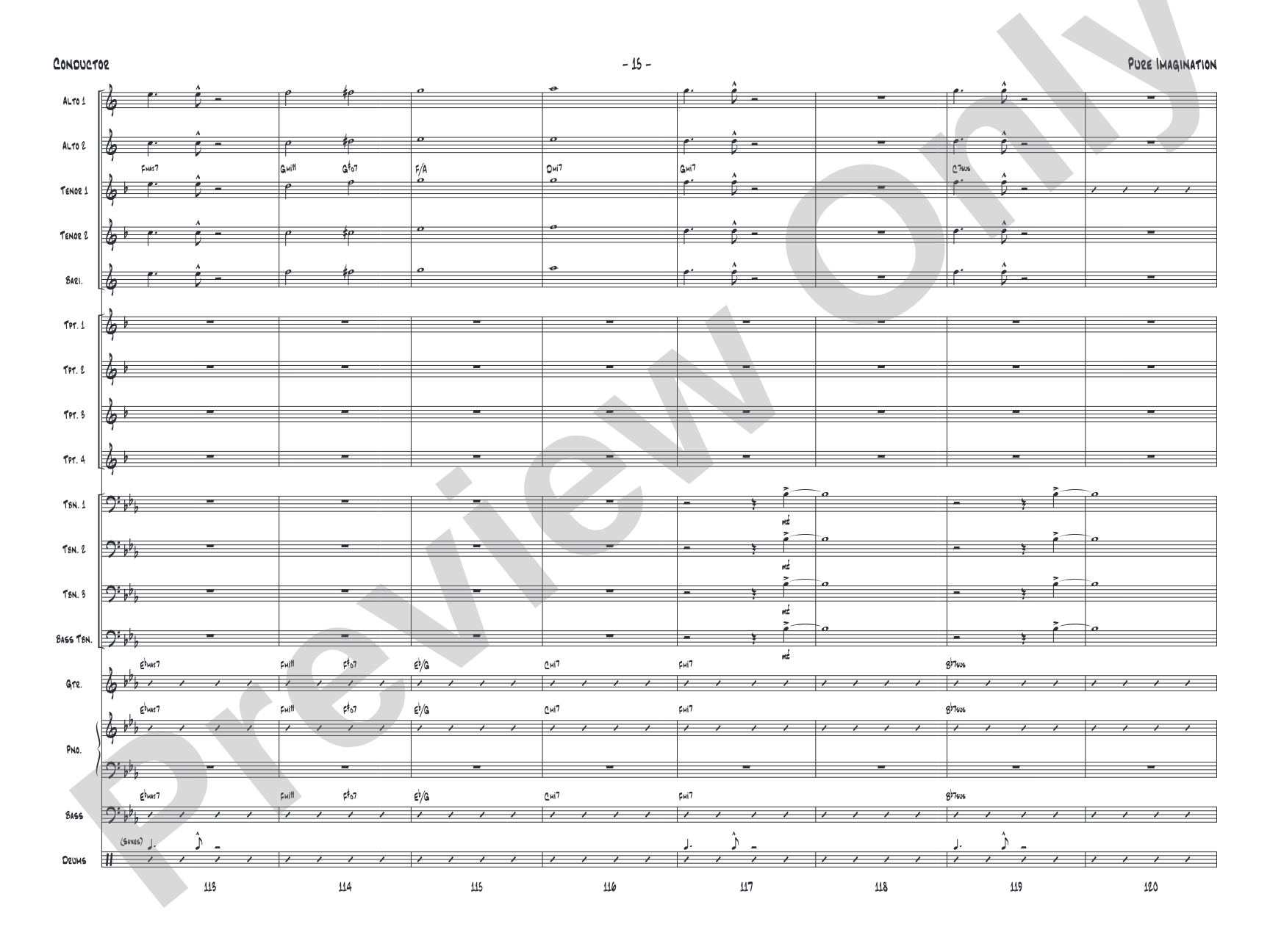
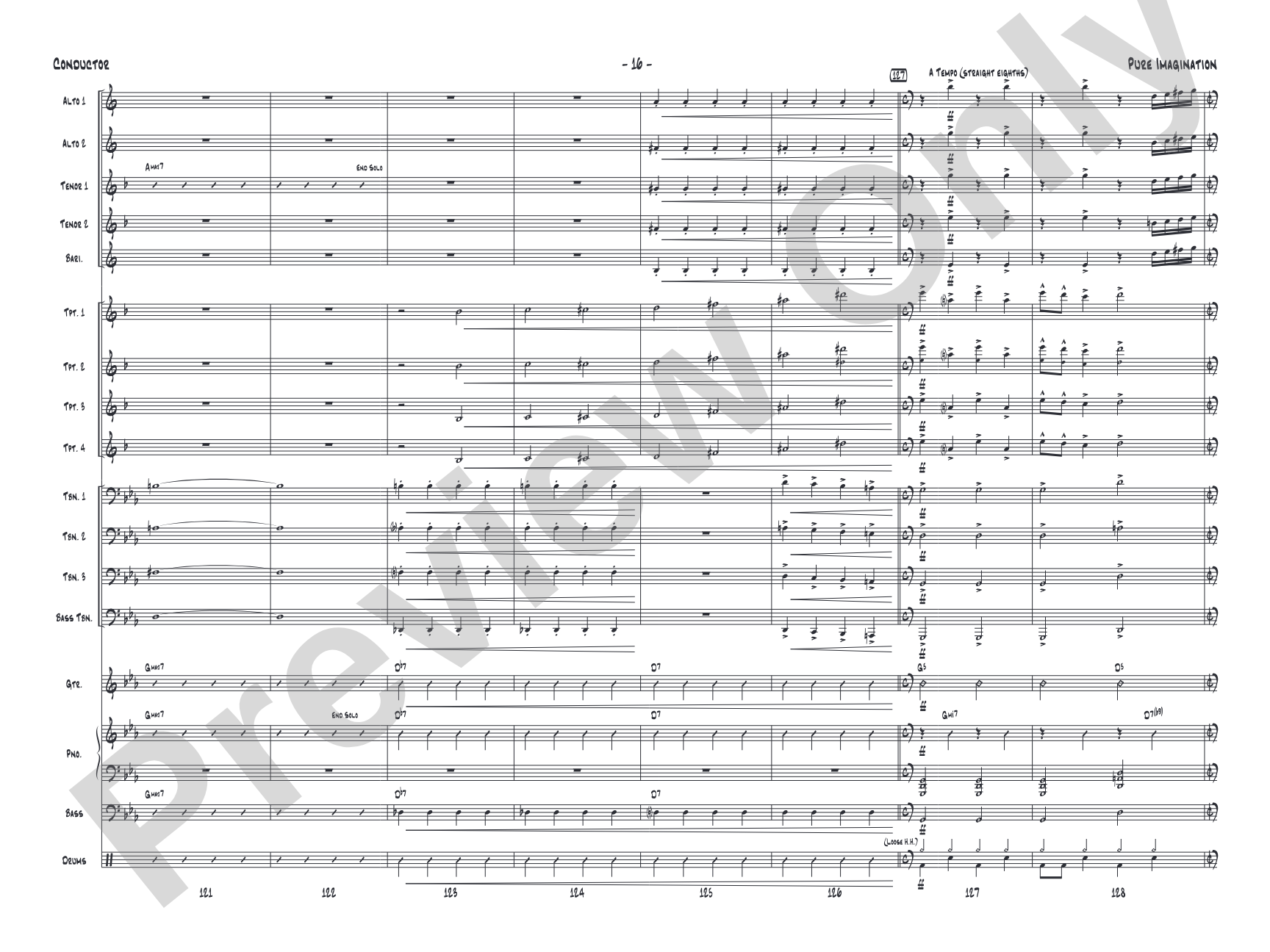
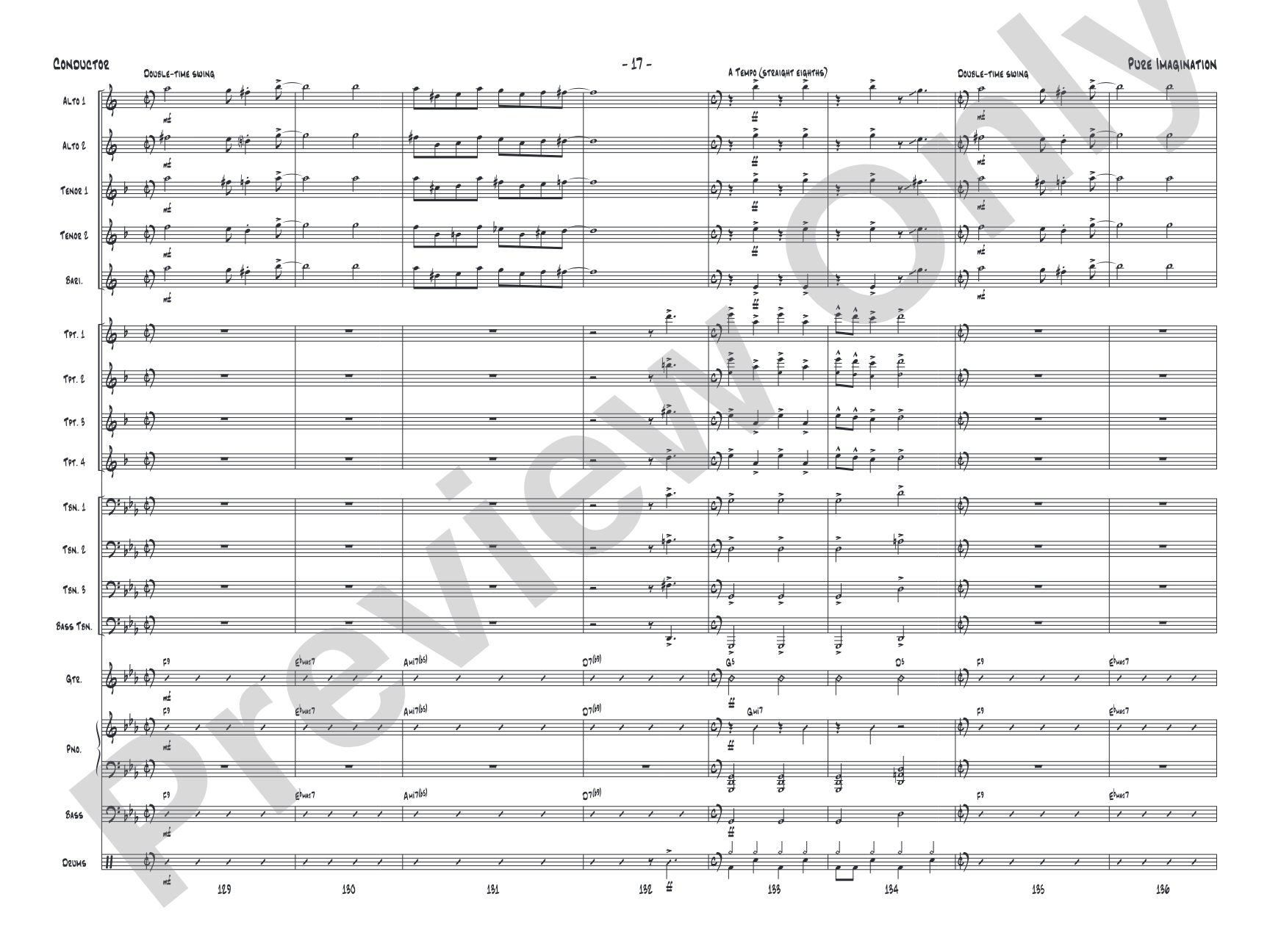
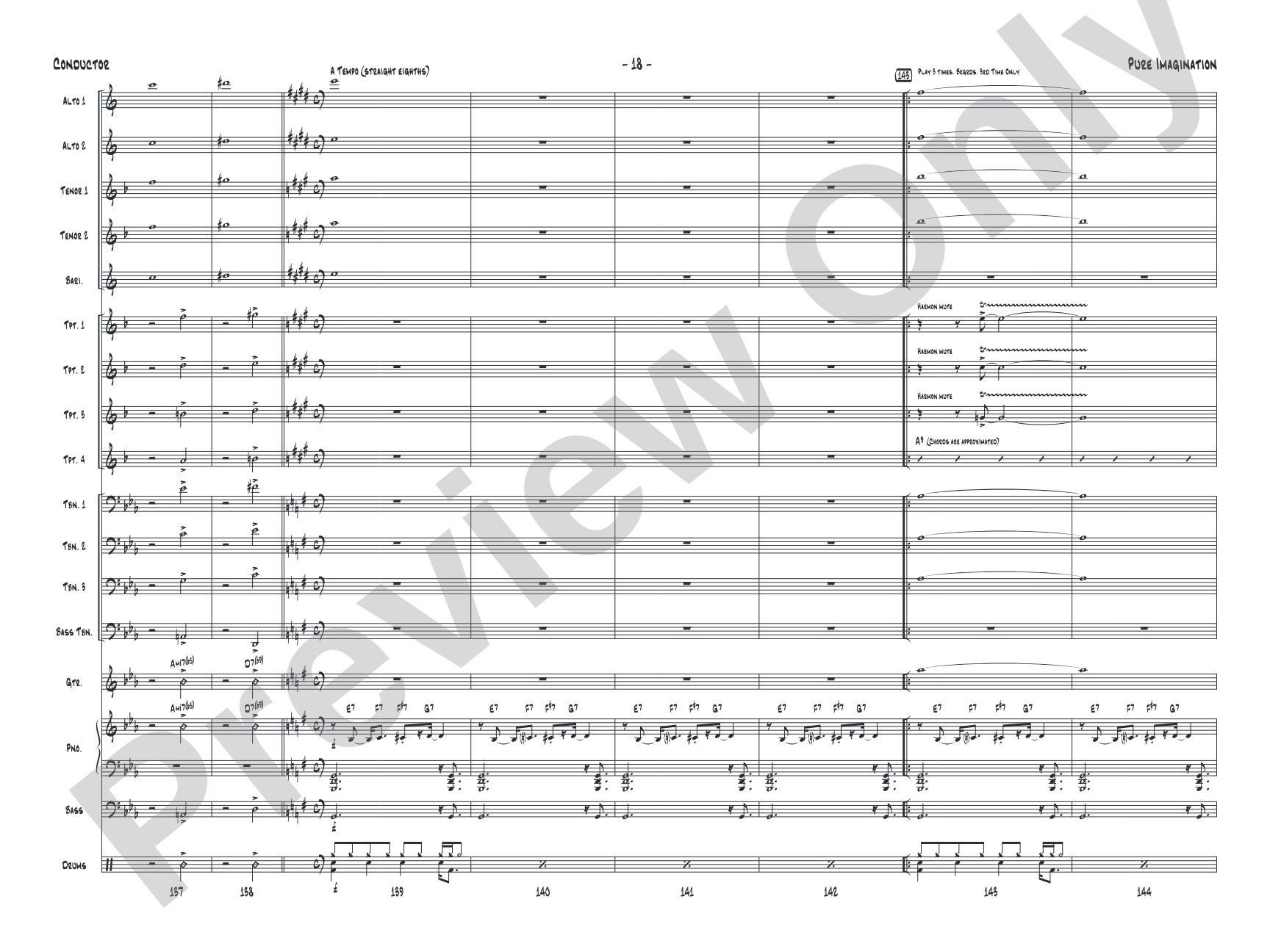
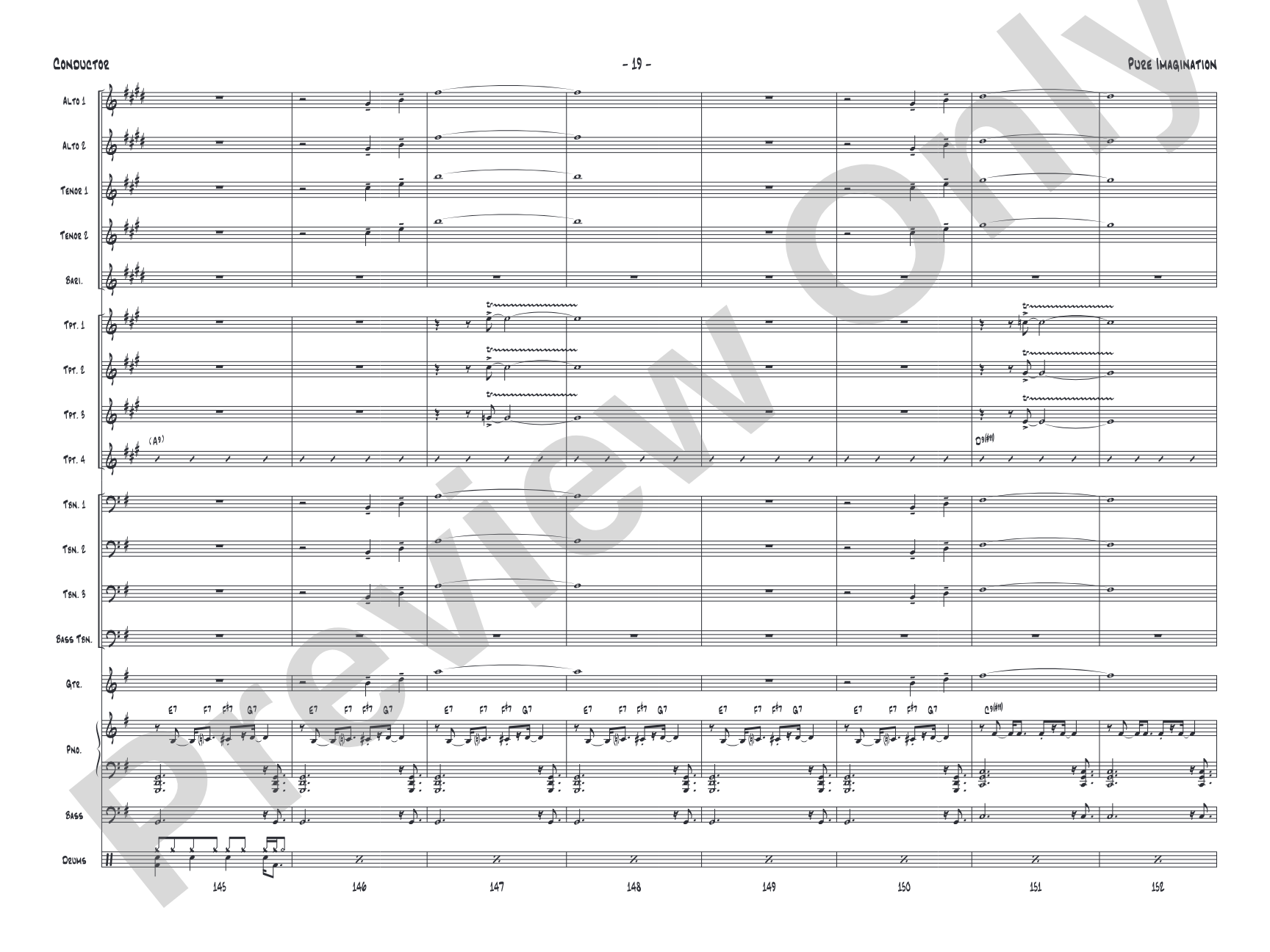
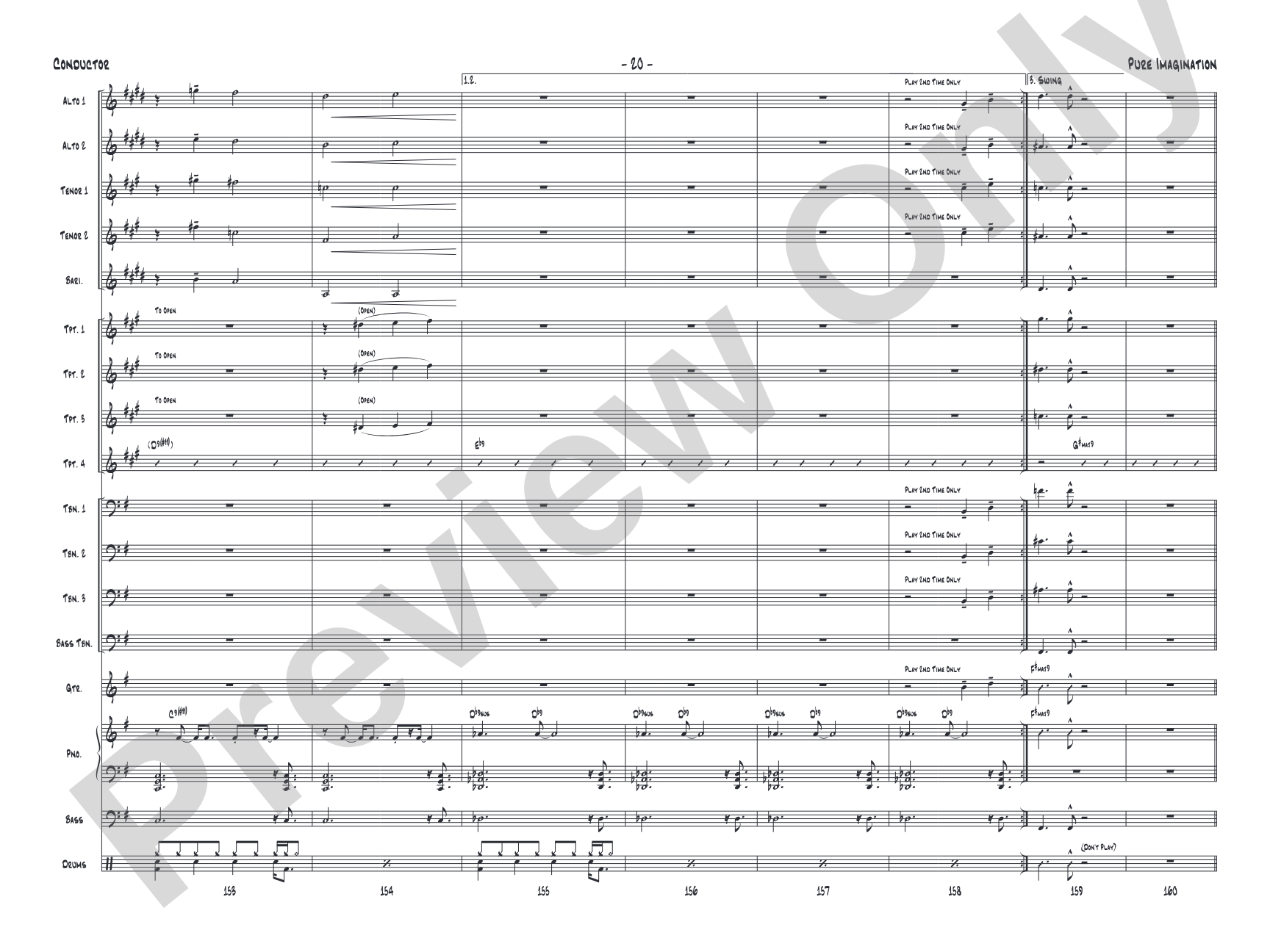
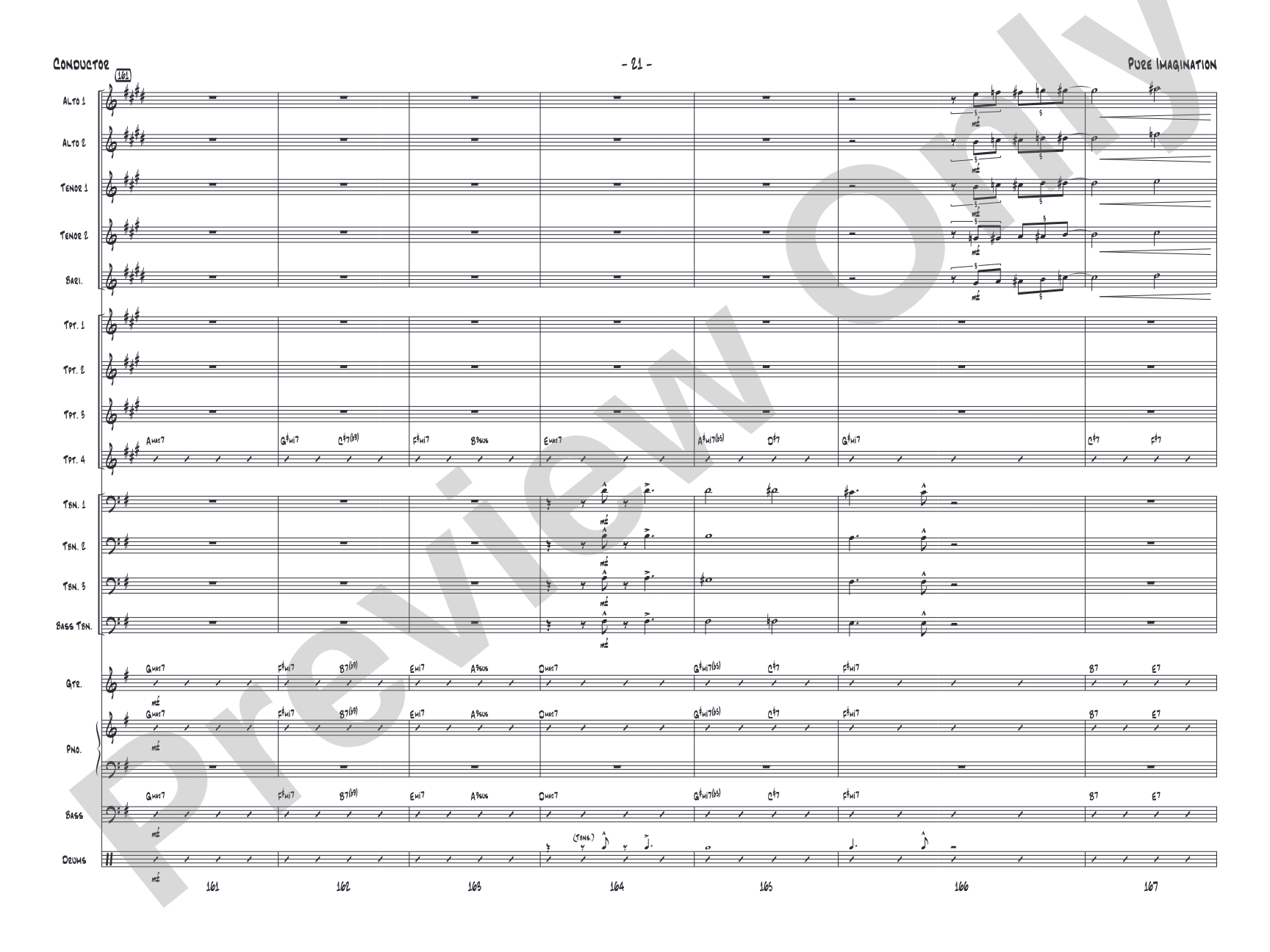
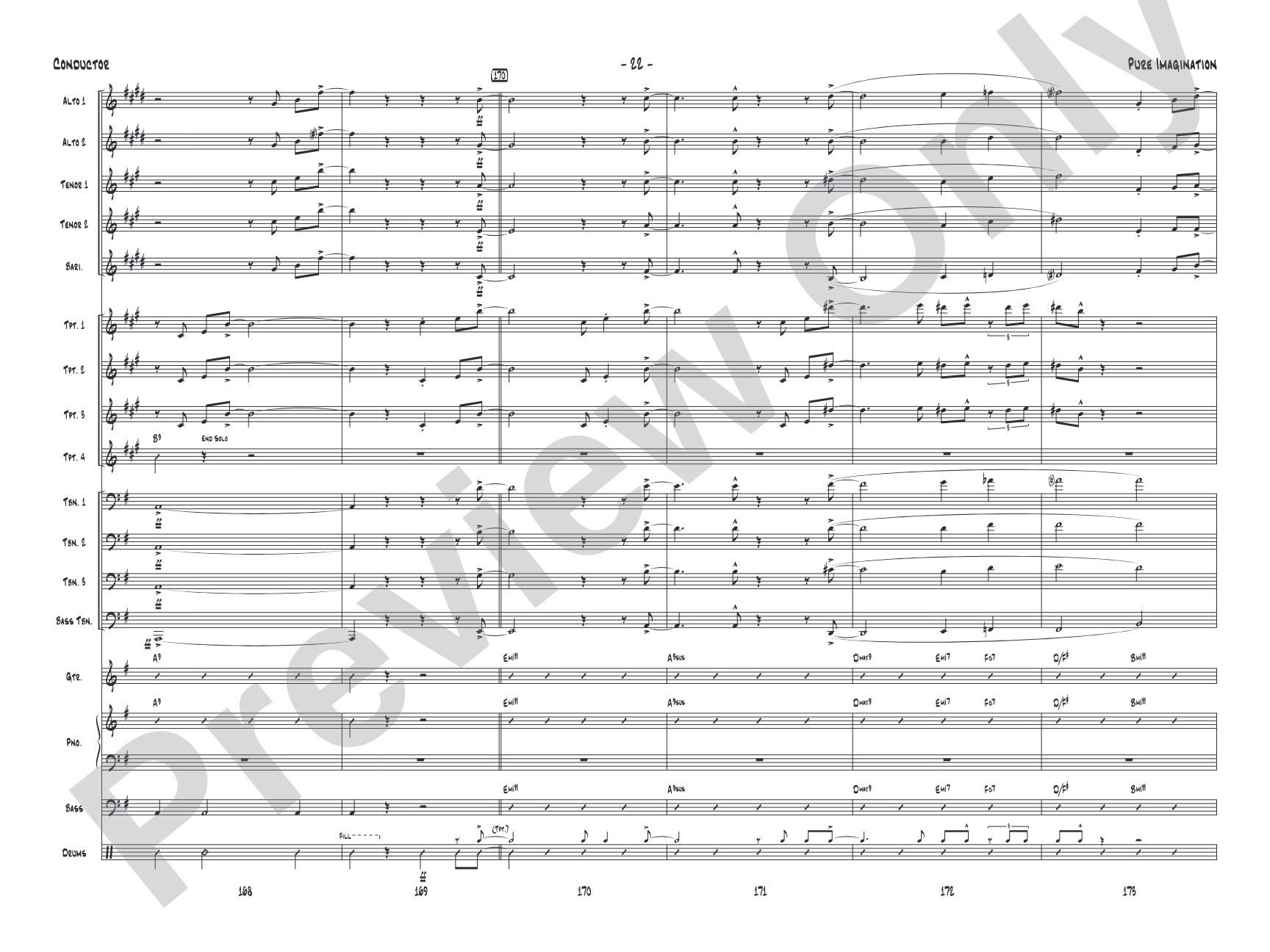
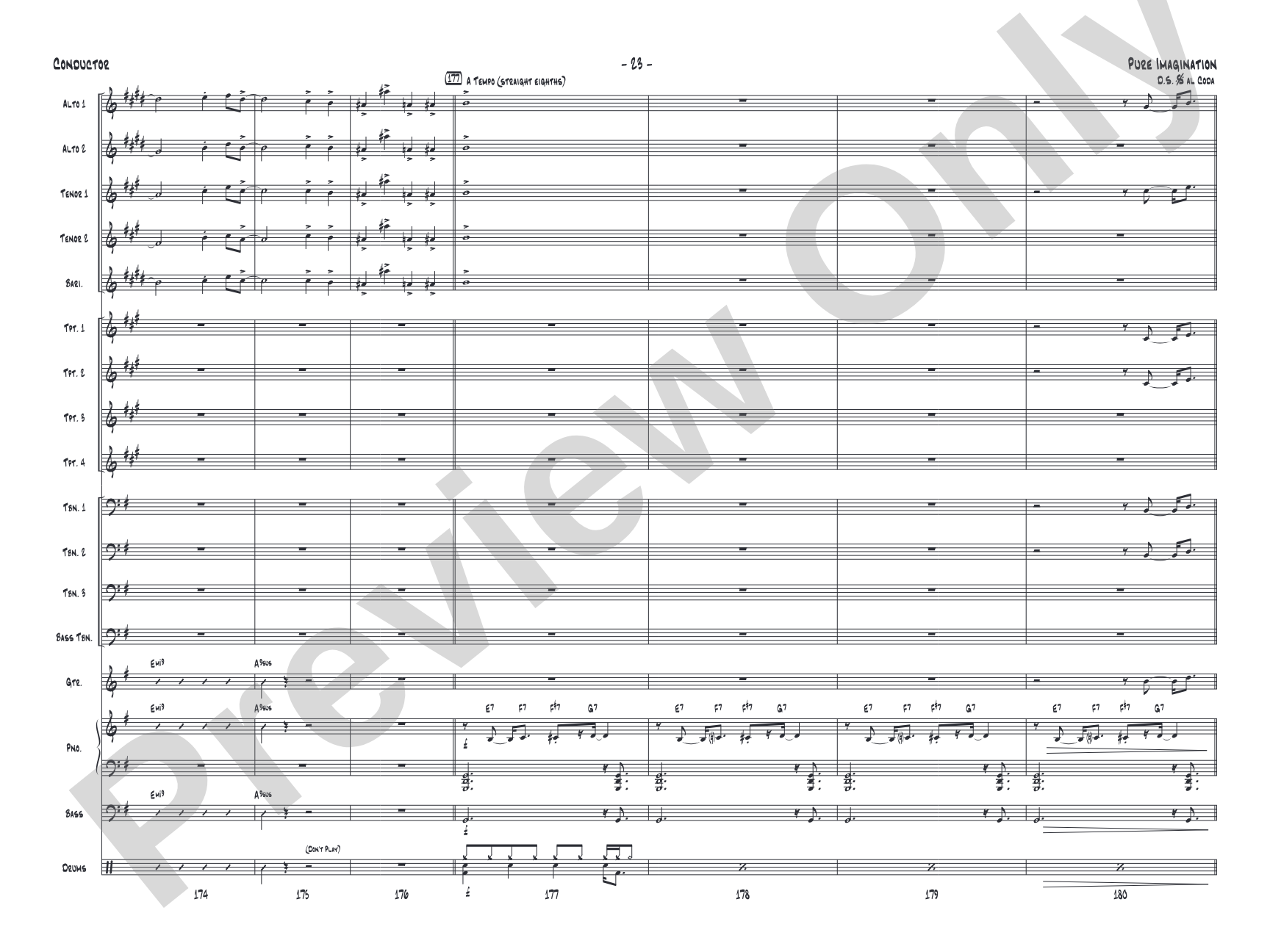
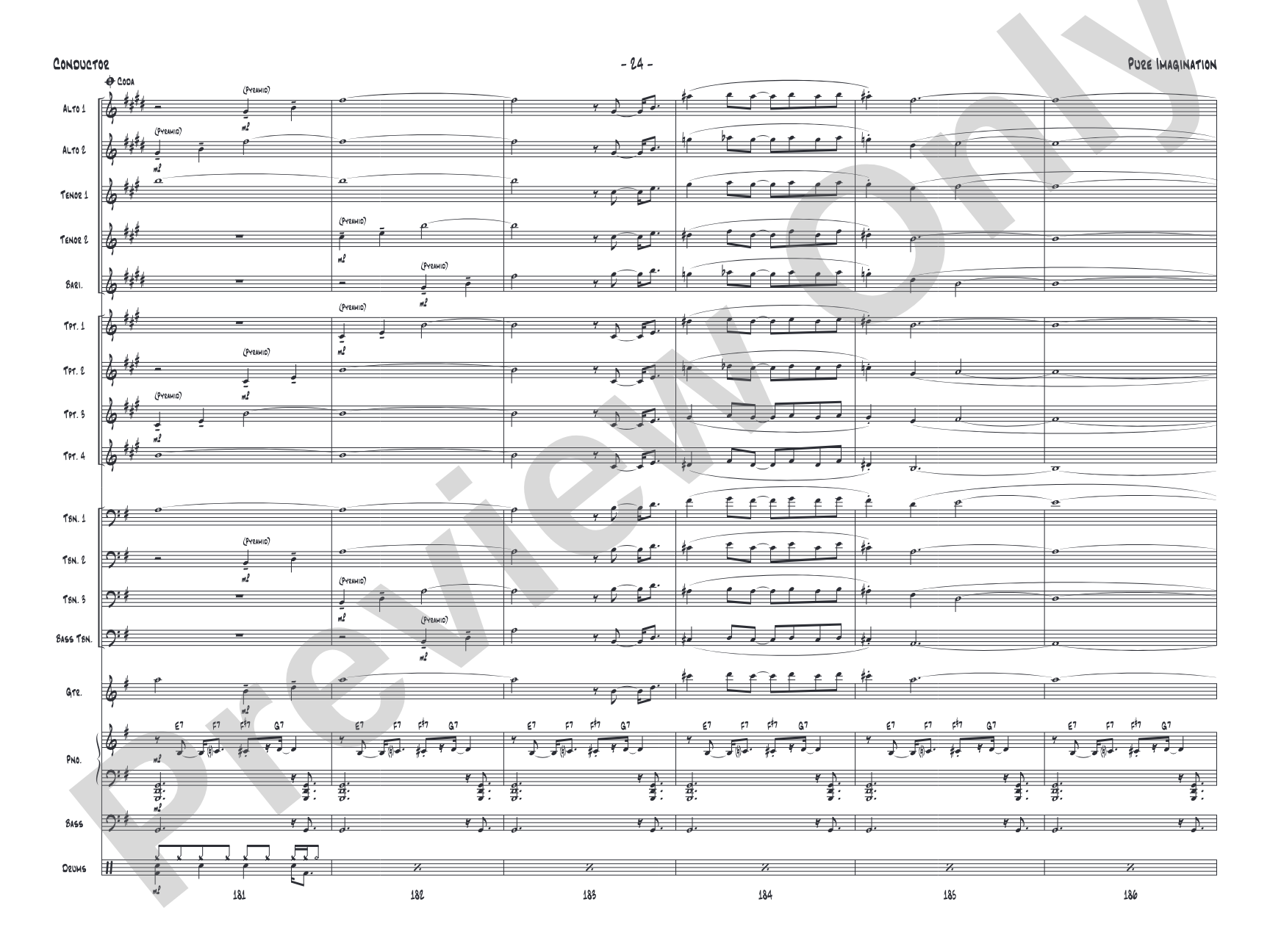
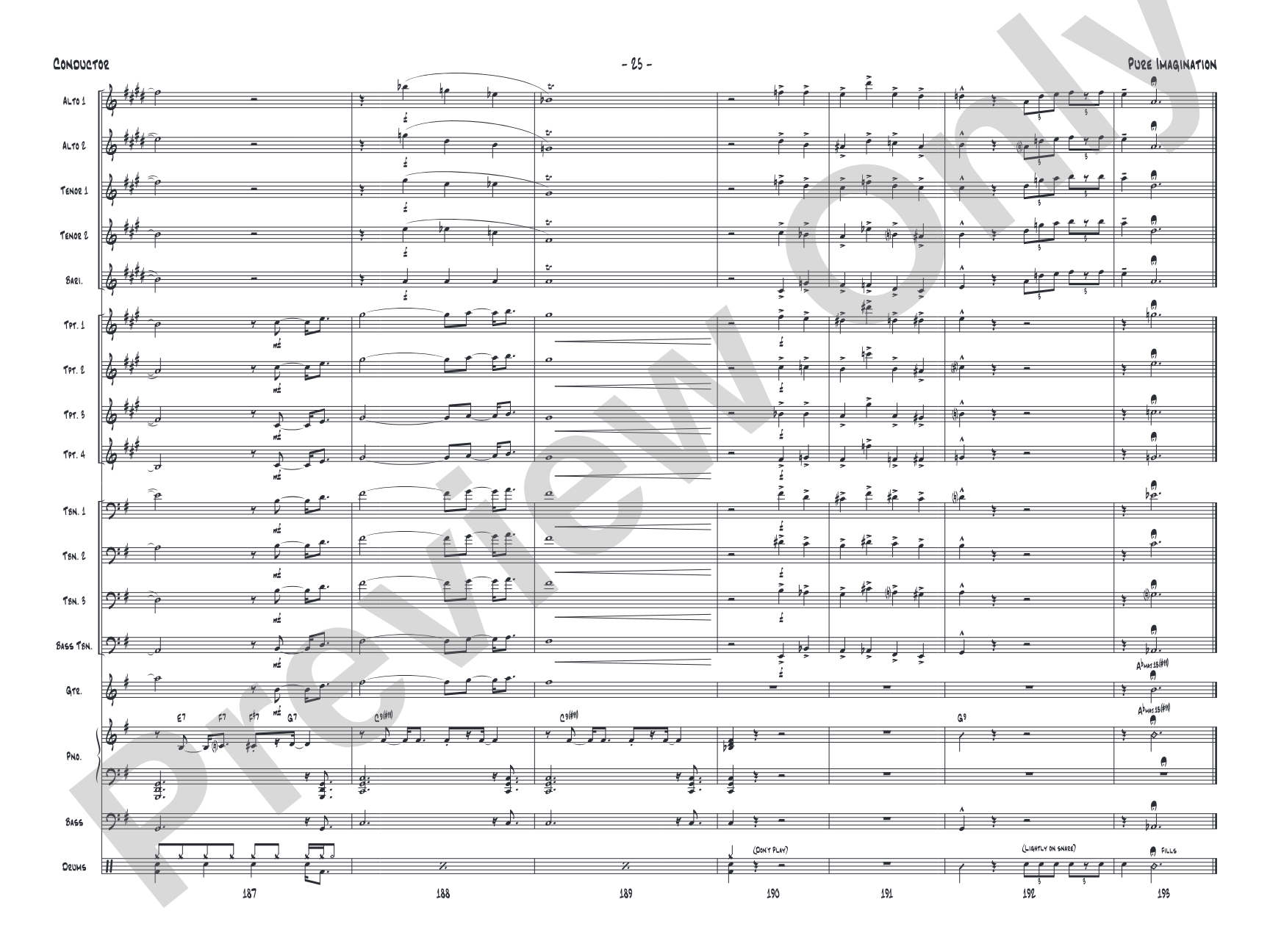

Pure Imagination: Jazz Ensemble Conductor Score & Parts
As Recorded by the Elliot Deutsch Big Band
Words and music by Leslie Bricusse and Anthony Newley / arr. Elliot Deutsch
Grade: 5 (Advanced / Difficult)
Item: 00-PK-0006596

$62.00
One moment…
Description
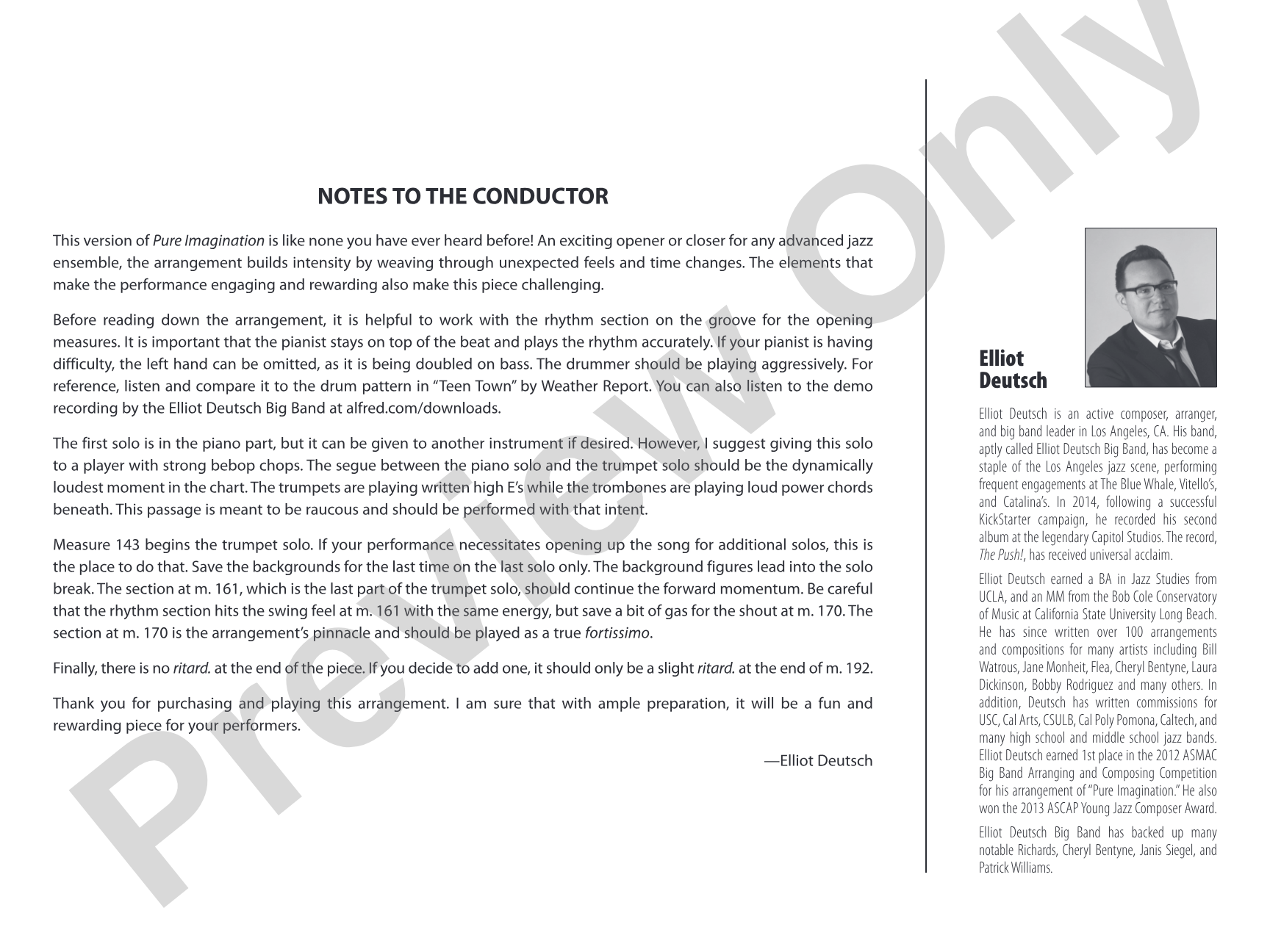
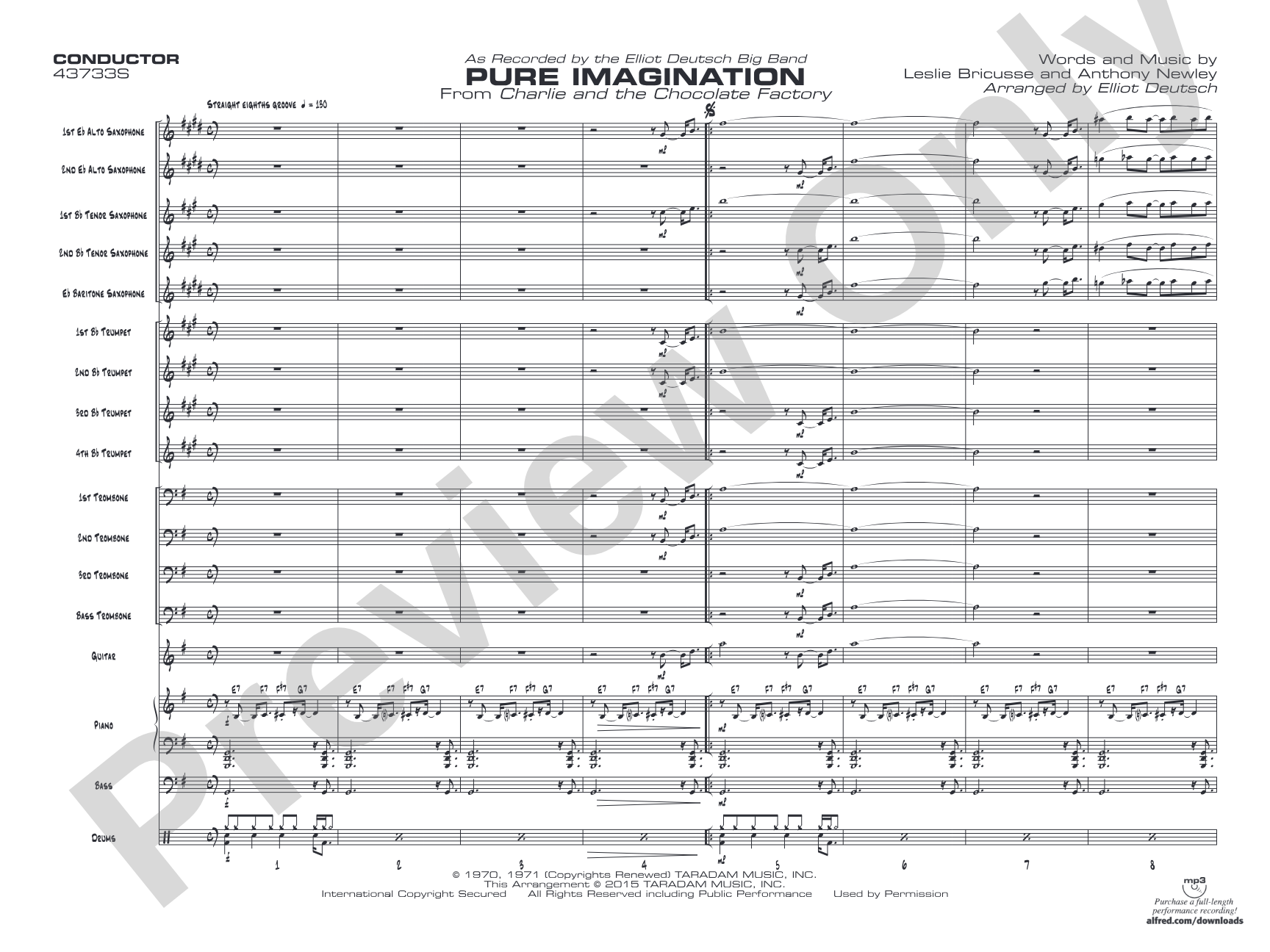
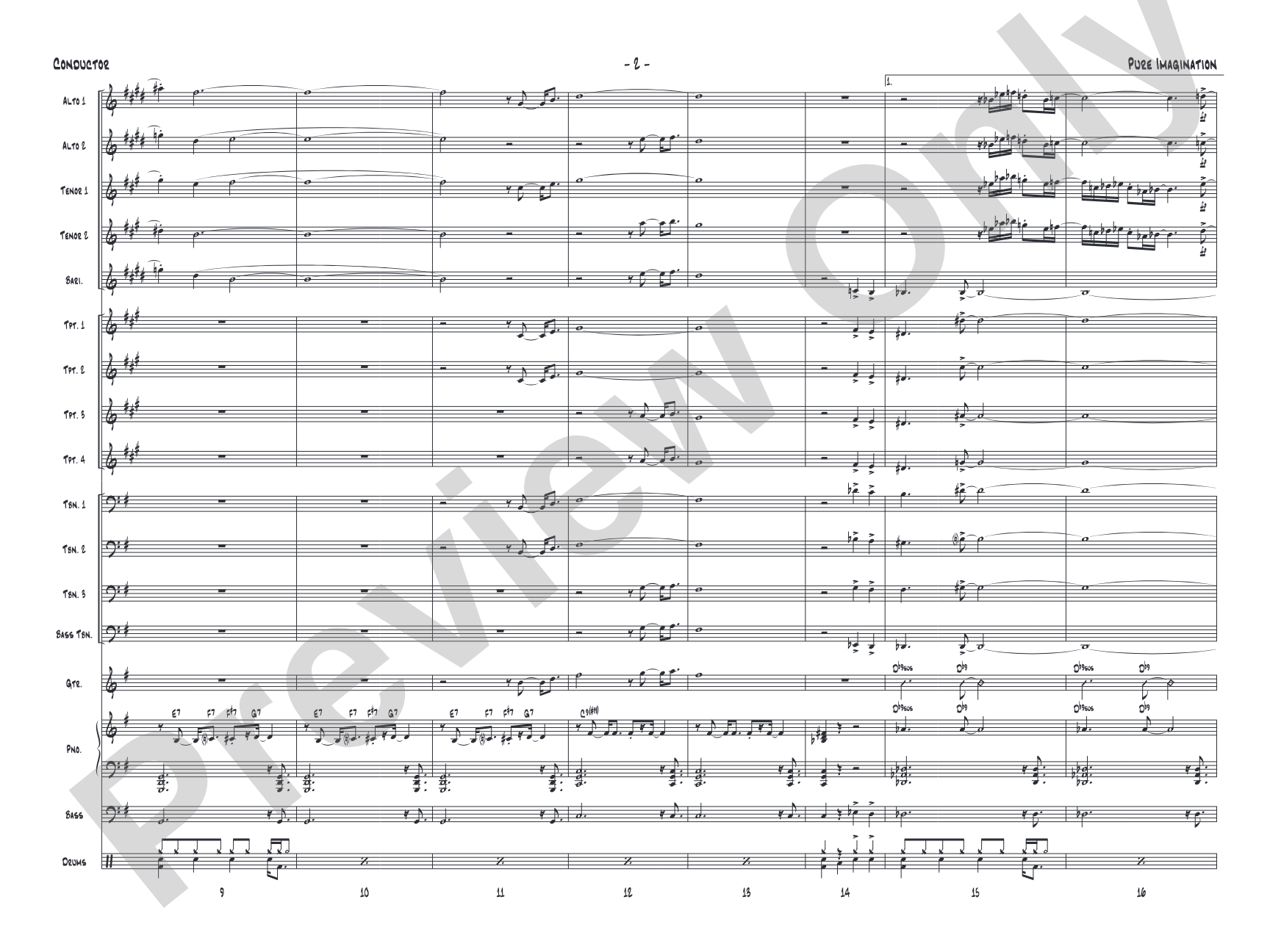
A great take on a wonderful tune. Beginning at 130 BPM, Deutch's arrangement of "Pure Imagination" moves to double-time swing and then into a samba groove with solo space for piano and trumpet 4. The lead trumpet range is to written high E. Check this one out! (6:47)


Don't just read it, hear it, play along with it, and watch your students grow with it. In MakeMusic Cloud, Pure Imagination: Jazz Ensemble Conductor Score & Parts comes alive with professional accompaniment, adjustable tempo, and built-in practice tools that turn solo practice into real progress.
Open in the Player
Jump straight in and assign it today.
Start Your Free Trial
Open this title and explore the full library in minutes.
Sample Audio
1
Audio File
--:--
0:00
0:00
Sample Video
Additional Details
Series:
Premier Jazz Series
Publisher:
Alfred Music
Page Count:
74
SKU:
00-PK-0006596
More about this title
About the Composer: Leslie Bricusse
Leslie Bricusse brought theatrical flair and memorable melody to mid-20th-century popular music. Born in London in 1931, he collaborated with composer Anthony Newley on some of the era's most enduring songs, including the Oscar-nominated "Pure Imagination" from Willy Wonka & the Chocolate Factory. His gift for crafting singable, emotionally direct material made his work accessible across audiences while maintaining genuine musical substance.
Bricusse's songs have been recorded hundreds of times and remain standards in jazz and popular settings. His ability to write melodies that transcend their original context makes his compositions ideal vehicles for reinterpretation by student and professional ensembles alike.
Why we love this
Deutsch's arrangement captures the wistful character of the original while giving a grade 5 jazz ensemble genuine contemporary substance. The structural arc from swing to double-time groove to samba keeps energy high and showcases different rhythmic vocabularies your section players need to master. The solo space for piano and trumpet 4 provides meaningful improvisation opportunities without sacrificing the arrangement's compositional integrity.
What to expect
Wistful and imaginative, the arrangement invites listeners into Wonka's world before pivoting into sophisticated rhythmic territory. The samba groove brings warmth and movement; the piano and trumpet solos breathe with jazz sensibility and space.
Who it's for
Advanced high school or college jazz ensembles seeking repertoire that balances accessibility with musical sophistication. Directors programming contests or festivals will find a piece that engages listeners while presenting genuine learning opportunities in swing, Latin, and contemporary jazz idioms.
How to get the most out of it
- Lock the rhythm section during the samba section. The piano and bass need to feel the clave pattern as a foundation; without that anchor, the groove loses its pocket and the trumpet 4 solo loses its frame.
- Balance the lead trumpet at the top of the range without letting it overpower the ensemble voicings underneath. High E sits naturally for many lead players, but work dynamics early so the section can match articulation and color.
- Establish the double-time swing transition cleanly by letting the rhythm section set the new tempo confidently. A brief stop-time moment or clear gesture from the podium prevents the ensemble from feeling rushed or tentative as the feel shifts.
- Give trumpet 4 multiple rehearsal runs on the solo section over a recorded or sequenced rhythm section track. The groove needs to feel inevitable to the soloist, not like they're chasing the accompaniment.
How to use it
Program this after an opening uptempo number to shift mood and demonstrate ensemble versatility. The 6:47 length and stylistic range make it an ideal set-closing piece that leaves audiences satisfied without overstaying its welcome.
Skills your students will build
- Reading and executing double-time swing feel with proper articulation
- Latin rhythmic precision in samba grooves and clave understanding
- Accompanying soloists with pocket and consistency
- High range command on lead trumpet (written E)
- Balancing melody and harmony in jazz voicings