
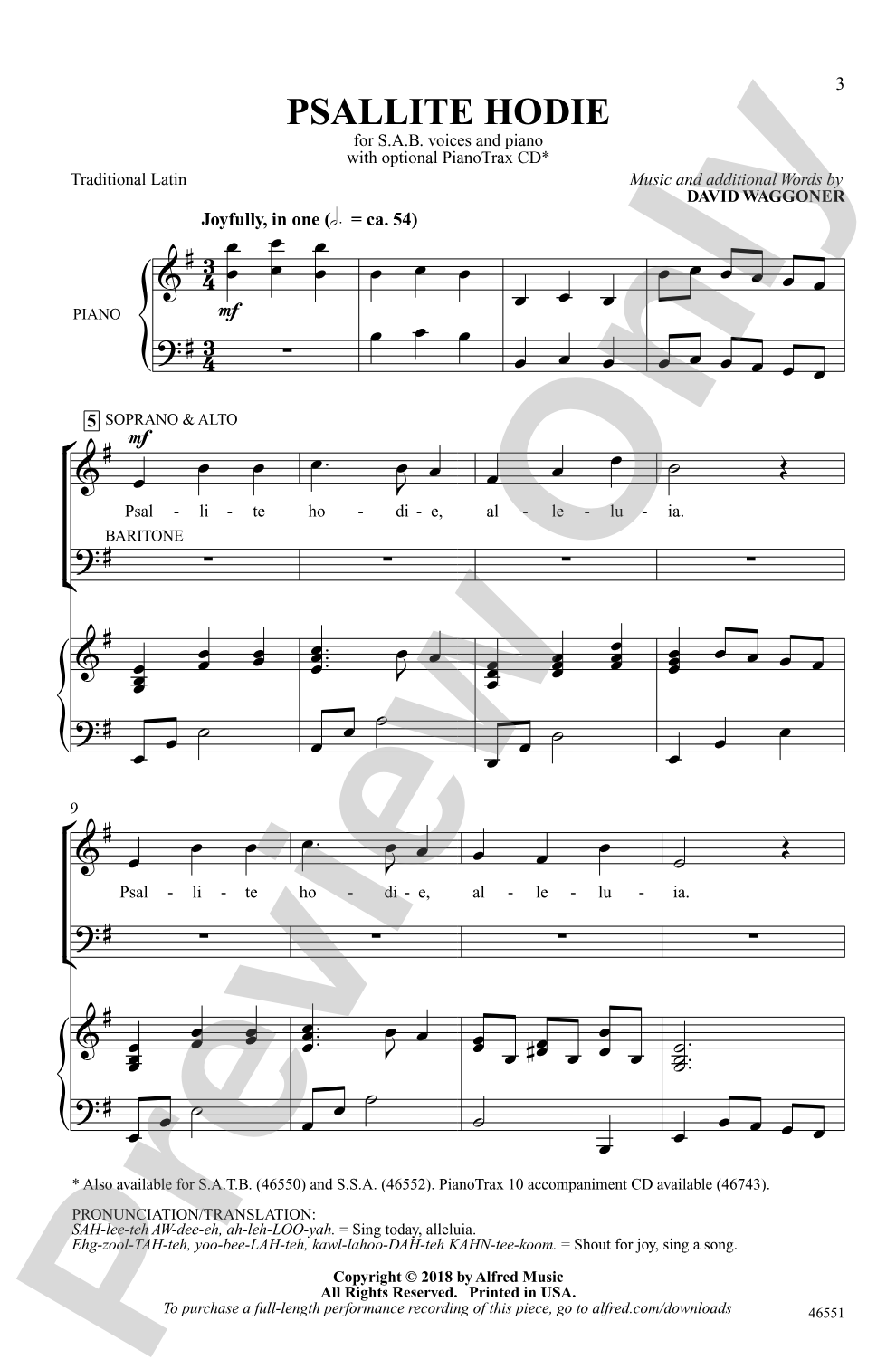
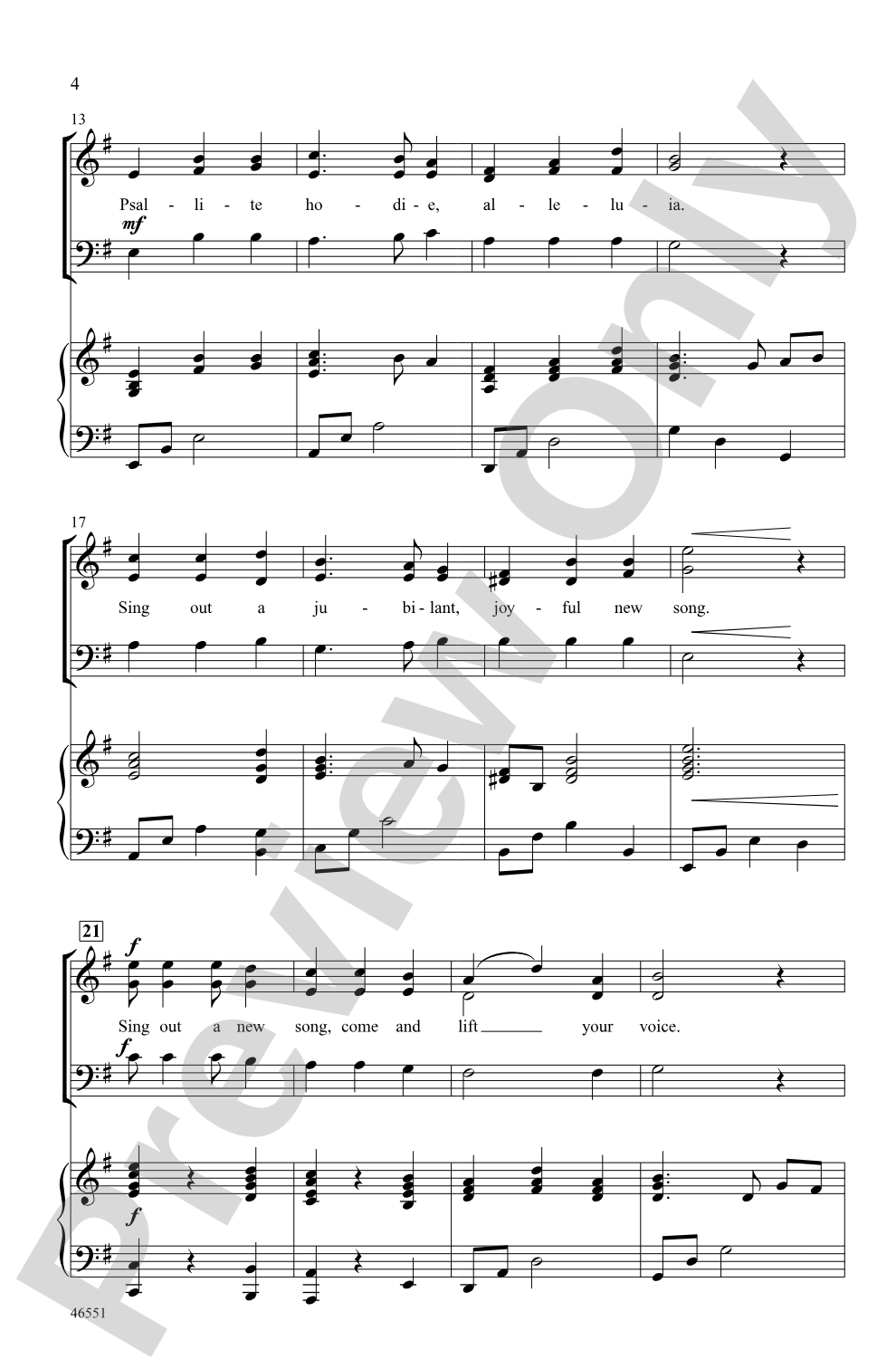
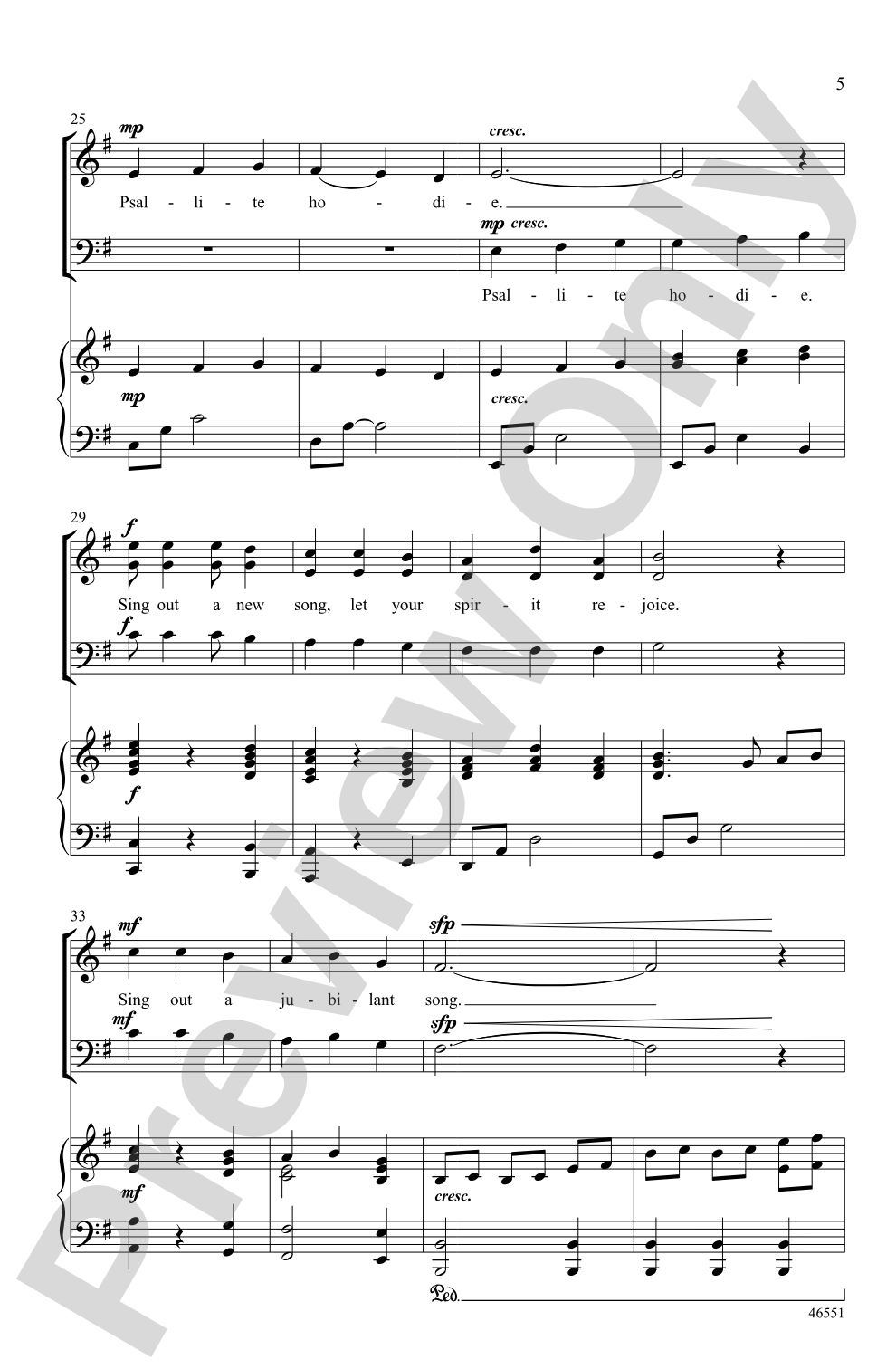

Psallite Hodie: SAB Choral Octavo
Music and additional words by David Waggoner
Item: 00-PO-0005723
$2.20
Minimum order quantity: 20 copies
Pickup currently not available
Description
Upper voices introduce a jubilant refrain, then the entire choir sings it in harmony. A contrasting section offers a gorgeous new motive, followed by a rich harmonization of the new material. The return to the original chorus is heightened by a soaring descant, which builds momentum into an exciting finish.


Psallite Hodie: SAB Choral Octavo isn't in MakeMusic Cloud just yet...but it could be. Let us know you'd like to see it, and you'll help shape what comes next. In the meantime, start a free trial and dive into thousands of interactive titles your students can play along with today.
Request This Title
Tell us you want it.
Start Your Free Trial
Explore everything that's ready to play right now.
Sample Audio
1
Audio File
--:--
0:00
0:00
Sample Video
No sample videos found.
Additional Details
Series:
Alfred Choral Designs
Publisher:
Alfred Music
Page Count:
16
SKU:
00-PO-0005723
More about this title
About the Composer: David Waggoner

David Waggoner brings practical experience from both the classroom and the church to his compositional work. As an elementary music educator in Woodhaven, Michigan, and Director of Music at First United Methodist Church in Wyandotte, he understands what singers of all ages need to perform with confidence and joy.
A graduate of the University of Michigan School of Music with a master's degree from Eastern Michigan University, Waggoner has composed extensively for choirs, handbells, and instrumental ensembles. His deep training in music education informs every piece he writes, making his work accessible without sacrificing musical substance.
Why we love this
The architecture of this piece respects the strengths of a three-part mixed choir while building genuine momentum. The descant on the final chorus transforms what could be a simple repetition into something that feels earned and celebratory, giving singers a reason to invest in the return rather than coast through it.
What to expect
Psallite Hodie radiates warmth and celebration from start to finish. The music has an almost processional quality at first, then opens into moments of genuine beauty before building toward a finish that feels both inevitable and thrilling.
Who it's for
This octavo works well for middle school, high school, or adult community choirs looking for a piece that sounds sophisticated without requiring years of advanced technique. The three-part voicing gives singers real independence while keeping the ranges comfortable and the harmonic language clear.
How to get the most out of it
- Bring out the jubilant refrain in the upper voices during the opening; this material becomes the anchor for the entire piece, so establish it clearly before the full choir enters.
- The contrasting section introduces new harmonic territory. Rehearse the SAB parts separately first so each voice part owns its line before blending the three parts together.
- Balance the descant against the main material in the final chorus so both lines sing through with equal presence; this isn't a solo moment, but a unified climactic gesture.
- Shape the overall arc toward the final cadence by allowing the excitement to build gradually through the repetition rather than starting at full volume.
How to use it
Program this as a strong closer to a concert or festival set where you want to send the audience out energized. The piece also works beautifully in a sacred or seasonal context, pairing well with other festive choral works from the Renaissance or contemporary sacred repertoire.
Skills your students will build
- Reading three-part SAB voicing with independent lines
- Balancing melody and harmony in a full choir texture
- Performing descant material against original melodic material
- Sustaining momentum and phrasing across repeated sections
- Singing with clarity and ensemble blend in contrasting harmonic passages