
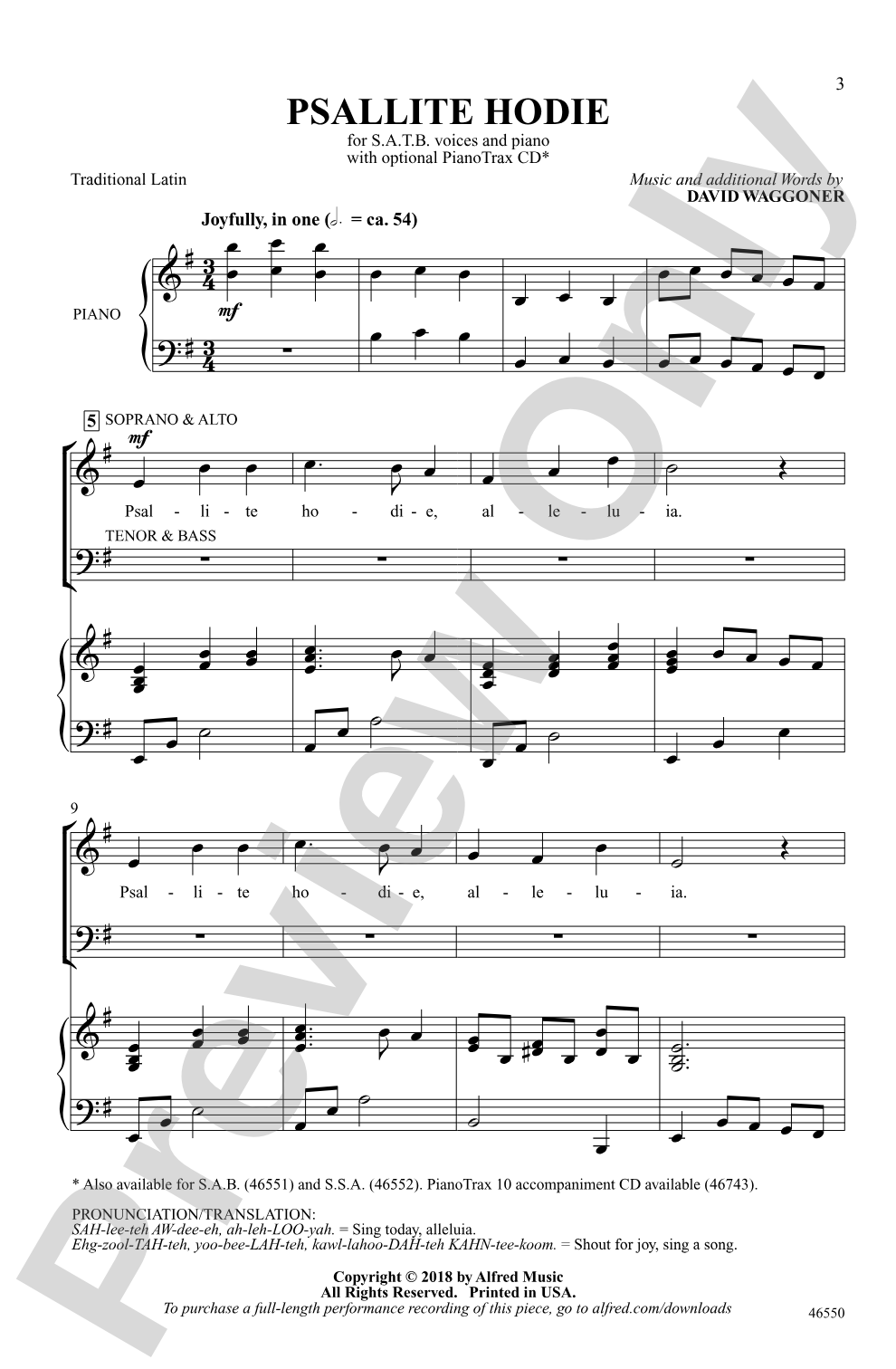
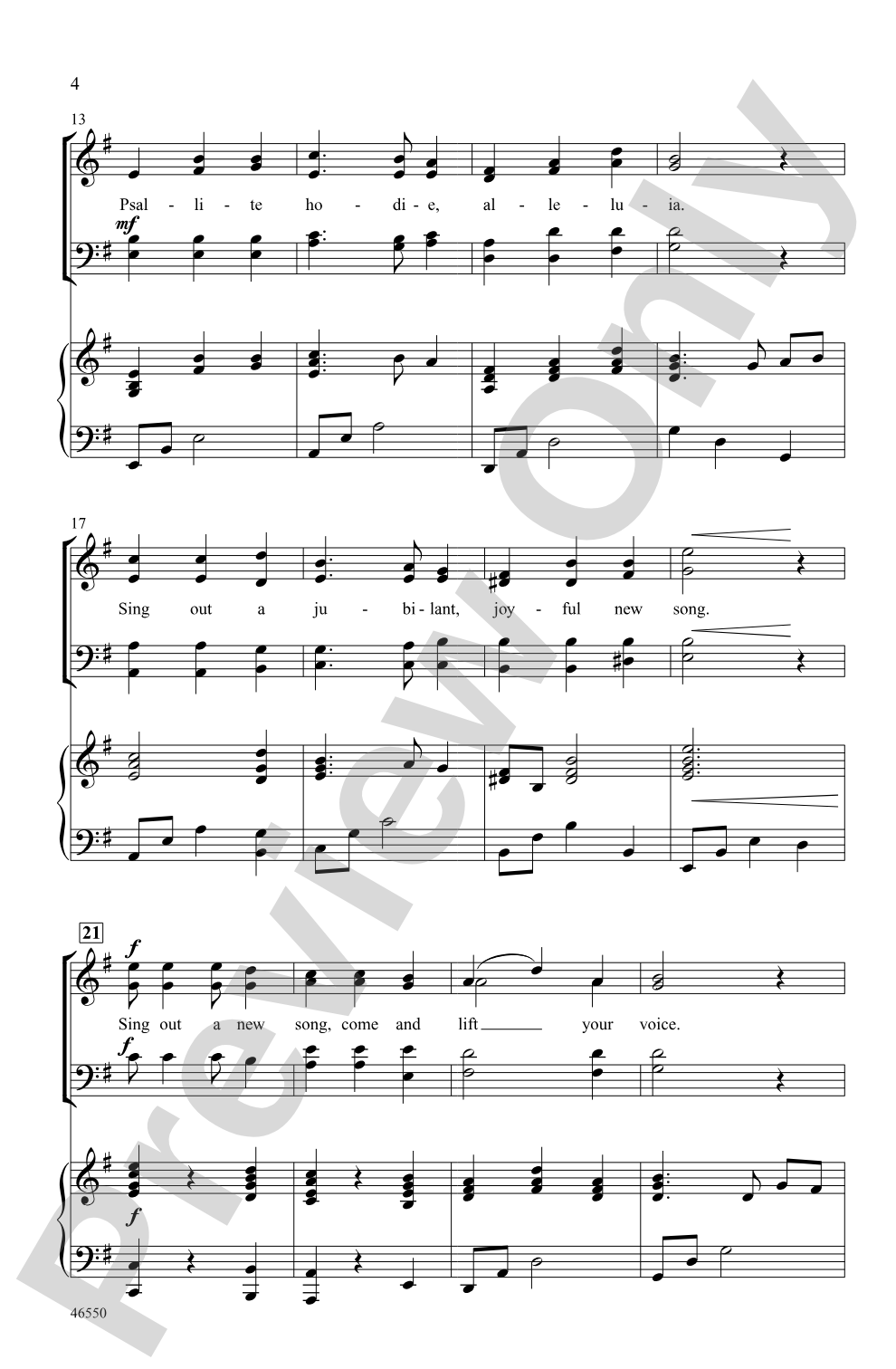
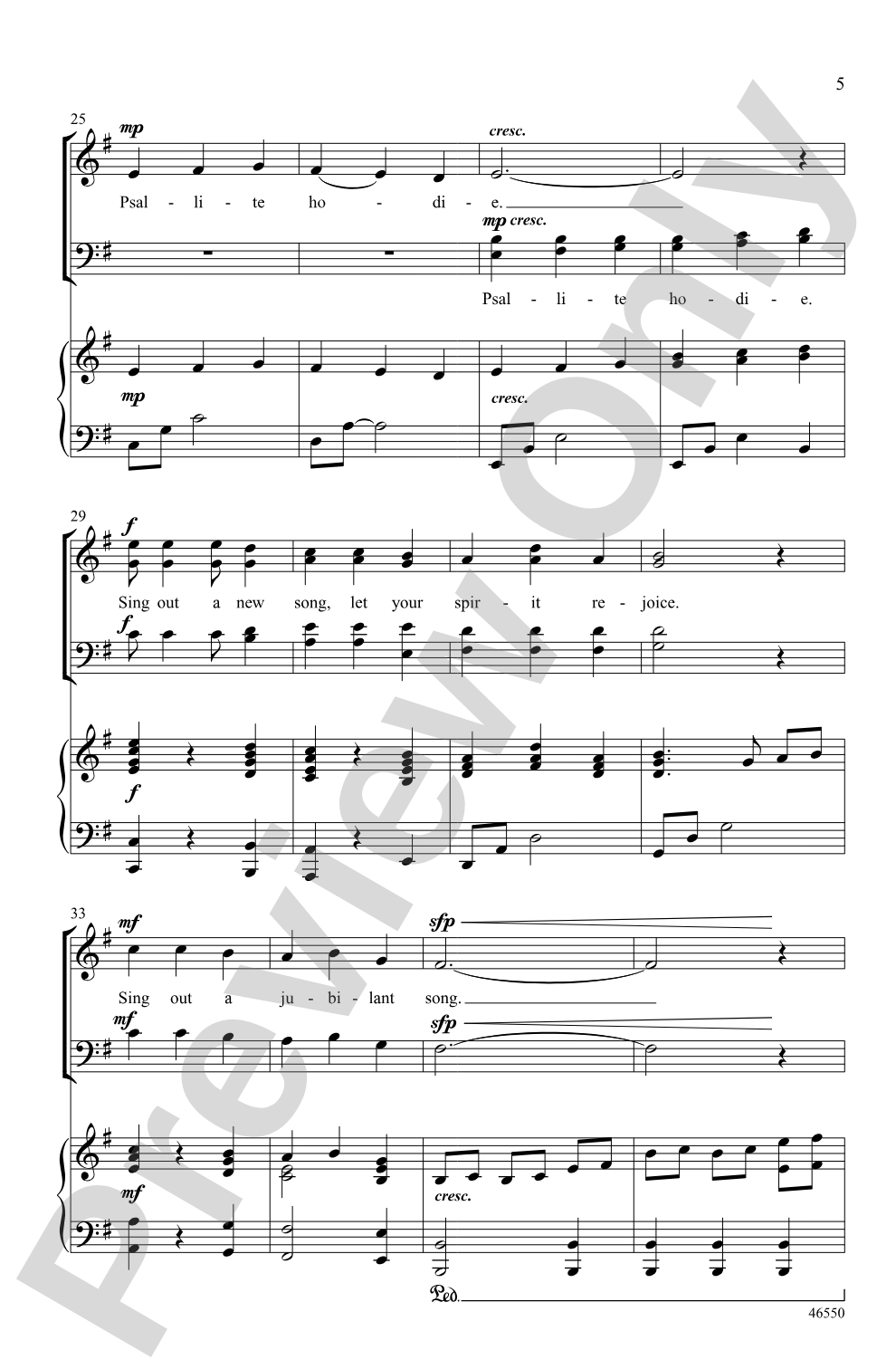

Psallite Hodie: SATB Choral Octavo
Music and additional words by David Waggoner
Item: 00-PO-0005722
$2.20
Minimum order quantity: 20 copies
Pickup currently not available
Description
Upper voices introduce a jubilant refrain, then the entire choir sings it in harmony. A contrasting section offers a gorgeous new motive, followed by a rich harmonization of the new material. The return to the original chorus is heightened by a soaring descant, which builds momentum into an exciting finish. This title is available in MakeMusic Cloud.


Psallite Hodie: SATB Choral Octavo isn't in MakeMusic Cloud just yet...but it could be. Let us know you'd like to see it, and you'll help shape what comes next. In the meantime, start a free trial and dive into thousands of interactive titles your students can play along with today.
Request This Title
Tell us you want it.
Start Your Free Trial
Explore everything that's ready to play right now.
Sample Audio
1
Audio File
--:--
0:00
0:00
Sample Video
Additional Details
Series:
Alfred Choral Designs
Publisher:
Alfred Music
Page Count:
16
SKU:
00-PO-0005722
More about this title
About the Composer: David Waggoner

David Waggoner holds degrees from the University of Michigan School of Music and Eastern Michigan University, where he earned a master's degree in music. He brings his training directly into his work as an elementary music educator in Woodhaven, Michigan, while also serving as Director of Music at the First United Methodist Church in Wyandotte.
Waggoner has built a substantial catalog of compositions across multiple genres and ensembles, with particular strength in choral and handbell writing. His understanding of both the classroom and the church context informs music that balances accessibility with musical substance.
Why we love this
Waggoner structures this piece with clear sectional drama that gives your choir real musical architecture to sink their teeth into. The descant entrance at the recapitulation creates a natural peak without requiring virtuosic voices, and the jubilant refrain is memorable enough that singers feel the pay-off of their preparation immediately.
What to expect
Psallite Hodie radiates joy and confidence, opening with an infectious jubilation that the choir immediately recognizes as singable. As sections build and the descant soars overhead, the emotional arc deepens from celebratory to majestic, closing with genuine momentum and purpose.
Who it's for
This octavo works for SATB choirs at the intermediate level and above who want a piece that feels fresh and structured without requiring extreme vocal ranges or complex rhythms. Both concert and festival settings suit this work equally well.
How to get the most out of it
- Balance the upper voices carefully in the opening refrain; they should sparkle without drowning out the harmonic content when the full choir enters.
- Shape the contrasting section's new motive with consistent phrasing across all four parts so the transition back to the chorus feels like a deliberate architectural choice, not a restart.
- Let the descant breathe in the final chorus; resist the urge to push it aggressively, since its soaring quality comes from clarity and confidence rather than volume.
- Establish a solid rhythmic foundation in the finish through the bass and baritone lines, which anchor the excitement and prevent the upper voices from rushing.
How to use it
Program this as a centerpiece on a concert featuring diverse sacred and secular repertoire, or as a festival entry that demonstrates your choir's ability to balance clarity, ensemble blend, and expressive shaping. The 16-page length and clear dramatic arc make it ideal for programs where you need a substantial choral work that doesn't require an entire set around it.
Skills your students will build
- Singing a refrain in unison, then harmonizing the same material with full choir
- Executing dynamic contrast between sections while maintaining vowel consistency
- Blending a descant line with the underlying harmonic texture
- Reading and performing four-part SATB voicing with attention to voice independence