Pretty Little One Cover Image

Pretty Little One: Jazz Ensemble Conductor Score

$9.00 USD
Sale price  $9.00 USD Regular price 
Skip to product information
Pretty Little One Cover Image

Pretty Little One: Jazz Ensemble Conductor Score

By Billy Strayhorn / ed. Jeff Lindberg

Grade: 5 (Advanced / Difficult)

Item: 00-36074S

$9.00
Shipped

One moment…

Description
Jazz for strings! A unique, never-before-published composition and arrangement by the brilliant Billy Strayhorn. A slow swing, this arrangement is written for solo violin, solo viola, violin 2, tenor sax, trombone, piano, bass, and drums.

Pretty Little One: Jazz Ensemble Conductor Score isn't in MakeMusic Cloud just yet...but it could be. Let us know you'd like to see it, and you'll help shape what comes next. In the meantime, start a free trial and dive into thousands of interactive titles your students can play along with today.

Sample Pages

No sample pages found.

Sample Audio
No sample audio found.
Sample Video
Additional Details
Series: Belwin Jazz Legend Series
Publisher: Alfred Music
Page Count: 20
UPC: 038081421933
SKU: 00-36074S

More about this title

About the Composer: Billy Strayhorn
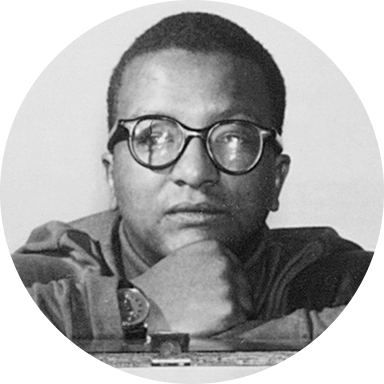
Billy Strayhorn

Billy Strayhorn (1915-1967) shaped American jazz from the shadows for nearly three decades. A prolific composer and arranger whose harmonic sophistication and lyrical gift remain unmatched, Strayhorn emerged as Duke Ellington's essential creative partner beginning in 1939, co-authoring some of the 20th century's most enduring standards. His compositions, from the wartime anthem "Take the 'A' Train" to the harmonically audacious ballad "Lush Life" (written when he was just 16), reveal a composer unafraid of complexity or emotional depth.

Strayhorn's public recognition never matched his artistic influence. He worked as a composer, arranger, and pianist across recordings by Ella Fitzgerald, Sarah Vaughan, Oscar Peterson, and countless other jazz luminaries, yet his name remained largely absent from popular consciousness. His decision to live openly as a Black gay man during an era of profound social restriction likely contributed to this deliberate obscurity, even as his music quietly became foundational to the jazz tradition. Historians now regard Strayhorn as one of America's most significant yet underappreciated composers.

Why we love this

Strayhorn's writing for this ensemble achieves something rare: genuine sophistication without sacrificing playability. The slow swing feel allows the string voices to sing with idiomatic jazz phrasing while the rhythm section and horns anchor a richly voiced harmonic palette. This is a piece that honors the conductor's intelligence and the ensemble's musicianship.

What to expect

A intimate, unhurried swing that feels almost like overhearing a conversation between old friends. The writing is elegant without pretense, sophisticated in its harmony yet warm in its expression, with the strings lending an unexpected softness to the jazz idiom.

Who it's for

Advanced jazz ensembles with string players confident enough to navigate both classical technique and jazz inflection. This conductor score serves ensembles seeking rarely performed Strayhorn material that demands musical maturity and offers authentic repertoire beyond the standard big band vocabulary.

How to get the most out of it

  • Balance the solo violin and viola lines against the harmonic support; these voices carry the melodic weight and should speak clearly even when surrounded by fuller sonority.
  • Shape the swing eighth-note feel through dynamic and rhythmic flexibility rather than literal metronomic precision; let the ensemble breathe as a small group would.
  • Coordinate the piano, bass, and drums as a true rhythm section with unified swing feel and forward momentum, anchoring the more lyrical string writing above.
  • Attend to Strayhorn's harmonic voice-leading in the ensemble parts; the richness depends on each voice maintaining its independence within the voicing.

How to use it

Program this as a centerpiece for a concert emphasizing jazz composition and arranging. The advanced difficulty and unique orchestration make it compelling as a standalone feature or paired with other Strayhorn works to highlight his compositional voice. The slow tempo and lyrical character offer rewarding contrast alongside faster ensemble pieces.

Skills your students will build

  • Swing eighth-note feel and jazz time in a string ensemble context
  • Balancing solo voices with harmonic accompaniment in small-group jazz settings
  • Strayhorn's sophisticated harmonic language and voice-leading
  • Coordinating strings with jazz rhythm section
  • Phrasing and rubato appropriate to slow balladic swing

You May Also Like