

Premier Piano Course, Technique 1A: Piano
By Dennis Alexander, Gayle Kowalchyk, E. L. Lancaster, Victoria McArthur, and Martha Mier
Level: 1A
Item: 00-PB-0001063
$9.99
Pickup currently not available
Related Items
Premier Piano Course, Technique 1A: Piano Book |
$9.99
|
View |
Description
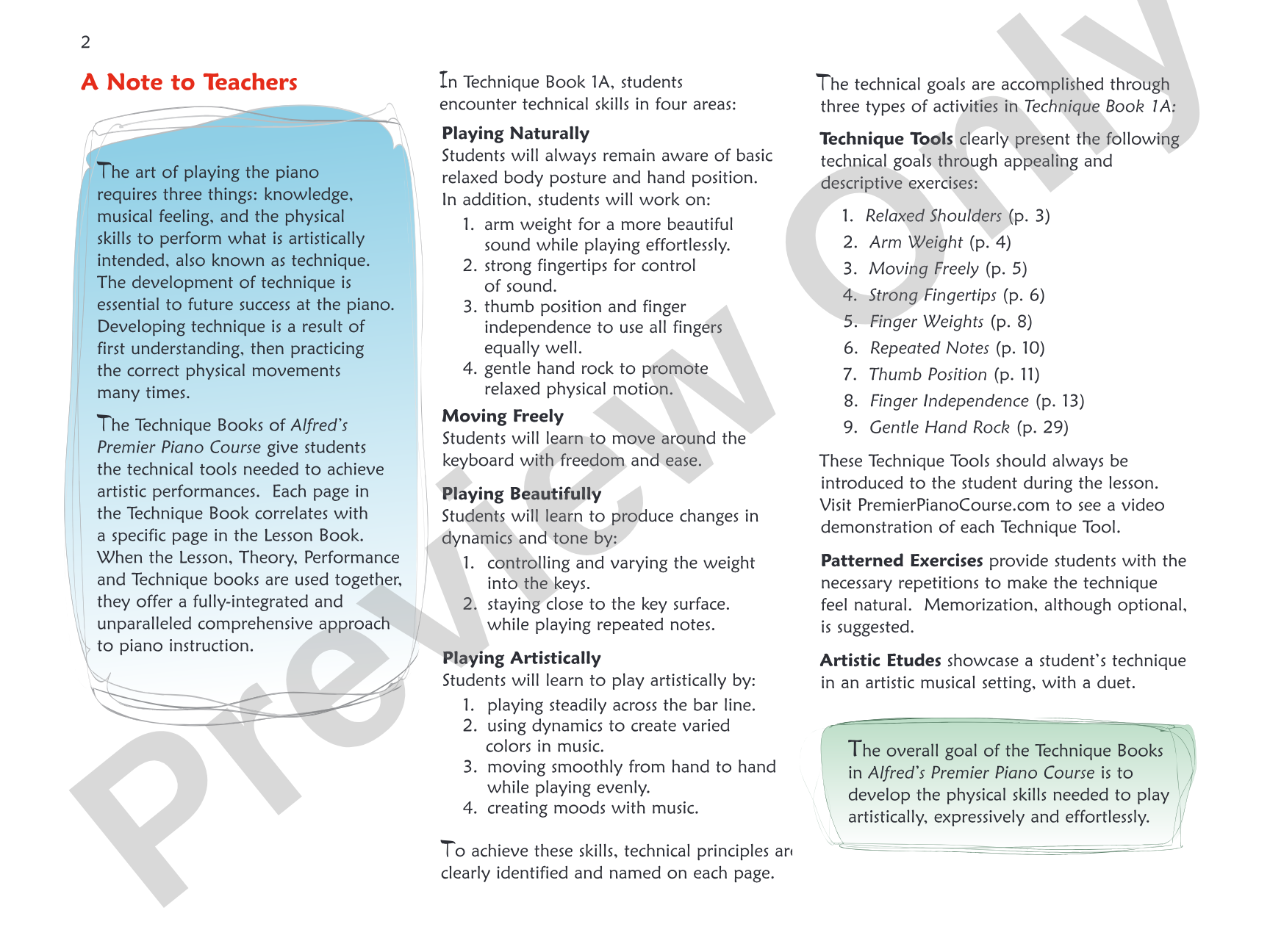
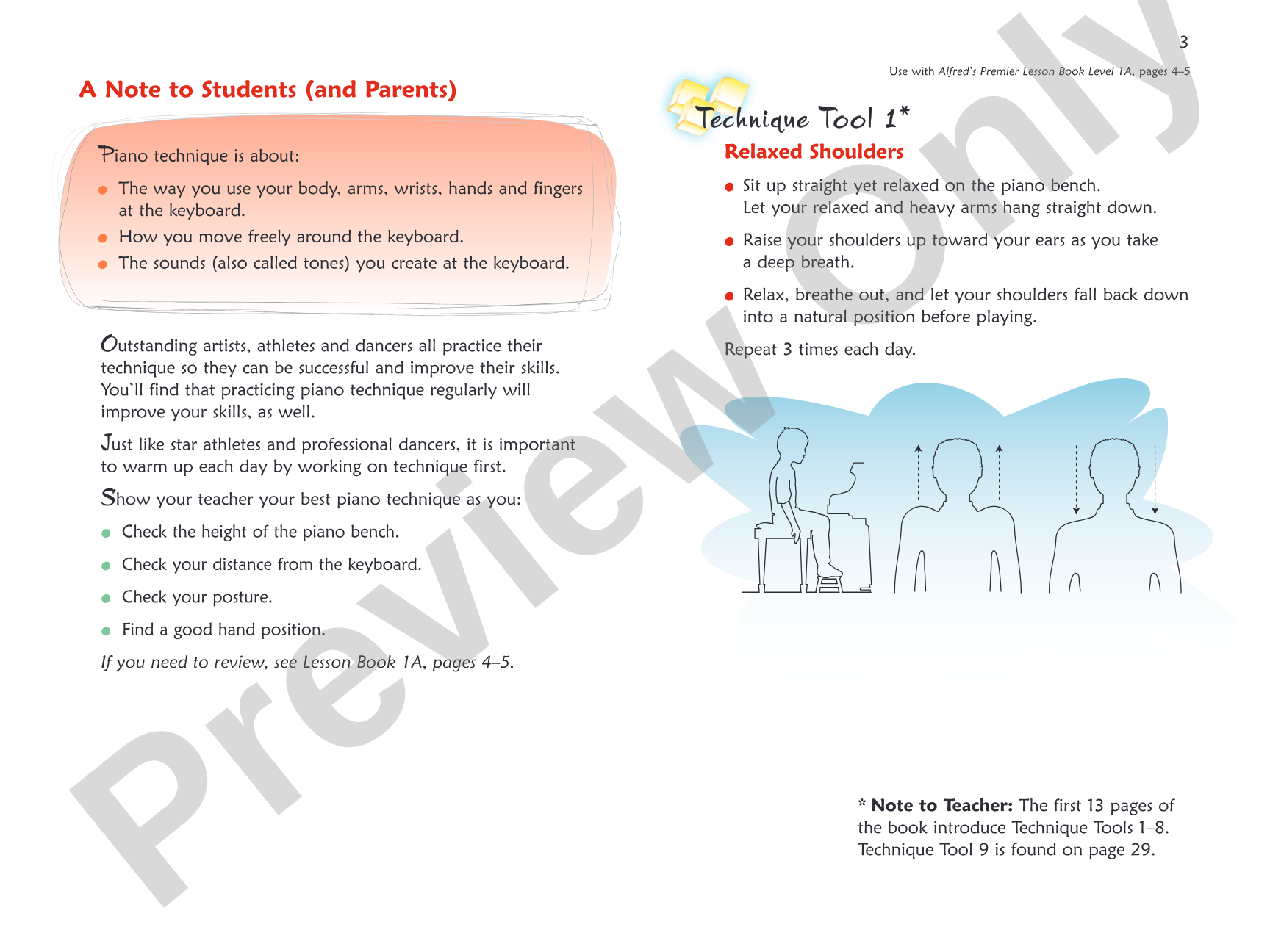
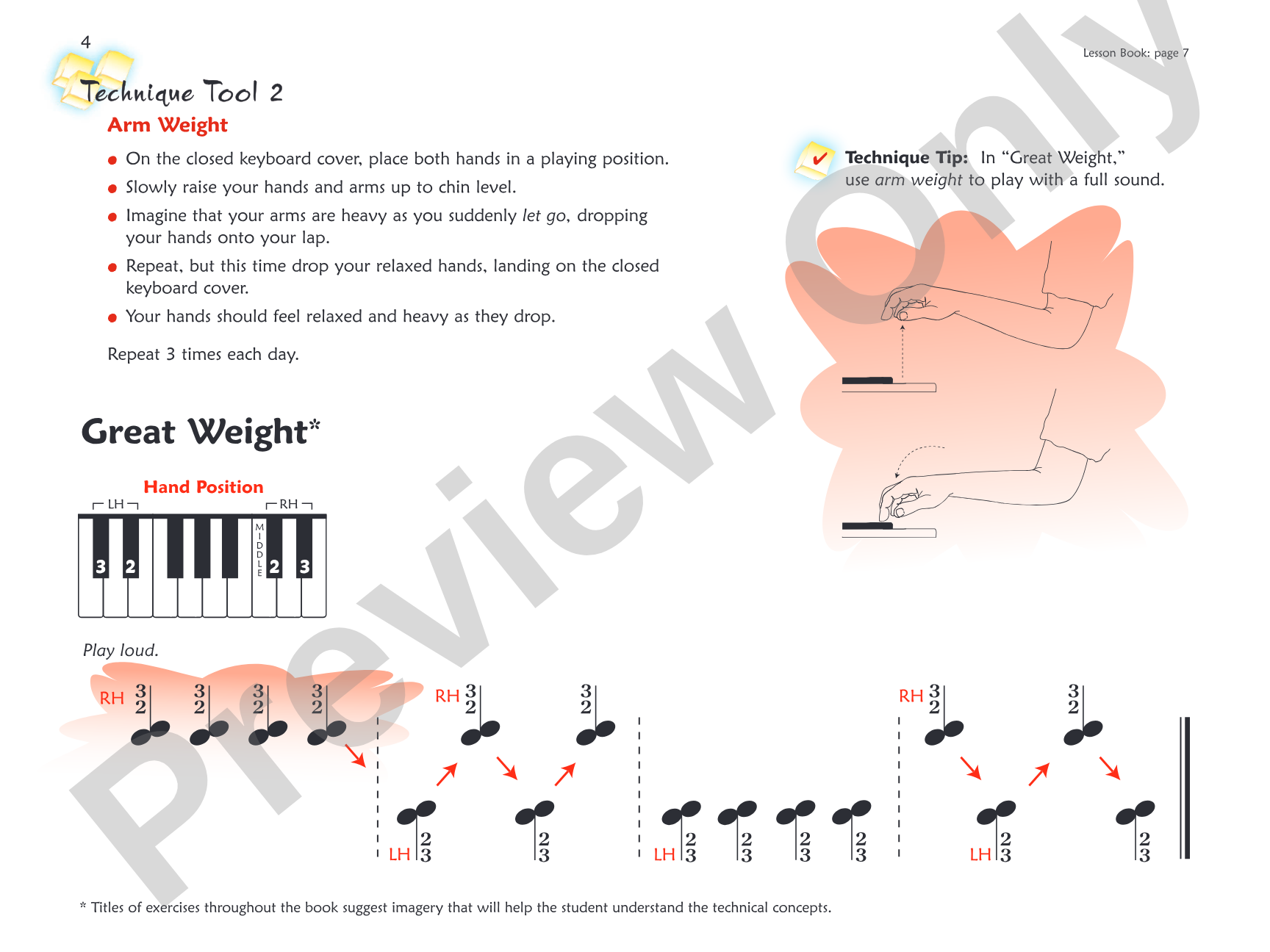
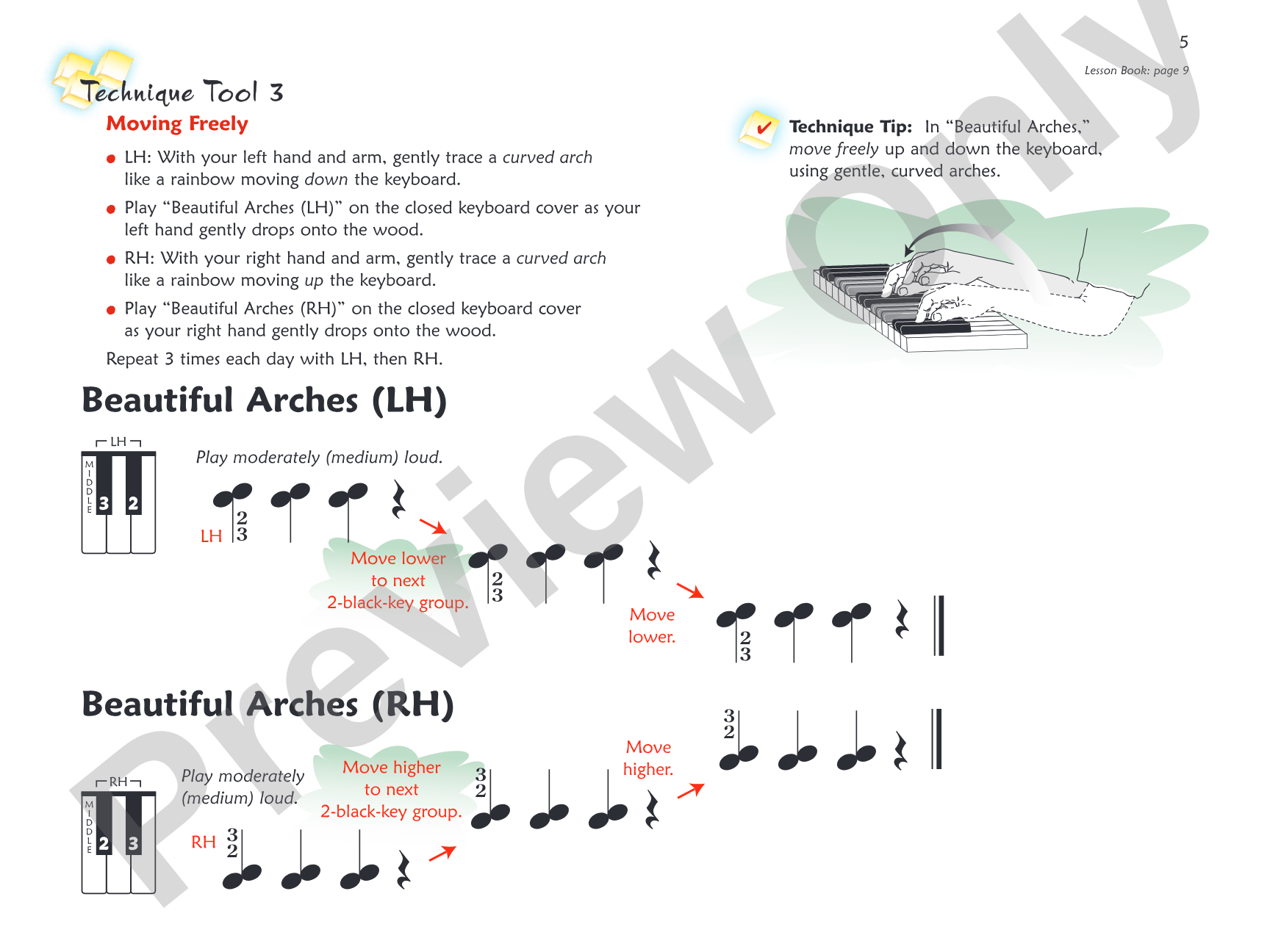
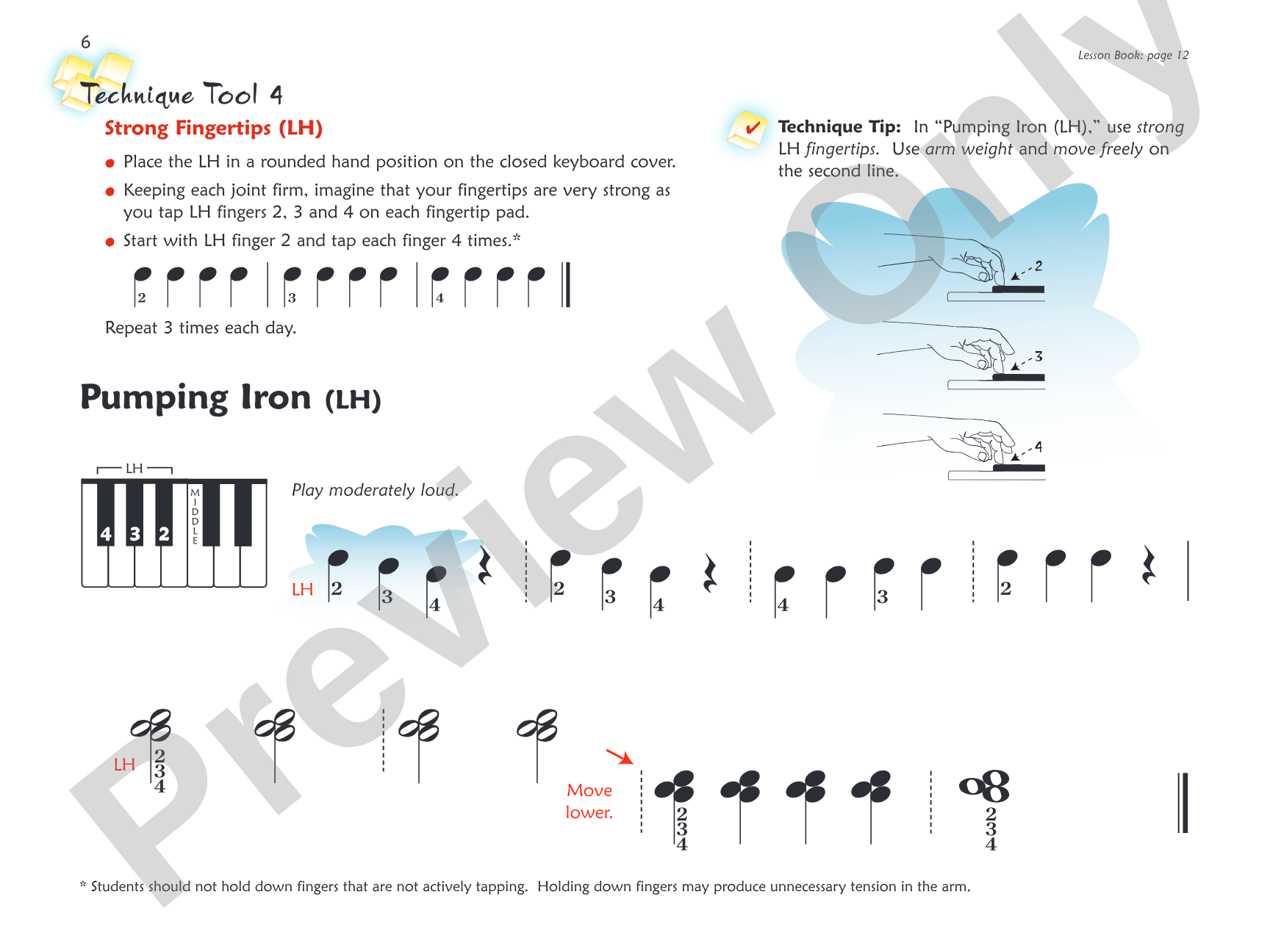
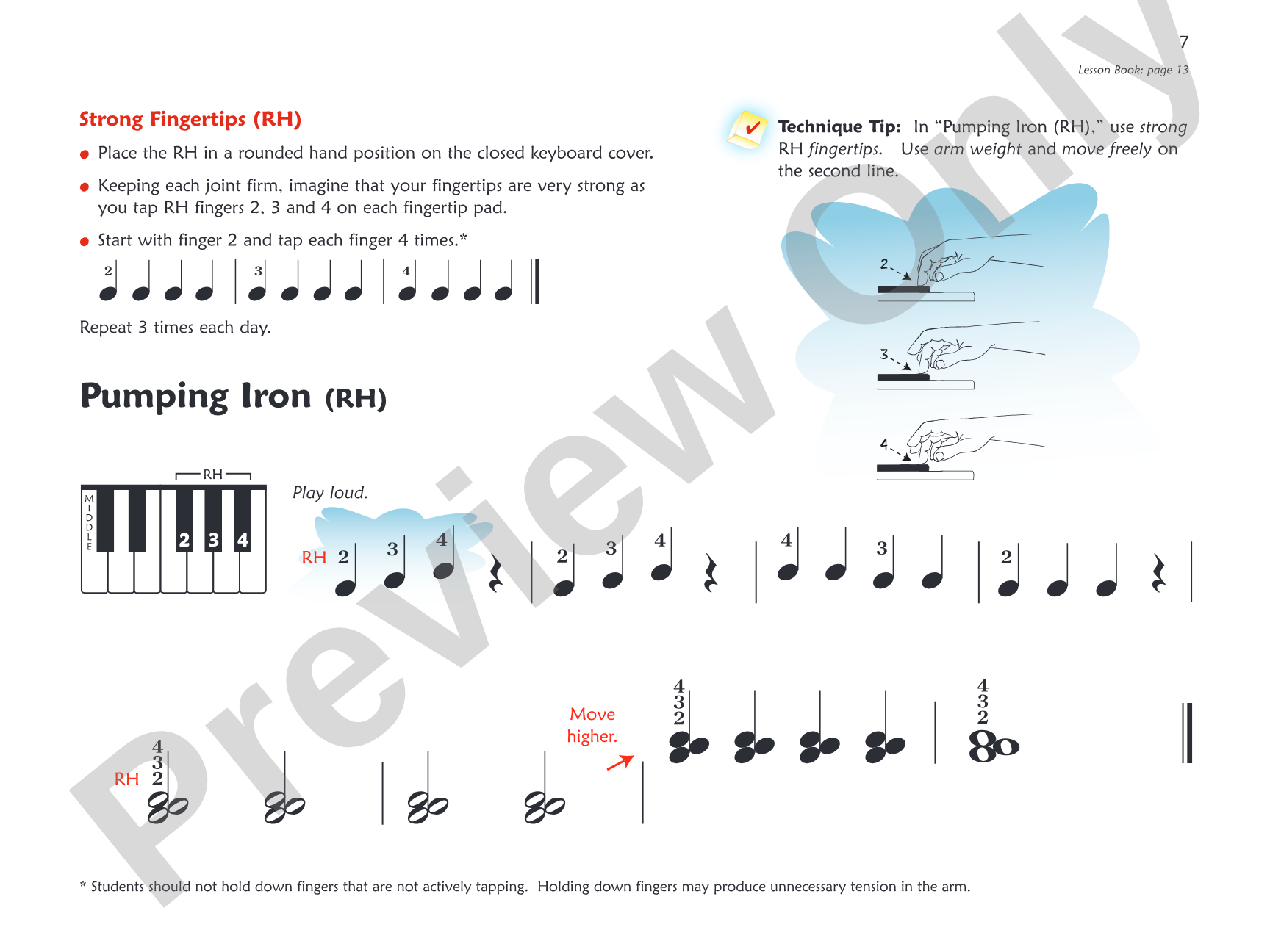
Now your students will have the technical tools needed to achieve artistic performances. They will encounter skills in four areas---playing naturally (physical aspects), moving freely (around the keyboard), playing beautifully (tone production) and playing artistically. The technical goals are accomplished through three types of activities---patterned exercises with necessary repetitions to make the technique feel natural, artistic etudes that showcase the student's technique in an artistic musical setting and appealing and descriptive exercises called Technique Tools. The nine Technique Tools in Level 1A relate to relaxed shoulders, arm weight, moving freely, strong fingertips, finger weights, repeated notes, thumb position, finger independence and gentle hand rock. Each page in the Technique Book correlates with a specific page in the Lesson Book; when the Lesson, Theory, Performance and Technique books are used together, they offer a fully integrated and unparalleled comprehensive approach to piano instruction. 32 pages.


Discover MakeMusic Cloud: thousands of interactive titles your students can play along with today.
Sample Audio
No sample audio found.
Sample Video
Additional Details
Series:
Premier Piano Course
Publisher:
Alfred Music
Page Count:
32
SKU:
00-PB-0001063
More about this title
About the Composer: Dennis Alexander

Dennis Alexander has shaped piano pedagogy since joining Alfred Music Publishing in 1986, establishing himself as one of the most published composers of educational piano literature. His output spans over 400 compositions and recordings created with Alfred, earning international recognition across all student levels. Alexander taught piano pedagogy for 24 years at the University of Montana before relocating to California, where he served on faculties at Cal State Fullerton and Cal State Northridge. He maintains an active composing and performance schedule from Albuquerque, New Mexico.
Beyond the studio and publishing house, Alexander has performed as a soloist and chamber musician, including a New York debut at Carnegie Recital Hall with violinist Walter Olivares. He has served as a collaborative artist for internationally recognized musicians and instrumentalists, conducted master classes at the Music Teachers National Association convention, and judged national competitions abroad. His work has been commissioned by numerous state music associations, and he remains a sought-after clinician at state and national music education conferences.
Why we love this
This book understands that technique without musicality wastes a student's time, and musicality without technique limits a student's voice. Rather than isolating drills from the music students are learning, Alexander's Technique Tools embed core physical concepts directly into the material, making coordination and tone production feel like natural extensions of repertoire study. The integrated approach across the four books means students never question why they're working on something, the answer lies on the next page of their lesson.
What to expect
Purposeful and grounded. Each exercise has a clear physical goal, feeling the weight in your arm, relaxing your shoulders, moving your thumb beneath your fingers, so students understand exactly what they're training their body to do. The musical context keeps the work engaging rather than mechanical.
Who it's for
Beginning piano students (Level 1A) who need a structured, integrated approach to building technique from the ground up. Teachers using the full Premier Piano Course series will find this book essential for developing the physical and musical skills that make artistic performance possible.
How to get the most out of it
- Work through the patterned exercises daily before moving to the etudes; the repetition builds muscle memory so the techniques feel automatic rather than forced.
- Pay close attention to the Technique Tools that correspond with each lesson page; using them alongside the Lesson Book creates reinforcement that students notice immediately.
- Let students listen to themselves during the artistic etudes; these pieces reveal whether the technical work from the exercises is actually translating into better tone and control.
- Check hand position and shoulder alignment frequently; many of the nine tools target postural habits that students revert to under pressure if not monitored consistently.
How to use it
Use this book as the technical foundation for any Level 1A student in a studio or group class setting. The correlation between pages in the Technique Book and the Lesson Book means you can assign technique work that directly supports the repertoire students are learning that week, creating a seamless progression from exercise to musical performance.
Skills your students will build
- Proper posture and arm weight distribution
- Relaxed shoulder alignment while playing
- Strong, independent finger technique
- Consistent tone production through finger control
- Thumb positioning and pivot movement
- Repeated note articulation and clarity
- Hand motion around the keyboard
- Finger independence and coordination