

Premier Piano Course, Duet 6: Piano Duets & Four Hands
Ed. Gayle Kowalchyk and E. L. Lancaster
Level: 6
Item: 00-PB-0000607
$9.50
Pickup currently not available
Related Items
Premier Piano Course, Duet 6: Piano Book |
$9.50
|
View |
Description
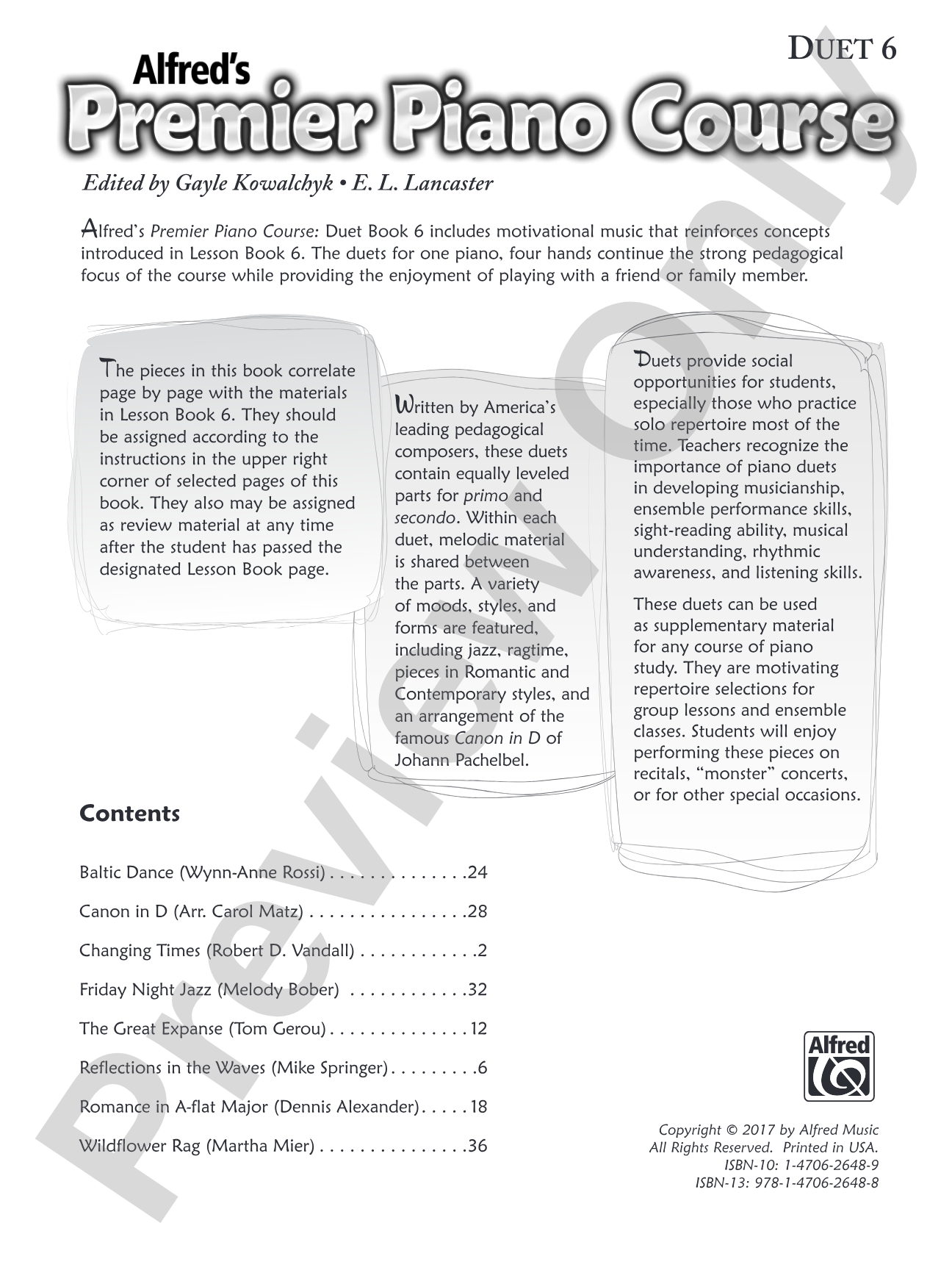
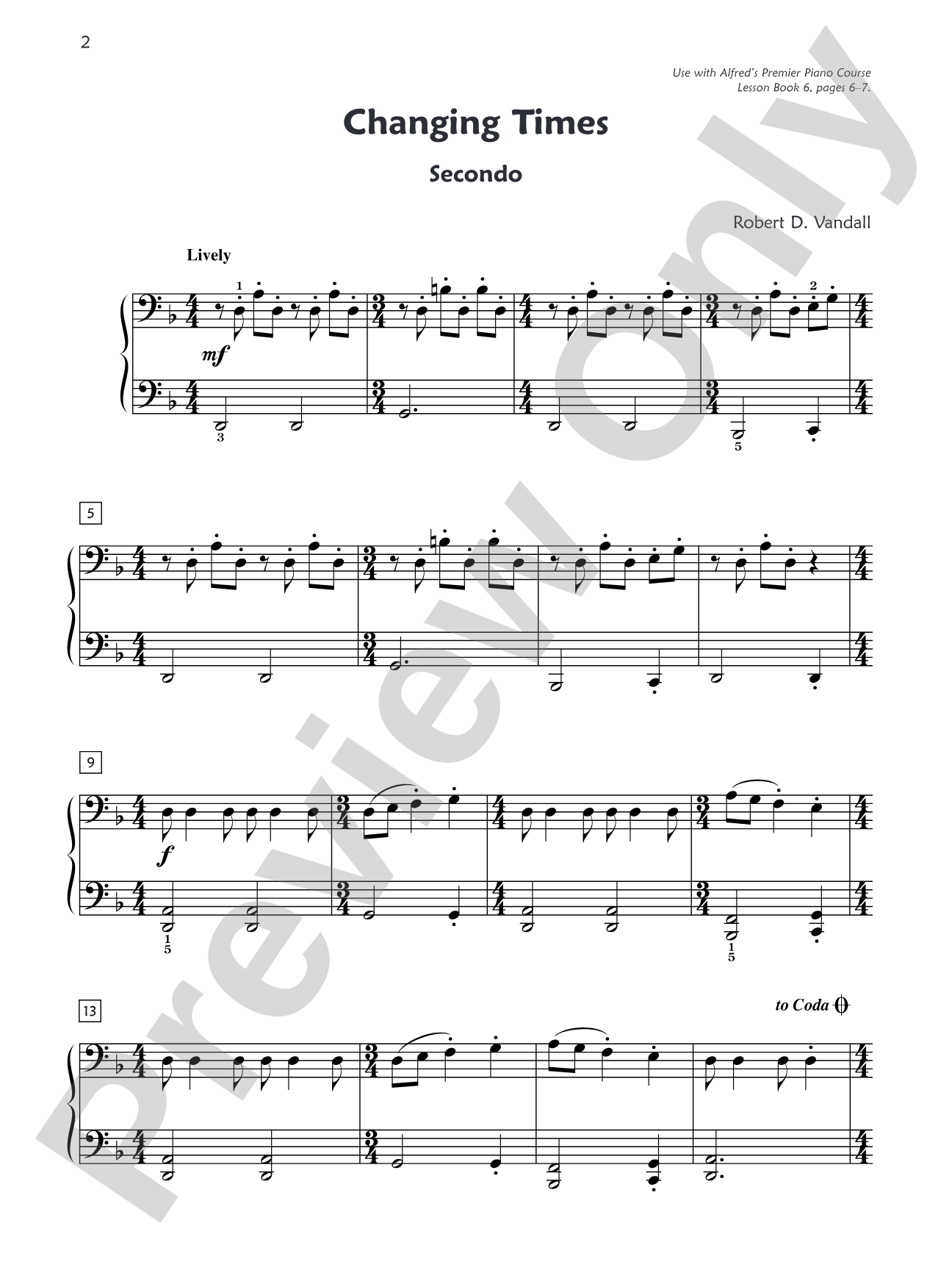
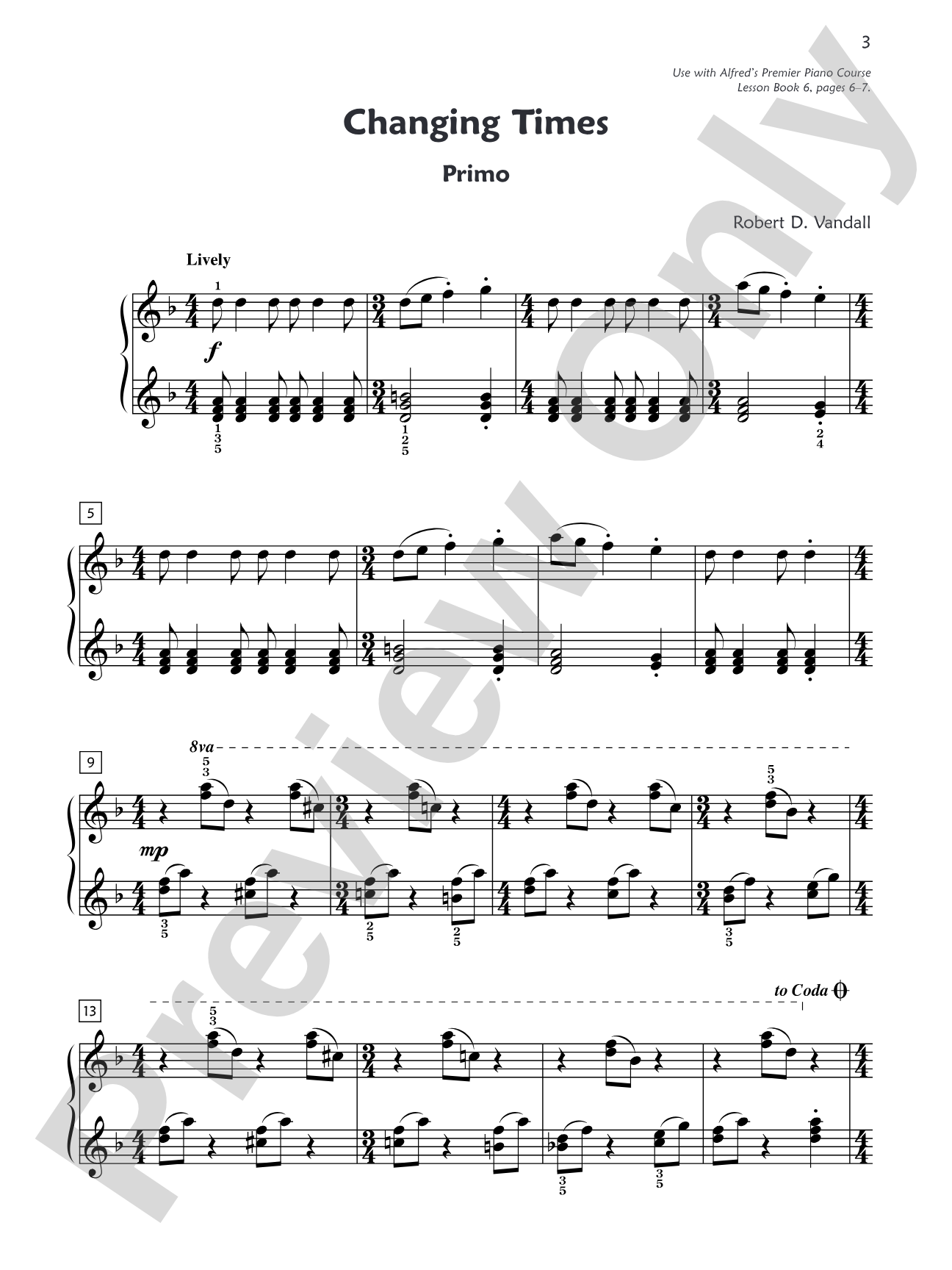
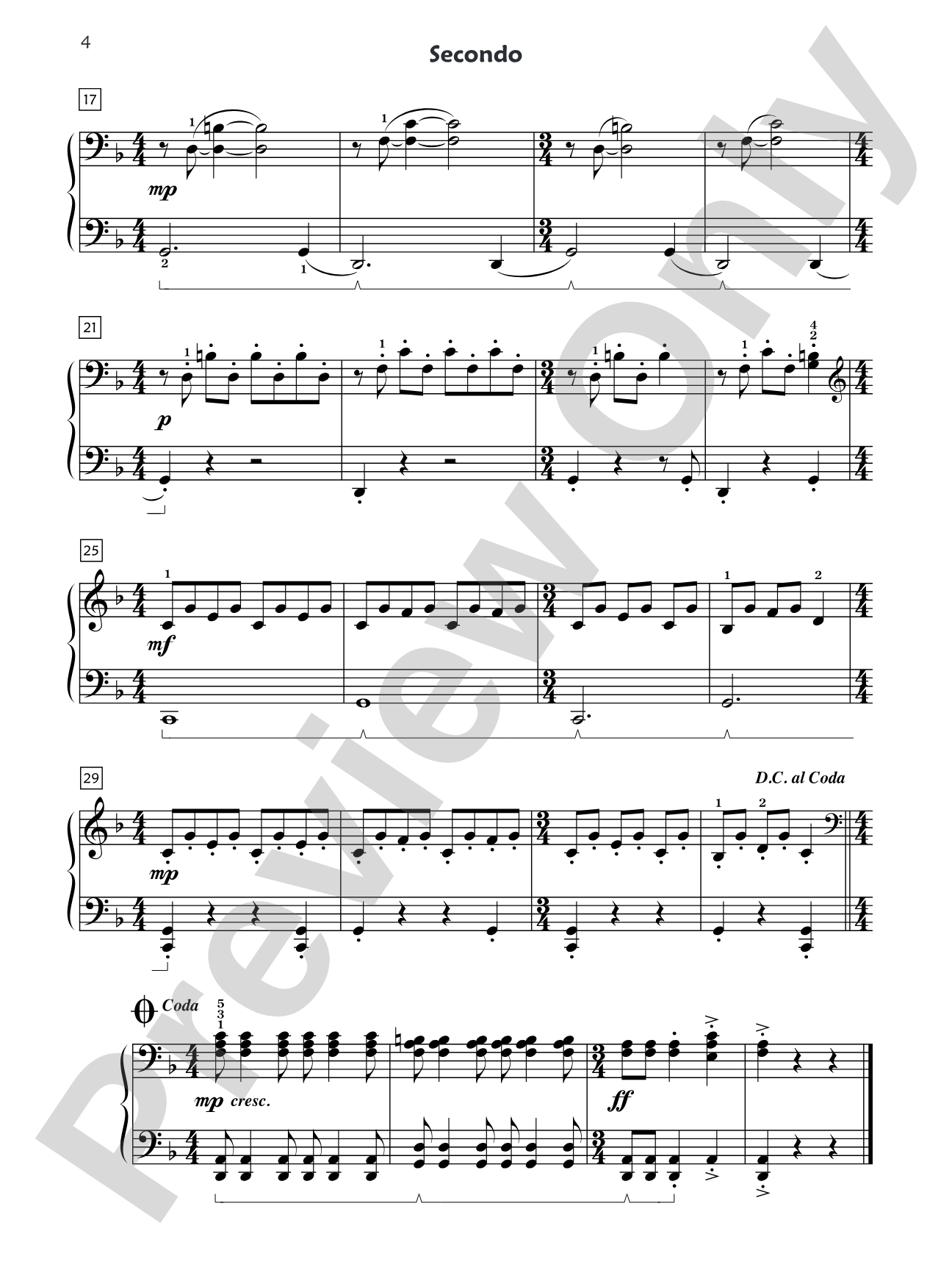
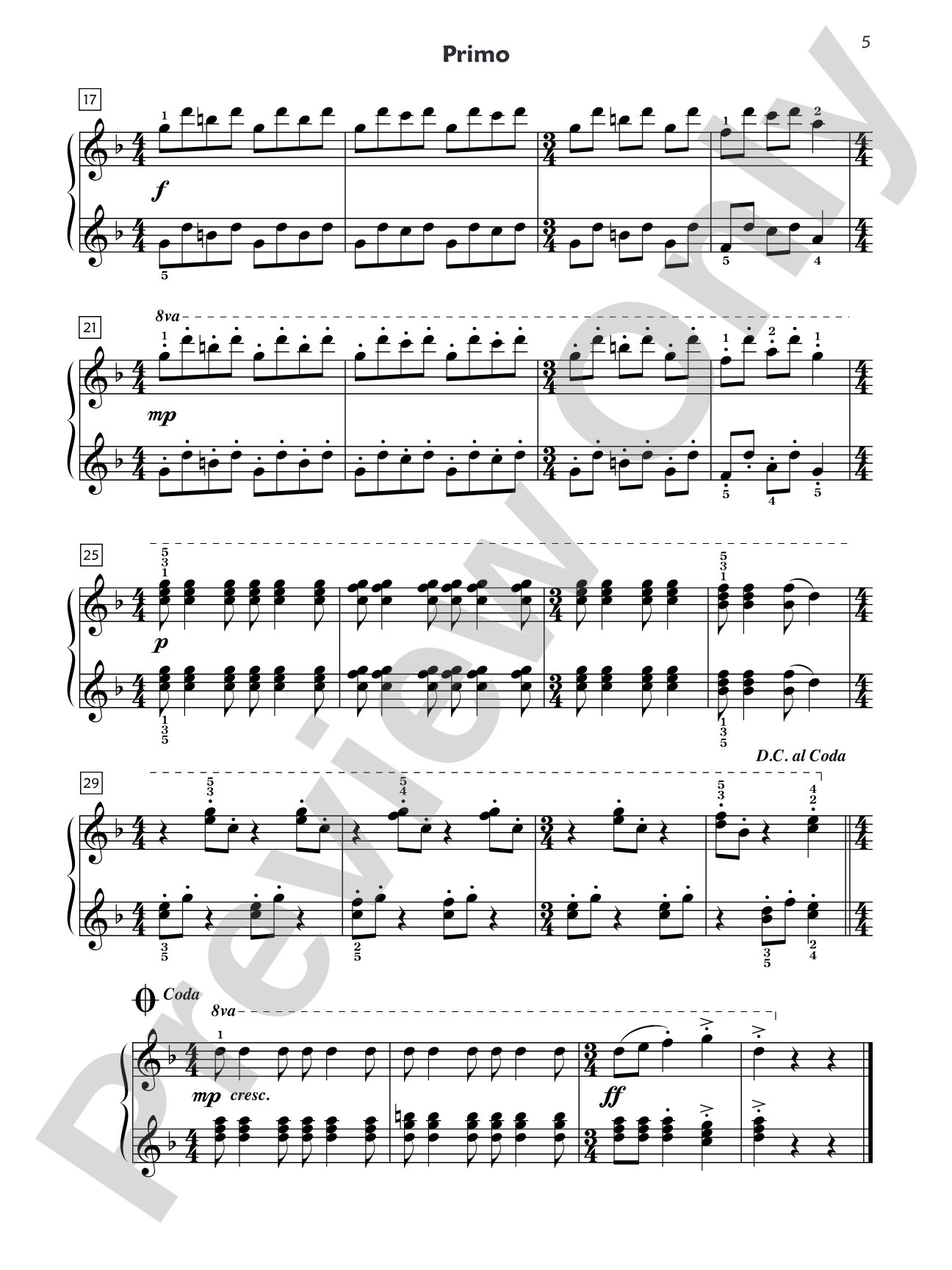
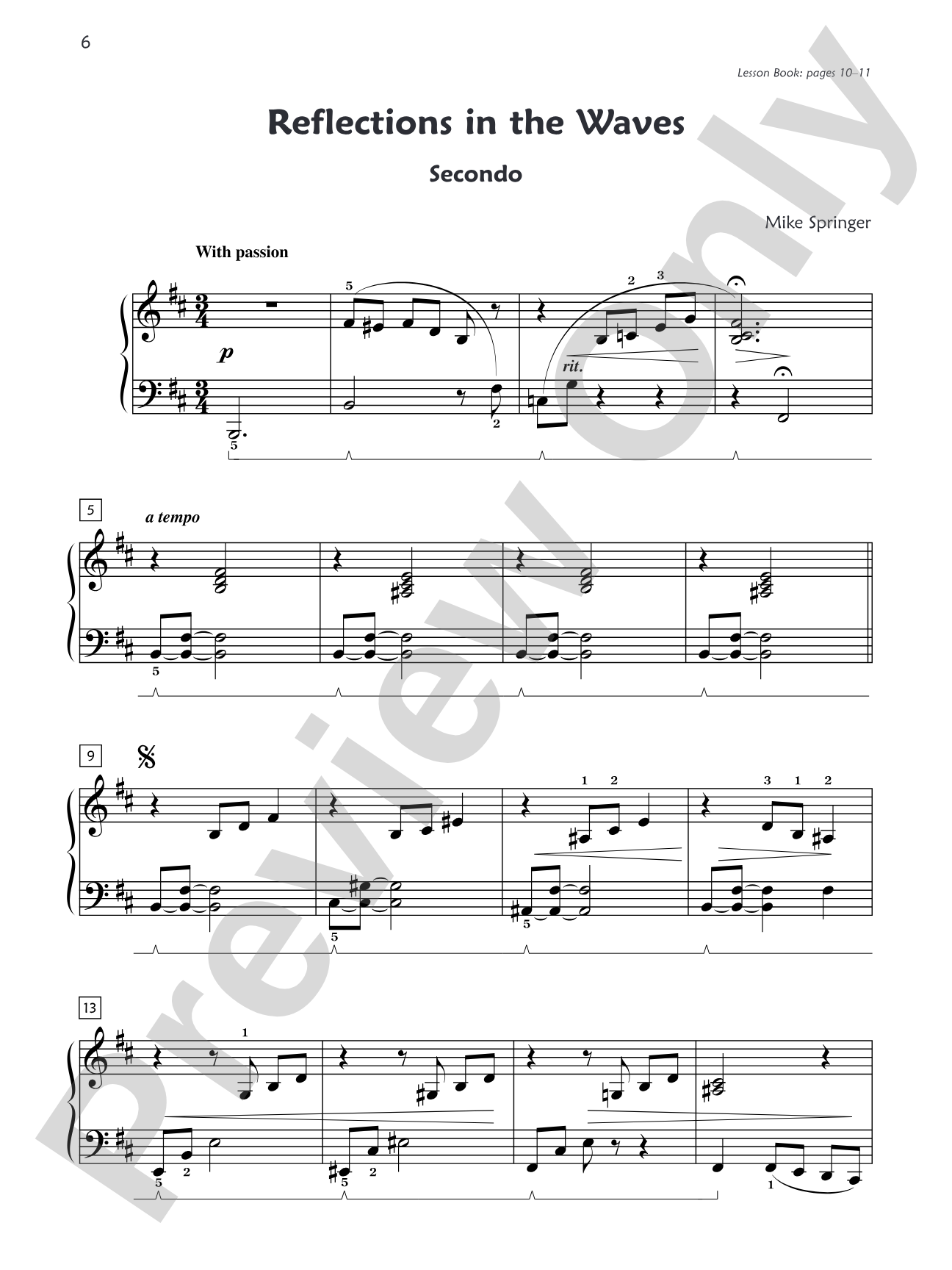
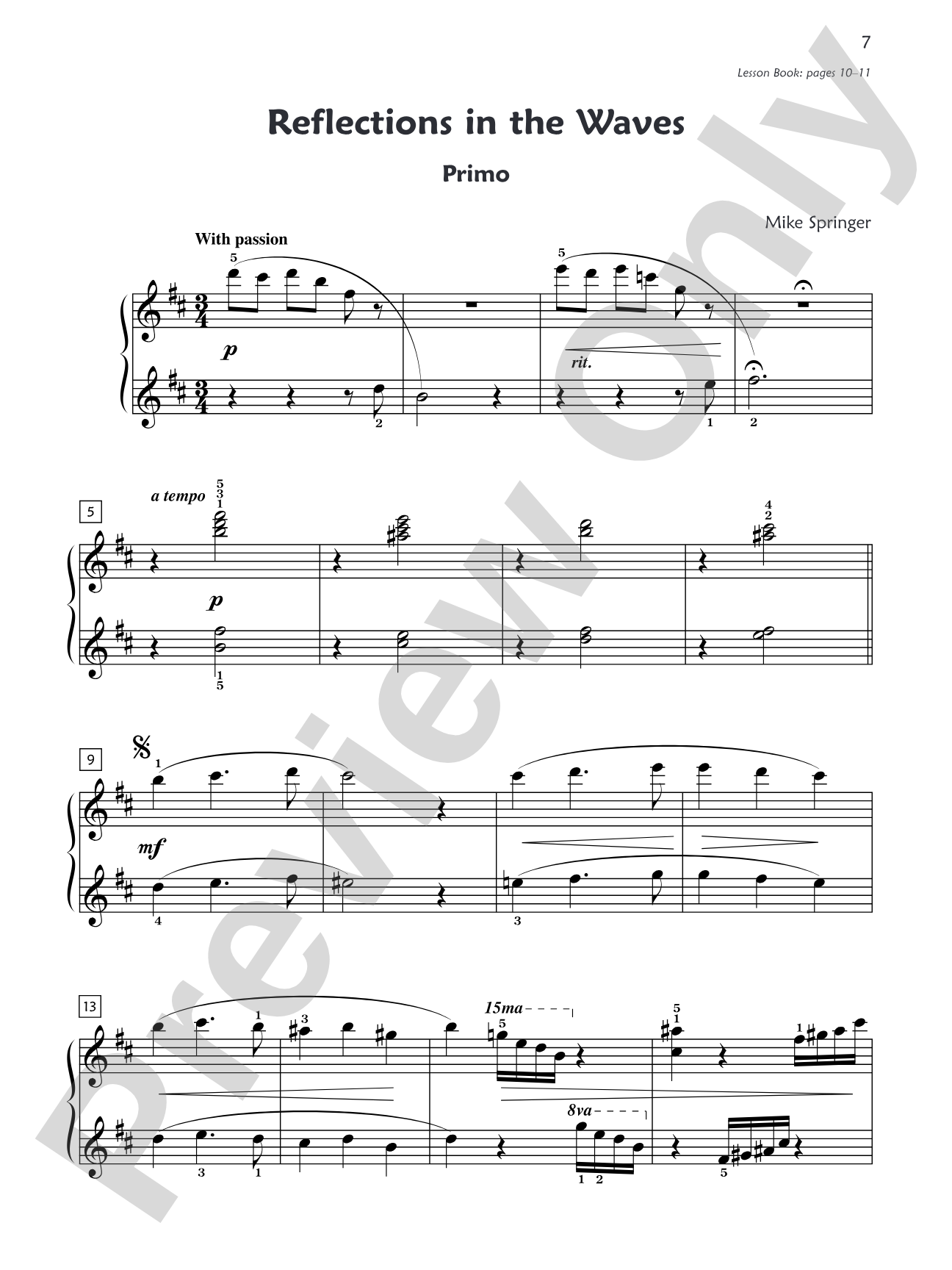
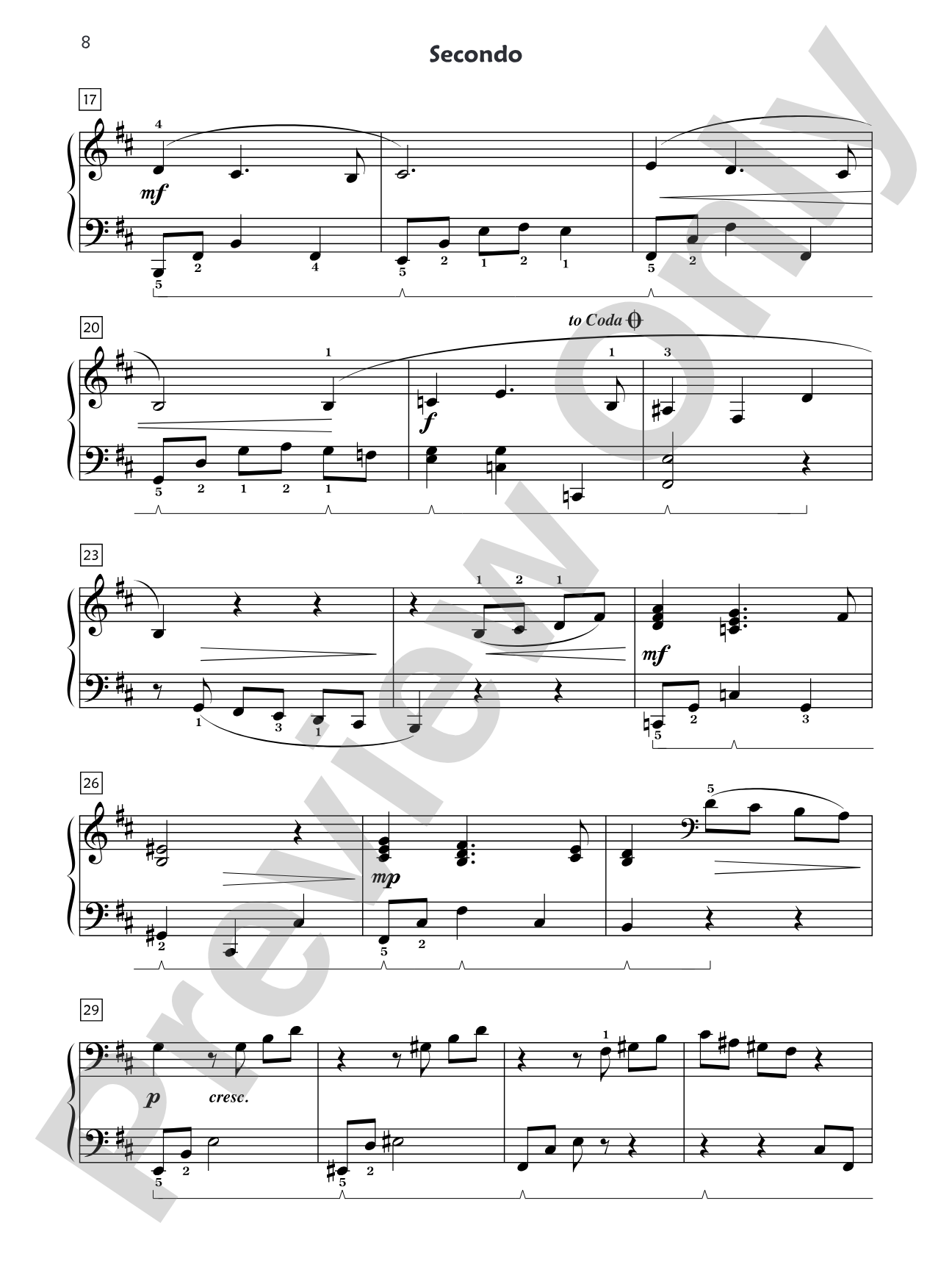
Alfred's Premier Piano Course: Duet Book 6 includes motivational music that reinforces concepts introduced in Lesson Book 6. These duets for one piano, four hands continue the strong pedagogical focus of the course while providing the enjoyment of playing with a friend or family member. Written by America's leading pedagogical composers, these duets contain equally leveled parts for secondo and primo. Within each duet, melodic material is shared between the parts. Styles and forms include jazz, ragtime, pieces in Romantic and Contemporary styles, and an arrangement of the famous Canon in D of Johann Pachelbel. Titles: Baltic Dance (Wynn-Anne Rossi) * Canon in D (Arr. Carol Matz) * Changing Times (Robert D. Vandall) * Friday Night Jazz (Melody Bober) * The Great Expanse (Tom Gerou) * Reflections in the Waves (Mike Springer) * Romance in A-flat Major (Dennis Alexander) * Wildflower Rag (Martha Mier). A Federation Festivals 2020-2024 selection. A Federation Festivals 2024-2028 selection.


Premier Piano Course, Duet 6: Piano Duets & Four Hands isn't in MakeMusic Cloud just yet...but it could be. Let us know you'd like to see it, and you'll help shape what comes next. In the meantime, start a free trial and dive into thousands of interactive titles your students can play along with today.
Request This Title
Tell us you want it.
Start Your Free Trial
Explore everything that's ready to play right now.
Sample Audio
No sample audio found.
Sample Video
No sample videos found.
Additional Details
Series:
Premier Piano Course
Publisher:
Alfred Music
Page Count:
40
SKU:
00-PB-0000607
More about this title
About the Creator
Alfred's Premier Piano Course draws from a collective of America's most respected piano pedagogues. Composers like Melody Bober, Robert D. Vandall, Dennis Alexander, and Martha Mier have shaped piano education for decades, creating literature that bridges technical development with genuine musical enjoyment. Their collaborative approach ensures that every piece serves both the student's growth and their immediate pleasure at the keyboard.
Why we love this
These duets solve the practical reality of intermediate piano teaching: students want to play together, but finding equally balanced four-hand music at Level 6 is difficult. The shared melodic material between primo and secondo keeps both players engaged and valued, while the stylistic range (jazz, ragtime, Romantic, contemporary) prevents rehearsals from feeling repetitive. Pachelbel's Canon in D arrives as an accessible reward for students who recognize the piece, making collaborative practice feel less like work.
What to expect
Playing these duets feels like a conversation between two musicians. One moment the primo carries the melody while secondo provides gentle support; the next, the roles shift, creating a natural back-and-forth dialogue. The stylistic variety keeps the experience fresh, moving from the rhythmic energy of ragtime to the sustained lyricism of Romantic miniatures.
Who it's for
Intermediate pianists ready to experience the collaborative joy of four-hand playing without sacrificing individual musicianship. This book works equally well for private lesson students performing with a teacher, siblings learning together, or duet partners in a group studio setting.
How to get the most out of it
- Establish the harmonic foundation first. The secondo player anchors the piece, so spend early rehearsals letting that part sit comfortably before layering the primo melody.
- Stagger your entrances during the first run-through. Have the secondo begin alone for 4-8 bars, then bring in the primo. This builds confidence and prevents the overwhelming sensation of simultaneous learning.
- Record yourselves playing individual parts at performance tempo. Listening back clarifies balance issues and helps students internalize their role within the larger sound.
- Vary your seating position during rehearsal. Shifting who sits closer to the treble or bass registers changes what each player hears and improves overall ensemble awareness.
How to use it
Feature a duet during a studio or group recital to celebrate ensemble learning without requiring a full accompanist. Alternatively, assign a duet as the final project of the year, pairing advanced students as mentors with those working through Book 6, creating a meaningful intergenerational performing moment.
Skills your students will build
- Balancing melodic and harmonic roles within an ensemble
- Coordinating rhythmic entrances and releases with a partner
- Reading and executing stylistic contrasts (jazz comping, classical phrasing, ragtime syncopation)
- Maintaining independence while responding to another performer's tempo and dynamics
- Interpreting shared musical phrases across two keyboard parts