

Premier Piano Course, Duet 1B: Piano Duets & Four Hands
Ed. Gayle Kowalchyk and E. L. Lancaster
Level: 1B
Item: 00-PB-0000555
$8.50
Pickup currently not available
Related Items
Premier Piano Course, Duet 1B: Piano Book |
$8.50
|
View |
Description
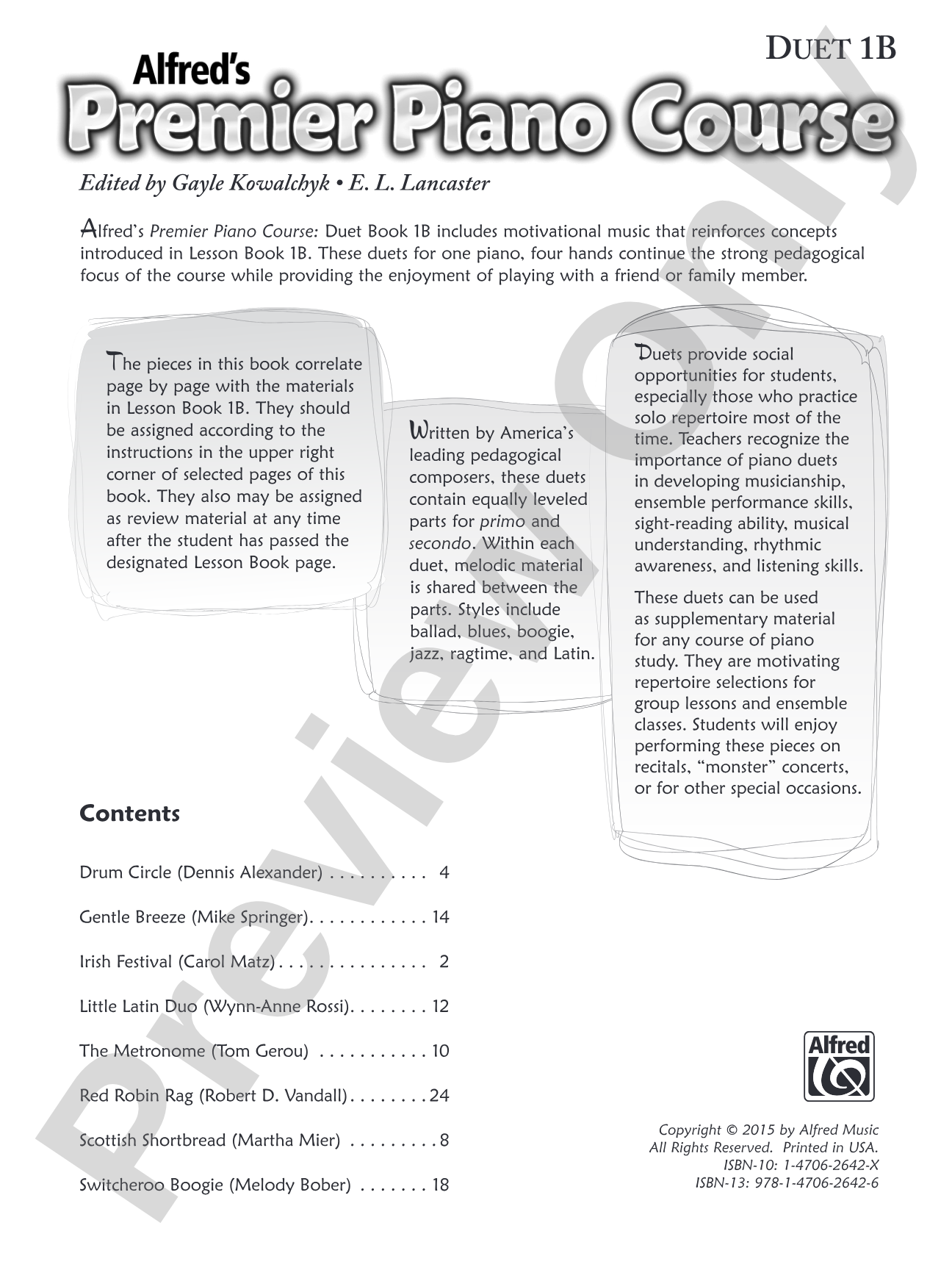
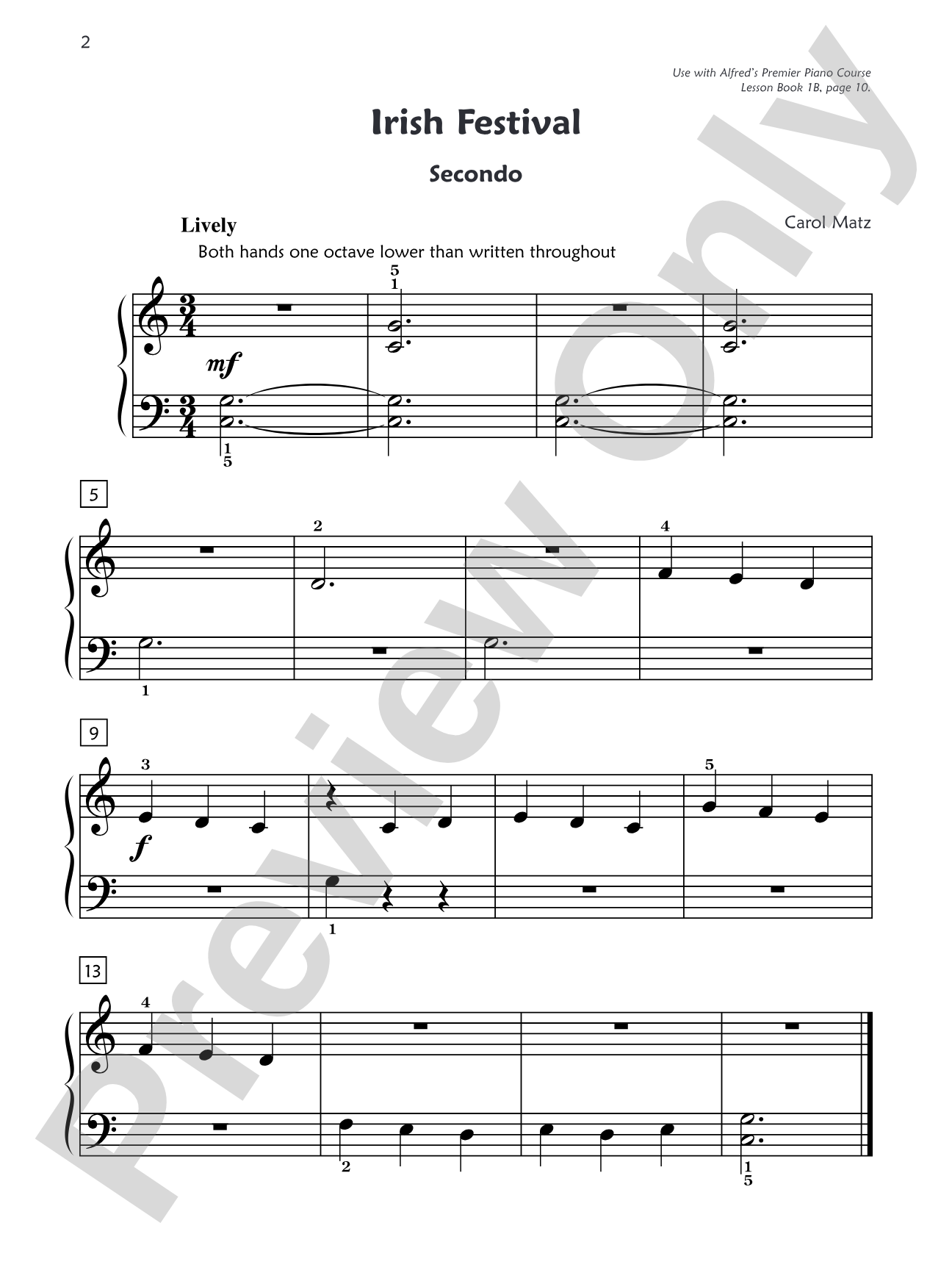
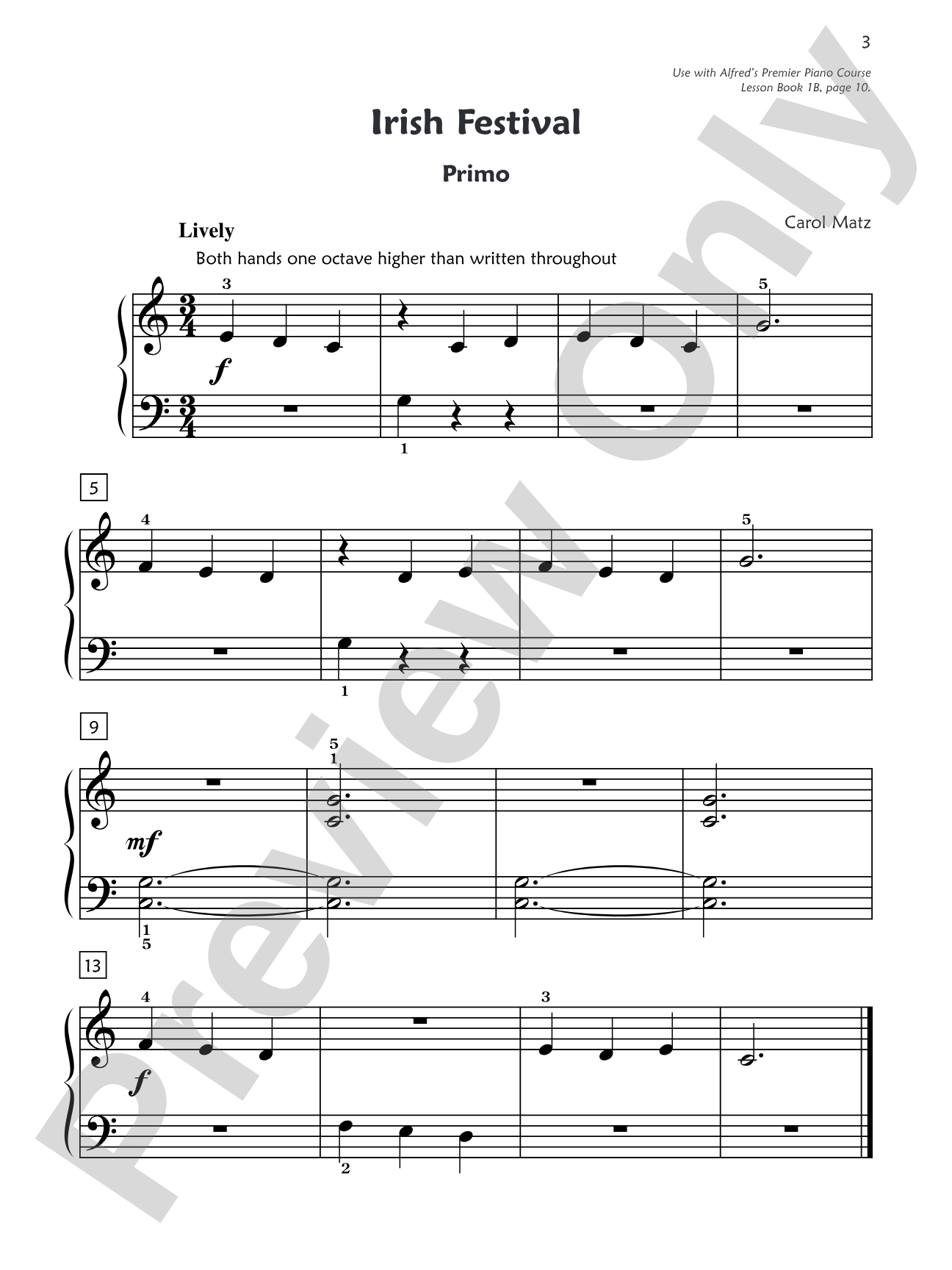
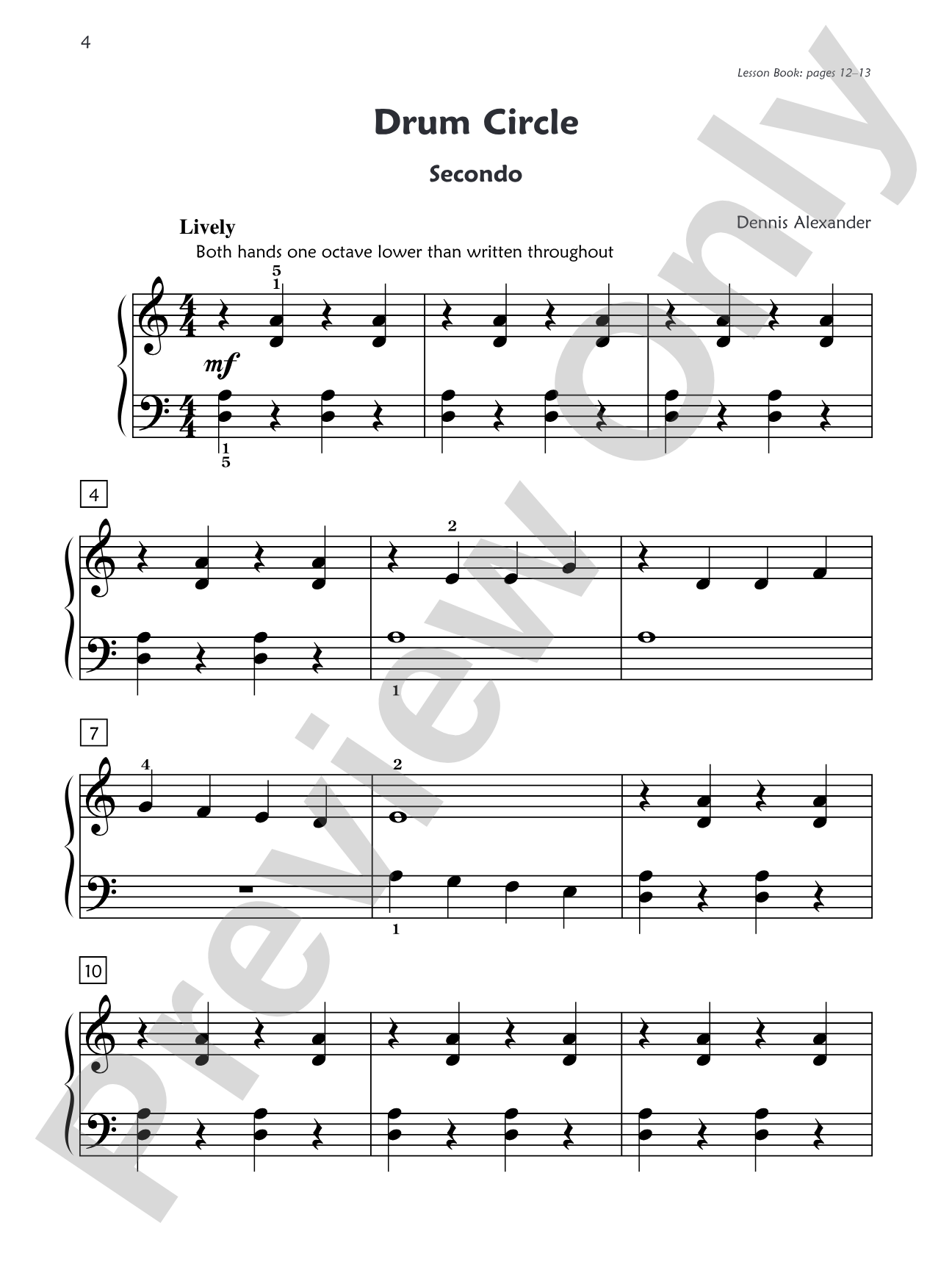
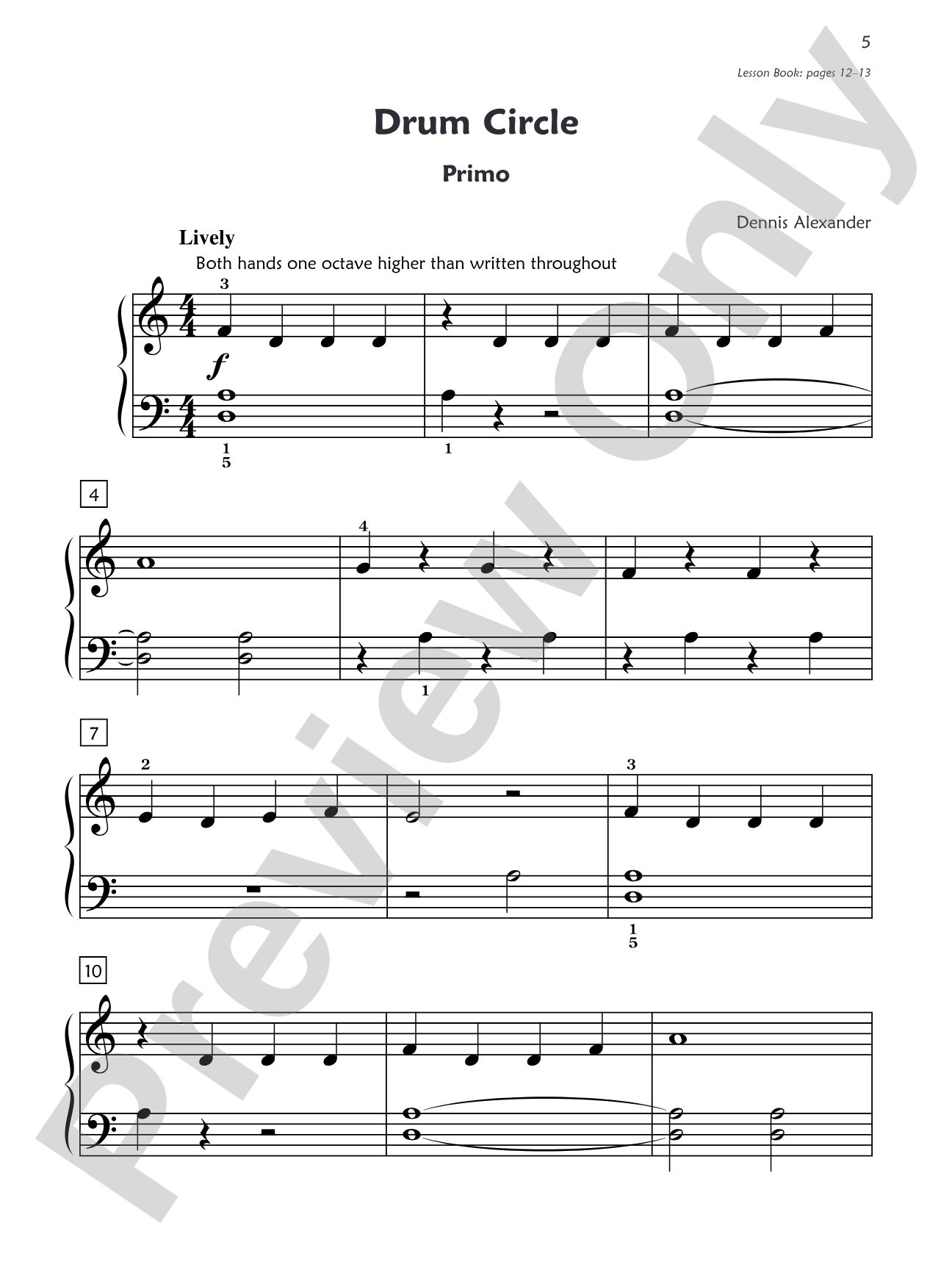
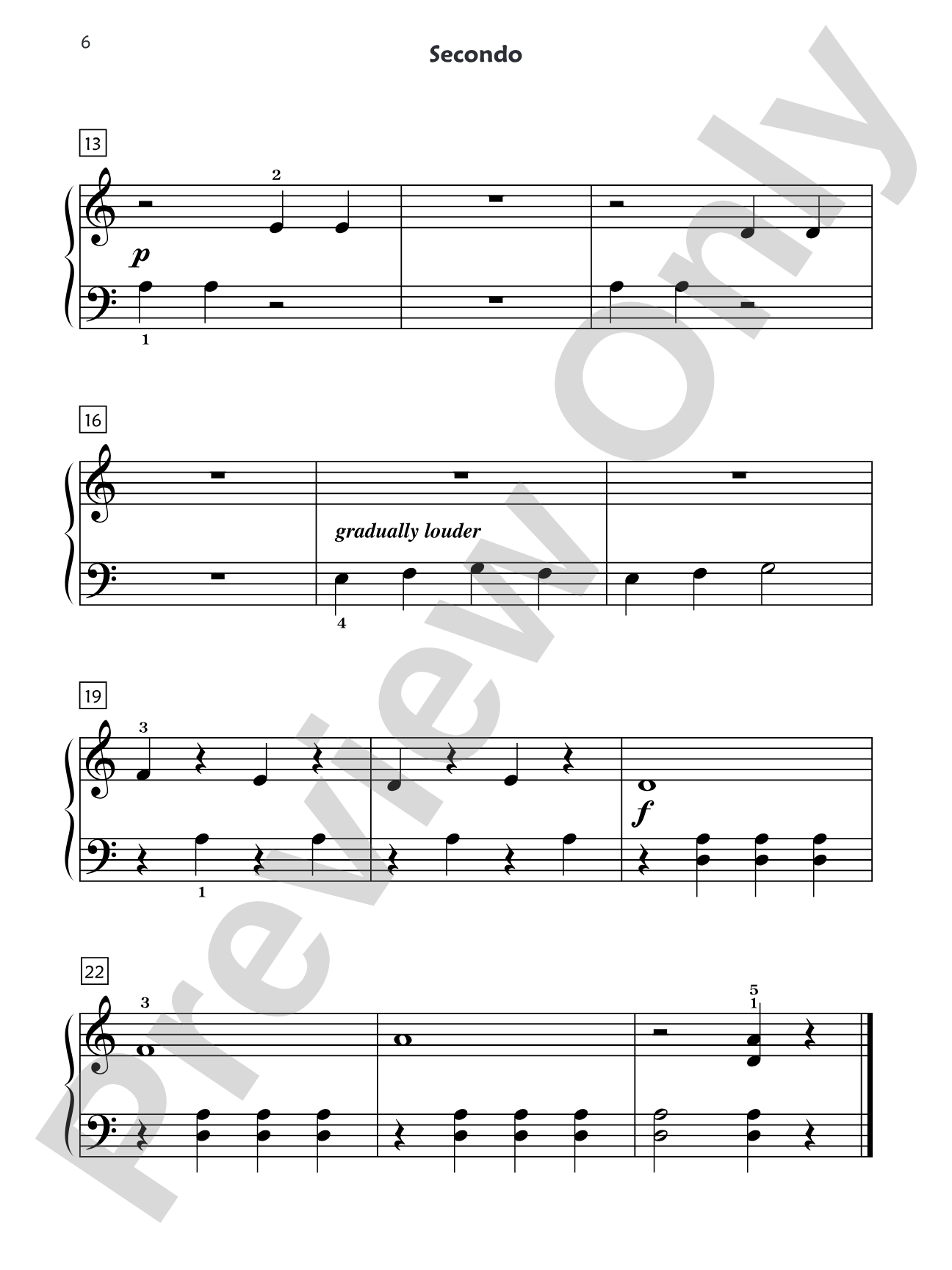
Alfred's Premier Piano Course: Duet 1B includes motivational music that reinforces concepts introduced in Lesson 1B. These duets for one piano, four hands continue the strong pedagogical focus of the course while providing the enjoyment of playing with a friend or family member. Written by America's leading pedagogical composers, these duets contain equally leveled parts for secondo and primo. Within each duet, melodic material is shared between the parts. Styles include ballad, blues, boogie, jazz, ragtime, and latin. Titles: Drum Circle (Dennis Alexander) * Gentle Breeze (Mike Springer) * Irish Festival (Carol Matz) * Little Latin Duo (Wynn-Anne Rossi) * The Metronome (Tom Gerou) * Red Robin Rag (Robert D. Vandall) * Scottish Shortbread (Martha Mier) * Switcheroo Boogie (Melody Bober). "Drum Circle," "Red Robin Rag," and "Switcheroo Boogie" are Federation Festivals 2016-2020 selections. A Federation Festivals 2020-2024 selection. A Federation Festivals 2024-2028 selection.


Premier Piano Course, Duet 1B: Piano Duets & Four Hands isn't in MakeMusic Cloud just yet...but it could be. Let us know you'd like to see it, and you'll help shape what comes next. In the meantime, start a free trial and dive into thousands of interactive titles your students can play along with today.
Request This Title
Tell us you want it.
Start Your Free Trial
Explore everything that's ready to play right now.
Sample Audio
No sample audio found.
Sample Video
No sample videos found.
Additional Details
Series:
Premier Piano Course
Publisher:
Alfred Music
Page Count:
28
SKU:
00-PB-0000555
More about this title
About the Creator
Alfred's Premier Piano Course draws from a collective of America's most respected pedagogical composers, including Dennis Alexander, Mike Springer, Carol Matz, Wynn-Anne Rossi, Tom Gerou, Robert D. Vandall, Martha Mier, and Melody Bober. Each brings decades of experience writing music that teaches without preaching, crafting pieces where technical demands and musical enjoyment develop together naturally.
These composers understand that duet playing transforms a student's relationship with music. Writing for four hands at one piano requires balancing equally interesting parts so neither player feels like an accompanist. That balance, combined with their attention to style diversity and melodic appeal, has made their work fixtures in countless studios and classrooms.
Why we love this
These duets solve the real problem of finding equally balanced four-hand music that doesn't feel like a compromise for either player. Each piece shares melodic material thoughtfully between primo and secondo, so both students stay engaged and invested in the musical outcome. The stylistic variety across blues, ragtime, Latin, and jazz gives your students genuine musical experiences rather than just technical exercises.
What to expect
Opening these pieces, you find yourself in a miniature world of genuine musical styles. From the hypnotic pulse of "Drum Circle" to the shuffle and swing of "Red Robin Rag," these duets carry the character of their genres without oversimplifying them. Playing four hands creates an immediacy and partnership that students remember long after the recital ends.
Who it's for
Students in Level 1B of the Premier Piano Course who are ready to experience ensemble playing on a single keyboard. Duet partners, whether peers in a studio or family members, benefit equally from the balanced part writing.
How to get the most out of it
- Rehearse the secondo part separately first if your student needs time to build confidence in supporting a melody they don't play. This prevents rushing or dropping the line when the primo enters.
- Establish a steady tempo during the first run-through; students often accelerate when concentrating on coordination rather than listening. Consider tapping the beat before you begin playing.
- Balance the sound so the shared melodic material remains audible no matter which hand is playing it. This requires attention from both players and creates a more polished performance.
How to use it
Program a duet from this collection as a lighter moment in a recital of solo work, or pair two students for a final ensemble piece that celebrates their progress together. These selections also work well in a pedagogical showcase where you're demonstrating how your teaching material flows from lesson to performance.
Skills your students will build
- Coordinating rhythmic entries and cutoffs with a partner
- Listening and balancing two independent parts at the same dynamic level
- Reading and performing within multiple style contexts (blues, ragtime, Latin, jazz, ballad)
- Sustaining focus on a supporting part while the other hand carries melody
- Responding to harmonic and melodic cues from a partner rather than relying solely on the score