
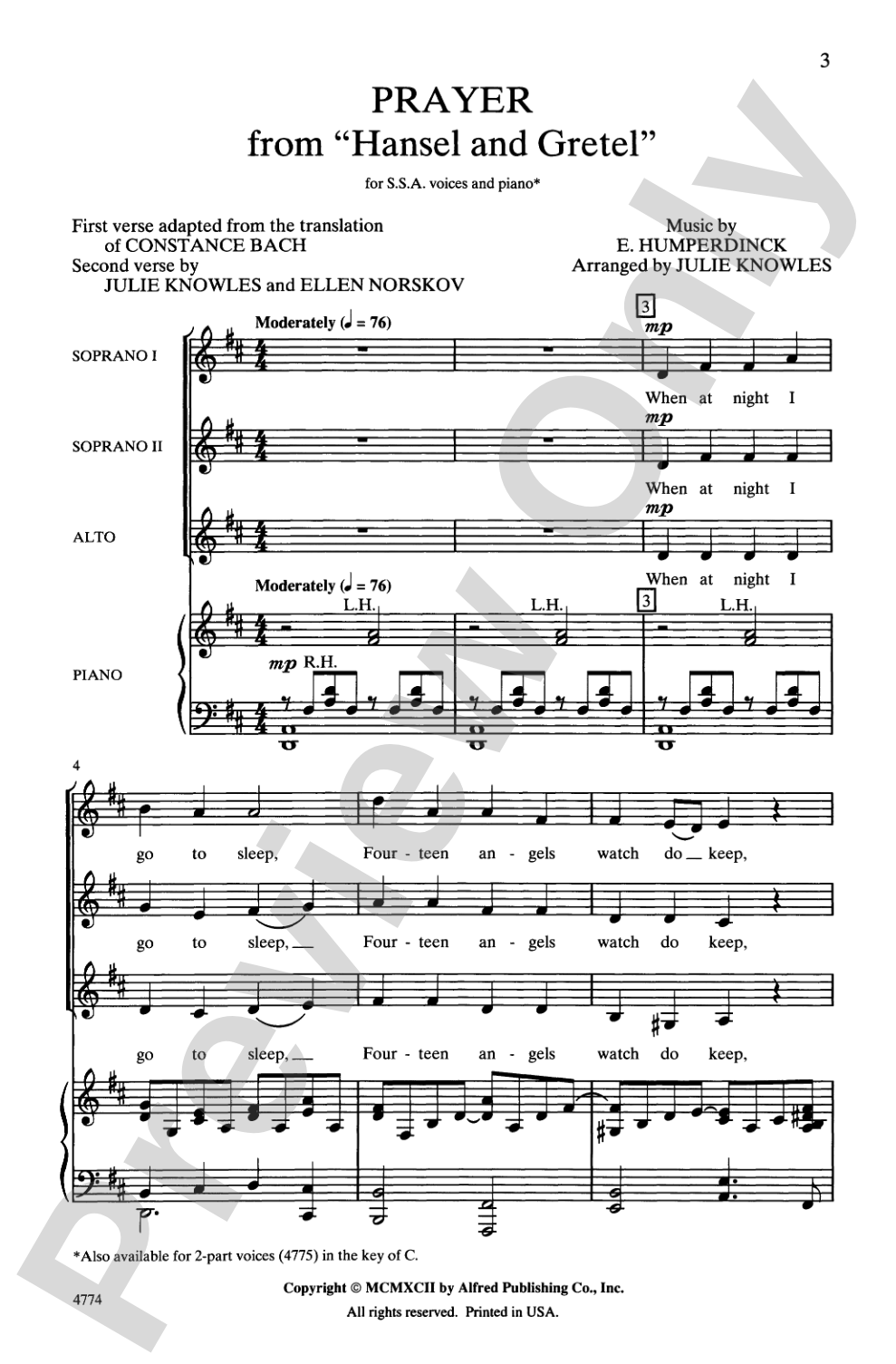
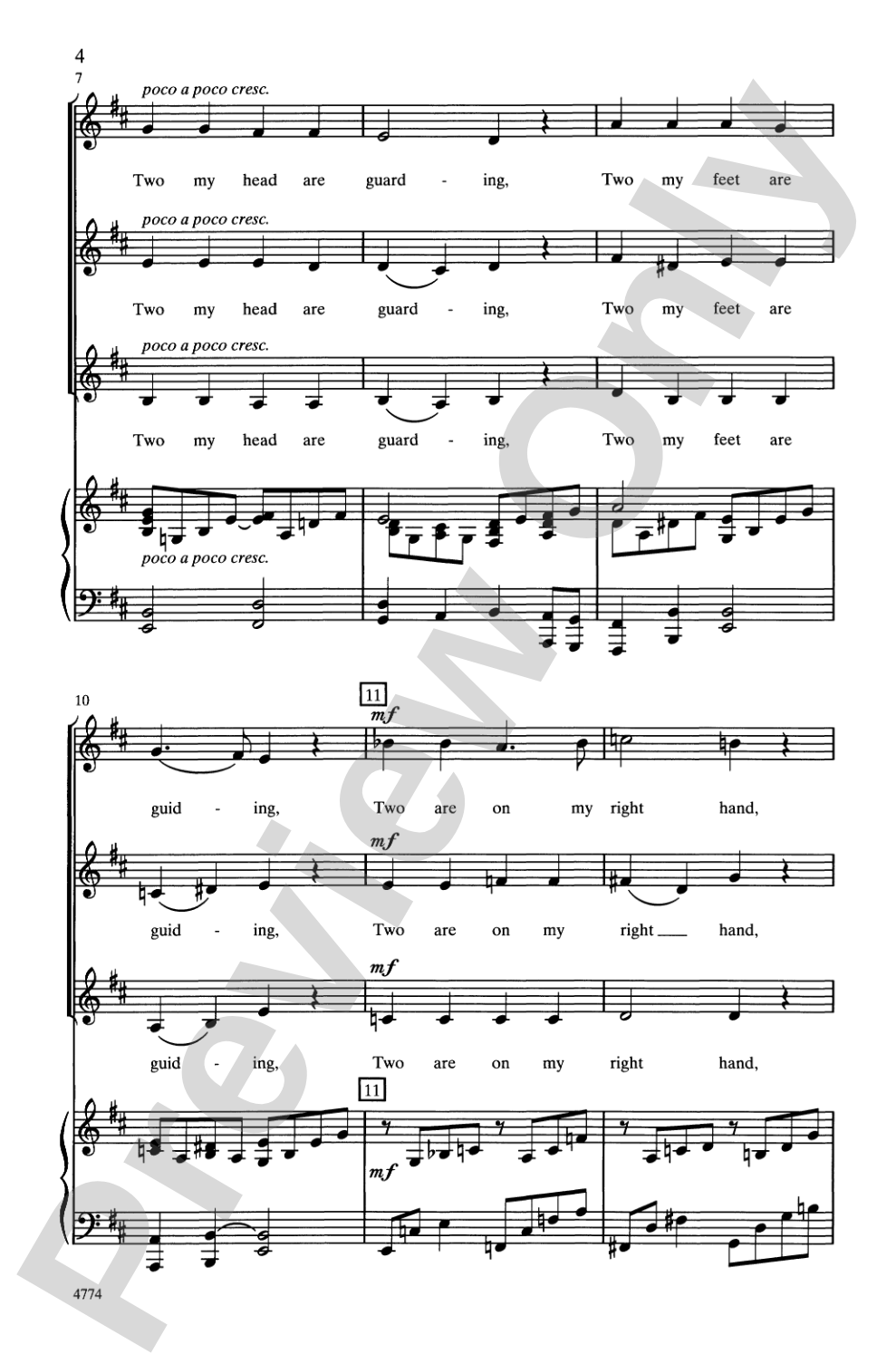

Prayer from Hansel and Gretel: SSA Choral Octavo
From Hansel and Gretel
Music by Engelbert Humperdinck / arr. Julie Knowles
Item: 00-PO-0004456
$2.25
Minimum order quantity: 20 copies
Pickup currently not available
Description
It's the well-known Humperdinck prayer from "Hansel and Gretel" with a new and touching second verse. This outstanding Julie Knowles arrangement now makes this beloved classic accessible for treble choirs. The piano accompaniment is gorgeous. Prayer is destined to become a choral standard.


Prayer from Hansel and Gretel: SSA Choral Octavo isn't in MakeMusic Cloud just yet...but it could be. Let us know you'd like to see it, and you'll help shape what comes next. In the meantime, start a free trial and dive into thousands of interactive titles your students can play along with today.
Request This Title
Tell us you want it.
Start Your Free Trial
Explore everything that's ready to play right now.
Sample Audio
1
Audio File
--:--
0:00
0:00
Sample Video
No sample videos found.
Additional Details
Series:
Alfred Archive Edition: Alfred Choral Designs
Publisher:
Alfred Music
Page Count:
12
SKU:
00-PO-0004456
More about this title
About the Composer: Engelbert Humperdinck
Engelbert Humperdinck (1854-1921) was a German composer who revolutionized opera by treating fairy tales as worthy subjects for sophisticated musical treatment. His opera "Hansel and Gretel," first performed in 1893, stands as one of the most frequently staged operas worldwide and remains a cornerstone of music education repertoire.
Humperdinck's gift lay in crafting melodies that lodge instantly in memory while supporting them with rich harmonic language and orchestration. The prayer from "Hansel and Gretel" exemplifies his ability to create profound spiritual moments within narrative contexts, making it an ideal text for choral musicians learning to balance emotional depth with technical control.
Why we love this
Julie Knowles's arrangement brings this Romantic masterwork into the treble choir repertoire with genuine artistry rather than oversimplification. The addition of a second verse deepens the devotional character while the lush piano writing gives accompanists material worthy of serious musicians. Choirs seeking a piece that reads as both accessible and substantial will find exactly that here.
What to expect
The music embodies quiet faith and childhood vulnerability set against Romantic-era harmonic richness. Humperdinck's original melody carries an almost hymn-like simplicity, yet Knowles's arrangement surrounds it with sophisticated piano writing that creates an intimate, reverent atmosphere.
Who it's for
Treble choirs at the intermediate to advanced level will find this arrangement both singable and musically rewarding. It works equally well for middle school advanced groups, high school treble sections, and adult women's choirs seeking repertoire with theatrical roots and spiritual substance.
How to get the most out of it
- Shape the melody with awareness of its hymn-like origins; this is prayer music, and your phrasing should reflect genuine spiritual intention rather than theatrical drama.
- Balance the SSA voicing so that the melody voice projects clearly without the inner voices receding into transparency; all three lines carry musical weight.
- Collaborate closely with your pianist during rehearsals to establish how the accompaniment's gorgeous textures should breathe; this is a true partnership, not keyboard padding.
- Approach the second verse as a deepening of the prayer rather than a new thought; your dynamic choices should build naturally from the first verse.
How to use it
Program this as a centerpiece for a sacred or holiday concert, where its narrative connection to a beloved opera and its deeply spiritual character will resonate with audiences. It also pairs naturally with other Romantic-era choral works or as a thoughtful contrast to lighter seasonal repertoire.
Skills your students will build
- Singing sustained, legit vocal lines with proper breath support across longer phrases
- Balancing three-part harmony where the accompanimental voices require as much care as the melody
- Interpreting text musically through prayer and introspection rather than theatrical expression
- Responding to piano accompaniment that is compositionally integrated, not merely supportive