
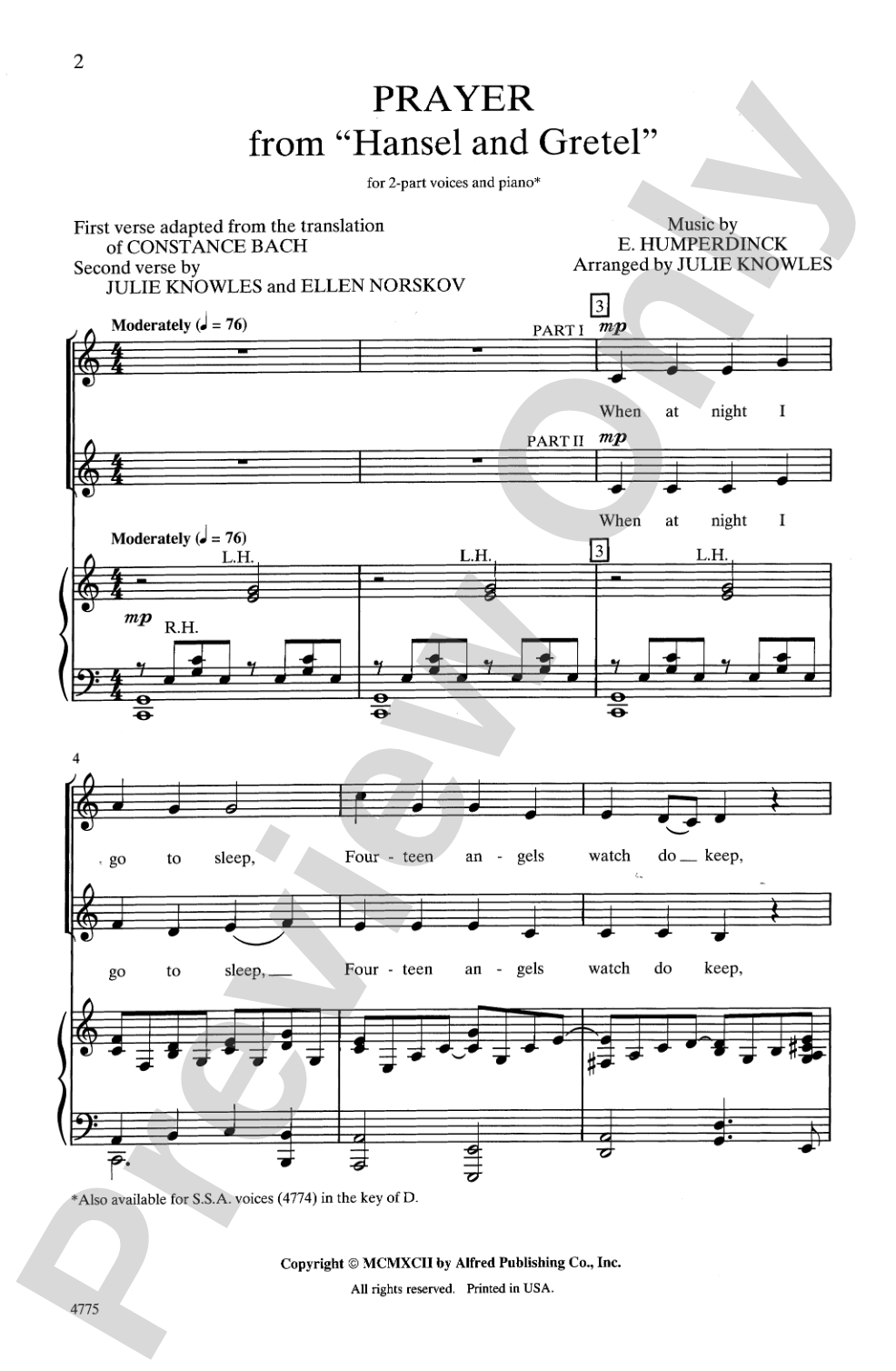

Prayer from Hansel and Gretel: 2-Part Choral Octavo
From Hansel and Gretel
Music by Engelbert Humperdinck / arr. Julie Knowles
Item: 00-PO-0002454
$2.25
Minimum order quantity: 20 copies
Pickup currently not available
Description
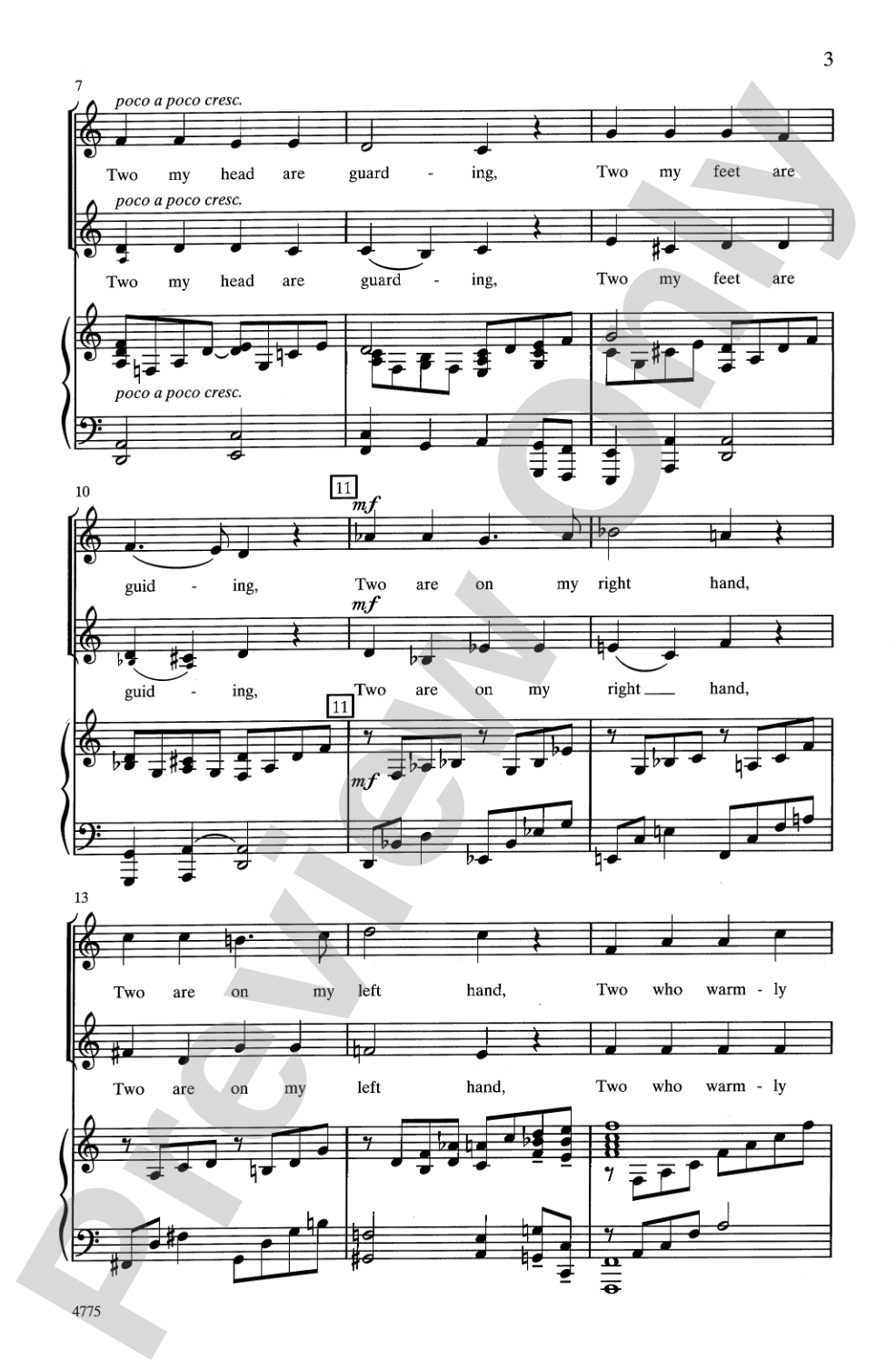
It's the well-known Humperdinck prayer from "Hansel and Gretel" with a new and touching second verse. This outstanding Julie Knowles arrangement now makes this beloved classic accessible for treble choirs. The piano accompaniment is gorgeous. Prayer is destined to become a choral standard.


Prayer from Hansel and Gretel: 2-Part Choral Octavo isn't in MakeMusic Cloud just yet...but it could be. Let us know you'd like to see it, and you'll help shape what comes next. In the meantime, start a free trial and dive into thousands of interactive titles your students can play along with today.
Request This Title
Tell us you want it.
Start Your Free Trial
Explore everything that's ready to play right now.
Sample Audio
1
Audio File
--:--
0:00
0:00
Sample Video
No sample videos found.
Additional Details
Series:
Alfred Archive Edition: Alfred Choral Designs
Publisher:
Alfred Music
Page Count:
8
SKU:
00-PO-0002454
More about this title
About the Composer: Engelbert Humperdinck
Engelbert Humperdinck (1854-1921) was a German composer whose gift for melody and theatrical storytelling made him one of the most performed operatic voices of his era. His opera "Hansel and Gretel," premiered in 1893, transformed a fairy tale into a masterwork by blending Wagnerian orchestration with folk-like simplicity and memorable, singable lines. The work remains a staple of international opera houses and has introduced countless listeners to classical music through its warmth and accessibility.
For music educators, Humperdinck's legacy lives in moments like the prayer from "Hansel and Gretel." The melody's combination of emotional depth and straightforward vocal writing makes it ideal for teaching choral music that matters. His ability to write for voices across ranges and ages, without sacrificing artistic substance, demonstrates why his work endures in both professional and educational settings.
Why we love this
Julie Knowles's arrangement opens this beloved prayer to treble choirs without diluting its emotional power. The addition of a second verse deepens the piece while maintaining Humperdinck's gift for melody, and the piano part stands on its own as genuinely beautiful accompaniment rather than a simple harmonic support. Choirs at this level rarely encounter repertoire this musically substantial.
What to expect
The prayer carries a sense of quiet hopefulness, with the melody sitting comfortably in the voice while the second part weaves in supportive harmony. There's an intimacy here, as if the singers are sharing a moment of earnest devotion rather than performing for an audience. The lush piano accompaniment wraps around the voices, creating a warm, enveloping sound.
Who it's for
Treble choirs at the middle school, high school, or small college level will find this arrangement exactly right. It's equally suited for church choirs seeking accessible sacred repertoire with real musical substance. Any director programming a concert that calls for something familiar yet fresh will benefit from what this arrangement offers.
How to get the most out of it
- Balance the two parts so the melody carries clearly while the second part enriches the harmonic foundation; avoid letting either voice recede into accompaniment.
- Shape the phrases through the text rather than by breathing at every barline; this creates the legit prayer-like quality the piece demands.
- Work closely with your pianist on the relationship between vocal parts and piano texture; the accompaniment breathes with the choir, not against it.
- Approach dynamics conservatively at first, then build interpretive choices after the parts are secure; this piece's power comes from simplicity, not from singing loudly.
How to use it
Pair this with other Romantic-era repertoire to create a thematic concert section, or use it as a bridge piece between secular and sacred programming. Its familiarity makes it effective as an encore or as a closing piece for a concert emphasizing comfort and connection. It also works beautifully in festival contexts, where judges and audiences recognize both the source material and the fresh arrangement.
Skills your students will build
- Singing sustained legit lines in a choral context
- Balancing two-part harmony where both voices carry equal musical importance
- Interpreting lyrical phrasing through text rather than resting on dynamic contrast
- Blending tone production while maintaining individual part clarity