

Practicing Our Solfeggio: 2-Part Choral Octavo
Words and music by Glenda E. Franklin
Item: 00-PO-0007588
$2.20
Minimum order quantity: 20 copies
Pickup currently not available
Description
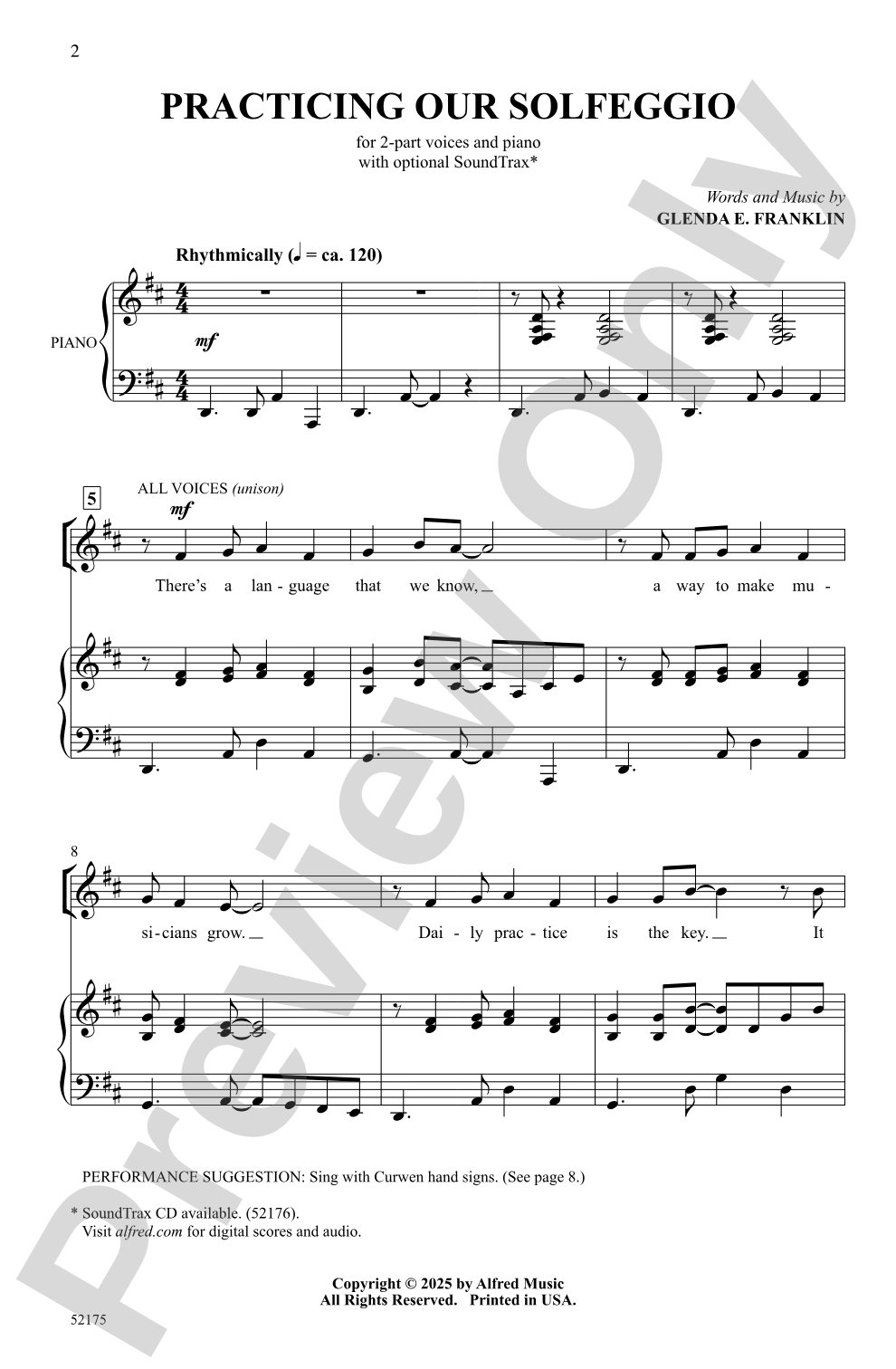
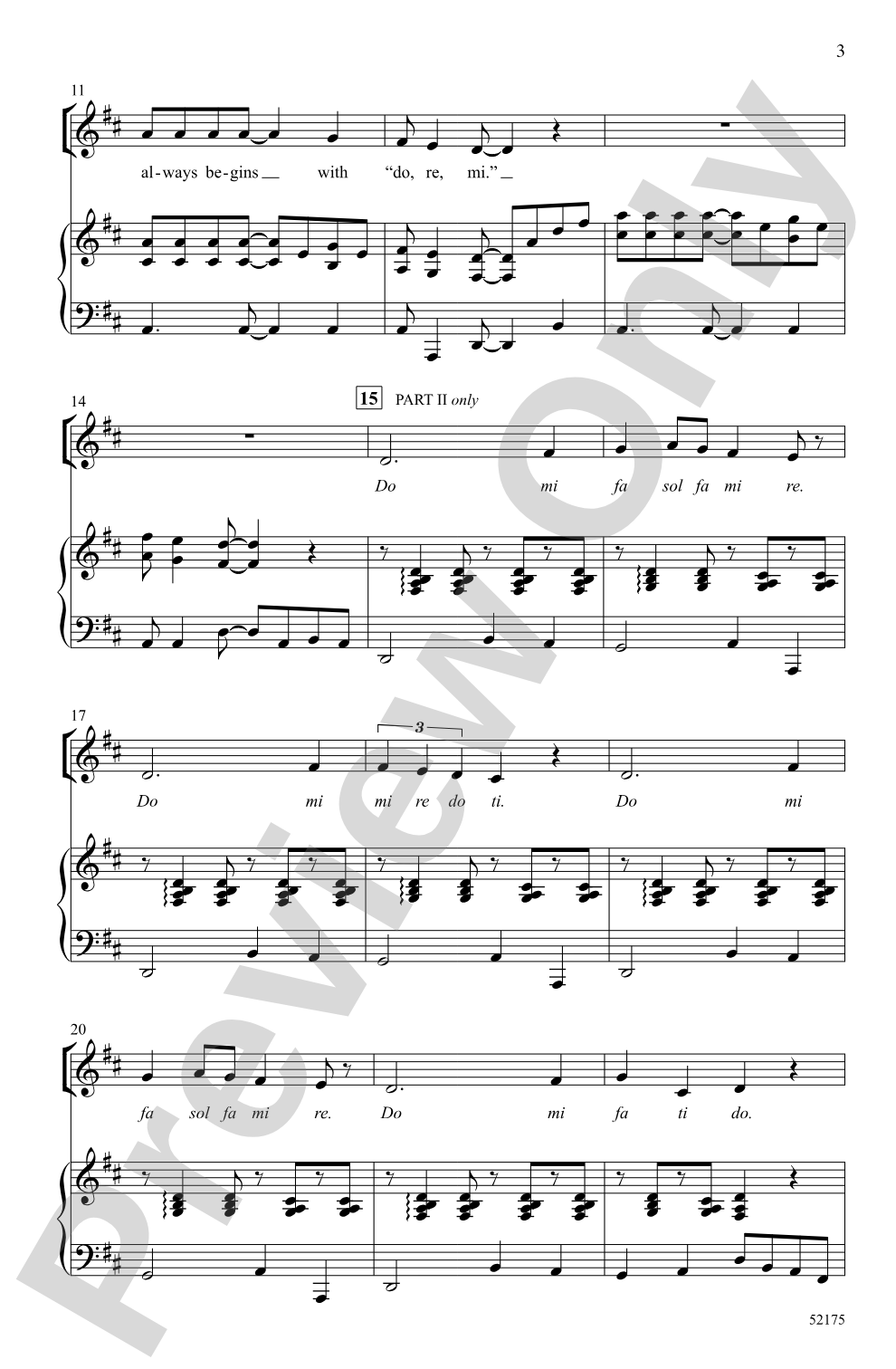
Music class is in session. Two bright melodies (sung on pitch syllables) are presented in unison before combining into a partner song. Additional lyrics remind singers that "daily practice is the key" to learning solfège. A rhythmic accompaniment supports young singers and a key change on the last chorus adds a lift. Practice and perform with Curwen hand signs!


Practicing Our Solfeggio: 2-Part Choral Octavo isn't in MakeMusic Cloud just yet...but it could be. Let us know you'd like to see it, and you'll help shape what comes next. In the meantime, start a free trial and dive into thousands of interactive titles your students can play along with today.
Request This Title
Tell us you want it.
Start Your Free Trial
Explore everything that's ready to play right now.
Sample Audio
1
Audio File
--:--
0:00
0:00
Sample Video
Additional Details
Series:
Alfred Choral Designs
Publisher:
Alfred Music
Page Count:
8
SKU:
00-PO-0007588
More about this title
Why we love this
Franklin builds reinforcement and confidence into the learning process itself. Young singers encounter solfège through musical experience rather than abstract drill, and the partner song structure keeps voices engaged while they're building ear training skills. The key change on the final chorus gives students a tangible sense of achievement and surprises the ear right when energy might dip.
What to expect
Bright, purposeful, and genuinely encouraging. The melodies are accessible and singable, moving without straining young voices. There's a celebratory quality to the arrangement that reflects the piece's message: learning music requires practice, but practice itself can be musical and fun. The key change lands with uplift, giving singers the experience of how a simple harmonic shift can refresh momentum.
Who it's for
Elementary and middle school choirs learning to sing on solfège syllables with accuracy and joy. This piece works for general music classes where solfège instruction is part of the curriculum, as well as beginning choir ensembles ready to sing in parts while reinforcing foundational ear training.
How to get the most out of it
- Teach the unison melody first so all singers own the solfège syllables securely before attempting the two-part combination.
- Integrate Curwen hand signs from the start of rehearsal, especially for the key change section where visual landmarks help singers track the shift.
- Shape the rhythmic accompaniment so it supports without overwhelming; young singers need its harmonic anchor more than they need textural complexity.
- Use the recorded accompaniment in early rehearsals to establish tempo and part security, then gradually reduce dependency as singers gain confidence.
How to use it
Program this as a concert opener or an inter-piece energizer where you want to highlight your choir's growth in musicianship and ear training. It also works powerfully in a family concert context where parents hear concrete evidence of what their children are learning in music class. The explicit message about daily practice makes it a natural fit after a rehearsal milestone or before a formal performance season begins.
Skills your students will build
- Accurate pitch singing using solfège syllables (do, re, mi, fa, sol, la, ti, do)
- Two-part singing and part independence
- Response to Curwen hand signs for visual pitch reinforcement
- Recognition and execution of key changes
- Ensemble blend and intonation in partner song texture