
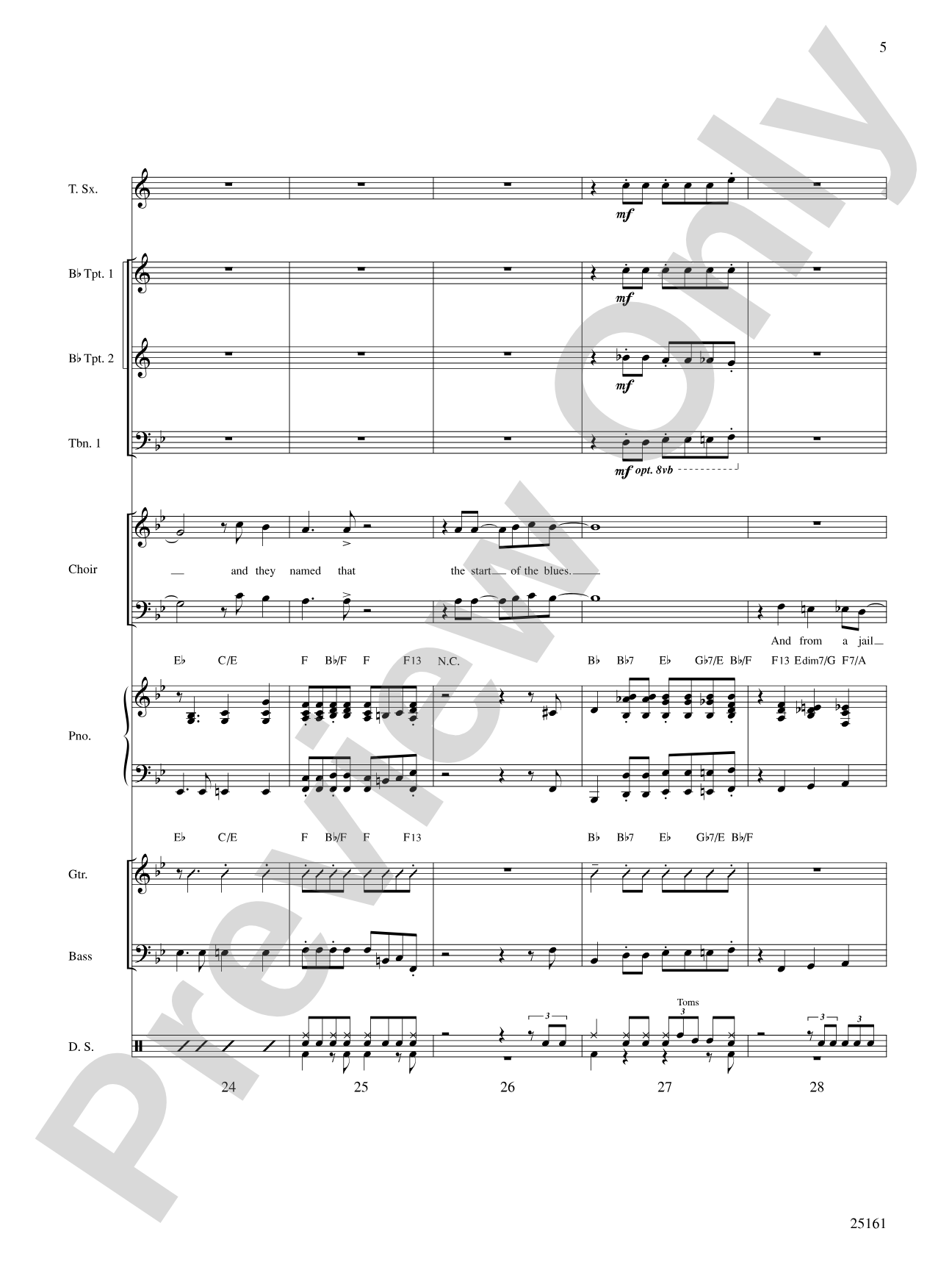
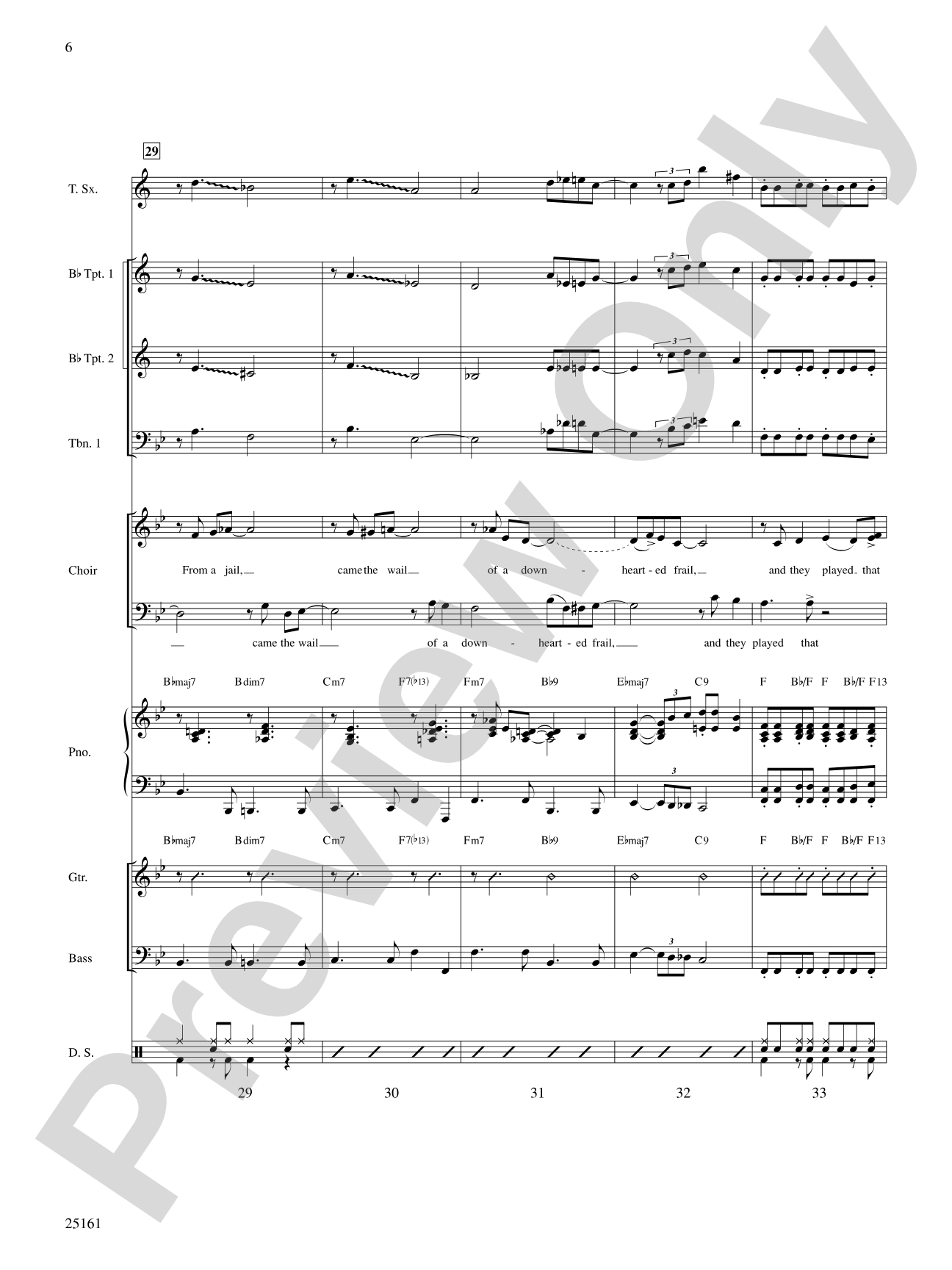
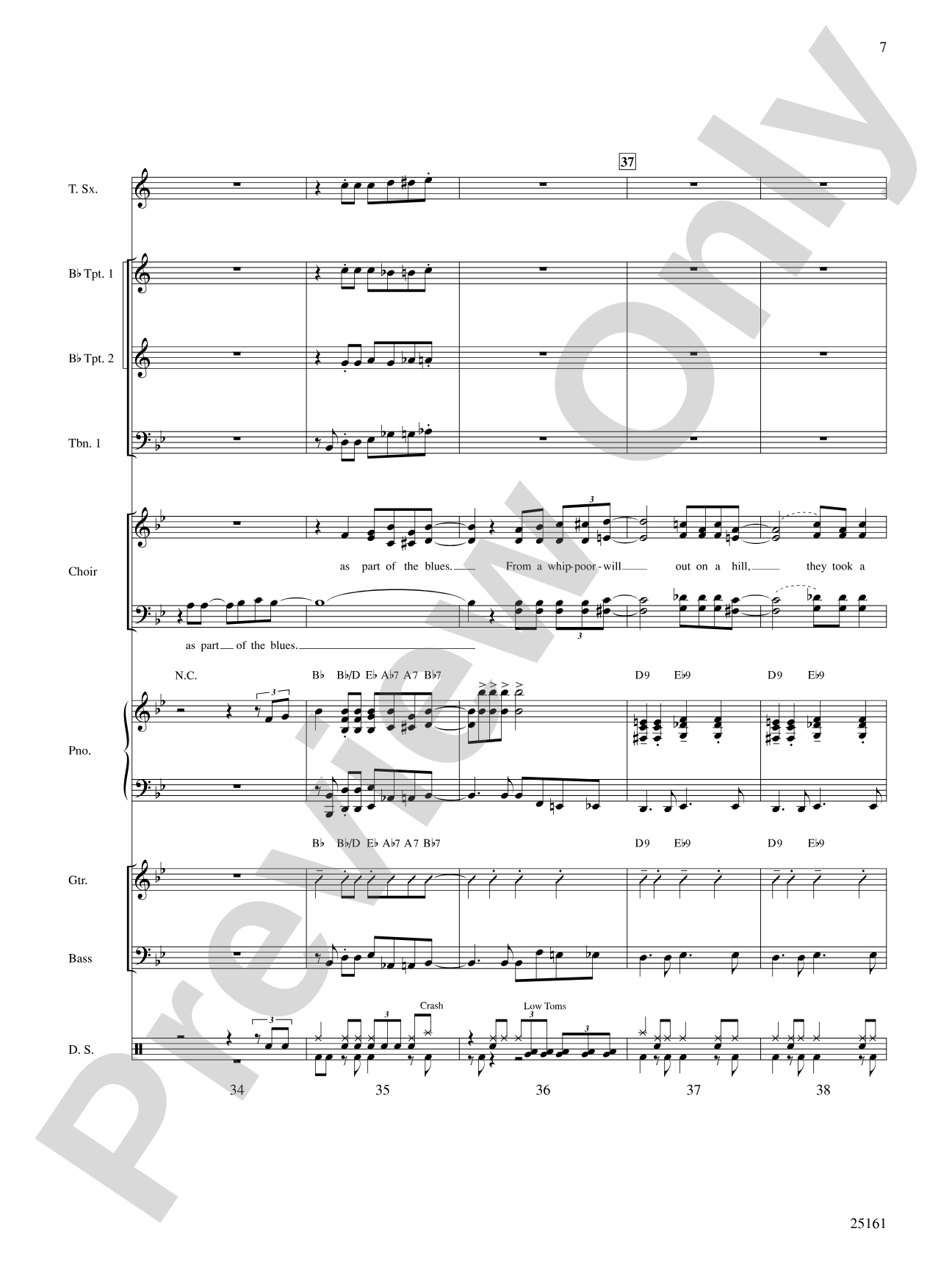
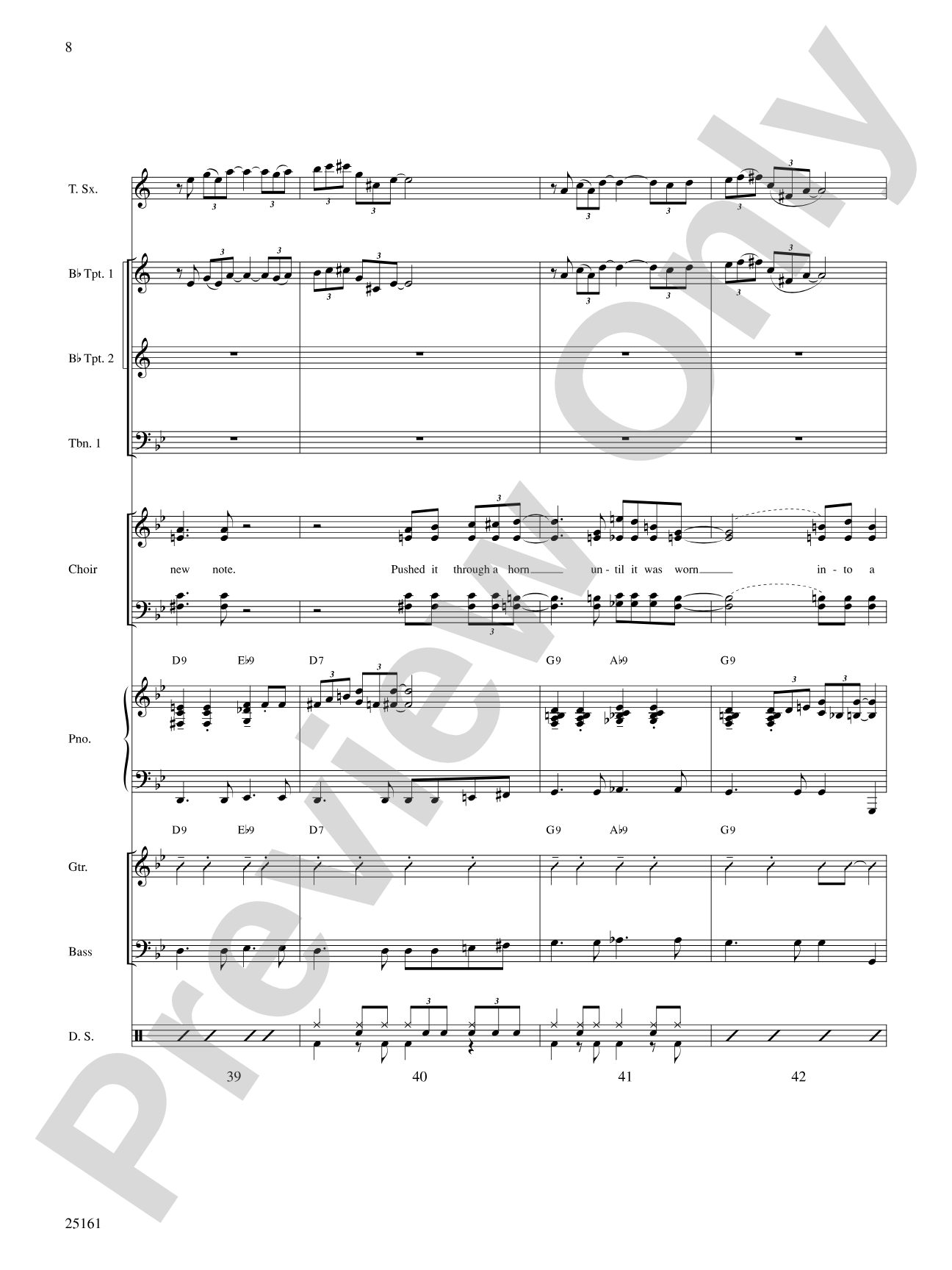
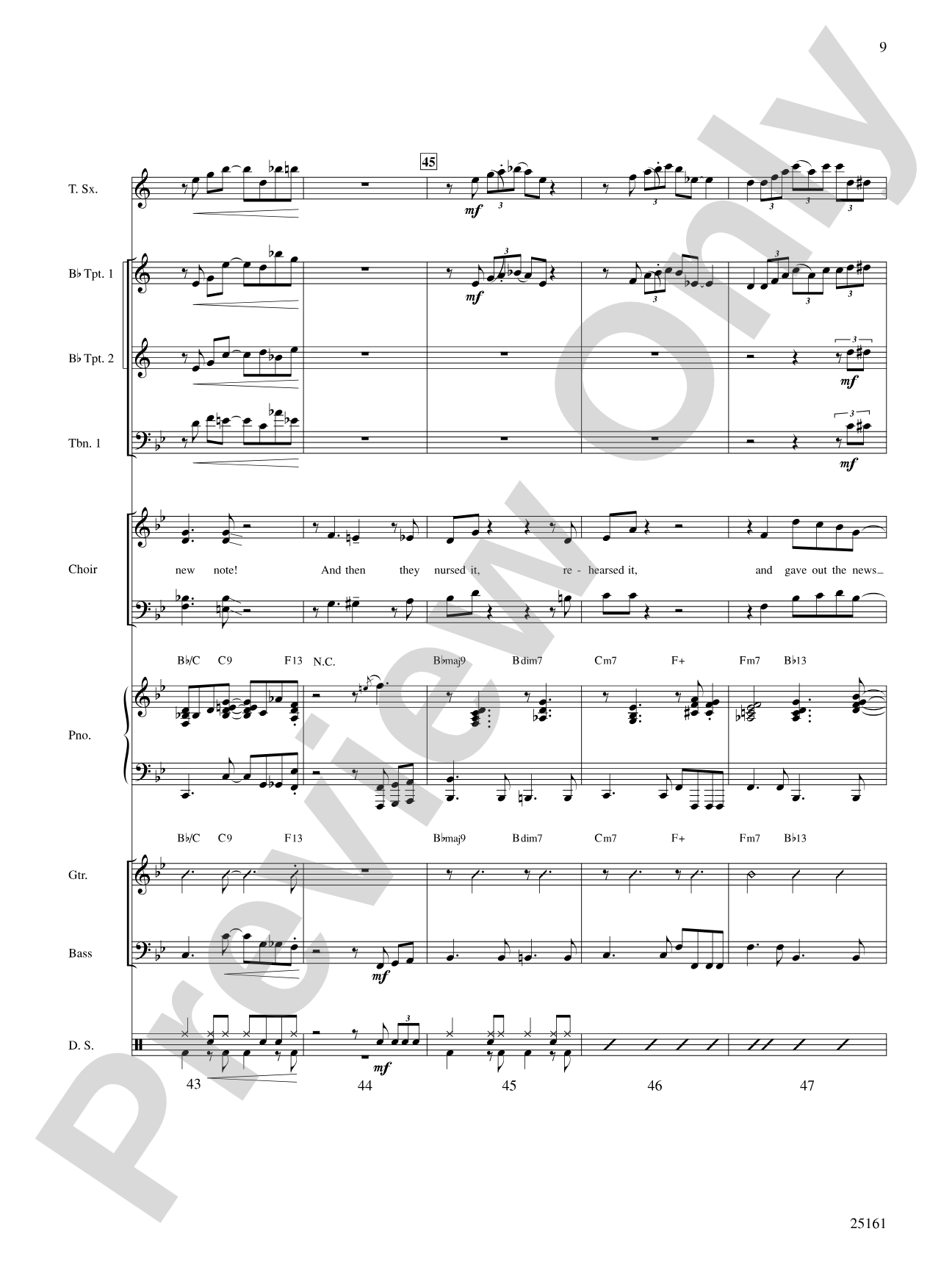
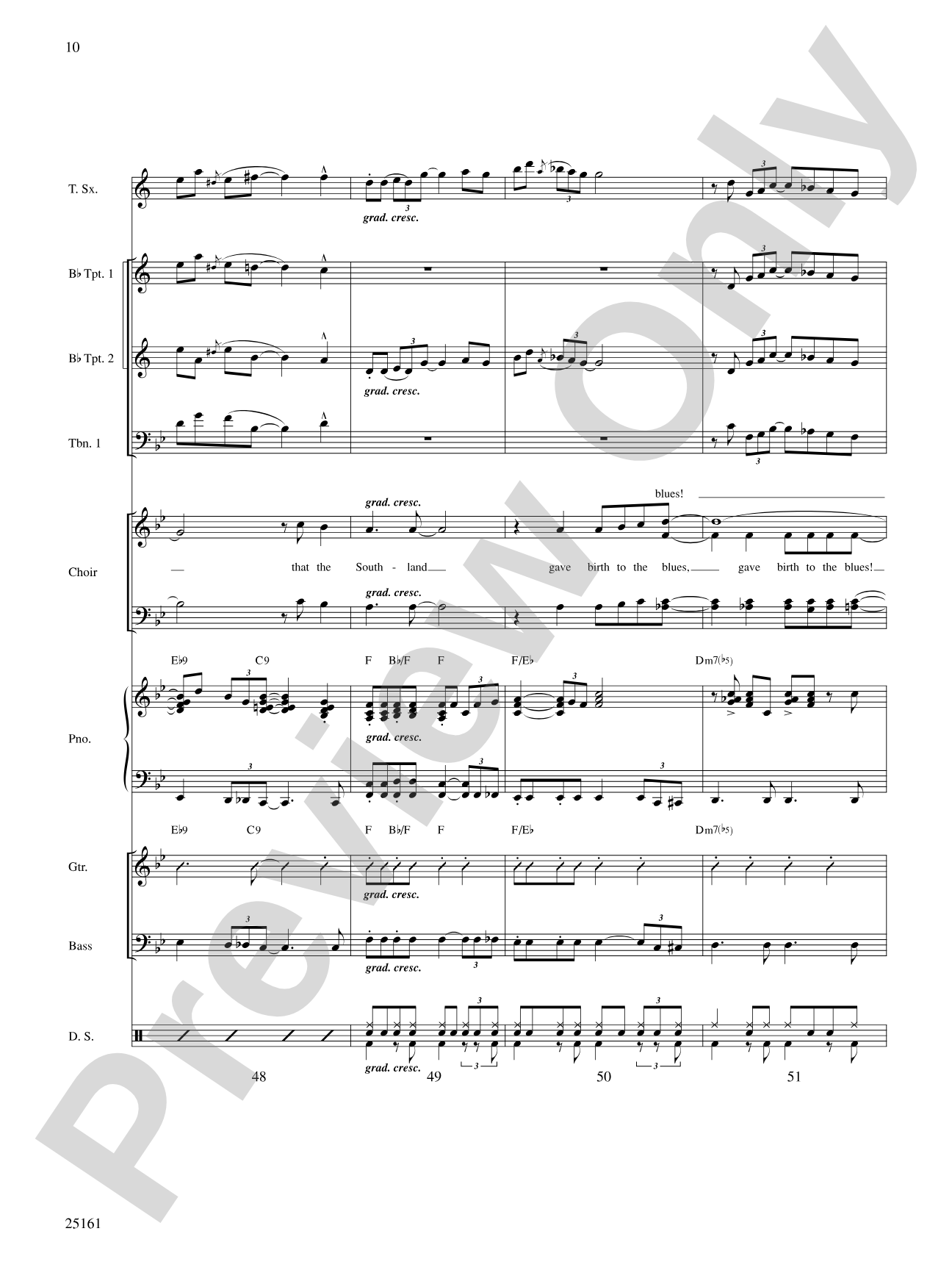
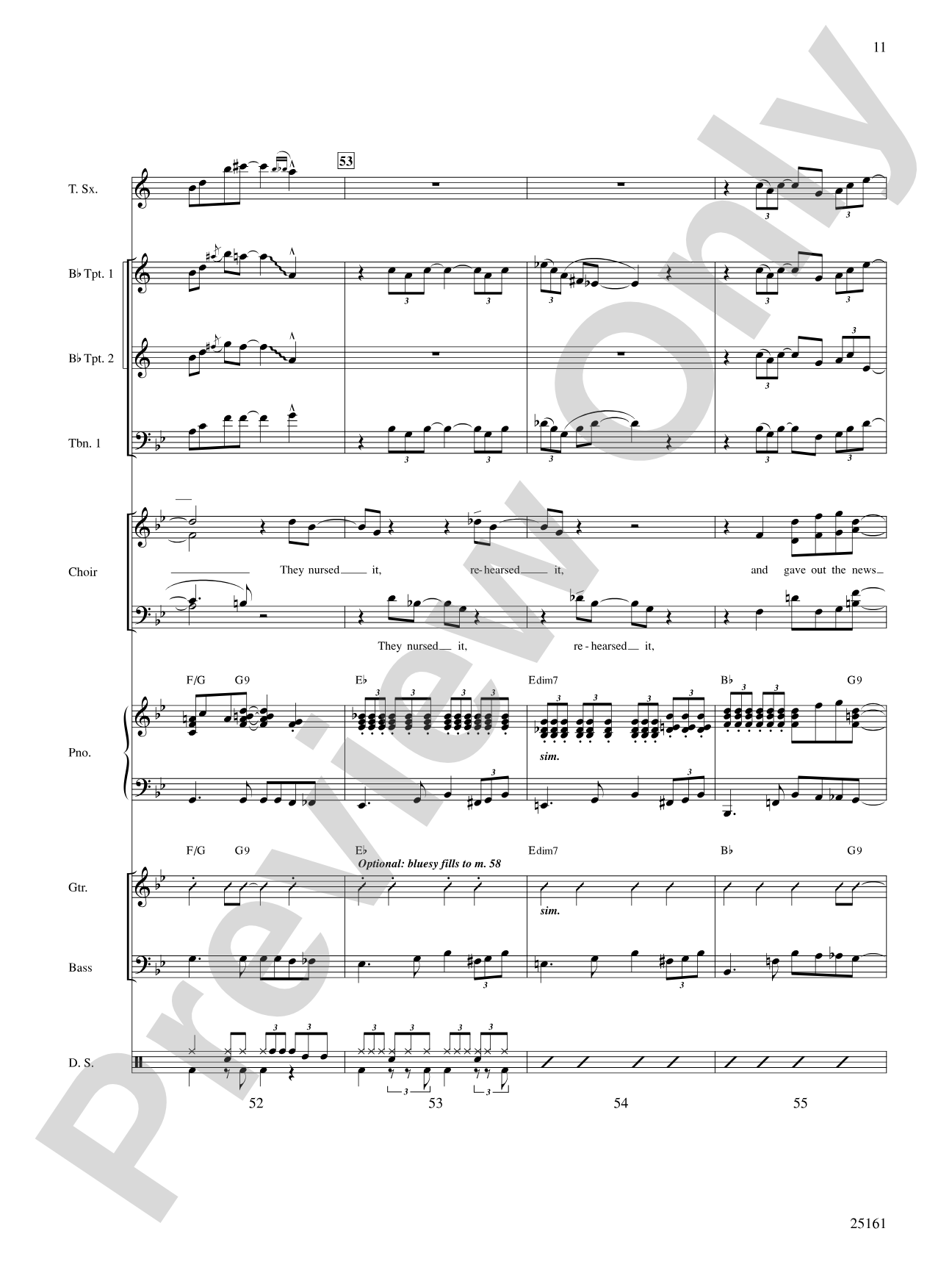
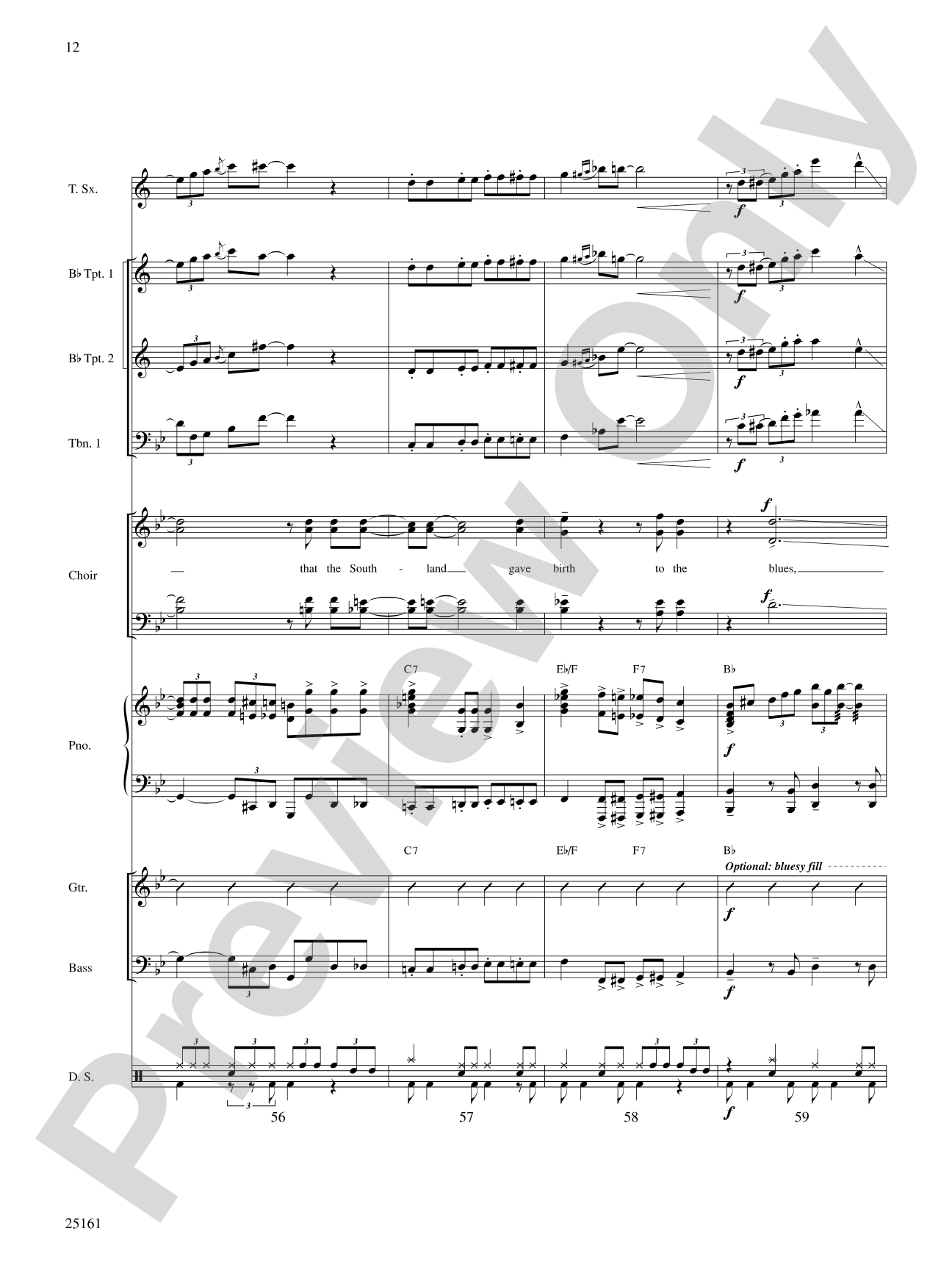
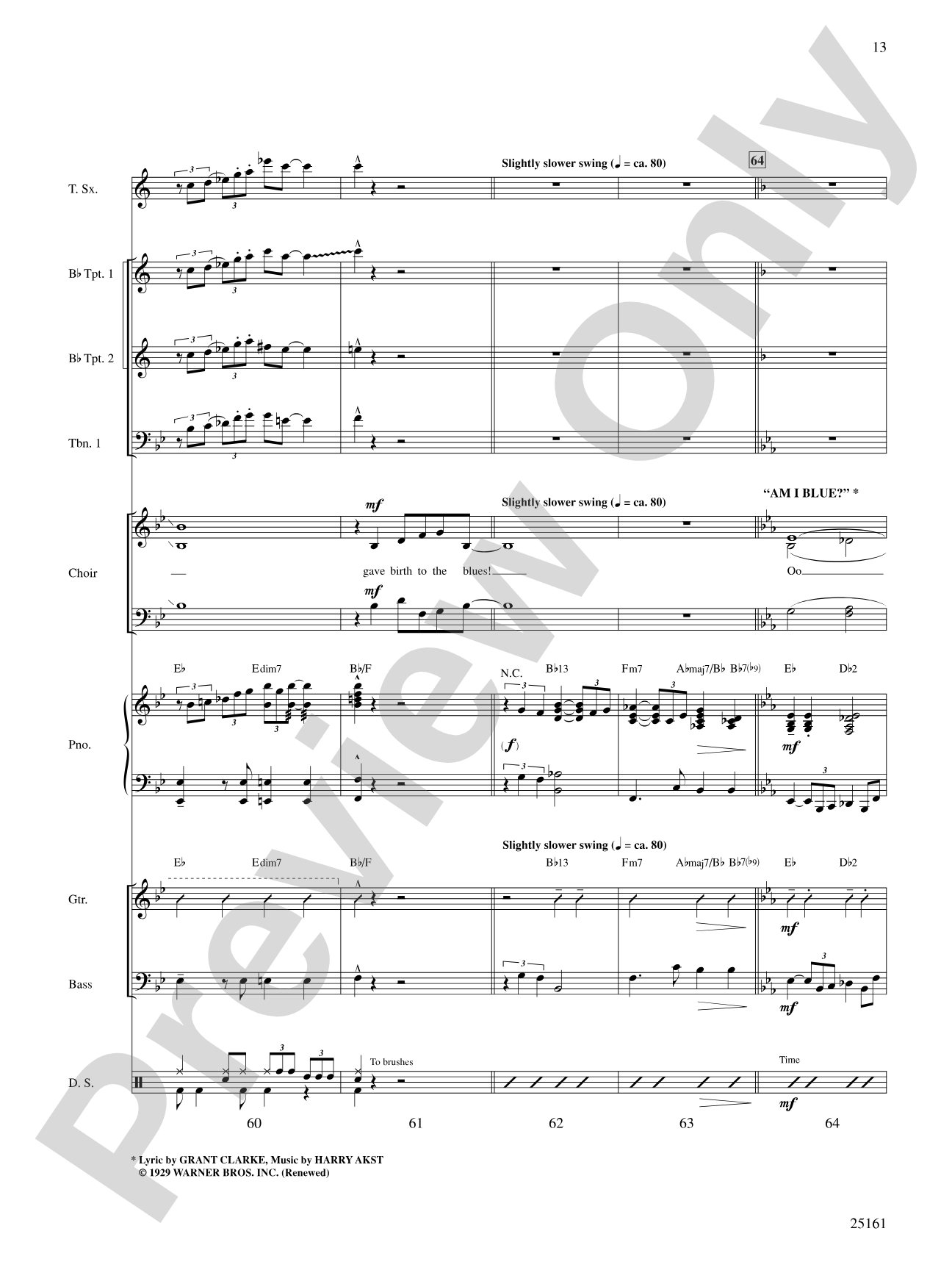
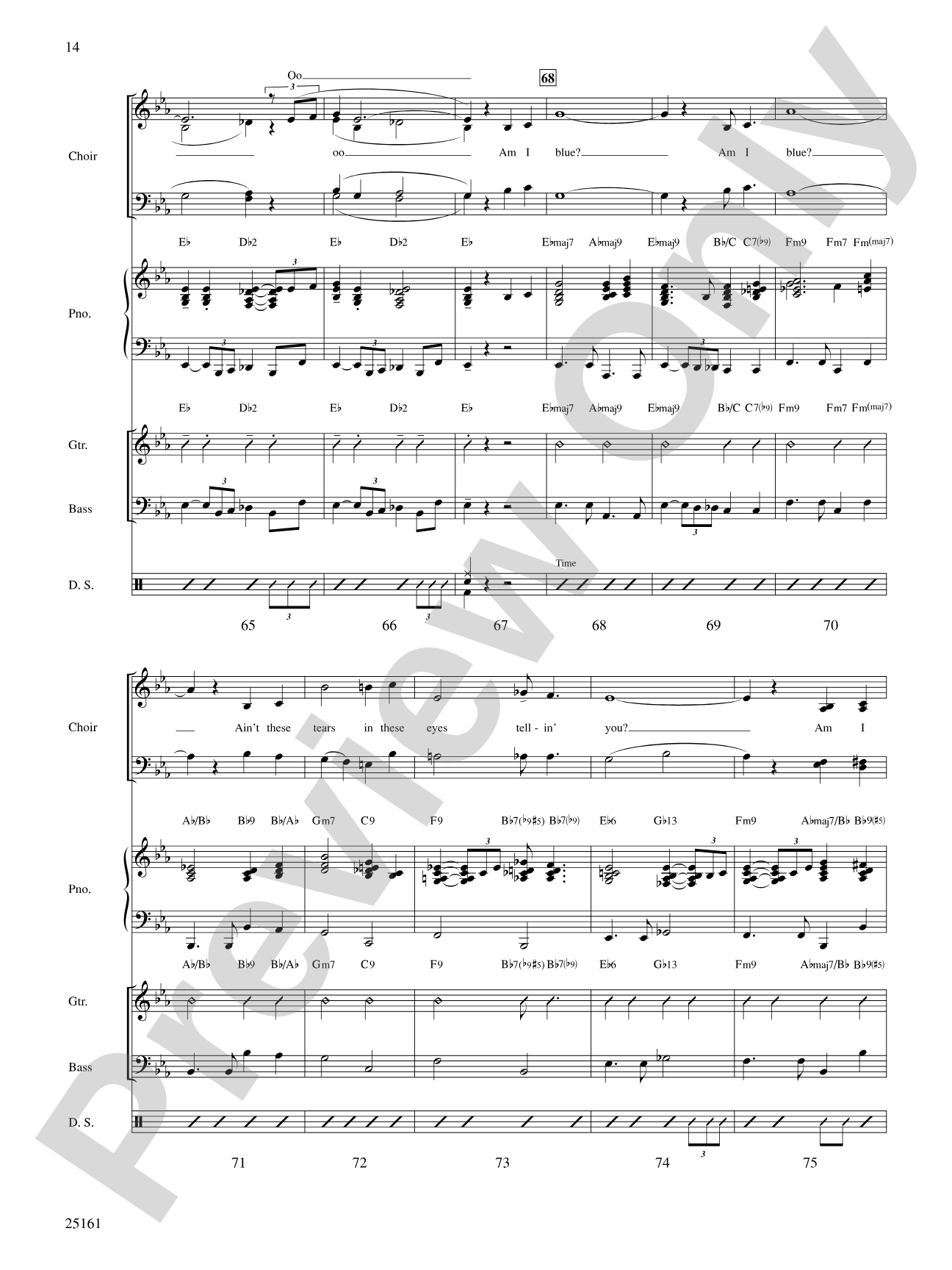
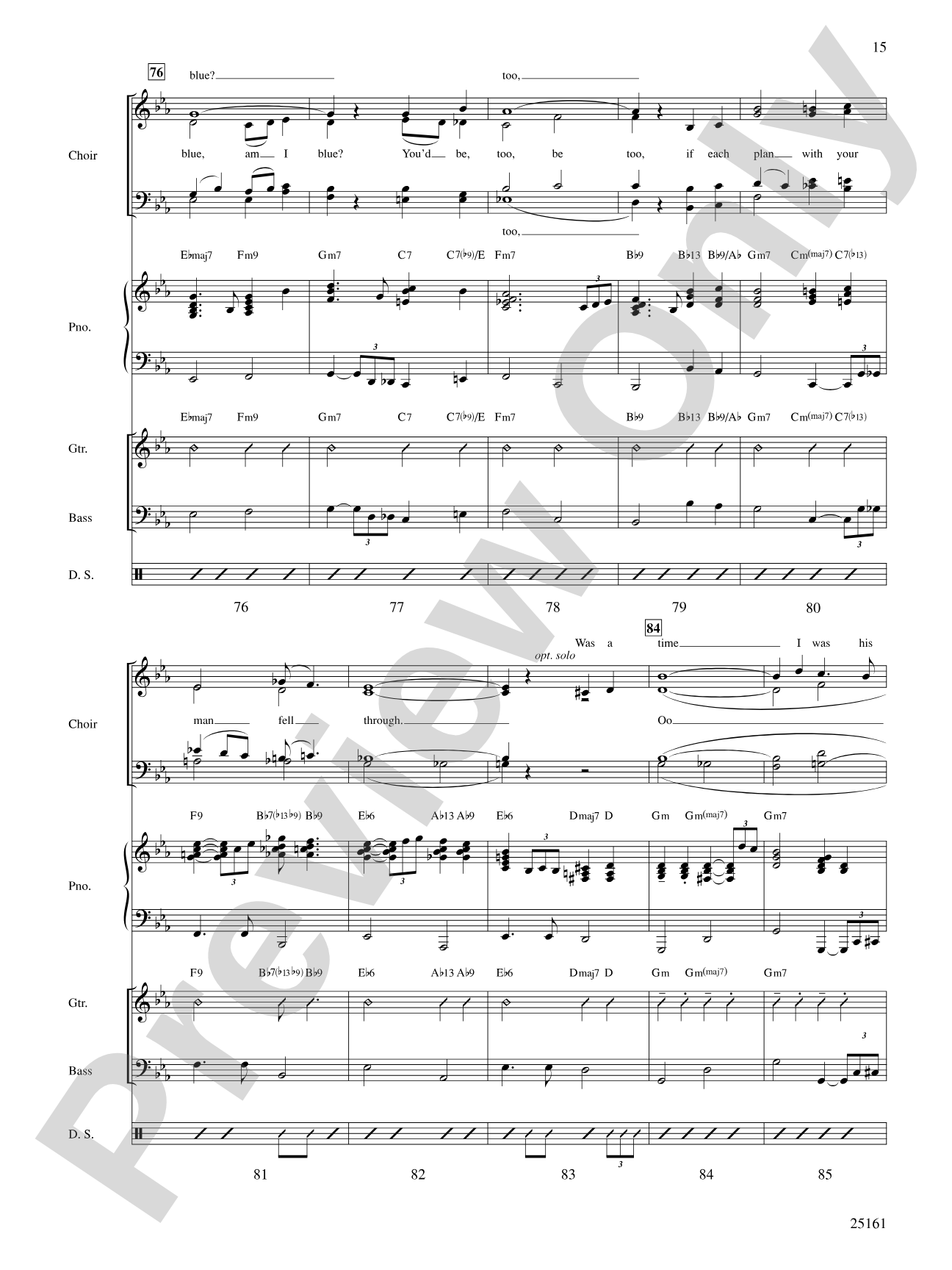
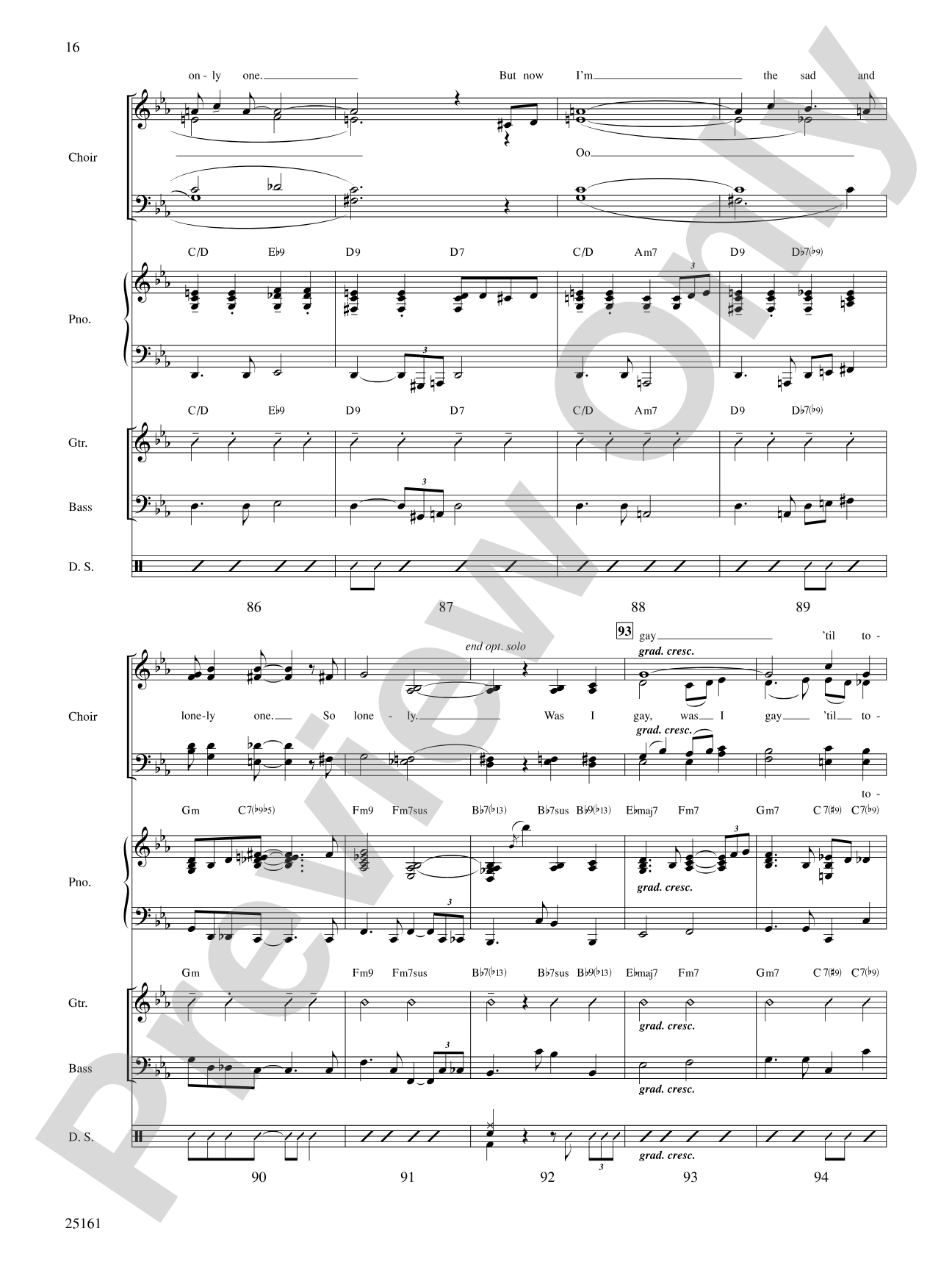
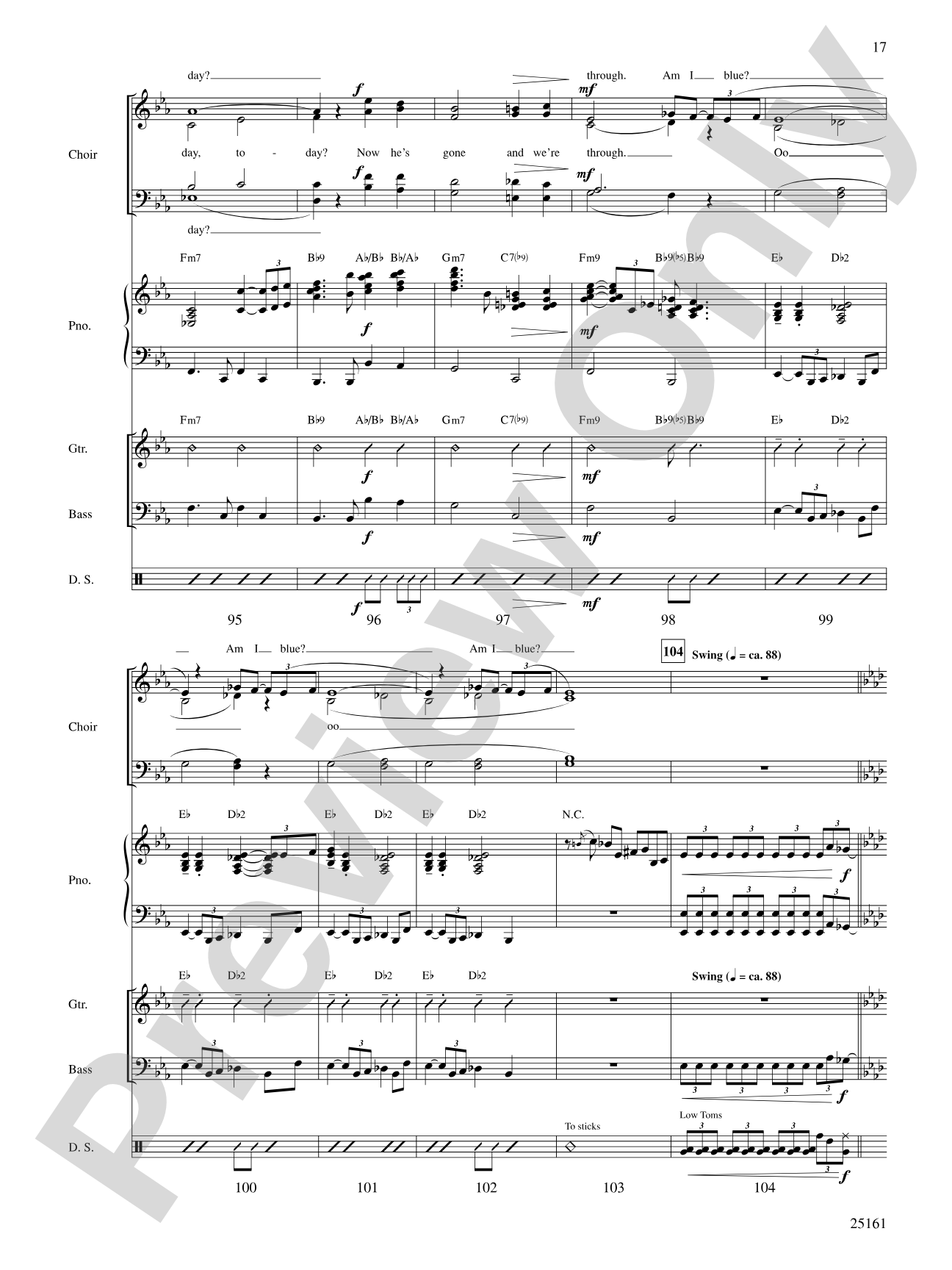
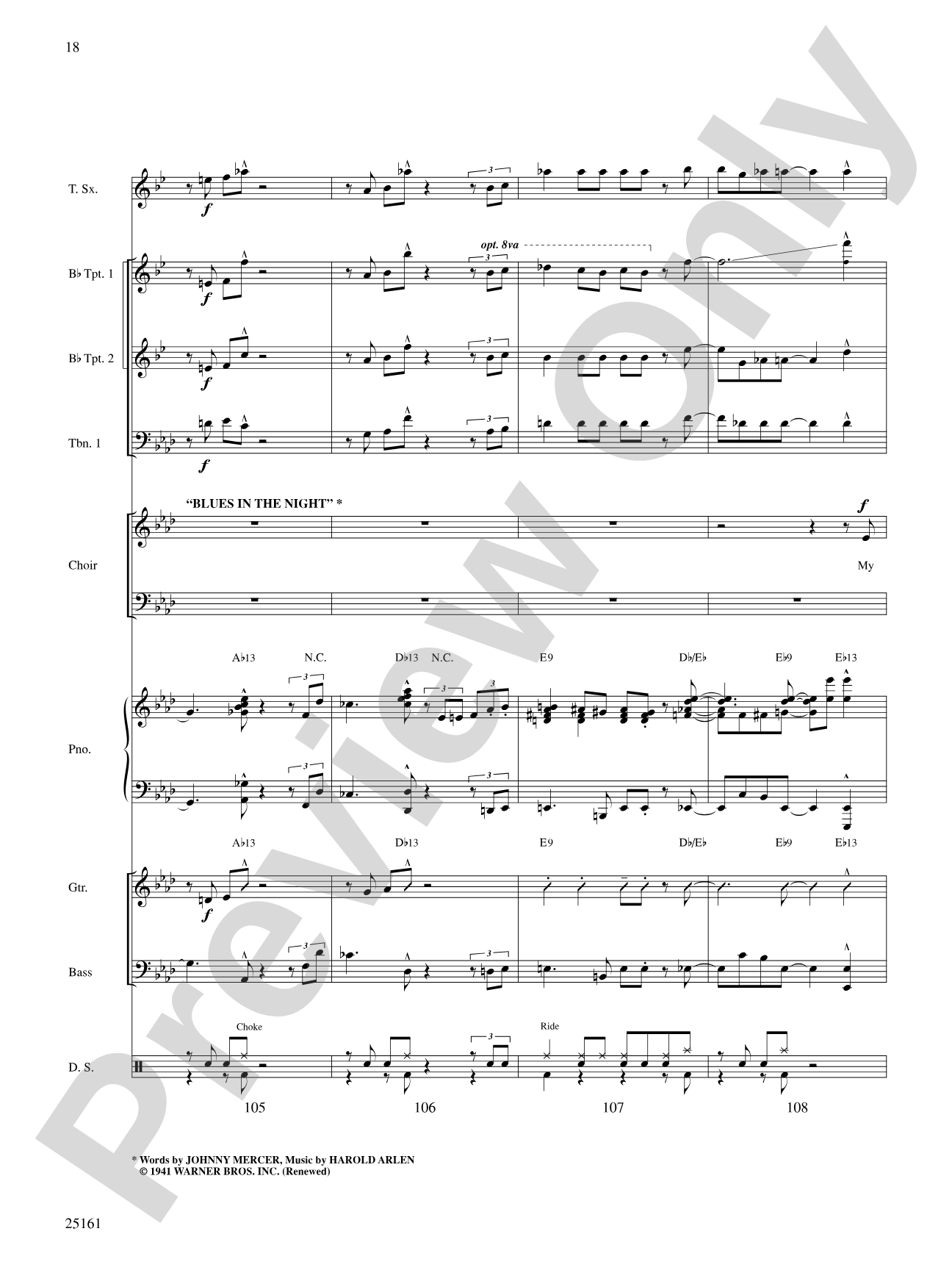
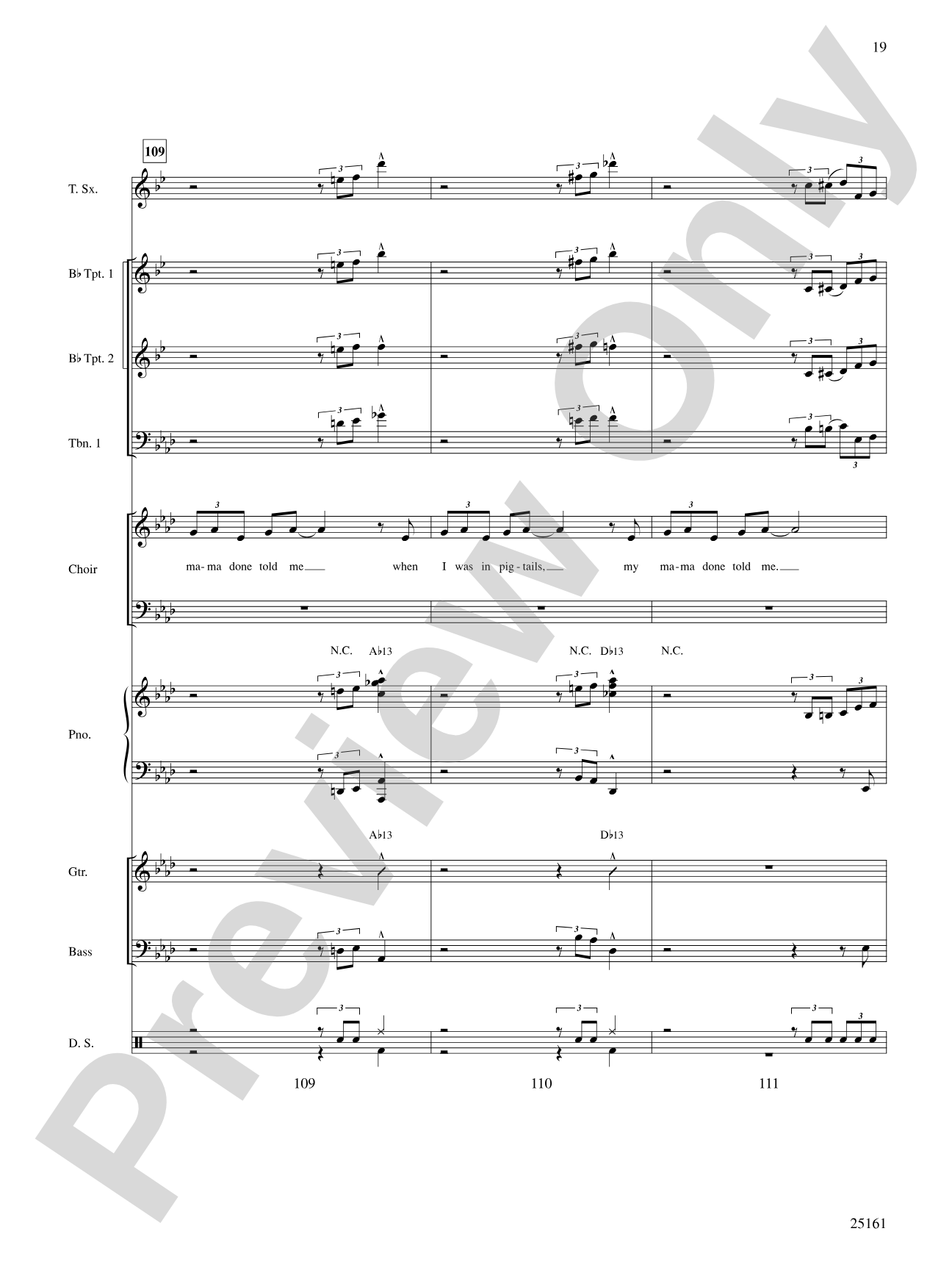
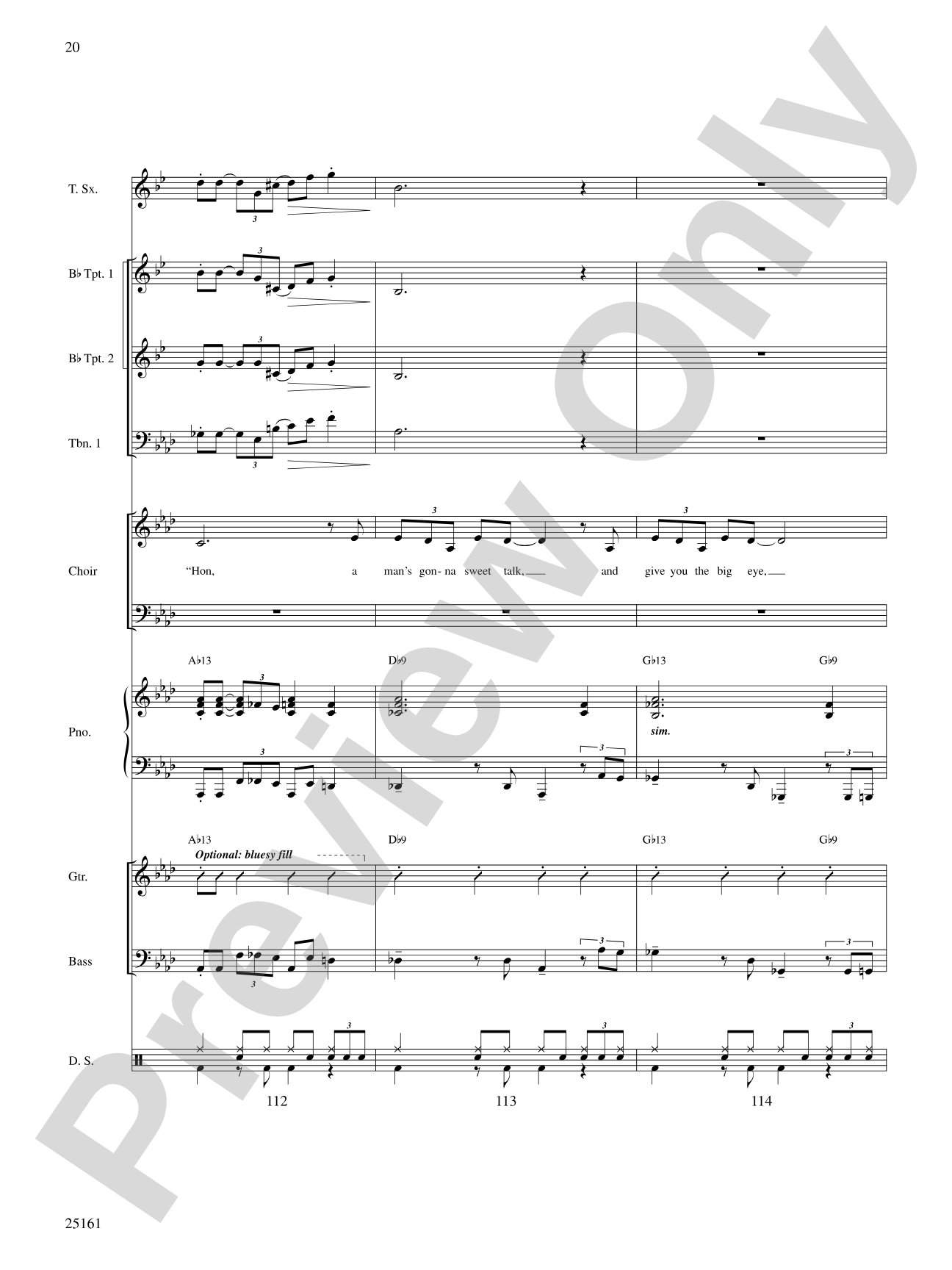
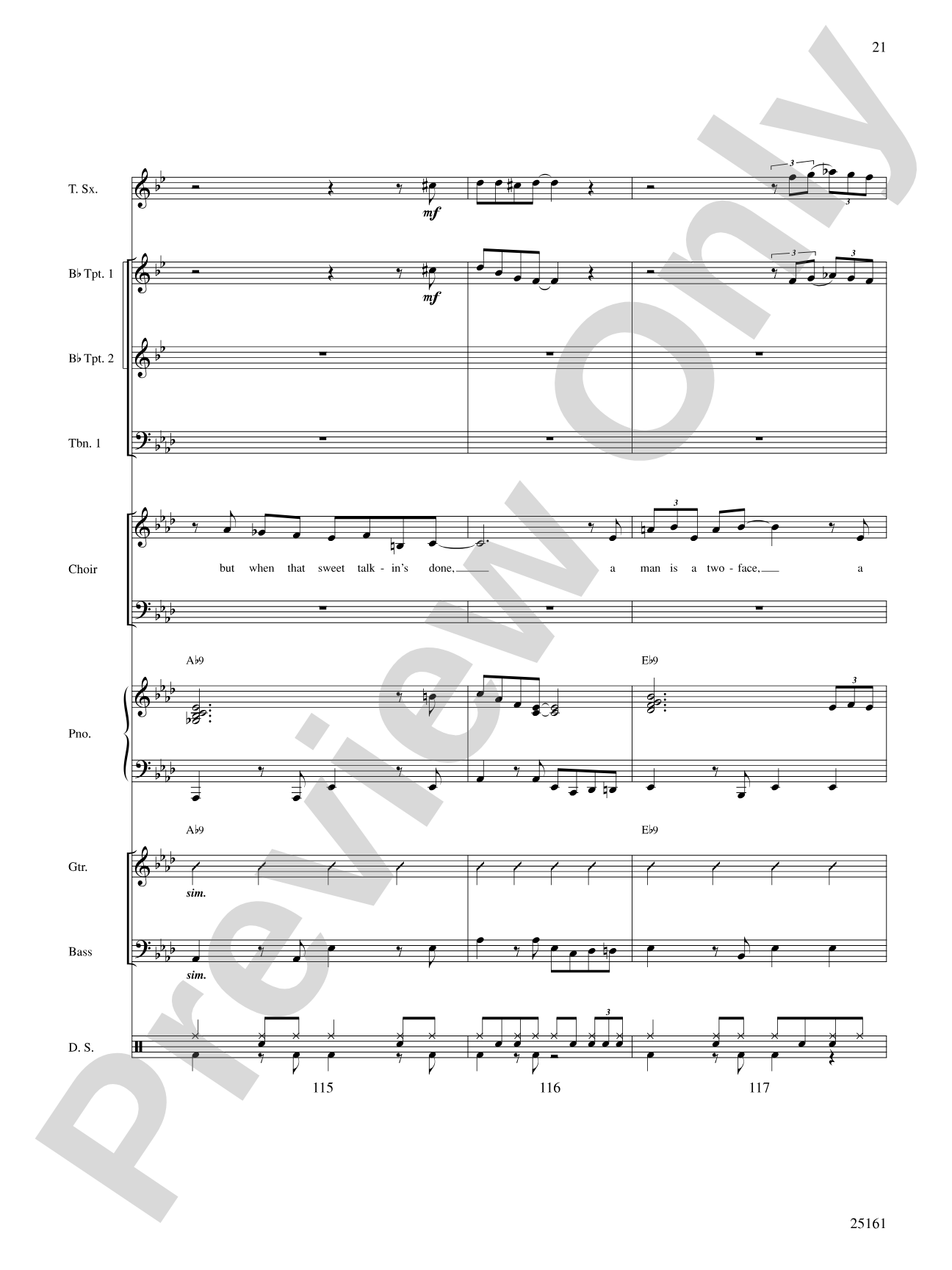
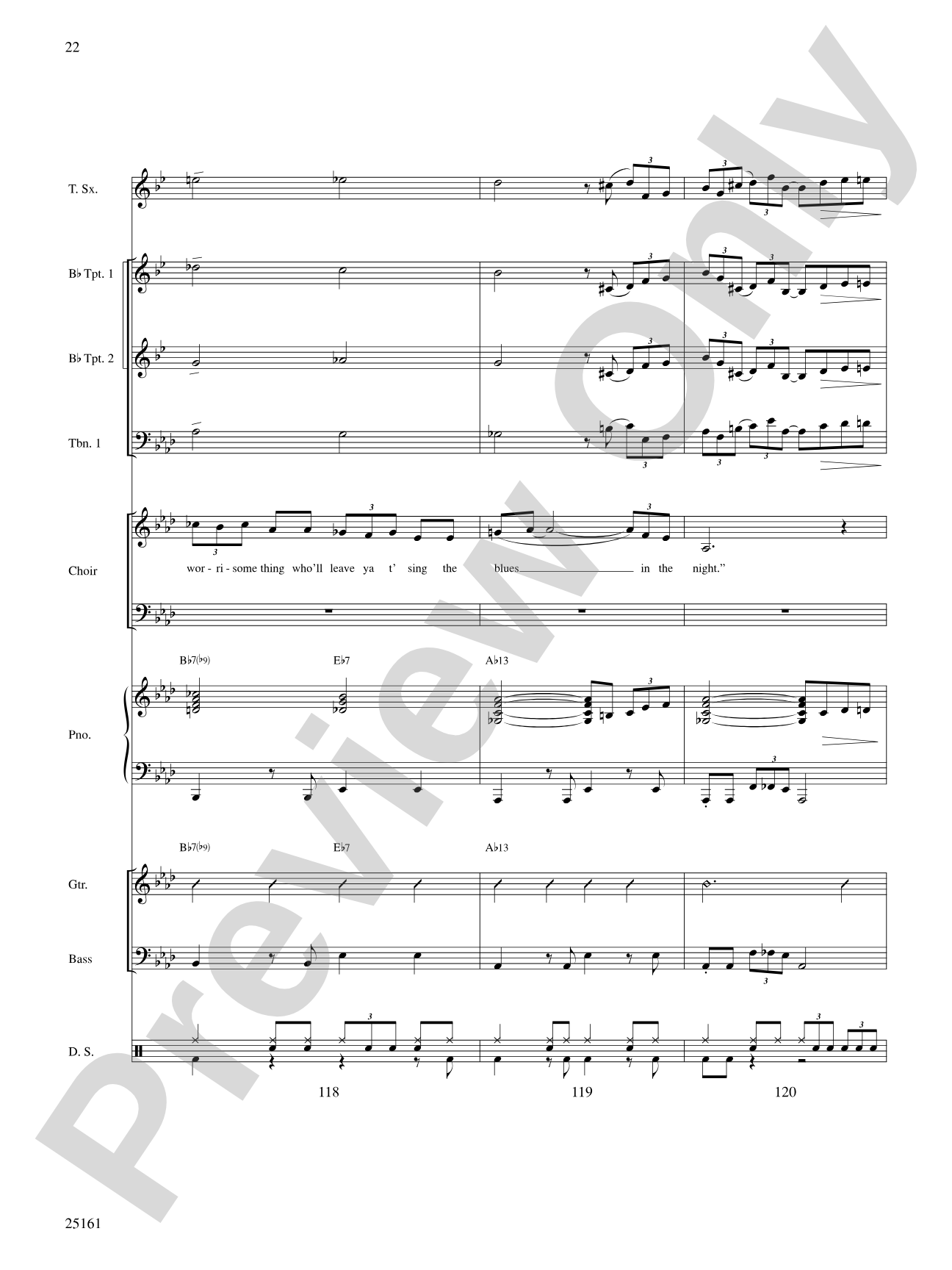
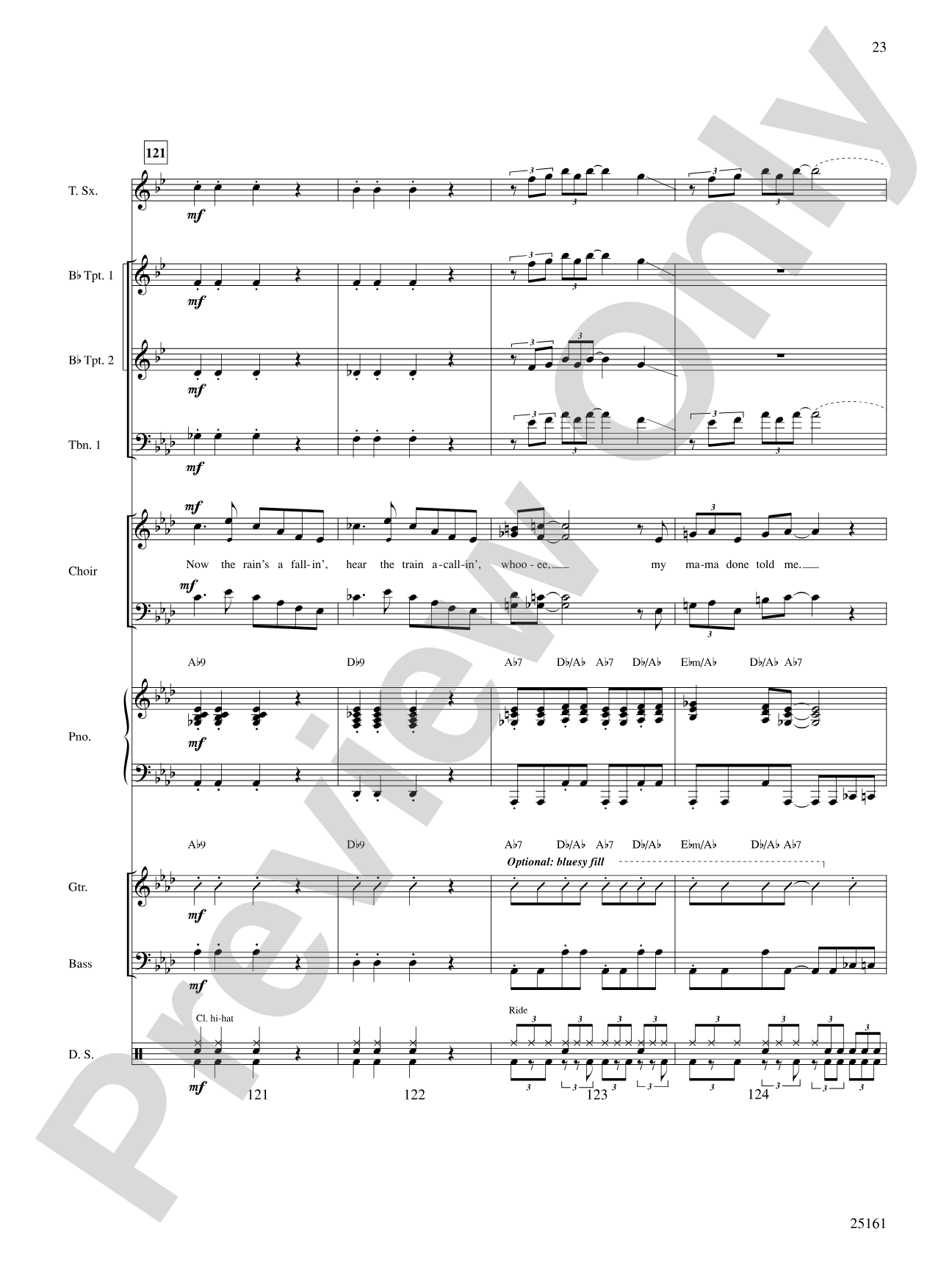
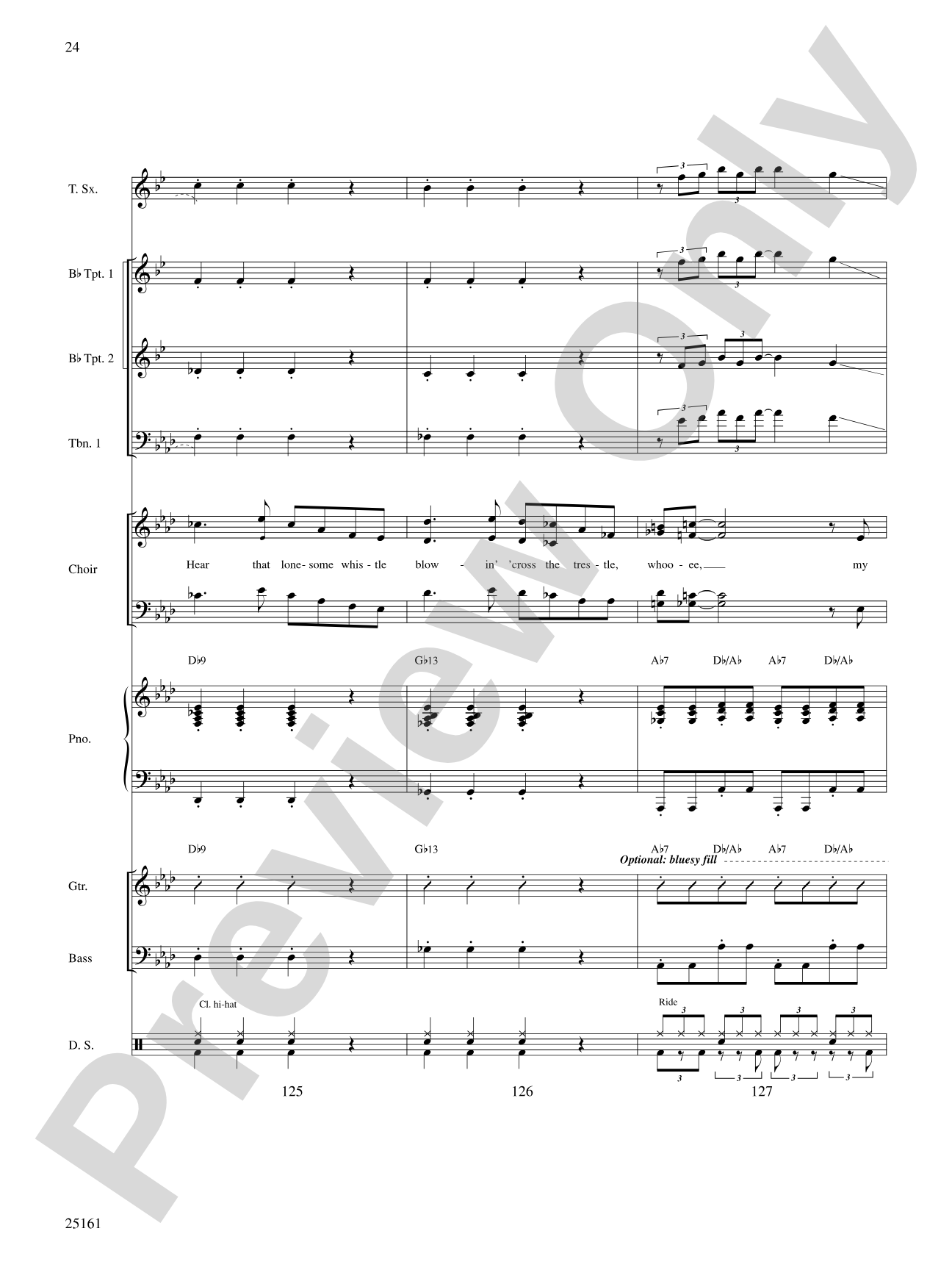
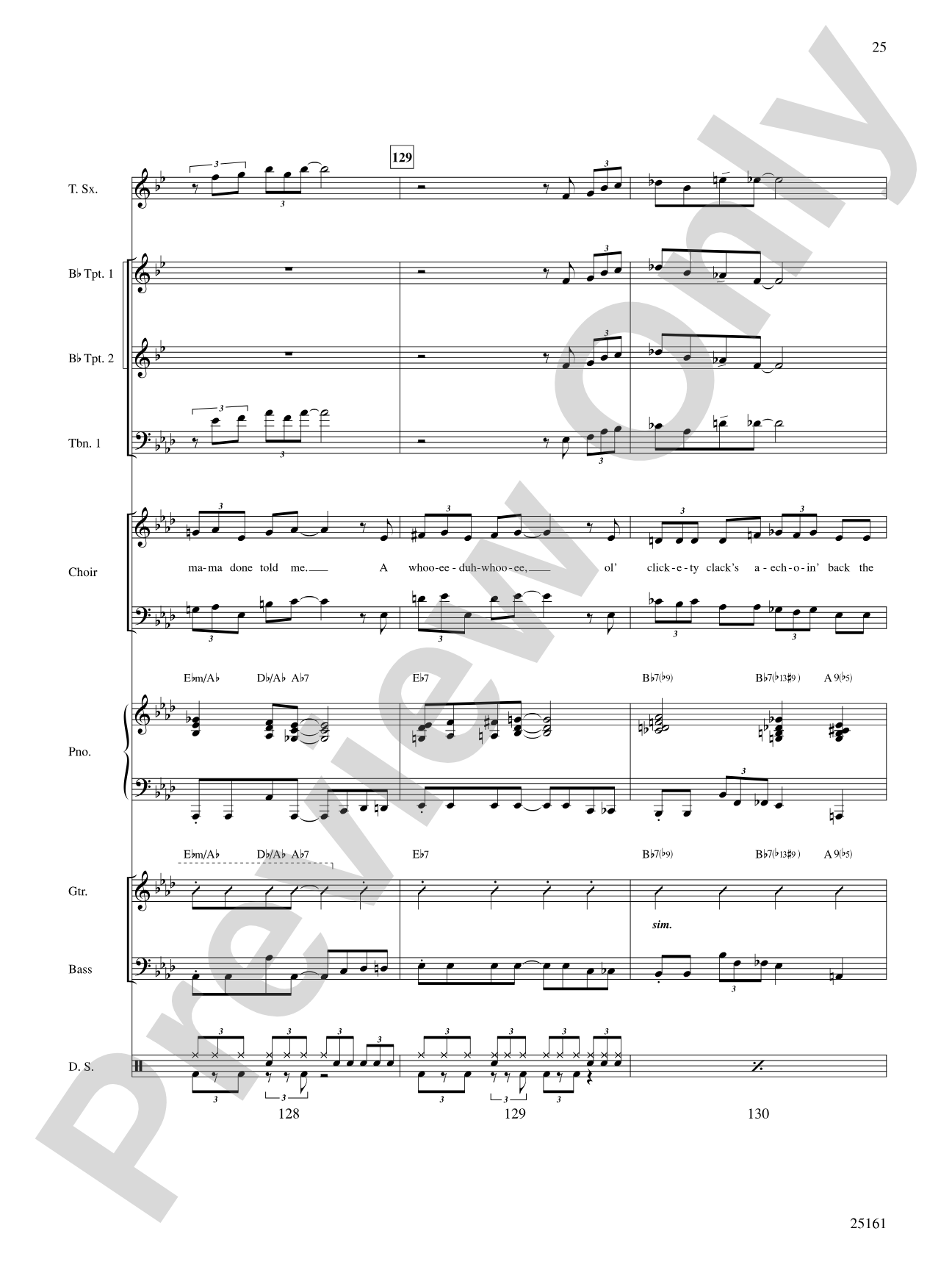
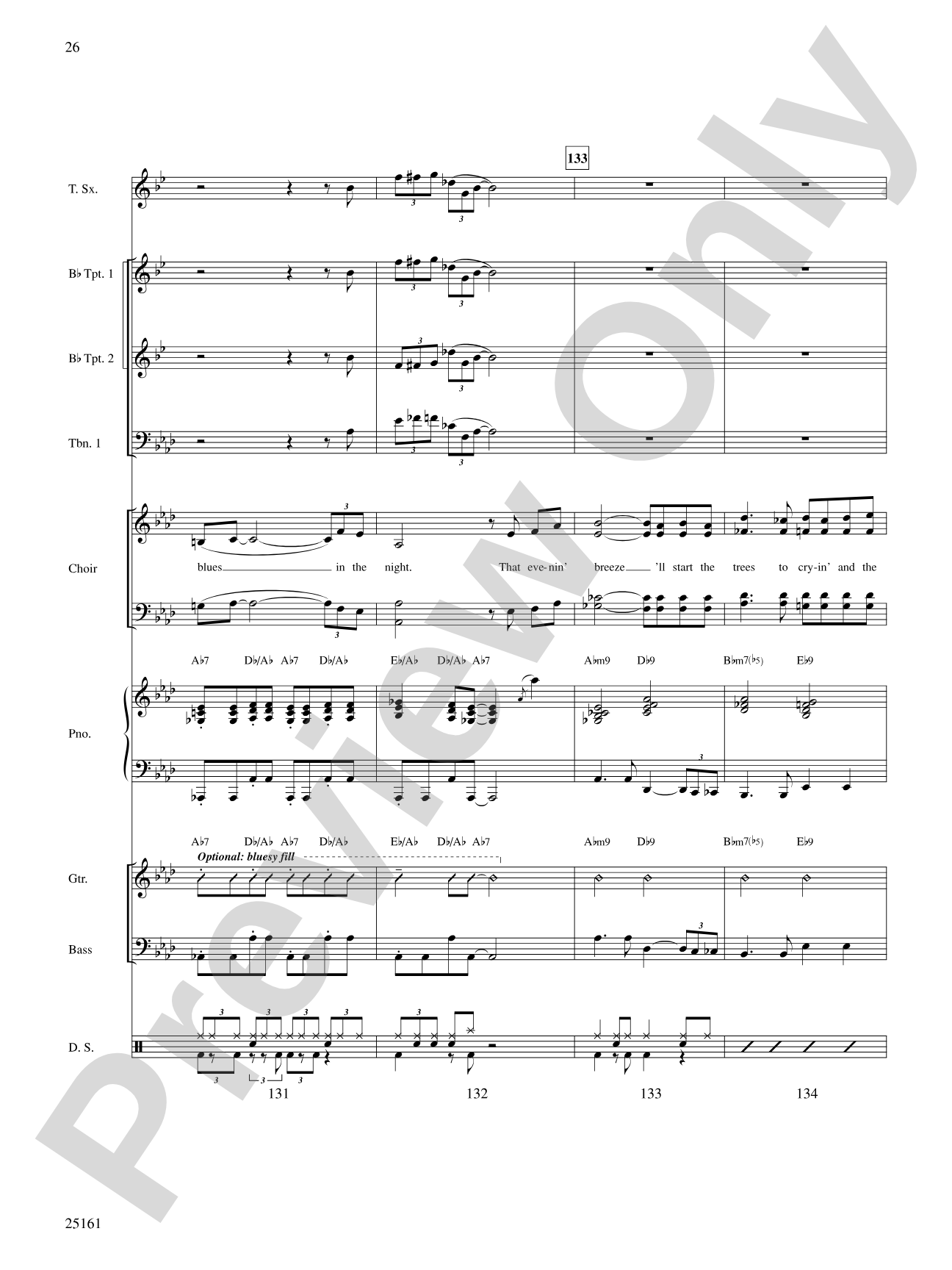
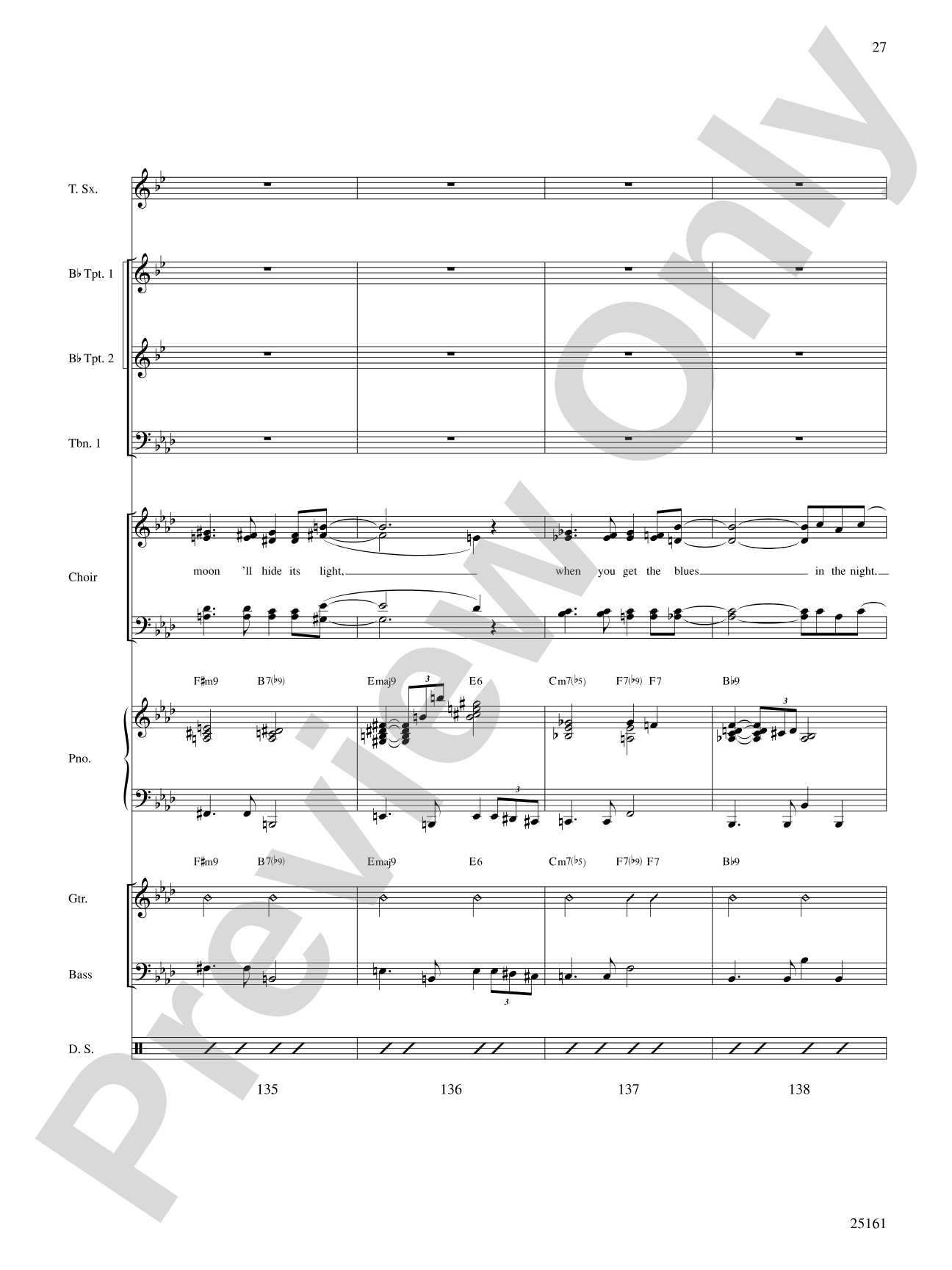
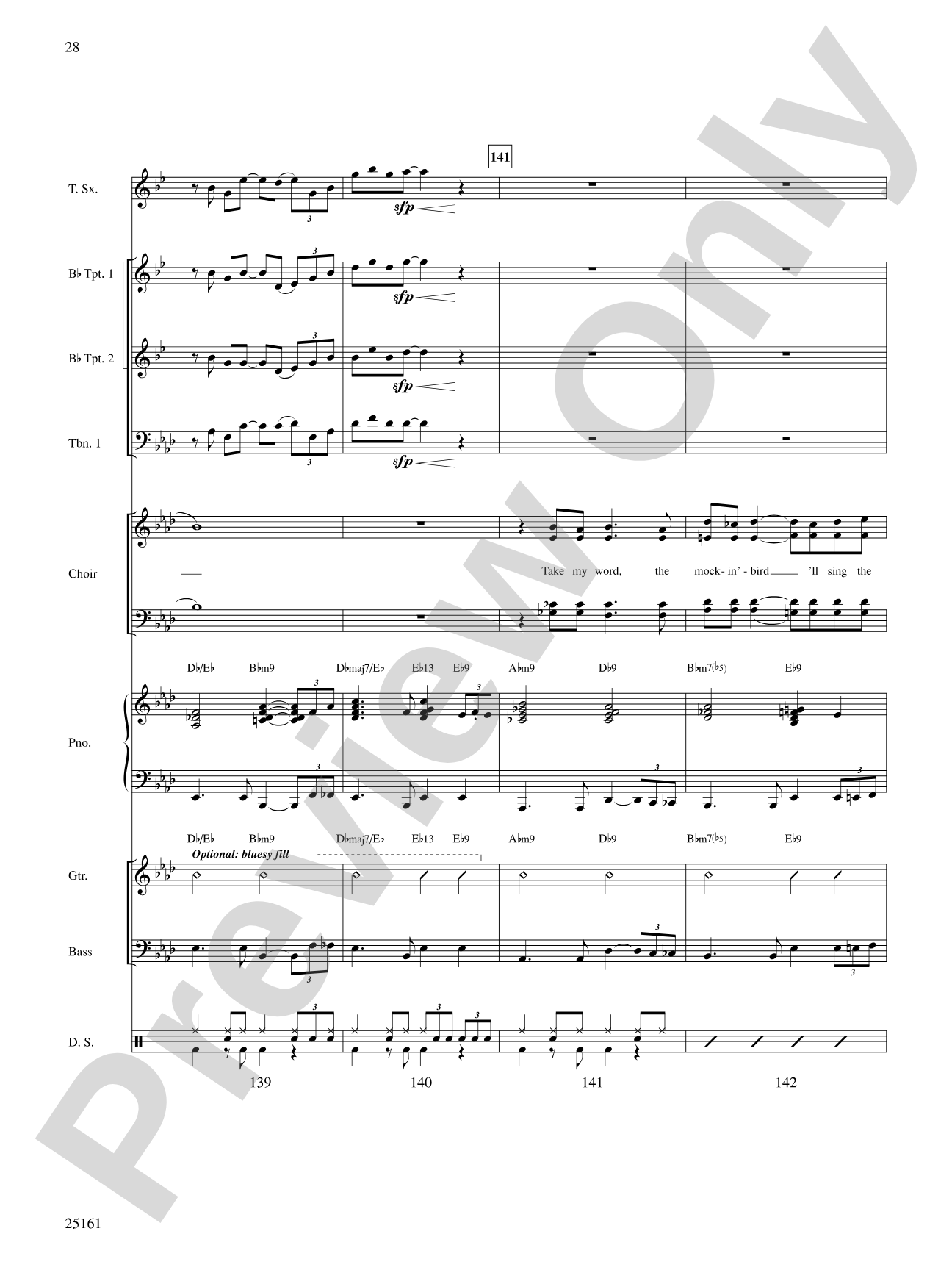
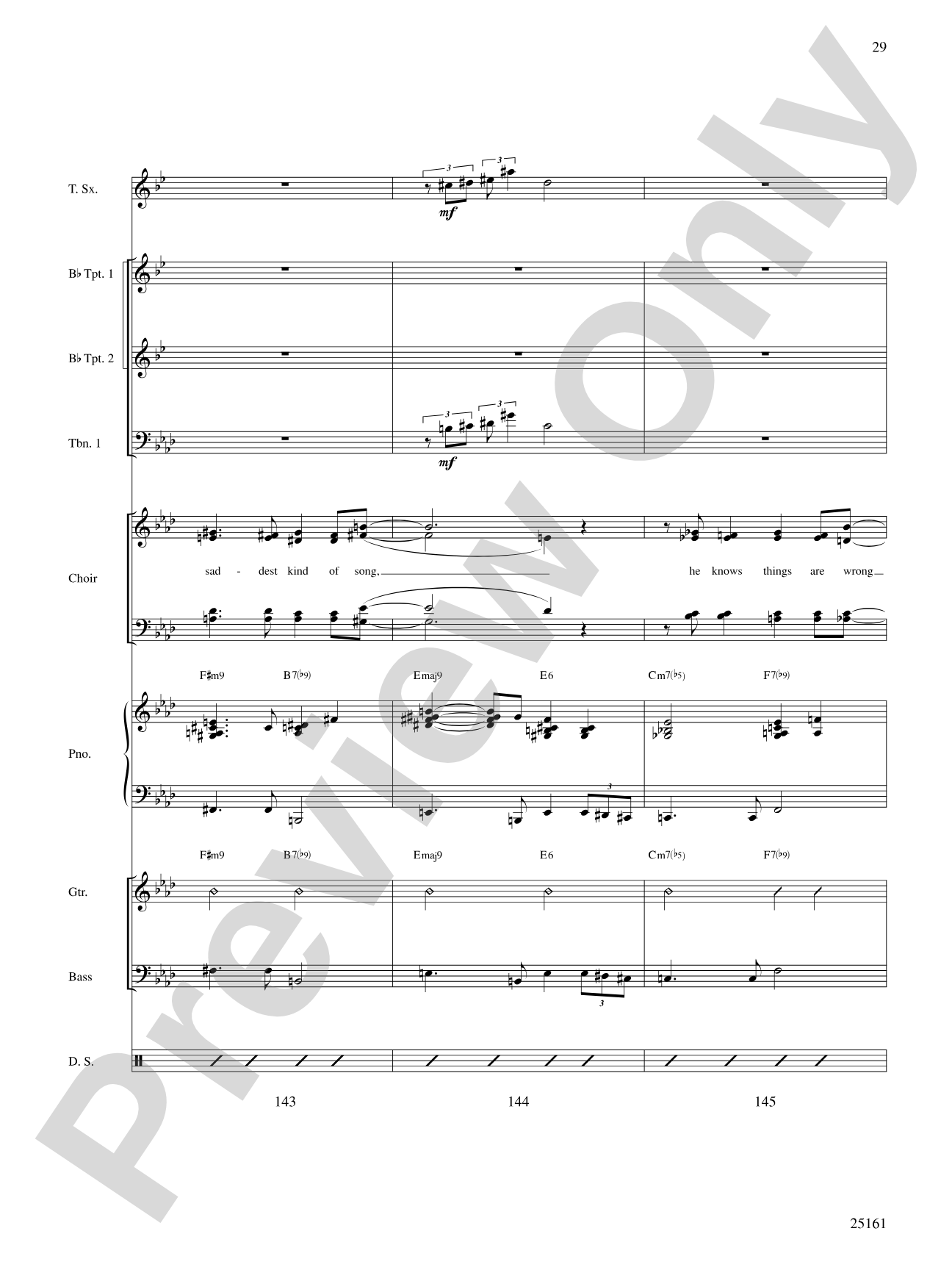
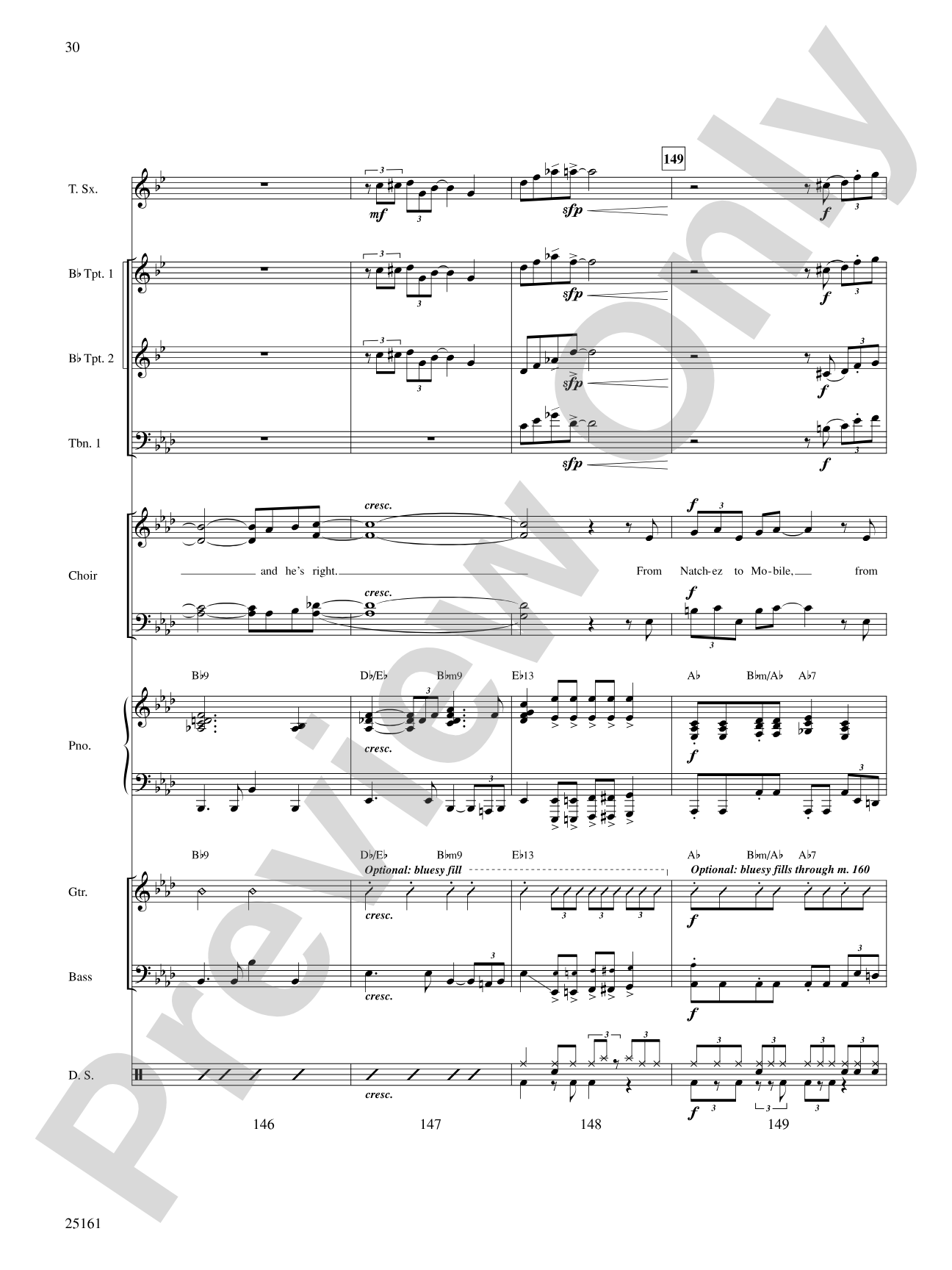
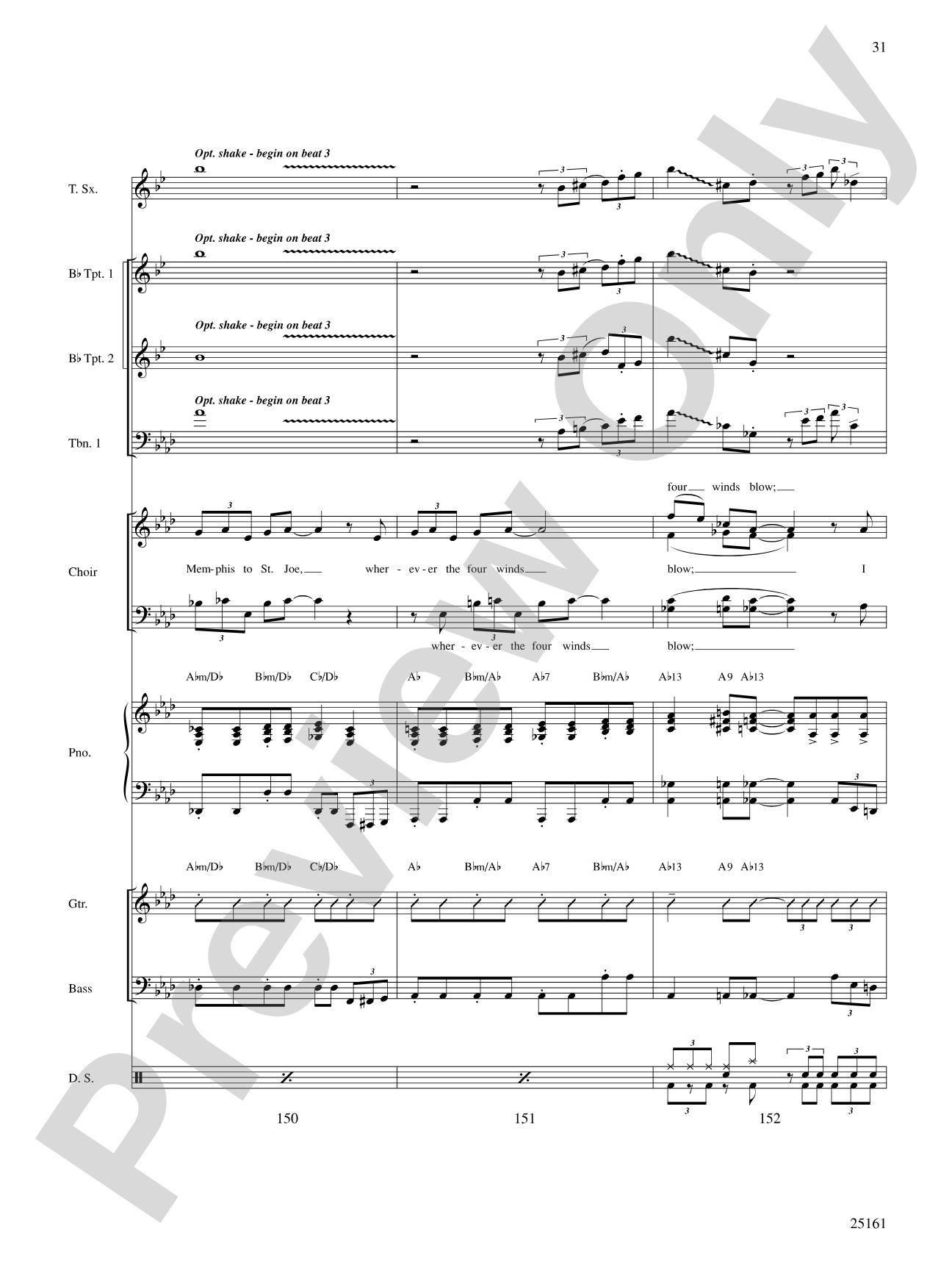
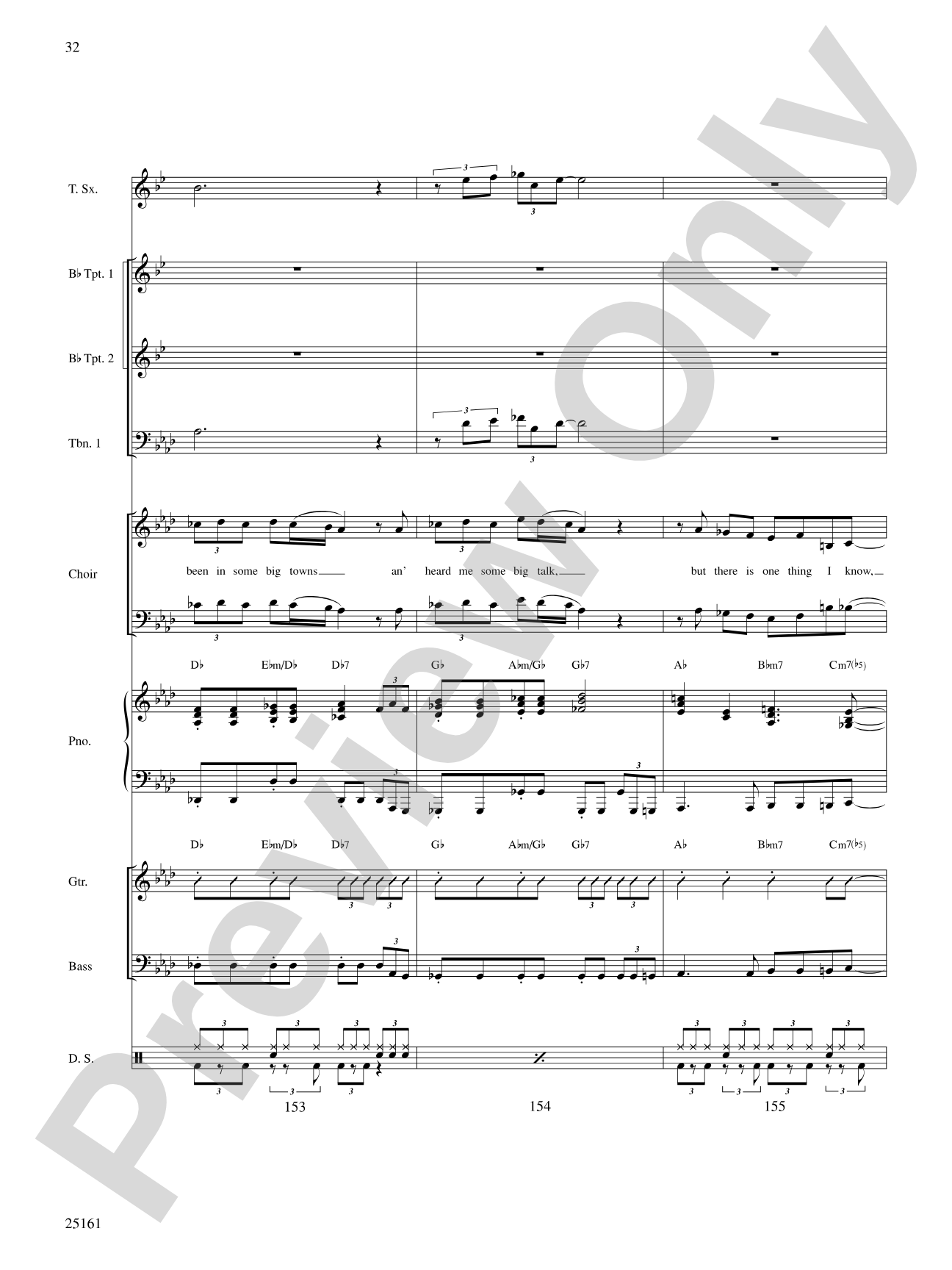
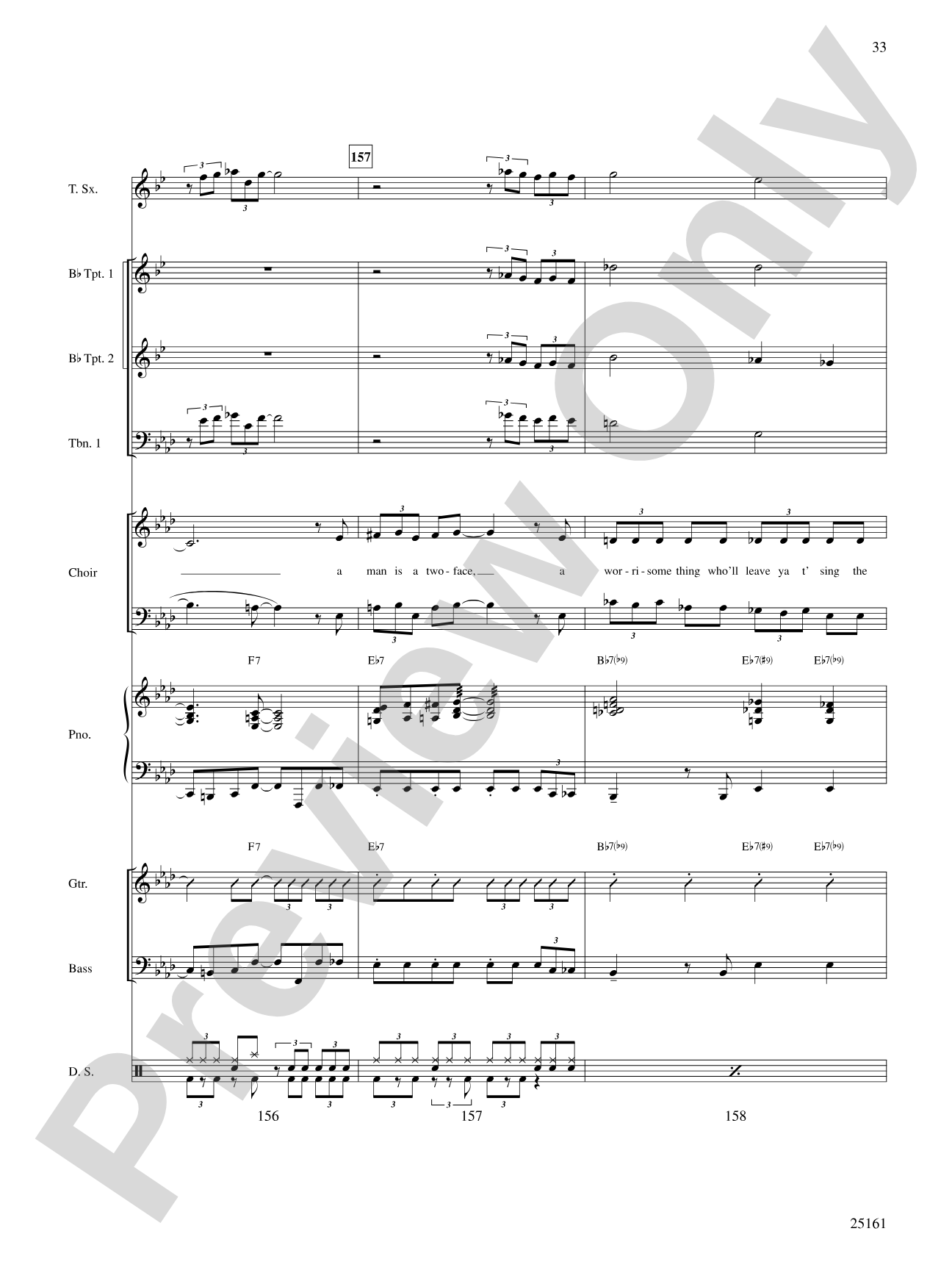
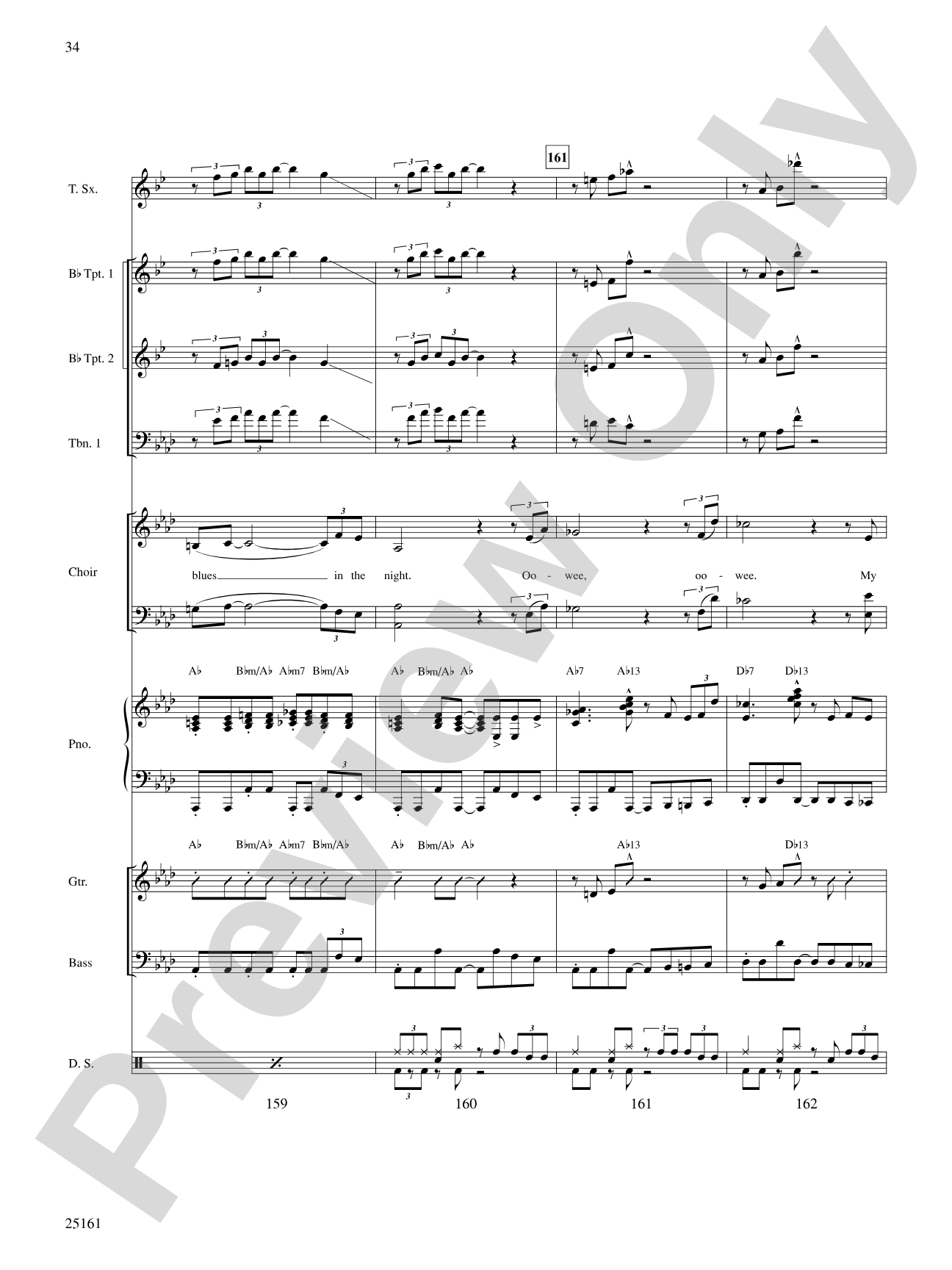
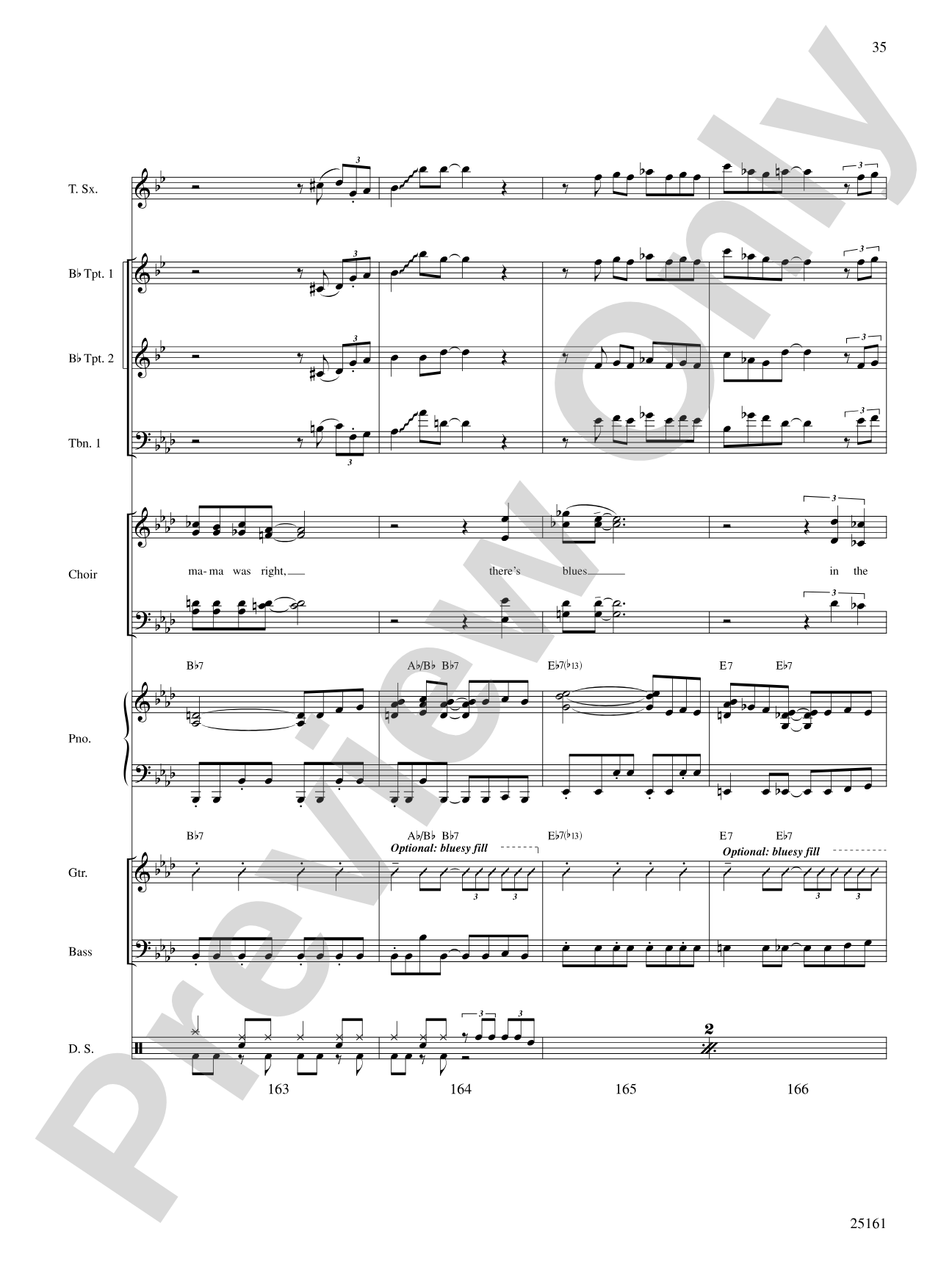
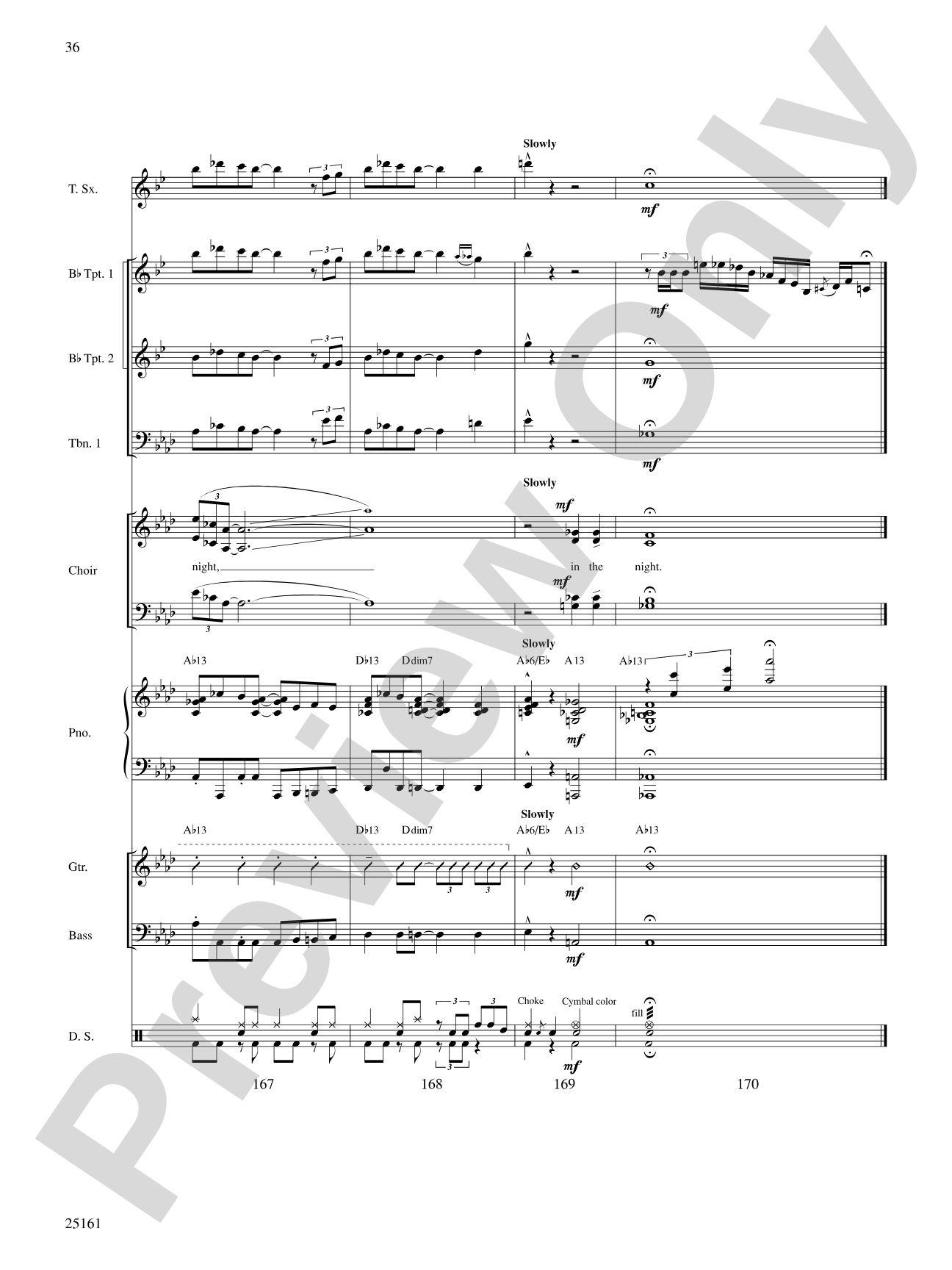

Portrait in Blue: Choral SoundPax
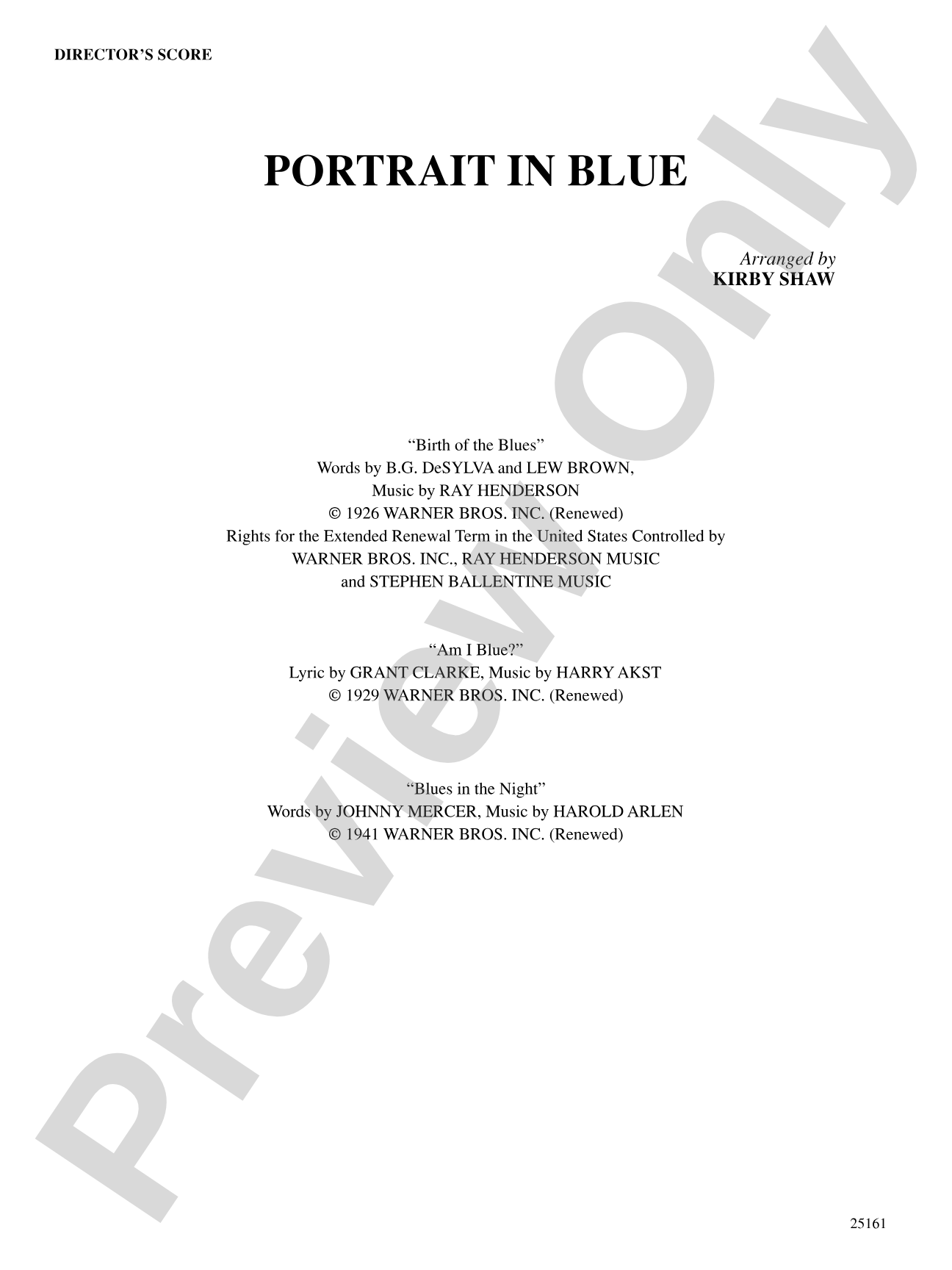
Featuring: Birth of the Blues / Am I Blue? / Blues in the Night
Arr. Kirby Shaw
Item: 00-PK-0005408

$40.00
One moment…
Related Items
Portrait in Blue: SoundTrax Digital Audio Download |
$22.95
|
View | |
Portrait in Blue: SATB Choral Octavo |
$3.50
|
View | |
Portrait in Blue: SAB Choral Octavo |
$3.50
|
View | |
Portrait in Blue: SSA Choral Octavo |
$3.50
|
View | |
Portrait in Blue: Choral Octavo SoundTrax CD |
$22.95
|
View | |
Portrait in Blue: Choral SoundPax |
$40.00
|
View |
Description
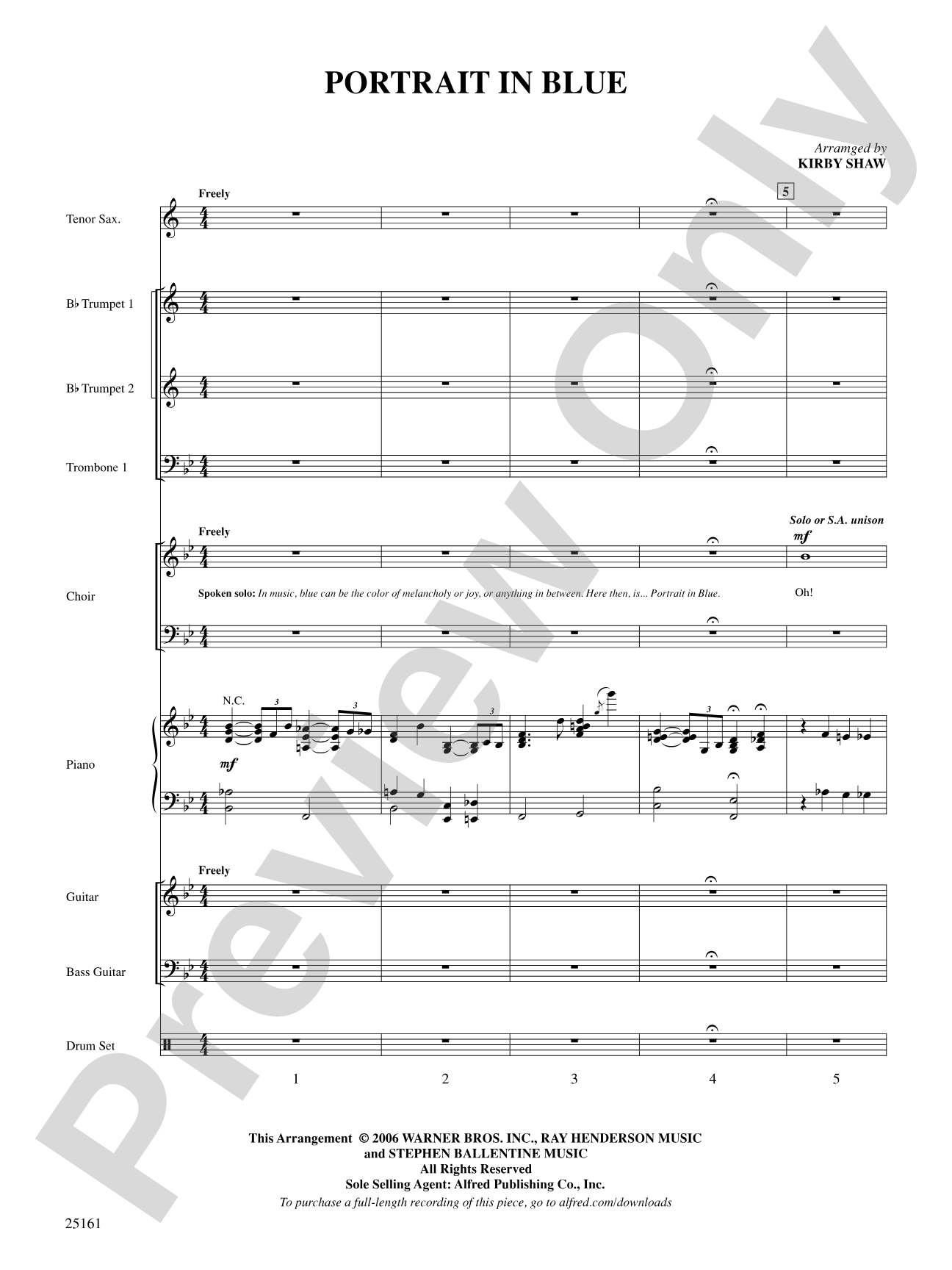
Parts included are: t. sax., 2 tpt., tbn., rhy.


Don't just read it, hear it, play along with it, and watch your students grow with it. In MakeMusic Cloud, Portrait in Blue: Choral SoundPax comes alive with professional accompaniment, adjustable tempo, and built-in practice tools that turn solo practice into real progress.
Open in the Player
Jump straight in and assign it today.
Start Your Free Trial
Open this title and explore the full library in minutes.
Sample Audio
1
Audio File
--:--
0:00
0:00
Sample Video
No sample videos found.
Additional Details
Series:
Alfred Pop Choral Series
Publisher:
Alfred Music
Page Count:
32
SKU:
00-PK-0005408
Instrumentation:
t. sax., 2 tpt., tbn., rhy.
More about this title
About the Arranger: Kirby Shaw
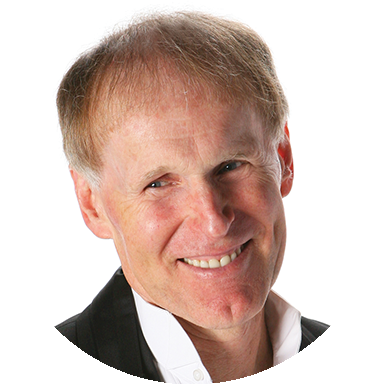
Kirby Shaw has shaped choral music education across North America and internationally, bringing his craft to educators in 45 states plus Canada, Australia, the Bahamas, Sweden, the Netherlands, Italy, Spain, and Germany. He holds degrees in Music Education and Choral Composition from San Jose State University and earned his DMA in Choral Conducting from the University of Washington. Shaw's teaching combines rigorous musicianship with infectious humor and deep knowledge of the jazz idiom.
Shaw founded and directed the acclaimed COS Vocal Jazz Ensemble at College of the Siskiyous in California, later directing similar programs at Colorado State University and the University of Missouri at Kansas City. He currently directs the Jefferson State Choral Coalition at Southern Oregon University. As a composer and arranger, Shaw has over 2500 works in print, with his music sung worldwide and nearly 20 million copies sold. His extensive discography includes hundreds of educational recordings, five college albums, and two solo releases. He is also a performing member of Just 4 Kicks, a four-voice a cappella jazz ensemble.
Why we love this
Shaw's arrangement brings genuine jazz vocabulary to a choral setting without overwhelming singers or requiring advanced soloing skills. The instrumental texture, tenor sax, two trumpets, trombone, and rhythm section, sits perfectly behind the voices, creating sophistication without demanding perfection from younger performers. This is the kind of chart that makes a concert feel polished and professional while remaining genuinely fun to rehearse.
What to expect
Sophisticated and swinging, with the lush harmonic language of classic American songwriting wrapped in a modern jazz ensemble sound. The arrangement breathes with rhythmic ease and invites singers into the relaxed elegance that makes Great American Songbook standards timeless.
Who it's for
This piece suits advanced high school and college choirs with some jazz experience or strong rhythmic flexibility. Directors seeking to program accessible jazz standards alongside more classical repertoire will find a polished, professional-sounding arrangement that doesn't require specialized vocal training.
How to get the most out of it
- Balance the choir sound against the instrumental parts carefully during rehearsal; the recorded accompaniment will help you hear how the voices should sit in the mix, so singers know exactly where they land rhythmically and harmonically.
- Work the jazz articulations and rhythmic precision with your singers before adding the full arrangement; many choral singers need explicit guidance on how jazz phrasing differs from classical legit singing.
- Have your brass and saxophone section lock their rhythmic interpretation with the rhythm section early, since the instrumental groove anchors the entire piece and gives singers confidence in their own entrances and releases.
- Use the recorded accompaniment in sectionals so each voice part can hear its own melodic line and harmonic function within the jazz texture, rather than learning in isolation.
How to use it
Program this as a centerpiece for a jazz or American music concert, or pair it with another Shaw arrangement to showcase the depth of your ensemble's range. The instrumental parts make it ideal for showcasing student soloists or a jazz band alongside your choir, creating an integrated concert experience.
Skills your students will build
- Jazz articulation and phrasing (swing rhythms, stylistic interpretation)
- Reading and singing syncopated rhythmic patterns
- Blending choir sound with live instrumental ensemble
- Understanding voice leading in jazz harmony
- Responding to instrumental rhythm section cues