
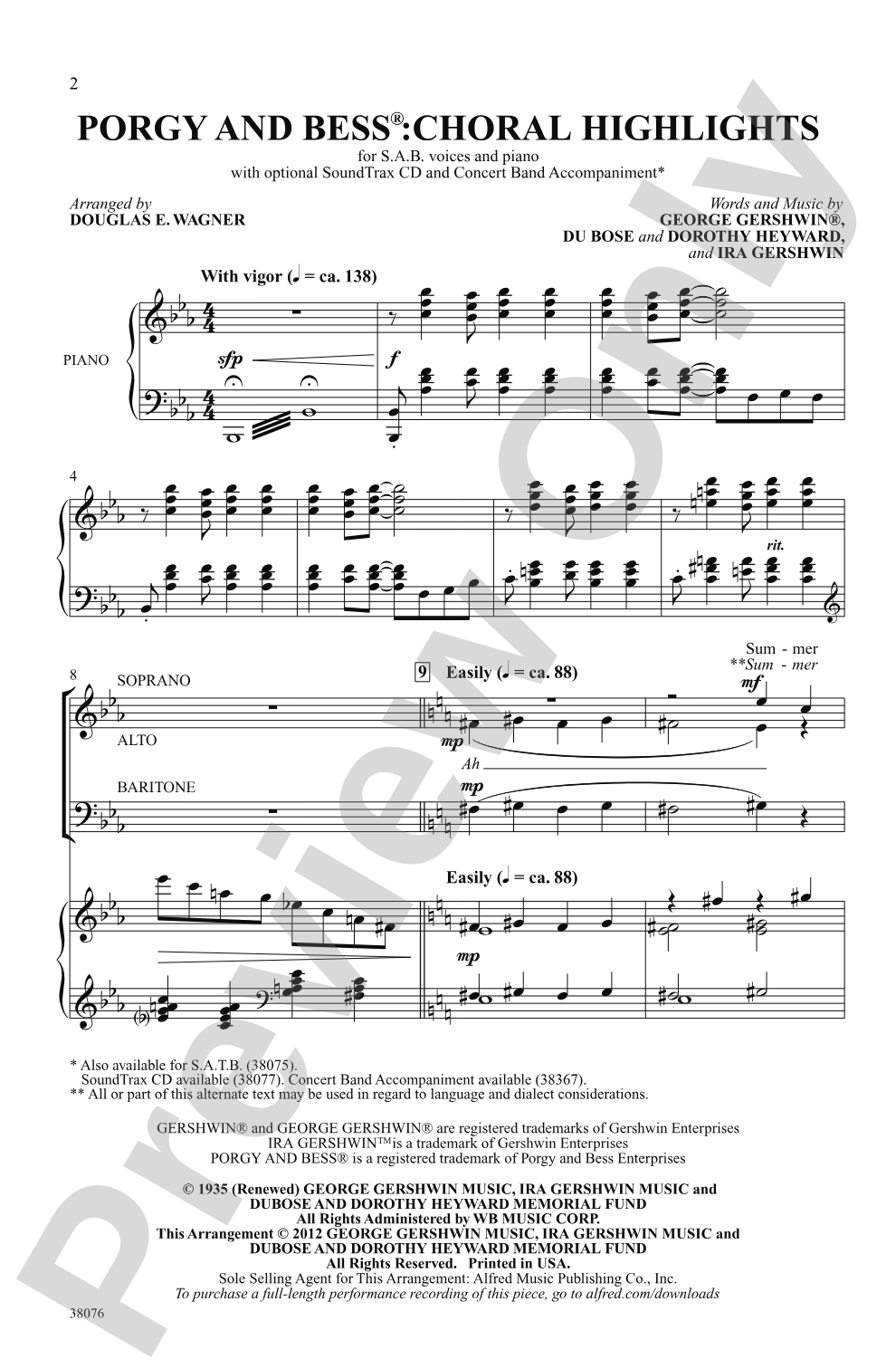
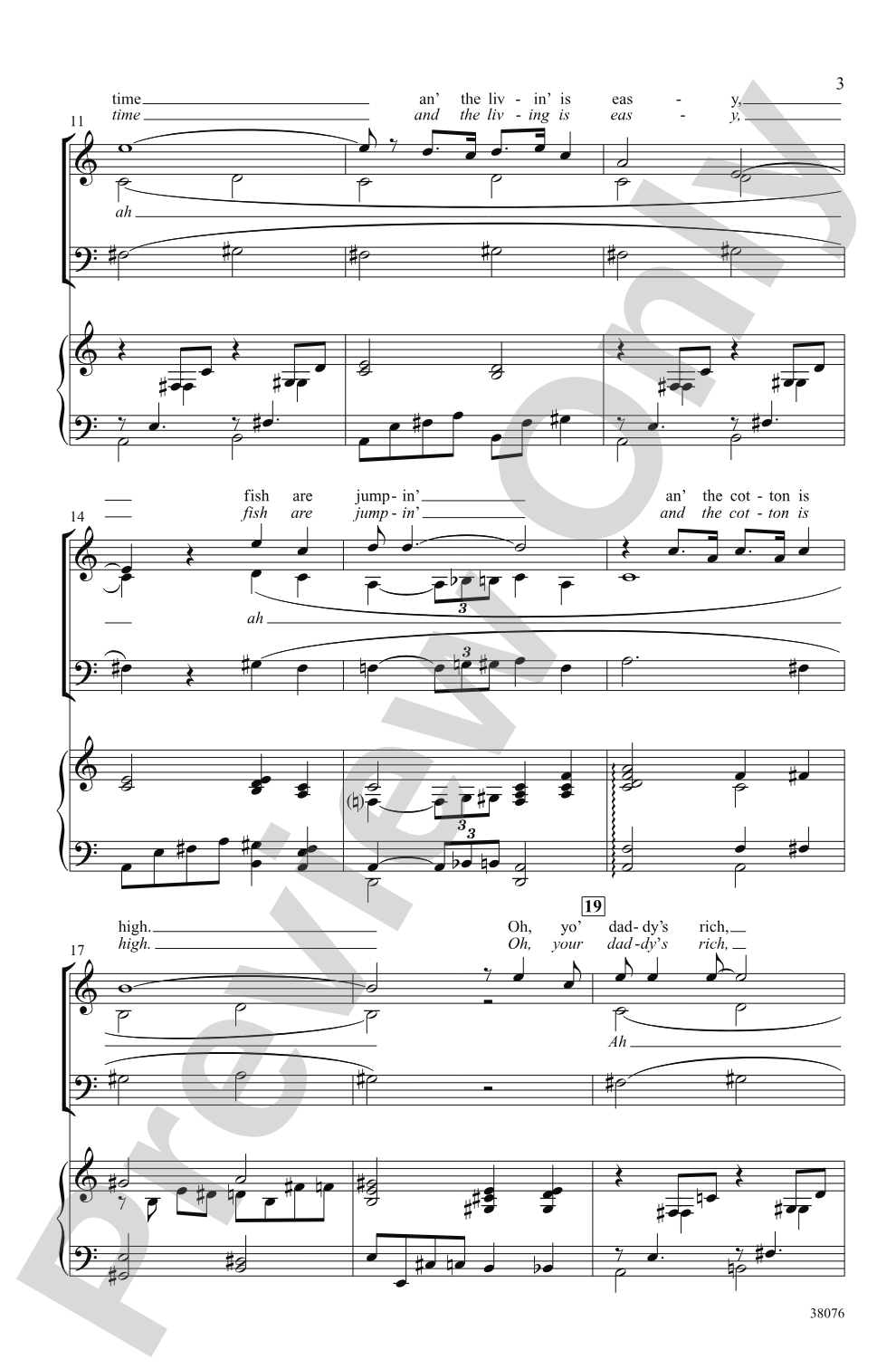
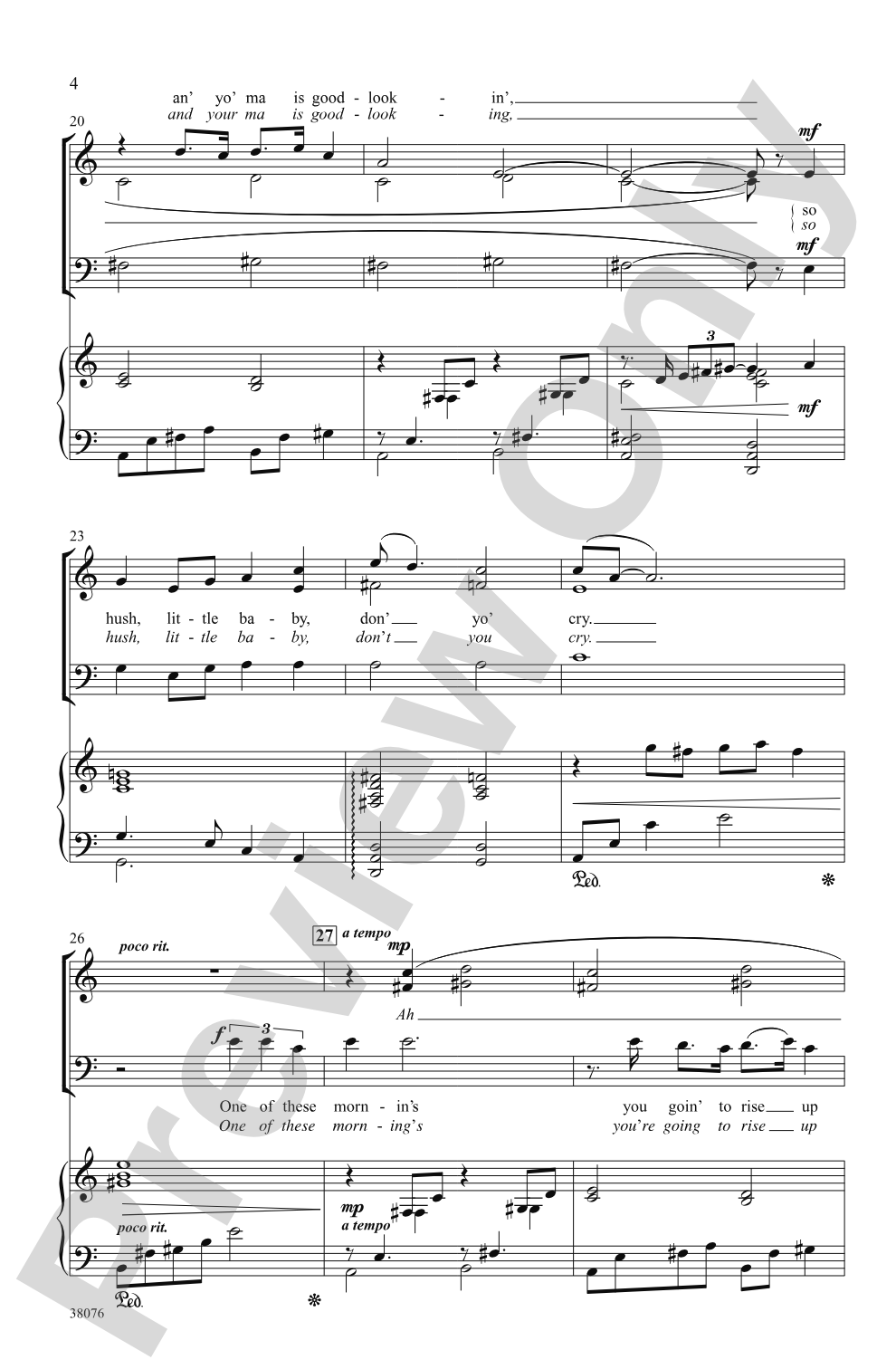

Porgy and Bess®: Choral Highlights: SAB Choral Octavo
Featuring: Summertime / I Got Plenty O' Nuttin / Bess, You Is My Woman / Oh Lawd, I'm On My Way
Words and music by George Gershwin, DuBose and Dorothy Heyward, and Ira Gershwin / arr. Douglas E. Wagner
Item: 00-PO-0001371
$2.50
Minimum order quantity: 20 copies
One moment…
Related Items
Porgy and Bess®: Choral Highlights: SoundTrax Digital Audio Download |
$35.00
|
View | |
Porgy and Bess®: Choral Highlights: SATB Choral Octavo |
$2.50
|
View | |
Porgy and Bess®: Choral Highlights: SATB Choral Octavo |
$2.50
|
View | |
Porgy and Bess®: Choral Highlights: SAB Choral Octavo |
$2.50
|
View | |
Porgy and Bess®: Choral Highlights: Choral Octavo SoundTrax CD |
$35.00
|
View |
Description
This classic Gershwin musical score has been given a fine, dramatic choral treatment in this stunning medley, celebrating the show's return to Broadway late in 2011. Optional Concert Band accompaniment is available. Approximately 4:45.


Porgy and Bess®: Choral Highlights: SAB Choral Octavo isn't in MakeMusic Cloud just yet...but it could be. Let us know you'd like to see it, and you'll help shape what comes next. In the meantime, start a free trial and dive into thousands of interactive titles your students can play along with today.
Request This Title
Tell us you want it.
Start Your Free Trial
Explore everything that's ready to play right now.
Sample Audio
1
Audio File
--:--
0:00
0:00
Sample Video
No sample videos found.
Additional Details
Publisher:
Alfred Music
Page Count:
16
SKU:
00-PO-0001371
More about this title
About the Composer: George Gershwin
George Gershwin (1898–1937) bridged the world of concert music and popular song with a compositional voice that was unmistakably American. His gift for melody, harmonic sophistication, and rhythmic vitality made him one of the most performed composers of the twentieth century. Porgy and Bess, created in collaboration with librettist DuBose Heyward and lyricist Ira Gershwin, stands as his largest dramatic work and remains a cornerstone of American musical theater.
Gershwin's orchestration and harmonic language in Porgy and Bess draw on jazz idioms, folk song, and operatic tradition in ways that challenged audiences and composers alike. His approach to choral writing expanded what was possible in popular music contexts, and the score's themes have become staples of choral repertoire across multiple arrangements and reductions.
Why we love this
Douglas E. Wagner's arrangement captures the emotional sweep of Gershwin's masterpiece while making it accessible to SAB choirs. The medley format lets you program a substantial work without the length commitment of the full score, and Wagner's treatment preserves the dramatic arc and harmonic richness that made Porgy and Bess transformative. Audiences recognize these melodies instantly, which means your singers perform with the energy and resonance that comes from knowing they're presenting something genuinely significant.
What to expect
Gershwin's melodies carry both warmth and urgency, grounded in the blues and spiritual traditions that animate Porgy and Bess. This arrangement lets you feel the full romantic and dramatic weight of the score: the longing, the joy, the sorrow, and the resilience that define the music.
Who it's for
This octavo works for community choirs, school choirs at the high school level and above, and church choirs looking to program substantial secular music. The SAB voicing accommodates ensembles without a strong tenor section while maintaining the harmonic depth of the original.
How to get the most out of it
- Balance the soprano and alto lines carefully in the opening sections; Wagner's voicing often layers the primary melody in the soprano, so the lower voices need clarity to support rather than disappear beneath.
- Use the recorded accompaniment to lock in harmonic tuning, especially in passages with chromatic movement or unexpected modulations that may feel unstable in rehearsal.
- Shape the phrasing by listening to how the words and music interact. This is operatic material adapted for choral voices, so honor the dramatic intent of each phrase rather than treating it as sectional singing.
- Pay attention to rhythmic precision in ensemble passages. Gershwin's syncopation and jazz-influenced figures demand clean articulation and exact timing.
How to use it
Program this as a major choral statement on a concert that celebrates American musical theater or concert repertoire. At just under five minutes, it works as a centerpiece piece that commands attention without overwhelming a set list. Pair it with other twentieth-century American works or lighter pops selections to create dynamic programming contrast.
Skills your students will build
- Reading SAB divisi passages with chromatic voice leading
- Interpreting jazz-influenced rhythmic figures and syncopation
- Balancing harmonic sophistication with text clarity
- Sustaining dramatic intensity across a multi-section medley structure
- Ensemble tuning in unfamiliar harmonic contexts