Popular Chord Dictionary for Piano Cover Image

Popular Chord Dictionary for Piano: Piano Book

$7.99 USD
Sale price  $7.99 USD Regular price 
Skip to product information
Popular Chord Dictionary for Piano Cover Image

Popular Chord Dictionary for Piano: Piano Book

By Willard A. Palmer and Ed Hughes

Item: 00-112

$7.99
Shipped

One moment…

Description
Notation, fingering and keyboard diagrams for all of the important chords used in popular music.

Popular Chord Dictionary for Piano: Piano Book isn't in MakeMusic Cloud just yet...but it could be. Let us know you'd like to see it, and you'll help shape what comes next. In the meantime, start a free trial and dive into thousands of interactive titles your students can play along with today.

Sample Pages

Sample Audio
No sample audio found.
Sample Video
Additional Details
Publisher: Alfred Music
Page Count: 48
ISBN10: 0-7390-1826-4
ISBN13: 978-0-7390-1826-2
UPC: 038081021287
SKU: 00-112

More about this title

About the Author: Willard A. Palmer
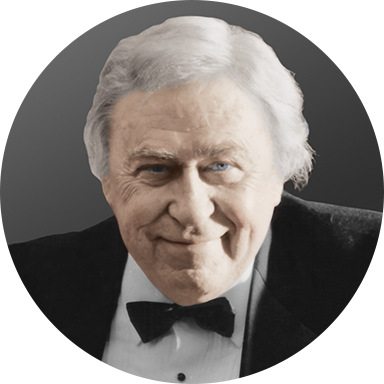
Willard A. Palmer

Willard A. Palmer stands as one of the twentieth century's most prolific music educators, composing nearly 800 works across piano, accordion, guitar, and choral literature. His output spans pedagogical methods, solo repertoire, and scholarly editions, many of which have reached audiences internationally through translations in German, Japanese, French, Dutch, and Spanish. Palmer's early training under Mae Vardeman emphasized improvisation and technique, foundations that would inform his teaching philosophy throughout his career.

Palmer's contributions to music scholarship earned him recognition as a leading authority on Baroque ornamentation and performance practice. He joined the University of Houston faculty where he established the first successful college accordion program, teaching there for 18 years while pursuing postgraduate research. His meticulous work in historical music led to the creation of the widely respected Alfred Masterworks series. Palmer received a Doctor of Humanities degree in 1971 and a Doctor of Music degree in 1983, cementing his standing as both composer and musicologist.

Why we love this

Palmer distills the chord vocabulary of popular music into a reference that pianists actually reach for. Rather than overwhelming students with theory, this book organizes chords by type and presents them with clear notation, fingering, and keyboard diagrams so players can see and understand how each shape functions.

What to expect

Opening this dictionary feels like getting a translator for a language you're trying to speak. Every chord type appears with multiple angles of understanding, so whether you think visually, through notation, or tactilely on the keys, the information clicks into place.

Who it's for

Piano students and teachers navigating popular music, jazz standards, contemporary worship music, or any repertoire built on chord progressions rather than classical harmonic practice. This resource serves pianists who need quick access to voicings without hunting through fake books or method books.

How to get the most out of it

  • Study one chord family at a time rather than trying to memorize the entire book at once. Mastering major triads and their inversions first builds a foundation for recognizing extensions and alterations.
  • Use the keyboard diagrams to connect hand position and muscle memory with the written notation. Play each chord voicing multiple times in sequence to develop tactile fluency.
  • Apply these chords to real chord progressions you're learning or improvising with. The reference becomes most valuable when you're actively using it to support repertoire study or playing by ear.

How to use it

Keep this on the piano as a studio reference when teaching students who work with lead sheets or chord symbols. It becomes essential in jazz or contemporary music units where chord recognition and voicing control move to the forefront of technique.

Skills your students will build

  • Recognizing chord types by sight and sound
  • Building chord voicings using proper fingering
  • Reading chord symbols and translating them to keyboard
  • Understanding chord inversions and extensions
  • Applying theoretical knowledge to practical keyboard application

You May Also Like