
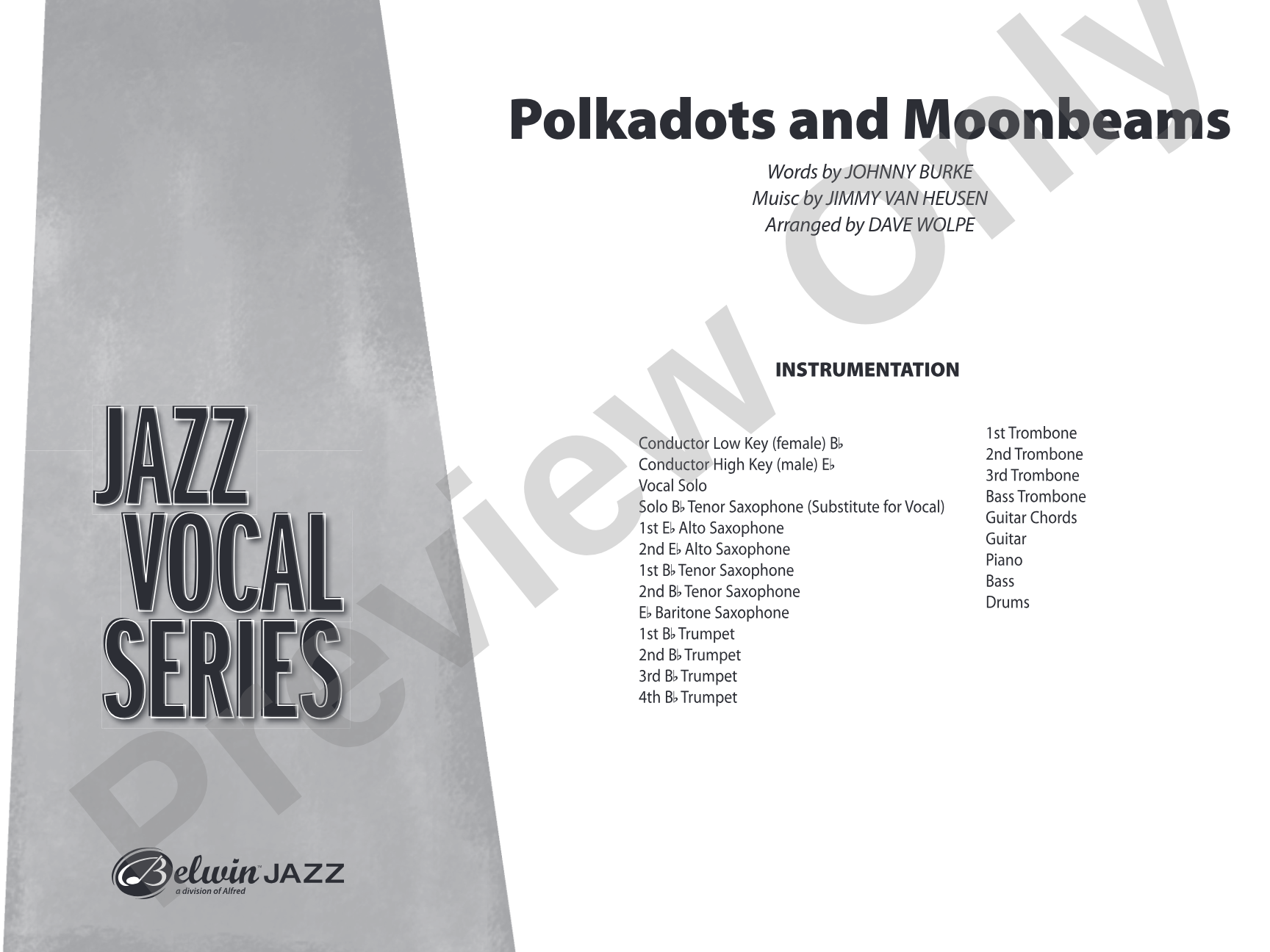
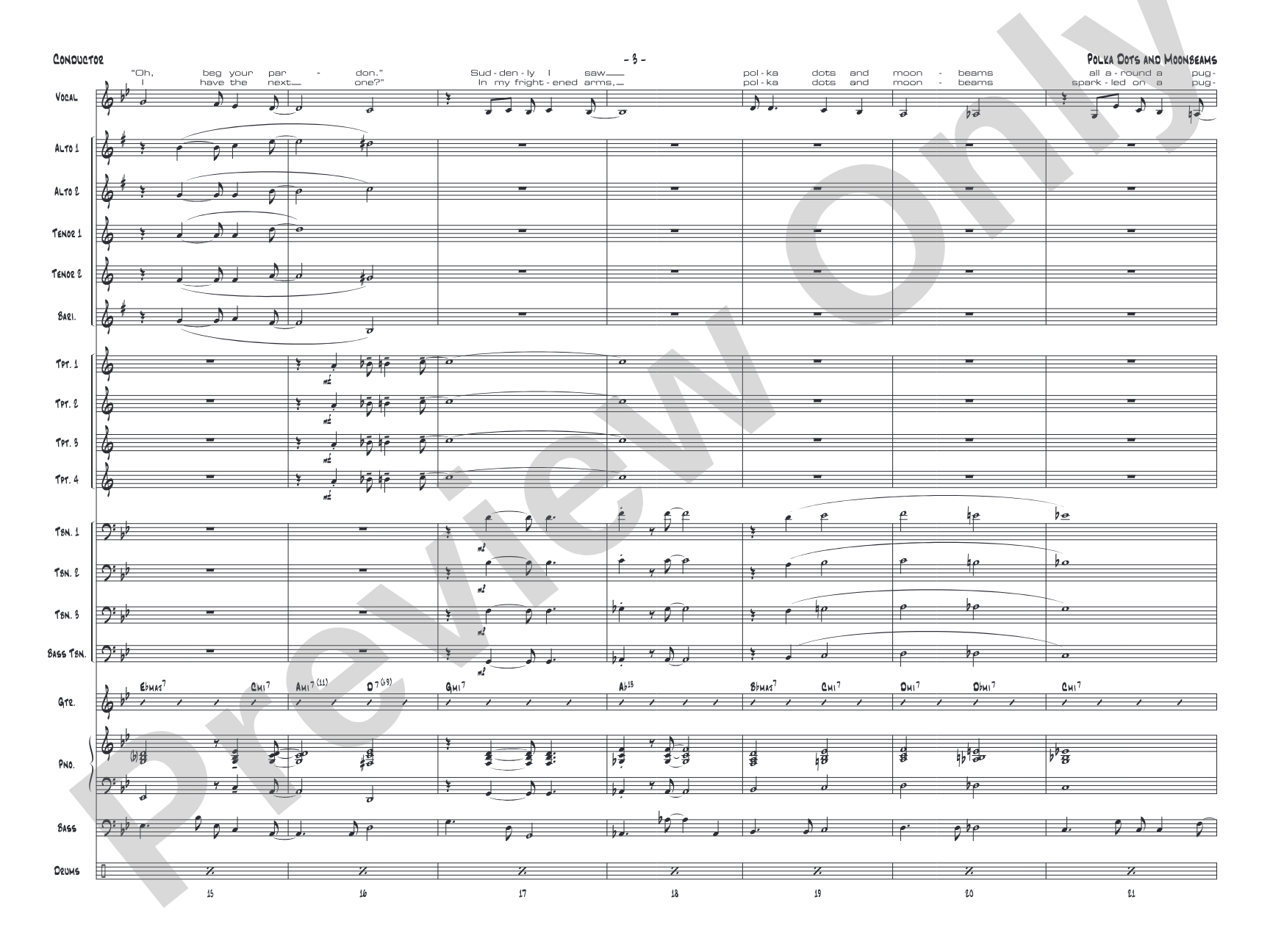
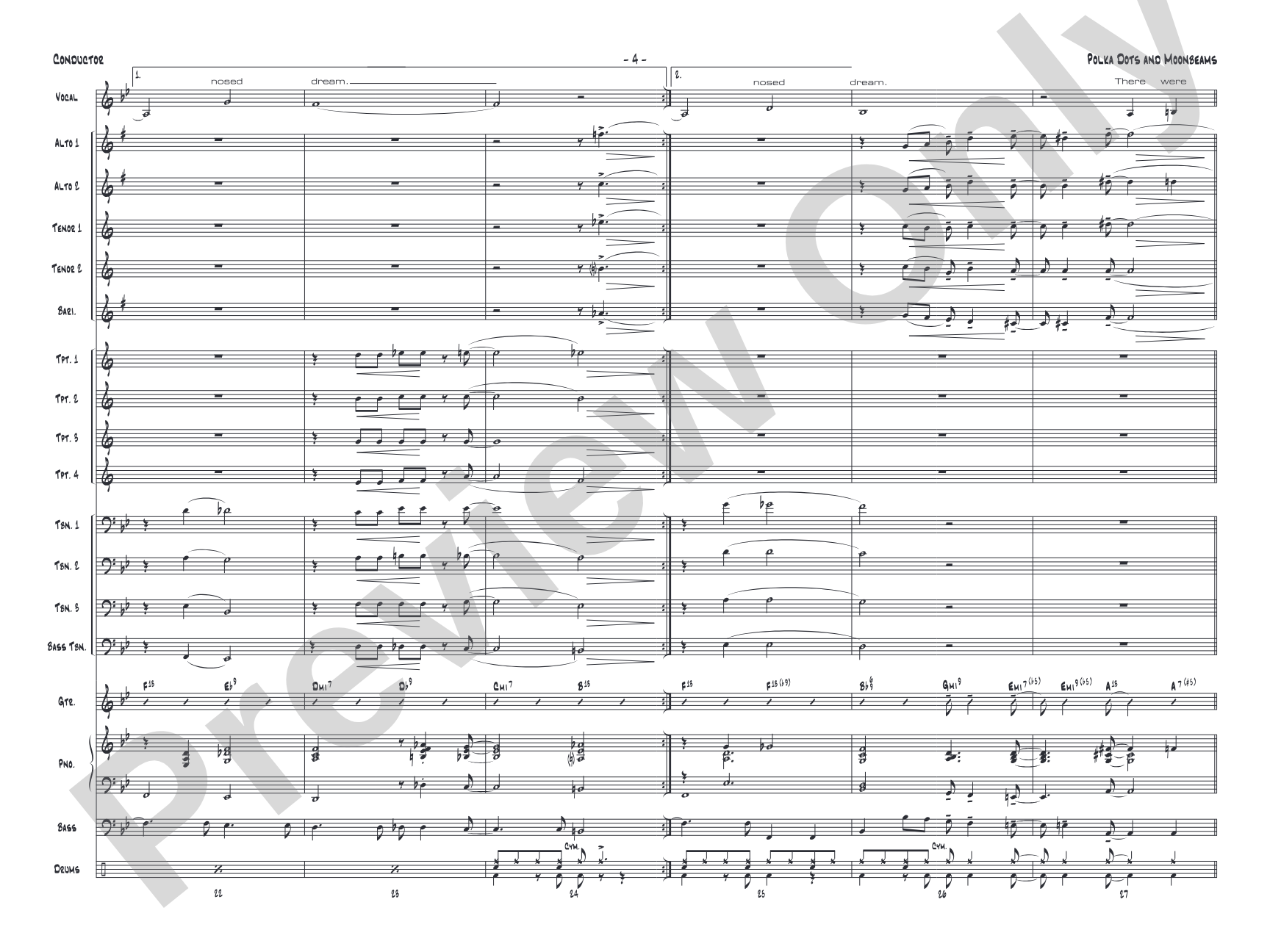
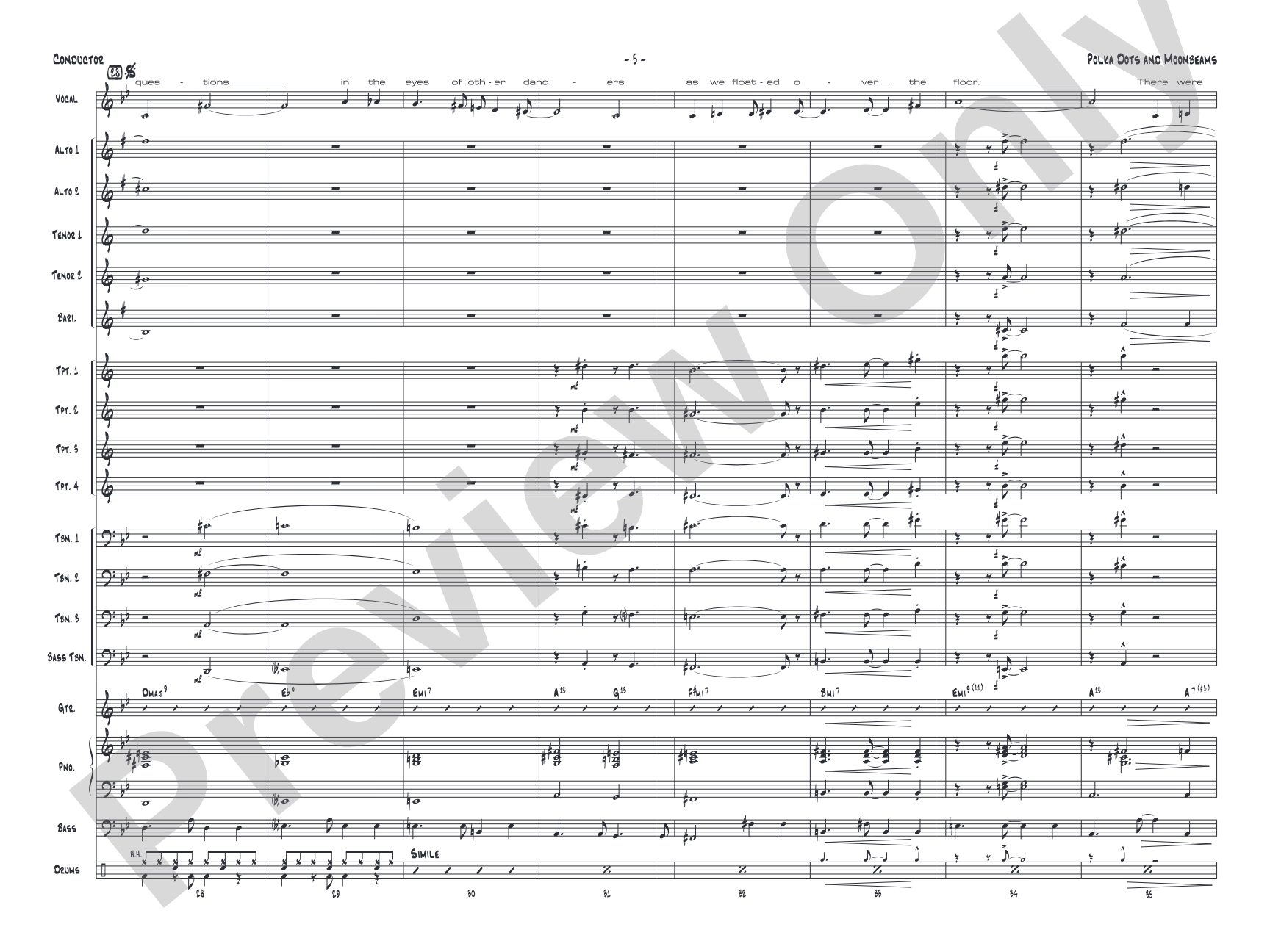
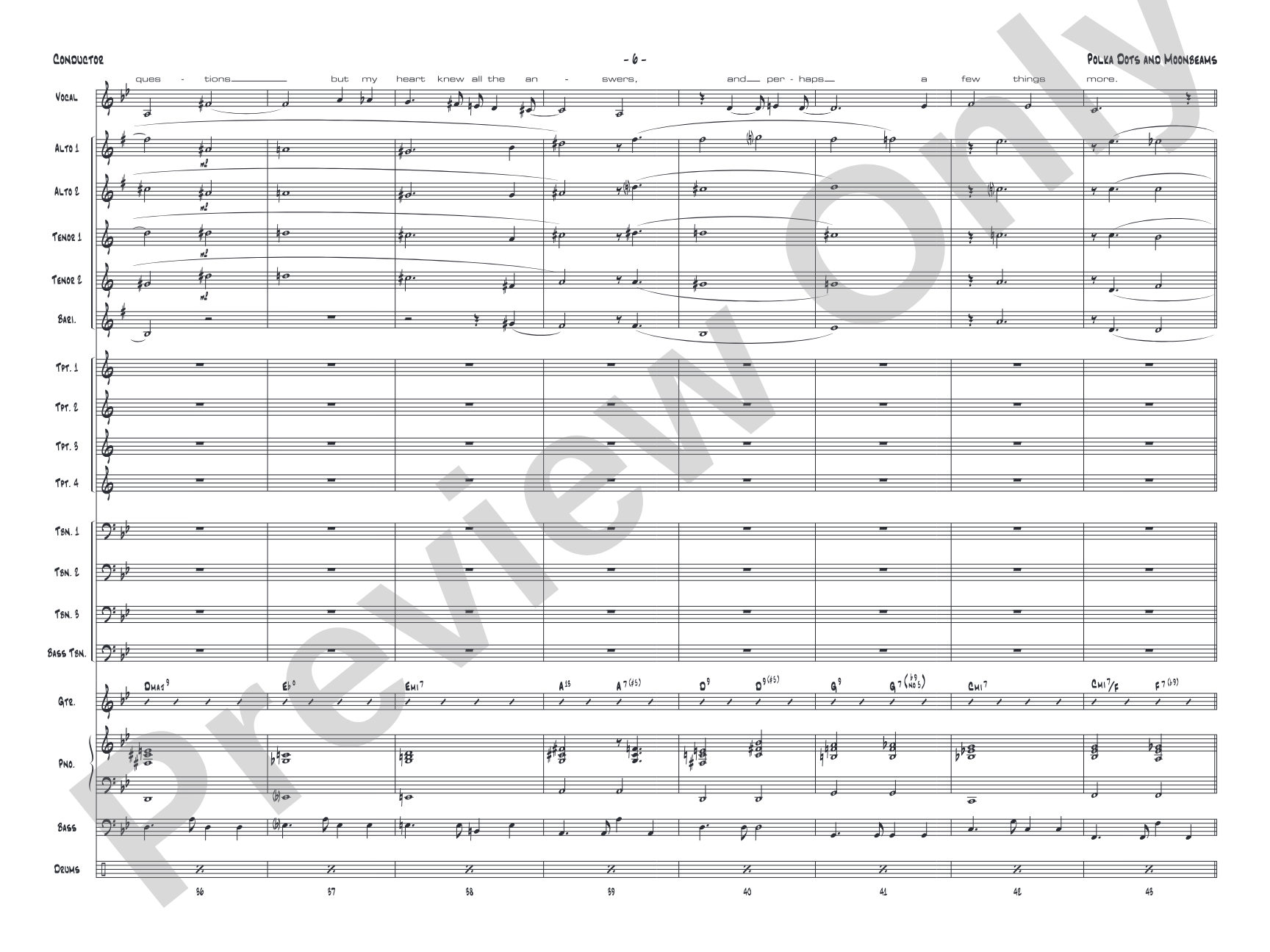
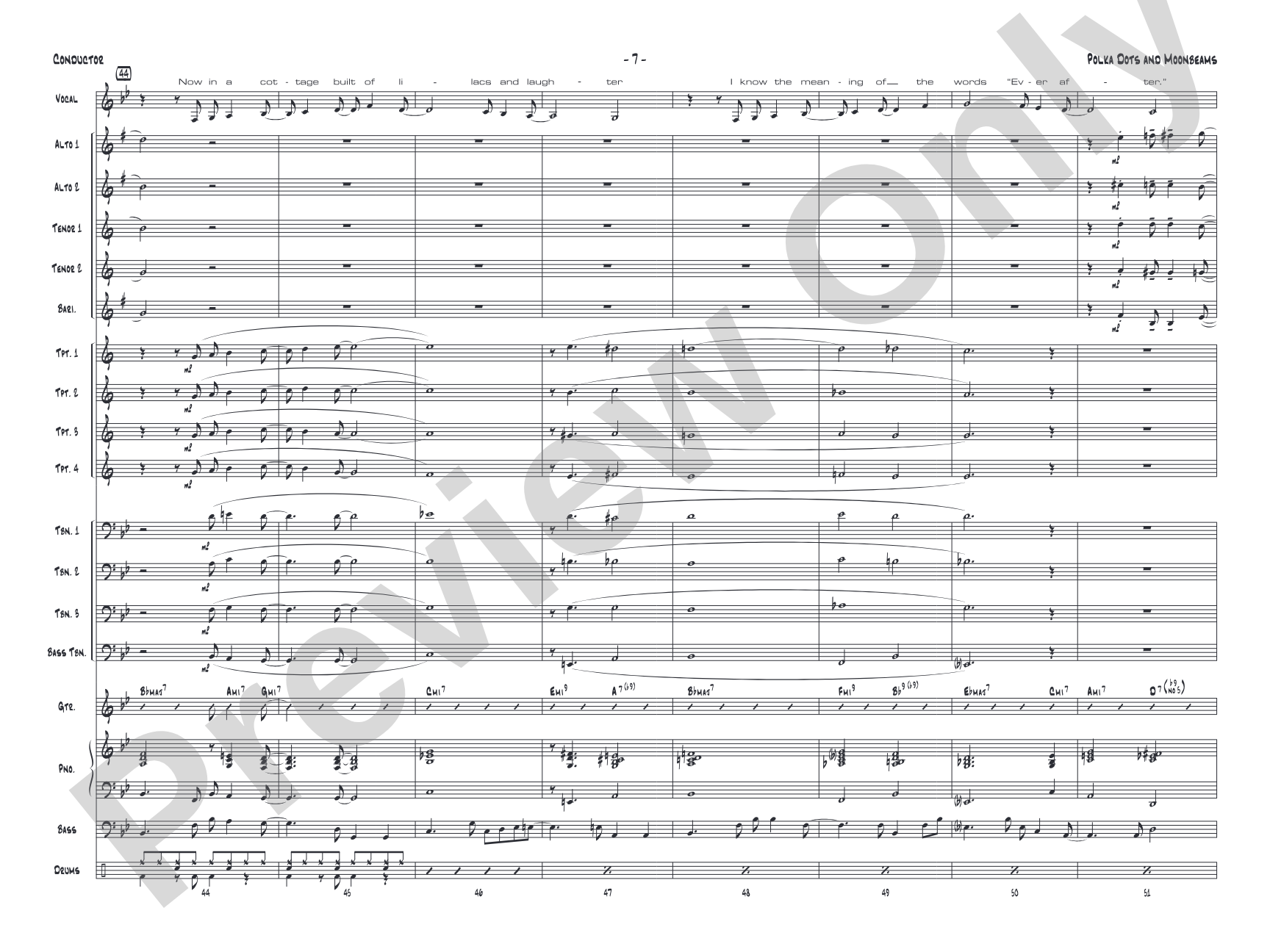
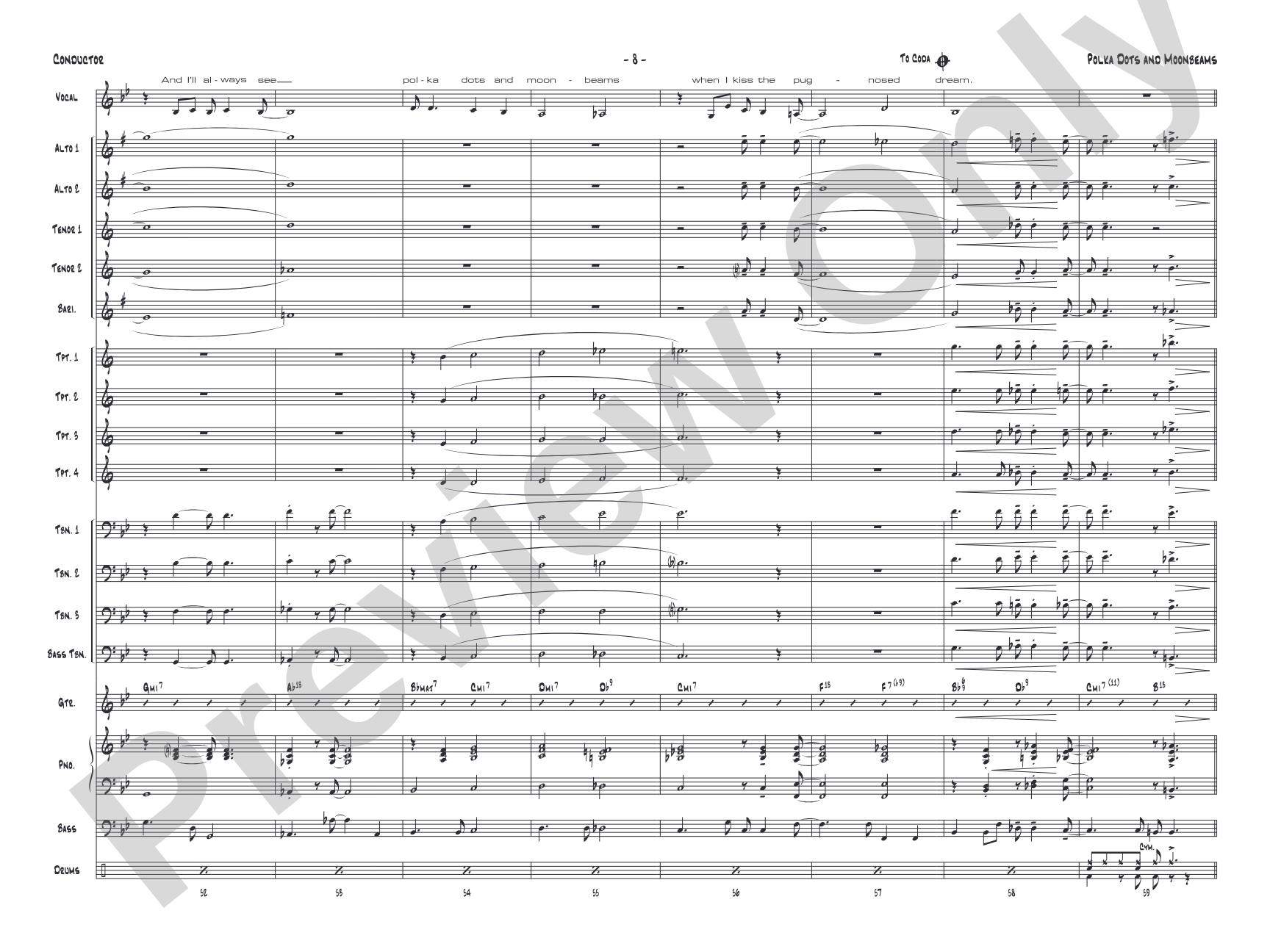
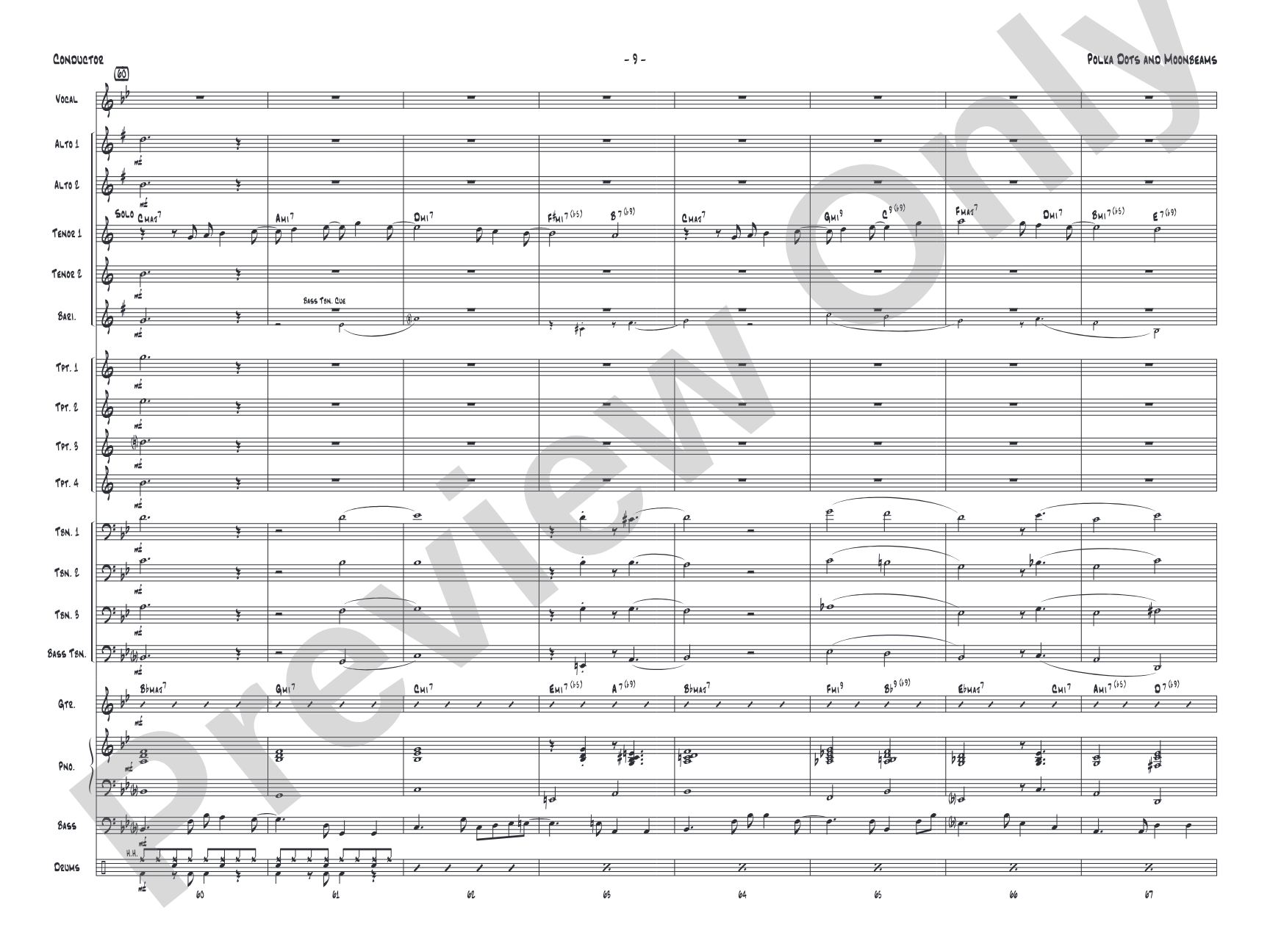
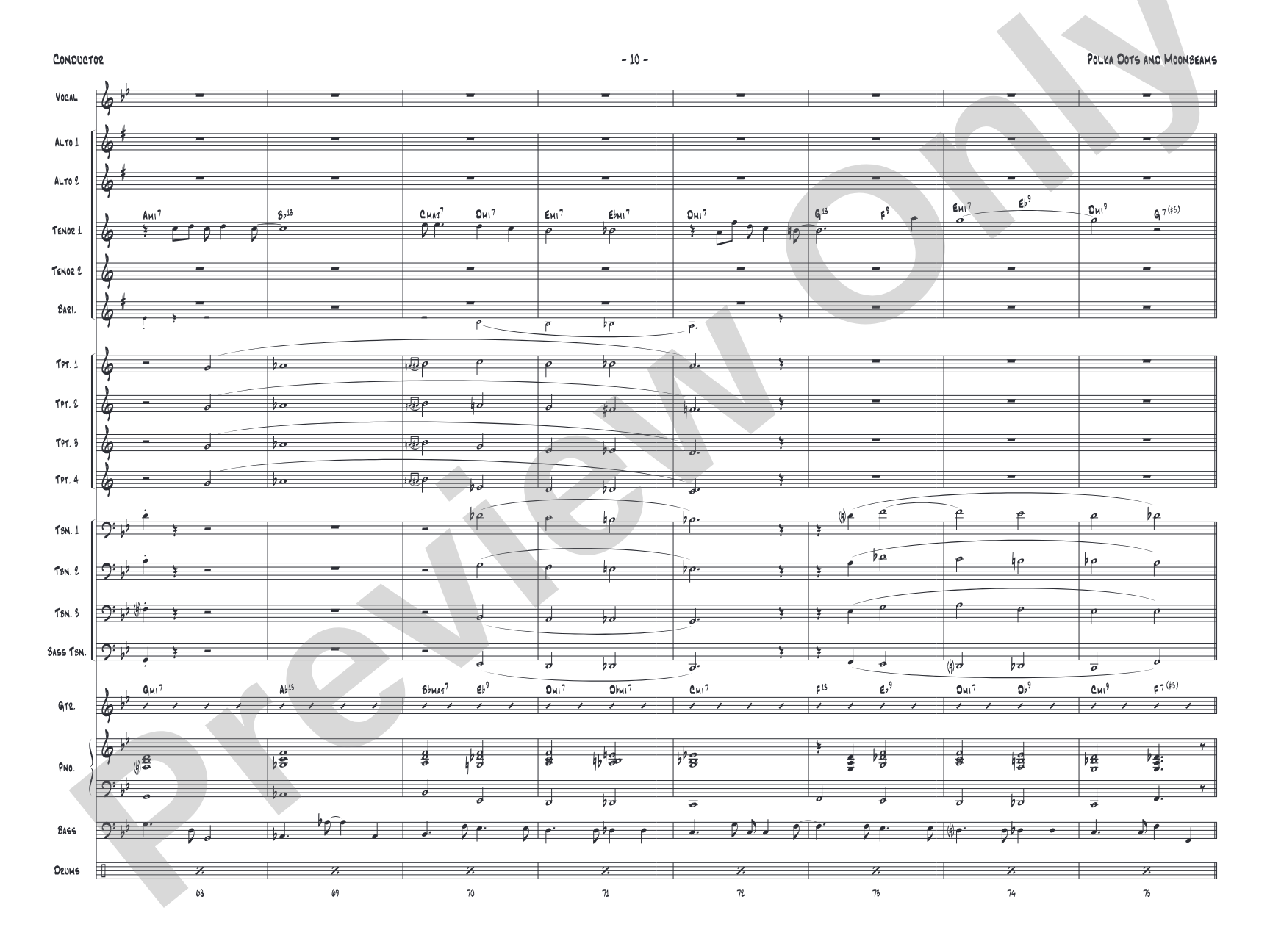
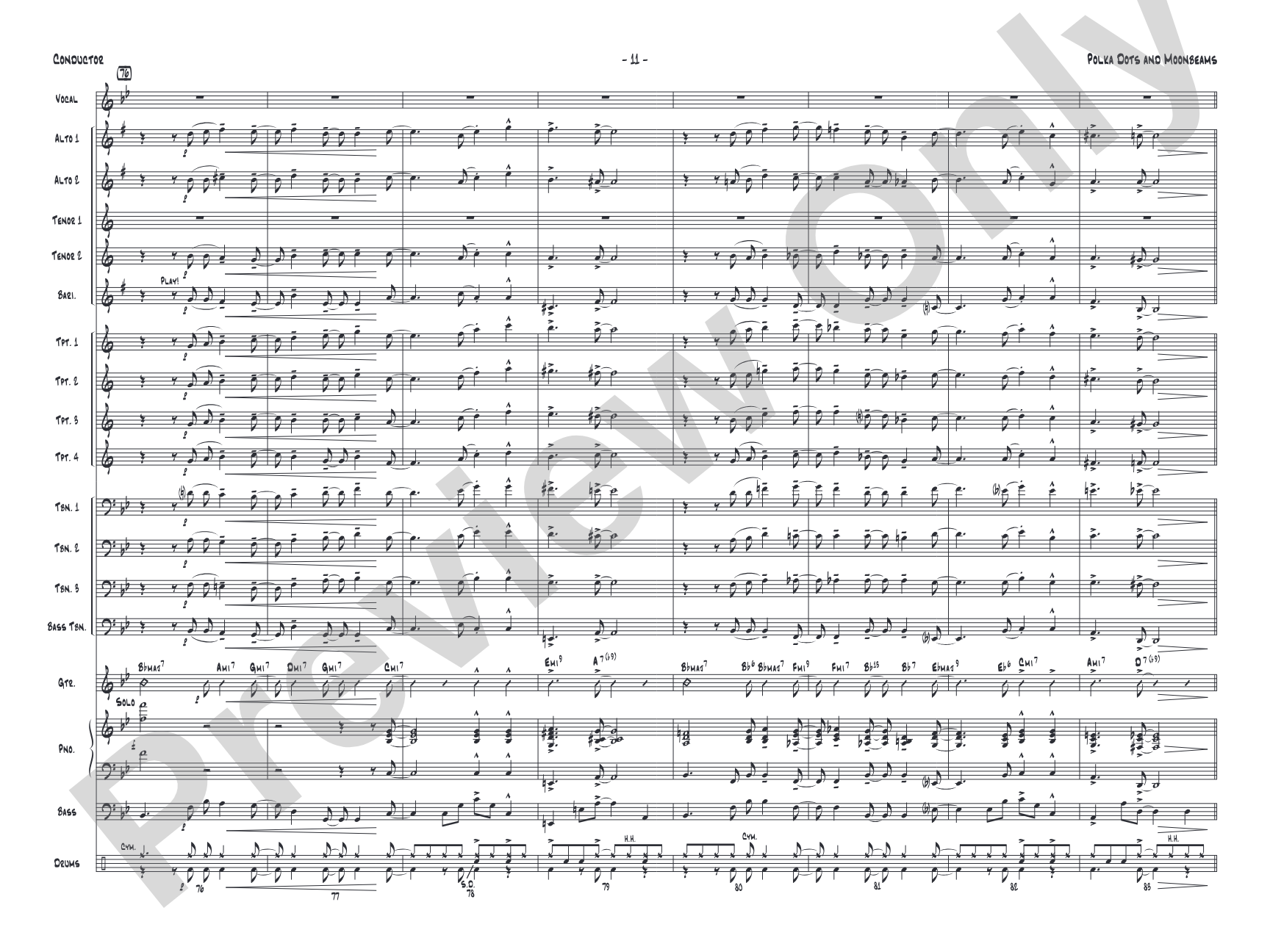
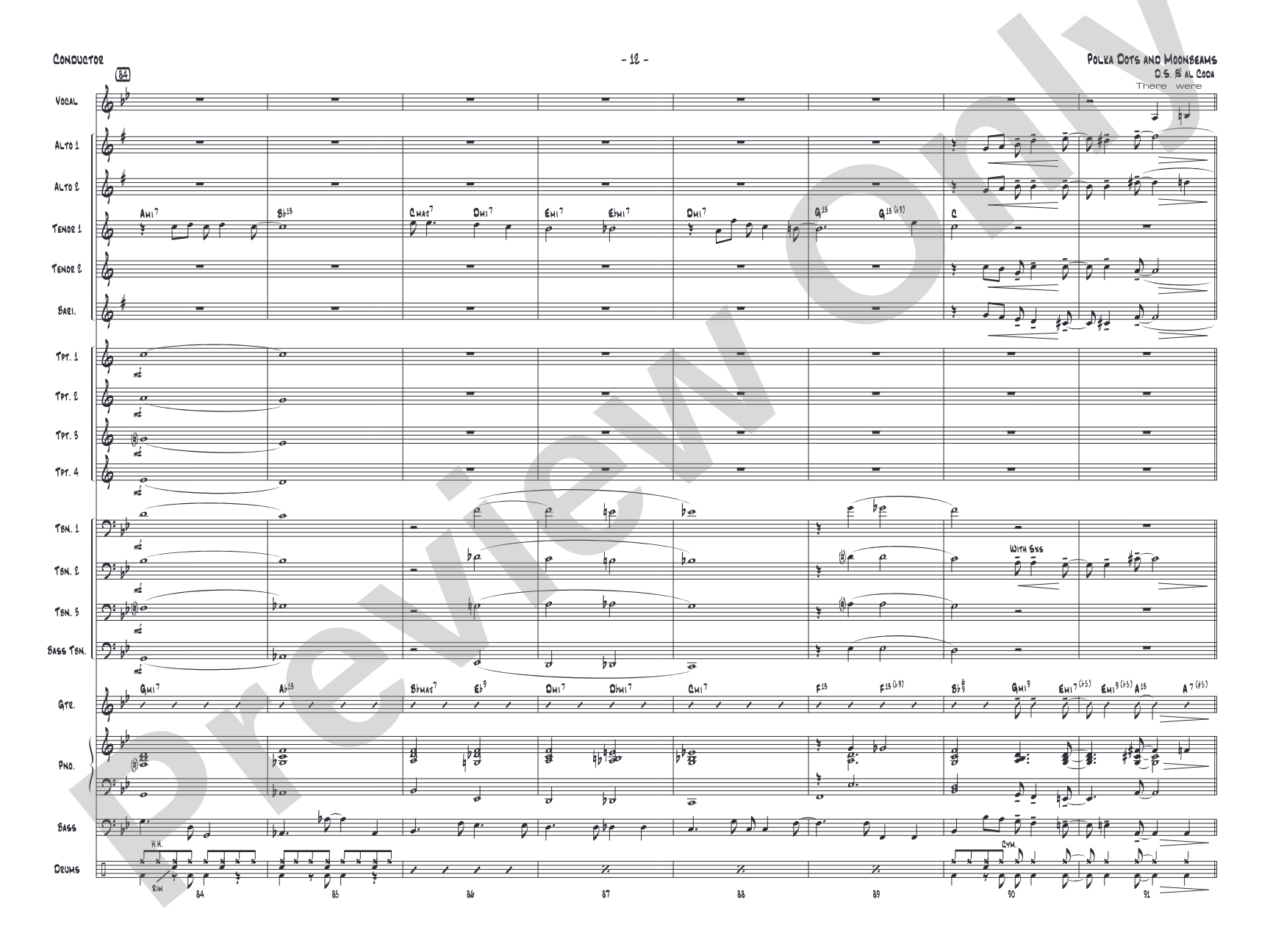
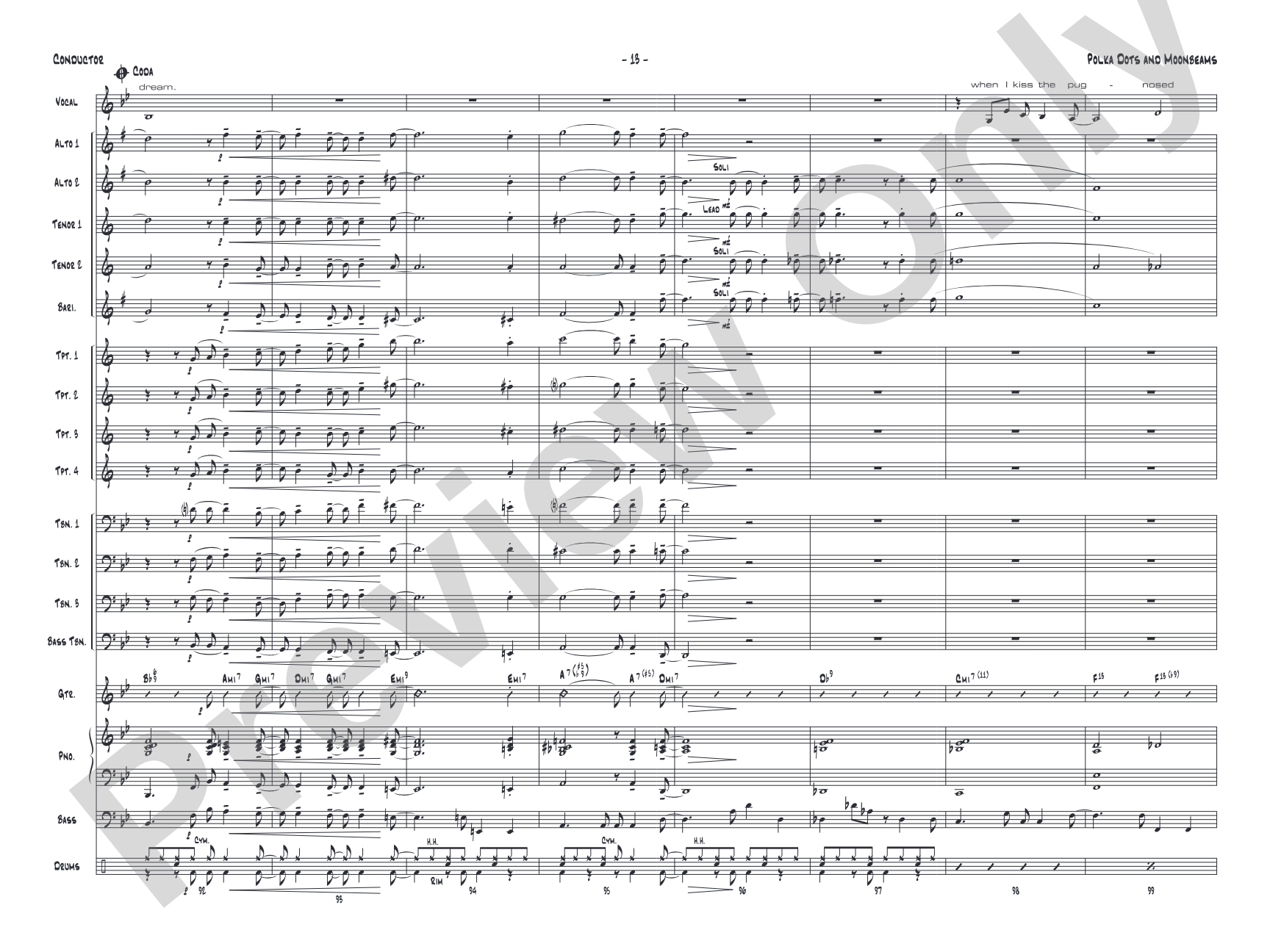
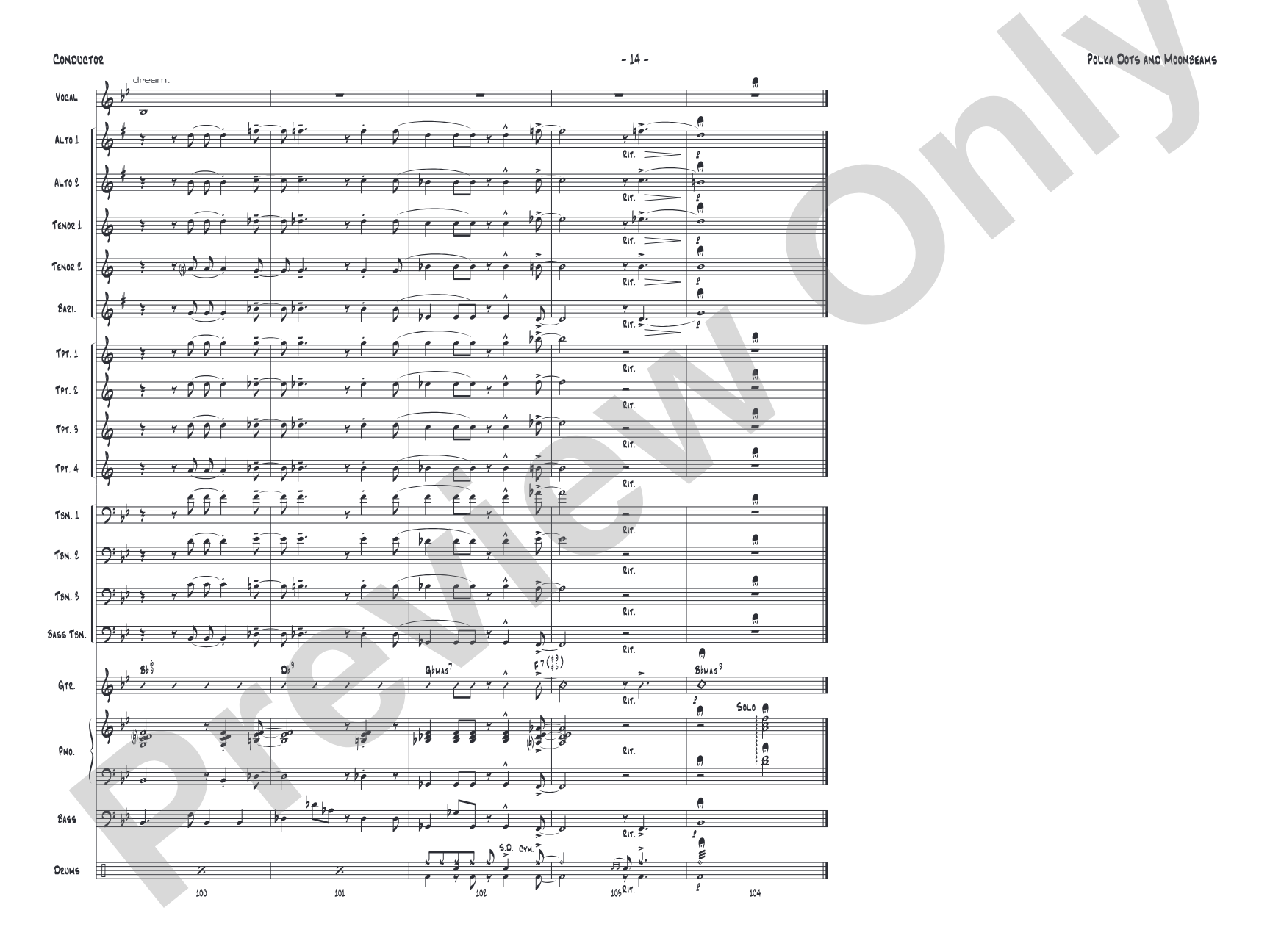
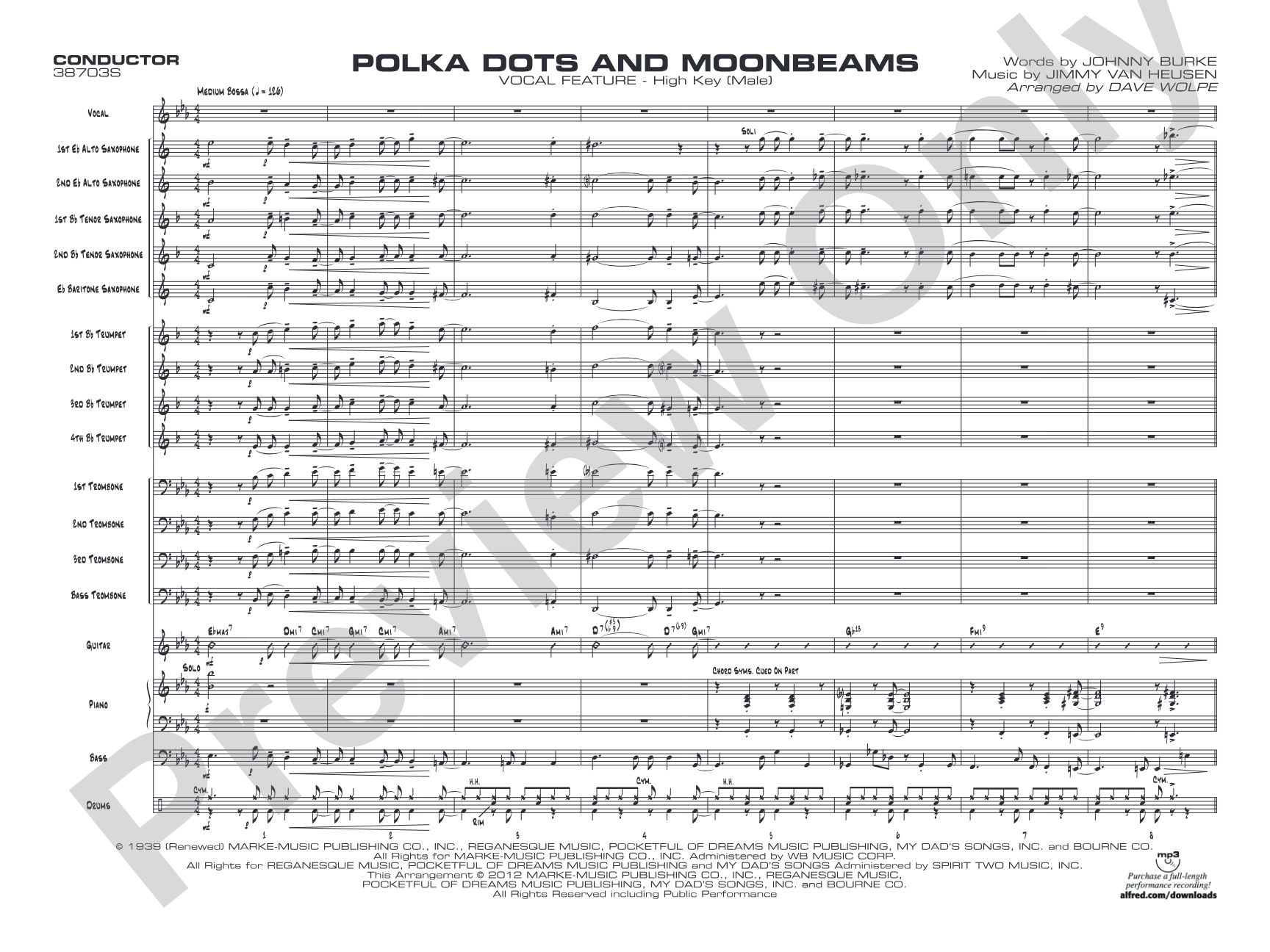
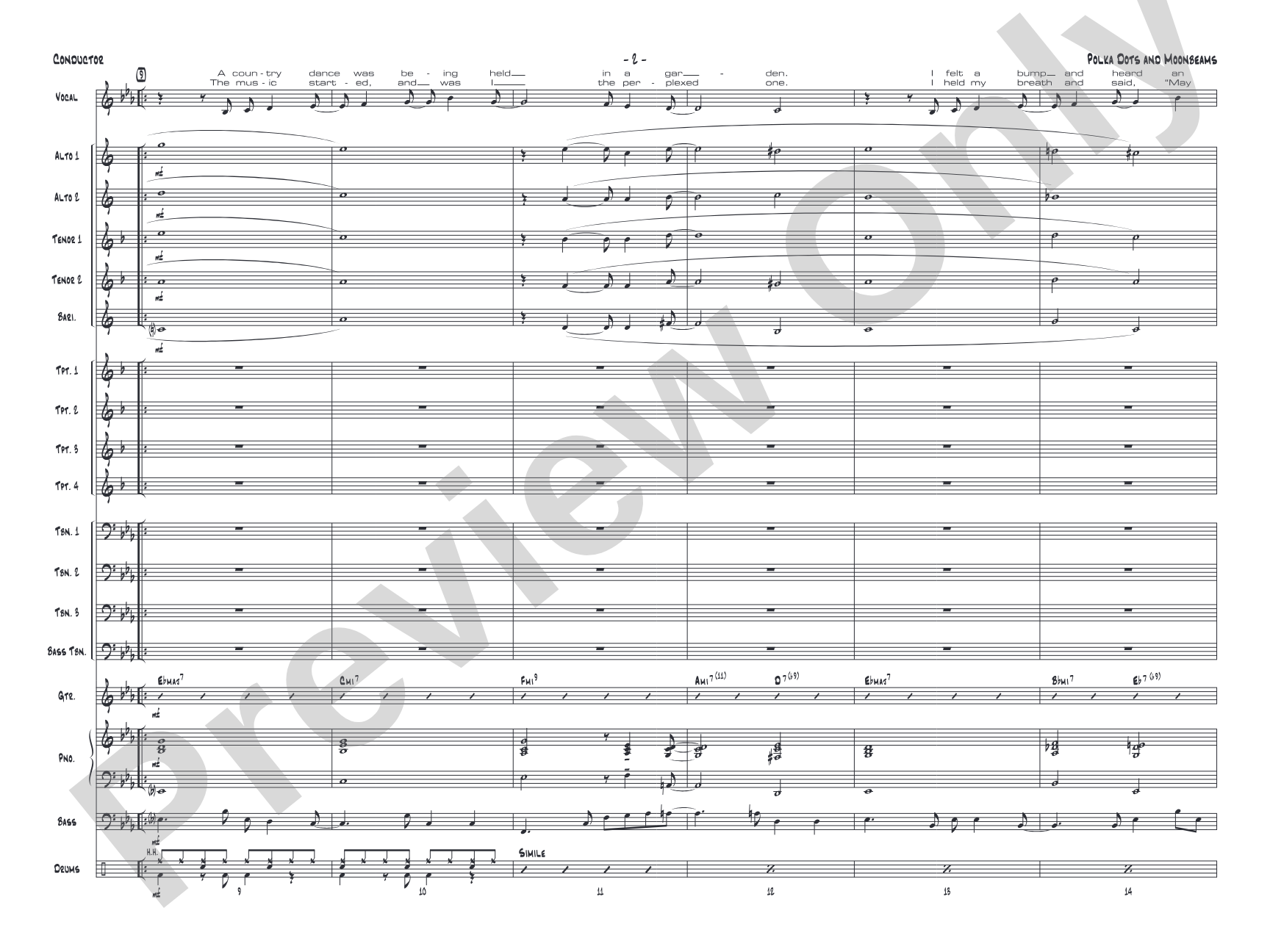
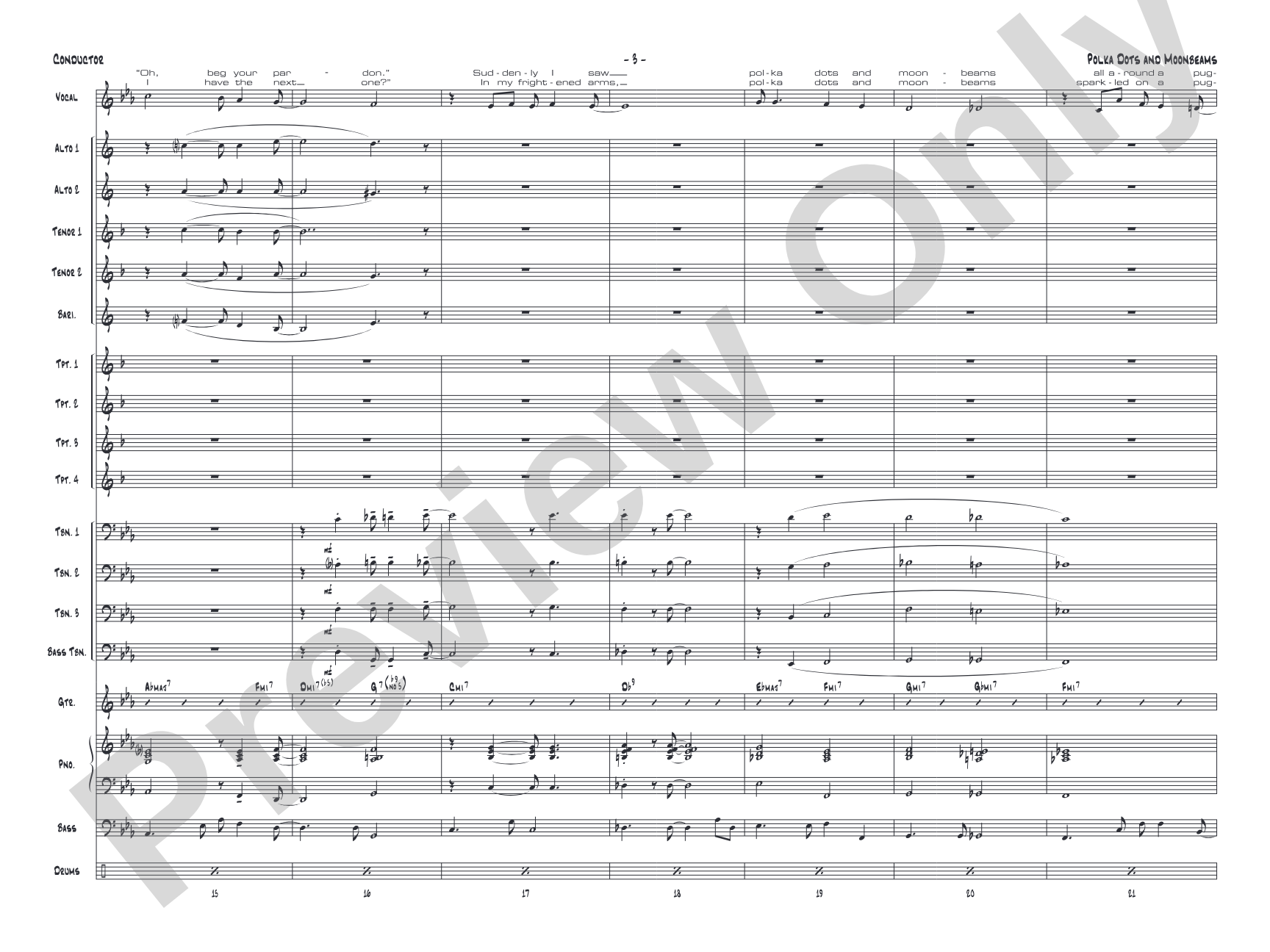
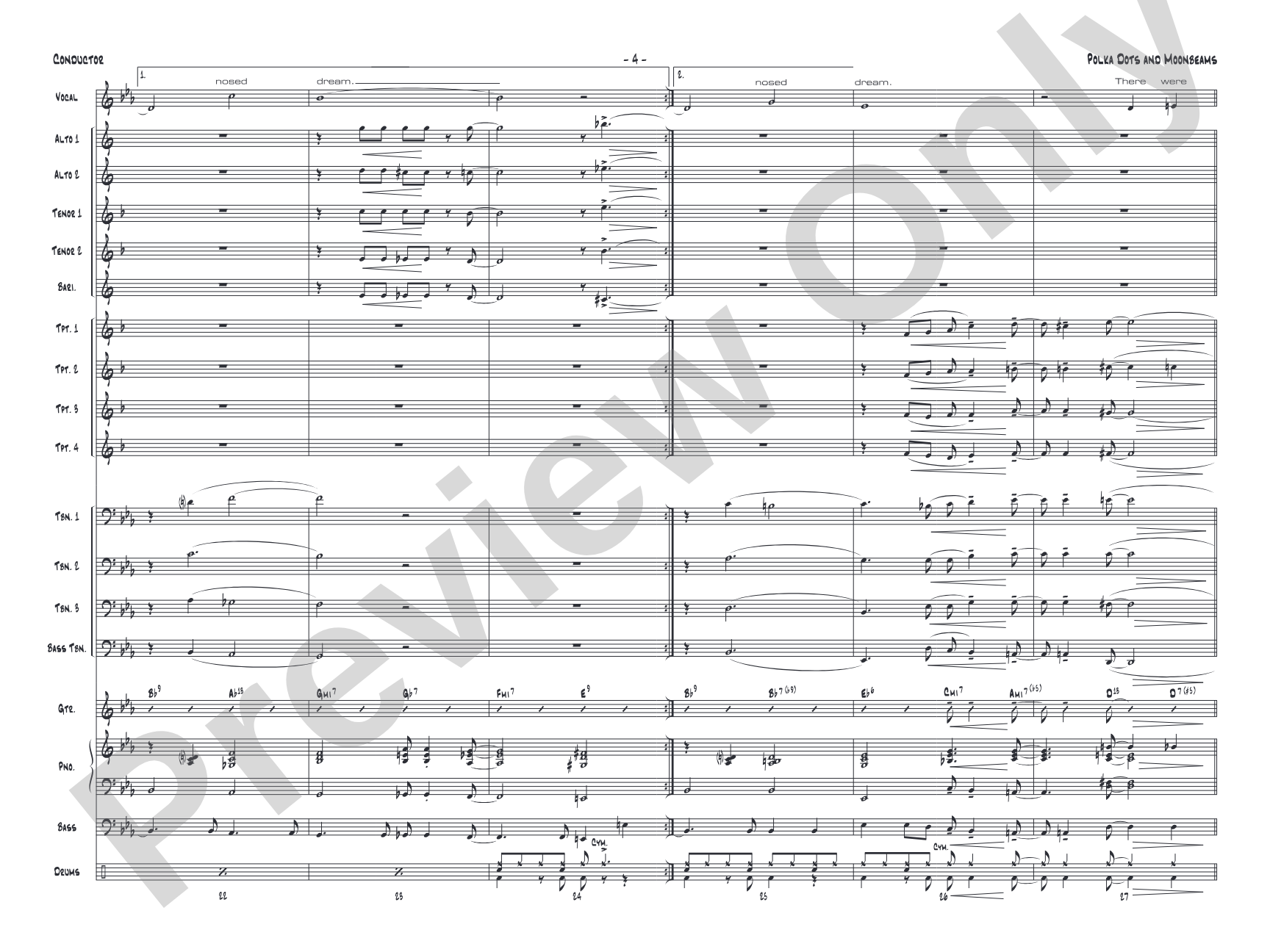
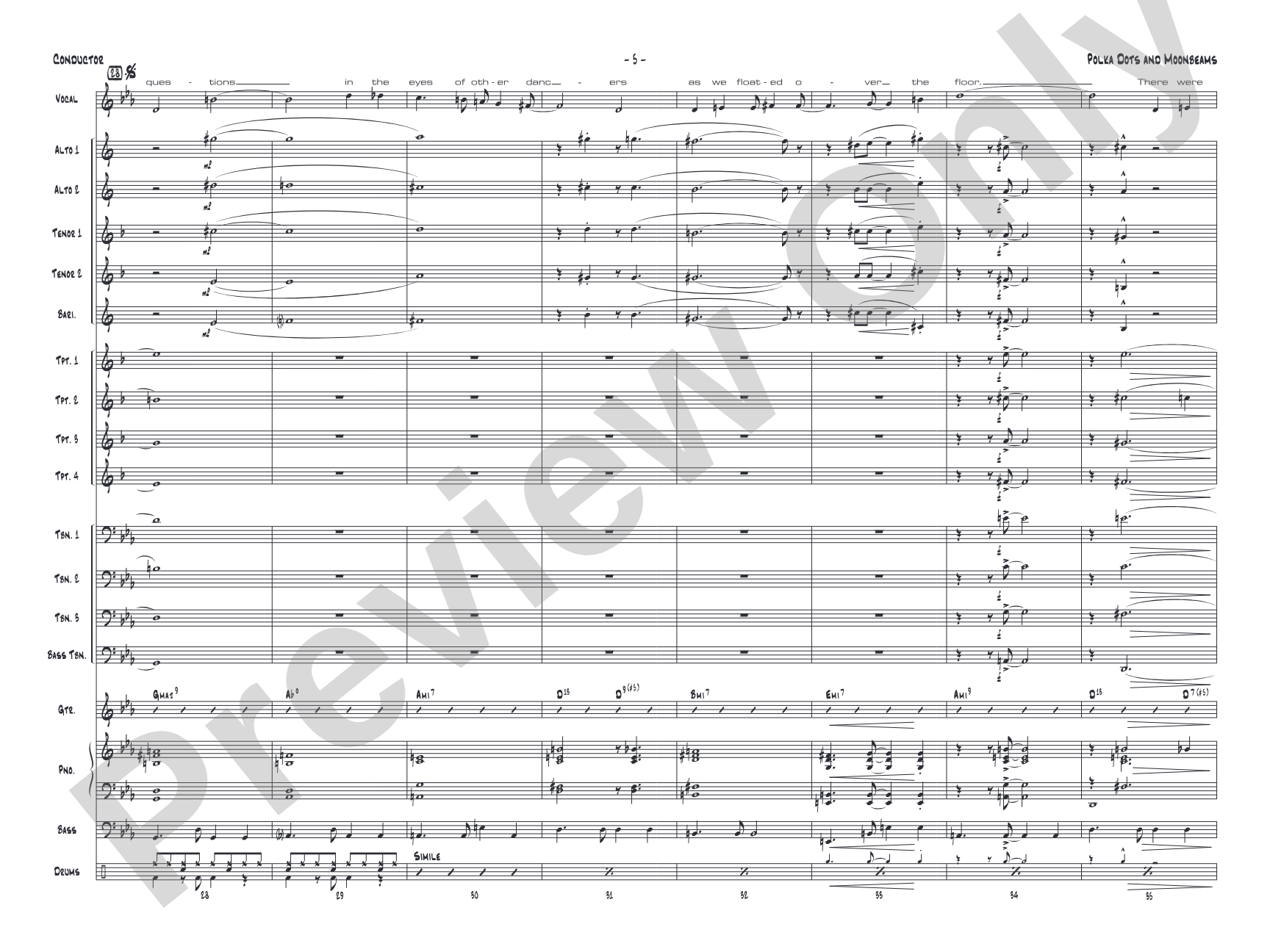
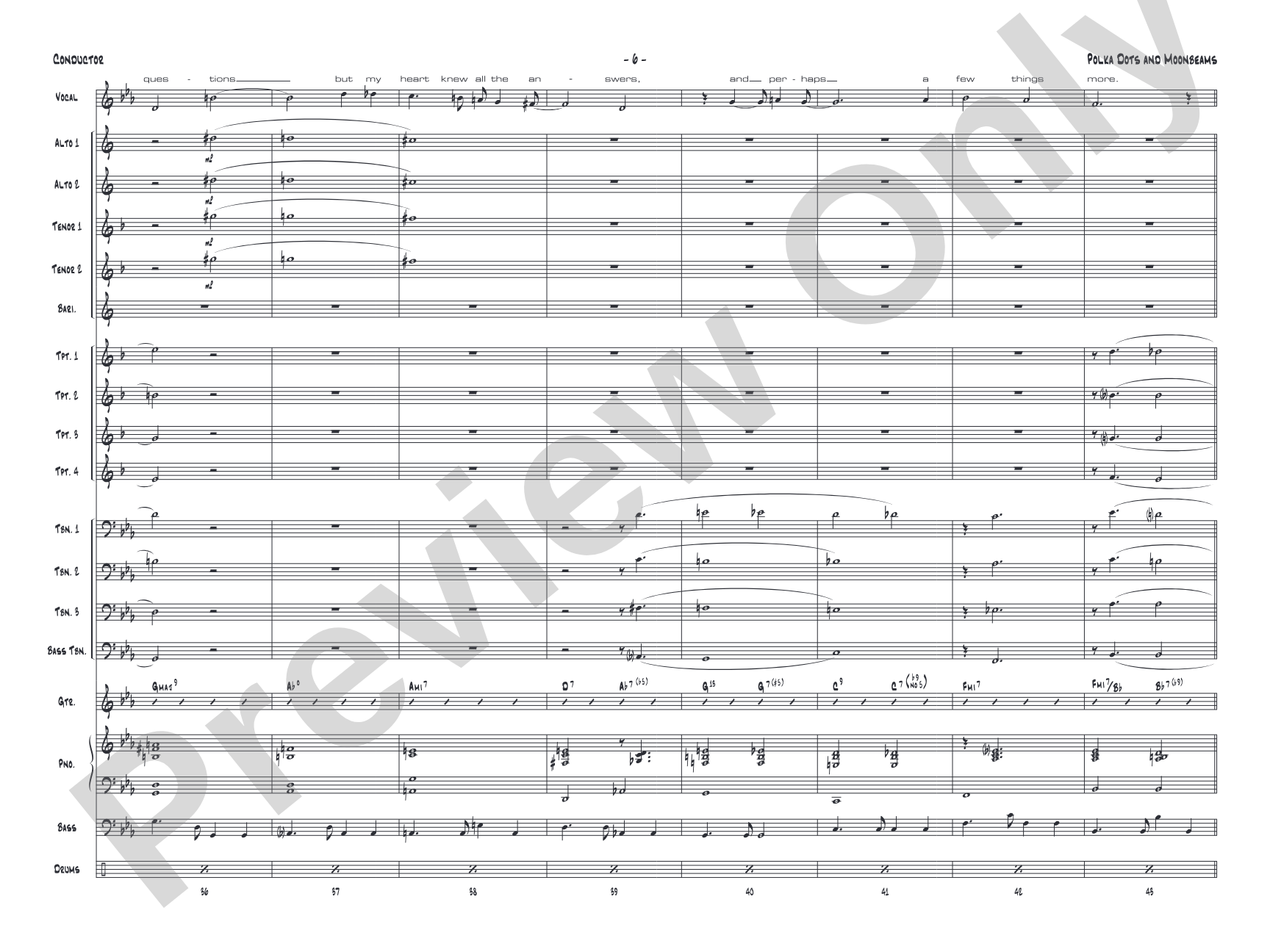
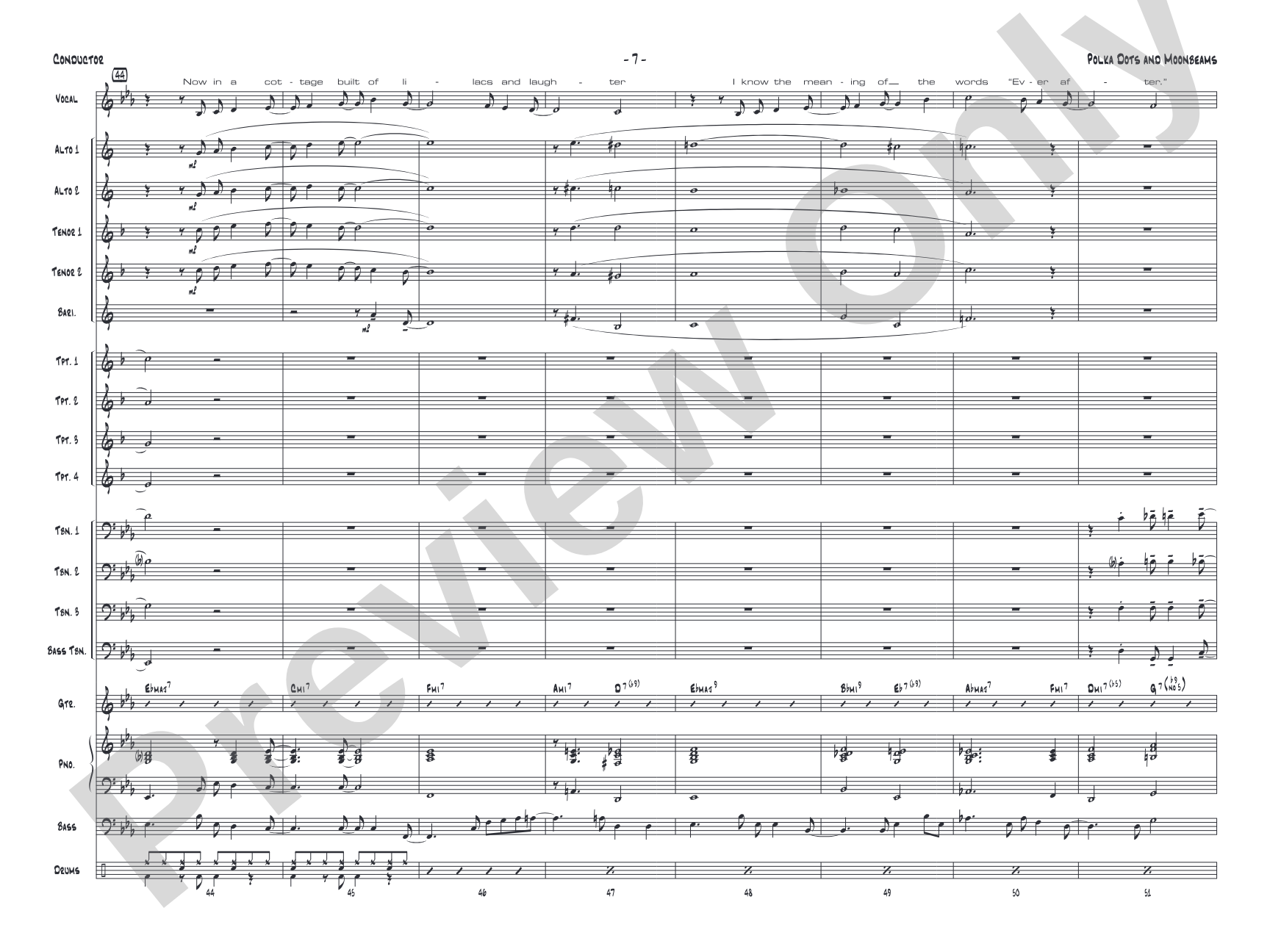
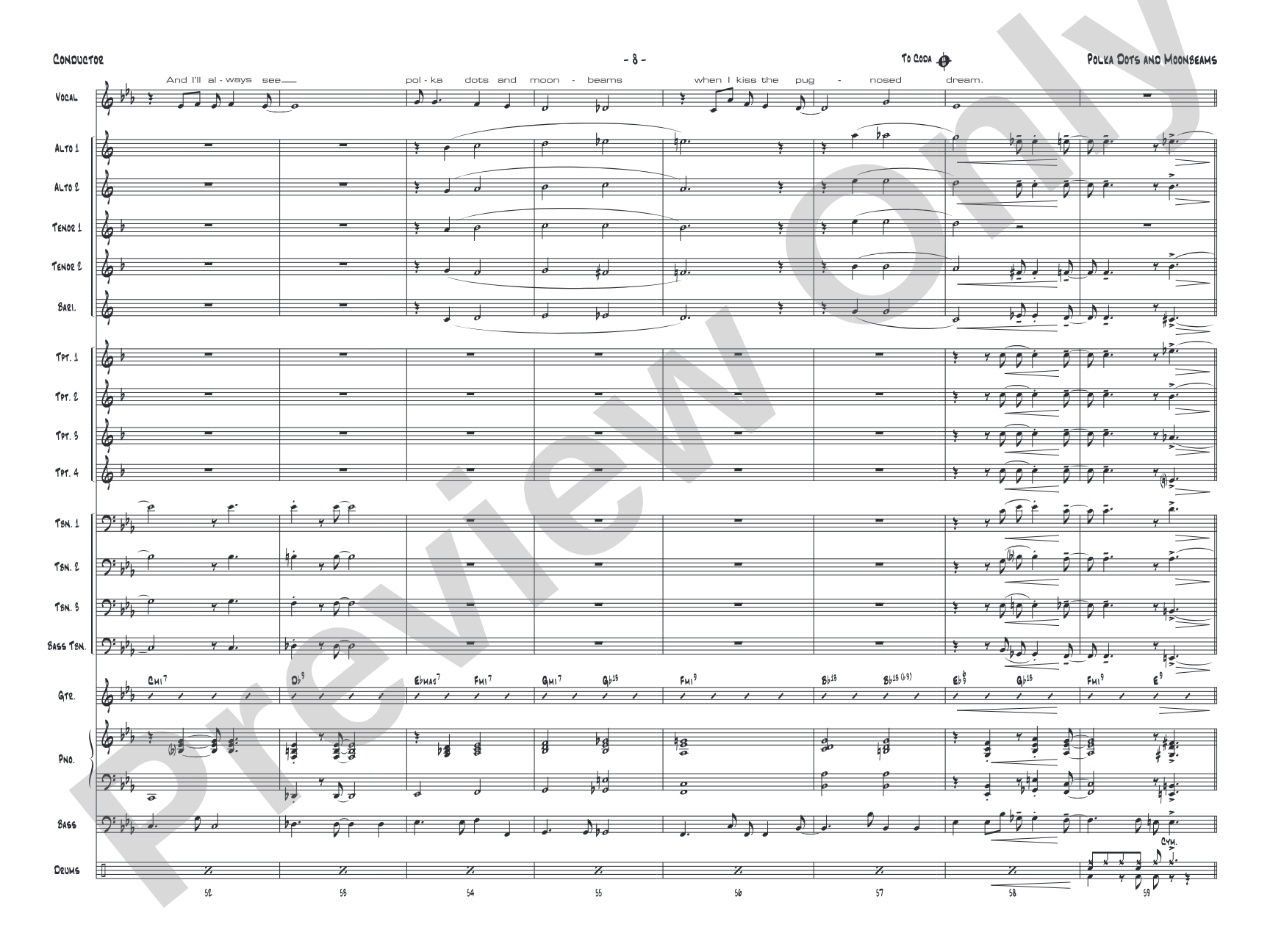
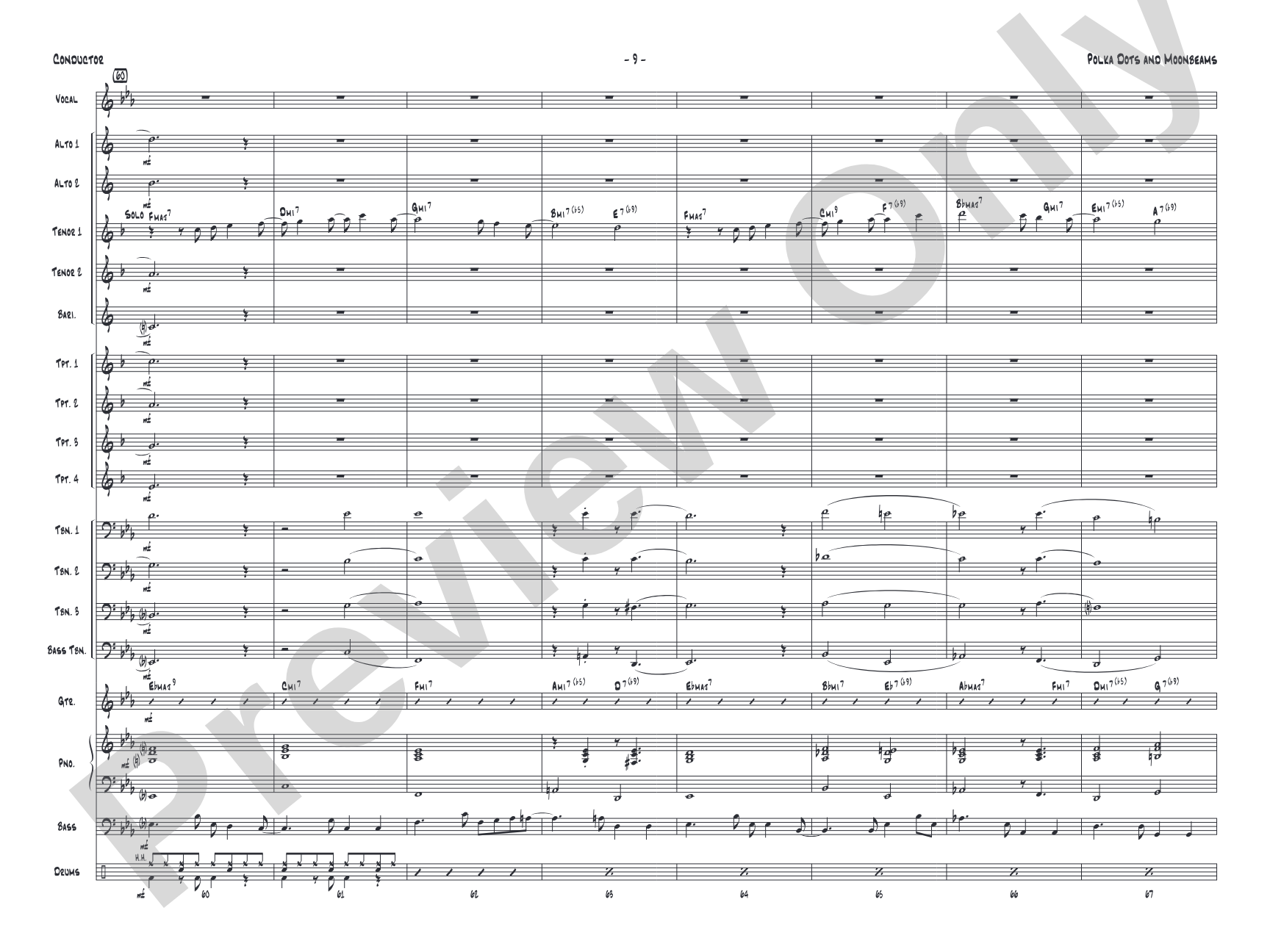
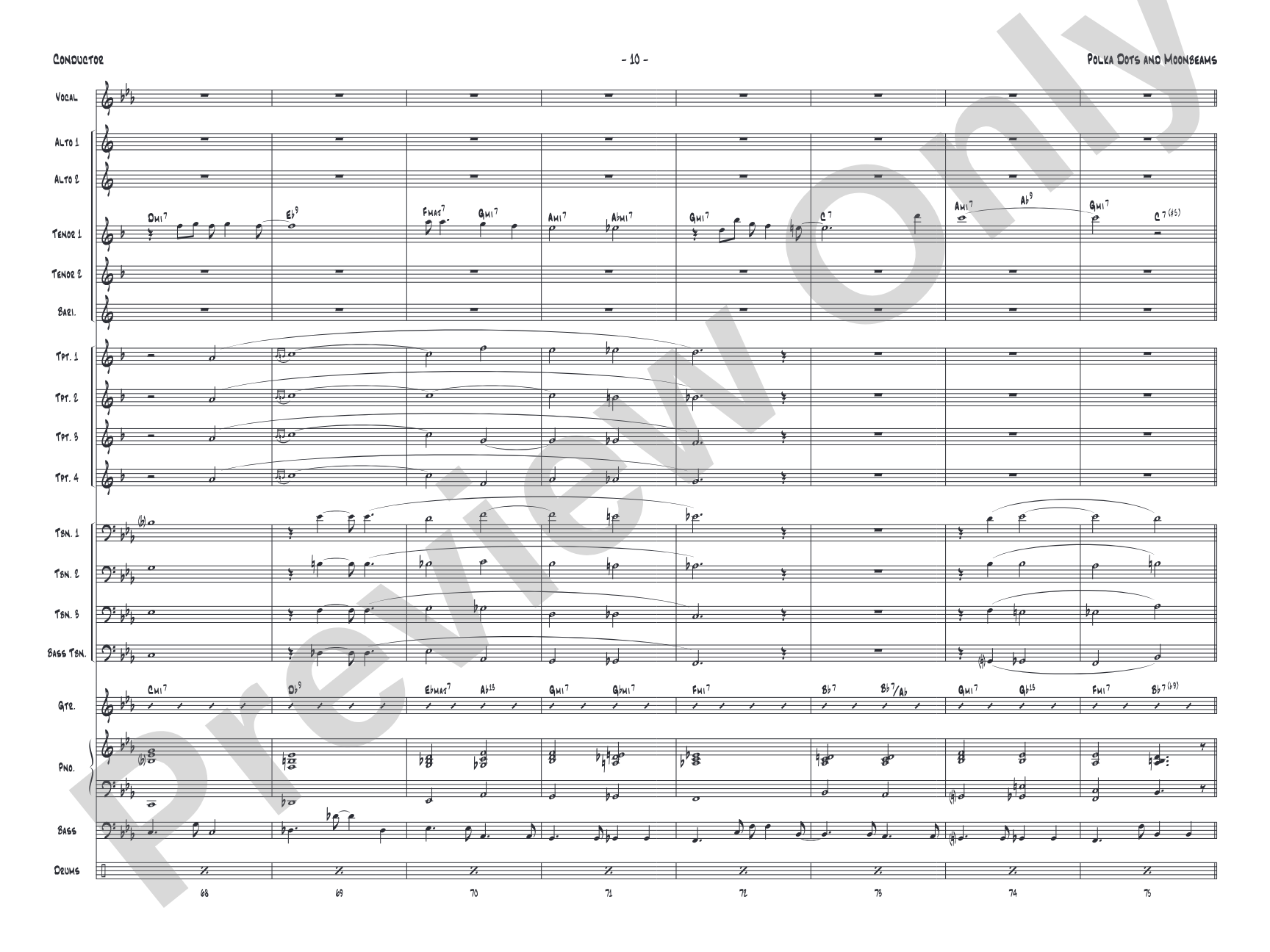
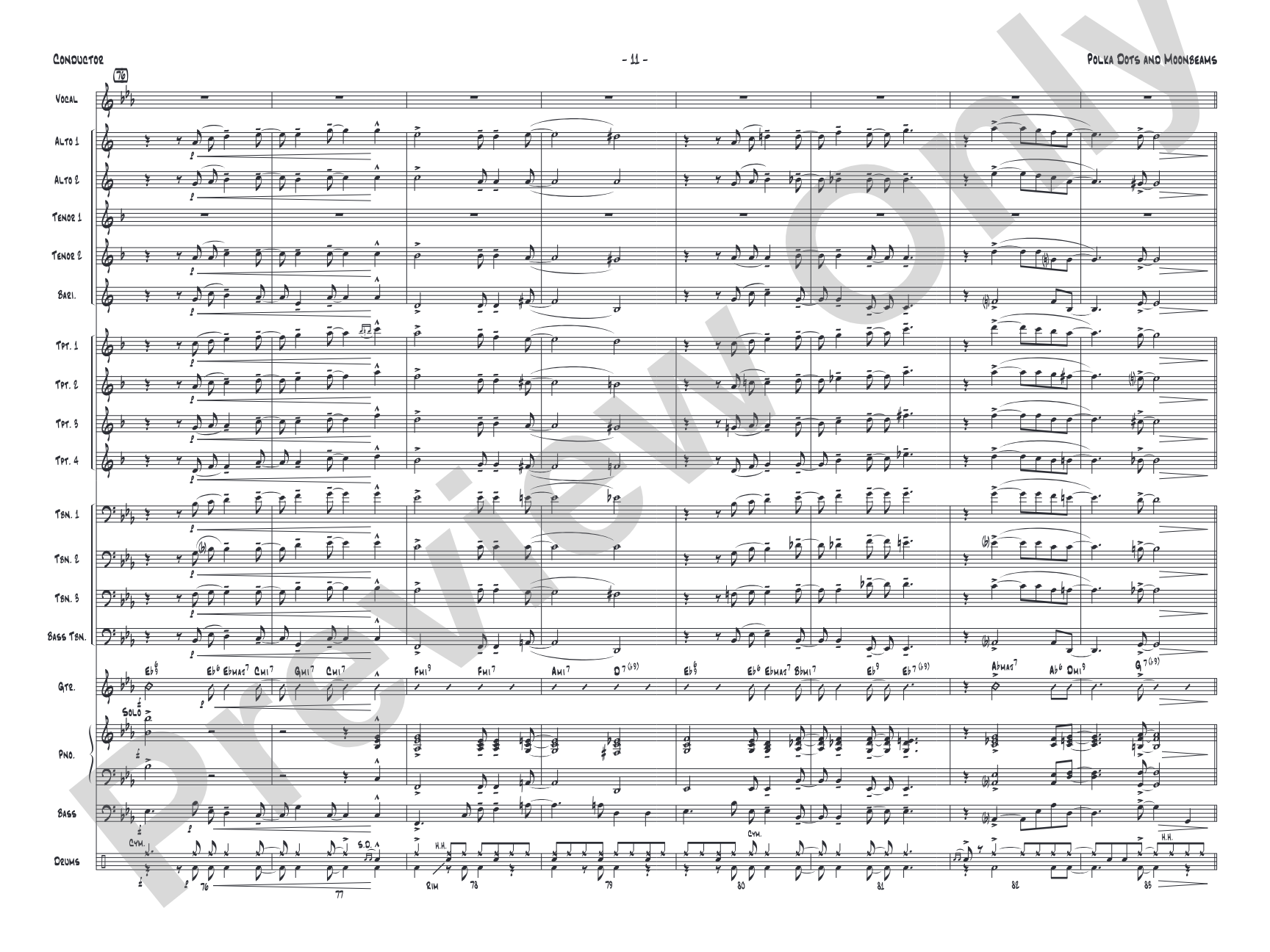
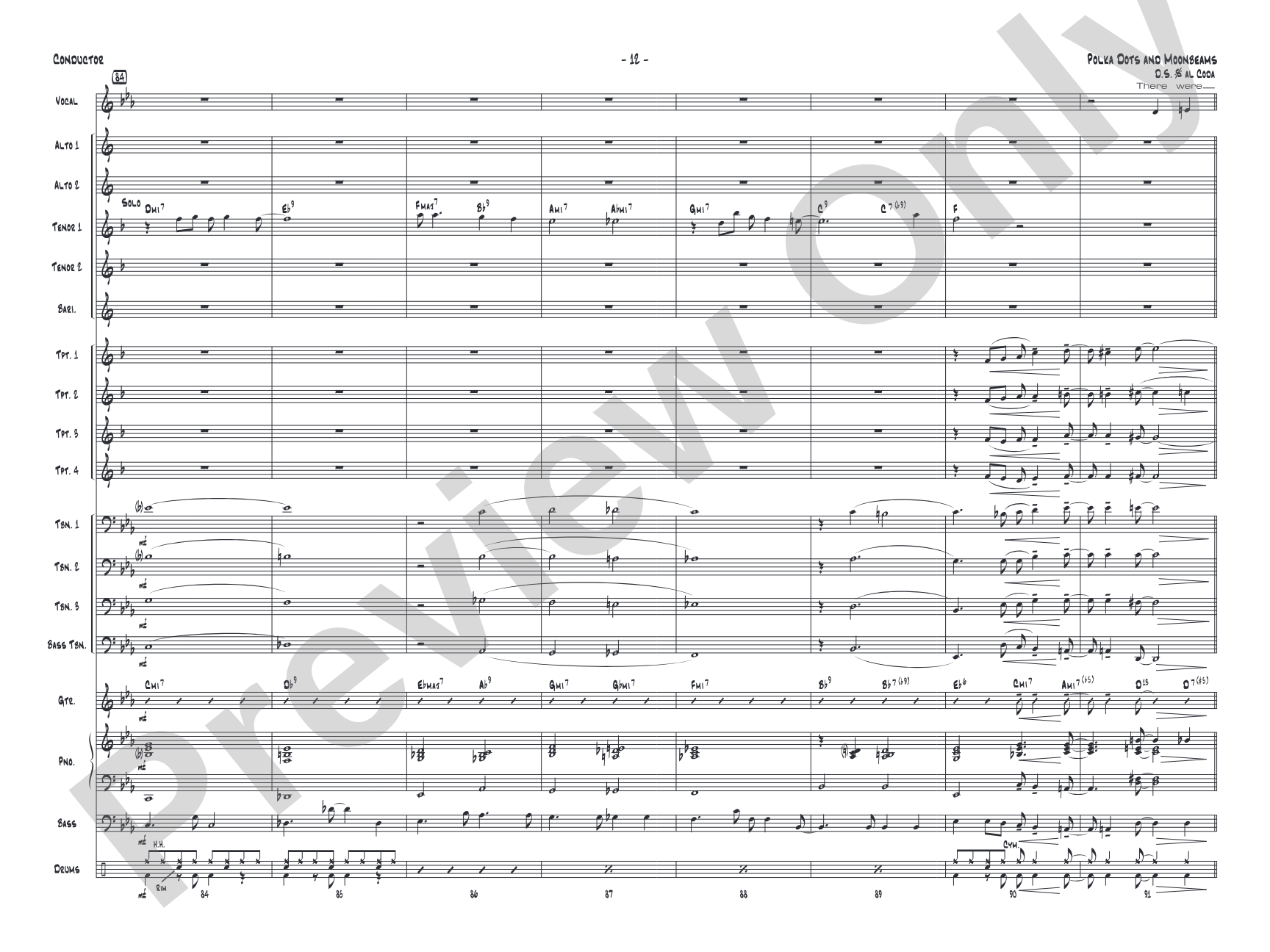
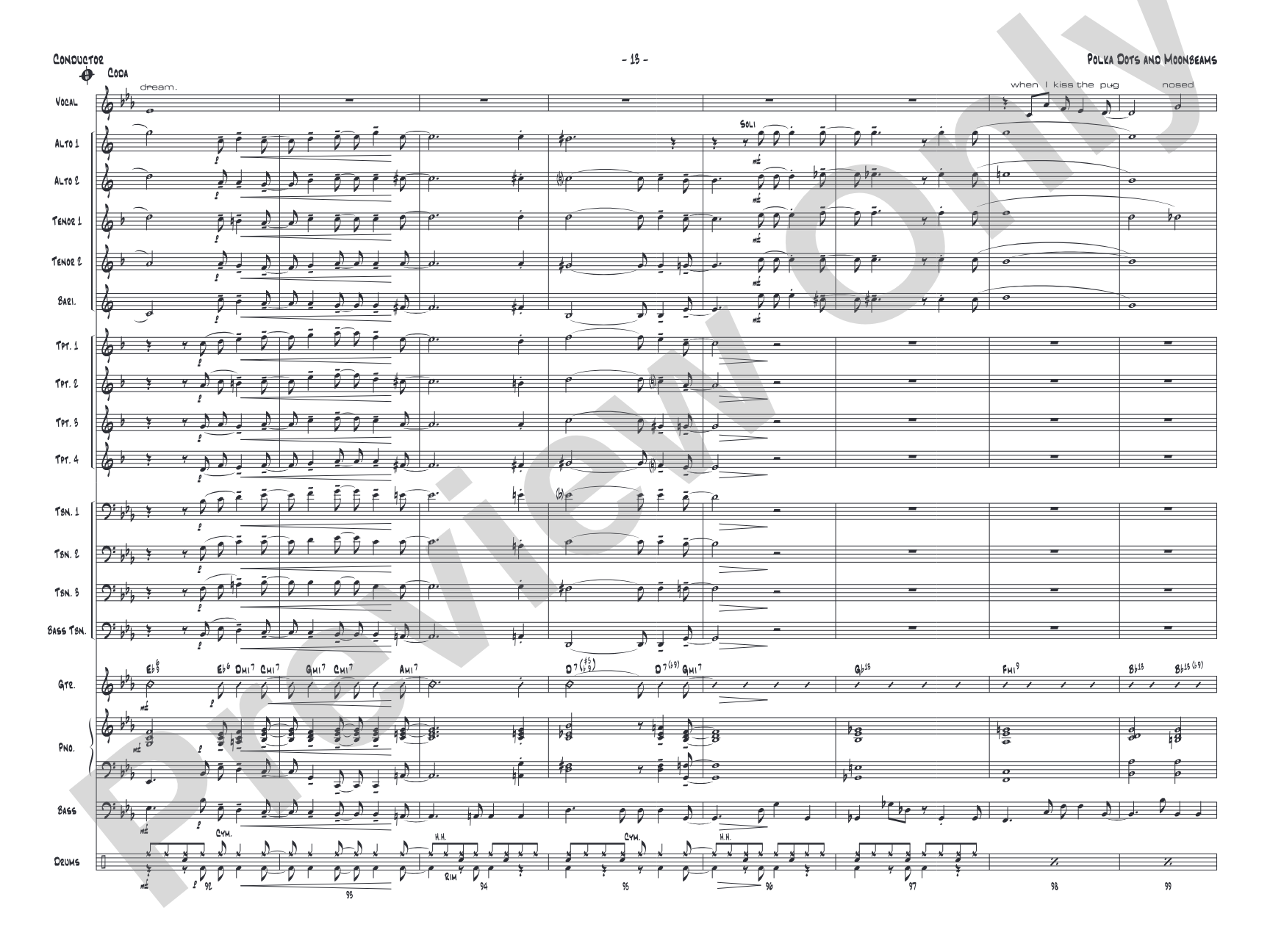
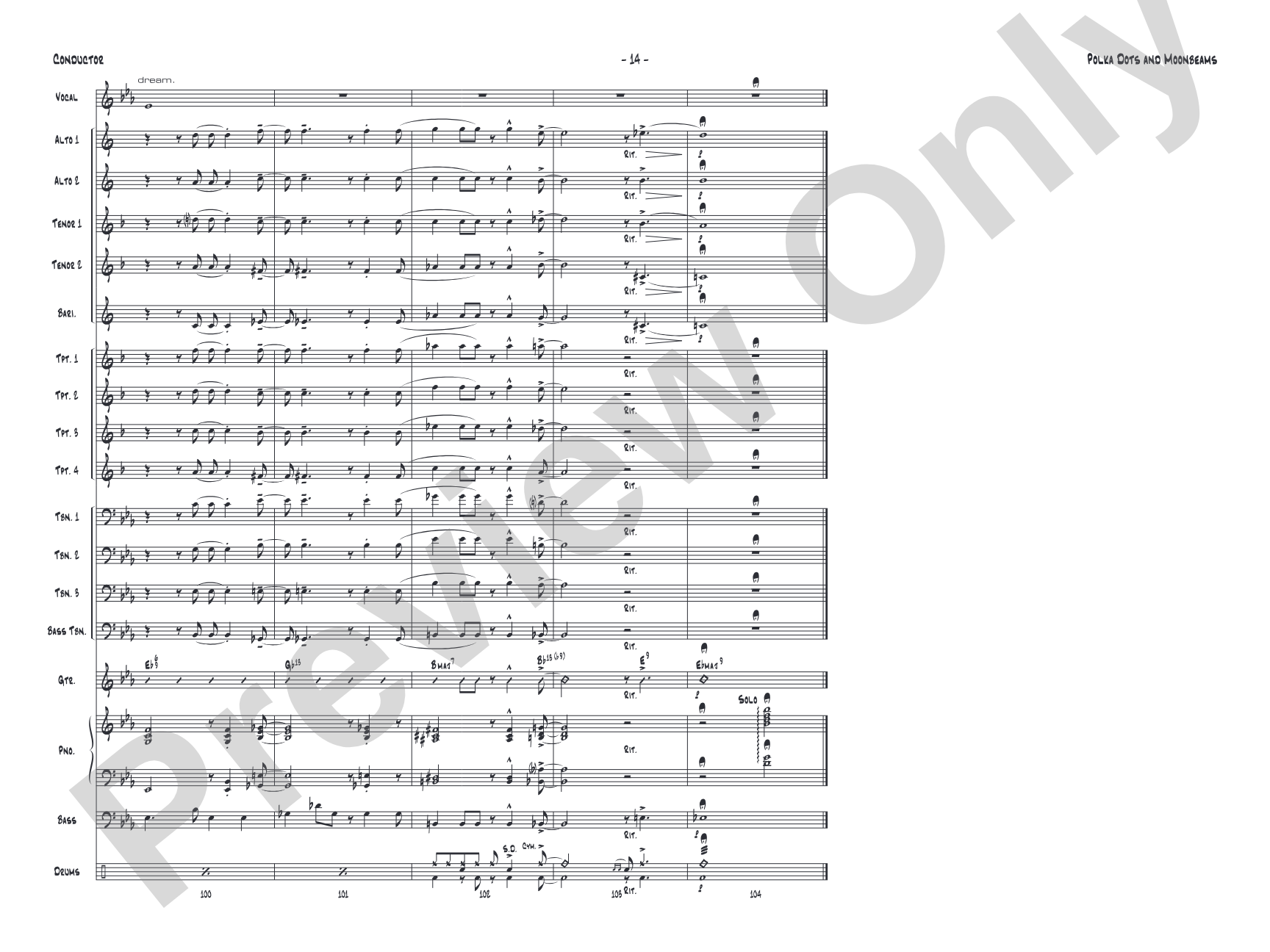

Polkadots and Moonbeams: Vocal Solo with Jazz Ensemble Conductor Score & Parts
Words by Johnny Burke, music by Jimmy Van Heusen / arr. Dave Wolpe
Grade: 3 (Medium)
Item: 00-PK-0006986

$58.00
Pickup currently not available
Buy Extra Parts (Digital PDF Download)
Parts Added to Cart!
Related Items
Polkadots and Moonbeams: Vocal Solo with Jazz Ensemble Conductor Score & Parts |
$58.00
|
View |
Description
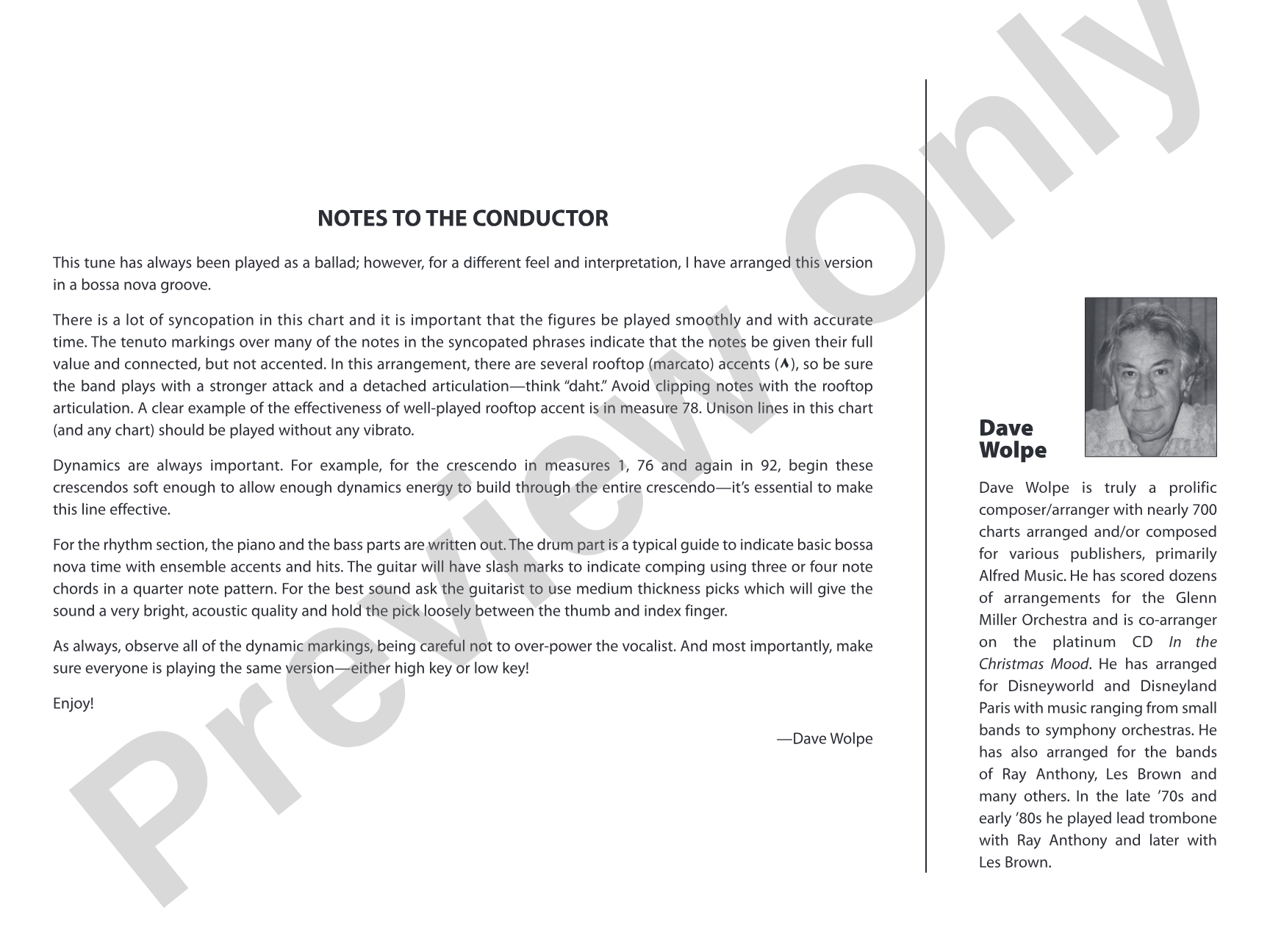
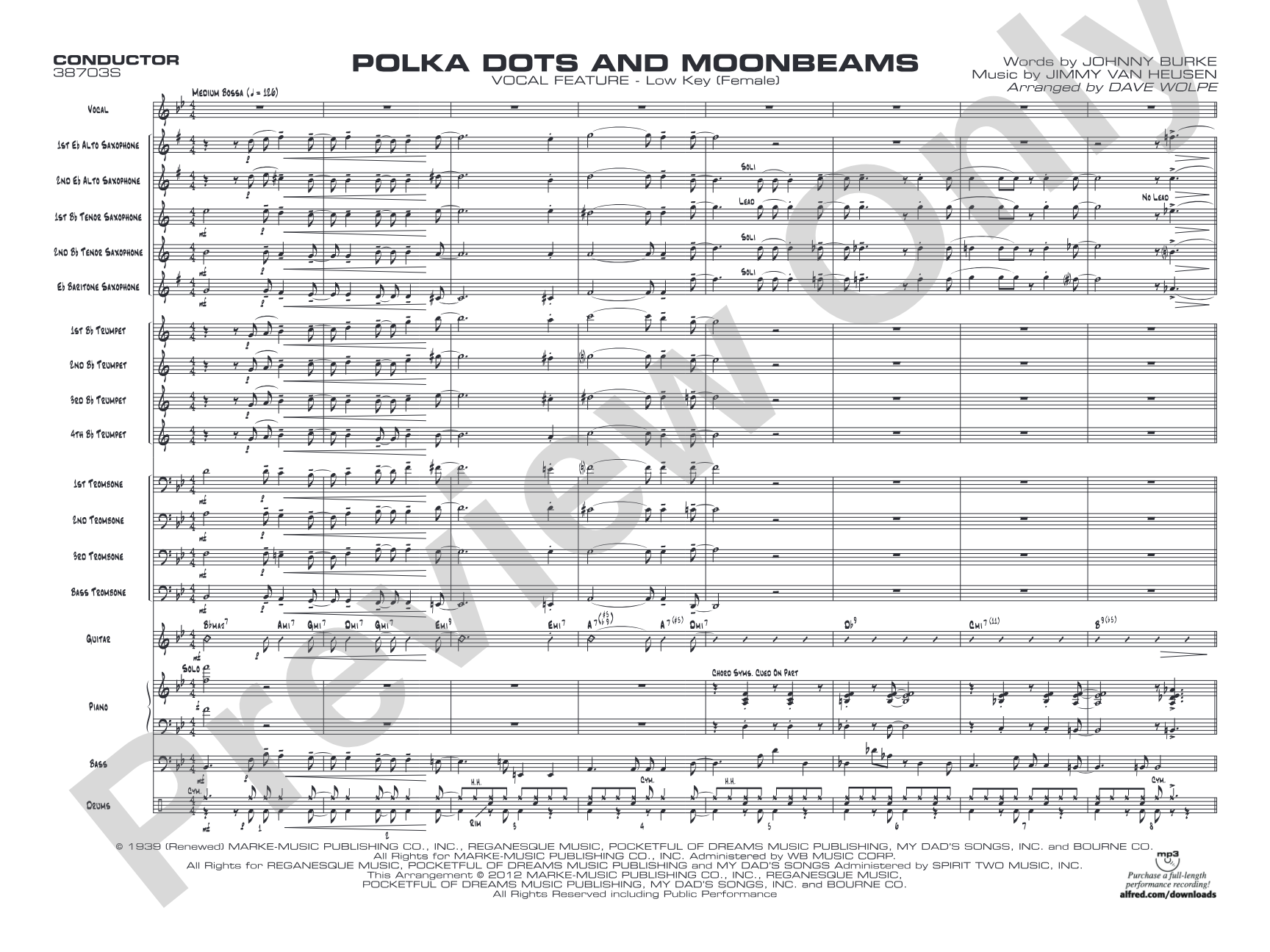
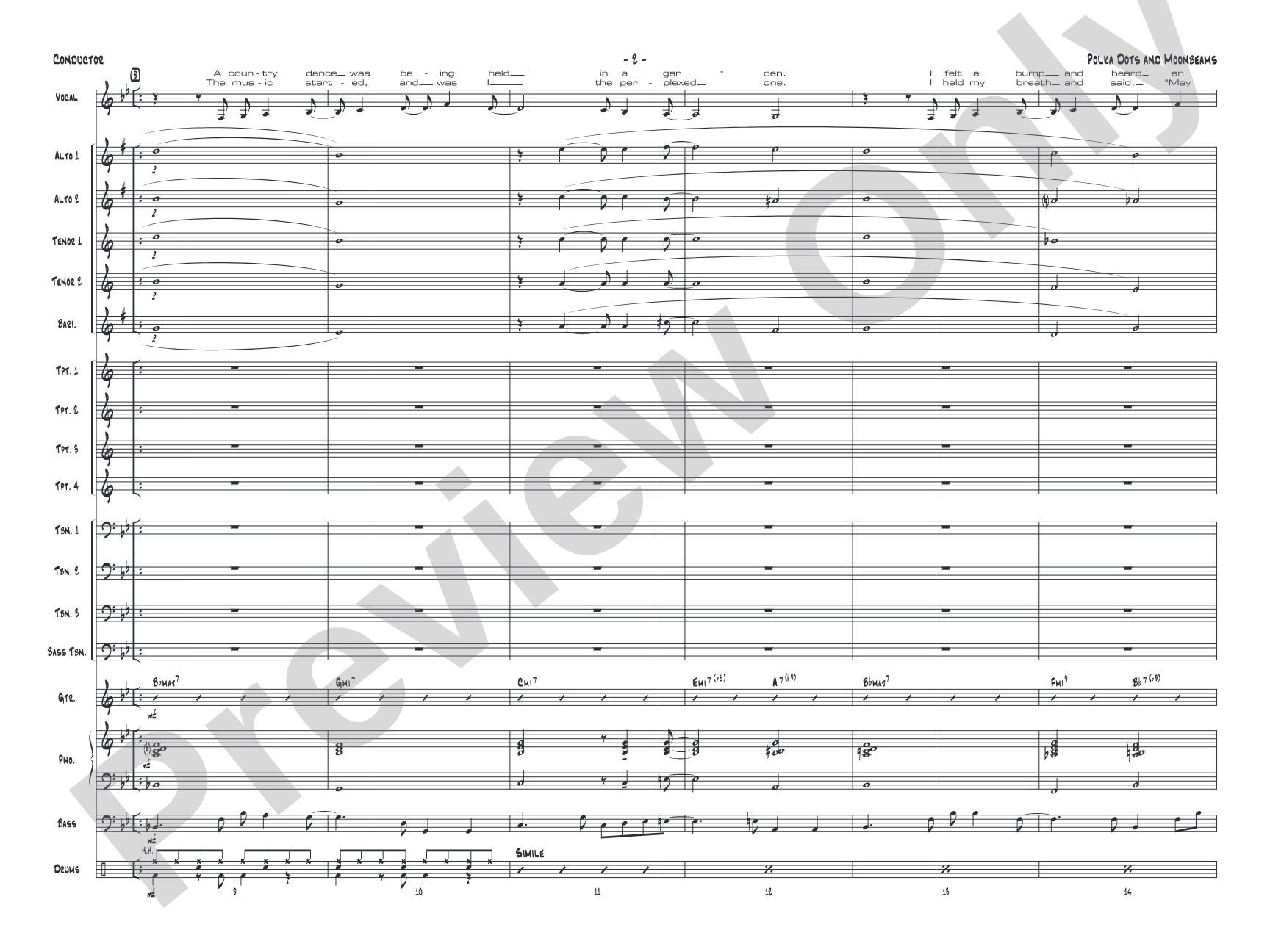
This standard gets a fresh bossa treatment---in two keys! The low key is F with vocal range from F below middle C to 2nd space A. The high key is E-flat with vocal range from B-flat below middle C to 4th line D. Lead trumpet range is to high D. Includes a written-out tenor sax solo and a substitute tenor sax melody part in lieu of the vocal.


Don't just read it, hear it, play along with it, and watch your students grow with it. In MakeMusic Cloud, Polkadots and Moonbeams: Vocal Solo with Jazz Ensemble Conductor Score & Parts comes alive with professional accompaniment, adjustable tempo, and built-in practice tools that turn solo practice into real progress.
Open in the Player
Jump straight in and assign it today.
Start Your Free Trial
Open this title and explore the full library in minutes.
Sample Audio
1
Audio File
--:--
0:00
0:00
Sample Video
No sample videos found.
Additional Details
Series:
Jazz Vocal Series
Publisher:
Alfred Music
SKU:
00-PK-0006986
More about this title
About the Composer: Jimmy Van Heusen
Jimmy Van Heusen (1913-1990) composed some of the most enduring standards of the American songbook, with a gift for memorable melodies that sit perfectly in the voice. His partnership with lyricist Johnny Burke produced dozens of film scores and popular songs that remain essential repertoire for jazz singers and ensembles. Van Heusen's ability to write singable, harmonically sophisticated melodies made his work ideal for jazz interpretation across generations.
Why we love this
Dave Wolpe's bossa nova arrangement respects the harmonic elegance of Van Heusen's melody while giving it contemporary rhythmic life, and the inclusion of both a vocal solo and a written tenor sax alternative makes this one flexible chart for any vocal jazz ensemble situation. The two-key option (F and E-flat) means you can cast this with confidence, and the written tenor solo gives your soloist something substantial to sink teeth into. This is exactly the kind of standard that belongs in a jazz ensemble's repertoire: sophisticated enough to engage serious players and singers, accessible enough that students grasp why this song has lasted seventy years.
What to expect
Sophisticated and warm, with the gentle swing of bossa nova giving the standard a relaxed sophistication. The melody sits comfortably in the voice, and the arrangement lets singers breathe with the space and phrasing the lyric deserves, while the rhythm section drives the groove with understated elegance.
Who it's for
Vocal jazz ensembles and jazz bands with a strong vocalist and reliable tenor saxophonist. This works equally well in a jazz combo context with piano, bass, drums, trumpet, and tenor sax, or in a fuller big-band setting where you want to feature both voices and horns.
How to get the most out of it
- Balance the ensemble sound around the vocal line; the rhythm section should lock in tight without overwhelming the lyrical quality the vocalist needs to shape the phrase
- Work the written tenor saxophone solo as a featured moment; this is a chance for your section's strongest improvisor to shine with pre-composed material that sits comfortably in the horn
- Let the bossa rhythm breathe—resist the urge to push the tempo; the groove should feel relaxed and in the pocket rather than rushed
- If you use the substitute tenor melody (in place of the vocal), treat it as a full soloist feature with the same attention to phrasing and dynamics you'd give a vocalist
How to use it
This works beautifully in a jazz concert program where you're alternating vocal and instrumental features; program it alongside a straight-ahead swing chart to show your ensemble's range of style. It's also a strong choice for a vocal jazz showcase or an evening that highlights both your vocalist and your tenor section.
Skills your students will build
- Singing over jazz harmony and understanding chord-scale relationships from a vocalist's perspective
- Playing jazz time feel and bossa nova rhythm in an ensemble context
- Reading and interpreting a written saxophone solo with appropriate jazz phrasing and articulation
- Balancing individual soloists with ensemble texture and supporting them as an accompaniment