
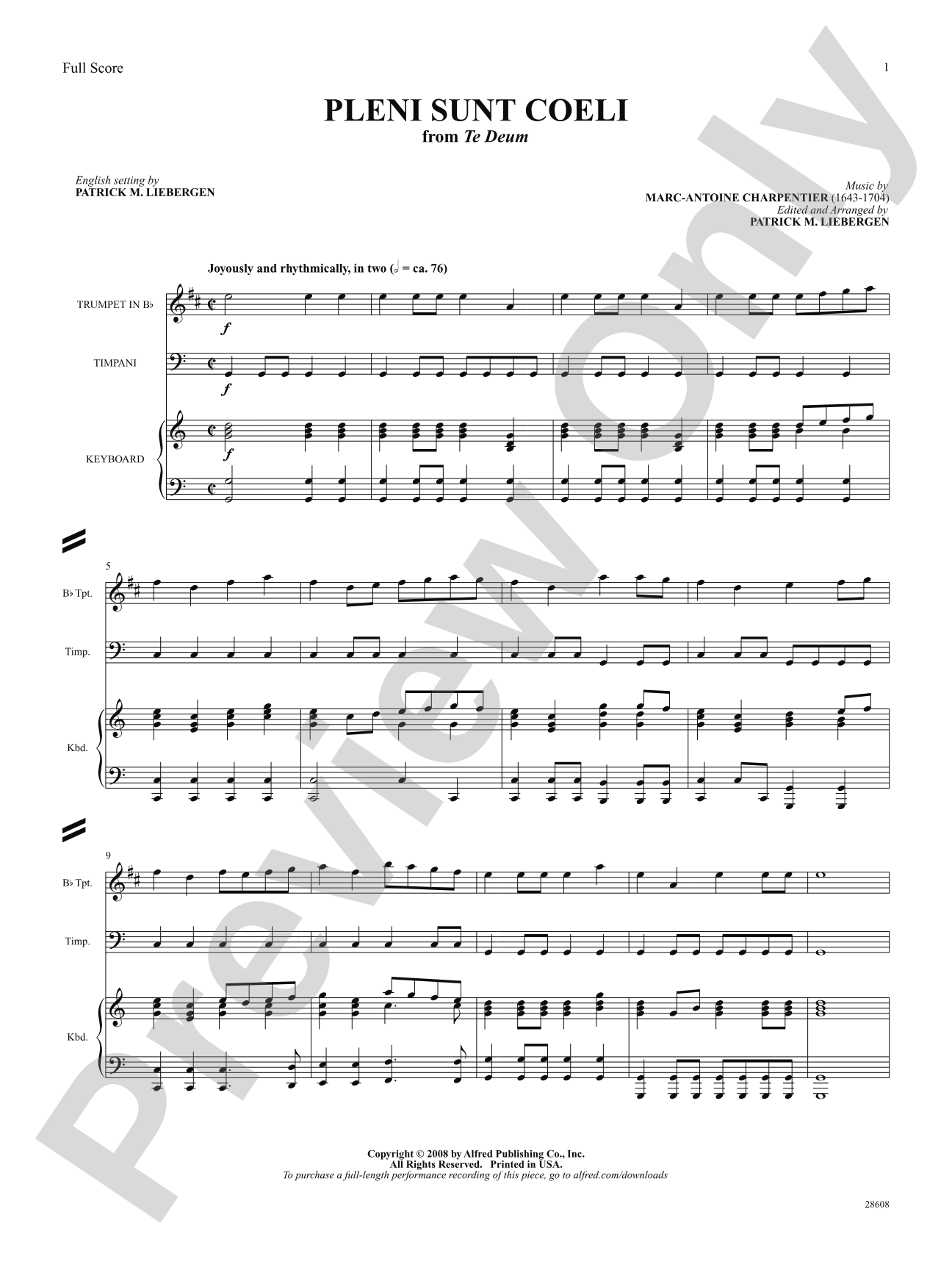
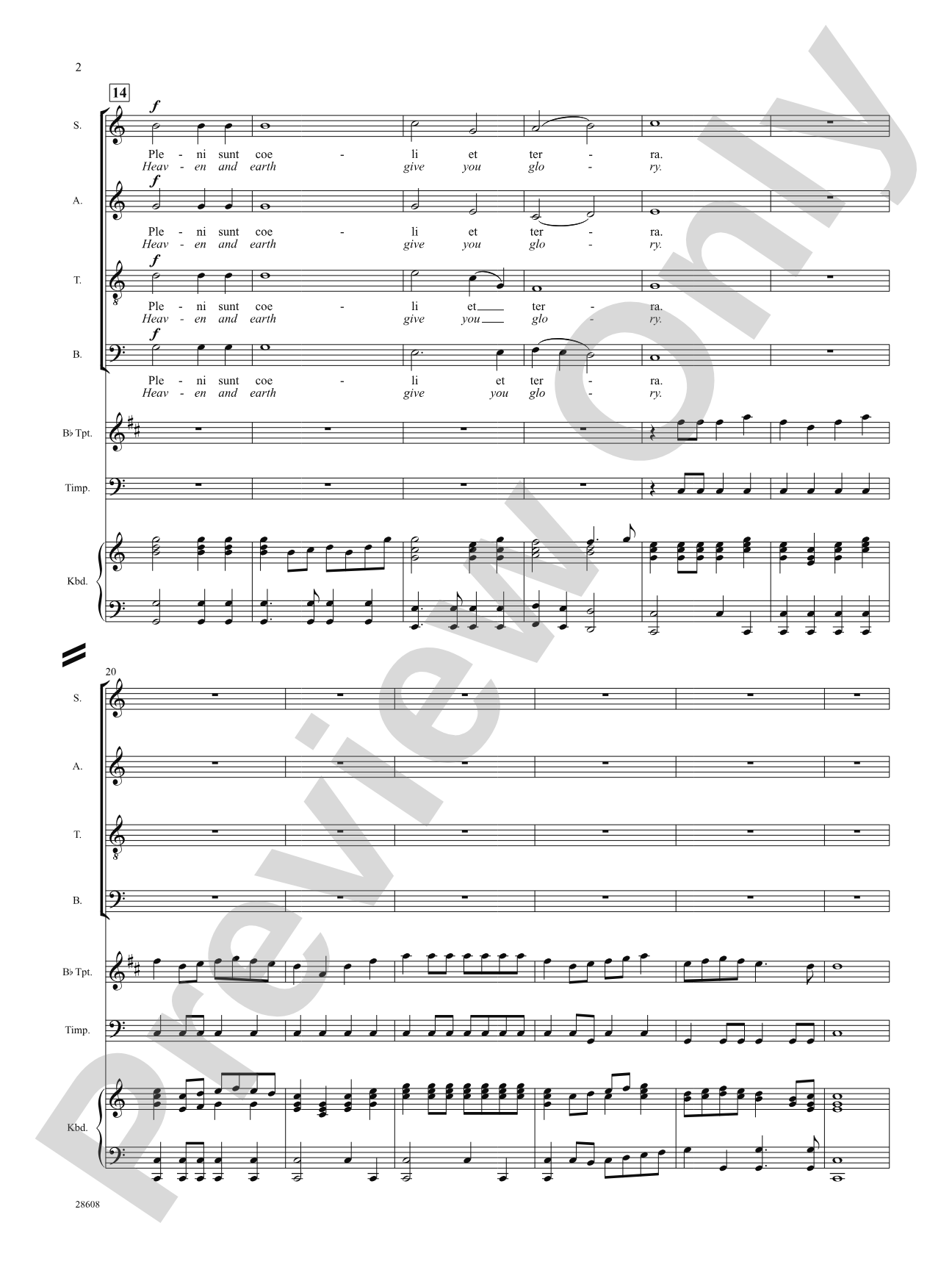
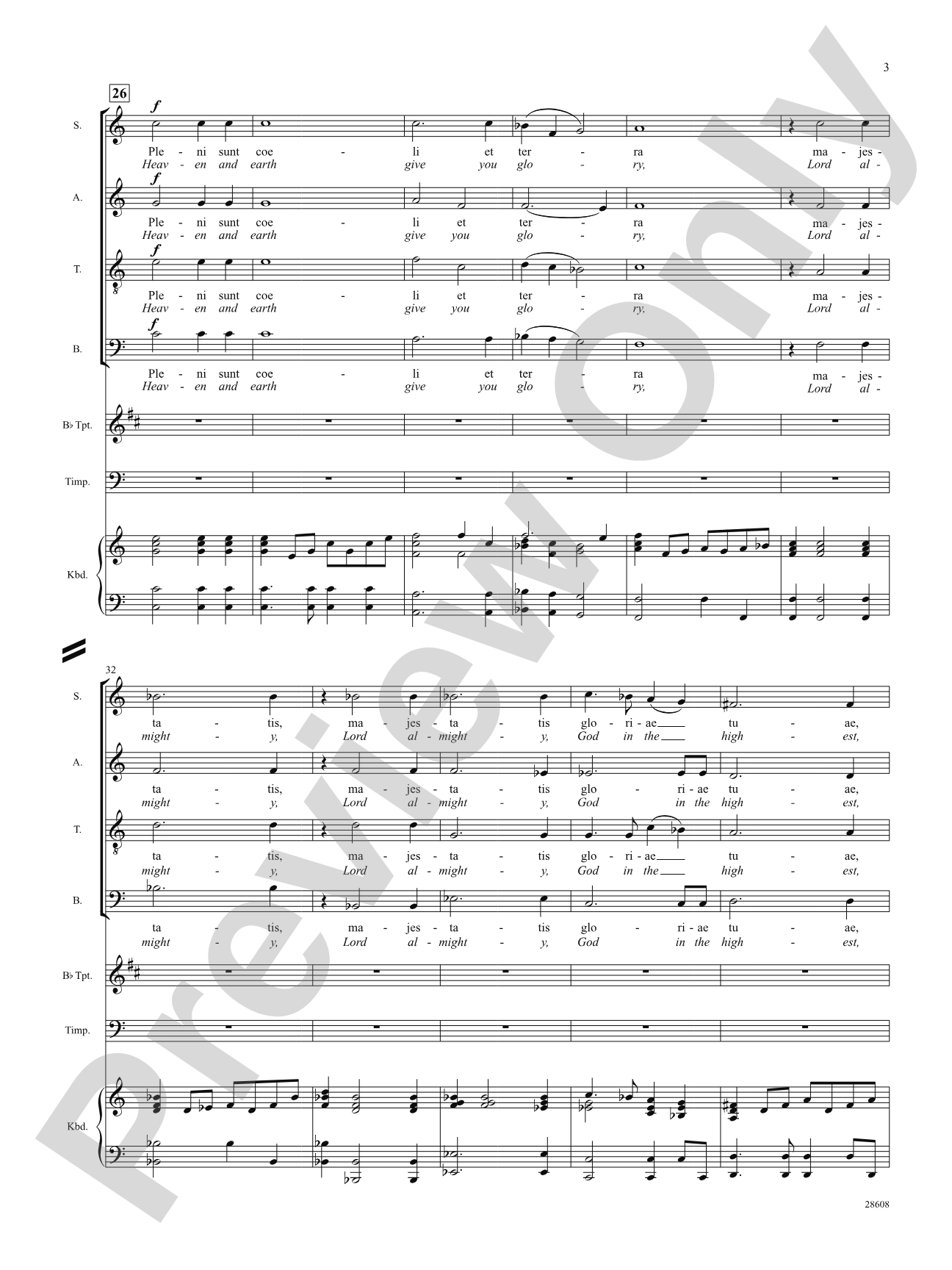
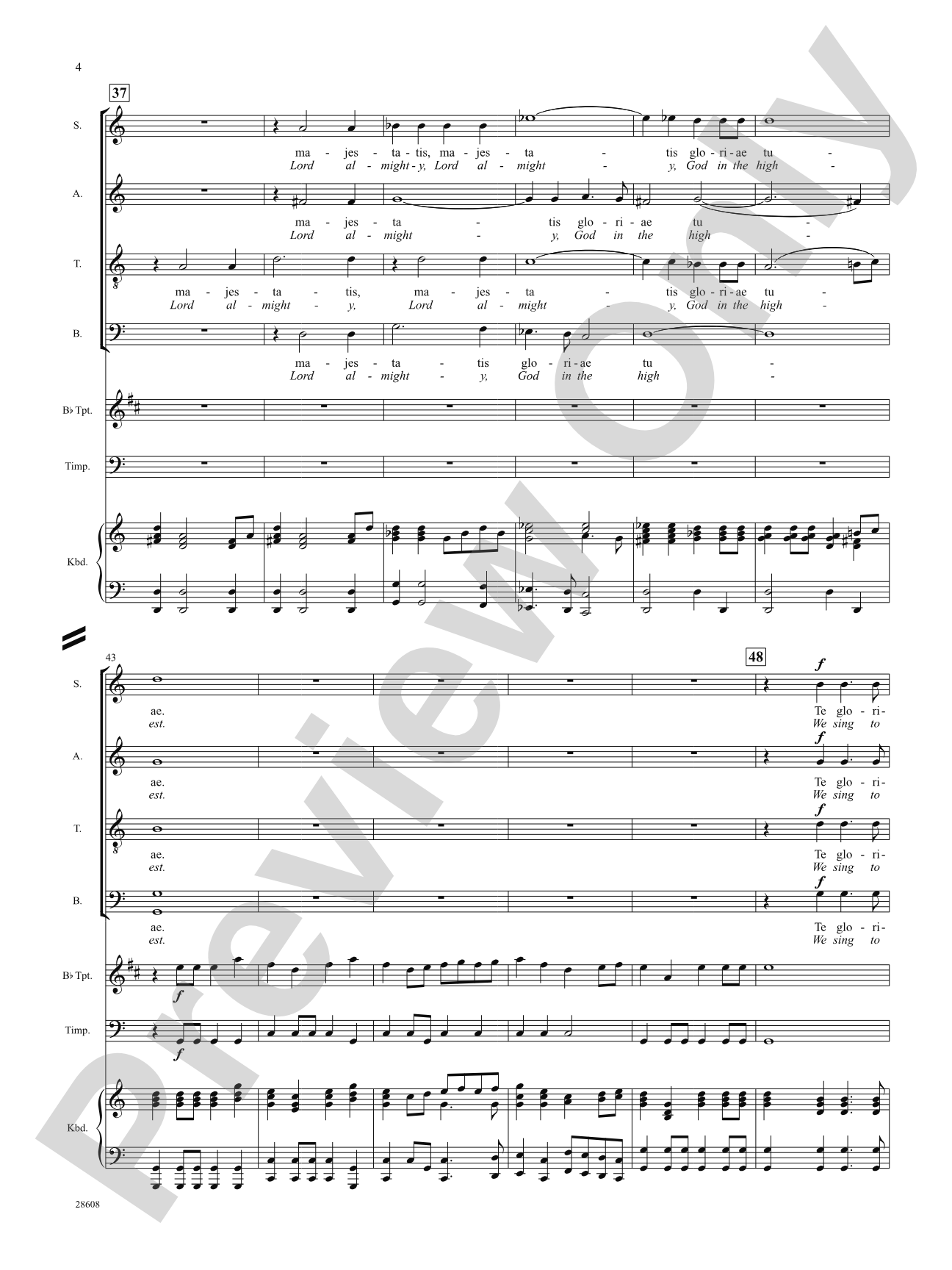
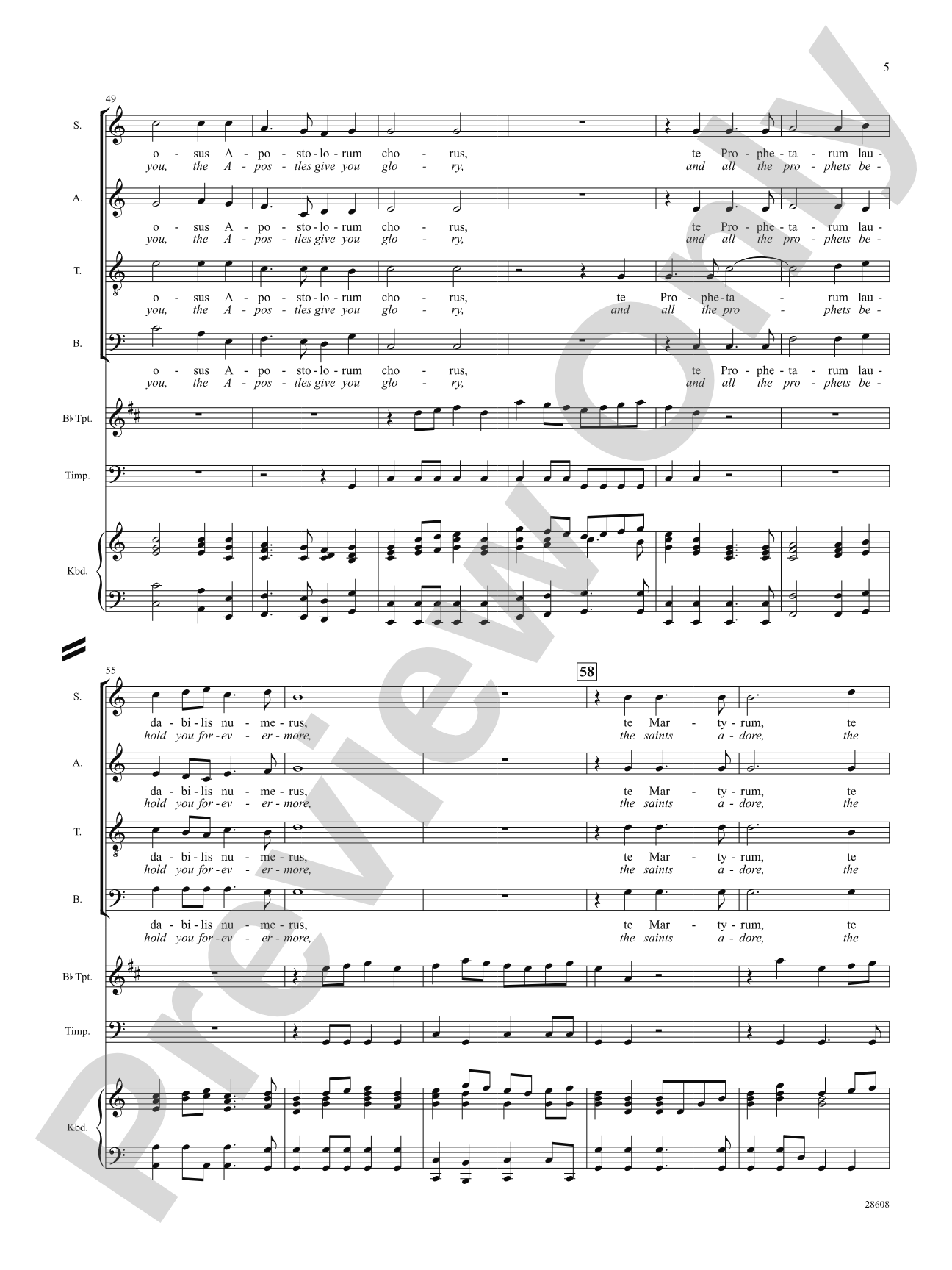
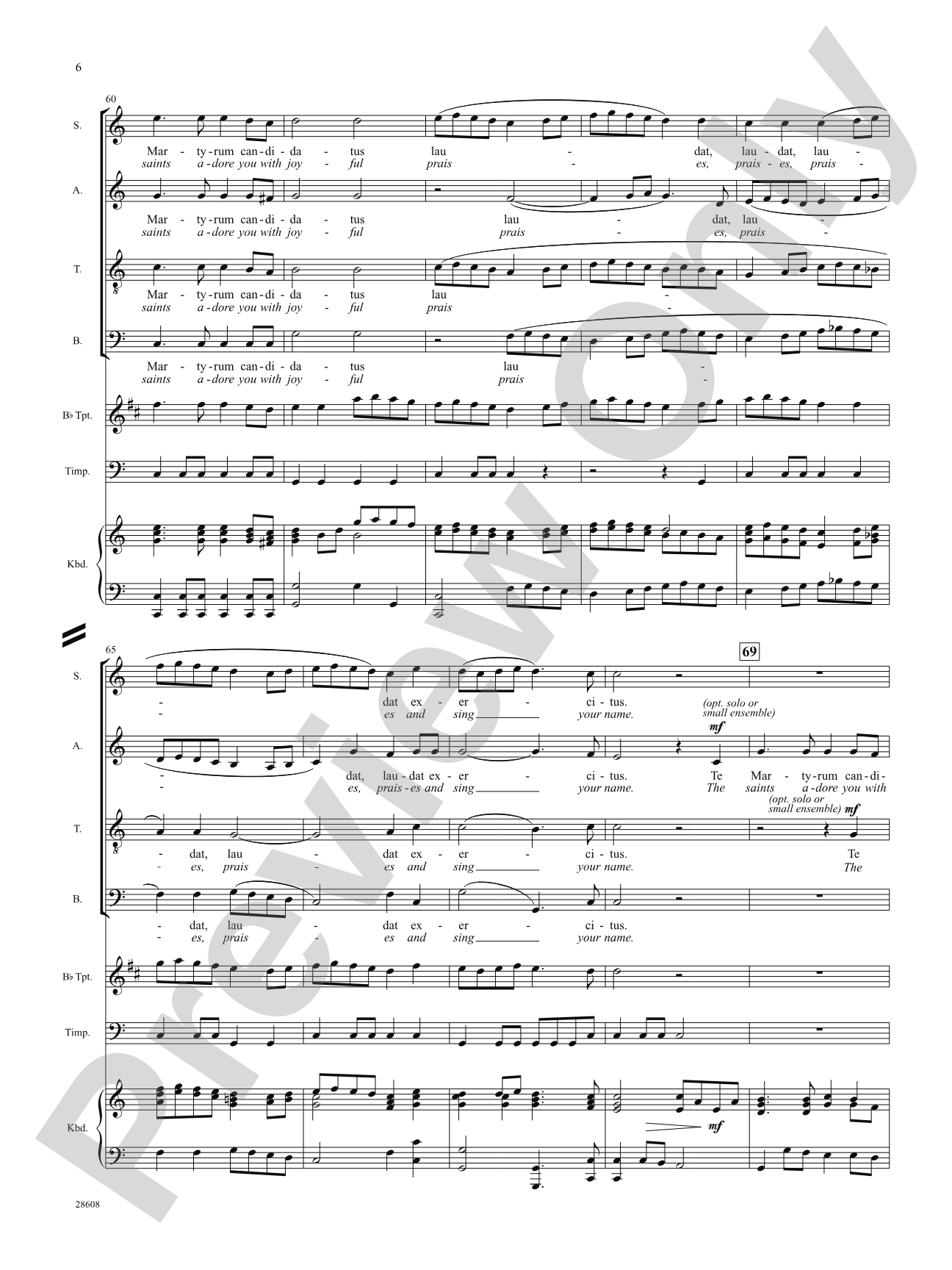
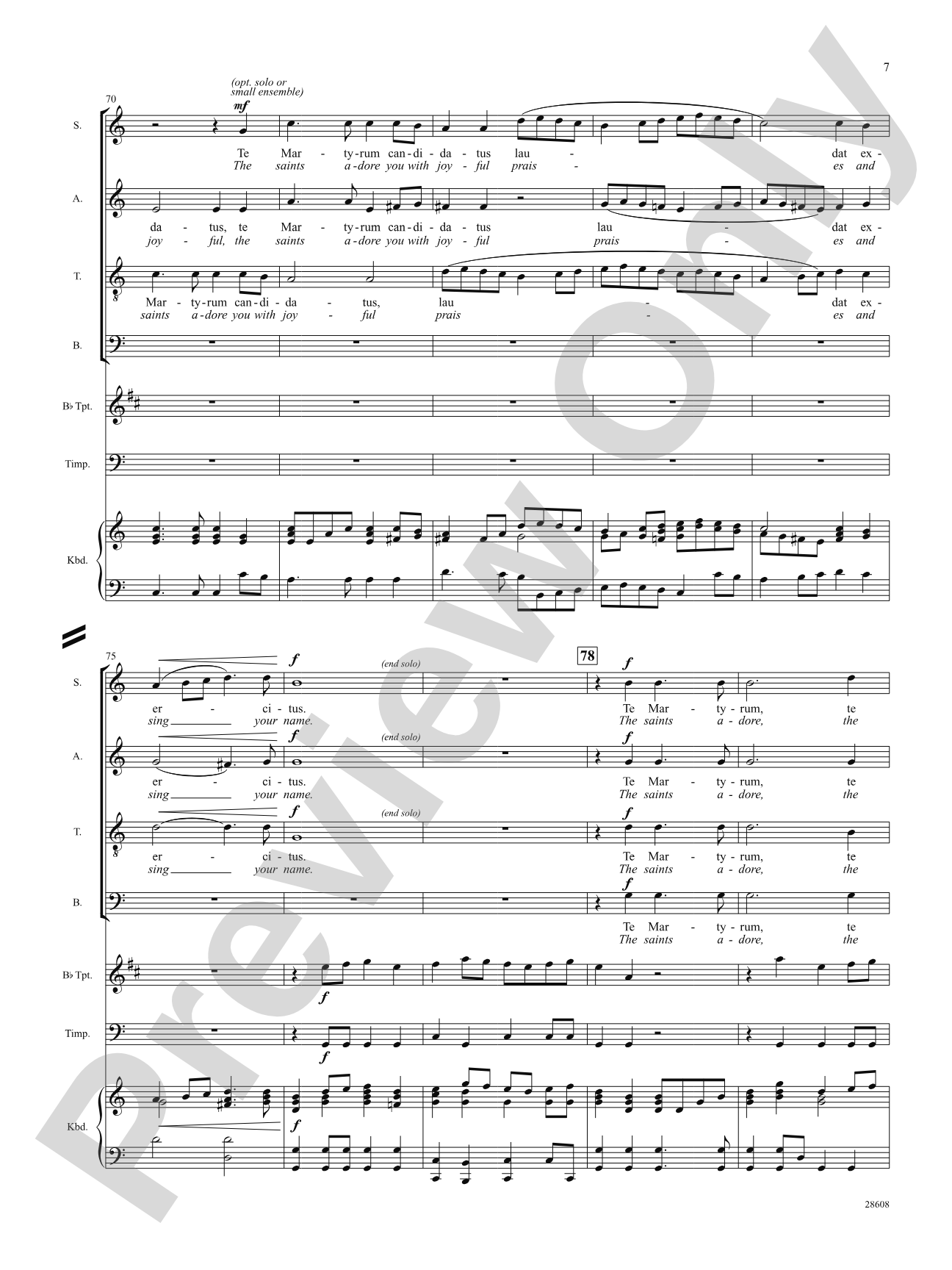
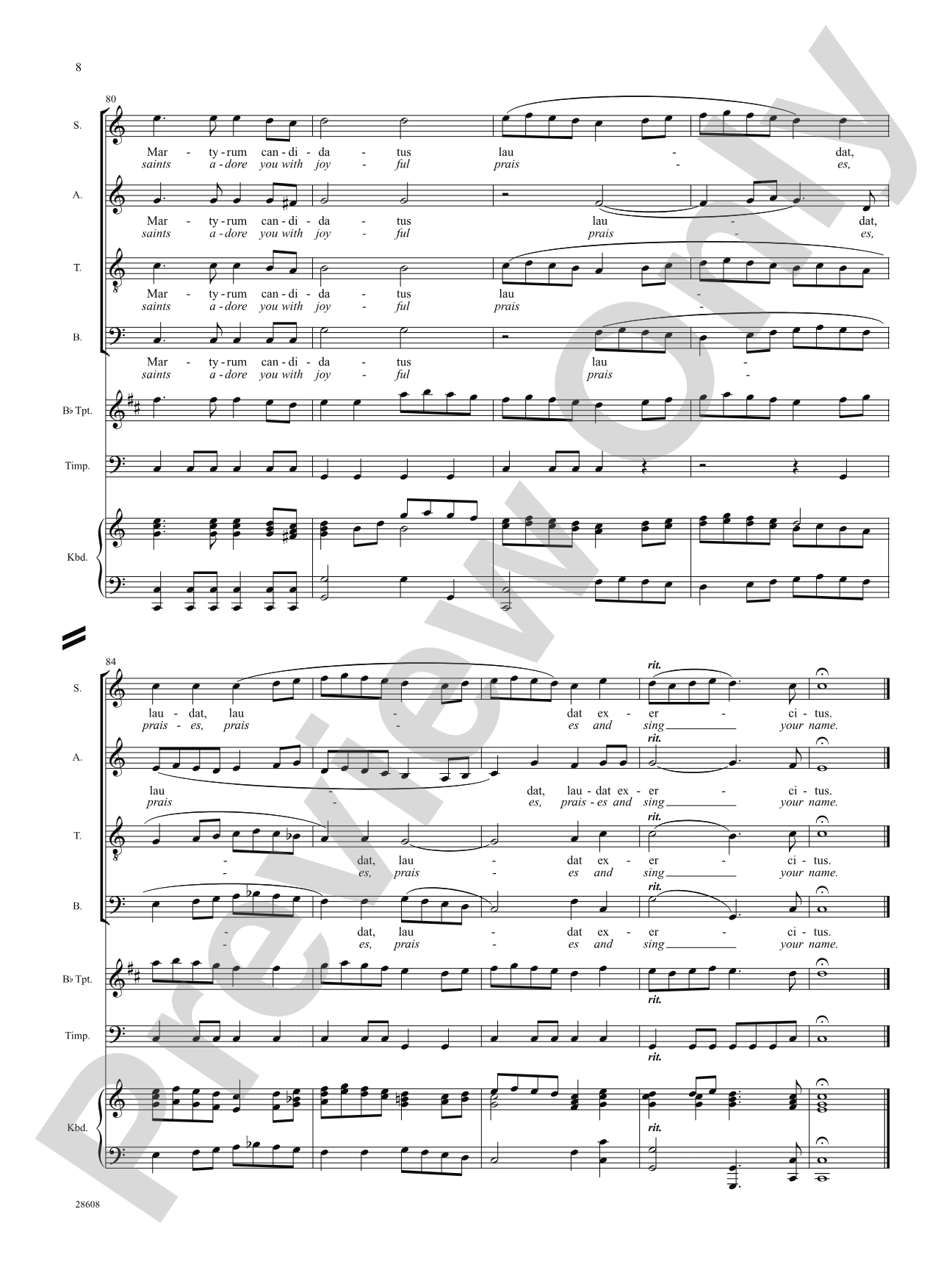

Pleni Sunt Coeli (from Te Deum): Choral SoundPax
English setting by Patrick M. Liebergen, music by Marc-Antoine Charpentier / arr. Patrick M. Liebergen
Item: 00-PK-0001347

$15.00
Pickup currently not available
Buy Extra Parts (Digital PDF Download)
Parts Added to Cart!
Related Items
Pleni Sunt Coeli (from Te Deum): SoundTrax Digital Audio Download |
$24.95
|
View | |
Pleni Sunt Coeli (from Te Deum): SATB Choral Octavo |
$1.75
|
View | |
Pleni Sunt Coeli (from Te Deum): SATB Choral Octavo |
$1.75
|
View | |
Pleni Sunt Coeli (from Te Deum): Choral Octavo SoundTrax CD |
$24.95
|
View | |
Pleni Sunt Coeli (from Te Deum): Choral SoundPax |
$15.00
|
View |
Description
The optional trumpet and timpani parts (available on the SoundPax and SoundTrax CD) and a brief vocal trio make this majestic Charpentier chorus stand out from the rest of your masterwork repertoire. Stately and strong. Includes parts for trumpet and timpani.


Don't just read it, hear it, play along with it, and watch your students grow with it. In MakeMusic Cloud, Pleni Sunt Coeli (from Te Deum): Choral SoundPax comes alive with professional accompaniment, adjustable tempo, and built-in practice tools that turn solo practice into real progress.
Open in the Player
Jump straight in and assign it today.
Start Your Free Trial
Open this title and explore the full library in minutes.
Sample Audio
1
Audio File
--:--
0:00
0:00
Sample Video
No sample videos found.
Additional Details
Series:
Alfred Choral Designs
Publisher:
Alfred Music
Page Count:
8
SKU:
00-PK-0001347
Instrumentation:
SoundPax
More about this title
About the Composer: Marc-Antoine Charpentier
Marc-Antoine Charpentier (1643, 1704) was the leading French composer of sacred music in the Baroque era, creating over 500 works that ranged from grand motets to intimate chamber pieces. Though his genius was recognized during his lifetime, he worked largely in the shadow of Lully and never achieved the court position he sought; yet his harmonic imagination and gift for text setting established him as one of France's finest musical voices.
Charpentier's sacred output defined the French Baroque style for generations of musicians. His Te Deum remains his most performed work, a testament to the strength of his melodic invention and his mastery of the chorus as a dramatic force. For conductors and singers, his music rewards careful attention to phrasing and balance; it asks for clarity and warmth in equal measure.
Why we love this
This arrangement captures the ceremonial magnificence of the original without requiring massive forces or complex divisi. The optional brass instrumentation lifts the piece from solid repertoire to genuine spectacle, while the brief vocal trio sections provide textural contrast that keeps singers engaged. It's the kind of masterwork that sounds impressive in performance but doesn't demand six months of rehearsal to pull off.
What to expect
Stately and confident, with moments of transcendent brightness. The piece unfolds with courtly dignity, then opens into jubilant passages that feel genuinely ceremonial. When the trumpet and timpani enter, the sound becomes majestic without ever losing its graceful Baroque proportions.
Who it's for
Choirs aiming to program a recognized masterwork that sounds substantial without extreme difficulty. This arrangement works well for advanced high school choirs, community choirs with strong singers, and college programs looking to include major Baroque sacred music in a season.
How to get the most out of it
- Balance the vocal trio moments carefully; they should feel intimate rather than buried. These sections benefit from strategic positioning in the rehearsal space to ensure clarity without sacrificing blend.
- If using the trumpet and timpani parts, coordinate those entrances precisely during sectionals. The brass adds weight, but rhythmic clarity matters more than volume.
- Shape the longer phrases with attention to harmonic rhythm rather than lyrical phrasing. Baroque sacred music lives in the architecture of the text and harmony, not in romantic rubato.
- Record a full run-through with all forces once the piece is concert-ready. Hearing your own choir with the recorded accompaniment will reveal balance issues you missed in rehearsal.
How to use it
Program this as an anchor in a concert focused on sacred masterworks, or pair it with other Baroque liturgical music to create a thematic set. It also works as a powerful closing piece to a concert celebrating choral excellence across eras, especially if you want to end on an affirmative, celebratory note.
Skills your students will build
- Singing Latin text with clear diction in a Baroque style
- Balancing blend and intonation in slower harmonic passages
- Adjusting to stylistically appropriate phrasing that respects harmonic function
- Coordinating with instrumental accompaniment and optional brass parts
- Singing exposed trio passages with confidence and presence