

Pleni Sunt Coeli (from Te Deum): SATB Choral Octavo
English setting by Patrick M. Liebergen, music by Marc-Antoine Charpentier / arr. Patrick M. Liebergen
Item: 00-PO-0000502
$1.75
Minimum order quantity: 20 copies
Pickup currently not available
Related Items
Pleni Sunt Coeli (from Te Deum): SoundTrax Digital Audio Download |
$24.95
|
View | |
Pleni Sunt Coeli (from Te Deum): Choral SoundPax |
$15.00
|
View | |
Pleni Sunt Coeli (from Te Deum): SATB Choral Octavo |
$1.75
|
View | |
Pleni Sunt Coeli (from Te Deum): Choral Octavo SoundTrax CD |
$24.95
|
View | |
Pleni Sunt Coeli (from Te Deum): Choral SoundPax |
$15.00
|
View |
Description
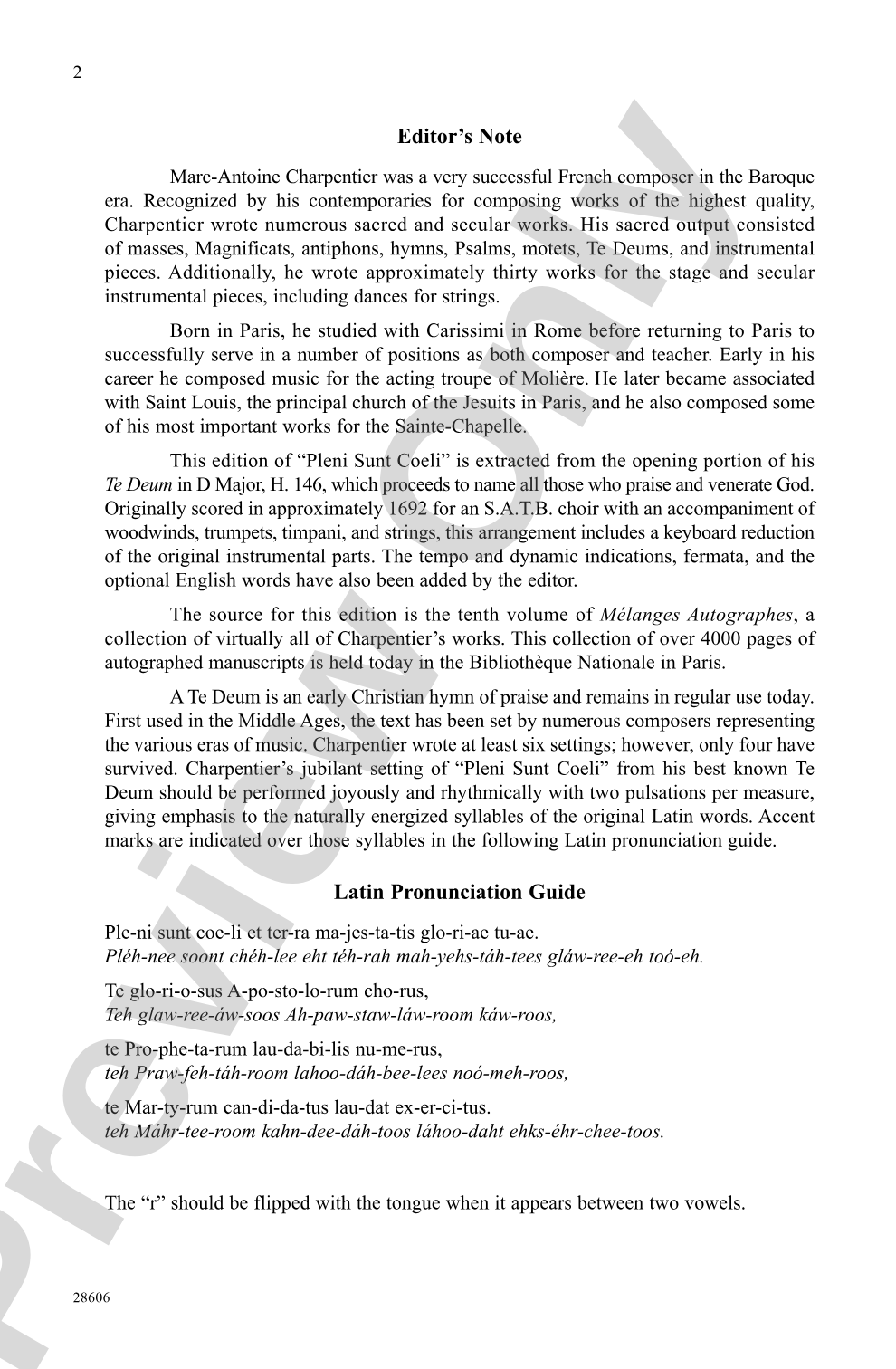
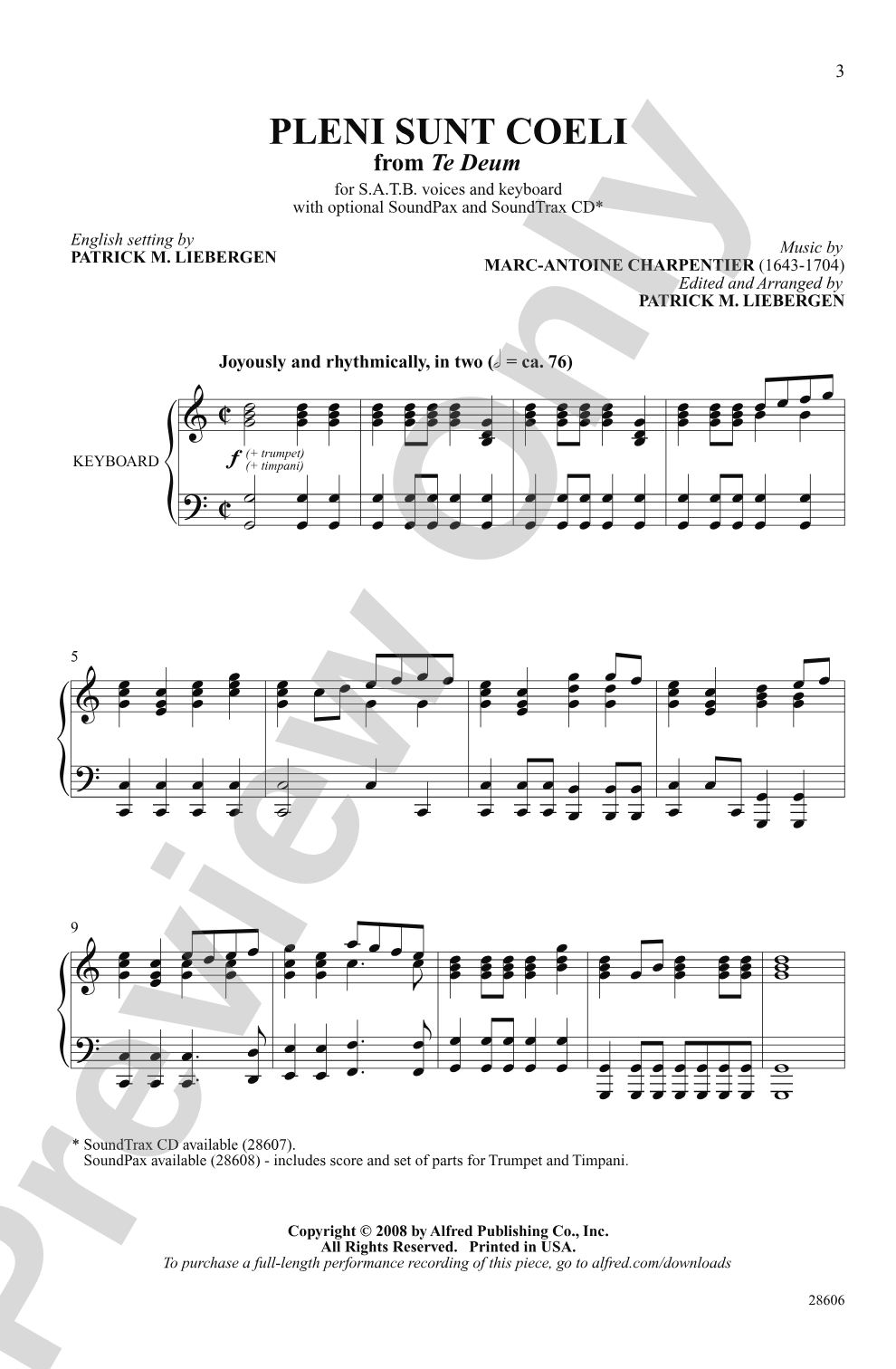
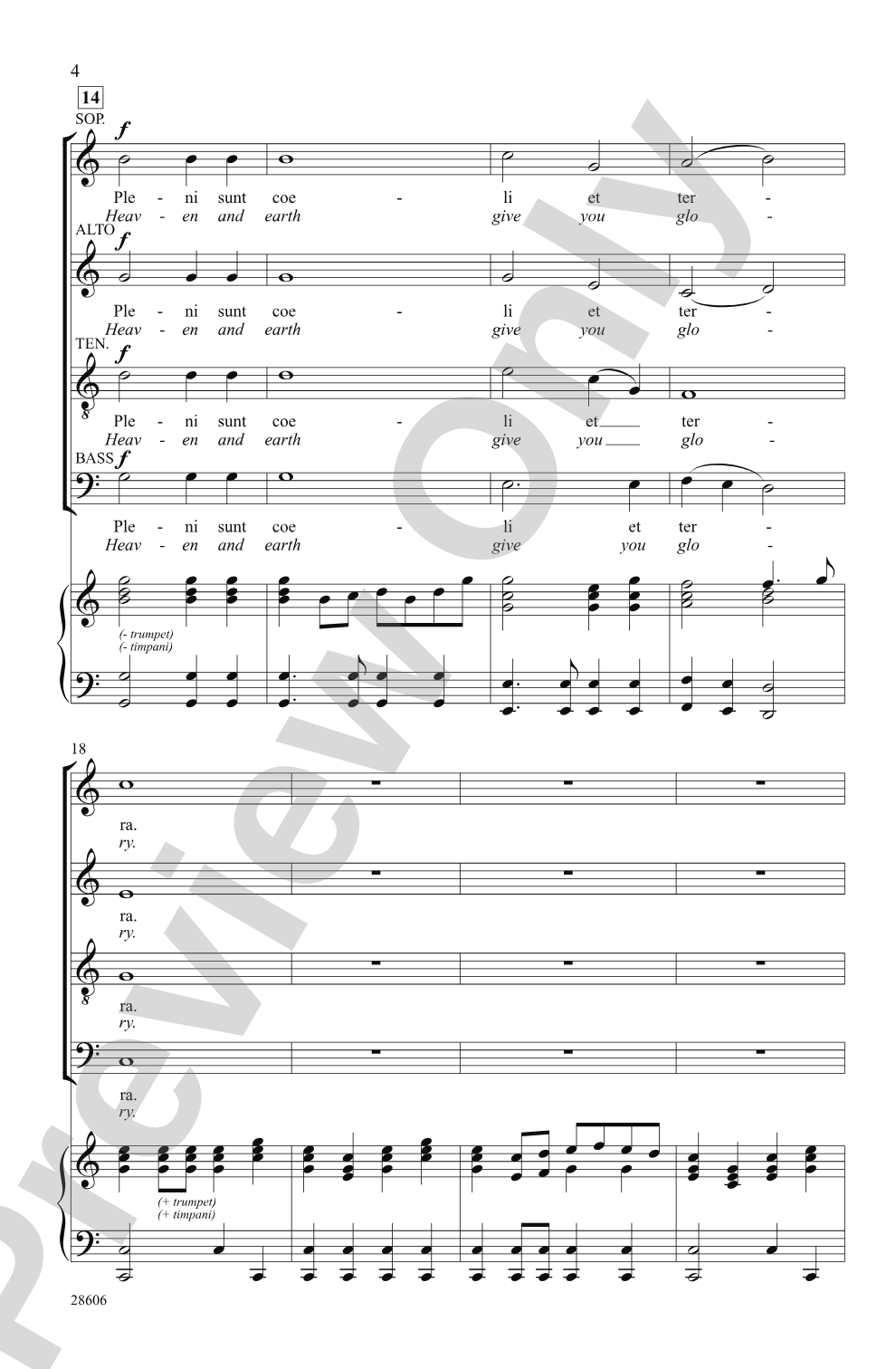
The optional trumpet and timpani parts (available on the SoundPax and SoundTrax CD) and a brief vocal trio make this majestic Charpentier chorus stand out from the rest of your masterwork repertoire. Stately and strong.


Pleni Sunt Coeli (from Te Deum): SATB Choral Octavo isn't in MakeMusic Cloud just yet...but it could be. Let us know you'd like to see it, and you'll help shape what comes next. In the meantime, start a free trial and dive into thousands of interactive titles your students can play along with today.
Request This Title
Tell us you want it.
Start Your Free Trial
Explore everything that's ready to play right now.
Sample Audio
1
Audio File
--:--
0:00
0:00
Sample Video
No sample videos found.
Additional Details
Series:
Alfred Choral Designs
Publisher:
Alfred Music
Page Count:
12
SKU:
00-PO-0000502
More about this title
About the Composer: Marc-Antoine Charpentier
Marc-Antoine Charpentier (1643–1704) stands among the most prolific and inventive French Baroque composers, yet remains less familiar to many musicians than his contemporaries. Working in Paris during a period of extraordinary musical development, he created over 500 works spanning operas, sacred music, instrumental suites, and dramatic scores that showcase remarkable harmonic sophistication and expressive depth.
Charpentier's sacred music holds particular power in the choral repertoire. His Te Deum, from which this movement comes, exemplifies his gift for grand ceremonial writing combined with intimate choral textures. For music educators, his works offer students direct access to the language of High Baroque France, with its distinctive rhythmic vitality and opulent orchestration.
Why we love this
Charpentier's mastery of choral grandeur meets arranger Patrick M. Liebergen's elegant orchestration in a piece that feels both ceremonial and musically substantial. The optional trumpet and timpani parts elevate this from a standard choral octavo into something genuinely majestic, while the brief vocal trio creates a textural moment that singers will find rewarding to execute. Directors programming Baroque sacred music will find this strikes the right balance between musical depth and rehearsal accessibility.
What to expect
Stately grandeur pervades this movement, with Charpentier's soaring counterpoint and rich harmonic vocabulary creating an atmosphere of reverent splendor. The writing feels opulent without sacrificing clarity, allowing singers to experience the confidence and architectural beauty of High Baroque ceremonial music.
Who it's for
This octavo serves choirs with solid musicianship across all four voice parts and directors seeking substantive Baroque sacred repertoire. It works equally well for concert choirs preparing a liturgical program or an academic ensemble deepening their understanding of French Baroque style.
How to get the most out of it
- Shape the opening phrases with forward harmonic momentum; the SATB writing supports a sense of processional dignity when each section brings consistent energy to the cadential points.
- If using the recorded accompaniment, listen through the full performance to absorb the character and pacing, then work sections acapella to ensure your singers own the harmonic language rather than relying on the track.
- Balance the vocal trio passage so it registers as a distinct textural moment without drowning in the surrounding SATB fabric; this requires careful attention to blend and dynamic control from your ensemble.
- Pay particular attention to the optional brass parts if you include them; even modest trumpet and timpani support transforms the acoustic and ceremonial weight of the closing sections.
How to use it
Program this as a centerpiece in a concert devoted to sacred Baroque masterworks, where it can anchor a set alongside other Te Deum movements or stand alone as a substantial choral statement. It also serves well as a concert closer when you want to leave audiences with an impression of vocal power and musical sophistication.
Skills your students will build
- Navigating Baroque harmonic language and functional harmony
- Executing sustained legato singing with textural precision in SATB writing
- Balancing soloist-ensemble dynamics when vocal soloists emerge from the choir
- Responding to orchestral accompaniment while maintaining independent vocal line integrity
- Ensemble independence and secure intonation across extended phrases