

Plaisir d'Amour (The Joys of Love): TBB Choral Octavo
(The Joys of Love)
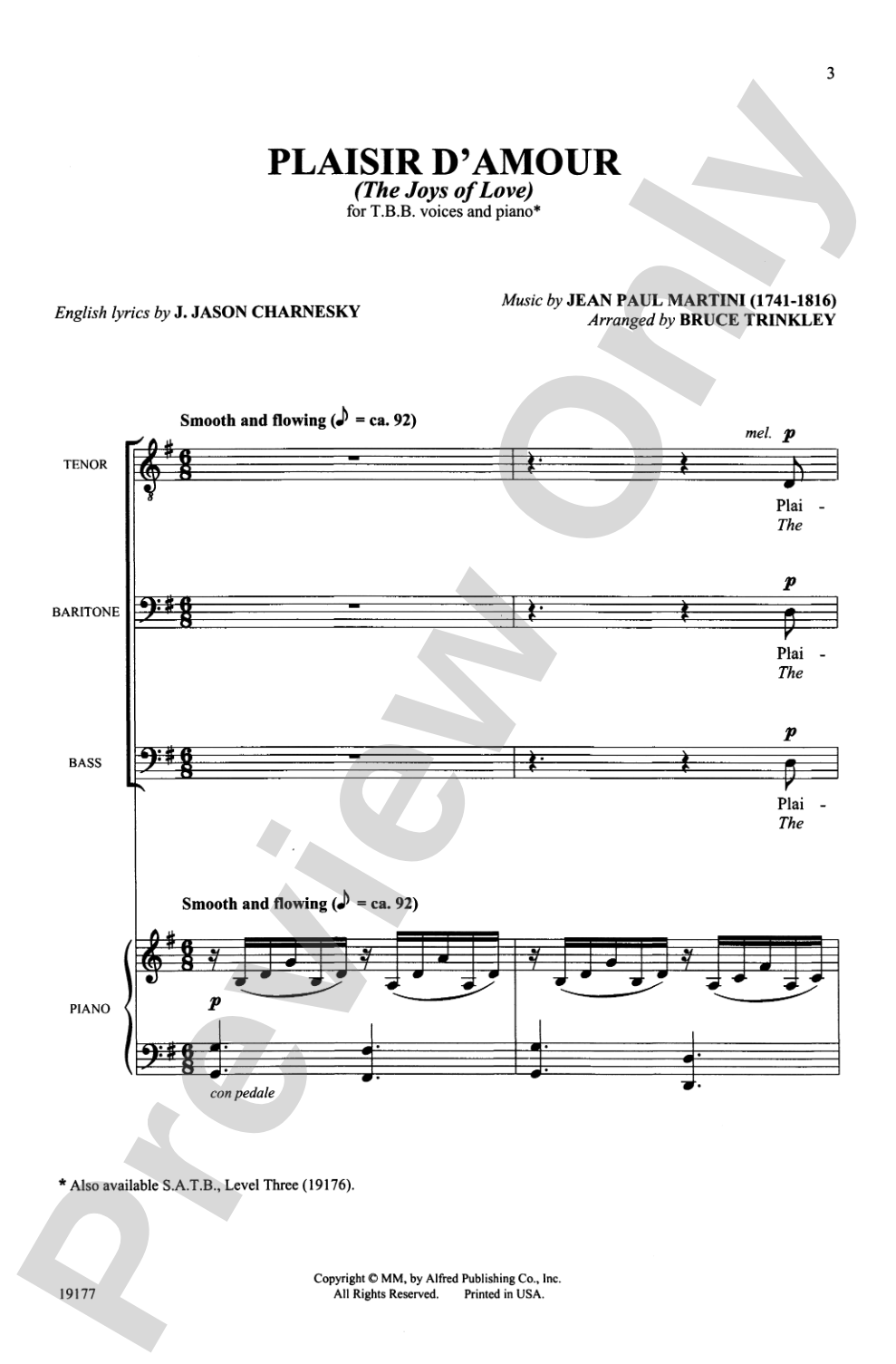
Words by J. Jason Charnesky, music by Jean Paul Martini / arr. Bruce Trinkley
Item: 00-PO-0004128
$2.25
Minimum order quantity: 20 copies
Pickup currently not available
Description
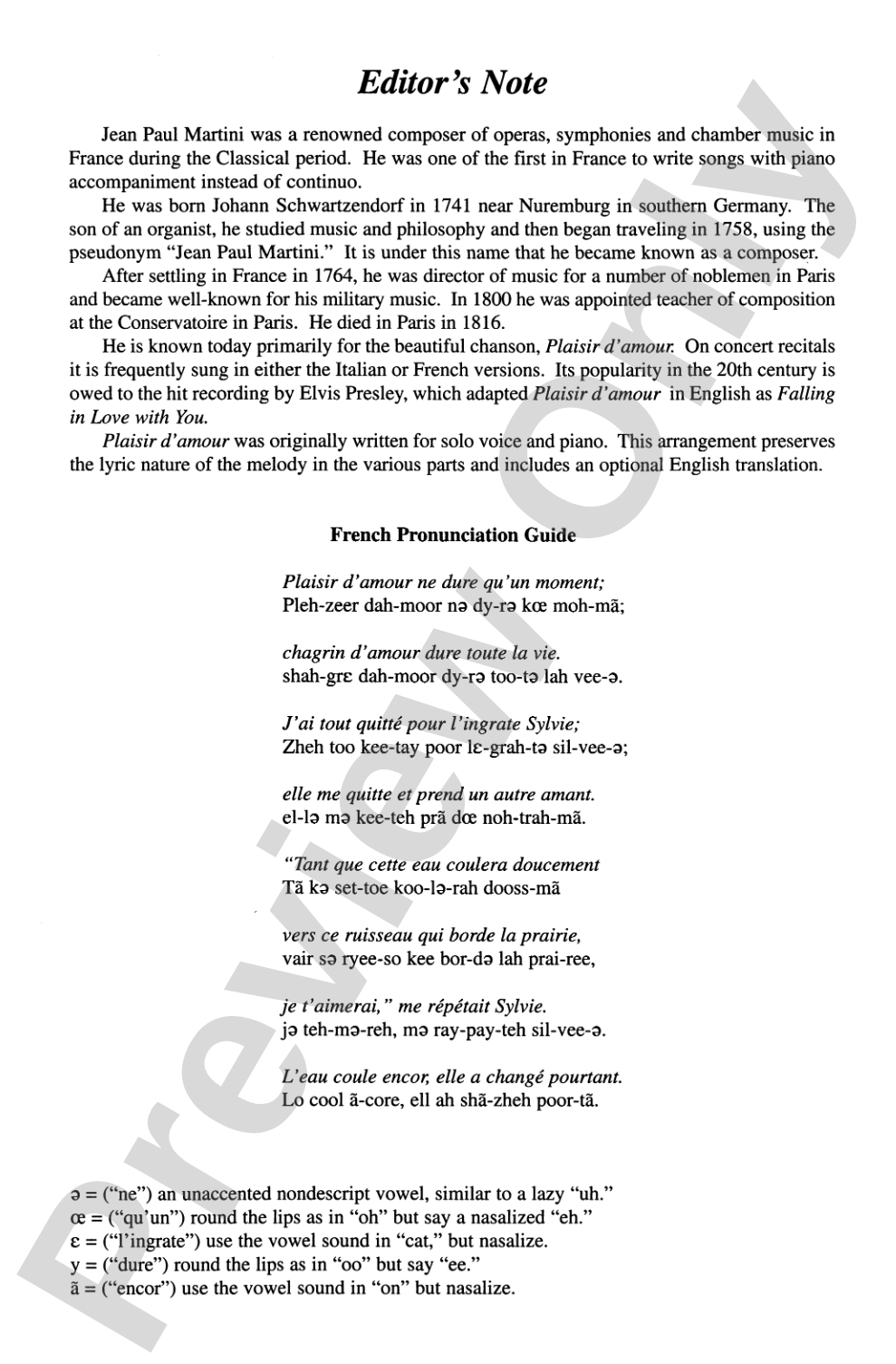
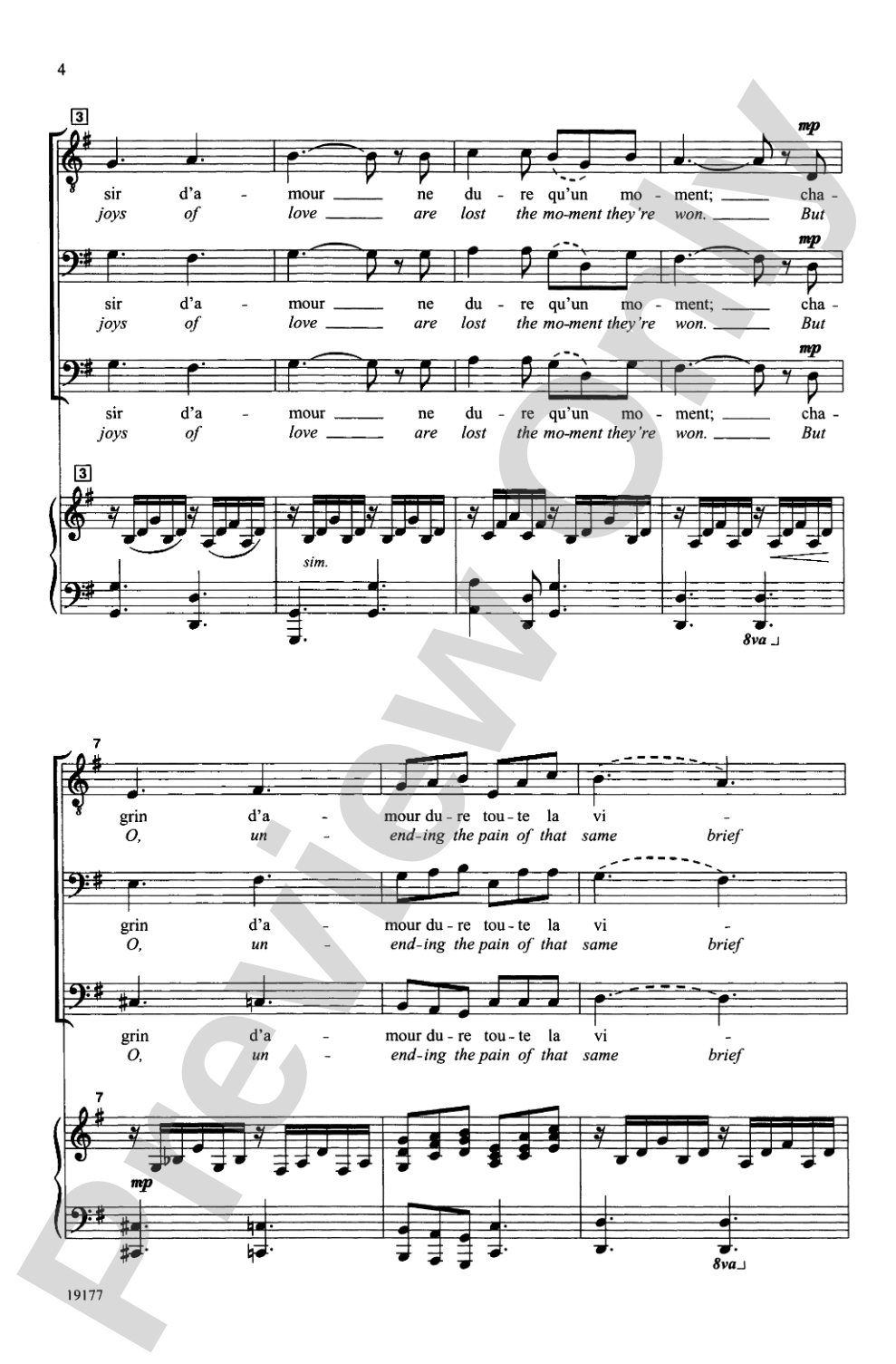
You'll instantly recognize this beautiful melody by Jean Paul Martini. Arranged for today's choirs, this well-crafted work may be sung in French (a pronunciation guide is included) or in an excellent, sensitive English translation. The piano part is smooth and flowing . . . a true accompaniment. Great vocal writing, with open score for easy reading. Editor's notes, useful for programs, are included in the publication. Note: the TBB edition is a classic; an exceptional selection for male groups


Plaisir d'Amour (The Joys of Love): TBB Choral Octavo isn't in MakeMusic Cloud just yet...but it could be. Let us know you'd like to see it, and you'll help shape what comes next. In the meantime, start a free trial and dive into thousands of interactive titles your students can play along with today.
Request This Title
Tell us you want it.
Start Your Free Trial
Explore everything that's ready to play right now.
Sample Audio
1
Audio File
--:--
0:00
0:00
Sample Video
No sample videos found.
Additional Details
Series:
Alfred Archive Edition: Alfred Choral Designs
Publisher:
Alfred Music
Page Count:
12
SKU:
00-PO-0004128
More about this title
About the Composer: Jean Paul Martini
Jean Paul Martini (1741-1816) was an Italian composer who spent much of his career in France, where he became known for his graceful vocal music and chamber works. His melodic gift was particularly suited to the drawing room repertoire of the late 18th century, and his songs remain accessible entry points into the Classical era for student singers.
Martin's output included operas, cantatas, and numerous romances for voice and piano. "Plaisir d'Amour" exemplifies his gift for writing memorable, singable melodies that balance technical interest with emotional directness, qualities that have kept his work in the choral repertoire for generations.
Why we love this
Arranging familiar repertoire for changing vocal demographics keeps music alive in ensembles. Martini's timeless melody deserves to be heard in male voice settings, and Bruce Trinkley's arrangement respects both the original's elegance and the particular strengths of TBB voicing. The bilingual text option lets groups reach audiences in multiple languages without sacrificing musicality.
What to expect
Graceful and intimate, with a melody that seems to float effortlessly over warm harmonic support. The text, whether sung in French or English, carries genuine sentiment without sentimentality, inviting singers to find simplicity and beauty in every phrase.
Who it's for
Male and mixed choirs seeking a piece that bridges Classical elegance with contemporary accessibility. Singers who can manage moderate ranges and moderate part independence will find this rewarding without requiring advanced harmonic reading or range demands.
How to get the most out of it
- Shape the phrases through the text rather than artificial breaks; the French and English both have natural breathing points that should guide your interpretive choices.
- Balance the upper two voices so the melody remains prominent without drowning the lower part, which provides essential harmonic color.
- Use the editor's notes and pronunciation guide in preparation; singers will gain confidence when they understand both the language and the musical intent.
- Let the piano's flowing accompaniment set a gentle tempo; rushing this piece flattens its character.
How to use it
Program this as a standalone romantic interlude between more dramatic works, or pair it with other Classical-era vocal writing to create a thematic set. Its manageable length and universal appeal make it ideal for community concerts, fundraisers, or spring programs where accessibility matters as much as artistry.
Skills your students will build
- Singing in French (with pronunciation guide support)
- Balancing melody and harmonic parts in open score
- Phrasing across textual and musical lines simultaneously
- Reading and interpreting editor's program notes