
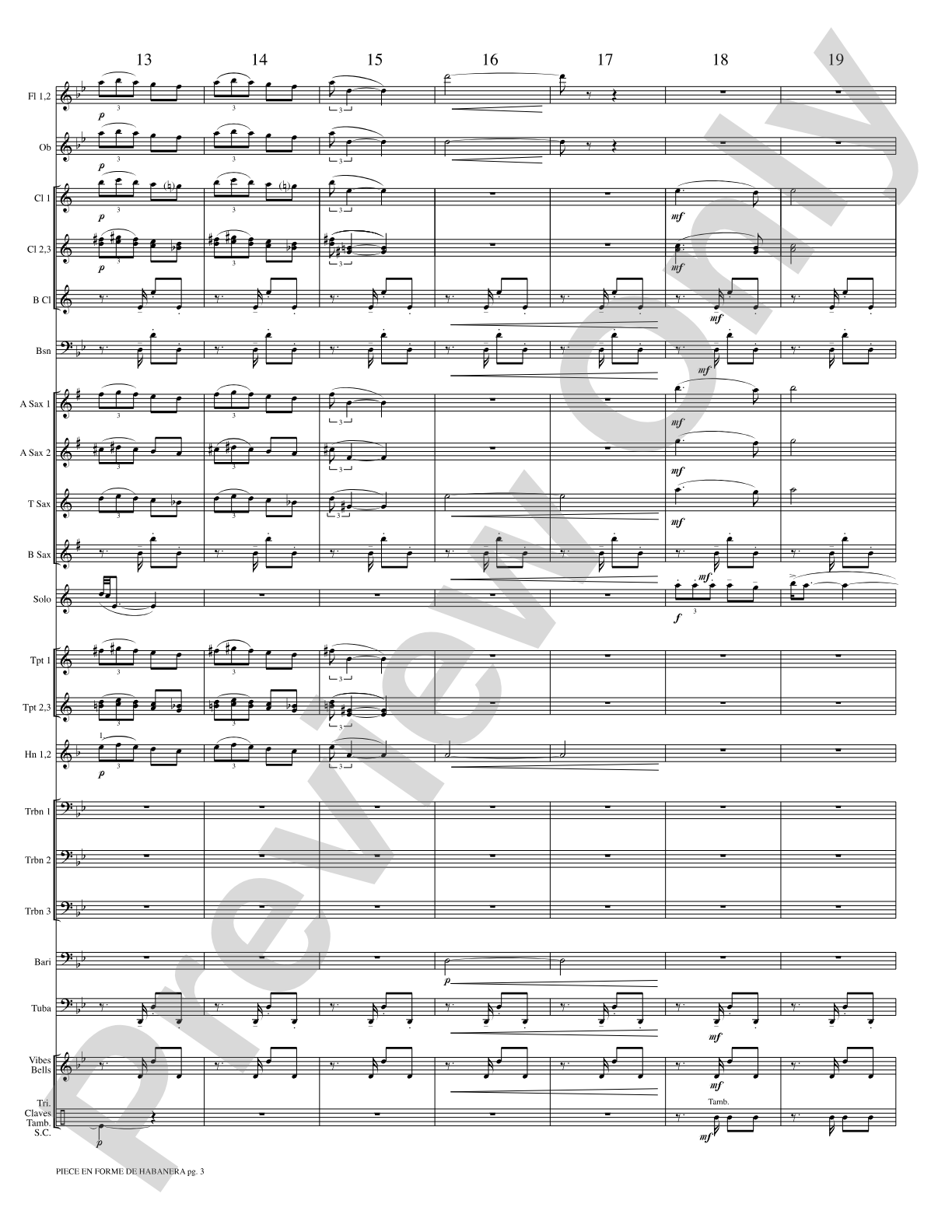
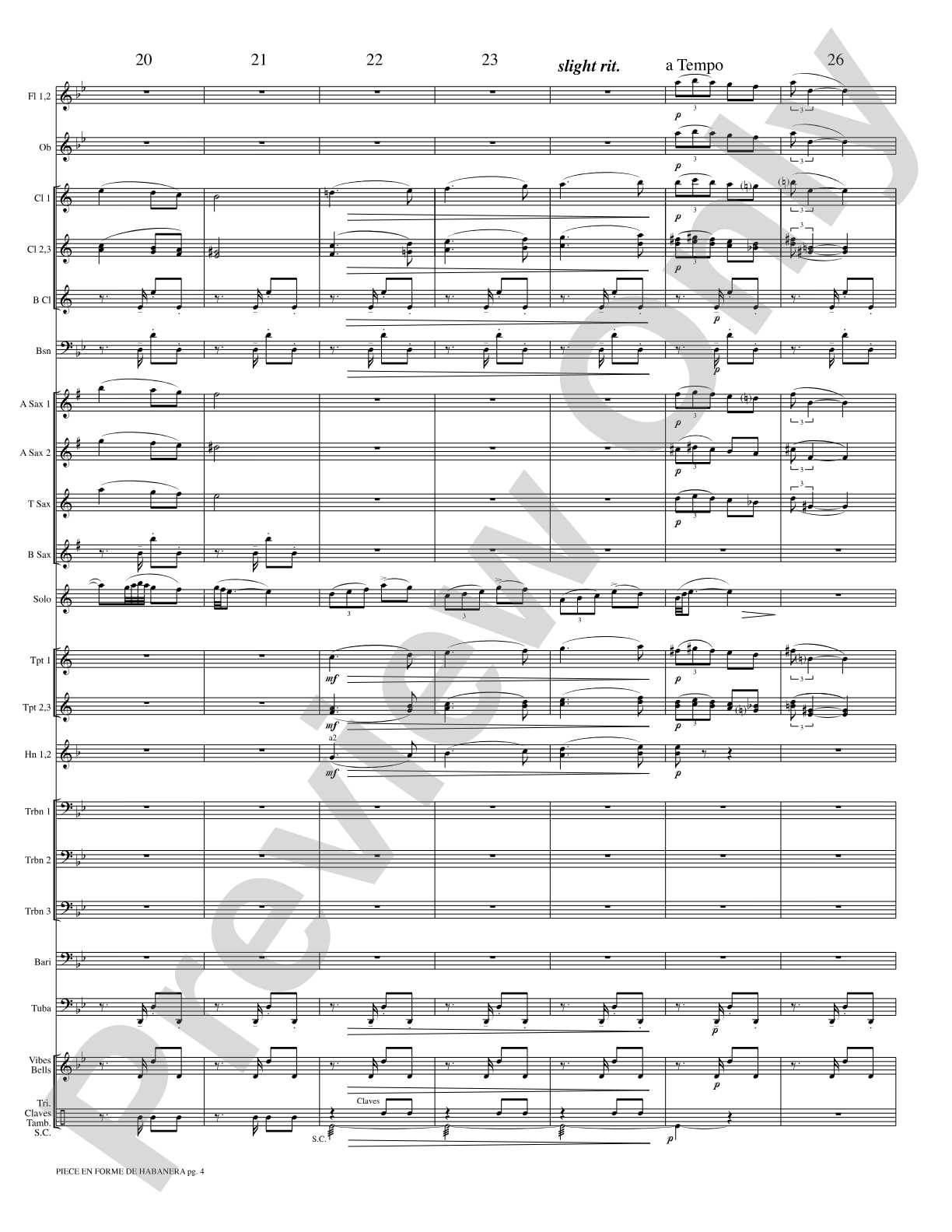
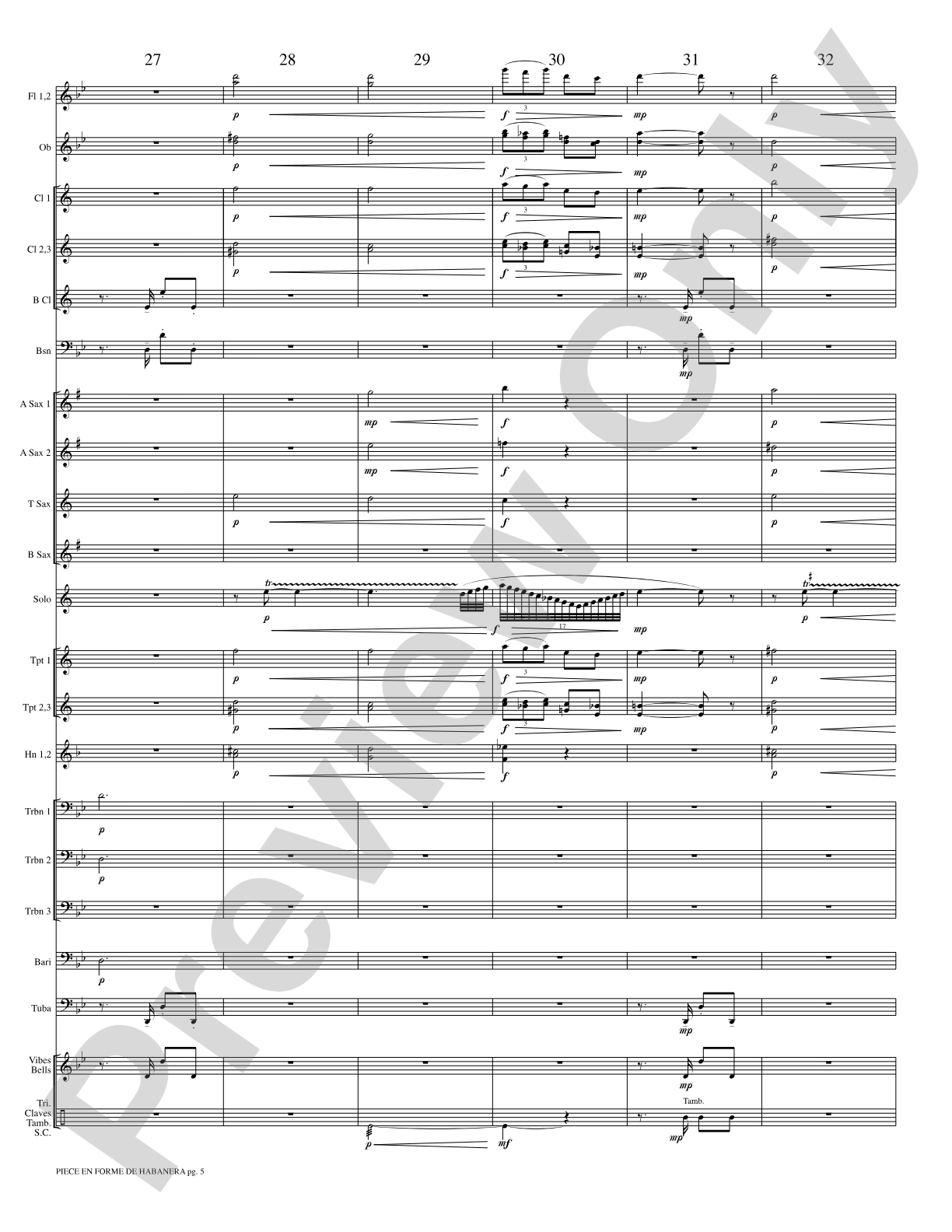
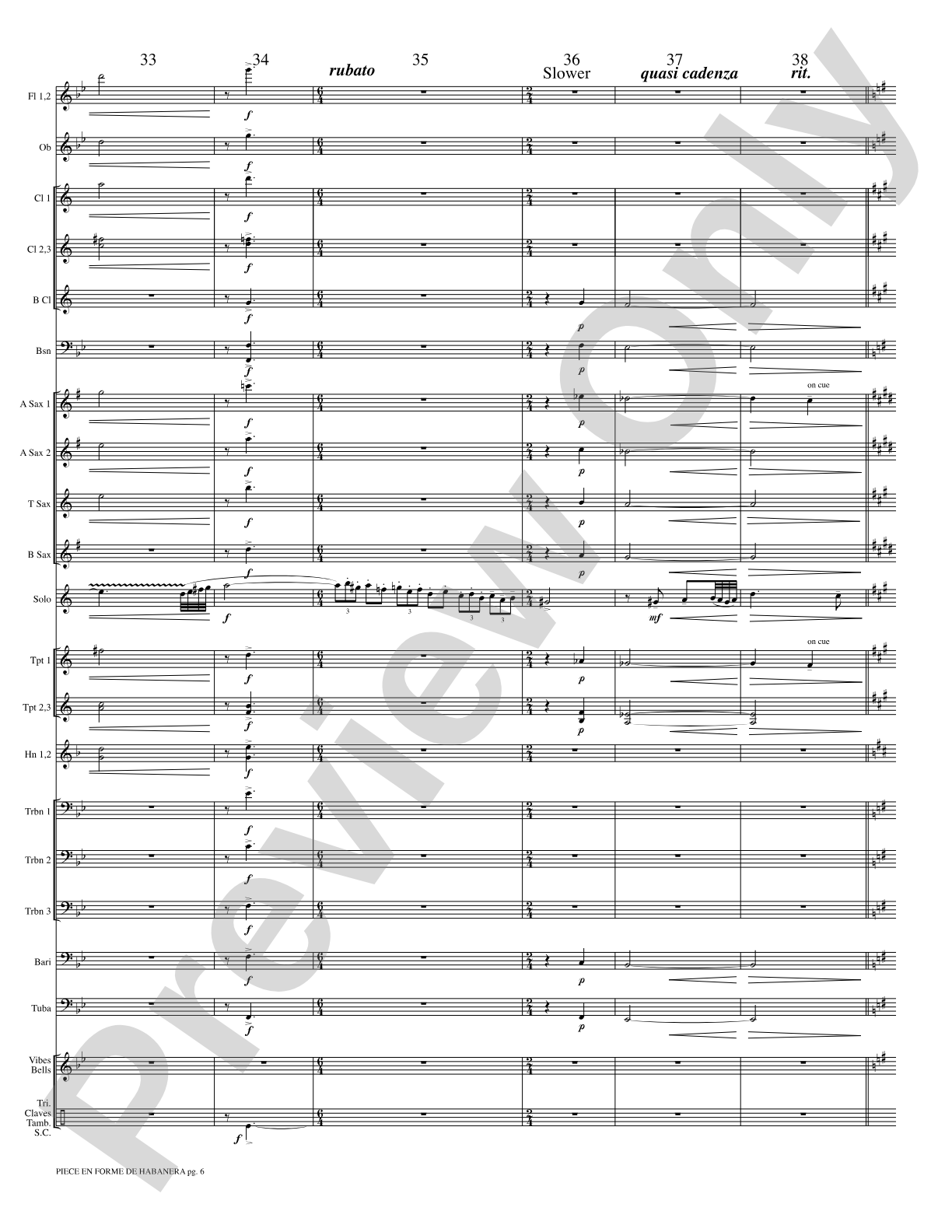
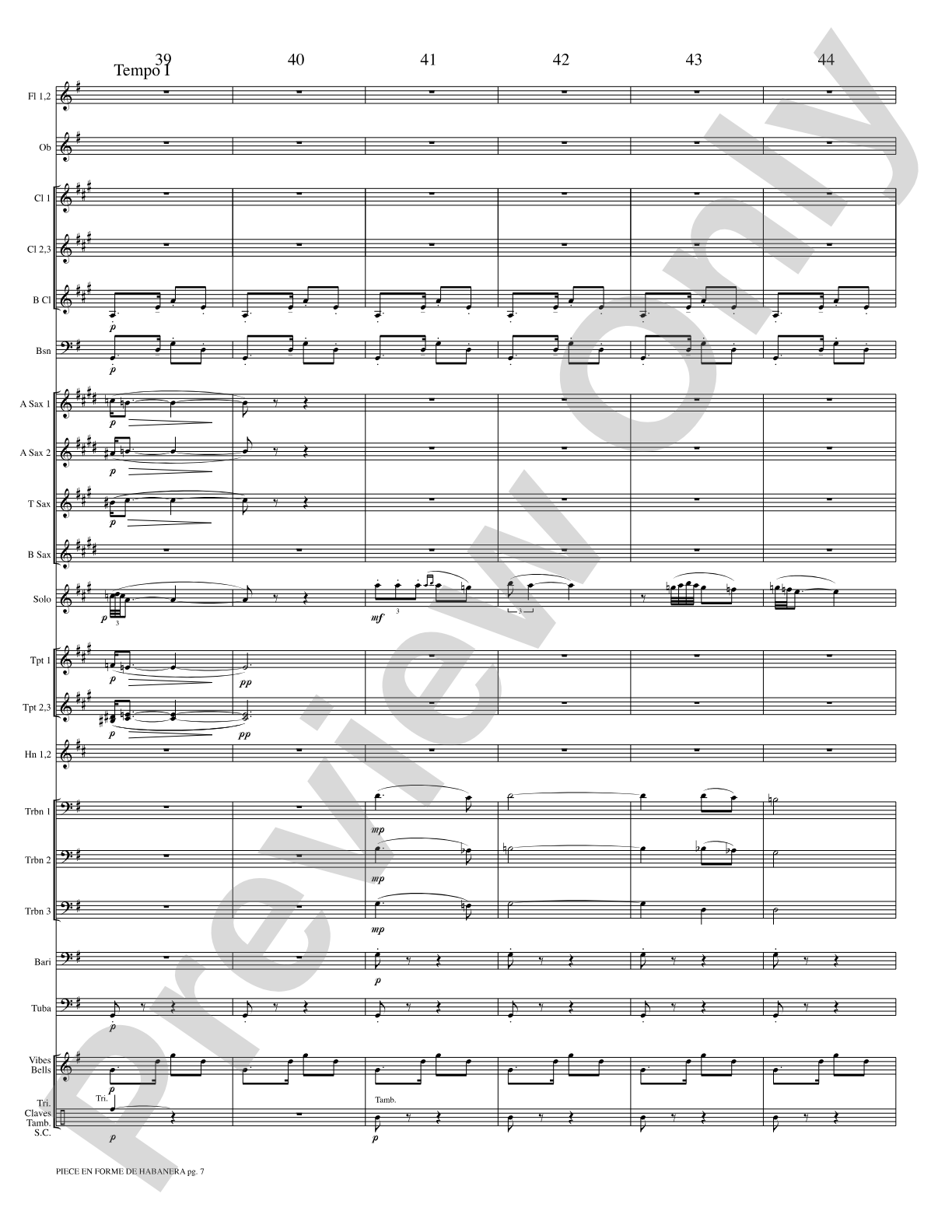
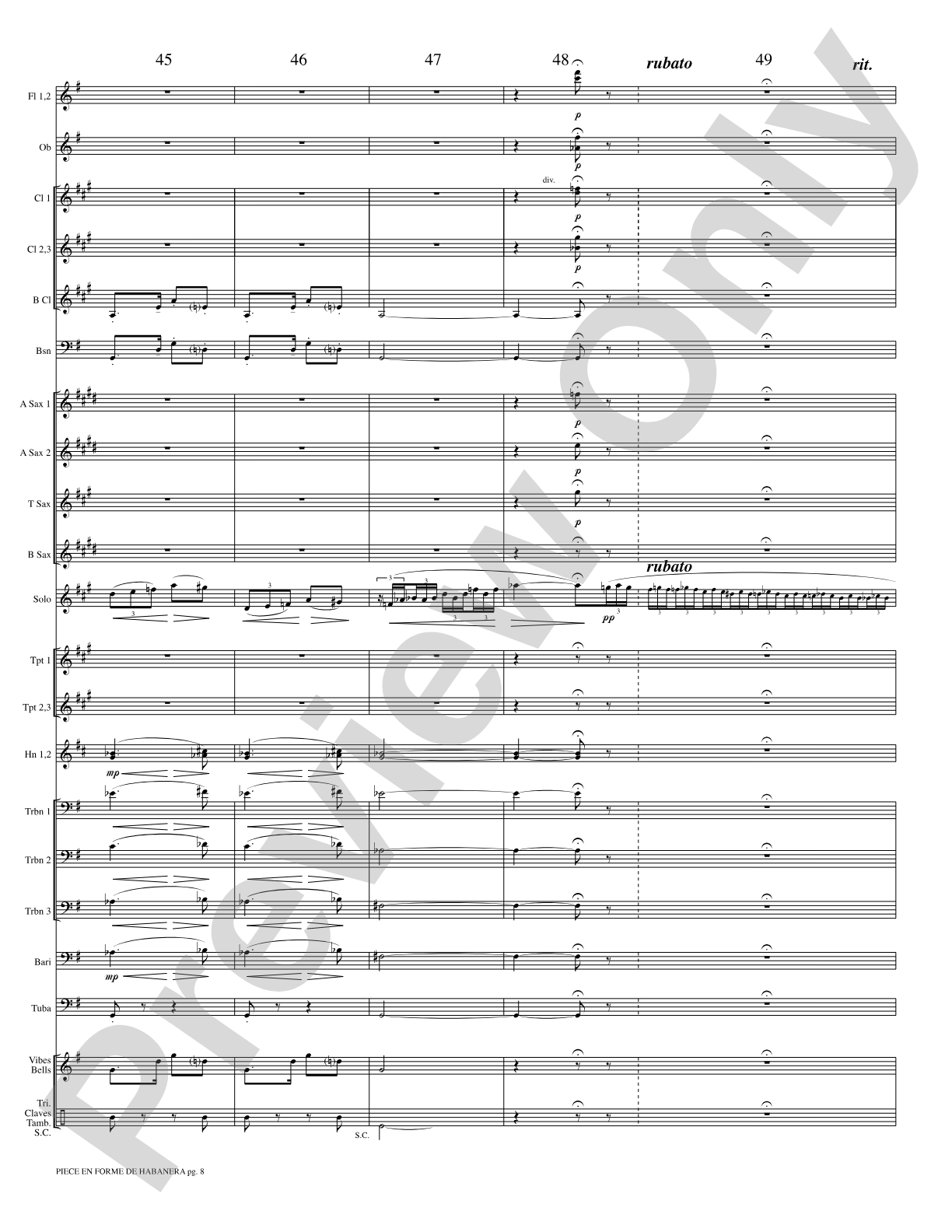
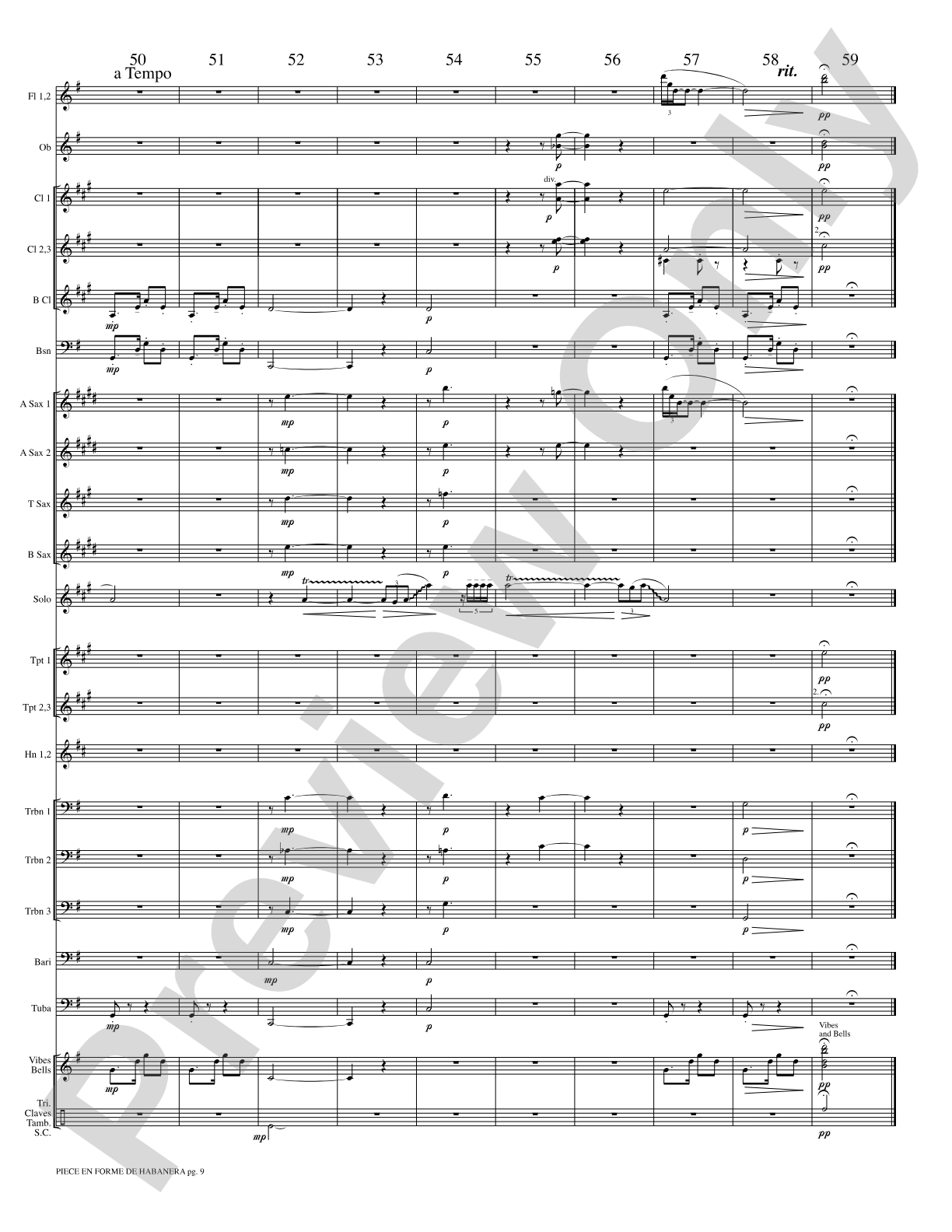


Piece en Forme de Habanera (Soloist and Concert Band): Concert Band Conductor Score & Parts
Soloist and Concert Band
By Maurice Ravel / arr. David Marlatt
Grade: 3
Item: 81-PK-0000010
$65.00
One moment…
Related Items
Piece en Forme de Habanera: Brass Quintet Score & Parts |
$15.00
|
View | |
Piece en Forme de Habanera: Concert Band Conductor Score & Parts |
$65.00
|
View | |
Piece en Forme de Habanera: Concert Band Conductor Score |
$10.00
|
View | |
Piece en Forme de Habanera: Flute & Keyboard Part(s) |
$6.00
|
View | |
Piece en Forme de Habanera: Clarinet & Keyboard Part(s) |
$6.00
|
View | |
Piece en Forme de Habanera: F Horn & Keyboard Part(s) |
$6.00
|
View | |
Piece en Forme de Habanera: Alto Saxophone & Keyboard Part(s) |
$6.00
|
View | |
Piece en Forme de Habanera: Trumpet & Keyboard Part(s) |
$6.00
|
View | |
Piece en Forme de Habanera: Trombone & Keyboard Part(s) |
$6.00
|
View | |
Piece en Forme de Habanera: 6 Trumpets Score & Parts |
$15.00
|
View |
Description
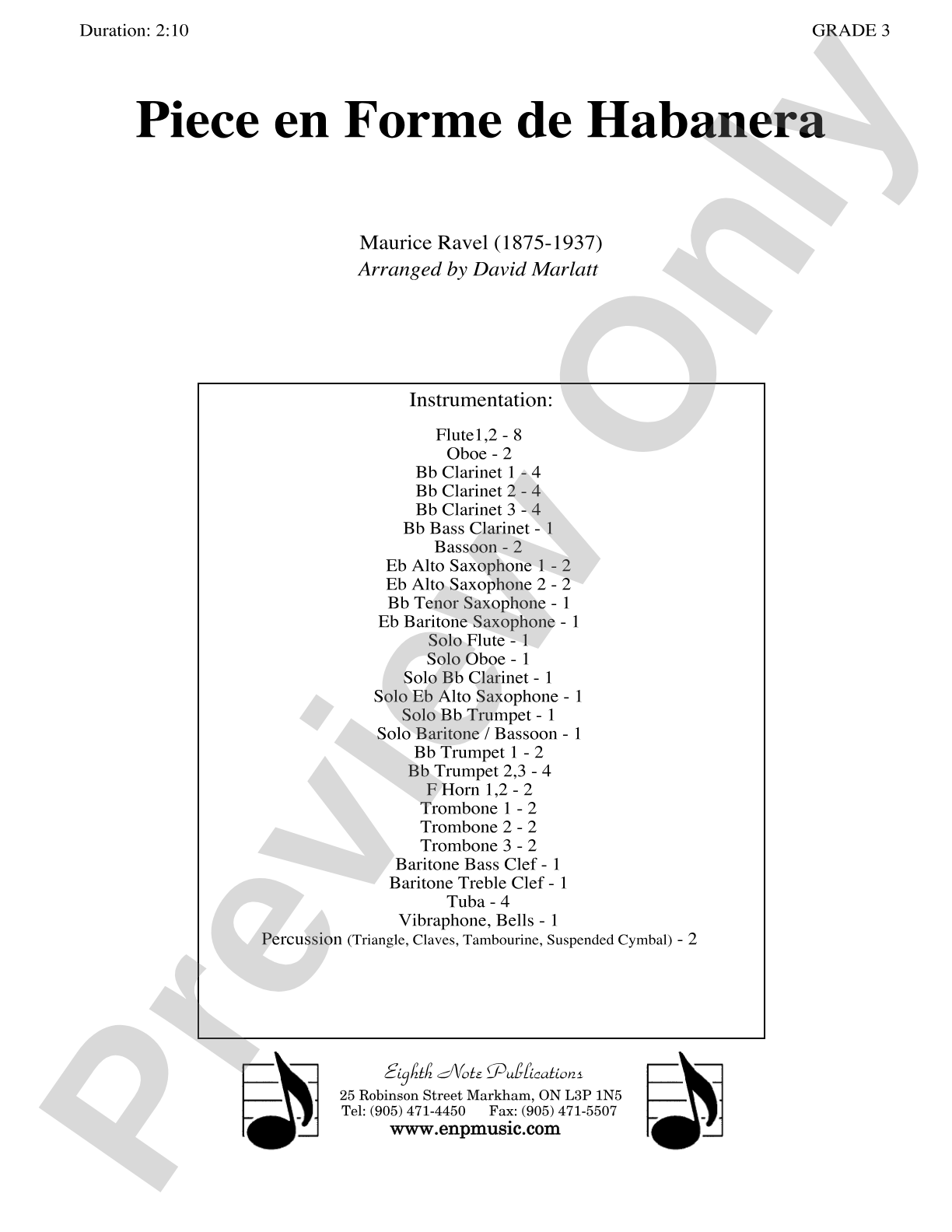
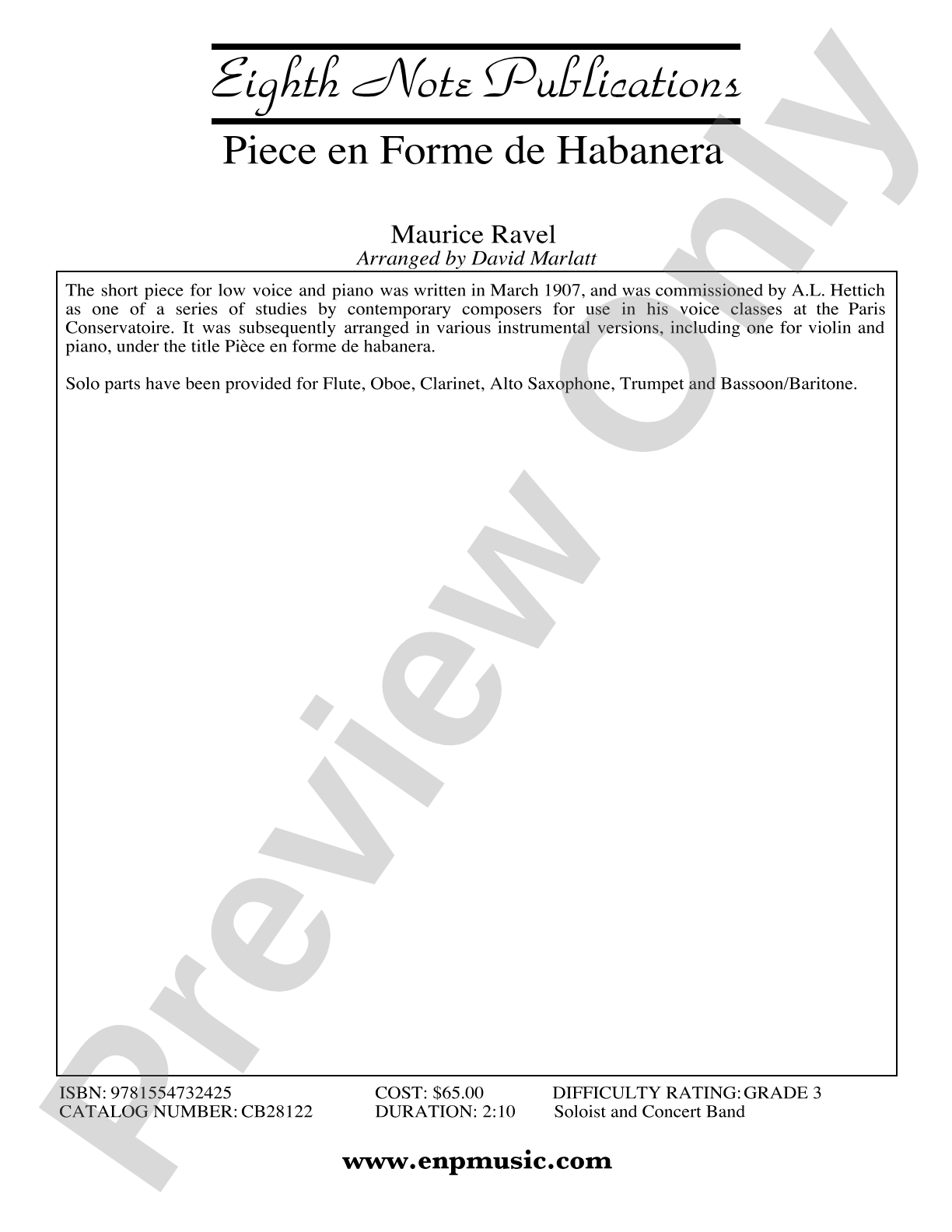
This short piece was originally written for low voice and piano as one of a series of studies by contemporary composers for use in voice classes at the Paris Conservatoire. It was subsequently arranged in various instrumental versions, including one for saxophone and piano, under the title Pièce en forme de habanera.
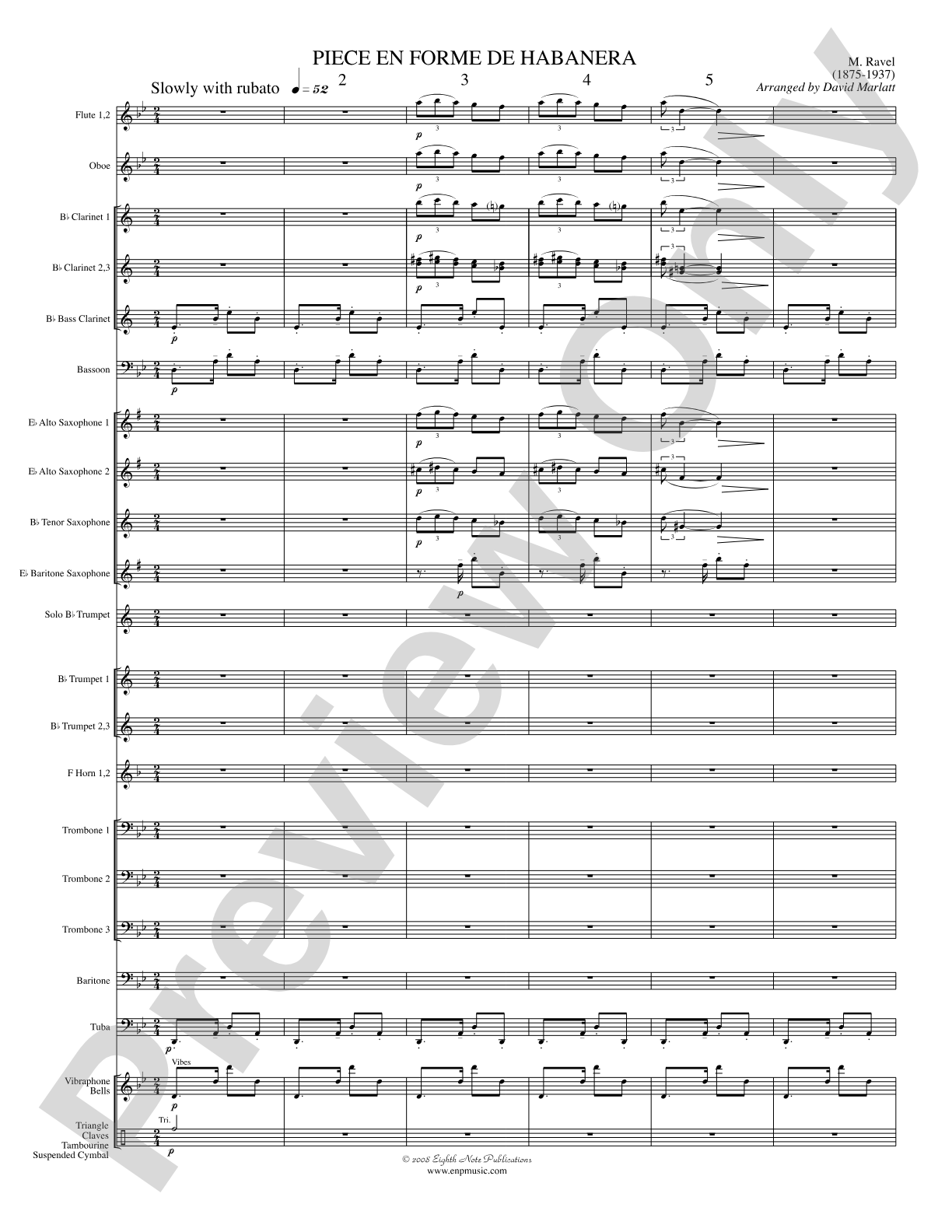
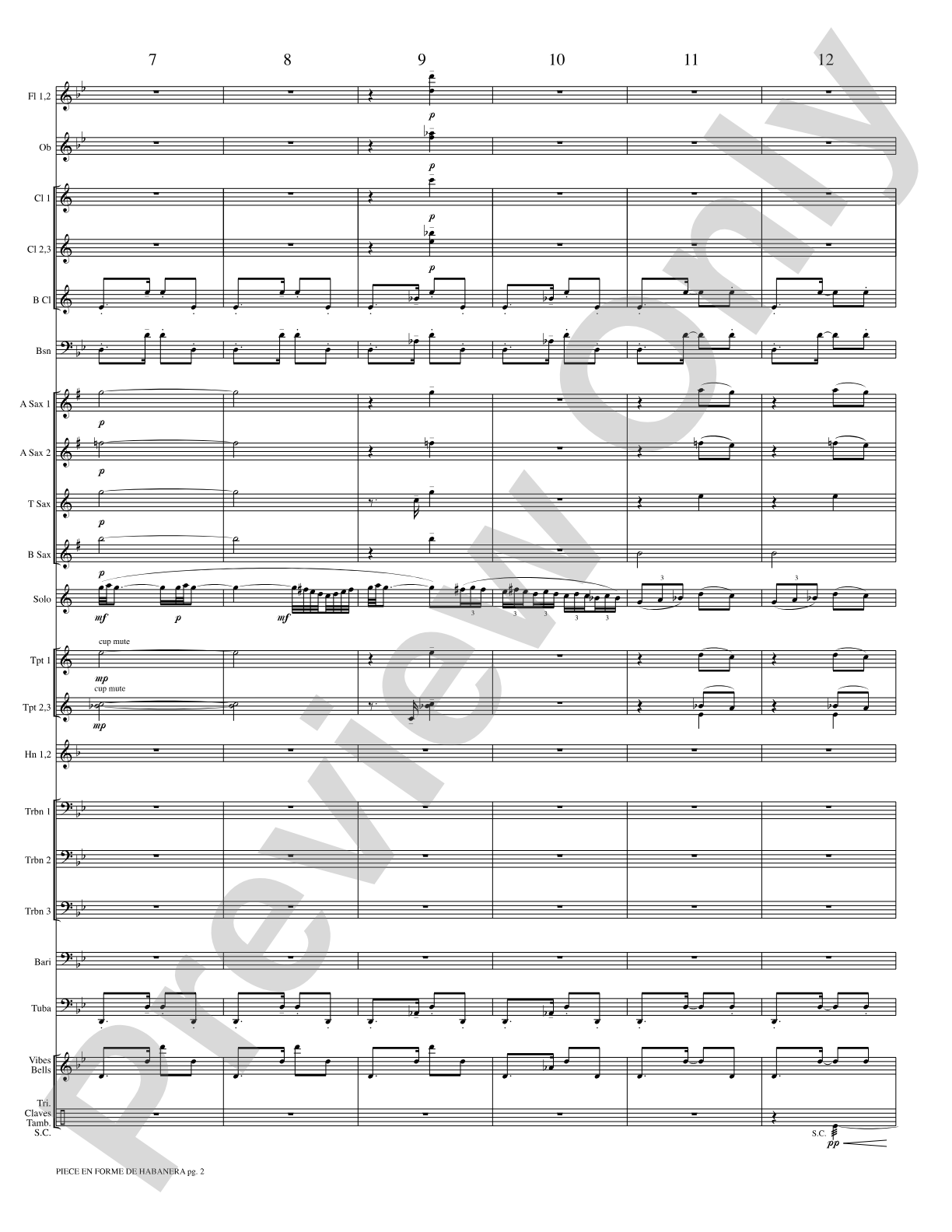
Solo parts have been provided for Flute, Oboe, Clarinet, Alto Saxophone, Trumpet and Bassoon/Baritone.


Solo parts have been provided for Flute, Oboe, Clarinet, Alto Saxophone, Trumpet and Bassoon/Baritone.
Discover MakeMusic Cloud: thousands of interactive titles your students can play along with today.
Sample Audio
1
Audio File
--:--
0:00
0:00
Sample Video
No sample videos found.
Additional Details
Series:
Eighth Note Publications
Publisher:
Eighth Note Publications
Page Count:
132
SKU:
81-PK-0000010
More about this title
About the Composer: Maurice Ravel
Maurice Ravel (1875-1937) stands as one of the twentieth century's most influential orchestrators and harmonic innovators. His meticulous approach to instrumental color and his ability to craft music of crystalline clarity made him a natural choice when the Paris Conservatoire commissioned a series of pedagogical pieces from contemporary composers. Ravel's gift lay in writing music that was simultaneously sophisticated in its harmonic language and accessible in its emotional directness—a balance that defined his entire career.
Beyond the concert hall, Ravel's influence on music education has been profound. His orchestrations and arrangements demonstrate how original works can be reimagined for different settings without losing their essential character. For conductors and student musicians, his scores remain masterclasses in clarity of texture and precision of scoring.
Why we love this
Ravel's original concept for voice classes at the Paris Conservatoire translates beautifully to a Grade 3 concert band setting, where young musicians gain exposure to genuine twentieth-century harmonic sophistication. The habanera rhythm provides instantly recognizable rhythmic drive, while David Marlatt's arrangement distributes solo opportunities across six different instruments, ensuring every section gets its moment in the spotlight. Programming this piece signals to your ensemble that they're capable of performing real music from the orchestral canon, not just simplified versions.
What to expect
The habanera rhythm evokes the warmth of Spanish and Cuban dance traditions filtered through Ravel's crystalline, somewhat detached lens. A single voice emerges from the band's lush supporting harmonies, singing with the kind of intimate, almost conversational phrasing that makes you forget you're listening to an arrangement. The overall effect is both nostalgic and modern, with the band's Impressionistic colors creating an atmosphere that is sophisticated without ever becoming fussy.
Who it's for
This arrangement serves Grade 3 concert bands preparing a soloist or wanting to feature different students across rehearsals. It works equally well for programs that emphasize twentieth-century music or for ensembles building repertoire that bridges classical traditions and modern compositional thinking. Any director seeking a piece that sounds more sophisticated than its Grade 3 difficulty level should suggest will find this invaluable.
How to get the most out of it
- Balance the habanera's steady rhythmic pulse with the lyrical, rubato character of the solo line; the rhythm section establishes the dance, but the soloist should breathe and phrase with vocal elegance
- Tune the thirds and sevenths carefully in the harmonic backdrop, especially in the band's supporting chords, since Impressionistic harmony can sound muddy if intonation slips
- Highlight the contrast between the A and B sections by adjusting the weight and color of the accompaniment; the second section often benefits from a slightly lighter touch that lets new timbral combinations emerge
- Conduct with clarity through any meter or tempo shifts within sections; even in a short piece, small gestures help the soloist stay confident and the band stay locked together
How to use it
Program this work on a concert that pairs traditional masterworks with newer arrangements or transcriptions, positioning it as a bridge between the canon and contemporary concert band writing. Its modest length and solo-with-ensemble format make it ideal as a feature piece that doesn't demand a full program; slot it between a longer multi-movement work and a contrasting contemporary composition. It also fits naturally into a music appreciation concert or a program exploring twentieth-century European music.
Skills your students will build
- Reading and balancing Impressionistic harmony with accurate intonation
- Accompanying a lyrical solo line with tasteful dynamic support and rhythmic precision
- Understanding the habanera rhythm and its historical and cultural context
- Shifting ensemble color and weight to support different solo instruments across the arrangement