
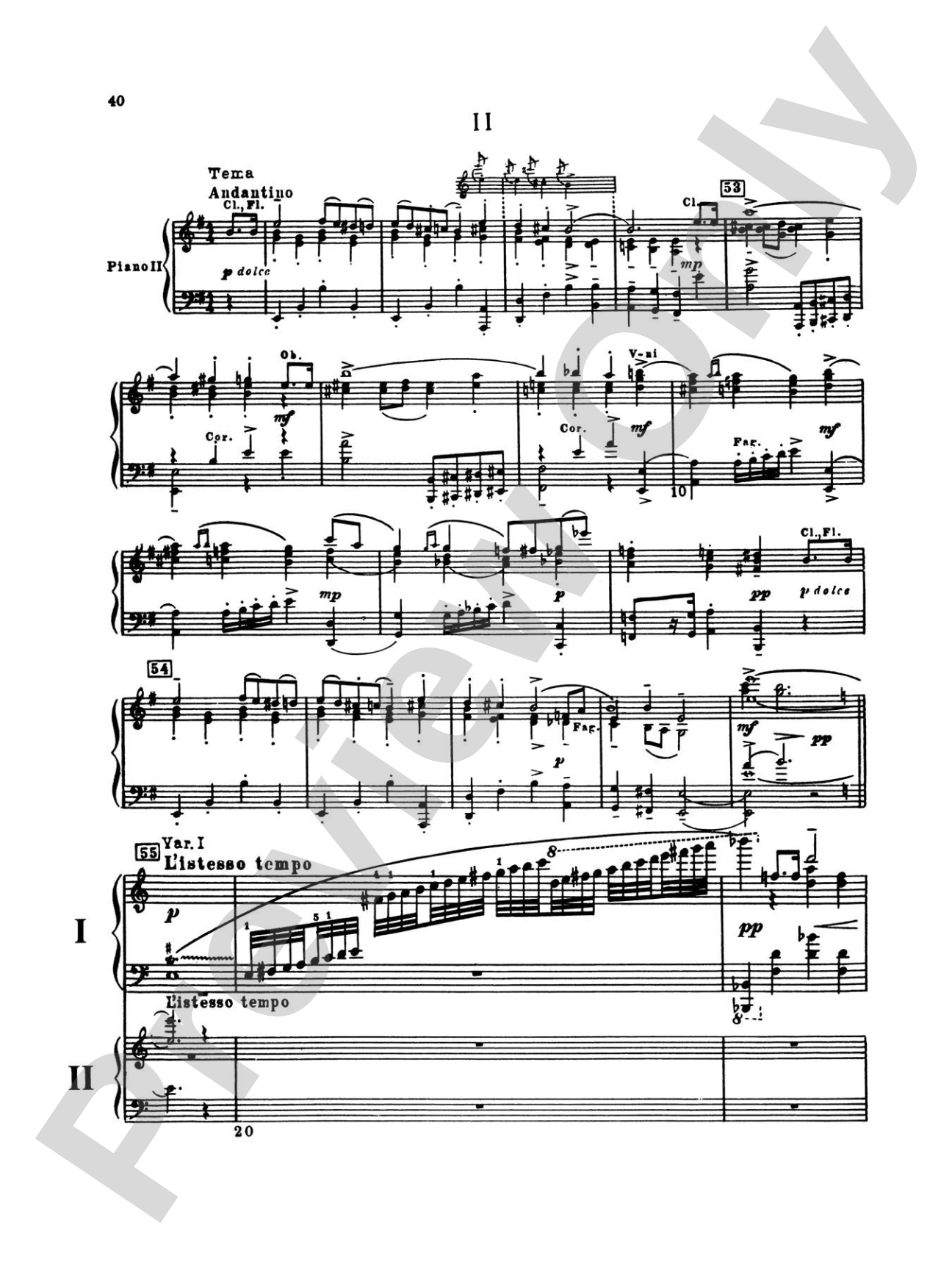
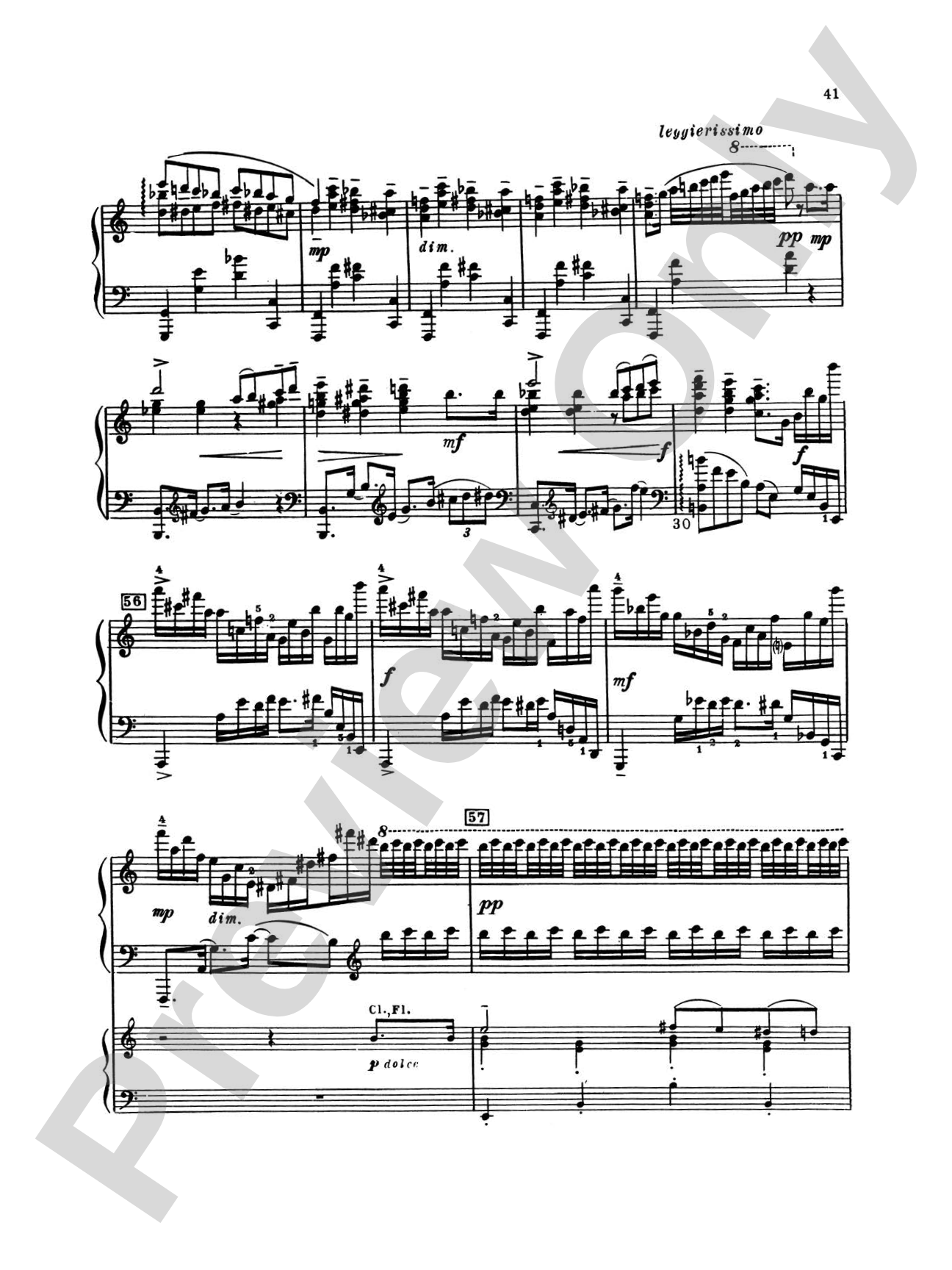
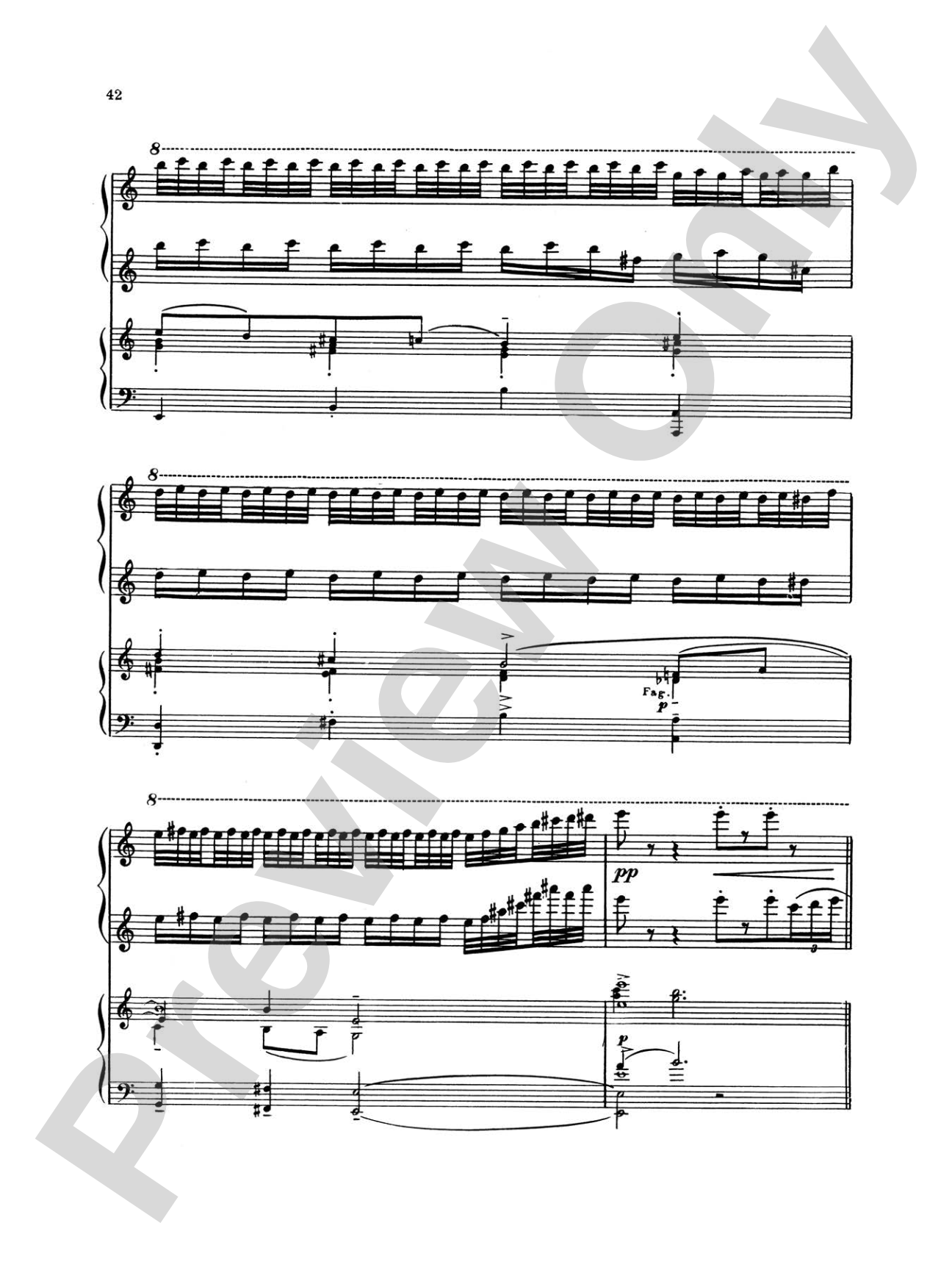
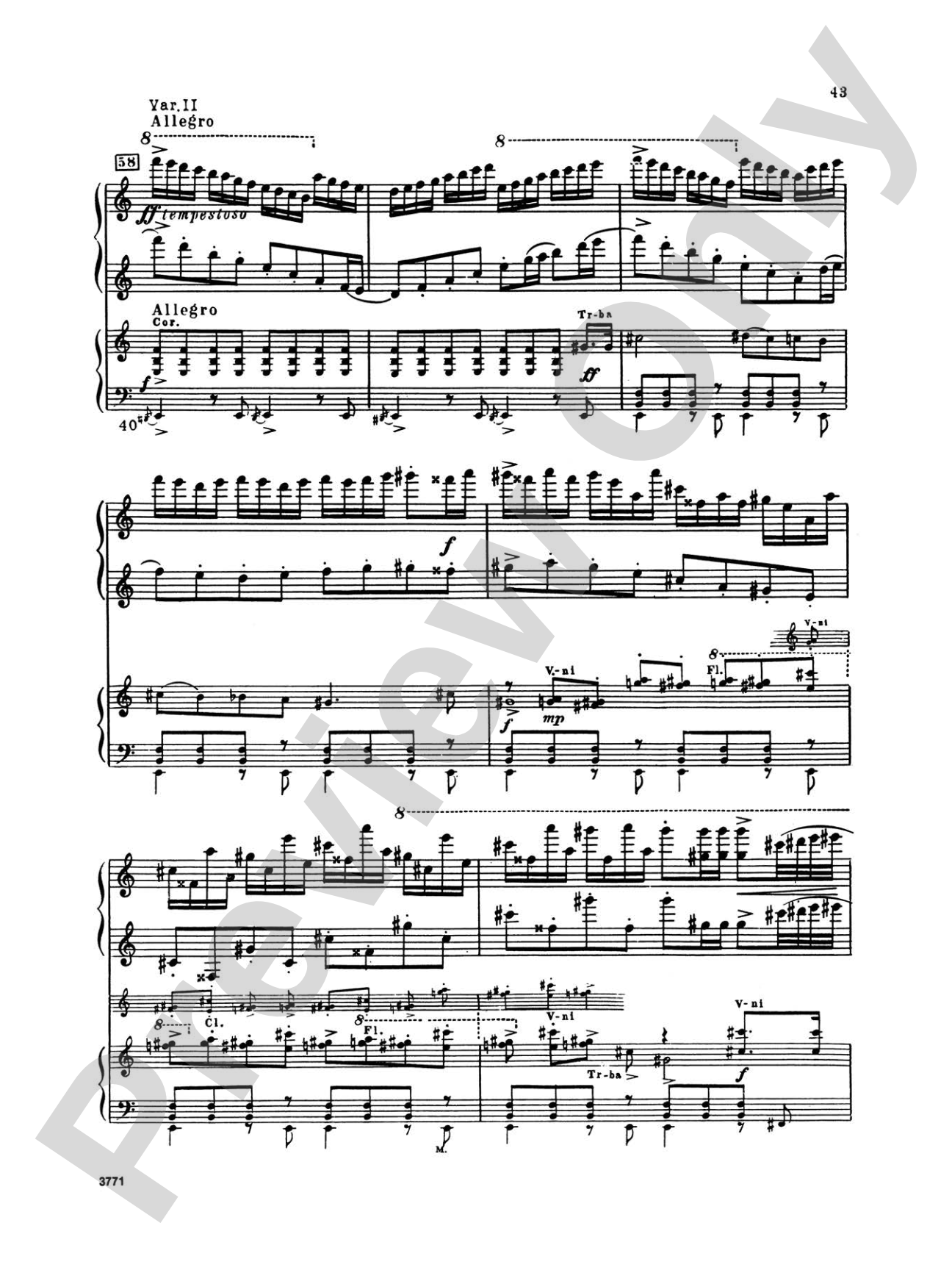
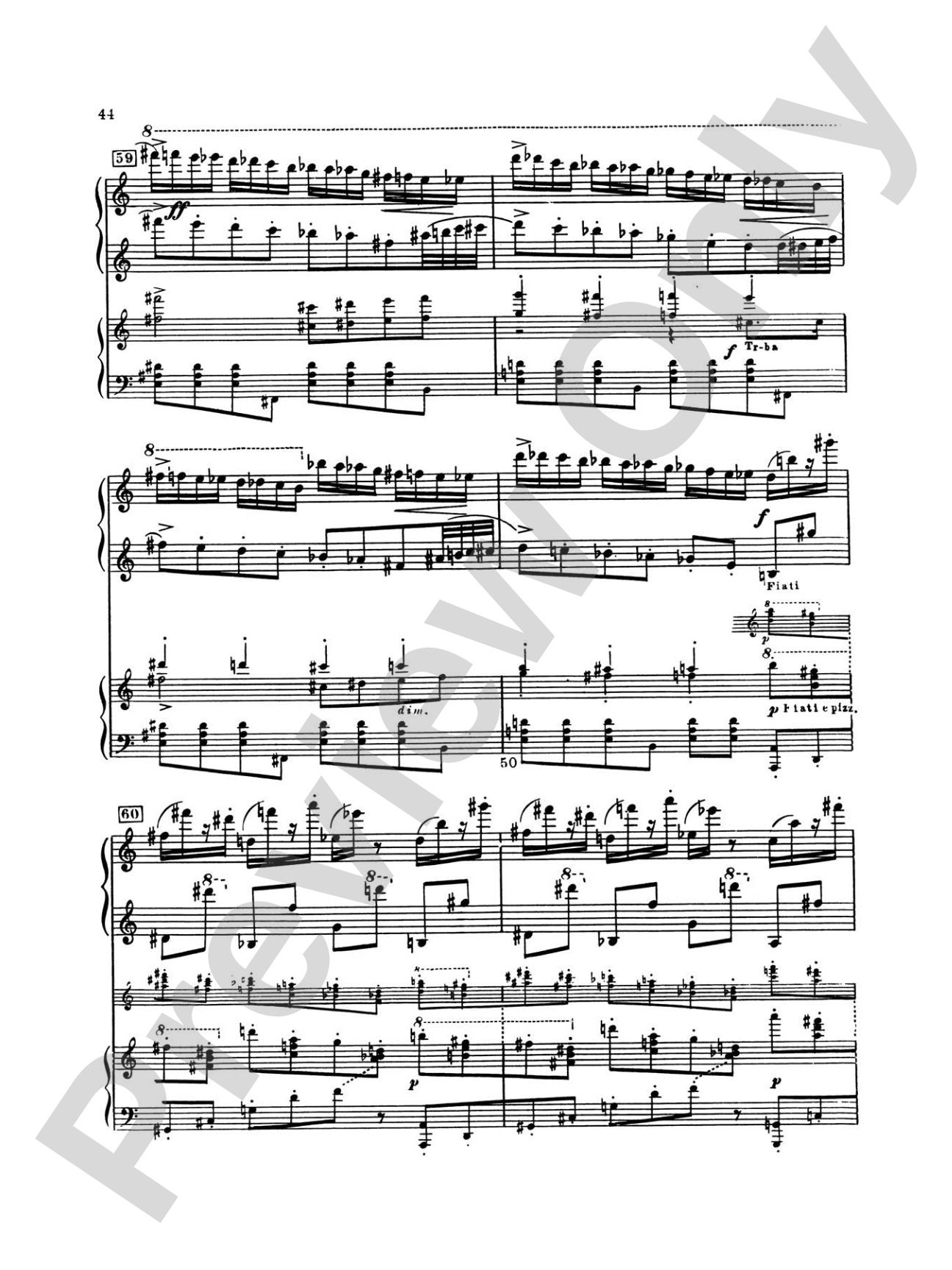

Piano Concerto No. 3 in C Major, Opus 26 - 2nd Movement - Piano Duo (2 Pianos, 4 Hands): Piano Duo (2 Pianos, 4 Hands)
By Sergei Prokofiev
Level: Advanced
Item: 00-PS-0017288
$9.99
Pickup currently not available
Description
A Federation Festivals 2024-2028 selection. A Federation Festivals 2024-2028 selection.


Discover MakeMusic Cloud: thousands of interactive titles your students can play along with today.
Sample Audio
No sample audio found.
Sample Video
No sample videos found.
Additional Details
Series:
Kalmus Edition
Publisher:
Alfred Music
Page Count:
100
SKU:
00-PS-0017288
More about this title
About the Composer: Sergei Prokofiev
Sergei Prokofiev (1891-1953) emerged as one of the 20th century's most inventive composers, bridging modernist innovation with lyrical accessibility. His compositional voice combined angular harmonies, driving rhythms, and unexpected harmonic turns with moments of surprising warmth, making his work instantly recognizable and endlessly rewarding to perform.
Prokofieff wrote prolifically across all genres: orchestral works, ballets, operas, concertos, and chamber music. His three piano concertos stand among the great works of the instrument, each showcasing his gift for blending virtuosic demands with genuine musicality. His music demands both technical facility and interpretive maturity from performers.
Why we love this
This movement offers advanced pianists a chance to experience Prokofiev's genius for counterpoint and harmonic color in an intimate two-piano setting. The Andante character invites musical dialogue between the two instruments, and its inclusion as a Federation Festivals selection confirms its value as literature that challenges serious pianists while remaining deeply musical.
What to expect
The Andante unfolds with introspective beauty, marked by Prokofiev's characteristic harmonic sophistication and delicate orchestral textures adapted for the keyboard. The movement breathes with lyrical restraint, occasionally touched by cool modernist harmonies that give way to warmer, more songful passages. It invites intimate collaboration between the two performers, creating a conversation that feels both intellectually rigorous and emotionally present.
Who it's for
Advanced pianists ready to tackle a major 20th-century work, either as a pair preparing for festivals and recitals or as individual pianists looking to expand their solo repertoire through duo performance. This selection suits serious students and professional musicians who understand Prokofiev's musical language and can balance technical demands with interpretive insight.
How to get the most out of it
- Balance the distribution of melodic material between the two pianos; neither partner should disappear, even when providing accompaniment or harmonic support. Listen across both instruments as a unified voice.
- Pay close attention to Prokofiev's accents and dynamic markings. They often fall on unexpected beats and function as compositional statements, not arbitrary emphasis.
- Coordinate pedaling carefully between both pianos to avoid muddying the texture. Each pianist should listen to how their resonance interacts with their partner's sound.
- Shape phrases with subtle rubato rather than mechanical precision. Prokofiev's harmonic language rewards gentle breathing and expressive phrasing.
How to use it
Program this movement as a centerpiece for an advanced piano duo recital, or pair it with other 20th-century chamber works for a thematic concert exploring modern approaches to the concerto form. Its contemplative character works well in the second half of a program, after more extroverted opening works, where audiences can settle into Prokofiev's harmonic world.
Skills your students will build
- Reading and performing dense 20th-century harmonic language
- Two-piano ensemble coordination and balance
- Interpreting Prokofiev's precise articulation and accentuation
- Understanding counterpoint across two independent keyboard parts
- Pedaling strategies in complex modern harmony
- Navigating fast passagework with rhythmic precision