
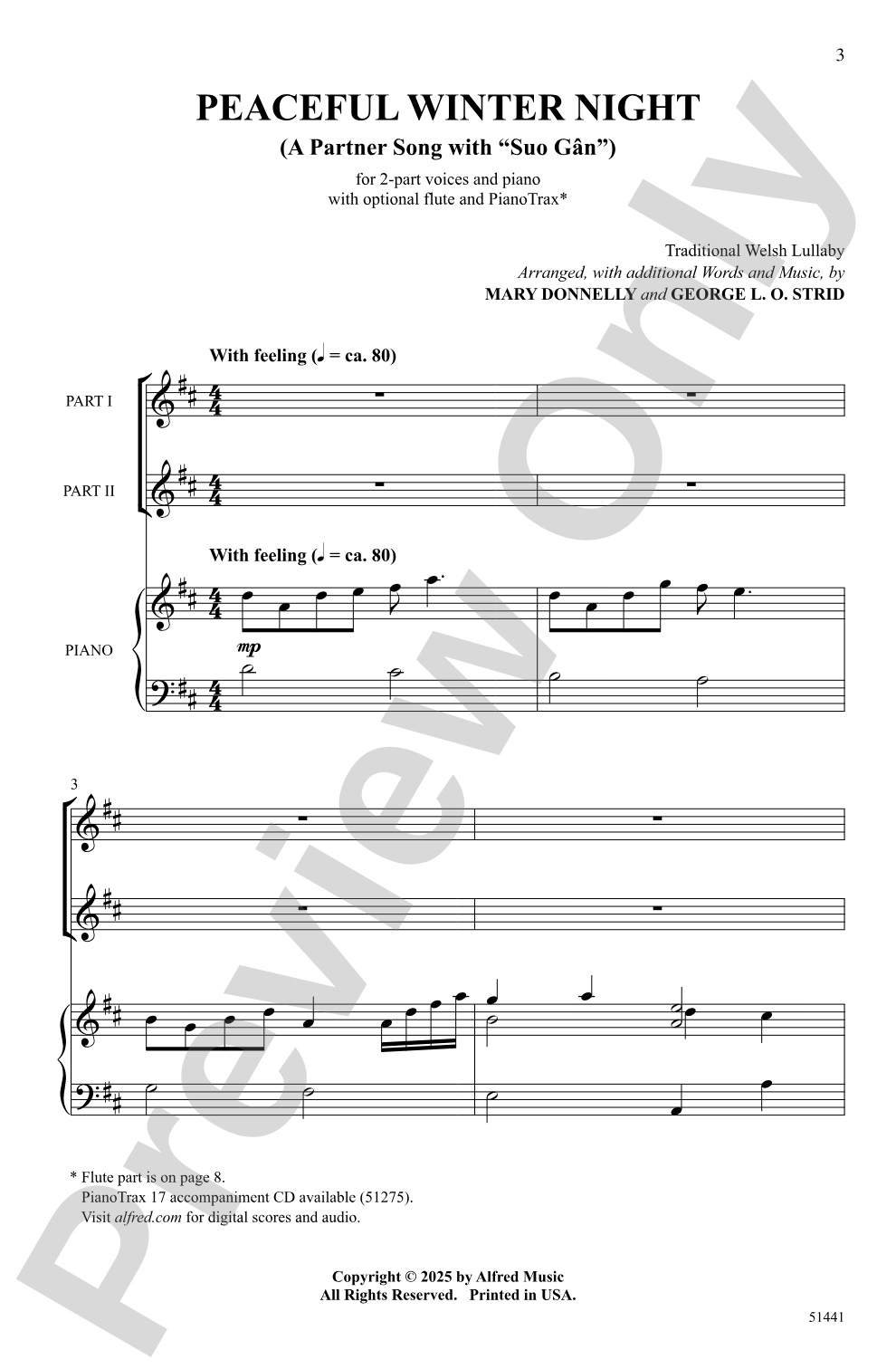
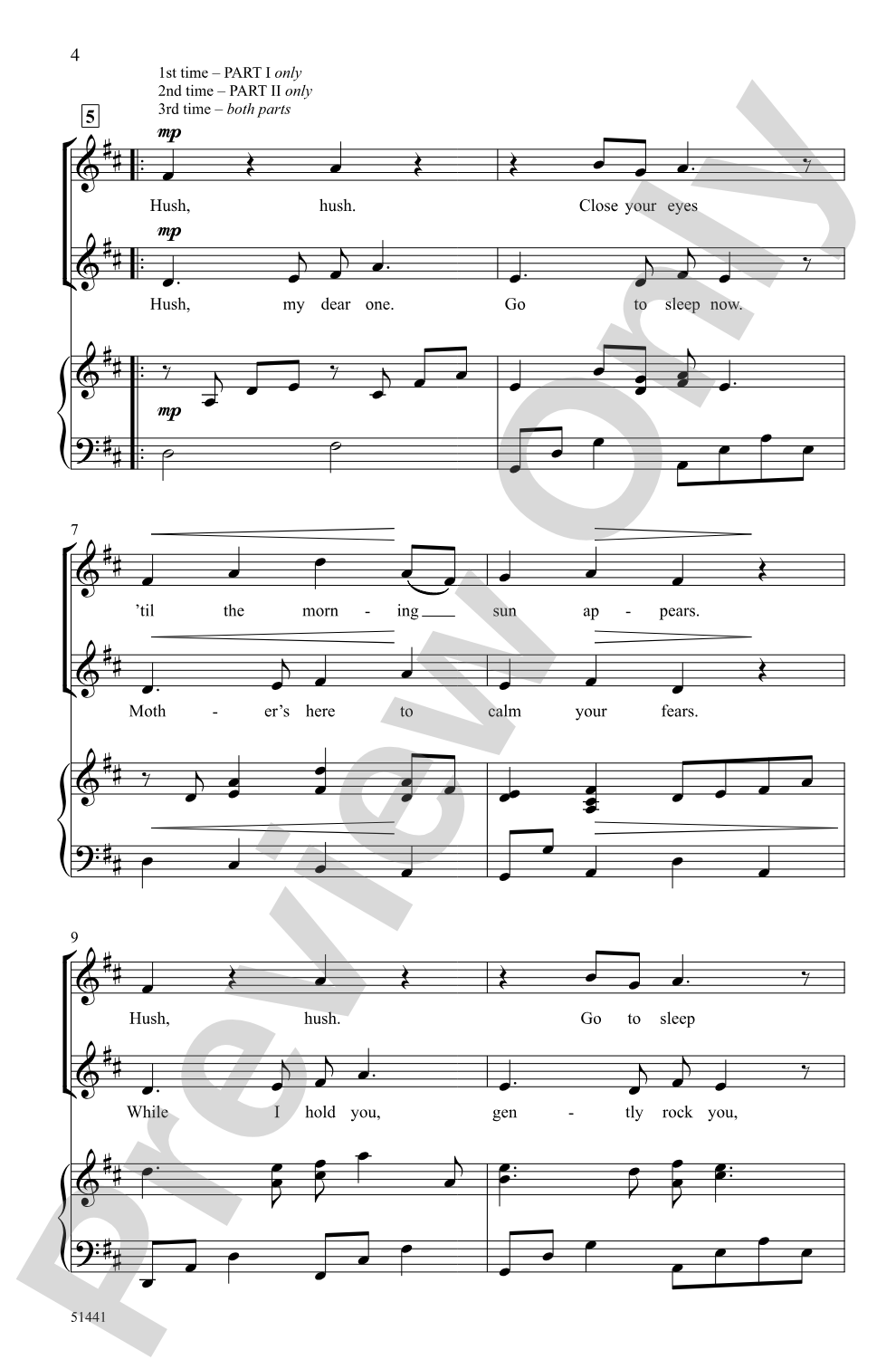

Peaceful Winter Night: 2-Part Choral Octavo
(A Partner Song with "Suo Gân")
Arr., with additional words and music, by Mary Donnelly and George L. O. Strid
Item: 00-PO-0007457
$2.20
Minimum order quantity: 20 copies
Pickup currently not available
Description
The traditional Welsh lullaby "Suo Gân" is paired with an original text and melody to create a gentle and soothing partner song. With vocal ranges spanning only an octave and a supportive piano part, this is an ideal choice for those new to singing in harmony. The optional flute part will add a graceful sparkle. With no mention of the holidays, sing this at any wintertime performance.


Peaceful Winter Night: 2-Part Choral Octavo isn't in MakeMusic Cloud just yet...but it could be. Let us know you'd like to see it, and you'll help shape what comes next. In the meantime, start a free trial and dive into thousands of interactive titles your students can play along with today.
Request This Title
Tell us you want it.
Start Your Free Trial
Explore everything that's ready to play right now.
Sample Audio
1
Audio File
--:--
0:00
0:00
Sample Video
Additional Details
Series:
Alfred Choral Designs
Publisher:
Alfred Music
Page Count:
8
SKU:
00-PO-0007457
Instrumentation:
Opt. Flute
More about this title
About the Arranger: Mary Donnelly
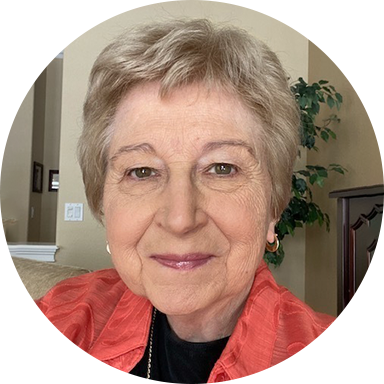
Mary Donnelly grew up in Reno, Nevada, and initially pursued English and French at the University of Nevada, Reno. While still an undergraduate, she discovered her passion for music education by founding two children's choruses, which led her back to school for music certification. She earned a Master's Degree in Education from Lesley College in Cambridge, Massachusetts, where she studied arts integration across the curriculum.
Donnelly spent three decades teaching general music and choir in Washoe County schools, bringing that same collaborative spirit to her classroom. In 1985, she met composer and arranger George L. O. Strid while team-teaching sixth grade music. Their partnership has produced over two hundred songs and twenty-five musicals, making them a prolific creative force in choral education. She remains active in ACDA, NEA, and ASCAP.
Why we love this
This arrangement honors a Welsh folk treasure while making it accessible to singers just developing harmonic confidence. The partner song structure creates natural, singable voice parts without requiring a wide range, and the optional flute part gives you flexibility to add instrumental color when your ensemble is ready. It works beautifully in winter programs that aren't holiday-focused, filling a real gap in seasonal programming.
What to expect
A hushed, tender moment in winter. The familiar Welsh melody carries the warmth of tradition, while the new text and countermelody create a gentle dialogue that feels like a lullaby shared between two voices. The optional flute floats above like frost catching moonlight, adding shimmer without disturbing the peaceful stillness.
Who it's for
This octavo is ideal for middle school choirs, beginning high school ensembles, or community choirs new to partner singing. The compact vocal ranges (spanning only an octave) and supportive piano part make it accessible while still offering genuine harmonic texture and musical depth.
How to get the most out of it
- Balance the two vocal lines by checking that the original melody (in one part) doesn't overshadow the new partner text; adjust piano dynamics if needed to support both lines equally.
- If using the optional flute part, rehearse it separately first so the flute player can anchor the harmonic foundation before the choir enters.
- Keep the tempo steady and warm without rushing; the gentle character depends on singers having time to shape each phrase.
- Use the recorded accompaniment to establish the supportive piano texture and help singers hear how their parts sit within the harmonic framework.
How to use it
Open a winter concert with this piece to establish an intimate, reflective mood before moving into larger works. It pairs well with other secular winter or evening-themed selections and works equally in contest and festival settings since it contains no holiday references. Consider programming it early in the season when you want to celebrate the beauty of winter itself rather than holiday themes.
Skills your students will build
- Singing independent melodic lines in a partner song structure
- Reading and balancing two concurrent vocal melodies
- Blending voices while maintaining harmonic awareness
- Phrasing and breath management in supported vocal ranges
- Coordinating with piano accompaniment and optional instrumental parts