Peaceful Winter Night Cover Image

Peaceful Winter Night: 2-Part Choral Octavo

$2.20 USD
Sale price  $2.20 USD Regular price 
Skip to product information
Peaceful Winter Night Cover Image

Peaceful Winter Night: 2-Part Choral Octavo

(A Partner Song with "Suo Gân")

Arr., with additional words and music, by Mary Donnelly and George L. O. Strid

Item: 00-51441

Need it now?

Buy Digital Version
$2.20
Shipped

One moment…

Description
The traditional Welsh lullaby "Suo Gân" is paired with an original text and melody to create a gentle and soothing partner song. With vocal ranges spanning only an octave and a supportive piano part, this is an ideal choice for those new to singing in harmony. The optional flute part will add a graceful sparkle. With no mention of the holidays, sing this at any wintertime performance.

Peaceful Winter Night: 2-Part Choral Octavo isn't in MakeMusic Cloud just yet...but it could be. Let us know you'd like to see it, and you'll help shape what comes next. In the meantime, start a free trial and dive into thousands of interactive titles your students can play along with today.

Sample Pages

Sample Audio
0:00
0:00
Sample Video
Additional Details
Series: Alfred Choral Designs
Publisher: Alfred Music
Page Count: 8
UPC: 038081589411
SKU: 00-51441
Instrumentation: Opt. Flute

More about this title

About the Arranger: Mary Donnelly
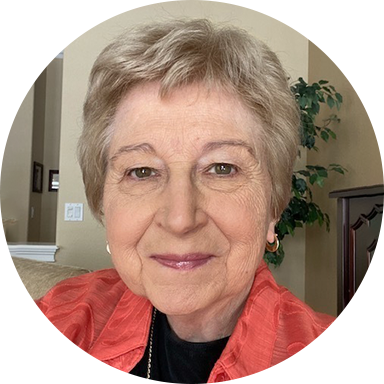
Mary Donnelly

Mary Donnelly grew up in Reno, Nevada, and initially pursued English and French at the University of Nevada, Reno. While still an undergraduate, she discovered her passion for music education by organizing children's choruses, which led her back to school for music certification. She earned her Master's Degree in Education from Lesley College in Cambridge, Massachusetts, where she focused on integrating arts across the curriculum. She spent thirty years teaching general music and choir in the Washoe County School District before retiring.

In 1985, Donnelly met George L. O. Strid while team-teaching sixth grade music. Their principal challenged them to write a musical for Reading Week, launching a partnership that has produced over two hundred songs and twenty-five musicals. Both are active members of ACDA, NEA, and ASCAP. Donnelly and her husband Rich continue to live in Reno.

Why we love this

The pairing of the beloved Welsh lullaby "Suo Gân" with an original companion melody creates a sophisticated yet accessible introduction to partner singing. Donnelly and Strid's careful voice leading keeps both parts singable and rewarding without sacrificing musical integrity. The optional flute part offers flexibility for programs with varied instrumentation levels, and the winter-neutral text makes this a genuinely multipurpose concert selection rather than a seasonal novelty.

What to expect

A hushed, intimate moment arrives when the two melodic lines intertwine over the piano's understated support. The arrangement wraps listeners in warmth and quietude, evoking the comfort of a lullaby while the optional flute adds a touch of crystalline beauty overhead. This is music designed to settle the listener into calm reflection.

Who it's for

This octavo serves singers new to harmonic singing, whether in middle school choirs, beginning high school ensembles, or community choirs building foundational ensemble skills. The limited vocal range (spanning only an octave) and supportive piano accompaniment make it accessible without sacrificing musical substance. Experienced directors will appreciate it as a gentle confidence-builder before tackling more complex textures.

How to get the most out of it

  • Shape the phrasing across the partner song's natural text phrases rather than line breaks; this will help singers hear how the two melodies interact and support one another.
  • Use the recorded accompaniment to establish the gentle tempo and to let singers focus on blend and intonation during early rehearsals.
  • If including flute, rehearse the instrumental part with the choir first so singers understand its role as a complementary voice, then add it gradually to avoid it overshadowing the vocal parts.
  • Encourage singers to listen across parts; even in a 2-part texture, awareness of how their line fits with the other voice prevents intonation drift.

How to use it

Program this as a set opener or closer for a winter concert, where its meditative quality can anchor a concert's emotional arc. Pair it with livelier seasonal selections to create contrast, or feature it alongside other partner songs and partner rounds to showcase evolving harmonic sophistication across the program. Its lack of holiday-specific text makes it equally suitable for a winter pops concert, a chamber choir recital, or a community concert celebrating the season.

Skills your students will build

  • Listening and blending in 2-part harmony
  • Sustaining independent melodic lines while responding to another voice part
  • Intonation awareness in partner song texture
  • Phrasing across longer lyrical phrases
  • Tracking optional instrumental parts in a choral arrangement

You May Also Like