

Peace Canon: 3-Part Mixed Choral Octavo
Music by Ludwig van Beethoven / arr. Donald Moore
Item: 00-PO-0004149
$2.25
Minimum order quantity: 20 copies
Pickup currently not available
Description
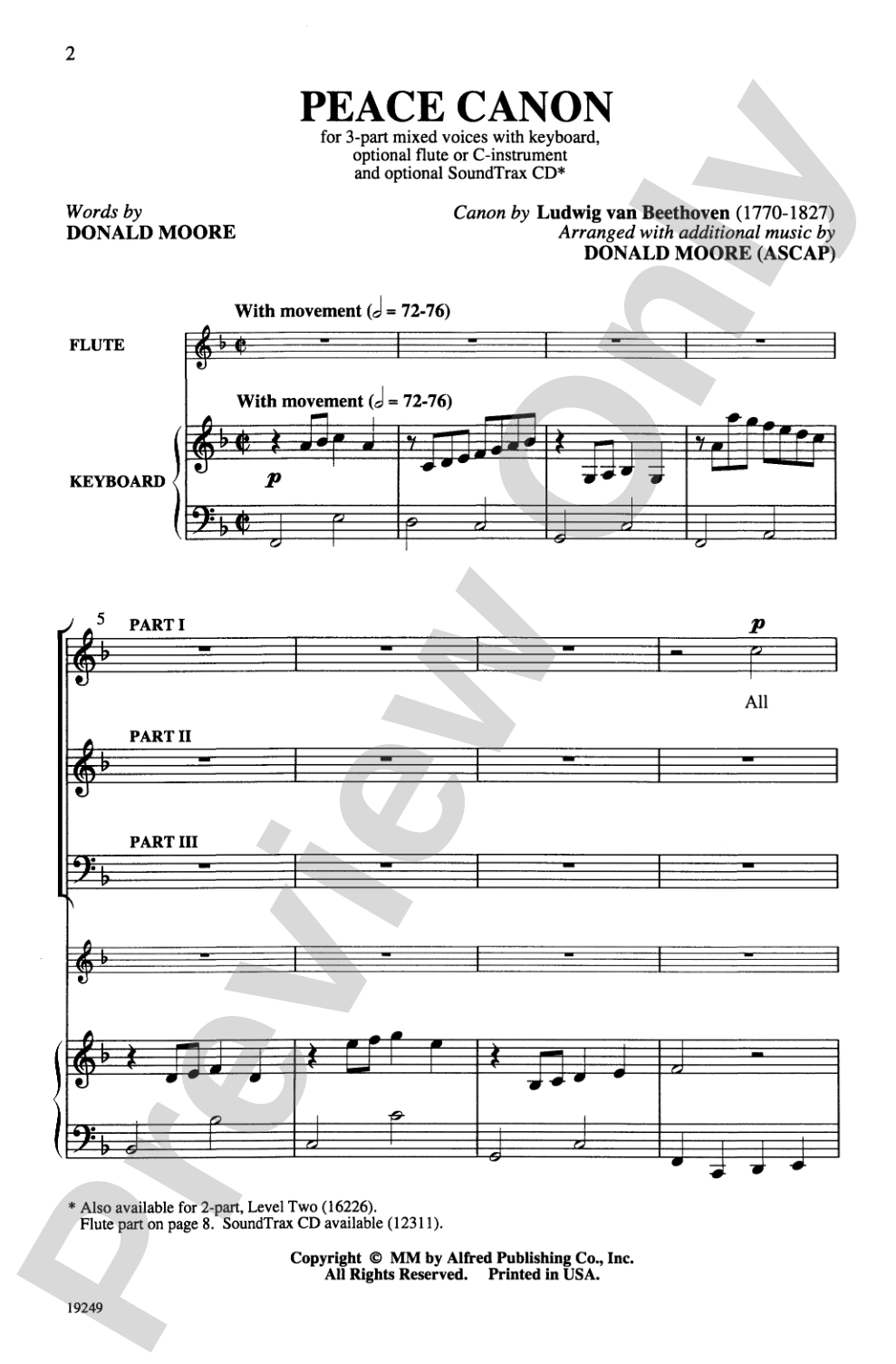
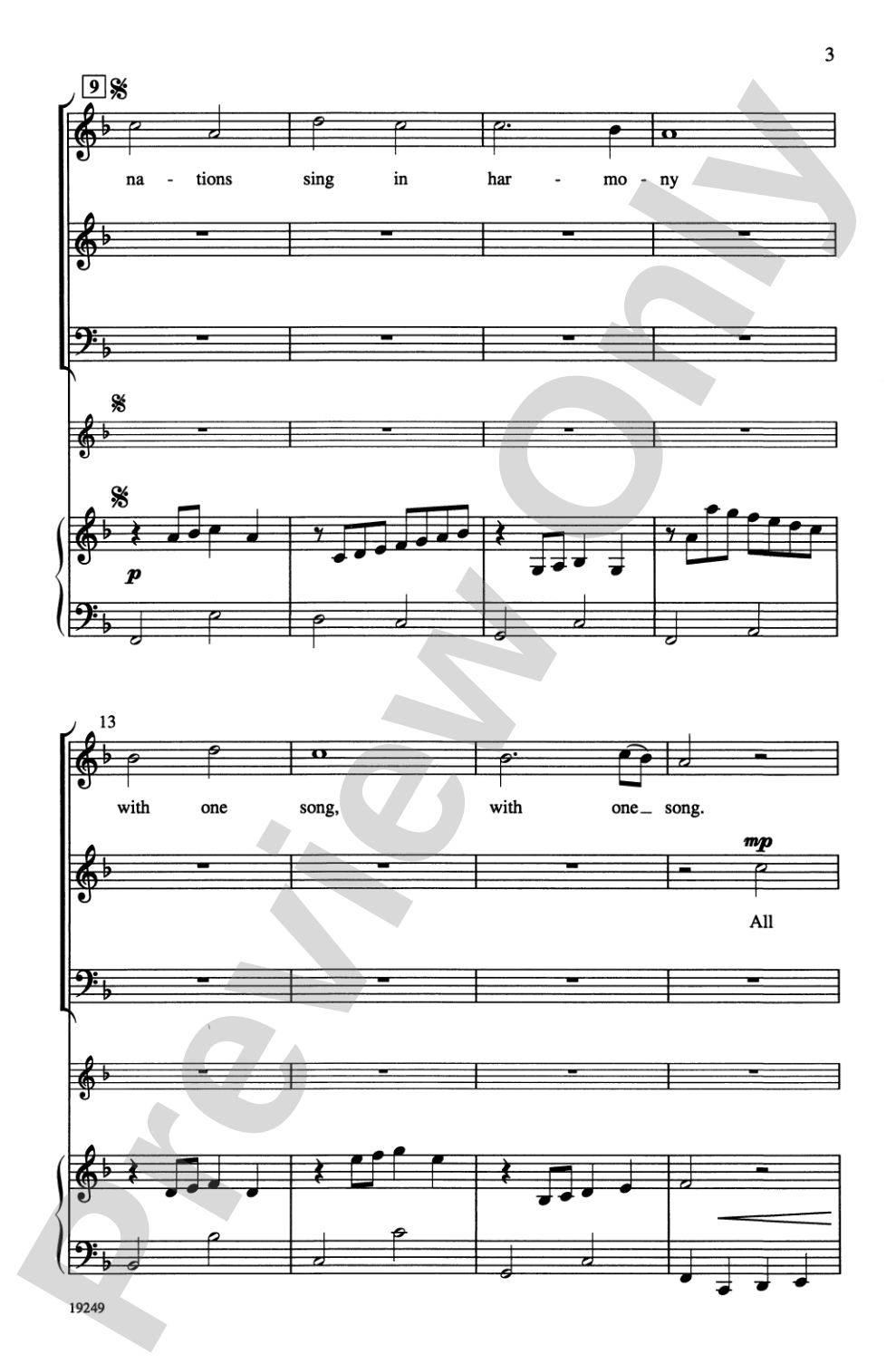
New for 3-part mixed groups! The lovely harmony created by the easy movement of the voice parts provides the perfect setting for the message of harmony and peace stated by the text. "All nations sing in harmony with one song...that all may live in peace." Using a classic Beethoven melody as the basis for this simple canonic arrangement, Don Moore has created a superb introduction to part singing for young choirs. An optional flute adds a special touch of color to this wonderful teaching piece.


Peace Canon: 3-Part Mixed Choral Octavo isn't in MakeMusic Cloud just yet...but it could be. Let us know you'd like to see it, and you'll help shape what comes next. In the meantime, start a free trial and dive into thousands of interactive titles your students can play along with today.
Request This Title
Tell us you want it.
Start Your Free Trial
Explore everything that's ready to play right now.
Sample Audio
1
Audio File
--:--
0:00
0:00
Sample Video
No sample videos found.
Additional Details
Series:
Alfred Archive Edition: Alfred Choral Designs
Publisher:
Alfred Music
Page Count:
8
SKU:
00-PO-0004149
Instrumentation:
Opt. Flute
More about this title
About the Composer: Ludwig van Beethoven
Ludwig van Beethoven (1770-1827) fundamentally transformed music from a courtly art into a vehicle for human emotion and social ideals. Deaf for much of his creative life, he composed some of history's most powerful and deeply felt works, driven by conviction rather than circumstance. His melodies and harmonic language became foundational to Western music education, and his work continues to inspire composers, arrangers, and musicians seeking to express universal themes.
Why we love this
Don Moore's arrangement takes one of the world's most recognizable melodies and transforms it into an ideal teaching piece for young mixed choirs discovering part singing. The canonic writing is genuinely musical rather than mechanical, and the text about nations singing in harmony gives students something meaningful to express. The optional flute part adds color without complication, making this as useful for all-choir concerts as it is for choir class.
What to expect
Gentle and uplifting, with a quality of hope woven into the familiar Beethoven melody. The overlapping voices create a sense of many voices speaking as one, reinforcing the text's message without ever feeling heavy or didactic. There is warmth in the simplicity and dignity in the harmony.
Who it's for
Young mixed choirs (grades 6-8 or high school singers new to part singing) benefit most from this piece, as the canonic structure teaches voice independence in a musically rewarding way. Intermediate choirs looking for a short, accessible secular work with a strong message will find it equally valuable. Directors serving choirs with limited music-reading experience can use this as a confidence builder.
How to get the most out of it
- Establish the melody clearly in the first voice before layering the canon. Have SAI singers mark their entrance points in pencil during the first rehearsals so entries feel secure and intentional.
- Balance the parts by thinking horizontally rather than vertically. Each line should sing through its own musical phrase as if it were complete, which creates clarity even when voices overlap.
- If using the flute, double-check that your flutist has the part before the first rehearsal and give them a few measures to locate their own melody within the texture. The optional part should enhance, not burden the choir's focus.
- Slow tempos expose young singers' intonation challenges. Aim for a tempo that feels natural and conversational, where the text can be understood and the part-singing remains secure.
How to use it
This works beautifully as an opening number for winter concerts focused on peace or global themes, where its message feels integrated rather than imposed. It can also anchor a program of masterwork arrangements, showing students how classic melodies evolve across time. Use it early in the rehearsal calendar when choirs are building foundational skills in part singing and intonation.
Skills your students will build
- Singing independent melodic lines within a canonic texture
- Entering at correct pitch and timing in a canon
- Balancing voice parts to support harmonic clarity
- Sustaining intonation while tracking movement in other voices
- Interpreting text with intention in an ensemble context