
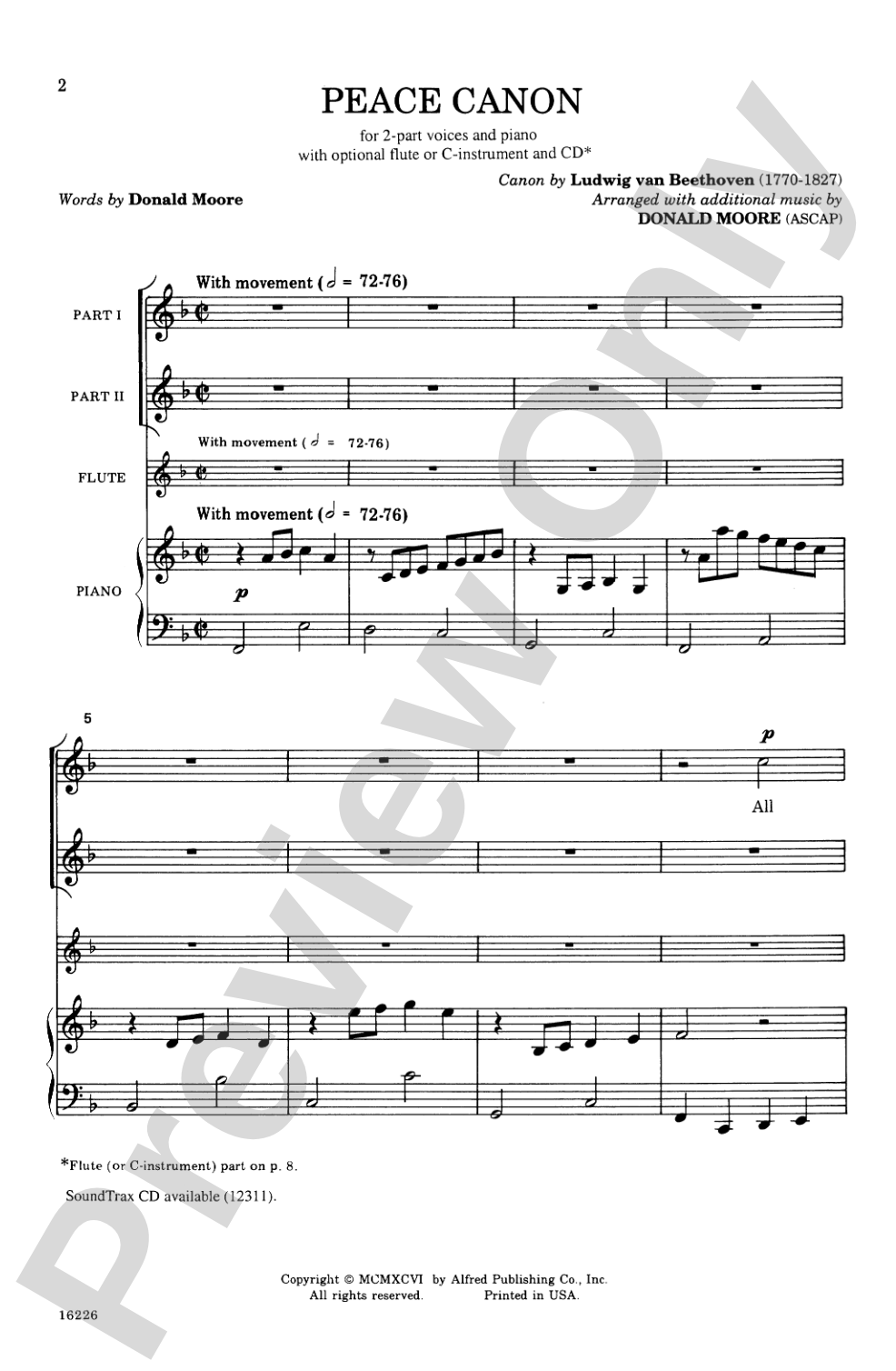

Peace Canon: 2-Part Mixed Choral Octavo
Music by Ludwig van Beethoven / arr. Donald Moore
Item: 00-PO-0003937
$2.25
Minimum order quantity: 20 copies
Pickup currently not available
Description
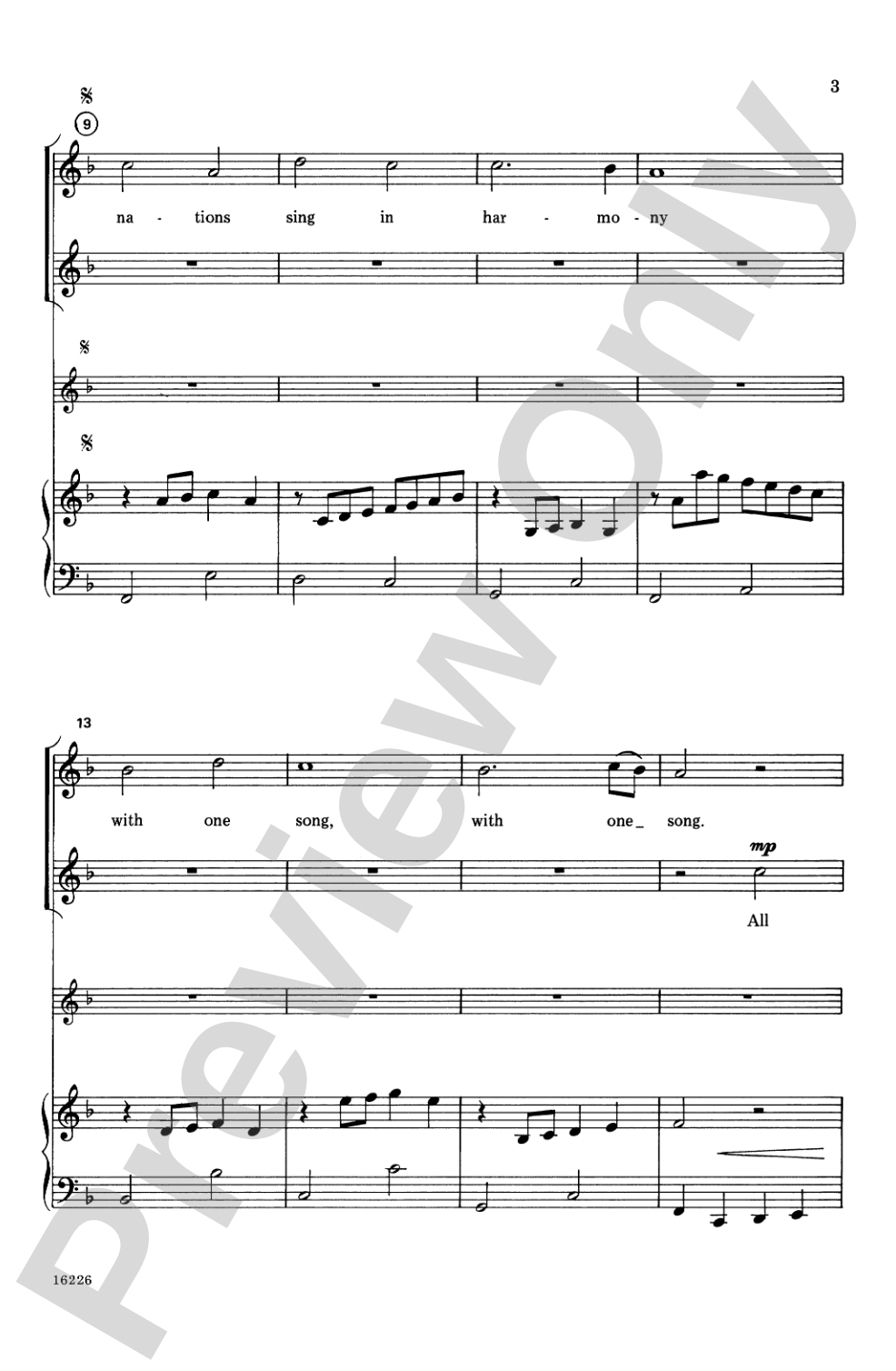
New for 3-part mixed groups! The lovely harmony created by the easy movement of the voice parts provides the perfect setting for the message of harmony and peace stated by the text. "All nations sing in harmony with one song...that all may live in peace." Using a classic Beethoven melody as the basis for this simple canonic arrangement, Don Moore has created a superb introduction to part singing for young choirs. An optional flute adds a special touch of color to this wonderful teaching piece.


Peace Canon: 2-Part Mixed Choral Octavo isn't in MakeMusic Cloud just yet...but it could be. Let us know you'd like to see it, and you'll help shape what comes next. In the meantime, start a free trial and dive into thousands of interactive titles your students can play along with today.
Request This Title
Tell us you want it.
Start Your Free Trial
Explore everything that's ready to play right now.
Sample Audio
1
Audio File
--:--
0:00
0:00
Sample Video
No sample videos found.
Additional Details
Series:
Alfred Archive Edition: Alfred Choral Designs
Publisher:
Alfred Music
Page Count:
8
SKU:
00-PO-0003937
Instrumentation:
Opt. Flute
More about this title
About the Composer: Ludwig van Beethoven
Ludwig van Beethoven (1770-1827) composed during the transition from Classical to Romantic music, a period when symphonic form and harmonic language were expanding dramatically. His work shaped generations of composers and remains central to the concert repertoire and music education worldwide. Beethoven's melodies, many of which have become synonymous with universal ideals like joy and brotherhood, continue to inspire arrangements for ensembles of all levels.
Why we love this
Donald Moore's canonic treatment transforms a Beethoven melody into an genuinely useful teaching piece for singers discovering two-part harmony. The uncrowded voice writing and the text's message of unity make this feel purposeful rather than didactic, and the optional flute part opens doors for mixed ensemble rehearsals without requiring advanced instrumental skill.
What to expect
The canonic structure creates a gentle conversation between the two voices, with each part weaving around the other in a way that feels inevitable rather than forced. There's warmth in the harmony and sincerity in the text, making this piece feel hopeful without veering into saccharine territory.
Who it's for
Young mixed choirs encountering two-part singing for the first time will find this accessible without feeling condescended to. Directors working with treble and lower voice singers who need easy, meaningful repertoire to build confidence will recognize this as a reliable choice for winter concerts or peace-themed programming.
How to get the most out of it
- Establish the canon's entrances clearly in rehearsal by having one part sing alone first, then gradually layering the second part so singers hear where their melodic line fits within the texture.
- Support the text's meaning through dynamic control; resist the urge to sing loudly simply because the arrangement is simple. The message lands better with focused, singing tone.
- If using the flute, reserve its entrance for a strategic moment (perhaps the final repetition of the text) rather than having it present throughout, which heightens its impact as a special color.
How to use it
This works beautifully as an opening number for winter concerts, setting a reflective or reconciliatory tone before moving into other repertoire. It also serves as a natural bridge in a concert mixing secular and sacred holiday music, or stands alone as the centerpiece of a brief peace-themed assembly program.
Skills your students will build
- Reading and singing in two-part harmony
- Tracking a melodic line while another voice moves independently
- Balancing part independence with blend and unity
- Singing with textual awareness and musical purpose