Payton's Tune Cover Image

Payton's Tune: Jazz Ensemble Conductor Score & Parts

$52.00 USD
Sale price  $52.00 USD Regular price 
Skip to product information
Payton's Tune Cover Image

Payton's Tune: Jazz Ensemble Conductor Score & Parts

By Rick Hirsch

Grade: 2.5

Item: 00-51898

Need it now?

Buy Digital Version
$52.00
Shipped

One moment…

Description
A gorgeous even-eighth treatment of a poignant yet powerful melody you'll love. Trumpet 1 takes the written melody line, plus a few brief suggested solos for alto, trombone, tenor, and trumpet are provided. The tempo after the intro is around 144 BPM. Auxiliary percussion and various other optional parts included. A beautiful chart. (3:30)

Payton's Tune: Jazz Ensemble Conductor Score & Parts isn't in MakeMusic Cloud just yet...but it could be. Let us know you'd like to see it, and you'll help shape what comes next. In the meantime, start a free trial and dive into thousands of interactive titles your students can play along with today.

Sample Pages

Sample Audio
0:00
0:00
Sample Video
Additional Details
Series: Young Jazz Ensemble
Publisher: Alfred Music
ISBN10: 1-4706-7735-0
ISBN13: 978-1-4706-7735-0
UPC: 038081599526
SKU: 00-51898

More about this title

About the Composer: Rick Hirsch
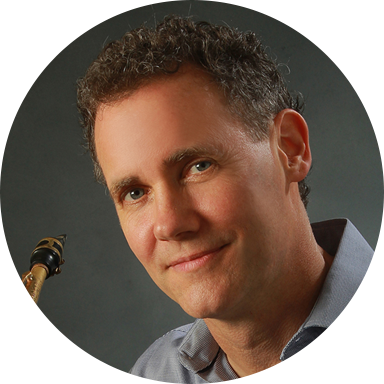
Rick Hirsch

Rick Hirsch holds degrees from UMass-Amherst and Northern Illinois University, and spent his early career as a personal music copyist for jazz luminaries Bob Mintzer and Toshiko Akiyoshi. His compositions and arrangements have been performed by jazz artists including Yusef Lateef and Eddie Henderson, and he has written for ensembles ranging from the Capitol Quartet to the Penn State Blue Band.

Hirsch is a frequent guest conductor for All-State and District Jazz Bands, and previously taught at Penn State University. In 2017, his big band BIG OL' BAND released their debut album Pocono Git-Down, which highlights the creative energy of jazz communities beyond the major metropolitan centers.

Why we love this

Hirsch brings the sensibility of a working composer and arranger to repertoire that young ensembles can actually perform convincingly. The even-eighth feel and deliberate pacing mean your students can focus on tone, phrasing, and collective listening rather than technical scrambling. This is a chart that sounds mature in the hands of Grade 2.5 players.

What to expect

Thoughtful and understated, with a melody that carries real emotional weight without sentimentality. The even-eighth feel gives it a contemporary polish while the harmonic language feels warm and accessible, inviting players and listeners alike into something both beautiful and genuine.

Who it's for

Jazz directors working with developing ensembles who want genuine compositional substance without excessive technical demands. Students who are ready for meaningful melodic and harmonic content but still building their jazz language and sectional independence.

How to get the most out of it

  • Treat the opening intro as a moment to establish ensemble tuning and dynamic control before the tempo locks in at 144 BPM; the silence before the ensemble enters should feel intentional.
  • Balance the trumpet melody against the supporting voices so the poignant quality of the tune comes through without the solo voice overwhelming the ensemble texture.
  • Give soloists space to breathe and phrase naturally; suggested solos work best when the player owns the melody rather than reading it mechanically.
  • Use the auxiliary percussion parts to shape the rhythm section feel, but keep them supportive of the main groove rather than decorative.

How to use it

This works equally well as a feature in a jazz concert or as a centerpiece in a mixed program balancing uptempo charts and vocals. The 3:30 length and moderate difficulty make it an ideal opening number or a closing piece that leaves audiences with something memorable rather than exhausted.

Skills your students will build

  • Phrasing and tone production in a melodic context
  • Even-eighth jazz feel and rhythmic precision at moderate tempo
  • Listening and balancing as an ensemble voice
  • Solo construction from provided frameworks
  • Interpretation of a poignant melody without overselling emotion

You May Also Like