

Pax Tecum: SATB Choral Octavo
(Peace, My Friend)
Words and music by Nathaniel Stine
Item: 00-PO-0007496
$2.30
Minimum order quantity: 20 copies
Pickup currently not available
Description
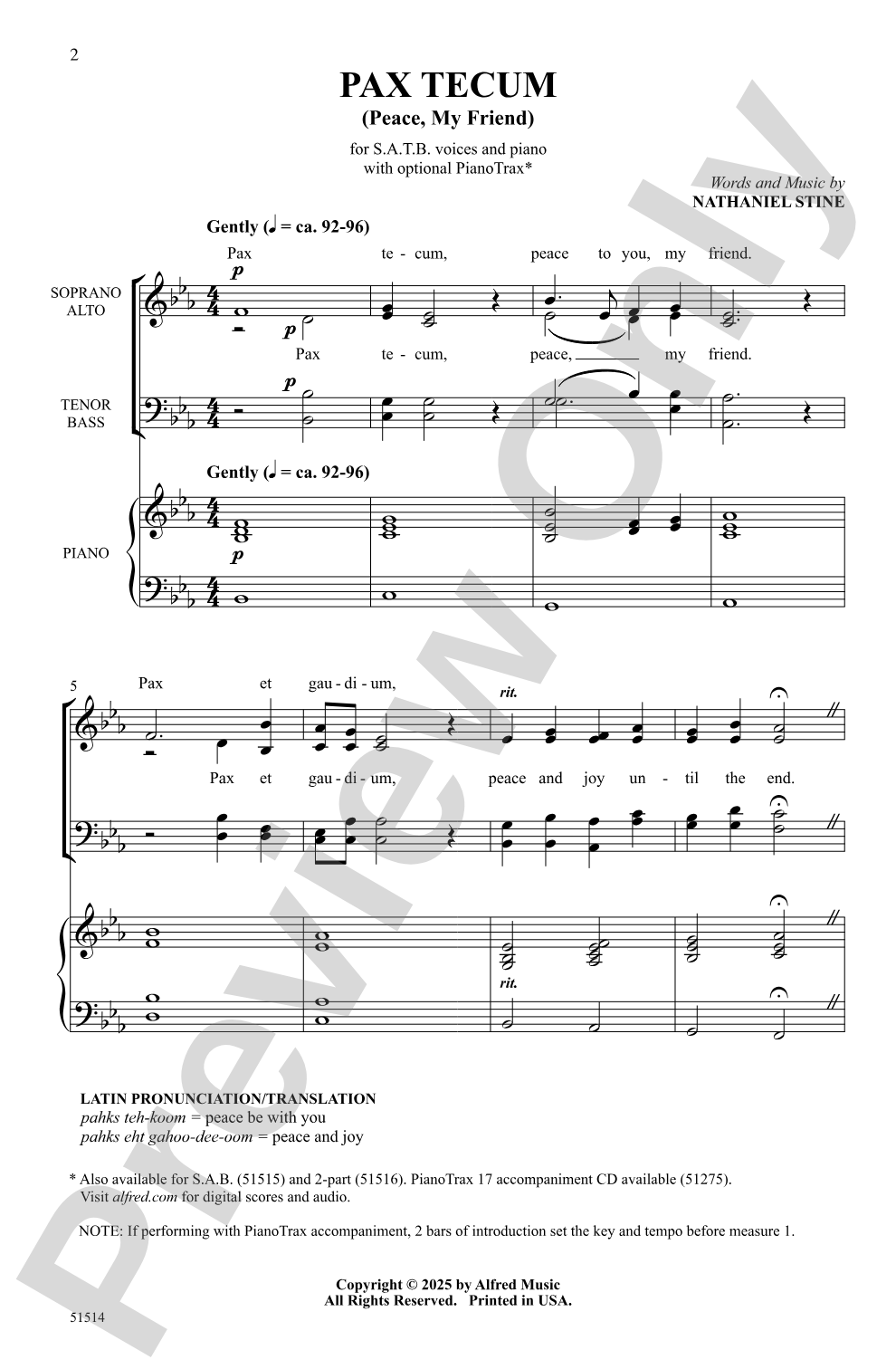
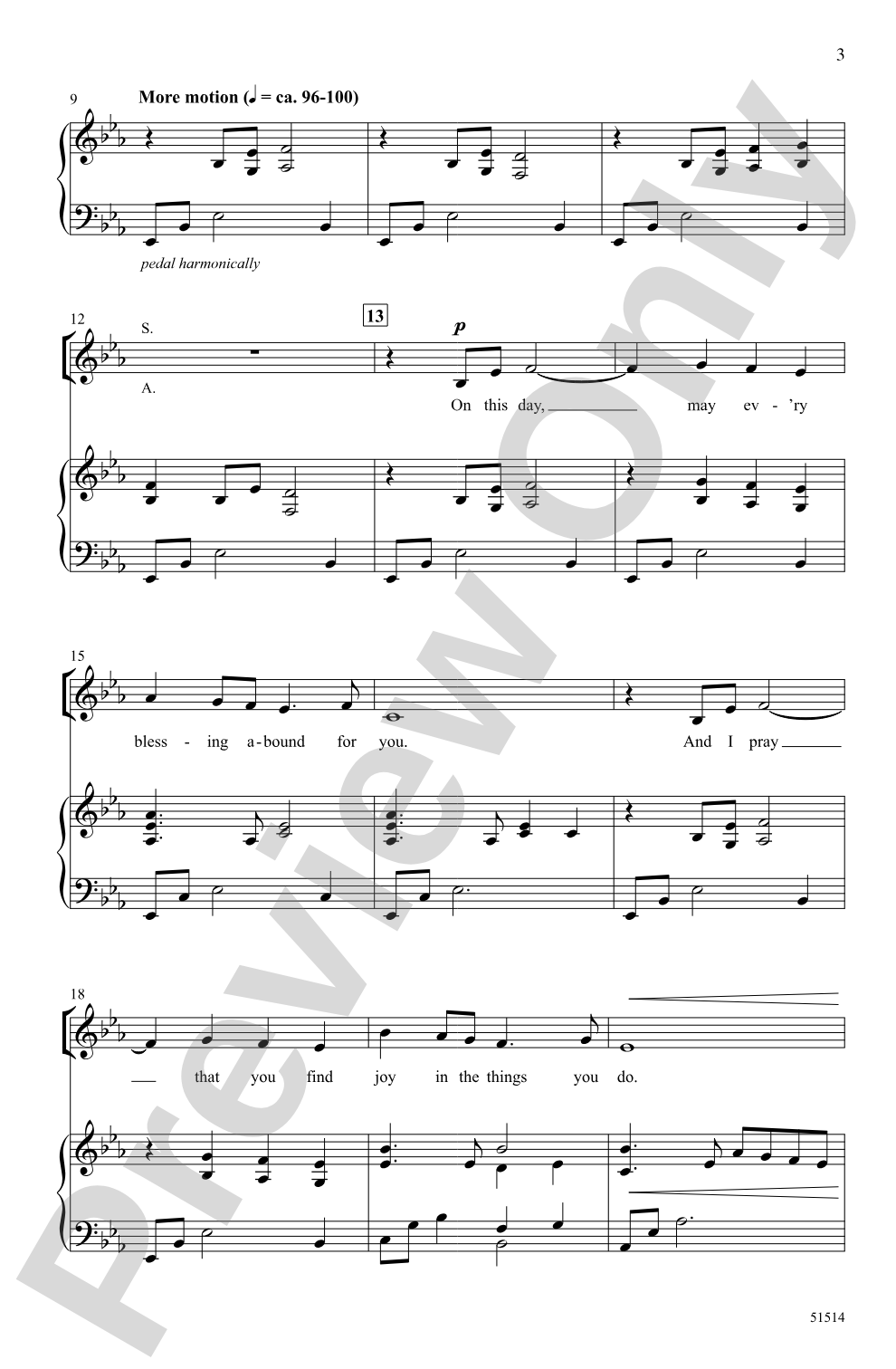
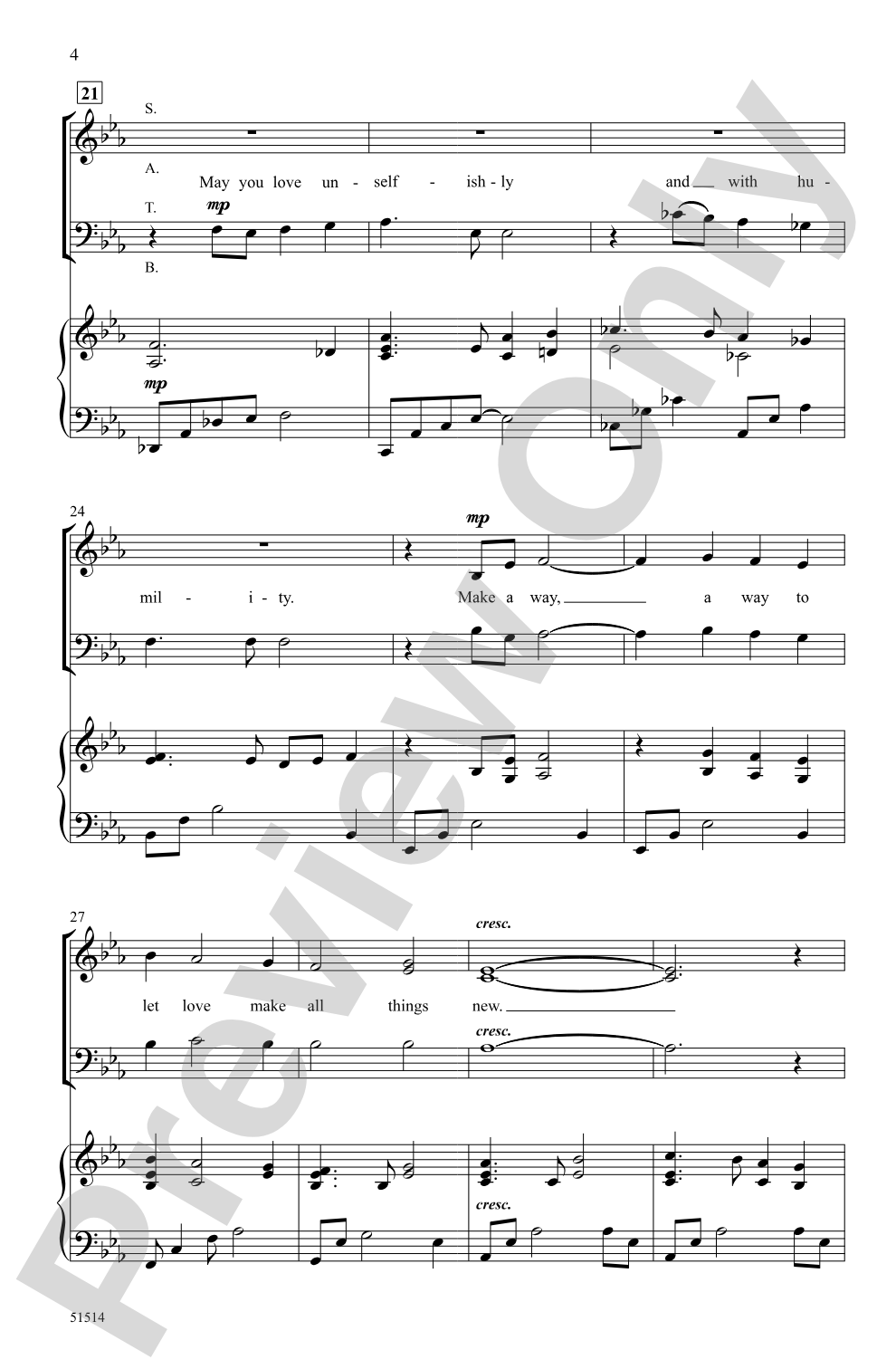
A pensive, chorale-style opening (supported by minimal accompaniment) sets a tone of reverence for this gentle song of peace. After the piano part blossoms, a variety of choral textures and harmonic high points make the mostly English text resonate. Assign a few sopranos on the lovely descant, which appears just before the piece tapers to its soft final chord.


Pax Tecum: SATB Choral Octavo isn't in MakeMusic Cloud just yet...but it could be. Let us know you'd like to see it, and you'll help shape what comes next. In the meantime, start a free trial and dive into thousands of interactive titles your students can play along with today.
Request This Title
Tell us you want it.
Start Your Free Trial
Explore everything that's ready to play right now.
Sample Audio
1
Audio File
--:--
0:00
0:00
Sample Video
Additional Details
Series:
Alfred Choral Designs
Publisher:
Alfred Music
Page Count:
12
SKU:
00-PO-0007496
More about this title
About the Composer: Nathaniel Stine

Nathaniel Stine grew up on Boston's North Shore and earned his Bachelor of Music in Vocal Performance from Gordon College in Massachusetts, followed by a Master of Music in Choral Music from USC. His career has taken him across the country as a performer, conductor, and arranger; he has appeared at Carnegie Hall as a pianist and arranger with the Tim Janis Ensemble, working alongside artists including Sarah McLachlan, James Galway, and Tori Kelly.
Why we love this
Stine's approach here is refreshingly restrained. Rather than pile on complexity, he lets the text breathe over a gentle harmonic foundation, then rewards singers and listeners with carefully placed moments of expansion. The descant texture offers a natural way to feature your confident high voices without overwhelming the ensemble, and the piece works equally well in a concert setting or festival competition.
What to expect
Pax Tecum unfolds like a quiet moment of reflection. The opening feels almost liturgical in its restraint, inviting listeners into a space of calm. When the piano part opens up and the harmonic landscape deepens, the piece gathers quiet dignity without ever losing its gentle character, arriving finally at a soft resolution that feels earned rather than tacked on.
Who it's for
This octavo works beautifully for mixed choirs looking for a gentle, reverent piece that is approachable without being simplistic. It suits groups preparing for graduations, peace-themed concerts, or festivals where control and musicality matter as much as technical difficulty.
How to get the most out of it
- Rehearse the opening chorale section without the piano accompaniment first so singers can lock in the harmonic progression and phrasing before adding the instrumental layer.
- Select sopranos for the descant who can sing independently from the main soprano line without being pulled by the volume of the section below them; consider giving them a separate rehearsal.
- Shape the dynamic arch around the moment when the piano part expands; this is where the piece blooms, so let the singers sense the shift in accompaniment texture and respond with renewed engagement.
- Bring the final chord down to true softness rather than fading out; precision matters more than volume in a piece this intimate.
How to use it
This piece sits comfortably on a spring or end-of-year concert, especially in a program exploring themes of peace or transition. It also pairs well as a closing number for a graduation event, or as the opening salvo in a peace-themed choral festival entry that can then build to bolder repertoire.
Skills your students will build
- Sustaining tone quality in soft, exposed passages
- Blending within a chorale-style harmonic structure
- Independence of voice parts within four-part writing
- Reading and executing dynamic control at low volumes
- Listening to and balancing with piano accompaniment