Paths of Glory Cover Image

Paths of Glory: Concert Band Conductor Score & Parts

$60.00 USD
Sale price  $60.00 USD Regular price 
Skip to product information
Paths of Glory Cover Image

Paths of Glory: Concert Band Conductor Score & Parts

By Carl Strommen

Grade: 2 (Easy)

Item: 00-BDM00004

makemusic Cloud badge

Need it now?

Buy Digital Version
$60.00
Shipped

One moment…

Description
With just a bit of a different bend, composer Carl Strommen presents us with a concert march that escapes the ordinary and the expected, moving us through this work with a flow that fascinates. Style concepts are an important teaching tool within its measures, presenting a flowing lyrical line as well as contrasting pulsating thrusts. This is a perfect work with which to open your concert or change the pace after the performance of a major work or arrangement. Highly recommended!

Don't just read it, hear it, play along with it, and watch your students grow with it. In MakeMusic Cloud, Paths of Glory: Concert Band Conductor Score & Parts comes alive with professional accompaniment, adjustable tempo, and built-in practice tools that turn solo practice into real progress.

Sample Pages

Sample Audio
0:00
0:00
Sample Video
Additional Details
Series: Belwin Young Band
Publisher: Alfred Music
Page Count: 250
UPC: 654979009658
SKU: 00-BDM00004

More about this title

About the Composer: Carl Strommen
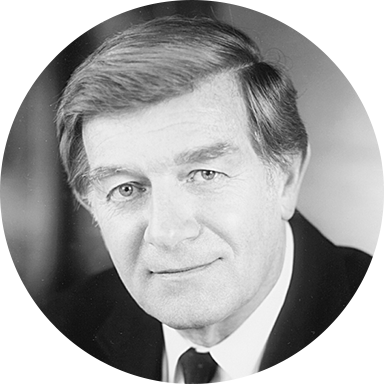
Carl Strommen

Carl Strommen stands among the most frequently performed composer-arrangers in North America and beyond. His music appears regularly on concert stages, in television broadcasts, and film scores, while his work across band, orchestra, jazz ensemble, and vocal genres demonstrates remarkable versatility. He has received the ASCAP Standard Writers Award annually, a testament to his prolific output and consistent quality.

Strommen holds a degree from the City College of New York and currently serves as an adjunct professor of orchestration and composition at C.W. Post Campus of Long Island University. He remains actively engaged in clinician work and commission writing. Based on Long Island, he maintains strong ties to both the academic community and the creative centers of Denver and Boulder, Colorado.

Why we love this

Strommen crafts a march that sidesteps predictability through its integration of lyrical phrasing and sharp rhythmic punctuation. The work functions equally well as an opener or as a strategic pace-shifter on a full program, giving conductors real programming flexibility at a grade level where such options remain limited. For young bands hungry to explore style concepts beyond march fundamentals, this offers genuine pedagogical substance without overcomplicating the ensemble.

What to expect

The piece unfolds with the confidence of a traditional march while weaving in moments of genuine lyricism that catch the listener off guard. Its architecture moves between spacious, singing lines and moments of rhythmic energy, creating a sense of purposeful forward motion tempered by musical introspection.

Who it's for

Beginning and developing concert bands at the grade 2 level seeking quality literature that combines march traditions with more sophisticated style exploration. This work suits ensembles working toward festivals or concerts and directors wanting to teach contrast and phrasing without requiring advanced technical facility.

How to get the most out of it

  • Shape the lyrical passages with long-line breathing in mind; encourage the ensemble to sustain phrase arc rather than resting between familiar march blocks.
  • Keep the pulsating thrusts rhythmically precise and articulate. These contrasting sections gain impact only when they cut cleanly against the flowing lines.
  • Balance the march's forward momentum with the rubato implied in lyrical sections; avoid conducting the work as a single tempo throughout.

How to use it

Open your concert with this work to establish musical sophistication from the first downbeat, or position it after a heavier feature to recalibrate the audience's energy. Its dual character makes it an ideal bridge piece between contrasting sections of a program.

Skills your students will build

  • Conducting and recognizing style shifts and textural contrasts
  • Phrasing across longer melodic lines in a march context
  • Balance between rhythmic precision and lyrical expression
  • Interpretation of articulation and dynamics as style tools

You May Also Like
